

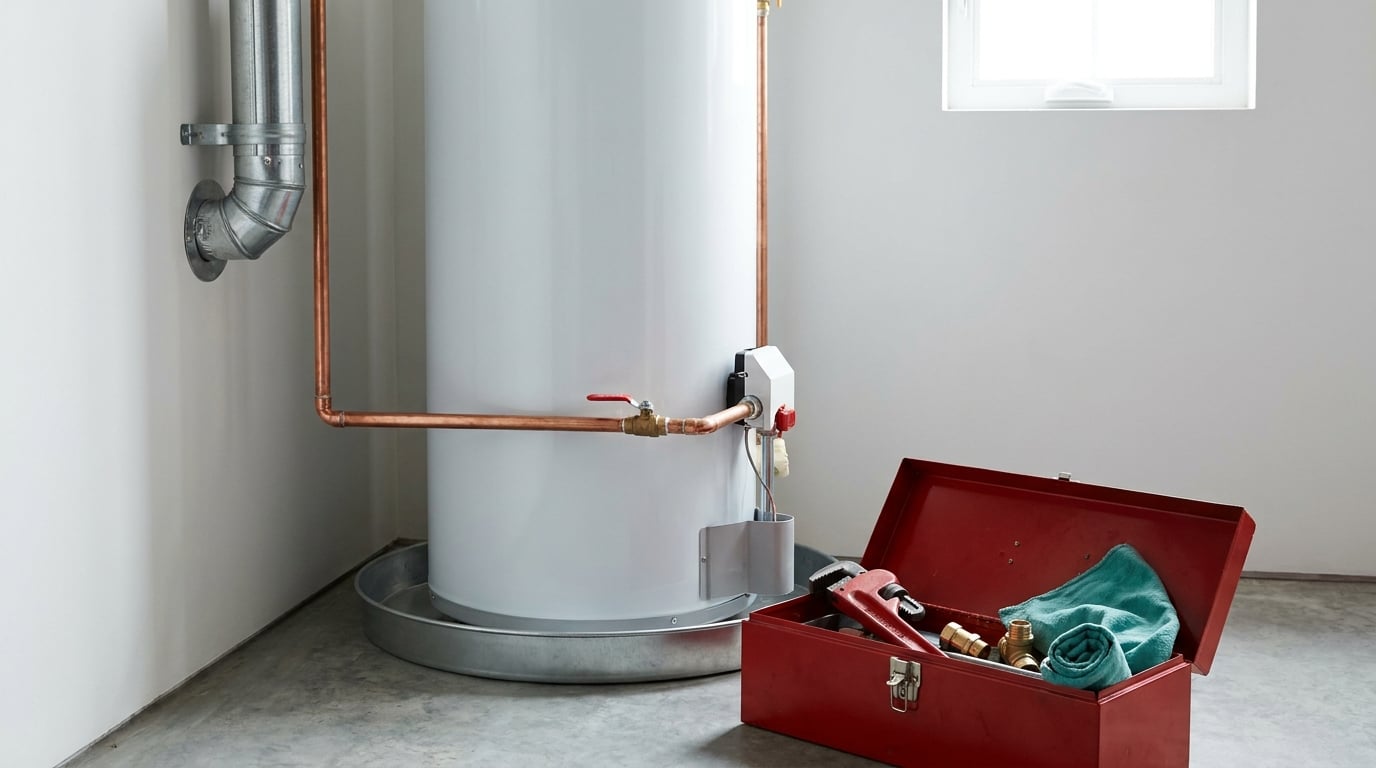
How much does it cost to install a water heater? Most US homeowners pay between $900 and $1,800 for a standard tank replacement, and $2,000 to $4,500 for a tankless unit, including the heater, labor, parts and the permit. A straightforward swap in an accessible garage sits at the low end. An attic install, a fuel conversion or a house with no gas line can run $3,000 or more.
Those numbers are national averages, not a quote for your house. Labor rates, code requirements and how hard the old unit is to get out all move the final total a long way, and prices change over time. Treat the ranges below as a benchmark for judging a quote, not a fixed price list.
The single most useful thing you can do is ask for a written, itemized quote that separates four buckets: the equipment, the labor, the permit and inspection, and any parts or code upgrades your home needs. Without that split, there is no way to tell markup from plumbing. Homeowners posting on r/homeowners and BiggerPockets describe quotes jumping from $700 to $2,600 for what was supposed to be the same swap, and the difference almost always traces back to bundled supply or an unitemized bill.
If your heater is leaking, rusting or running out of hot water mid-shower, start with our water heater troubleshooting guide to see whether the problem is actually fixable before you price a replacement.
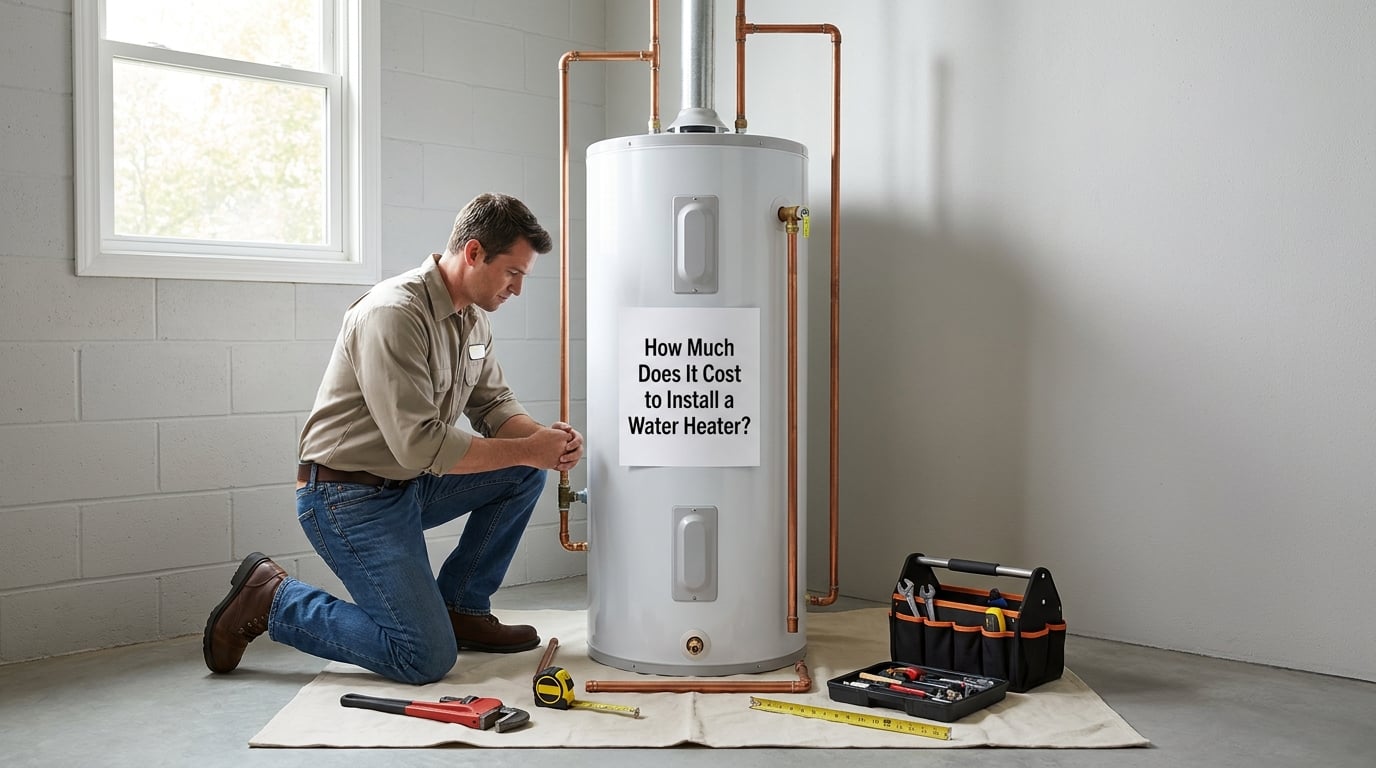
A standard 40- or 50-gallon tank heater installed by a licensed plumber typically lands between $900 and $1,800 all-in. Tankless runs higher, usually $2,000 to $4,500 installed, because the unit itself costs more and the venting or electrical work takes longer.
| Heater type and size | Unit | Labor | Permit | Installed total |
|---|---|---|---|---|
| 30-gallon electric tank | $400 to $700 | $400 to $700 | $50 to $150 | $900 to $1,500 |
| 40-gallon electric tank | $550 to $900 | $450 to $800 | $50 to $150 | $1,050 to $1,800 |
| 50-gallon electric tank | $700 to $1,200 | $500 to $900 | $75 to $200 | $1,300 to $2,200 |
| 50-gallon gas tank | $800 to $1,400 | $600 to $1,100 | $100 to $250 | $1,500 to $2,600 |
| 80-gallon gas tank | $1,100 to $1,800 | $700 to $1,200 | $100 to $250 | $1,900 to $3,200 |
| Hybrid heat pump tank | $1,600 to $2,800 | $700 to $1,300 | $100 to $250 | $2,400 to $4,300 |
| Tankless, electric | $1,200 to $2,200 | $900 to $1,600 | $100 to $250 | $2,200 to $4,000 |
| Tankless, gas | $1,500 to $2,800 | $1,100 to $2,000 | $150 to $300 | $2,400 to $4,500 |
Read that table as a range for the whole job, not a shopping list. The unit column is what the equipment costs on its own. The labor column assumes an accessible install with compatible existing piping and venting. Add roughly $200 to $600 when the job needs new venting, a gas line run, an electrical panel upgrade, an expansion tank, seismic strapping or a drain pan.
A complete standard quote covers six things, and you should be able to see each one written down.
What often sits outside that base scope is where the surprise lives. An expansion tank for thermal expansion, a mixing valve required on some tankless installs, a new drain pan, seismic strapping in earthquake zones, or replacing corroded shutoff valves all add up. Homeowners report an extra $200 to $600 in small parts on jobs that were quoted as simple swaps.
Tank size drives the unit price and little else. A 30-gallon electric tank and a 50-gallon gas tank may take the same two to four hours of labor, but the gas unit costs more to buy and more to connect.
Fuel type changes the install more than the size does. Electric units need a 240-volt circuit with adequate panel capacity and often a dedicated breaker, which is cheap if the wiring is already there and expensive if it is not. Gas units need correct flue sizing and a properly sized gas line, and that is where code upgrades cluster. Switching from electric to gas in a home that was never plumbed for it can add $1,500 or more on its own.
Efficiency ratings decide whether you need a bigger tank at all. The first hour rating (FHR) says how much hot water the tank delivers in the first hour, and the uniform energy factor (UEF) scores annual operating cost. If you are sizing by household habit instead of by rating, you can end up paying for gallons you never use. Our tankless versus tank cost and efficiency comparison walks through how the two families differ on upfront cost, running cost and lifespan.
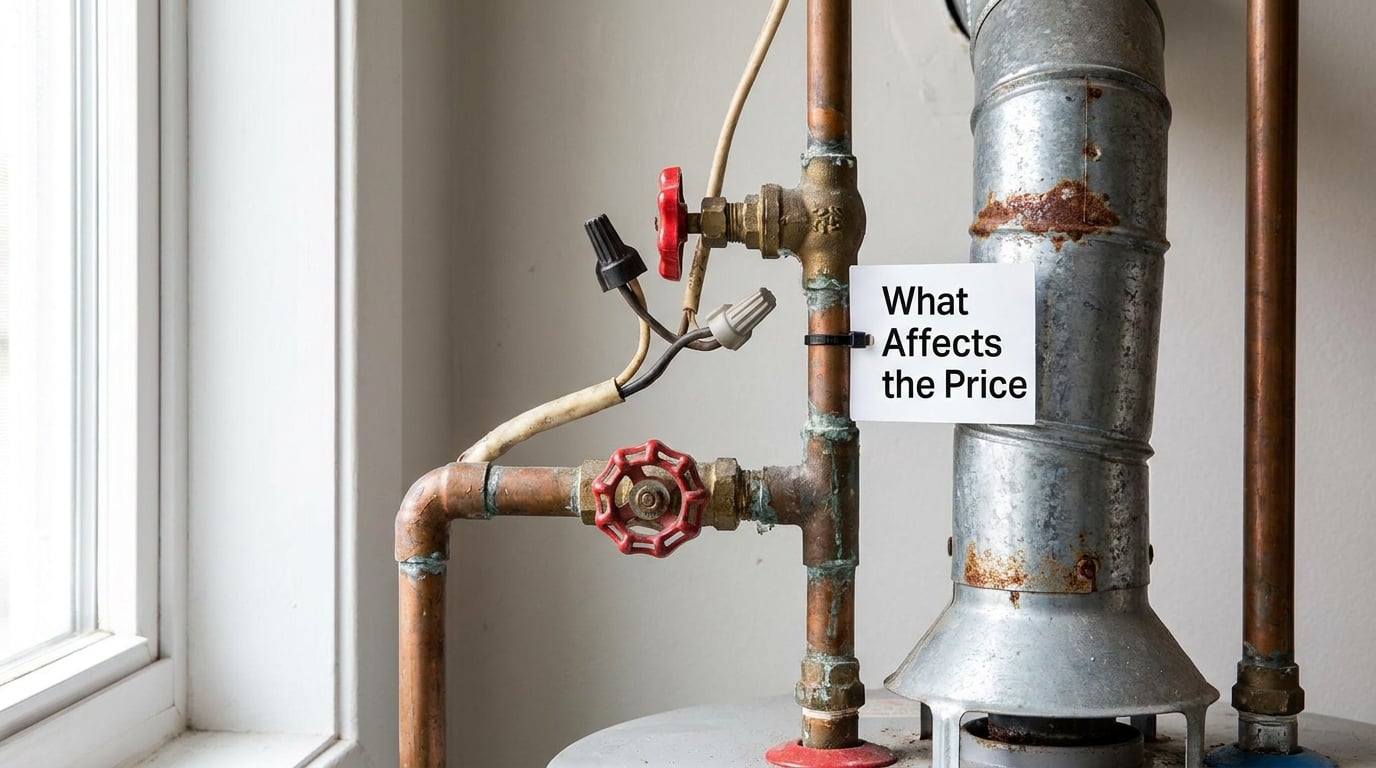
Two houses with identical heaters get wildly different quotes, and the difference is almost always the site rather than the appliance.
Access and location. A heater in a garage or an accessible closet is a two-to-four-hour job. The same tank in an attic, a crawlspace or behind a finished wall can take most of a day, because the old unit has to be cut apart to get it out. Homeowners report accessible installs capping out around $500 in labor while overhead installs run several times that.
Fuel capacity. Electric installs need panel capacity and the right amperage breaker. Gas installs need a correctly sized gas line and a flue that meets current code. If your existing setup falls short, you are looking at electrical or gas contractor work on top of the plumber’s bill.
Venting. A gas heater exhausting through a properly sized existing flue is routine. A flue that is too small, too long or the wrong shape has to be rebuilt or re-routed, and that is one of the most common code-driven price jumps in this job.
Permits and code upgrades. Permit fees run about $50 to $250 depending on the jurisdiction. Skipping the permit saves that and can create problems at resale, with home inspectors, or with a warranty claim later, so treat it as part of the real cost rather than an optional extra.
Relocation and drainage. Moving the heater to a different wall, adding new drain piping or running a new gas line turns a replacement into a remodel. This is the clearest case where buying the equipment yourself stops being the cheap option.
Water and site conditions. Hard water accelerates scale on elements and anode rods, which does not change the install price but changes how long the new unit lasts. Active leakage or water damage around the old tank means remediation work before anything gets installed.
Pricing model and timing. Flat-rate job pricing is safer than hourly for a well-defined swap like this, because you know the scope up front. Hourly billing plus an after-hours or emergency surcharge is how a three-hour job turns into a large surprise bill. Scheduling a planned replacement in a slow week also helps, since labor is the biggest line item on most quotes.
None of these cut corners on safety. They all target the two biggest levers: the markup on the heater and the hours on the clock.
Get three itemized quotes, in writing. Ask each one to break out the unit, labor, permit, parts and any code upgrade separately. A quote that refuses the split is telling you something useful about how the rest of the invoice will look. Two quotes is the floor; three is where the spread becomes obvious.
Buy the heater yourself and pay for labor only. Buying the unit from a big-box retailer or a plumbing supply house and hiring a plumber only for the swap is the single biggest cost lever homeowners report finding, often saving several hundred dollars. The catch is that many plumbers will not warranty work on equipment they did not supply, so ask before you buy.
Replace like with like. Staying with the same fuel type, roughly the same capacity and a similar efficiency tier keeps the existing venting, gas line and electrical circuit usable. Every conversion decision adds a line item.
Leave the unit where it is. Relocation is the most expensive optional change you can make. If the old location is accessible and code-compliant, keeping it is cheaper than moving it.
Bundle removal and installation. Ask for haul-away in the same quote instead of accepting a disposal fee at the end, and have the old unit disconnected during the same visit rather than paying a separate trip.
Plan the purchase. A failed heater bought at 9pm on a Sunday carries emergency rates. Replacing a tank that is ten years old, during normal hours, on a weekday, removes the surcharge entirely and gives you time to compare.
Check rebates and credits before you buy. High-efficiency and heat pump water heaters often qualify for utility rebates and manufacturer promotions, and homeowners report a federal incentive of around 30 percent up to a $2,000 cap for heat pump water heater models. Program terms and eligible model lists change, so confirm the current details with the manufacturer and your utility before you order.
Know when not to do it yourself. Homeowners describe swapping an electric tank as a manageable weekend job with fittings, a torch and a lot of YouTube. Gas work, flue changes and anything touching a gas line belong to a licensed pro, and doing it wrong risks carbon monoxide. Our step-by-step tankless install guide shows the scope of a job most people underestimate.
Repair only when the repair is cheap relative to a new unit. The practical rule of thumb: if the repair runs more than about half the cost of a comparable new heater, replace it. Tanks generally last 8 to 12 years and tankless units considerably longer, so an old tank with a failed heating element is usually a replacement decision.
Home Depot’s installation service for a standard tank heater is typically quoted in the several-hundred-dollar range for labor on an accessible, code-compliant install, on top of the unit you purchase from the store. Exact fees change by ZIP code and job conditions, so get the install quote at the counter before you buy. Confirm whether it includes removal of the old unit, the permit and the Tu0026amp;P valve.
Lowe’s offers installation on water heaters it sells, with the labor portion generally quoted in the several-hundred-dollar range for a straightforward tank swap. Like any retailer program, the fee varies by location and by what your home needs beyond basic hookup. Ask specifically about haul-away, permit handling and whether a gas connection is included. This is the supply-plus-labor channel most homeowners find cheapest.
Labor alone for a 40-gallon tank typically runs $450 to $800 when the unit is in an accessible location with compatible piping and venting. Electric connections are at the lower end; gas venting and flue work push toward the upper end. Add $300 or more for attic or behind-wall access, and expect the same labor line to be quoted as a flat-rate job price rather than an open hourly meter.
Because installation cost is mostly labor, parts and code compliance, not the heater. On a typical $1,500 job, roughly half is equipment, 30 to 40 percent is labor, and the rest is permit, fittings and disposal. Deeper access, new venting, a gas line run, an electrical upgrade or an expansion tank all add line items that a quick-swap quote never mentions. An itemized quote is how you see which of these you are actually paying for.
In many jurisdictions, yes. A water heater replacement that includes gas venting or new electrical work commonly requires a permit, usually $50 to $250 plus a small inspection fee. Electric-only swaps are exempt in some places and required in others, so check your local building department. Unpermitted work can complicate a resale, flag in a home inspection, and complicate a warranty claim.
A straightforward electric tank swap is the DIY case people report completing for a few hundred dollars in parts, mostly fittings and valves. Gas units, any flue or vent change, and gas line work should go to a licensed contractor, because the failure mode is carbon monoxide, not water damage. Check your permit requirement first, and know that self-install can affect the manufacturer warranty.
Write down four things before you call anyone: the fuel type, the capacity in gallons, where the unit lives, and whether you are replacing a failed tank or planning ahead. That one-page summary tells any plumber whether this is a like-for-like swap or a conversion, and it makes quote comparison meaningful.
Then get two or three written quotes that each break out the heater, labor, permit and removal separately. If a how much does it cost to install a water heater question comes down to one number in your head, that number is the range above, adjusted for your access and fuel setup. Let the itemized quotes, not the headline figure, set the price.
