
Replacing all the windows in a typical US house runs $7,000 to $25,000 installed, or roughly $550 to $1,100 per window, and most whole-house projects land somewhere between $8,000 and $15,000. That wide spread is normal: the per-window price you see online is usually the unit alone, and labor, trim, permits and weatherproofing make up a large share of the invoice.
Every figure below is a typical US range rather than a quote. Material prices, regional labor rates and incentive programs shift constantly, so treat the numbers as a benchmark to sanity-check bids against, not a promise. This guide is updated for October 2026.
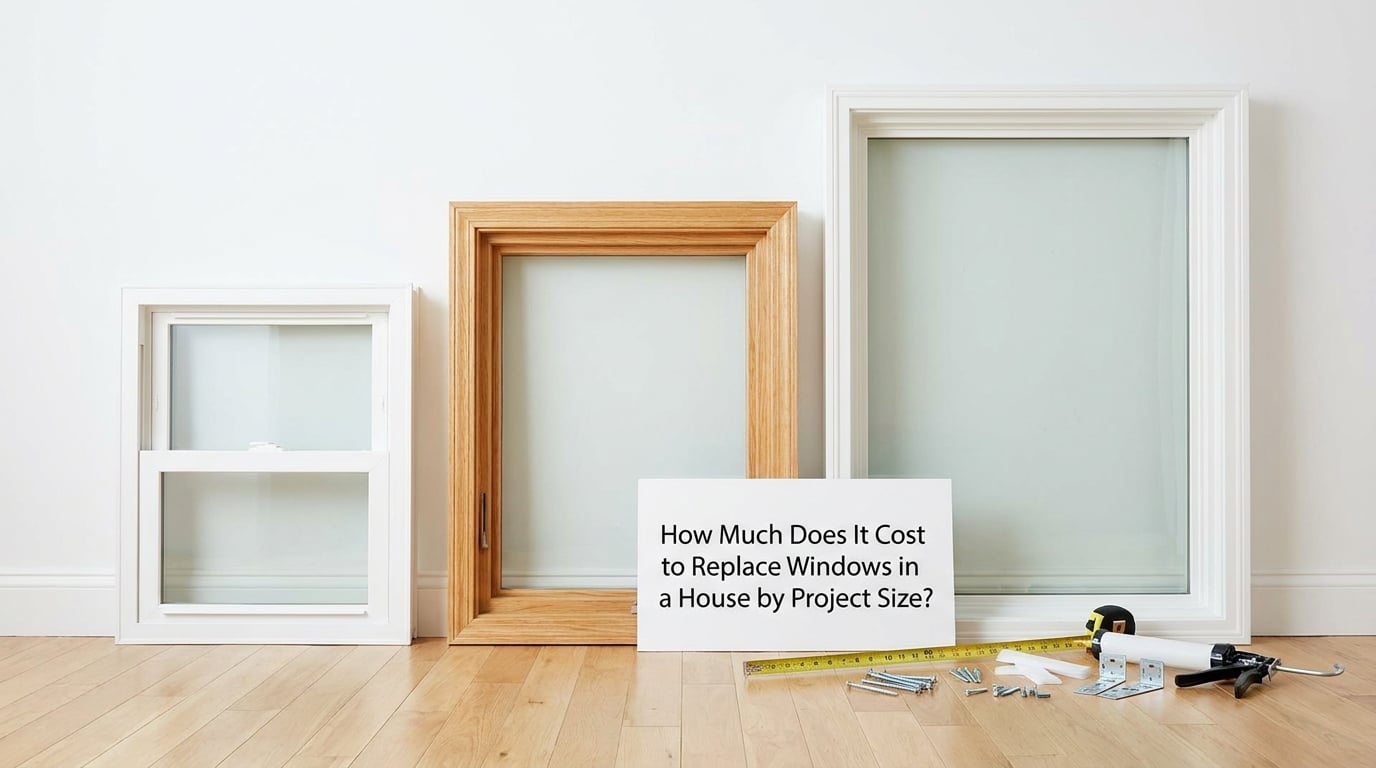
Most 1,500 to 2,500 square foot houses have 12 to 20 openings. Multiply that count by a per-window installed price and you get the project total, which is why the project-size table below is the fastest way to get a realistic budget number before you call anyone.
| Project size | Low estimate (installed) | High estimate (installed) | With typical bulk pricing |
|---|---|---|---|
| 1 window | $600 | $1,200 | Not applicable |
| 5 windows | $3,000 | $5,500 | $2,700 to $5,000 |
| 10 windows | $5,500 | $10,500 | $4,900 to $9,200 |
| 15 windows | $8,000 | $15,500 | $7,200 to $13,500 |
| 20 windows | $10,500 | $20,000 | $9,500 to $17,500 |
A regional cost aggregator puts a low-cost state at $565 to $1,243 per window installed, which works out to $5,650 to $12,430 for a ten-window project before any bulk discount. Coastal wind-borne debris zones quote far higher, with $1,500 to $2,400 per window common for impact-rated full-frame installs. Both numbers are real. The spread between them is geography, not someone overcharging you.
Homeowners notice the same gap. In a long-running r/HomeImprovement thread, one poster shared a Home Depot quote of $13,172.79 for eight vinyl Milgard V400 windows, roughly $1,650 per window, and assumed the windows themselves should have cost $400 to $500. The gap between the unit price and the invoice is normal, and the next section breaks it into pieces you can actually check.
Frame material is the single biggest lever most homeowners control. Vinyl dominates by volume, and the premium tiers exist mainly for appearance and historical accuracy rather than performance.
| Frame material | Typical installed cost per standard window | Notes |
|---|---|---|
| Vinyl | $450 to $800 | Lowest maintenance, most common, widest color range |
| Aluminum | $500 to $900 | Thin frames, more common in warm climates |
| Fiberglass | $650 to $1,100 | Holds shape well, repaints like a wood sash |
| Composite | $700 to $1,200 | Resin and wood fiber blend, easy upkeep |
| Clad wood | $900 to $1,500 | Wood interior with an aluminum or vinyl exterior |
| All wood | $1,200 to $1,800 and up | Highest cost, needs painting on both faces |
Style and size come next. A standard single-hung or double-hung opening is the baseline every other price is measured against.
| Window type | Size band | Typical installed cost | What changes the price |
|---|---|---|---|
| Single-hung or double-hung | Standard 3 to 4 sq ft opening | $450 to $900 | Rough opening repairs, sash weight |
| Slider | Standard to 6 sq ft | $450 to $950 | Larger glass area, track hardware |
| Casement | Standard to 8 sq ft | $650 to $1,300 | Multi-point hardware, hinge and swing clearance |
| Picture window | 4 to 12 sq ft | $700 to $1,600 | Fixed glass means no vent in that wall |
| Bay or bow | Any | $1,500 to $4,000 per unit | Custom sizing, head trim and structural work |
| Skylight | Any | $1,200 to $3,000 | Roof cutting, curb work, interior drywall repair |
Installation method changes the labor line more than the product line. An insert, sometimes called a pocket replacement, drops the new sash assembly into the existing frame and is the cheapest route. A full-frame replacement removes the entire frame down to the rough opening, and that teardown is what you are paying extra for.
| Installation method | Labor per window | Best fit |
|---|---|---|
| Insert or pocket | $300 to $600 | Sound frame, correct size, cosmetic refresh |
| Full-frame replacement | $500 to $800 | Rot, water damage, or a change in shape or color |
| Full tear-out and reframe | $800 and up | Damaged rough opening, structural changes |
One regional publisher builds its estimate from labor hours multiplied by a published carpenter wage and then a contractor markup, arriving at roughly $165 of base labor per standard opening before materials and weatherproofing. It is a useful sanity check on the low end, but real quotes carry a lot more than that number because the per-opening work includes trim, sill pans and disposal.
Region matters more than most buyers expect. A table broken into broad cost tiers reads roughly like this, with the low-cost figure applying to a standard vinyl double-hung insert install and the high-cost figure applying to a premium frame in a high-wage metro:
| Region tier | Examples | Per window installed |
|---|---|---|
| Lower cost | Rural Midwest, parts of the South | $450 to $750 |
| Middle | Midwest metros, Mid-Atlantic, Mountain West | $650 to $1,050 |
| Higher cost | Northeast corridor, Southern California, Seattle, Chicago | $900 to $1,500 |
| Code-driven | Florida coastal, Gulf and Atlantic wind zones, HVHZ Miami-Dade | $1,500 to $2,400 |
A credible estimate itemizes the work instead of quoting a single lump sum. If a bid arrives as one number with no breakdown, ask for a revision before you sign anything.
| Line item | Typical range | What it actually buys |
|---|---|---|
| Window unit | 40 to 55 percent of the total | Frame, sash, glass package, hardware, finish |
| Installation labor | 25 to 35 percent | Removal, setting, leveling, fastening, cleanup |
| Interior trim | $150 to $300 per opening | Casing, apron, stool and, on older homes, jamb repair |
| Exterior trim or brickmould | $100 to $250 per opening | Exterior casing, sill and head flashing, weep holes |
| Weatherproofing | $75 to $200 per opening | Flashing tape or pan, backer rod, exterior caulk, weatherstripping |
| Disposal and haul-away | $75 to $150 per window or a flat fee | Old sash removal, dumpster or truck cost, land fill fees |
| Permit and inspection | $150 to $250 per project | Municipal fee plus a required inspection slot |
| Rot or siding repair | $250 to $400 per opening | Repairing a soft sill or rotted frame before the new unit goes in |
Two charges are worth a direct question. First, any line called labor and miscellaneous wood without a quantity. Homeowners flag that wording specifically because it is where a vague scope hides a markup. Second, disposal fees per window on a large project; a flat project fee is usually fairer once you are past about a dozen openings.
Ask each bidder to state in writing whether the trim, weatherstripping, sill flashing, caulk and haul-away are included or itemized. Two quotes with identical window counts can differ by 30 to 50 percent purely because one of them quietly excluded the exterior casing.
Price transparency is the theme in our site’s other cost breakdowns too, like what a ceiling fan costs to run and how much electricity air purifiers use. The habit is the same: find the line item and check the math.
Count and size do the obvious work. Two identical houses with the same frame material can land 40 percent apart because one has 12 small openings and the other has 12 openings including a bay and two skylights.
Frame and glass configuration sets the unit cost. A double-pane Low-E package with an argon fill is standard in most of the country and is baked into the baseline prices above. Triple-pane typically adds $100 to $200 per window, and laminated impact glass adds considerably more because of the interlayer and the code requirements attached to it.
Access is the cost item homeowners forget. Upper-story openings need a ladder or a lift, and a lift rental can add $300 to $800 for the day. A second-floor bay needs both. If the crew cannot reach the opening from the ground, the estimate carries a premium whether or not anyone labels it as such.
Damage in the opening changes the method. Once a crew finds a soft sill or a rotted jamb, the install stops being a standard replacement and becomes repair work, typically $250 to $400 per opening, and the schedule stretches. Historic districts add another layer: a Massachusetts-area homeowner saw $3,000 to $3,500 per window for 100-year-old windows because the original profiles had to be matched and approved.
Regional labor rates and code requirements set the floor and ceiling. A published state estimate for a low-cost region uses a carpenter wage near $29 an hour and a markup of about 2.84 times to reach roughly $165 of base labor per standard opening, which tells you how much of the labor cost is the wage and how much is the business around it. In wind-borne debris regions, impact glazing is not optional, and the code, not the homeowner, sets the price floor.
Add-ons stack in predictable places. Grids, a specific color, upgraded hardware finishes, a krypton rather than argon fill, and laminated glass each add to the unit. Electrical work, such as moving a receptacle or running a new circuit for a powered shade, is usually subcontracted and shows up as its own line.
Get three written, itemized quotes for the identical scope, and make sure the scope is identical. Homeowners consistently report a 30 to 50 percent spread between the highest and lowest bid on the same 10 openings, and that spread is usually scope or price structure rather than quality. If you want a benchmark for how a detailed line item breakdown should look, read how much energy a solar panel produces and compare how the same team treats the parts versus the whole.
Replace the worst windows first. Drafty or damaged openings, the north side of the house, the bathroom, and any single-pane unit in a cold climate deliver most of the comfort benefit per dollar. A phased project over two or three years also lets you test a contractor before committing the rest of the house.
Keep sound frames where you honestly can. An insert into a sound frame is $300 to $600 in labor instead of $500 to $800, and the product still delivers the new glass package, hardware and weatherstripping. This is not the right call on rotted sills, bowed frames, or when you are changing the window shape or exterior color.
Skip upgrades that do not pay for themselves at your climate. Triple-pane, krypton fill and decorative grids all add cost, and in a mild climate the payback on those options is weak. Compare U-factor and SHGC ratings rather than trusting a label.
Bundle the work. Doing all the openings in one visit is the standard way to get a bulk discount, usually 8 to 15 percent off the per-window price, because the crew only mobilizes once. Doing the work in one visit is also simply less disruptive.
Make the job easier. Clear the interior of furniture, remove window treatments and blinds, keep pets inside, and provide a clear path to every opening, inside and out. Landscaping, driveway access and power for power tools all get priced in when access is awkward.
Check incentives carefully, because the rules move. The federal Section 25C energy efficient home improvement credit ended after December 31, 2025, so do not build a budget around it without confirming the current status. Utility rebates are still worth asking about, and some pay per square foot of glass, with one regional program citing $0.76 per square foot. State programs exist too, sometimes with meaningful grants, and insurance discounts may apply in coastal areas where impact glazing is installed.
Yes, if the existing frame is straight, square and free of rot. An insert, or pocket replacement, drops the new sash and glass into the old frame, and labor usually runs $300 to $600 per window instead of $500 to $800 for a full-frame replacement. It is a poor choice on bowed frames, soft sills, or when you want to change the window shape or exterior color.
Interior casing, apron and stool typically add $150 to $300 per opening. Exterior trim or brickmould runs $100 to $250 per opening. On older homes, jamb or sill repair can push the interior line toward the higher end, so ask whether trim work is included in the quote or itemized separately.
Rules vary by municipality. Many jurisdictions require a permit for structural or full-frame work, and impact-rated glazing almost always needs one, with fees commonly running $150 to $250 for the project plus an inspection. A pure insert replacement is often exempt. Ask your local building department before work starts rather than after.
Triple-pane usually adds $100 to $200 per window and is worth it in cold climates or on the north side of a house where you heat all winter. In mild climates the payback is weak and double-pane with a Low-E coating and an argon fill gets you most of the benefit at a lower price. Compare U-factor and SHGC ratings instead of pane count.
Upstairs, bay, bow and oversized openings cost the most extra. Second-story work needs a ladder or a lift, and a lift rental can add $300 to $800 for the day. A bay or bow unit often runs $1,500 to $4,000 installed because of custom sizing and structural work. Historic districts add approval and matching costs that can double the unit price.
A good quote lists each window by size and style, the frame material and glass package, labor by installation method, interior and exterior trim, weatherstripping and flashing, disposal, permits, and any repair work the contractor expects. It should also state the warranty on both the product and the installation, plus the payment schedule. If a bid arrives as a single number, ask for the breakdown.
For most US homes, how much does it cost to replace windows in a house works out to $7,000 to $25,000 installed, with the typical project falling between $8,000 and $15,000, and $550 to $1,100 per window installed. Start by measuring and inventorying your openings, noting size, style and which frames are actually damaged. Then get at least three written quotes covering the same scope, with materials, labor, disposal, permits and warranty terms broken out on separate lines, and compare those line by line rather than only at the bottom total.
