
How to get rid of gnats in house plants comes down to one fact almost nobody is told: you are killing two different insects. The flies you can see and swat are adults, and they are the easy half. The larvae living in the soil, translucent with a shiny black head, are where most of the life cycle happens and where almost every failed treatment leaves its survivors.
Start with the soil. Fungus gnats are drawn to potting mix that stays evenly damp, so cutting the moisture and treating the top inch of soil does more than any product you can buy. Most infestations clear in two to four weeks if you work both halves at once.
Last updated: October 2026
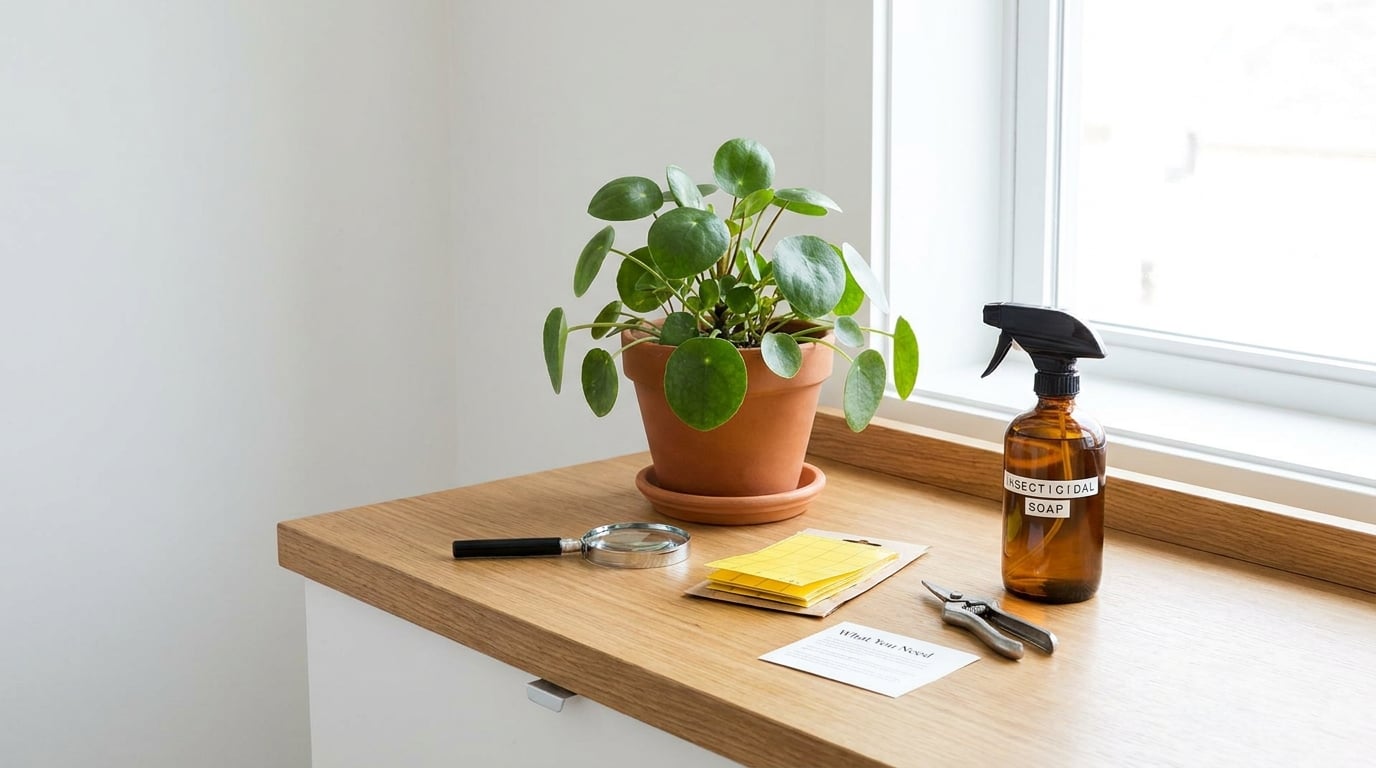
Most of what you need is already in the house. The list below is ordered by the order you will use it.
The whole approach is a routine rather than a gadget, and it is worth lining it up with the rest of your plant care. Our guides to getting rid of weeds naturally and purslane control run through the same idea outdoors: identify what is actually growing, then change the conditions that let it thrive, rather than treating the symptom repeatedly.
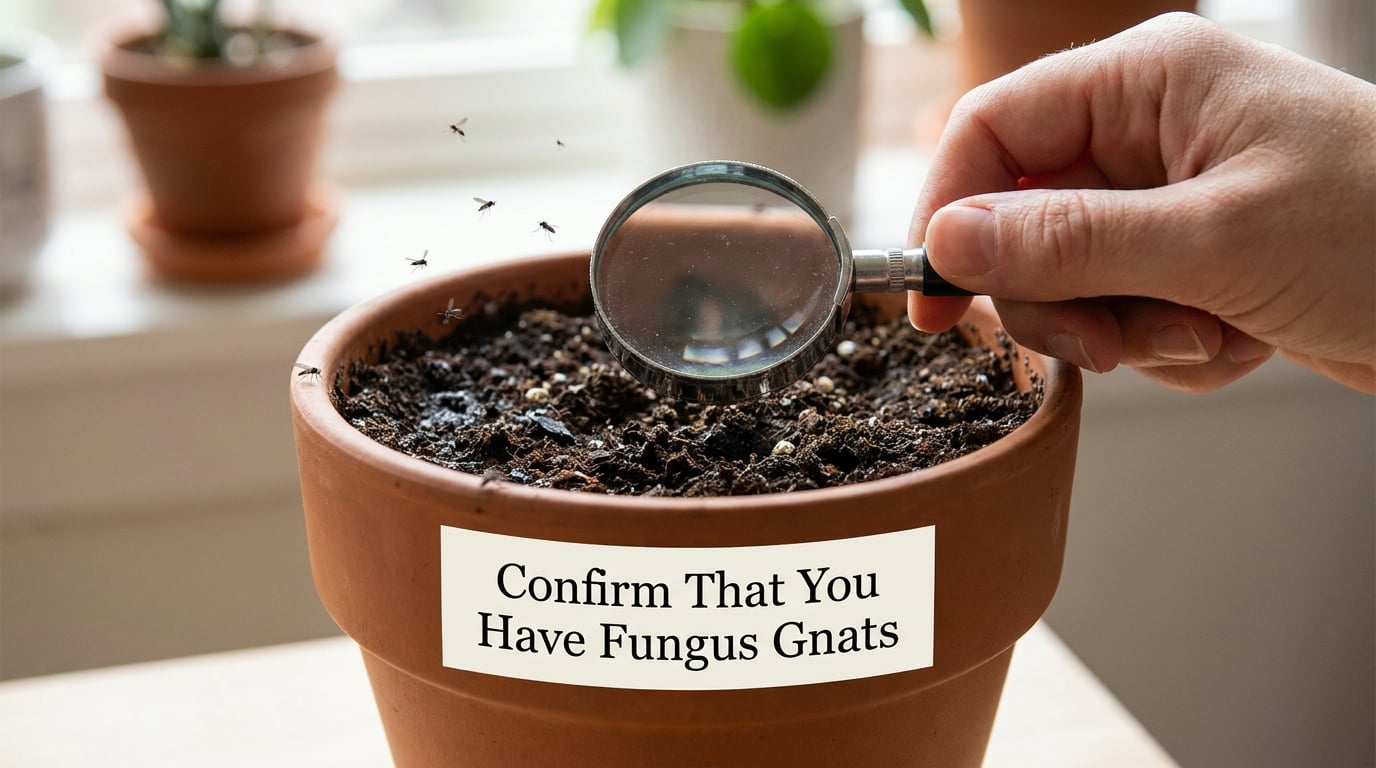
Fungus gnats are small dark flies, roughly 1/16 to 1/8 inch long, with a slender body and thread-like antennae. Watch one settle on the soil and walk rather than hover, and you have your answer. Lift a magnifying glass to the soil surface too: the larvae are legless and translucent with a bright black head, and they leave shiny slime trails on the sides of the pot.
Adults lay eggs in damp organic matter. Three to four days later the larvae hatch, feed for about ten days on fungi, decaying matter and root tips, then pupate for about four days. At 75F that whole generation takes roughly 17 days, which is the single most useful number in this whole guide because it tells you when to expect a drop in the flies you can see.
Other small fliers look similar and need different treatment. This is the check before you spend anything.
| Pest | Size | Look for it | Where it lives |
|---|---|---|---|
| Fungus gnat | 1/16 to 1/8 inch | Dark, slender, long thread-like antennae, a Y-shaped vein in the wing on Bradysia species | Soil surface and canopy above it |
| Shore fly | About 1/8 inch | Dark body, very short bristly antennae, sits still on the soil rather than walking it | Wet, algae-rich soil and saucers |
| Whitefly | About 1/8 inch | White, powdery, moth-like, flies up in a cloud when disturbed | Undersides of leaves |
| Fruit fly | About 1/8 inch | Red or amber, with red eyes | Your fruit bowl, not the plant |
Reach for a hand lens before you reach for a spray. Ten minutes of confirmation saves weeks of treating the wrong pest.
Move the affected pot away from the rest of your collection first. One person on r/HouseplantsUK describes isolating a single monstera and watching the problem stay contained to that pot, and it is the cheapest step in this whole process.
Then take off the top inch of soil. That layer holds most of the eggs and the young larvae, which is why the larvae are concentrated near the surface. Scoop it out, bag it, and put it in the bin rather than the compost heap, where warm soil would give it a very good start.
While you have the pot off the shelf, wipe down the rim, the saucer, the outer wall and the surface underneath. Sticky honeydew-like residue and stray eggs survive there untouched for weeks. Do the same to any cachepot the plant sits in, since that is where water and soil collect out of sight.
Trim off any lower leaves that are yellowing or mushy at the base. It tidies the plant and removes tissue the larvae have been chewing, but it is not the fix on its own.
Overwatering is the reason the gnats are there, and no treatment survives while you keep the soil damp. The rule extension services give is simple: let the top inch of soil dry out completely between waterings. For most tropical houseplants that means watering far less often than people expect.
Switch to bottom watering, which is also the advice at the top of the extension answer that ranks for this query. Set the pot in a tray or tub of room-temperature water for 10 to 20 minutes, then lift it out and empty whatever collected in the saucer after 20 minutes. Standing water in a saucer is a permanent gnat hotel.
Then check the boring stuff. Does the pot have a drainage hole that is not blocked? Is the mix so dense that water sits on top? Empty standing water out of cachepots and decorative planters. A pot sitting inside a decorative cover with no way to drain will stay wet long after you have watered it properly.
One honest note from an extension entomologist on Ask Extension: there is no watering globe that reliably does this for you. If you have bought one and it seems to be working, test it against a pot you water by hand before you trust it.
Two habits close the gap. Water in the morning, so surface moisture has the day to evaporate. And if you get tired of probing soil with a finger, our guide to humidifiers for plants covers the ambient side, though note that a humidifier raises damp air around the plant without fixing wet soil, and gnats care about the soil.
Now the part that actually ends the cycle. Treat the soil, not the air.
Hydrogen peroxide drench. Mix three to four parts water with one part 3% hydrogen peroxide and pour or spray it over the soil surface until it runs out of the drainage holes. It kills larvae on contact and does nothing to the adults, which is exactly why it needs to be paired with traps. Multiple people on r/houseplants describe this as the recipe that finally worked after weeks of other attempts. Keep the solution in a labelled bottle and use it within a few days, since it loses strength once mixed.
Bti, and only the right Bti. Bacillus thuringiensis israelensis is a bacterium that specifically targets the gut of fly and mosquito larvae. Sold under names like Gnatrol, and as the granules in mosquito bite products, it is applied as a soil drench and reapplied about every five days until the adults are gone. One warning worth more than the cost of the product: the Bacillus thuringiensis kurstaki you buy to kill caterpillars on your roses does not work on fly larvae. They are different subspecies, and buying the wrong one is the most common expensive mistake in this topic.
Beneficial nematodes and predatory mites. Steinernema feltiae nematodes hunt larvae in the soil, and Hypoaspis predatory mites eat the eggs. Extension services recommend both. In practice, nematodes are perishable and time-sensitive, so use them the day they arrive rather than storing them.
Repot and replace the soil. When the pot has had the same mix through two treatment rounds, or the plant is wilting from root damage rather than thirst, take it out of the old soil entirely. Wash the pot, cut back dead roots, and repot in fresh pasteurized or soilless mix. You can solarize garden soil at home by spreading it in clear plastic in the sun for four to six weeks, which approximates what commercial pasteurization does.
A top dressing. A layer of coarse perlite or gravel makes the surface less inviting for egg laying and stops it from staying wet. It is a small step, but it keeps working between waterings.
Here is how the options compare, since most people end up trying several.
| Method | Targets | Speed | Relative cost | Pets and kids | Succulents |
|---|---|---|---|---|---|
| Let topsoil dry, bottom water | Habitat | Slow, ongoing | Free | Safe | Safe |
| Small yellow sticky traps | Adults | Days | Low | Safe, keep out of reach | Safe |
| Dilute hydrogen peroxide drench | Larvae | Days to 1 week | Low | Safe at this dilution | Use the weaker mix |
| Bti soil drench | Larvae | 1 to 2 weeks, reapply every 5 days | Medium | Safe once dry, per label | Safe |
| Beneficial nematodes | Larvae | 1 to 2 weeks | Medium to high | Safe | Safe |
| Repot into fresh mix | Larvae and eggs | Immediate for the soil | Low | Safe | Best option |
| Synthetic pyrethrin spray | Adults, short knock-down | Hours | Medium | Keep off surfaces, per label | Not recommended |
Pet and child safety deserves a direct answer, because the honest list of mistakes here is short. Bti, dilute hydrogen peroxide, insecticidal soap used as directed, and a dry top dressing are all fine in a home with a toddler or a cat, provided you follow the label and let sprayed leaves dry before anything touches them. Neem oil is the problem, not the safety category. Its wide-spectrum mode of action and its oily residue make it a poor fit for succulents, and it is the wrong default for a plant that lives in low light and wet air.
One more health note, since nobody mentions it: fungus gnats can carry bacteria including E. coli and salmonella on their bodies. Wash your hands after handling infested soil, and do not eat food over an open pot.
Traps are the visible half of the treatment, and they work best as a measuring tool rather than a cure. The adults you trap never get the chance to lay the next generation of eggs.
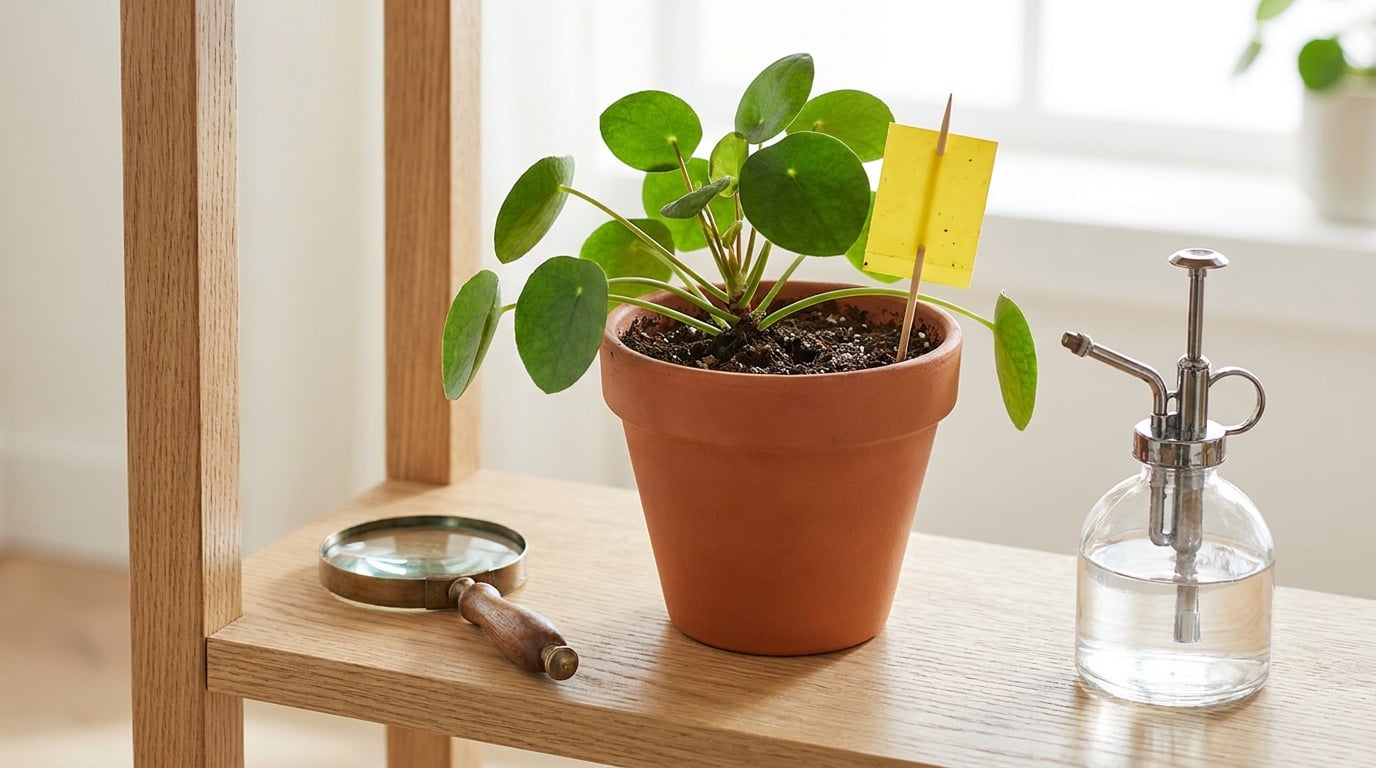
Use the small yellow traps that stake into the soil, one per pot, pushed just above the surface. The big window-style flypaper people keep by the glass catches gnats that are already loose in the room, and on a plant shelf it is close to useless. Replacing traps weekly is fine, because a trap that is thick with gnats has given you its data.
Building your own takes a minute. Cut a yellow card, smear it with a sticky tree-banding gel such as Tanglefoot, tape it to a wooden skewer and stand it in the pot. A shallow dish of apple cider vinegar, water and a couple of drops of dish soap works as a drowning trap, and the soap is what breaks the surface tension so the flies cannot sit on it. Neither replaces a soil treatment, and neither is worth much in a room full of gnats, but they cost nothing and they tell you what is happening.
Raw potato chunks are the underrated option. Press a small piece into the soil and check it in a couple of days: larvae gather at the moisture, which gives you a living count of what is still in the pot rather than what is still flying.
Here is how to tell progress from failure week by week.
Count the gnats on your trap on the same day each week. It is the only honest progress measure, and it beats going by whether the room looks quiet, which mostly tells you the adults are hiding.
Treating only the adults. Swatting, spraying flies in flight and hanging window traps feel productive because the gnats vanish in front of you. Meanwhile the larvae keep feeding and a new generation emerges in under three weeks. Always pair adult control with a soil treatment.
Flushing the pot with plain water. Running water through the soil spreads larvae into the saucer and out onto the shelf, where they can pupate in the runoff.
Using dish soap as a spray on the plant. A vinegar-and-soap dish traps floating flies. Spraying soapy water on leaves burns foliage, and dish soap is not a pesticide. If you want a foliage treatment, use insecticidal soap, which is made for plants, and follow the label.
Buying caterpillar Bt. Bacillus thuringiensis kurstaki is for caterpillars. For fly larvae you need Bacillus thuringiensis israelensis, sold as Bti, Gnatrol, or in the granules used for standing water. Read the active ingredient, not just the front of the packet.
Assuming sticky traps mean the infestation is over. Once a trap is so thick with gnats that you cannot see the yellow, the gnats simply move to the next surface. Count on fresh traps, not on the covered one.
Spraying neem oil on succulents. It is the standard internet answer and the wrong tool for the plant most often infested. For succulents, the dry-soil correction and a repot do more than any spray.
Trusting cinnamon, apple traps used dry, or diatomaceous earth. Ground cinnamon is a weak deterrent at best, and household apple-shaped traps only work baited. Diatomaceous earth needs surface moisture to be effective and does not reach larvae down in the soil profile, so it underperforms badly indoors.
Leaving the affected pot among healthy ones. Adults move, and soil moves with watering. Isolate until you have had a clean trap for two consecutive weeks.
Watering the plant as if it were thirsty when it is wilting from root damage. Heavily infested plants wilt because the larvae have eaten the roots, not because the soil is dry. Fix the soil before you add water, and check the roots when you repot.
None of this is exotic. It is the standard set of corrections we see repeated across the plant forums, and the ones that come up most often are simply watering less and treating the soil.
Once a pot is clean, keeping it clean is mostly about watering habits and where your soil comes from.
Two popular ideas that do not hold up. A Venus flytrap or pitcher plant in the same room will catch some adults, and it looks great, but it will not fix an infestation and it will suffer the same watering mistakes. And a humidifier is about leaf health, not pest control; our broader guide to neem oil sprays for plants covers the spray question honestly, including why neem is a poor fit for the succulents most likely to bring gnats in the door.
Where you are buying or storing soil matters too, and the same storage logic applies outdoors, whether you are dealing with crabgrass in a lawn or weeds in a bed. Untreated outdoor material is where the next generation comes from.
Usually, yes. Fungus gnats are dark, slender flies about 1/16 to 1/8 inch long with thread-like antennae, and they walk across damp soil rather than hovering over it. If they have very short bristly antennae and sit still, you likely have shore flies. Whiteflies are white and powdery and sit on leaf undersides. Check the soil with a hand lens for translucent larvae with a shiny black head, which confirms fungus gnats beyond doubt.
Two to four weeks if you attack adults and larvae together. A fungus gnat generation takes roughly 17 days at 75F: about 3 days for eggs to hatch, 10 days of larval feeding, and 4 days as pupae. Visible flies usually thin out in week two, and trapped counts should be low by week three. Expect an occasional stray fly into week four, which is normal rather than a failed treatment.
Not on the plant. Dish soap is a surfactant, not a pesticide, and spraying it on leaves burns foliage. Its proper use is a few drops in a shallow dish of apple cider vinegar and water as a drowning trap for flying adults, where the soap breaks the surface tension. For anything that touches leaves, use insecticidal soap, which is formulated for plants, test on one leaf first, and follow the label.
Because consistently moist potting mix is exactly what they need, and because larvae often survive the first round. Every watering that leaves the surface damp re-creates the habitat, and any untreated larvae reach adulthood in about two to three weeks, which reads to you as a fresh infestation. Let the top inch dry between waterings, switch to bottom watering, empty the saucer, and repeat the soil drench at five-day intervals until new flies stop appearing.
They cut the numbers but they do not finish the job on their own. Traps only catch adults, and most of the life cycle is spent as larvae and pupae in the soil, which is why trap-only treatment fails so often. Use the small traps that stake into the pot rather than large window flypaper, replace them weekly, and pair them with a soil treatment. A covered trap tells you the adults moved, not that they are gone.
Insecticidal soap is safe when used as the label directs, tested on one leaf first, and allowed to dry where a pet or child cannot lick it. Neem oil is also used indoors, but it is a poor fit for succulents, whose waxy surfaces hold oily residue, and it does little against soil-dwelling larvae. For succulents, the dry-soil correction and a repot into fresh mix are safer and work better than a spray.
To get rid of gnats in house plants, work in this order and do not skip the middle. Confirm the pest with a hand lens, isolate the pot, cut off the top inch of soil, then let the surface dry out and water from the bottom. Treat that soil with dilute hydrogen peroxide or Bti, keep small yellow traps in the pot for the adults, and count the gnats on them once a week.
Two to four weeks is a normal timeline, not a failure. If new gnats are still appearing in week four, the larvae are surviving, and the answer is a repot into fresh pasteurized mix rather than another spray.
