

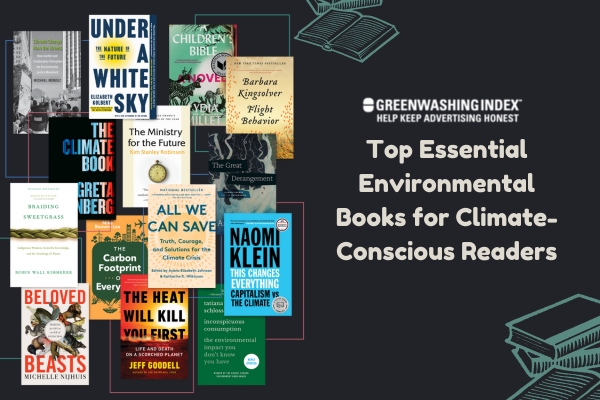
Climate anxiety is at an all-time high in 2026, and more readers are turning to environmental books to make sense of a rapidly shifting planet. Whether you are wrestling with climate grief, searching for actionable solutions, or simply want to understand the science behind global warming, the right book can reframe how you see your role in the movement. The challenge is that the publishing world has flooded shelves with titles on sustainability, conservation, and environmental justice, making it hard to separate genuinely transformative reads from surface-level activism.
We spent weeks reading, comparing, and evaluating the most recommended environmental books of the past several years. Our selection prioritizes scientific credibility, diverse authorship, and a balance between honest climate reporting and genuine hope. Every title on this list earned its place because it offers something distinct, whether that is indigenous wisdom, intersectional analysis, or a practical roadmap for reversing emissions. You will find foundational texts alongside newer releases that reflect where the climate conversation stands today.
This guide is built for climate-conscious readers who want depth without despair. If you have ever finished a book about the planet and felt paralyzed rather than empowered, these ten picks are specifically chosen to avoid that trap. We have organized them so you can quickly identify which book matches your interest, whether that is climate science, environmental racism, or nature writing rooted in traditional ecological knowledge. For those who want to extend their reading practice sustainably, you can also explore sustainable shopping alternatives that pair well with an eco-conscious lifestyle.
Every book below includes our hands-on take on who should read it, what makes the author qualified, and where the book might fall short. Let us walk through the best environmental books available right now, starting with a quick comparison of our top three picks.
Before we explore the full list, here are the three titles we recommend most often. Each earned its badge through a combination of reader reception, author credibility, and the unique perspective it brings to the climate conversation.
The table below gives you a side-by-side snapshot of all ten titles so you can scan key themes at a glance. We have highlighted the central focus of each book to help you match it to your reading goals.
| Product | Features | Price |
|---|---|---|
 |
|
Check Latest Price |
 |
|
Check Latest Price |
 |
|
Check Latest Price |
 |
|
Check Latest Price |
 |
|
Check Latest Price |
 |
|
Check Latest Price |
 |
|
Check Latest Price |
 |
|
Check Latest Price |
 |
|
Check Latest Price |
 |
|
Check Latest Price |
Author: Robin Wall Kimmerer
Publisher: Milkweed Editions
Rating: 4.7 stars
23k+ reviews
Few environmental books have resonated with readers the way Braiding Sweetgrass has since its publication. Robin Wall Kimmerer brings a rare dual identity to the page as both a trained botanist and a member of the Citizen Potawatomi Nation. That combination lets her argue, with both scientific precision and lyrical warmth, that Western science and indigenous knowledge are complementary rather than competing frameworks.
The book reads like a conversation with someone who has spent a lifetime listening to the land. Kimmerer uses stories about sweetgrass harvesting, maple sugaring, and pecan gathering to illustrate principles of reciprocity and gratitude that traditional ecological knowledge has practiced for centuries. Readers consistently describe it as a transformative experience rather than just an informative one.
Forum discussions across sustainability communities repeatedly name this title as the single most recommended nature book for people who feel disconnected from the environment. It works equally well for newcomers to environmental reading and for those who have already consumed dozens of climate titles.
Kimmerer holds a PhD in botany and directs the Center for Native Peoples and the Environment at SUNY. Her academic rigor grounds every claim, while her cultural heritage gives the writing an emotional and spiritual dimension that pure science writing rarely achieves. This is what makes the book feel authoritative without ever feeling cold.
This is the ideal starting point for readers new to environmental books who want something that moves the heart as much as the mind. It also speaks powerfully to educators, gardeners, and anyone interested in how traditional ecological knowledge can inform modern conservation. If you have felt overwhelmed by data-heavy climate science books, Kimmerer offers a human-centered entry point.
Readers looking for policy recommendations or emissions data will not find them here. The book is contemplative by design, and some chapters meander in ways that test patience if you prefer a tight argument structure. Pair it with a solutions-oriented title like Drawdown for a complete picture.
Author: Harriet A. Washington
Format: Audiobook
Rating: 4.8 stars
287 reviews
Harriet A. Washington takes on one of the most underreported dimensions of the environmental crisis in A Terrible Thing to Waste. The book argues that environmental racism is not just a matter of unfair pollution placement but a direct assault on the cognitive development and potential of marginalized communities. Washington builds this case through extensive research linking exposure to lead, industrial chemicals, and other toxins to measurable IQ losses in affected populations.
What makes this book stand out is its refusal to treat environmental justice as a side issue. Washington positions it at the center of the climate conversation, showing how systemic inequality and environmental degradation are inseparable forces. The narrative is urgent without becoming shrill, and the evidence is presented in a way that a general audience can follow.
At a 4.8-star rating, this is the highest-scored title on our list. Readers consistently praise Washington for writing about devastating realities in a way that informs rather than paralyzes, which is exactly what forum users say they want from environmental nonfiction.
Washington documents how hazardous waste sites, polluting factories, and contaminated water sources are disproportionately located in low-income neighborhoods and communities of color. She connects this pattern to lost intelligence, reduced economic opportunity, and generational harm. The book reframes environmental degradation as a civil rights issue with quantifiable human cost.
This book is essential for anyone who wants to understand environmental racism beyond slogans and headlines. It suits readers who already grasp the basics of climate change and want to deepen their understanding of how environmental harm maps onto existing social inequalities. Policy professionals, public health students, and activists will find it especially valuable.
The subject matter is genuinely heavy. Washington does not soften the reality of what marginalized communities face, and some readers may find certain chapters difficult to get through. That honesty is a strength, but go in prepared for an emotionally demanding read rather than a comforting one.
Author: Leah Thomas
Publisher: Voracious
Rating: 4.7 stars
297 reviews
Leah Thomas built a movement before she wrote this book. Through her platform Intersectional Environmentalist, she popularized the idea that the environmental movement cannot succeed if it ignores social justice. The book extends that argument into a full guide for how individuals and organizations can practice a more inclusive form of climate activism.
Thomas writes with the clarity of someone who has spent years translating complex ideas for online audiences. She explains how environmental degradation disproportionately harms communities of color, and she challenges readers to examine the blind spots in mainstream green movements. The result is a book that feels both personal and structural in its scope.
What we appreciate most is how actionable it is. Rather than stopping at diagnosis, Thomas offers a framework readers can apply immediately to their advocacy, purchasing decisions, and community engagement. This makes it a strong pick for people who want to move from reading to doing.
The book unpacks the intersection of racism, classism, and environmental harm. Thomas argues that dismantling oppressive systems is inseparable from protecting the planet, and she backs this up with historical context and contemporary examples. Readers gain a vocabulary for talking about environmental justice that goes beyond surface-level awareness.
This is the right choice for activists, educators, and anyone involved in sustainability work who wants their efforts to be genuinely inclusive. It also serves as an excellent primer for readers new to the concept of intersectional environmentalism who want a welcoming entry point rather than an academic treatise.
If you have already studied environmental justice extensively, some of the foundational concepts will feel familiar. The book is relatively concise, which works in its favor for accessibility but may leave depth-seekers wanting more. Pair it with Toxic Communities for a more academic treatment of the same themes.
Editors: Johnson and Wilkinson
Publisher: One World
Rating: 4.7 stars
977 reviews
All We Can Save is an anthology that collects the voices of dozens of women at the forefront of climate action. Dr. Ayana Elizabeth Johnson and Katharine K. Wilkinson curated this collection to highlight a truth that mainstream environmental discourse often misses, which is that women, particularly women of color, have long been leading the most effective climate work on the ground.
The anthology format is a strength because it delivers many perspectives in a single volume. Essays range from policy analysis to personal memoir, and the inclusion of poetry and art gives the book an emotional texture that straight nonfiction rarely achieves. Readers tell us they return to individual pieces long after finishing the full collection.
This title appears on nearly every major climate reading list, and Google’s AI Overview specifically cites it as a top pick in the climate solutions category. That recognition reflects how well it balances honest acknowledgment of the crisis with a genuine sense of what can still be done.
The book is organized into thematic sections that cover everything from energy and agriculture to grief and collective action. Each section weaves together analytical essays with creative work, so readers process both data and emotion in a single sitting. Standout pieces frequently mentioned in reader reviews cover indigenous land stewardship and youth activism.
All We Can Save is ideal for book clubs, classroom settings, and readers who want breadth over depth. If you learn best through varied voices and formats rather than a single sustained argument, this anthology delivers. It also makes a strong gift for someone beginning their climate reading education.
Because each contribution is relatively short, readers seeking deep analysis of any single topic may feel underserved. The anthology’s power comes from accumulation rather than exhaustive treatment of any one subject. Treat it as an orientation guide that points you toward the writers and topics worth exploring further.
Author: Greta Thunberg
Publisher: Penguin Books
Rating: 4.7 stars
1.1k reviews
Greta Thunberg compiled The Climate Book to do something most individual authors cannot accomplish alone, which is to assemble the current consensus of the global scientific community into a single accessible reference. Rather than relying solely on her own voice, she brought together over a hundred experts to explain how the climate crisis works, what is driving it, and what must happen to address it. The result reads less like a memoir and more like a rigorously sourced briefing for the public.
Since the book first appeared, Thunberg’s role in the climate movement has continued to evolve. She has sharpened her critique of political inaction and corporate greenwashing, and the book reflects that uncompromising stance. Readers who want a clear-eyed assessment of where global emissions actually stand, stripped of political spin, will find that here.
The strength of this volume is its refusal to let readers off the hook. Thunberg repeatedly calls out the gap between what leaders promise and what the science demands. That directness is what makes the book a lasting reference rather than a dated snapshot of a single moment in climate discourse.
Sections cover the physics of warming, the cascading effects on ice sheets and ocean systems, and the equity dimensions of who bears the greatest burden. Expert contributors fill gaps that no single author could cover credibly. This collaborative structure means the science is current and authoritative rather than filtered through a layperson’s interpretation.
This is our top recommendation for readers who want to understand the climate crisis from a scientific standpoint without enrolling in a course. It suits policy-minded readers, students, and anyone who wants to argue from evidence rather than emotion. If you find yourself frustrated by vague climate commentary in the news, this book gives you the data to cut through it.
The book is dense by design. With contributions from so many experts, some sections repeat information that regular followers of climate news will already know. Skimming is perfectly acceptable, and the structure actually encourages jumping to the sections most relevant to your interests rather than reading cover to cover.
Author: Katharine Hayhoe
Publisher: Atria
Rating: 4.6 stars
687 reviews
Katharine Hayhoe approaches the climate crisis from an angle most environmental books ignore entirely, which is the psychology of how we talk about it. Saving Us argues that the biggest barrier to climate action is not a lack of information but a failure of communication. Hayhoe, a climate scientist and evangelical Christian, has spent years engaging audiences that the environmental movement often writes off.
Her central insight is that people change their minds through shared values, not through data dumps or shame. She walks readers through how to find common ground with climate skeptics by connecting global warming to things they already care about, whether that is their children’s future, their faith, or their local economy. The book is as much about human connection as it is about atmospheric science.
Forum users frequently cite climate anxiety and the difficulty of talking to dismissive family members as major pain points. Hayhoe addresses both directly, giving readers a toolkit for conversations that feel productive rather than exhausting.
Hayhoe breaks effective climate communication into a clear process that begins with listening rather than lecturing. She demonstrates how to identify shared values, connect climate impacts to local experiences, and propose tangible actions that feel achievable. Real-world examples from her own speaking engagements make the framework concrete.
This is the book for anyone who has felt defeated after a climate conversation gone wrong. It suits teachers, community organizers, parents, and professionals who need to advocate for climate action in resistant environments. Even if you never plan to debate a skeptic, the empathy skills Hayhoe teaches transfer to every relationship in your life.
Readers looking for detailed policy analysis or a comprehensive climate science primer should look elsewhere. Saving Us is narrowly focused on the communication challenge, and it does that job extremely well. Some may find the optimistic tone at odds with the severity of the crisis, but Hayhoe would argue that despair is the bigger obstacle.
Editor: Paul Hawken
Publisher: Penguin Books
Rating: 4.7 stars
1.9k reviews
Drawdown changed the climate conversation when it first landed by doing something no other book had attempted at that scale. Paul Hawken and a team of researchers ranked one hundred concrete solutions to global warming by their potential to reduce atmospheric carbon, then calculated the cost and net savings of each. The result is a reference book that treats reversing warming as an engineering and policy challenge with measurable answers rather than a vague aspiration.
What keeps this book relevant years after publication is the organization behind it. The Drawdown project has continued publishing updated research, expanding its solutions database, and refining its models. Readers who start with the book can follow the living research through the Project Drawdown platform, which means the knowledge does not go stale the way a static publication might.
The book’s framing matters as much as its data. By ranking solutions from refrigerant management to educating girls in low-income countries, Hawken forces readers to confront which interventions actually move the needle. Some of the highest-impact solutions surprise people who assume renewable energy alone will solve everything.
Each solution includes estimated carbon reduction, implementation cost, and net financial impact. The rankings are based on rigorous modeling rather than opinion, which is why the book has become a go-to reference for policymakers, educators, and business leaders. Solutions span energy, food systems, land use, and social dimensions like girls’ education.
This quantitative structure is what makes the book so rewarding for repeated consultation. You can open it to any solution and immediately understand its potential impact in measurable terms, which turns abstract climate goals into decisions you can compare directly.
Drawdown is the single best choice for readers who want to move from awareness to action with concrete data. It suits sustainability professionals, students, entrepreneurs, and anyone evaluating where to focus their climate effort for maximum impact. If you have ever asked what actually works, this book answers that question directly.
The format is reference-oriented, so readers expecting a narrative will need to adjust expectations. Treat it as an encyclopedia of solutions rather than a book to read straight through. The ongoing Project Drawdown research means some specific figures have been updated since publication, so cross-reference the latest data for the most current numbers.
Authors: Biabani and Figueres
Publisher: TMA Press
Rating: 4.4 stars
47 reviews
Climate Optimism tackles a problem that pervades the environmental reading experience, which is that constant exposure to catastrophic framing can paralyze rather than motivate. Zahra Biabani, known for her Weekly Earth Wins content, teams up with Christina Figueres, a former UN climate chief, to make the case that genuine progress is happening and deserves attention. The book is a deliberate counterweight to the doom-heavy tone that dominates much of the climate genre.
The authors compile documented environmental wins, from renewable energy milestones to ecosystem recoveries, and frame them not as excuses for complacency but as evidence that action produces results. This matters because forum users across multiple communities explicitly ask for books that deal honestly with the crisis without leaving them immobilized by despair. Climate Optimism speaks directly to that need.
What we find valuable is the book’s insistence that optimism is a strategy rather than a feeling. Biabani and Figueres argue that people who believe change is possible are more likely to act, and they back that argument with examples of systemic shifts that already occurred. For readers managing climate grief, this framing can be genuinely restorative.
The book highlights concrete progress on renewable energy deployment, species conservation, international climate agreements, and grassroots activism. Each example is presented with enough context to understand why it matters and how it was achieved. Readers get a sense of the mechanisms behind positive change rather than just feel-good anecdotes.
This is our top recommendation for readers experiencing climate burnout. It suits activists who need to recharge, parents trying to talk to children about the environment without inducing fear, and anyone who has stopped engaging with climate content because it feels too heavy. Pair it with a solutions book like Drawdown for balance.
The review count is lower than our other picks, which partly reflects the book’s niche positioning and smaller publisher reach. Readers seeking rigorous data analysis will find this title lighter on substance than something like Drawdown or The Climate Book. Its value lies in emotional recalibration and motivation rather than comprehensive research.
Author: Dorceta E. Taylor
Publisher: NYU Press
Rating: 4.5 stars
157 reviews
Dorceta E. Taylor provides the scholarly backbone that books like The Intersectional Environmentalist and A Terrible Thing to Waste build upon. Toxic Communities is a deeply researched examination of how environmental hazards end up concentrated in minority and low-income neighborhoods, and Taylor traces the historical and political machinery that produces those outcomes. This is the book to read when you want to understand the structural roots of environmental injustice rather than just its symptoms.
Taylor connects segregation, zoning decisions, industrial siting, and residential mobility patterns to show that environmental racism is not accidental. She documents how deliberate policy choices over decades created the unequal pollution conditions we see today. The research is painstaking, drawing on case studies and historical records that give the argument unshakeable grounding.
For readers who have read the more accessible environmental justice titles and want to go deeper, this is the natural next step. It rewards patience with a level of detail and rigor that trade books simply cannot match.
The book examines multiple case studies across American cities, tracing how zoning laws, discriminatory lending practices, and political maneuvering concentrated industrial pollution in specific neighborhoods. Taylor’s methodology combines historical analysis with contemporary data, giving readers both the origins and the current reality of environmental inequality.
This is our pick for serious students, academics, policy researchers, and anyone whose work touches on environmental justice. It also suits deeply committed general readers who want the most thorough available treatment of how environmental racism operates as a systemic force rather than a series of isolated incidents.
Taylor writes as an academic, which means the prose is precise and evidence-dense rather than breezy. Readers accustomed to narrative nonfiction may find the going slower, but the payoff is a depth of understanding that lighter treatments cannot provide. Approach it as a reference you will return to rather than a single-sitting read.
Author: Ayana Elizabeth Johnson
Publisher: One World
Rating: 4.6 stars
209 reviews
What If We Get It Right? is the newest title on our list and arguably the most imaginative. Ayana Elizabeth Johnson, who also co-edited All We Can Save, asks a question that most climate literature is too afraid to pose seriously, which is what does a world where we actually succeeded look like. Instead of cataloging catastrophe, Johnson assembles essays, poetry, and artwork that construct positive climate futures in vivid detail.
The book’s premise is that imagination is a prerequisite for action. If we cannot picture a desirable future, we will never build the political will to reach it. Johnson brings together contributors from science, policy, art, and culture to sketch what success could look like across energy systems, food production, urban design, and social organization. The result is a volume that feels genuinely original in a genre saturated with warnings.
This interdisciplinary approach sets it apart from every other book on this list. Rather than arguing from data alone, Johnson treats climate change as a challenge that requires creativity and vision as much as engineering. Forum users who ask for hopeful books about climate change without wanting toxic positivity will find this title hits the balance precisely.
Most climate books tell you what is going wrong. This one tells you what going right could look like, grounded in genuine scientific possibility rather than fantasy. Contributors include climate scientists, policy experts, artists, and writers who approach the question from their distinct disciplines. The mix of formats keeps the reading experience dynamic.
This is the book for readers who are tired of being told only what to fear. It suits creative thinkers, planners, organizers, and anyone whose climate engagement has stalled because the future feels predetermined. If you want to reconnect with the possibility that human ingenuity and cooperation can still change the trajectory, start here.
Because it is a recent release, the review base is still growing, and the speculative format will not appeal to readers who want straightforward policy prescriptions. The book’s strength is its generative quality, meaning it sparks ideas rather than handing you a checklist. Some readers will love that quality while others will find it less immediately practical than Drawdown.
These ten environmental books together form a well-rounded climate education that spans science, justice, solutions, and imagination. Now let us look at how to choose among them based on your specific reading goals.
One of the clearest findings from our research is that readers do not want a flat numbered list. They want guidance on which book fits their situation, and that guidance should map to actual themes in the climate conversation rather than generic advice. The categories below reflect how the books on this list cluster around distinct reader needs.
If your priority is understanding the physical science behind global warming, start with The Climate Book by Greta Thunberg. Its expert-contributed chapters cover ocean chemistry, ice dynamics, feedback loops, and emissions trajectories with the rigor of a textbook but the accessibility of a trade publication. Follow it with Drawdown to see how that science translates into ranked solutions.
Readers focused on how environmental harm intersects with racial and economic inequality have three strong options that work progressively. Begin with The Intersectional Environmentalist for an accessible overview, move to A Terrible Thing to Waste for the public health dimension, and finish with Toxic Communities for the rigorous academic foundation. Together they cover the full spectrum from activism to research.
Forum discussions reveal that climate grief is one of the most common reasons readers seek environmental books. If anxiety is your primary obstacle, Climate Optimism offers documented wins that counter despair. Saving Us helps by reframing the crisis around human connection and agency. What If We Get It Right? provides the imaginative fuel to picture a future worth working toward. None of these books deny the severity of the crisis, but all three refuse to let catastrophe be the final word.
Braiding Sweetgrass is the standout here, and it carries the weight of this category almost single-handedly. Kimmerer demonstrates that traditional ecological knowledge is not folklore but a sophisticated system of environmental understanding developed over millennia of careful observation. Readers consistently describe it as the book that most changed their relationship with the natural world.
Drawdown remains the definitive reference for concrete, ranked, costed solutions to global warming. All We Can Save complements it by showing the human leadership behind those solutions, with a focus on the women driving implementation on the ground. Together they answer both what to do and who is already doing it.
Across competitor lists, the most trusted recommendations come from named experts with verifiable credentials. Every author on our list has direct qualifications: Kimmerer is a PhD botanist, Hayhoe is an atmospheric scientist, Johnson is a marine biologist and policy expert, Taylor is a Yale-educated sociologist, and Washington is a fellow at Harvard’s Ethics Center. When choosing environmental books beyond this list, check whether the author has relevant scientific training, lived experience with the issues, or a track record of cited research. Social media following alone is not a credential.
Forum users frequently mention audiobook availability as a deciding factor. Several titles on this list perform exceptionally well in audio format, particularly Braiding Sweetgrass, where the lyrical prose rewards being heard aloud, and A Terrible Thing to Waste, which is available as an audiobook edition. If you commute or process information better by listening, check audio availability before committing to a format. Once you finish your reading list, you can also recycle your old books sustainably to keep your habit eco-friendly end to end.
These environmental books also make excellent eco-friendly gifts for Earth Day or any occasion where you want to share climate-conscious reading with someone in your life.
Braiding Sweetgrass by Robin Wall Kimmerer is widely regarded as the best environmental book for general readers. Its combination of indigenous wisdom, botanical science, and lyrical storytelling has earned over 23,000 reader reviews and consistent recommendations across sustainability communities. For readers specifically interested in climate solutions, Drawdown by Paul Hawken is the most cited reference.
Start with The Climate Book by Greta Thunberg for a comprehensive, expert-sourced overview of climate science. Follow it with Drawdown to understand concrete solutions ranked by impact. If you want a more personal, accessible entry point, Saving Us by Katharine Hayhoe explains the science through the lens of human connection and communication.
For beginners, we recommend starting with Braiding Sweetgrass for nature connection, The Intersectional Environmentalist for social justice context, and Climate Optimism for a hopeful framing that prevents early burnout. These three are accessible, relatively short, and cover distinct angles of the environmental conversation without requiring prior knowledge.
Yes. Climate Optimism by Zahra Biabani and Christina Figueres documents real environmental progress. What If We Get It Right? by Ayana Elizabeth Johnson envisions positive climate futures through essays and art. Saving Us by Katharine Hayhoe frames the crisis around empathy and agency. All three balance honesty about the crisis with genuine evidence that action produces results.
A Terrible Thing to Waste by Harriet A. Washington covers environmental racism and its public health impact. The Intersectional Environmentalist by Leah Thomas provides an activism framework. Toxic Communities by Dorceta E. Taylor offers the academic foundation on how segregation and zoning concentrate pollution in marginalized neighborhoods.
Climate Optimism is our top pick for climate anxiety because it counters doom with documented wins. Saving Us helps by focusing on productive conversation and shared values. What If We Get It Right? channels anxiety into imagination and agency. All three are specifically chosen because they avoid the paralysis that pure catastrophe narratives can produce.
The ten environmental books on this list cover the full spectrum of what climate-conscious readers need in 2026. From Robin Wall Kimmerer’s indigenous botanical wisdom to Paul Hawken’s ranked climate solutions, from Harriet Washington’s environmental racism reporting to Ayana Elizabeth Johnson’s speculative climate futures, these titles together form a reading path that moves from understanding to action to hope.
If you want a single starting point, begin with Braiding Sweetgrass. If you need concrete solutions data, go to Drawdown. If climate anxiety is your biggest barrier, pick up Climate Optimism or What If We Get It Right? If your focus is environmental justice, read A Terrible Thing to Waste and then deepen with Toxic Communities. The right book depends on what you bring to the page and what you need to take from it.
Reading is where climate engagement begins, not where it ends. These authors give you the knowledge, vocabulary, and motivation to act, but the value compounds when you share what you learn. For younger readers in your life, explore our guide to nature books that connect students with the environment, and for more ways to live out what these books teach, check out our sustainable seasonal activities. Pick the title that speaks to your moment, and let it be the first of many.
