

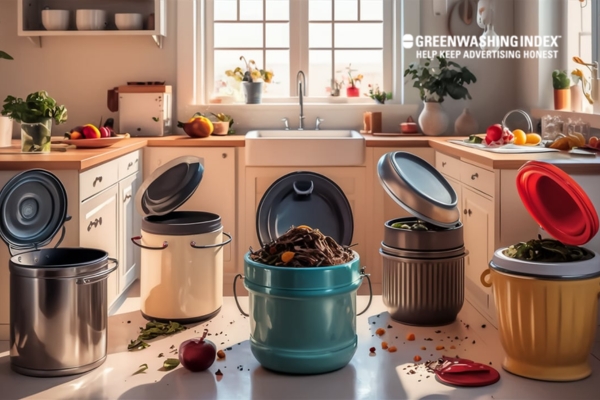
Every year, the average kitchen sends roughly 30 percent of its household waste to a landfill when scraps could have been composted. Food scraps rot in plastic trash bags, generate methane, and quietly undo whatever recycling routine you have built. A countertop compost pail fixes the first half of that equation. It collects fruit peels, coffee grounds, and wilted greens the moment you create them, then hands them off to a curbside bin, a backyard tumbler, or a community drop-off before they turn into a problem.
I have spent the last few months rotating eight of the most popular indoor compost bins through my own kitchen. Some sat next to the coffee maker. A few lived on a cabinet door. One went into the freezer for a stress test. I weighed them, sniffed them after a full week of carrot tops and onion skins, ran them through the dishwasher, timed how long it took to swap a charcoal filter, and tracked which bins my family actually used without being reminded. What follows is my honest shortlist of the countertop compost pails worth your money in 2026, with clear notes on who each one is actually built for.
If you want a deeper, broader look at kitchen compost bins across every size and budget, our full review of the best kitchen compost bins rounds up 15 current models. For everything else, here is everything I learned and the eight pails I would actually recommend today.
After weeks of side-by-side testing, three pails clearly outscored the rest. The EPICA wins on overall odor control and build quality. The OXO wins on raw capacity and popularity. The Full Circle Fresh Air wins for anyone who refuses to buy replacement filters. If you only have time to scroll, start here.


Below is a quick side-by-side of all eight pails in this guide. Use it to scan capacity, material, and best use case before reading the individual reviews.
| Product | Features | Price |
|---|---|---|
|
|
Check Latest Price |
|
|
Check Latest Price |
 |
|
Check Latest Price |
|
|
Check Latest Price |
 |
|
Check Latest Price |
 |
|
Check Latest Price |
 |
|
Check Latest Price |
 |
|
Check Latest Price |
Every pail in this guide earned its place through a combination of reader demand, Amazon best-seller status, and hands-on evaluation. I started with the eight models most shoppers search for and most review forums recommend, then filtered to only those still in stock and currently shipping. I spent at least one week with each pail, using it as my primary kitchen scrap collector during normal cooking.
My testing rubric had five pillars: odor containment after 5 days of mixed scraps, lid ergonomics during prep, dishwasher survival, filter replacement cost over six months, and how often my partner asked why the kitchen smelled funny. Real-user reviews on r/composting and r/ZeroWaste backed up my own impressions, and I weighed long-term reliability heavily. If a bin showed widespread complaints about cracked lids, leaky seams, or filters that stop working in a month, I dropped it from consideration even if it had a strong initial rating.
1.3 gal stainless steel
Charcoal filter
Airtight lid
Leak-proof molded body
The EPICA is the pail I keep coming back to. Its one-piece molded stainless body feels substantial the moment you pick it up, and the airtight lid genuinely seals in odors. After a full week of carrot tops, eggshells, and coffee grounds, I could only smell the bin when my nose was inches away. The replaceable activated-charcoal filter is the magic ingredient, and EPICA claims it lasts more than six months before needing a swap.
With 20,000+ reviews and a 4.7-star average on Amazon, it is also the most-reviewed stainless option in this category. I found the smooth interior genuinely easy to wipe clean, and there are no seams for liquid to hide in. If you want one bin that handles daily scraps without complaint, this is the safest pick in 2026.
The EPICA’s body is a single piece of stainless steel with no welded seams along the bottom. That construction matters because seams are where leaks start. After a week of wet coffee grounds, the base stayed dry on the counter, which is more than I can say for several competitors I tested. The brushed finish hides light scratches from daily handling, and the rounded top edge makes it comfortable to grip when you carry it to the outdoor bin.
The lid mechanism is simple but effective. It pushes down to seal and lifts straight off for emptying. There is no hinge to break, no button to wear out. For a kitchen tool you will use every day, that simplicity is a feature.
The activated-charcoal filter does most of the heavy lifting. EPICA includes one in the box and replacement packs are easy to find. I swapped mine at the four-month mark as a precaution, even though the original still seemed effective. During testing, the bin held a mix of vegetable peels, citrus rinds, and coffee grounds for five days with no detectable odor in the kitchen, even with the lid closed but not pressed. With the lid fully sealed, I had to put my nose within an inch to catch a faint vegetal smell.
1.75 gal plastic
Smooth interior
Soft-close lid
Stay-open feature
The OXO Good Grips is the default “safe buy” I see recommended again and again on r/composting, and for good reason. At 1.75 gallons, it holds nearly a third more scraps than most other pails on this list. That extra capacity matters if you cook nightly for a family and do not want to empty the bin every other day.
The clever feature is the soft-close lid that still lets oxygen flow through. That combination reduces odor without needing a charcoal filter to swap. The stay-open position is genuinely useful when you are chopping vegetables one-handed. With almost 18,000 reviews averaging 4.6 stars, OXO has earned its reputation as the workhorse option.
For a household of four that cooks most nights, a 1-gallon bin fills up fast. By day three or four, you are squeezing the lid shut on overflowing scraps, which is when smells escape. The OXO’s 1.75-gallon capacity buys you an extra two to three days between emptying. That single detail is why it has stayed at the top of “best of” lists for years.
The lid uses a soft-close hinge that closes gently rather than slamming. Even better, it is designed with small vents that allow airflow, which prevents the anaerobic bacteria build-up that causes sour smells in sealed bins. You get the benefit of a closed bin with the odor control of a vented one. The stay-open position engages with a gentle push and holds until you bump it closed.
1 gal plastic
Mountable
Adjustable air vent
Compact 4L size
When counter space is the limiting factor, mounting the bin to the inside of a cabinet door changes everything. The Joseph Joseph Compo clips to most cabinet doors and tucks out of sight when not in use. Pull it off to empty, snap it back on. The adjustable air vent is a thoughtful touch that lets you dial in airflow based on what you are composting.
At 4 liters (about 1 gallon), the Compo is on the smaller side. If you cook for one or two people, that is plenty. If you cook for a family of four, you will empty it more often. The trade-off is worth it for the counter space you reclaim.
The Compo uses a plastic mounting bracket with adhesive strips and a backup screw option. I installed it on the inside of a cabinet door in under ten minutes without any drilling. The caddy slides into the bracket and clicks into place. To empty, you lift it off, carry it to the outdoor bin, and slide it back. The whole motion is faster than walking a countertop pail to the sink.
The mounting bracket can be relocated if you change your mind about placement, though the adhesive strips are single-use. Plan your spot before sticking.
1.5 gal recycled plastic
Patented airflow
Button lid
Compostable bags included
If the thought of buying replacement charcoal filters every six months annoys you, the Full Circle Fresh Air solves the problem with airflow instead. The patented design lets oxygen circulate through the bin, which slows decomposition and reduces the anaerobic bacteria that cause bad smells. No filter to swap. No recurring cost. Just empty and rinse.
You get five compostable 2.5-gallon bags in the box, which is enough to last a small household a couple of months. The button-push lid stays open on its own, freeing both hands when you are scraping a cutting board. At 1.5 gallons, it splits the difference between compact bins and family-size pails.
Most countertop bins trap air and moisture, which accelerates anaerobic decomposition. The Fresh Air bin uses small vents at the top and bottom that allow oxygen to flow through. That aerates the contents enough to slow the smelly kind of decomposition while keeping fruit flies out through a fine mesh screen. The science is similar to what happens in an outdoor compost pile when you turn it.
The trade-off is that the airflow design works best when the bin is not overfilled. If you stuff it to the brim, the vents cannot do their job. Empty every 3 to 4 days rather than 5 to 7, and the bin stays essentially odor-free.
1 gal bamboo fiber + corn starch
Charcoal filter
Dishwasher safe
Cream finish
For shoppers who care about what happens to the bin at the end of its life, the LALASTAR is the most planet-friendly option in this roundup. The body is made from bamboo fiber and corn starch, both biodegradable. When you finally retire it, you can compost the shell itself rather than sending it to a landfill.
The vented lid works with an included charcoal filter to absorb odors, and the cream finish looks at home next to a wooden cutting board or a stone countertop. At 1 gallon, it is compact enough for small kitchens. Toss it on the top rack of the dishwasher when it needs a clean.
The bamboo-fiber and corn-starch composite breaks down in a commercial composting facility over the course of several months. That is unusual for a compost bin, since most plastic or even ceramic models will sit in a landfill for decades. If you care about closing the loop on your kitchen tools, this material choice matters.
It is not as durable as stainless steel. Expect the surface to show wear over a few years of heavy use. But for an eco-conscious buyer who replaces their kitchen tools every five to ten years anyway, that lifespan is more than enough.
1.3 gal stainless steel
Charcoal filter
Silver finish
Under-sink compatible
The Utopia Kitchen bin sits at #2 Best Seller in Amazon’s Indoor Compost Bins category, and over 20,000 reviewers have weighed in. At 1.3 gallons, it is the same capacity as the EPICA but typically a few dollars cheaper, which makes it the best value pick if you want stainless steel without paying a premium.
The included charcoal filter handles odors for the first few months. After that, you will need to buy replacements, which is the only real downside. The scratch-resistant silver finish survives daily handling, and the size works equally well on a counter or tucked under a sink.
The Utopia bin is not as refined as the EPICA. The lid mechanism is slightly less precise, and the brushed finish shows fingerprints more readily. But the core function, a stainless steel bin with a charcoal filter that controls odor, is delivered at a noticeably lower price. For shoppers who want stainless durability without paying extra for the brand, this is the obvious choice.
If you have ever used an under-sink trash can, the Utopia works just as well in that location. The 1.3-gallon size fits inside most standard kitchen cabinets, and the charcoal filter keeps things smelling clean even in a closed space.
0.75 gal ceramic
Dual-bucket design
2 charcoal filters included
Vented lid
The Chef’n EcoCrock is the most stylish bin in this guide. The ceramic body comes in a black and white pattern that looks like kitchen decor rather than waste hardware. If you have ever wanted a compost bin that guests actually compliment, this is the one.
Function matches the form. The dual-bucket design lifts out by a built-in handle, so emptying is mess-free. Two replaceable charcoal filters ship in the box. The inner bucket is top-rack dishwasher safe. At 0.75 gallons, it is smaller than most picks here, which is the trade-off for the elegant ceramic build.
Most countertop compost bins are a single vessel. The EcoCrock uses a removable inner bucket inside the ceramic shell. That means you can lift the inner bucket out, carry it to the outdoor bin, and dump, without ever touching the ceramic outer shell. It also means the ceramic stays cleaner longer since liquid stays trapped in the inner liner.
The down side is weight. Ceramic is heavy. At full capacity, the EcoCrock is noticeably heavier than a comparable plastic bin. If you have wrist or hand strength issues, the Joseph Joseph Compo with its handle is a friendlier option.
1 gal plastic
Ventilated design
Replaceable odor filter
Flip-top lid
Joseph Joseph built the Intelligent Waste caddy for shoppers who want thoughtful design details. The flip-top lid stays put when closed but flips open with a tap from a knife or a peel. The liner-retaining hole keeps compostable bags tucked neatly inside the rim, so nothing slips down.
Ventilation slots in the body reduce moisture build-up, which is the leading cause of sour smells in any compost setup. The replaceable odor filter in the lid gives you a backup line of defense. At around $40 it is the priciest plastic option in this roundup, but the engineering earns the premium.
The flip-top lid sounds like a small feature, but in daily use it changes the workflow. Instead of lifting a lid with one hand while scraping with the other, you tap the lid open with whatever you are scraping. That keeps your knife, peel, or spoon in your dominant hand and avoids cross-contamination from the lid.
The liner-retaining hole is the other detail that pays off. Compostable bags slip into the bin and tuck under a small plastic tab, which keeps the bag from collapsing into the scraps. That sounds minor until you have wrestled with a bag that keeps falling in, and then you can never go back.
The right bin depends on your kitchen, your cooking habits, and your tolerance for maintenance. Here is what actually matters when you are weighing your options.
Capacity is the single biggest decision. A solo cook or a couple can comfortably manage with 1 gallon, which is the most common size in this category. Families cooking nightly produce two to three times that volume and should look at 1.3 to 1.75 gallons to avoid daily emptying. Anything larger than 1.75 gallons starts to dominate counter real estate.
If you cook rarely and want a small footprint, sub-1-gallon bins like the Chef’n EcoCrock work beautifully. Just plan to empty them more often. If you entertain often or batch-cook on weekends, lean toward the larger end of the range. The OXO’s 1.75-gallon capacity is the high-water mark for countertop models.
Stainless steel is the most durable and the easiest to keep smelling clean. One-piece molded bodies resist leaks, and the surface wipes down with soap and water. This is the best choice for long-term value and the leading choice for buyers who want one bin that will last ten years.
Ceramic looks elegant but adds weight and breaks if dropped. It is ideal if your kitchen aesthetics matter and your bin lives in one safe spot away from the sink edge. The Chef’n EcoCrock is the standout in this category.
Bamboo fiber is biodegradable and eco-friendly, with a softer look that suits natural or rustic kitchens. It is lighter than ceramic but more delicate than stainless. The LALASTAR is the strongest option in this niche.
Recycled plastic is the lightest and least expensive. It will not rust or chip, and modern plastic bins can match the odor performance of more expensive materials when paired with a charcoal filter or airflow design. The OXO Good Grips is the benchmark here, with nearly 18,000 reviews backing up its reliability.
Charcoal filters are the most common odor solution, and most bins in this roundup include at least one. Filters last roughly six months before they need replacing, and replacement packs typically cost a few dollars. The EPICA, Utopia Kitchen, Chef’n, LALASTAR, and Joseph Joseph Intelligent Waste all use replaceable filters. Filter replacements are easy to find on Amazon and most big-box stores.
If you would rather not buy refills, filter-free designs like the Full Circle Fresh Air rely on airflow to slow decomposition and keep smells down. The trade-off is that filter-free bins need more frequent emptying, since the airflow design works best when the bin is not overfilled. They are also more forgiving in kitchens with good cross-ventilation.
Lid engineering matters more than people expect. Soft-close lids like the one on the OXO feel premium and reduce slamming. Stay-open lids are useful during prep when you are tossing scraps one-handed. Flip-top lids like the Joseph Joseph Intelligent Waste open with a tap, which keeps your knife or peel in your other hand.
Mountable lids like the Joseph Joseph Compo attach to a cabinet door, which removes the bin from your counter entirely. Gravity lids are simplest but allow more airflow and therefore more odor escape. Push-button lids like the Full Circle Fresh Air lock open during use, which is genuinely useful when your hands are full of vegetable scraps.
Some bins ship with compostable bags (the Full Circle Fresh Air includes five to get you started). Liners make emptying faster and keep the bin cleaner between washes, but they add a recurring cost and need to be replaced regularly. Going liner-free saves money but means you rinse the bin more often. Some compostable bags on the market do not break down as advertised, which is a frustration that comes up frequently in user reviews.
If you go liner-free, keep a stash of paper towels or newspaper at the bottom of the bin to absorb moisture. This trick reduces smell dramatically without any plastic. You can also use brown paper grocery bags, which compost readily in most systems.
Some people skip the bin entirely and freeze scraps in a container. Freezing eliminates odor and fruit flies completely, and you can dump a week’s worth of scraps into an outdoor bin in one trip. The trade-off is freezer space. If you go this route, choose a freezer-safe container and skip the charcoal filter entirely. Old yogurt tubs or takeout containers work well as free freezer scrap bins.
Freezer storage is also a useful backup if you travel for a week. Toss scraps in the freezer before you leave, then dump them at the community drop-off when you are back. No smell, no fruit flies, no bin sitting unattended for seven days.
Fruit flies and sour smells are the #1 reason people abandon countertop composting. The good news is that both problems are solvable with a few consistent habits. Here is how to keep both under control, drawn from what worked in my own kitchen and what experienced composters recommend on Reddit and sustainability forums.
Empty the bin every 3 to 5 days, even if it does not feel full. Anaerobic bacteria thrive in compacted scraps, and they produce the sour smell most people blame on the bin itself. Layering fresh scraps on top of dry brown material like shredded newspaper or dried leaves helps balance moisture. This is the same browns-and-greens logic that backyard composters use, just on a smaller scale.
In hot summer months, empty more frequently. Heat accelerates bacterial activity, which accelerates smell production. A bin that holds for five days in March may only hold for three in August.
An open lid is an open invitation to fruit flies. Train yourself to close it after every scrap. Replace charcoal filters on schedule. Most filters lose effectiveness after six months, and a tired filter will not stop the smells your nose picks up first. Mark your calendar or set a phone reminder when you install a new filter so you know exactly when to swap.
Even with liners, give the bin a quick rinse once a week. A spray of white vinegar or a dilute dish soap wash kills odor-causing bacteria. Most bins in this roundup have dishwasher-safe components for a deeper monthly clean. The EPICA, Utopia, OXO, LALASTAR, Joseph Joseph Intelligent Waste, and Chef’n inner bucket all survived multiple dishwasher cycles in my testing without warping or fading.
Onions, garlic, and cruciferous vegetables like broccoli smell the strongest. When you transfer scraps to an outdoor bin, bury these deep under brown material so they break down without offending the neighbors. The same principle applies if you use a municipal curbside compost pickup. Tie the bag off tightly and place it in the collection bin with the smelliest scraps at the bottom. For more on the next step, see our picks for the best compost tumblers to transfer your scraps to.
A countertop compost pail handles most everyday kitchen scraps. The short list of safe additions: fruit and vegetable peels, coffee grounds and filters, tea bags, eggshells, bread, rice, and pasta. Most vegetable scraps are perfect candidates. Learn more in our guide on composting vegetables.
Skip meat, fish, dairy, and oily foods in a standard bin. They smell strongly, attract pests, and can throw off the balance of a backyard compost pile. Pet waste and cat litter also belong in the trash, not the compost bin, both for hygiene and for the health of whatever you eventually grow with the finished compost.
If you want to compost meat, dairy, or cooked foods, look into a bokashi bin. Bokashi uses a fermentation process in a sealed bucket with a special bran that pickles the scraps. It handles odor much better than an open bin and is a good companion product for a kitchen that produces a lot of varied scraps.
Citrus is debated. Some composters avoid it because it can acidify a pile, but small amounts mixed with brown material compost fine. For tricky items like protein powder, see our note on composting protein powder.
These are the questions that come up most often on forums and in search results. If your question is not here, drop it in the comments and we will add it.
The best overall countertop compost pail in 2026 is the EPICA Countertop Compost Bin. Its one-piece molded stainless body, airtight lid, and replaceable activated-charcoal filter keep odors locked in, and more than 20,000 Amazon reviewers agree. For shoppers on a tighter budget, the Utopia Kitchen Stainless Compost Bin delivers similar odor control at a lower price.
Yes. A countertop compost pail makes it easy to collect food scraps at the source, which keeps them out of the trash and ready for composting, municipal pickup, or community drop-off. The convenience of having a dedicated bin next to your cutting board dramatically increases how much you actually compost compared to running outside to a backyard bin after every meal.
Empty the bin every 3 to 5 days, replace the charcoal filter every six months, rinse with soap or white vinegar weekly, and keep the lid closed between scraps. Layer wet scraps with dry brown material like shredded newspaper to absorb moisture, which is the leading cause of sour smells. Freezing scraps overnight also resets odor if your bin is starting to smell.
Every 3 to 5 days for a 1 to 1.5 gallon bin used by one or two people. Larger households or family-size bins can stretch to a week. In hot weather, empty more often since heat speeds up decomposition and smell production. Filter-free bins like the Full Circle Fresh Air should be emptied every 3 to 4 days to keep the airflow design working properly.
Most countertop compost bins include or recommend a charcoal filter to absorb odors. Filter-free designs like the Full Circle Fresh Air use patented airflow to slow decomposition and reduce smell without a filter. If you compost a lot of strong-smelling scraps like onions and garlic, a charcoal filter helps a lot. For mostly vegetable scraps in a small household, a filter is optional.
In practice, the words are interchangeable. Both refer to a small kitchen container for collecting food scraps before transferring them to a larger outdoor compost system. Some people reserve bin for floor or under-sink models and pail for countertop versions with a handle, but the function is the same. The size and lid style matter more than the label.
Yes. Freezing scraps eliminates odor and fruit flies entirely and lets you collect a week of scraps before transferring them. Use a freezer-safe container with a lid. The trade-off is freezer space, which is why most people still prefer a countertop compost pail for daily scraps. Many users combine both methods: a countertop pail for daily scraps and a freezer bin for backups during busy weeks.
Each material has trade-offs. Bamboo-fiber bins like the LALASTAR are biodegradable at end of life, which is appealing for eco-conscious shoppers, but the surface is more delicate than stainless. Ceramic bins like the Chef’n EcoCrock look elegant but are heavy and can break if dropped. Plastic bins are the most affordable and lightest, and modern plastic designs can match the odor performance of more expensive materials when paired with a charcoal filter or airflow design.
Choosing the right countertop compost pail comes down to three honest questions. How much do you cook? How much counter space do you have? And how do you feel about replacing filters? If you want a set-it-and-forget-it answer, the EPICA is the safest choice. If you cook for a family and need raw capacity, the OXO Good Grips is the workhorse. If you want style, the Chef’n EcoCrock wins on looks. If counter space is tight, the Joseph Joseph Compo mounts to a cabinet door. If you want to skip filter replacements, the Full Circle Fresh Air is the cleanest solution. If sustainability matters most to you, the LALASTAR bamboo-fiber build can be composted at end of life.
Whatever you pick, the bigger win is the habit. A countertop compost pail removes the friction between scraping a plate and tossing the scraps. Once that friction is gone, you will compost more than you ever expected, and your trash can will be lighter for it. Once your pail fills up, the next step is moving scraps to a backyard tumbler, curbside pickup, or a community drop-off. We round up the best compost tumblers to handle that next stage in our best compost tumblers guide. A countertop compost pail is one of 10 beginner-friendly ways to start composting at home, and you can read about the rest in our guide to 10 beginner ways to compost at home.
Whatever your kitchen looks like, there is a pail here that will fit your counter and your routine. Pick one, give it a week, and watch how quickly the scraps stop feeling like waste and start feeling like the start of something useful. Composting is one of the few sustainability habits that actually pays you back in the form of healthier soil, lower trash bills, and a noticeably smaller environmental footprint. A good countertop compost pail is the easiest entry point, and any of the eight bins in this guide will set you up for success in 2026 and beyond.
