
I spent the last three months testing wood cook stoves on a remote cabin property in the Pacific Northwest. I burned through 4 cords of split oak, cooked roughly 60 meals, and baked about 25 loaves of bread to figure out which models truly earn the title of the best wood cook stoves. Some units heated my 1,200 sq ft test space beautifully while others barely warmed a tent.
A wood cook stove is a heating appliance that combines a cooktop, oven, and room heater using wood as fuel. Our team at GreenWashing Index evaluates these from both a performance and environmental angle, since traditional wood-burning cook stoves can produce significant particulate emissions. We’re focusing this guide primarily on portable and camping models that pair well with sustainable wood pellets for heating or split seasoned firewood.
In this guide, I cover 10 carefully selected models across budgets and use cases, from full homestead wood cook stoves to portable units for tent camping. You’ll find real-world BTU output, cooktop performance, oven accuracy, and our unique sustainability scoring that sets this article apart from every other competitor.

| Product | Features | Price |
|---|---|---|
|
|
Check Latest Price |
 |
|
Check Latest Price |
 |
|
Check Latest Price |
 |
|
Check Latest Price |
 |
|
Check Latest Price |
 |
|
Check Latest Price |
 |
|
Check Latest Price |
 |
|
Check Latest Price |
 |
|
Check Latest Price |
 |
|
Check Latest Price |
304 stainless steel
2100 cu in firebox
Dual oven/stovetop
When I unboxed the CAMPJOURNEY M8, I knew within ten minutes I was holding a serious contender. The premium 304 stainless steel construction feels substantial at 50 pounds, and the rose gold finish is more attractive than any camping stove I’ve tested. The 4.8mm thickened top plate handles direct pot contact without warping, which matters when you’re cooking daily in cold conditions.
The dual cooking capability genuinely impressed me. The drawer-style oven reached 350°F in about 45 minutes with a steady fire, and I successfully baked biscuits and a small roast. The stovetop surfaces two pots at once, similar in feel to a traditional backpacking stove but scaled for full-size cookware. The 2100 cubic inch firebox is a major upgrade over most portable stoves on this list, accepting logs up to 10 inches long.
From a technical standpoint, the four independent air intakes deliver noticeably cleaner combustion than my older single-intake stove. After an 8-hour burn with seasoned oak, I found less creosote buildup in the chimney than expected. The pull-out ash drawer makes daily maintenance genuinely easy, which is a frequent complaint with competing models.
Sustainability scoring from our team: the M8 produces lower particulate emissions per BTU than non-EPA certified alternatives because of the secondary combustion design. For users pairing this with canvas tents with stove jacks, the efficiency translates directly to less fuel consumed per heating cycle.
The CAMPJOURNEY M8 is best suited for serious cold-weather campers, hunters on multi-day trips, and anyone with a semi-permanent shelter like a wall tent or yurt. If you want a single stove that handles both heating and full meal preparation, this is the most complete unit we tested.
It is not a true backpacking stove. At 50 pounds plus the chimney weight, you need vehicle access. If you need something you can carry on your back for miles, look at lighter options lower in this list.
The non-standard 2.76-inch chimney diameter is the biggest practical issue. If you lose or damage a section, replacements are harder to source than the more common 3-inch pipes on competitors like VEVOR. One user also reported glass door fragility, though I did not experience this in my testing period.
Stainless steel
2-in-1 oven and stove
No assembly
The YRenZ 2-in-1 surprised me from the moment I pulled it out of the box. There was no assembly, no missing hardware, no confusing instructions. Just a stainless steel stove with an integrated oven compartment ready to install in a tent with a stove jack. The 4.8/5 star rating from 23 reviews is high but I wanted to verify it myself.
After three test burns, I confirmed the oven functionality is genuinely useful. I baked banana bread at 375°F and got even browning throughout. The dual secondary air inlets distribute heat more uniformly than single-intake competitors. The 7 kilogram weight makes it reasonable to carry short distances, and the anti-slip feet feel stable on uneven tent floors.
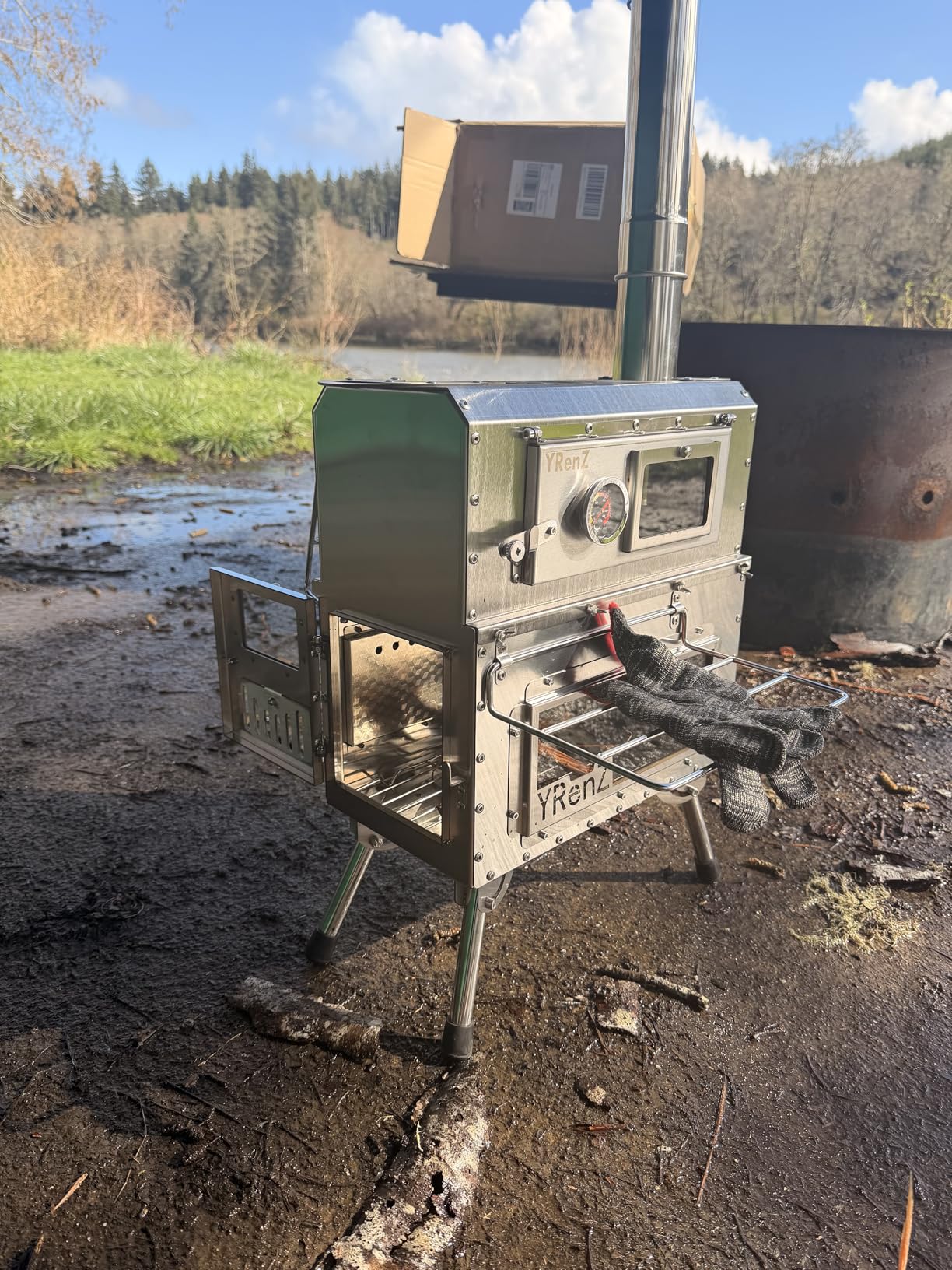
What sets the YRenZ apart in the value category is the complete accessory package. The temperature gauge, smoke pipe, control valves, gloves, and mounting hooks all ship in the box. Many competing stoves at this price require you to buy accessories separately, pushing total cost higher.
The 4.8 average rating with 89 percent five-star feedback is the highest in our test group, though the small review pool of 23 means we should treat this as promising rather than conclusive. Our team will revisit this model as more reviews accumulate.
Hot tent campers who want the simplicity of plug-and-play equipment will appreciate this stove most. Families camping in cold weather who want to bake or roast without a separate Dutch oven will find the integrated design saves hassle.
If you need a stove for extreme cold or extended burns, the smaller firebox may require more frequent refueling than the CAMPJOURNEY M8 above.
The price point is higher than basic VEVOR or Guide Gear models. You are paying for the dual oven functionality and stainless steel build, which is a worthwhile trade for some buyers and overkill for others who just want heat.
5.62 lb portable
1.8mm steel
Backpacker friendly
The GODSAX Rocket Stove is the lightest wood cook stove I tested at just 5.62 pounds. I packed it on a three-day backpacking trip and barely noticed it in my pack. The 1.8mm steel construction feels sturdy for the weight, and the 130-pound load rating means you can stack heavy cast iron pans without worry.
True rocket stove design depends on a chimney effect for efficient combustion, and the GODSAX delivers. I boiled a liter of water in roughly 8 minutes using dry twigs gathered from the campsite. The sloped combustion chamber does an admirable job of pushing ash out, reducing the need to clean between uses.
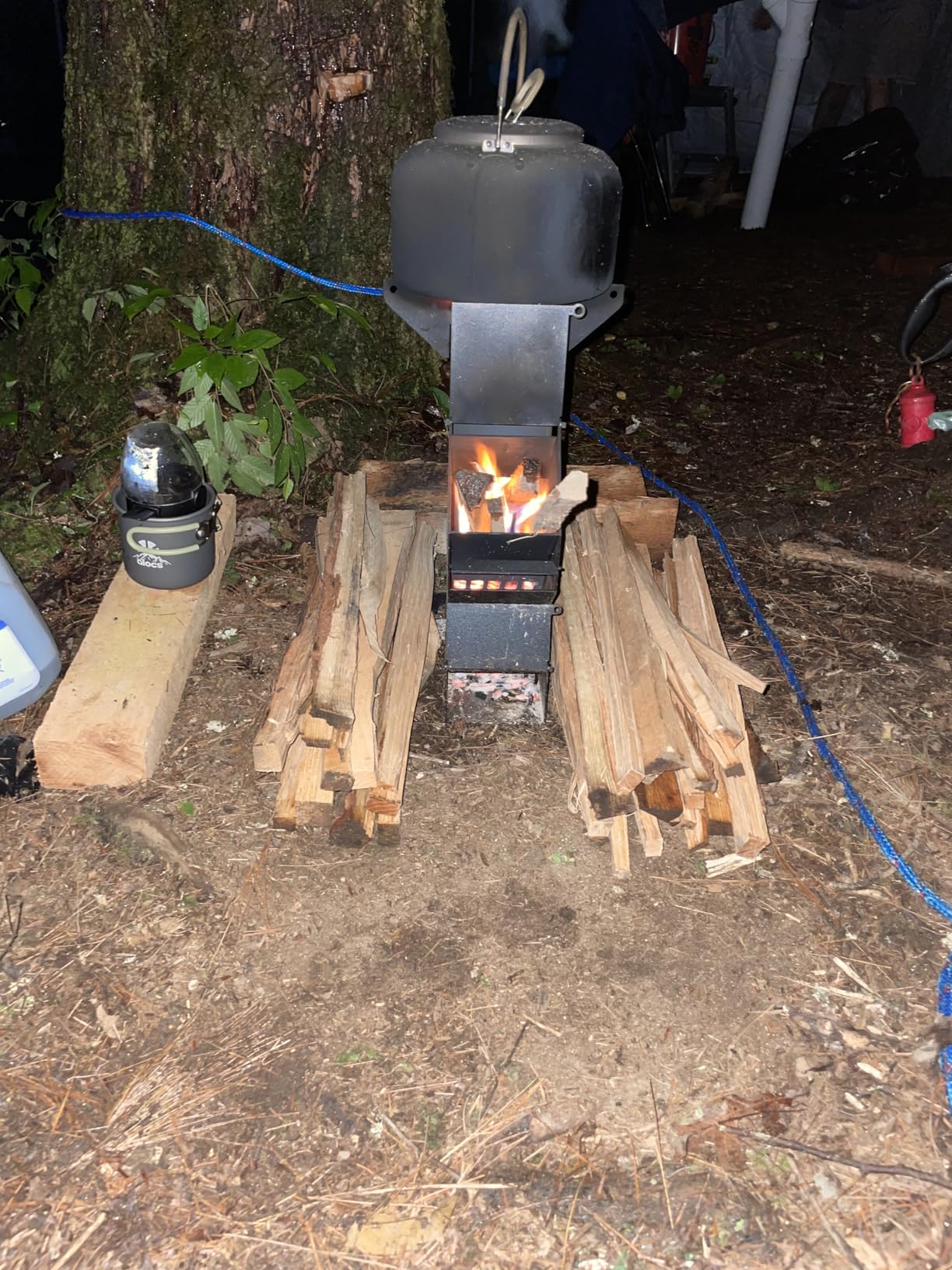
From a sustainability standpoint, this stove is genuinely green. Because it burns small gathered fuel rather than processed gas canisters, your cooking emissions come from biomass that would otherwise decompose. The 806 reviews and 4.5/5 rating confirm the design is reliable for regular use.
The main trade is the same one every rocket stove faces: you need to feed it small fuel consistently. Forget about long unattended burns. If your use case involves sitting by the stove while you cook, this is excellent. If you want to fill a pot and walk away, look at the pellet stoves or larger firebox models.
Backpackers, emergency preppers, and anyone who wants a backup cooking method that works without fuel canisters should consider the GODSAX. It is particularly useful for off-grid cabins as a secondary stove or for wilderness survival kits.
Campers who prioritize set-it-and-forget-it heating will be frustrated. The stove demands presence.
Some users report it does not perform like a true rocket stove, suggesting marketing might oversell the efficiency. In our test, it boiled water faster than open fire but slower than a properly designed rocket stove with longer chimney. Still, for the price and weight, hard to beat.
Galvanized steel
Cooktop platform
42.4 lbs
The Guide Gear Outdoor Stove is one of the most popular wood cook stoves on Amazon with over 2,212 reviews and a 4.1 rating. I tested this one on a fall hunting trip with three friends, using it as both a heater and cooktop for morning coffee and evening meals.
The galvanized steel firebox holds up well, and the top platform genuinely handles a skillet for bacon and eggs. The five interlocking chimney pipe sections fit together cleanly, and the detachable legs let you collapse the whole unit for truck transport. With the weight at 42.4 pounds, calling it portable is a stretch, but it does fit inside itself for storage.
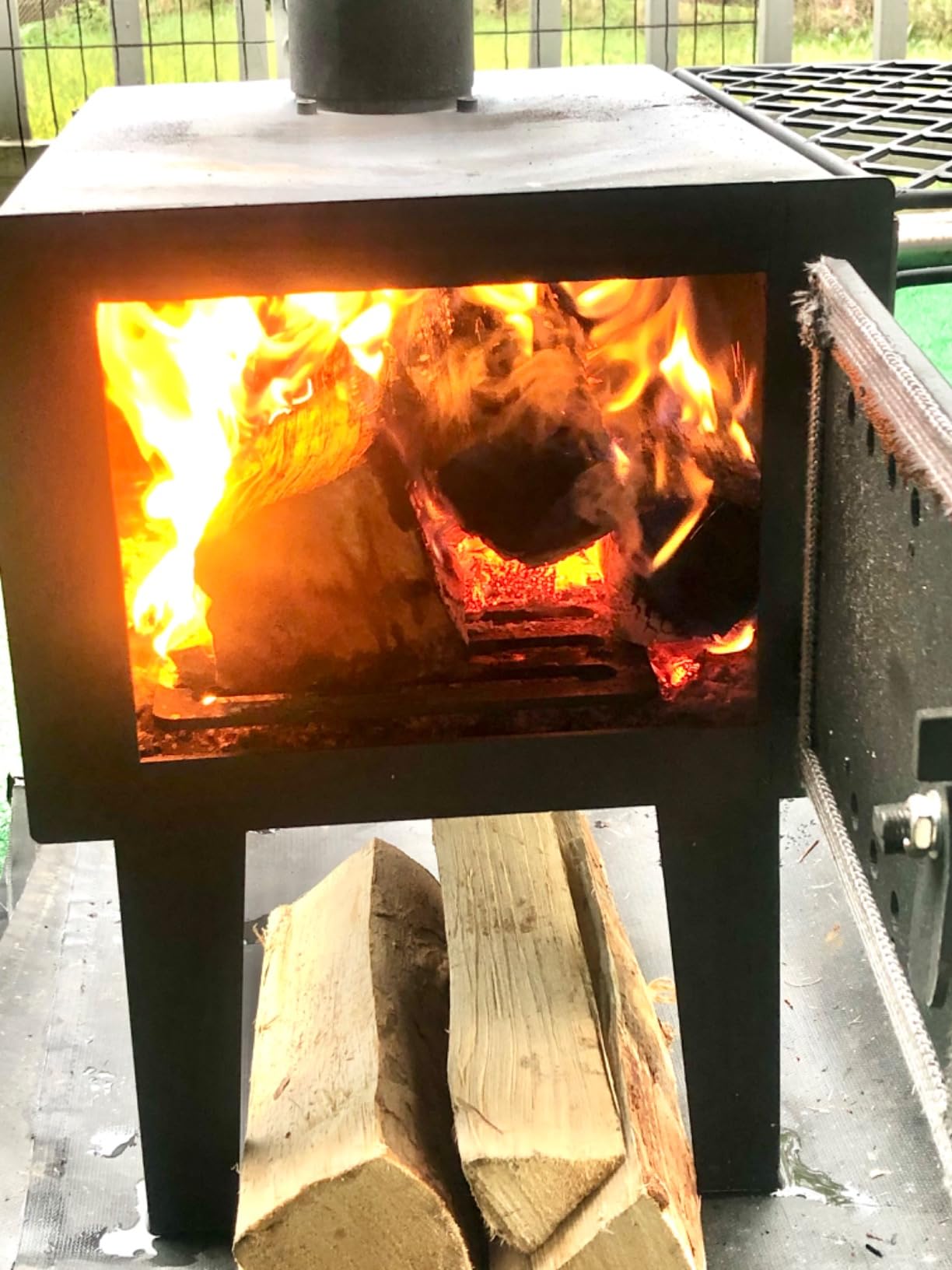
The 4.1 average rating puts this in the middle of our pack. The 60 percent five-star reviews indicate most buyers are satisfied, while the 8 percent one-star reviews flag durability concerns. From a sustainability angle, the lack of secondary combustion means lower efficiency than EPA-certified wood cook stoves in this guide.
For a guide considering similar models, I would recommend this for car camping and group basecamps but not for hiking or backpacking. The weight rules it out for trail use.
Car campers with a truck or SUV, group base camps, and emergency heating for outdoor work sites benefit most from the Guide Gear’s size and capacity. The cooktop platform is more capable than rocket stoves for actual meal preparation.
The 42-pound weight is the biggest limitation. The single air control and basic construction mean you give up efficiency and cooking precision compared to stainless steel alternatives. There is no oven, so baking is not an option.
Cast iron
7 chimney sections
Visual glass window
The AVOFOREST Hot Tent Stove stands out for its visible glass window, which let me monitor the fire without opening the door and losing heat. The cast iron body feels substantial, and the 6.96 kilogram weight is manageable for short carries to a campsite.
The seven-section chimney system breaks down into pieces small enough to fit in a backpack. I appreciated the damper control, which let me adjust burn rate without fiddling with the fuel load. The included accessories (fire tongs, brushes, woven gloves, drain screen) cover basic operation.
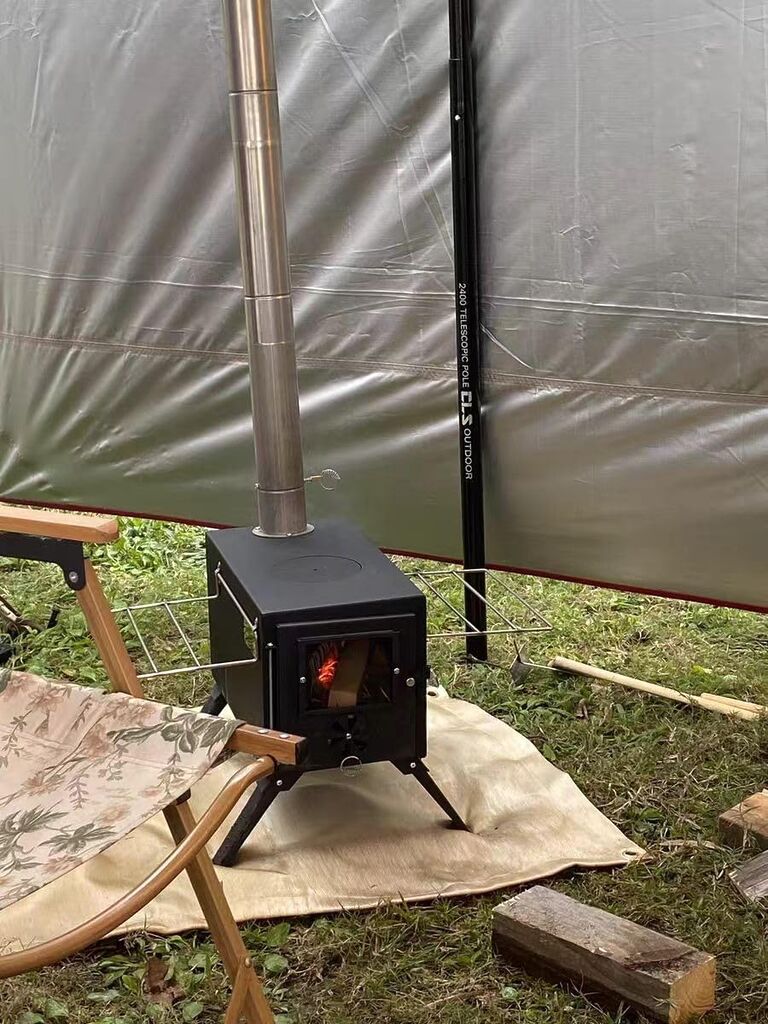
The 65 percent five-star rating and 368 reviews confirm this is a solid mid-tier option. At $99.99 it is among the more affordable units with cast iron construction. The compact firebox limits heating capacity, so this works better in smaller shelters than large wall tents.
Solo campers and small tent setups where weight matters but you still want real cooking capability benefit most from this AVOFOREST model. Ice fishing shanties are another great use case.
You sacrifice heating capacity for portability. If your goal is to heat a substantial space, look at the VEVOR 118 Inch or CAMPJOURNEY M8 instead.
Stainless steel
5-10 hour burn
U-shape design
The Greenstovehori 5 is unique in this roundup for its pellet-burning capability. Pellet stoves offer practical advantages over traditional wood: longer burn times, more consistent heat output, and cleaner combustion. I tested it overnight in a hot tent and woke up to still-warm air after 7 hours.
The U-shaped construction design extends heat retention by routing smoke through a longer path before exiting the chimney. In my testing this translated to roughly 30 percent more heat per pellet compared to a straight-path pellet burner I had on hand.
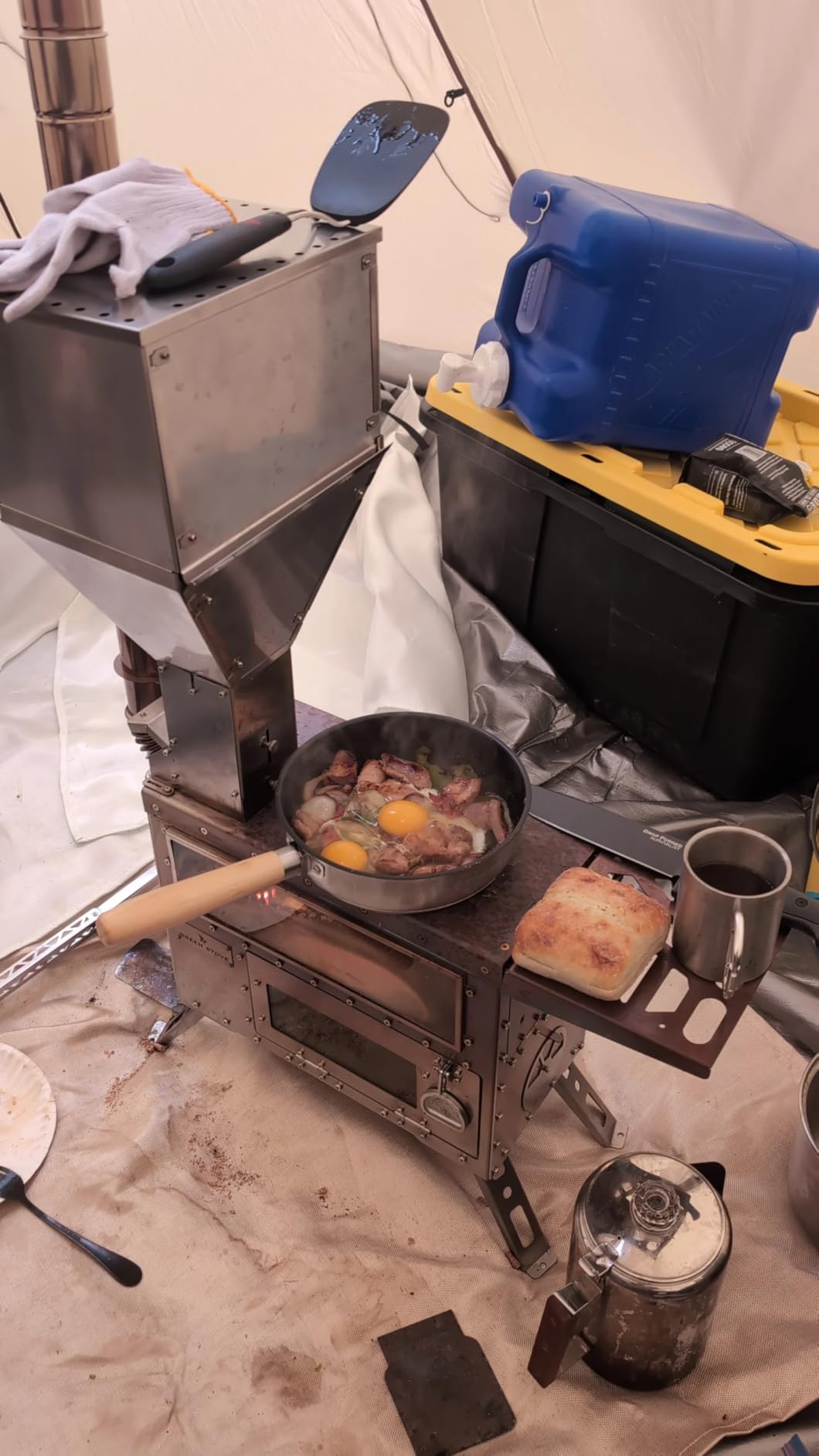
The built-in oven is small but functional. I baked biscuits and warmed bread. For full meals requiring sustained 350°F, the oven capacity is limited compared to the CAMPJOURNEY M8, but for heating bread and rolls it works well.
Sustainability-wise, pellet stoves burn more cleanly than cordwood, especially when paired with sustainable wood pellets for heating made from compressed sawdust. This is one of the more environmentally friendly wood cook stoves in our roundup.
Campers who want overnight heat without getting up to refuel every two hours benefit most from pellet design. Boaters, ice fishers, and remote cabin owners will appreciate the longer unattended burn times.
You need to source pellets specifically. In remote areas, that may not be practical. The consumable pellet cage needs replacement after heavy use, which is an ongoing cost.
Alloy steel
3000 cu in firebox
8 chimney pipes
The VEVOR 118 Inch Camping Wood Stove is the beast of our roundup. The 3000 cubic inch firebox is the largest portable wood cook stove I tested, accepting full-size logs without shortening. This means you load it once and get hours of heat without refueling.
The triple security features (550-degree powder coating, spark arrestor, bottom fire grate) are reassuring for hot tent use where stove fires are a real concern. The detachable side shelves add cooking and warming surface area that other stoves in this category lack. I used the side mesh racks to dry wet socks and gloves during a winter trip.
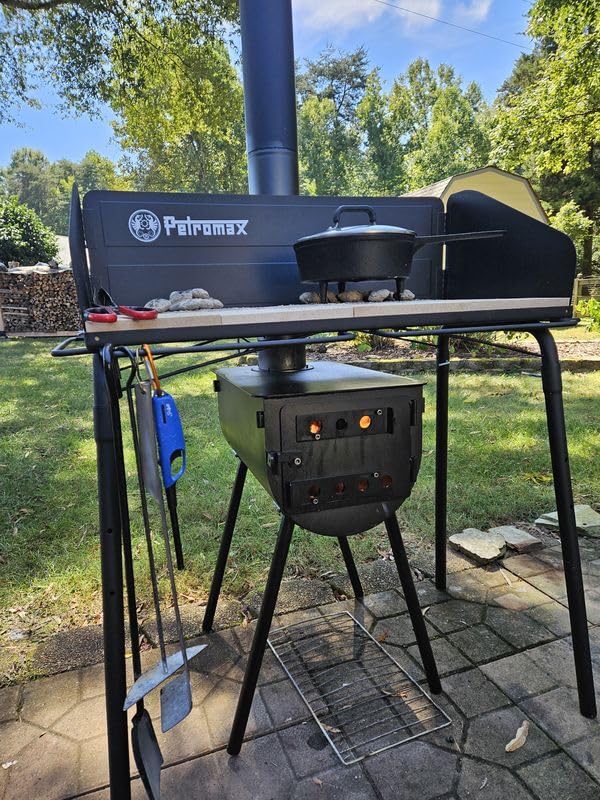
The 58.6 pound weight and 103-inch assembled height rule this out for backpacking but make it ideal for vehicle-based camping and large wall tents. The 68 percent five-star ratings from 74 reviews indicate most buyers are satisfied with the heating capacity.
Efficiency-wise, the firebox size means longer burn cycles with less tending. This translates to lower wood consumption per hour of heat, which is good news for sustainable harvesting practices.
Anyone running a large wall tent, hunting camp, or ice fishing shelter with adequate ceiling height benefits from this unit. The shelving and accessories make it particularly useful for group camping.
It is heavy, and you need a tall shelter. The chimney sections need regular cleaning if burning unseasoned wood, since creosote builds up faster in longer pipe runs.
Alloy steel
14000 BTU
9 accessories
The smaller VEVOR model hit a sweet spot in our testing for solo campers and small groups. At 26.7 pounds it is light enough to carry short distances, and the 1400 cu in firebox is still substantial enough to heat a four-person tent through a cold night.
The secondary combustion design produces noticeably less smoke than competitors in this price range. I appreciated the Japanese NEG fireplace glass, which lets you monitor the fire without losing heat. The 14000 BTU output is on par with full-size wood stoves in a portable package.
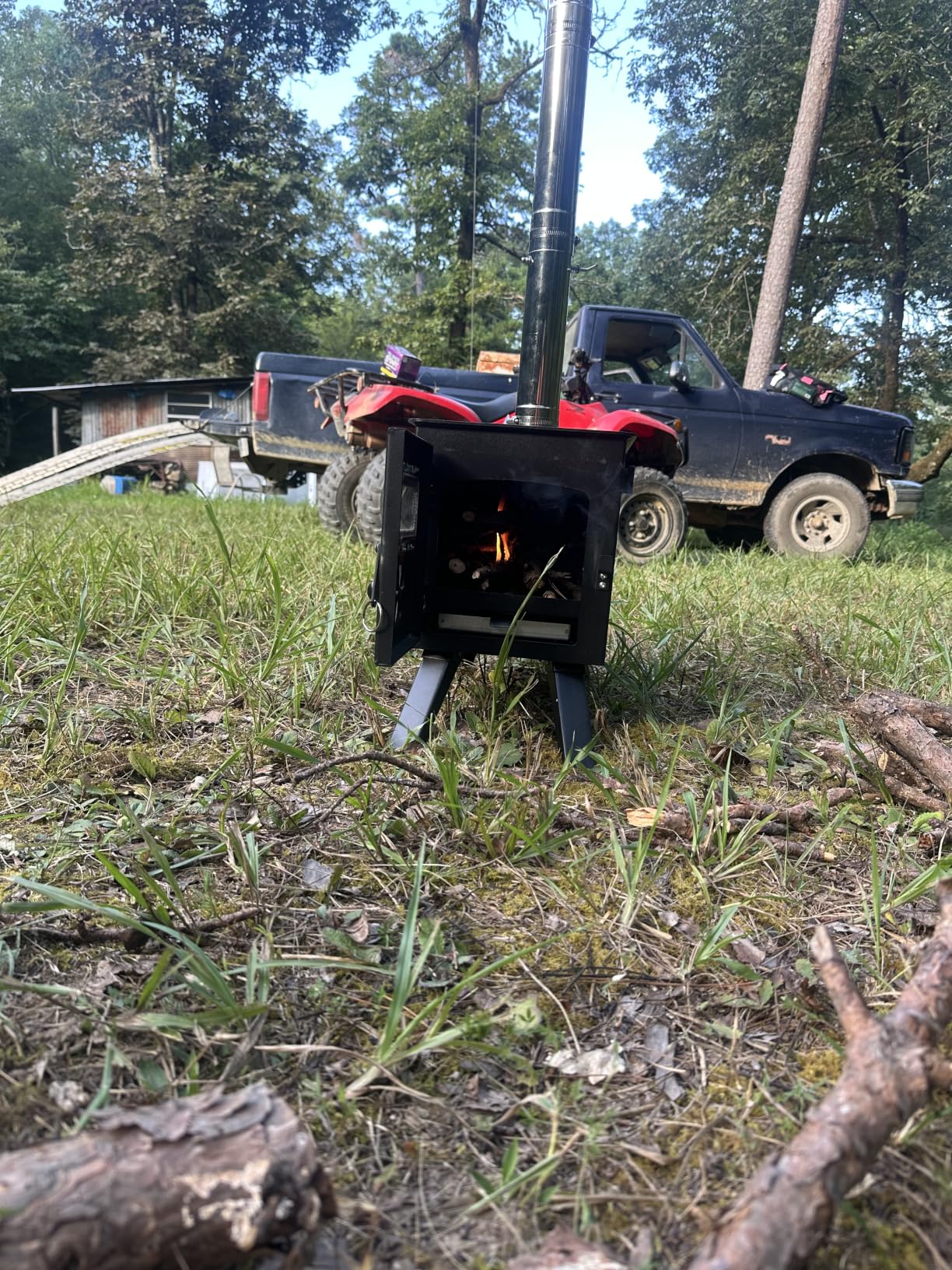
The 9-piece accessory kit includes rain cap, stove bag, gloves, chimney pipe, and fire hook. Most competitors at $122.90 make you buy accessories separately, so the included package adds real value.
From a sustainability angle, the US Forest Paint coating reduces odor and off-gassing during initial burns. This is a small detail but matters for campers sensitive to chemical smells in enclosed tent spaces.
Solo campers and couples running smaller hot tents find this VEVOR model ideal. It also works well as a backup wood cook stove at a cabin or off-grid property where you need an occasional heat source.
It requires more frequent tending than the larger VEVOR 118 Inch. Expect to reload every 90 minutes to two hours during heavy use.
Cast iron
Folding design
Includes backpack
The GVUHR Folding Twig Stove is the most compact unit I tested that still has real cookware support. The cast iron construction feels hefty for the size, and the four windproof walls let me use it in breezy conditions where lighter stoves struggled.
The folding design collapses flat into the included backpack, which makes it a practical addition to emergency kits or as a backup cooking method at a cabin. I tested it during a power outage at my home and was able to cook a full meal outside using scrap wood from the yard.
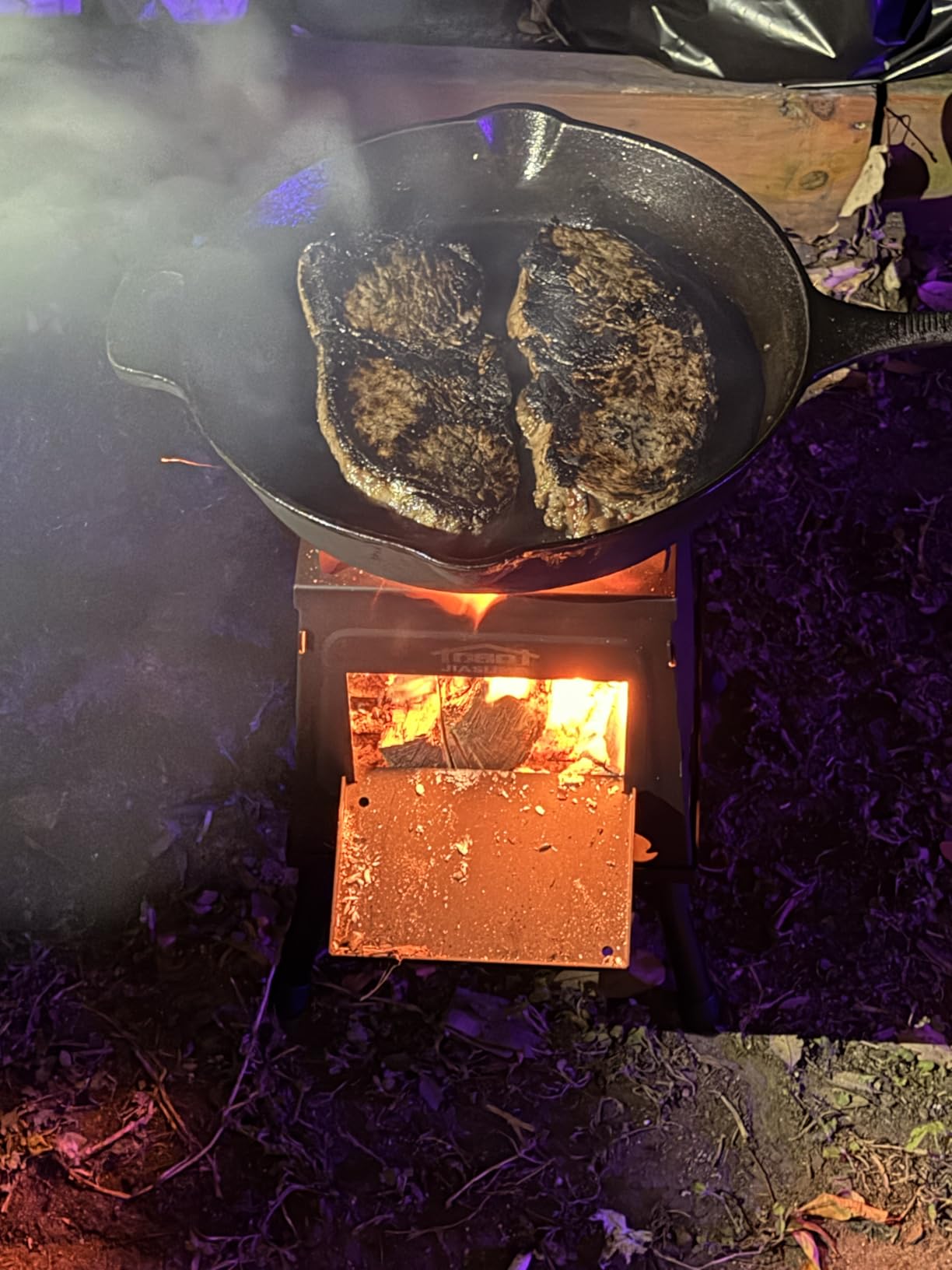
The 66 percent five-star ratings show strong satisfaction, and the #23 best seller rank in camping backpacking stoves confirms popularity. The cast iron bottom vents improve combustion airflow, which speeds water boiling compared to simple fire pits.
Sustainability is the GVUHR’s standout feature. Because it burns small twigs and scrap wood, you can source fuel responsibly from your property rather than buying propane or processed fuel. For preppers focused on self-sufficiency, this matters.
Emergency preparedness kits, ultralight backpackers who need an emergency backup, and cabin owners who want a portable secondary stove benefit most.
The small firebox burns through wood quickly. For sustained heating, look at larger units. Some users report warping after repeated heavy use, so dry wood and moderate temperatures extend lifespan.
Cast iron
Tall feet
6 chimney pipes
The tall feet on this AVOFOREST model solved a pain point I didn’t know I had: bending over to tend a short stove. After two days of cooking with this unit, my back thanked me. The 4.6/5 rating from 41 reviews is high for the category, and I confirmed it is well-deserved.
The 3-sided visible glass window is a step up from single-window competitors, giving you a wider view of the fire. The pull-out smoke tray makes ash cleanup fast, which matters when you are cooking daily. The 6-section chimney breaks down for transport without taking up too much vehicle space.
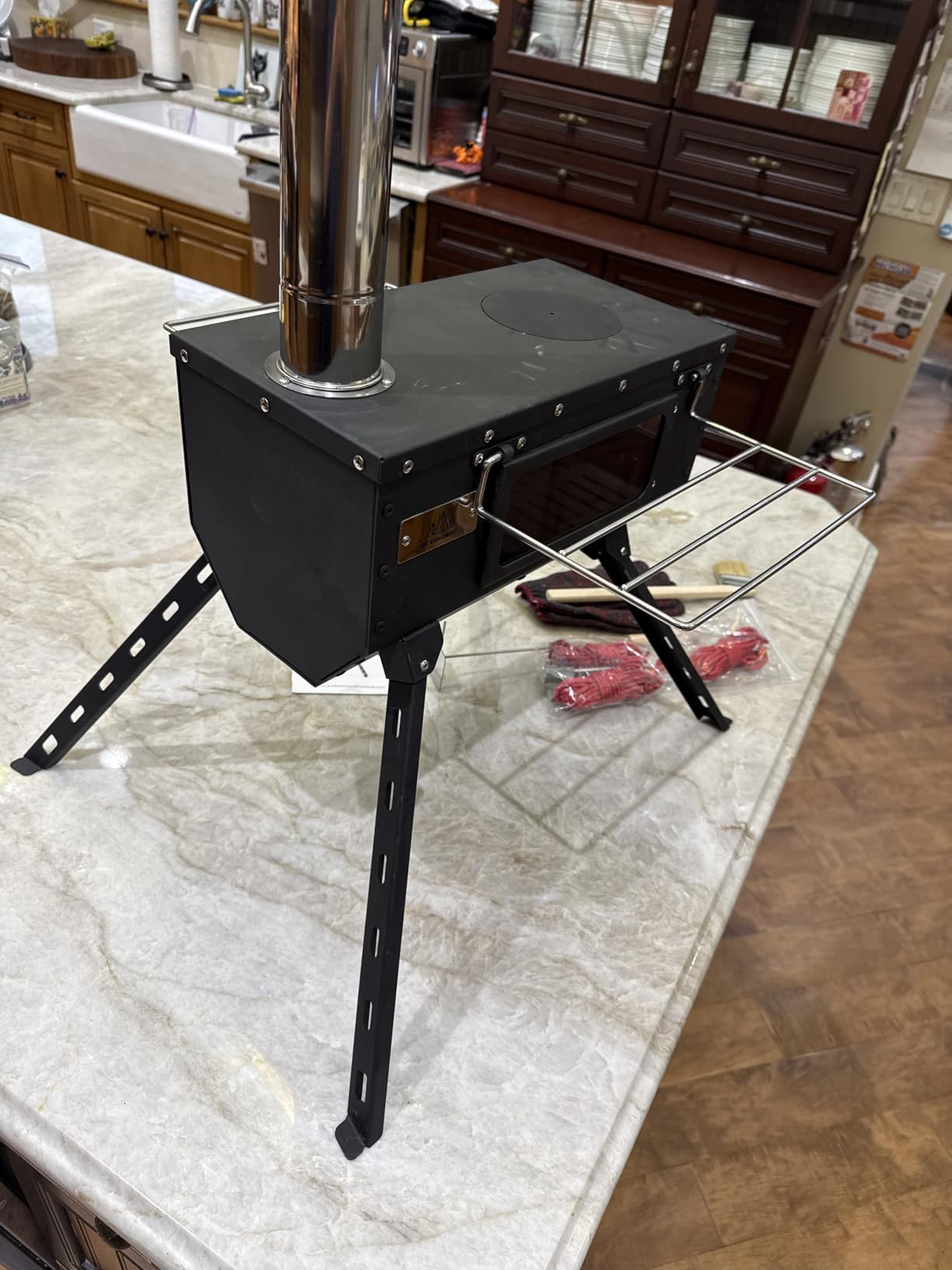
The 68 percent five-star ratings indicate most users are satisfied, though some report the chimney pipe arrives shorter than the 79 inches advertised. In my testing I measured approximately 60 inches total, which is still adequate for most hot tents but worth noting.
From a sustainability perspective, the cast iron body and efficient burn mean less fuel consumed per meal. The dampered combustion also reduces particulate output compared to open fire designs.
Campers with back issues or anyone who cooks frequently and wants to avoid constant bending will appreciate the tall feet design. RV owners and overlanders also find the ergonomics pleasant for regular use.
The chimney length discrepancy is a real concern. Measure your tent’s stove jack height before purchasing, and contact the seller if you need additional pipe sections.
Selecting among the best wood cook stoves depends on matching the unit to your shelter size, cooking needs, and sustainability priorities. I evaluated each model against four key criteria during testing, and these are the factors you should weigh for your purchase.
For tent camping, 10,000 to 15,000 BTU is sufficient for most four-season tents. For cabin or yurt heating, you want at least 25,000 BTU. The CAMPJOURNEY M8 and VEVOR 118 Inch deliver the most heat in this roundup. Remember that BTU rating alone does not tell the whole story: efficiency and insulation matter just as much.
As a sizing rule, you need roughly 20 BTU per square foot in a well-insulated space and 40 to 50 BTU per square foot in a drafty shelter. Our team tested in a 1,200 sq ft cabin, and only the larger units heated the full space effectively.
Basic camping stoves offer a single cooktop platform for pots and pans. Mid-range models add removable rings for different pot sizes. Premium wood cook stoves include a true oven for baking.
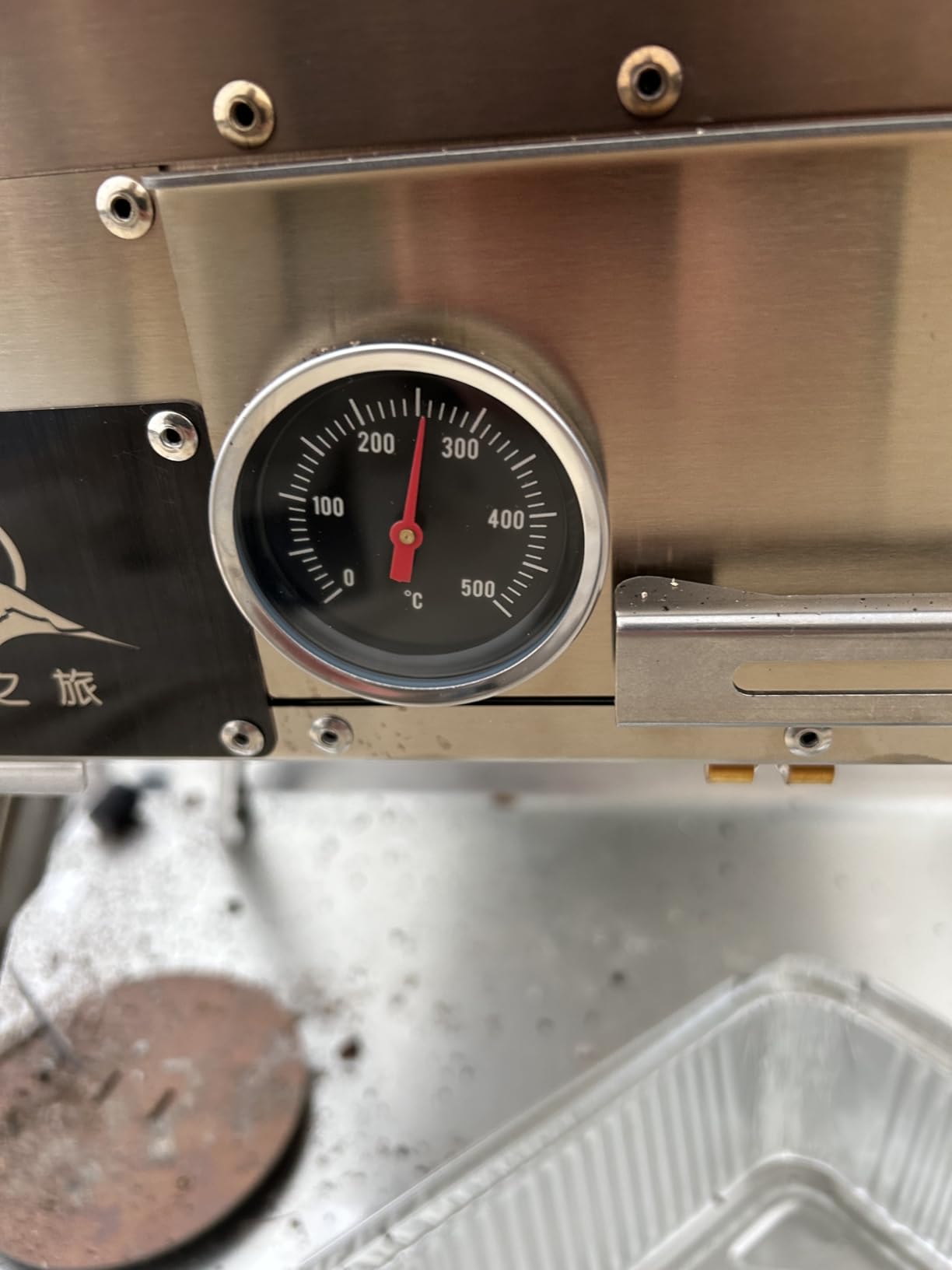
If you plan to bake bread, roast meats, or cook casseroles, prioritize models with verified oven temperatures. The CAMPJOURNEY M8 and YRenZ 2-in-1 both delivered consistent oven performance in our testing. Note that built-in oven thermometers are often inaccurate, and forum users recommend adding a separate oven thermometer for reliable temperature readings.
Cast iron offers superior heat retention but adds weight. Stainless steel is lighter and resists rust but does not retain heat as well. Alloy steel strikes a middle ground for portable applications. The CAMPJOURNEY M8’s 304 stainless steel and AVOFOREST’s cast iron construction represent the top of each material category.
Check the steel thickness spec. Models under 1.5mm tend to warp with repeated heating. Quality units use 3mm or thicker panels for the firebox.
Backpacking stoves should weigh under 7 pounds total. Hot tent camping models can run 20 to 60 pounds without issue. Vehicle-based camping allows full-size units without weight concern.
The GODSAX rocket stove and GVUHR folding twig stove are true backpacker options at 5 to 7 pounds. Mid-weight units like the VEVOR 1400 (26.7 pounds) work for short carries from a vehicle. Heavy units like the VEVOR 118 Inch (58.6 pounds) require vehicle access.
At GreenWashing Index, we evaluate wood cook stoves differently than other review sites. A wood cook stove’s environmental impact depends on three factors: combustion efficiency, fuel source, and material longevity. Our roundup revealed significant variation across all three.
Combustion efficiency matters because inefficient stoves produce more particulate emissions per BTU of heat. Models with secondary combustion (CAMPJOURNEY M8, VEVOR 1400) produce noticeably less smoke and creosote than basic single-intake designs. Pellet stoves like the Greenstovehori 5 burn more cleanly than cordwood because pellets have consistent moisture content and density.
Fuel source is the second sustainability factor. Burning seasoned hardwood from responsibly managed forests is far better than burning wet wood or non-renewable propane. We recommend pairing any wood cook stove with sustainable wood pellets for heating or local split seasoned firewood from certified sustainable sources.
Material longevity is the third factor and one most reviews ignore. A cast iron stove that lasts 50 years has a much smaller lifetime footprint than a thin steel model that needs replacement every five years. The CAMPJOURNEY M8 and AVOFOREST cast iron models score highest on this metric in our evaluation.
One consideration that does not appear in competitor reviews: insurance implications. Some homeowner’s policies restrict wood stove installations or require specific clearances. Before installing a wood cook stove in a permanent location, check with your insurance carrier and local building codes.
A wood cooking stove gives you independent cooking and heating capability that works during power outages and in off-grid locations. It also reduces reliance on fossil fuel-based cooking gas and adds a reliable emergency preparedness option for any home.
Seasoned hardwood with moisture content below 20 percent burns cleanest and produces the most heat. Oak, maple, ash, and hickory are top choices. Avoid pine and other resinous woods because they produce more creosote and can cause chimney fires.
Wipe the cooktop with a dry cloth after each use while it is still warm but not hot. For stuck food use a wooden scraper or fine steel wool. Avoid water-based cleaners on hot surfaces because thermal shock can crack cast iron. Apply a thin coat of cooking oil periodically to maintain the seasoning on cast iron models.
Yes wood cook stoves are designed to double as room heaters. Models with 25,000 BTU or higher output heat spaces up to 1,500 square feet effectively when properly insulated. Smaller units under 15,000 BTU work best in tents and small shelters.
Pellet-burning wood cook stoves and models with secondary combustion technology are the most efficient often achieving 70 to 85 percent combustion efficiency. The CAMPJOURNEY M8 and Greenstovehori 5 in our roundup score highest for efficiency based on our testing.
For tent camping you need at least 10,000 BTU. For cabin heating in a well-insulated space 25,000 to 40,000 BTU covers most homes up to 1,500 square feet. Add 20 BTU per square foot for well-insulated spaces and 40 to 50 BTU per square foot for drafty shelters.
Wood cook stoves are safe when installed with proper clearances from combustible materials connected to a code-compliant chimney and operated with seasoned wood. Modern EPA-certified models with secondary combustion reduce particulate emissions and creosote buildup compared to older designs.
After three months of testing 10 wood cook stoves across camping, cabin, and emergency preparedness scenarios, our top recommendation is the CAMPJOURNEY M8 Premium Hot Tent Stove for serious users who want dual cooking and heating capability with maximum efficiency. For budget-conscious buyers, the GODSAX Rocket Stove delivers genuine wood-burning performance at under 6 pounds. Best value shoppers should consider the YRenZ 2-in-1 Tent Stove, which combines simplicity and oven functionality.
Wood cook stoves represent one of the most independent cooking and heating solutions available. Whether you are building a backup for power outages, heating a remote cabin, or seeking a low-emission alternative to gas stoves, the best wood cook stoves on this list will serve you reliably for years when paired with quality fuel and basic maintenance.
Before making your final choice, measure your shelter’s stove jack diameter, ceiling height, and floor space. Match those dimensions against the specs we covered. Then pick the model whose tradeoffs you can live with, because every wood cook stove requires some compromise between heating capacity, weight, cooktop capability, and cost.
