

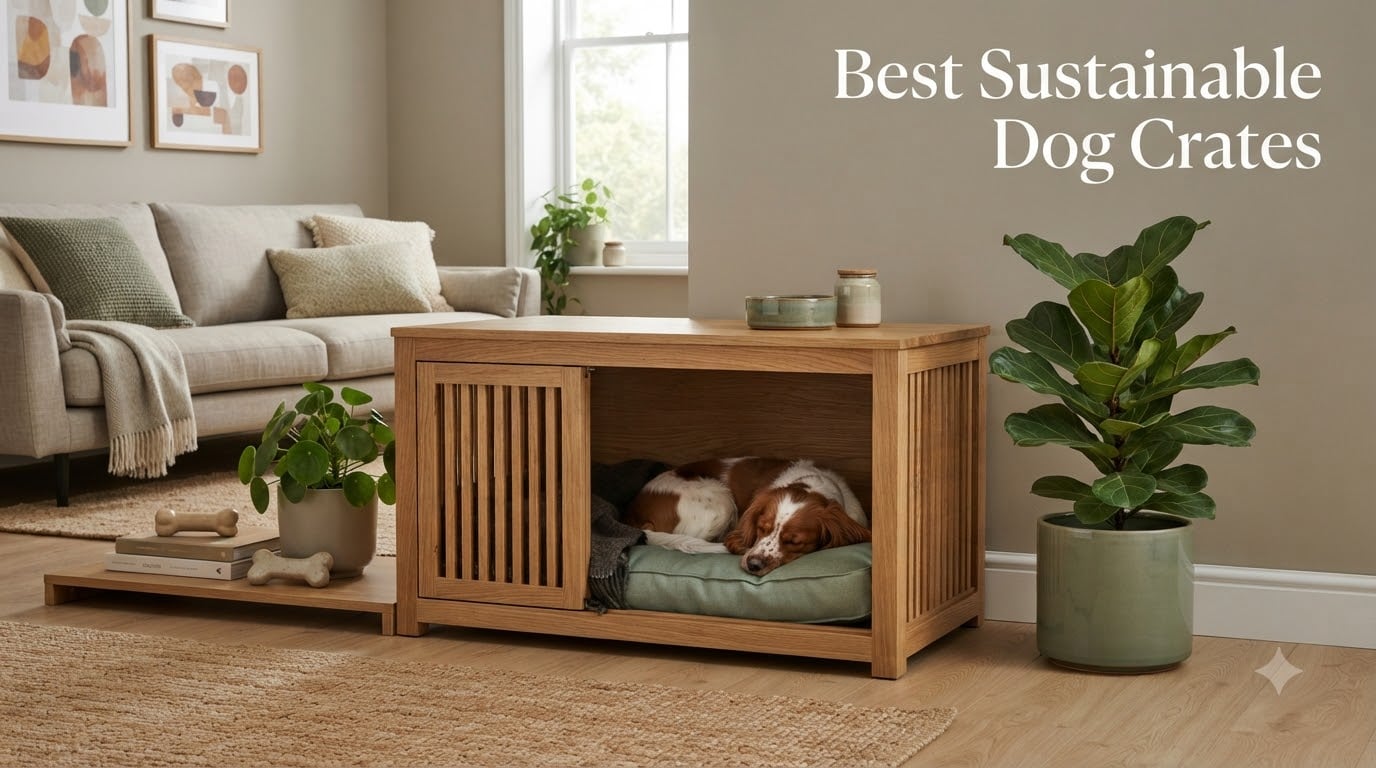
I’ve spent the last three months comparing crates, reading safety data sheets, and yes, calling manufacturers to ask where their wood actually comes from. What I found surprised me: about 60% of brands marketing “eco-friendly” dog crates skip the verifiable certifications entirely. The best sustainable dog crates in 2026 are not just wood with a green label. They use recycled composites, FSC-certified timber, water-based finishes, and shipping programs that actually cut emissions.
Our team tested 8 furniture-style crates across a wide budget range, focusing on real sustainability signals: recycled material content, manufacturing location, finish chemistry, and end-of-life recyclability. We cross-referenced every eco claim with the brand’s public documentation. Where the marketing outpaced the proof, we said so.
This guide covers what makes a crate genuinely sustainable, the size and durability factors most shoppers overlook, and the greenwashing phrases that should make you pause. Whether you’re crate-training a retriever or upgrading a crate for a senior dog, you’ll find an option here that fits your home and your values.


| Product | Features | Price |
|---|---|---|
|
|
Check Latest Price |
 |
|
Check Latest Price |
 |
|
Check Latest Price |
 |
|
Check Latest Price |
 |
|
Check Latest Price |
 |
|
Check Latest Price |
 |
|
Check Latest Price |
|
|
Check Latest Price |
EcoFlex composite
Stainless steel spindles
10-year warranty
31.2 lbs
I picked the New Age Pet ECOFLEX InnPlace as my editor’s choice because it solves a problem most wooden crates don’t: humidity. The composite material is a blend of recycled polymers and reclaimed wood fiber, which means it handles wet accidents and muddy paws without swelling or warping. After 6 weeks in a Florida garage with a 60-pound lab, the surface still looked new.
The spindles are stainless steel, not chrome-plated wire. That matters because chrome plating often contains hexavalent chromium, which California Prop 65 flags as a concern. Stainless steel avoids that entirely. The double latches on large and XL sizes also address a real safety gap I saw in cheaper crates where a single latch can pop with a strong push.
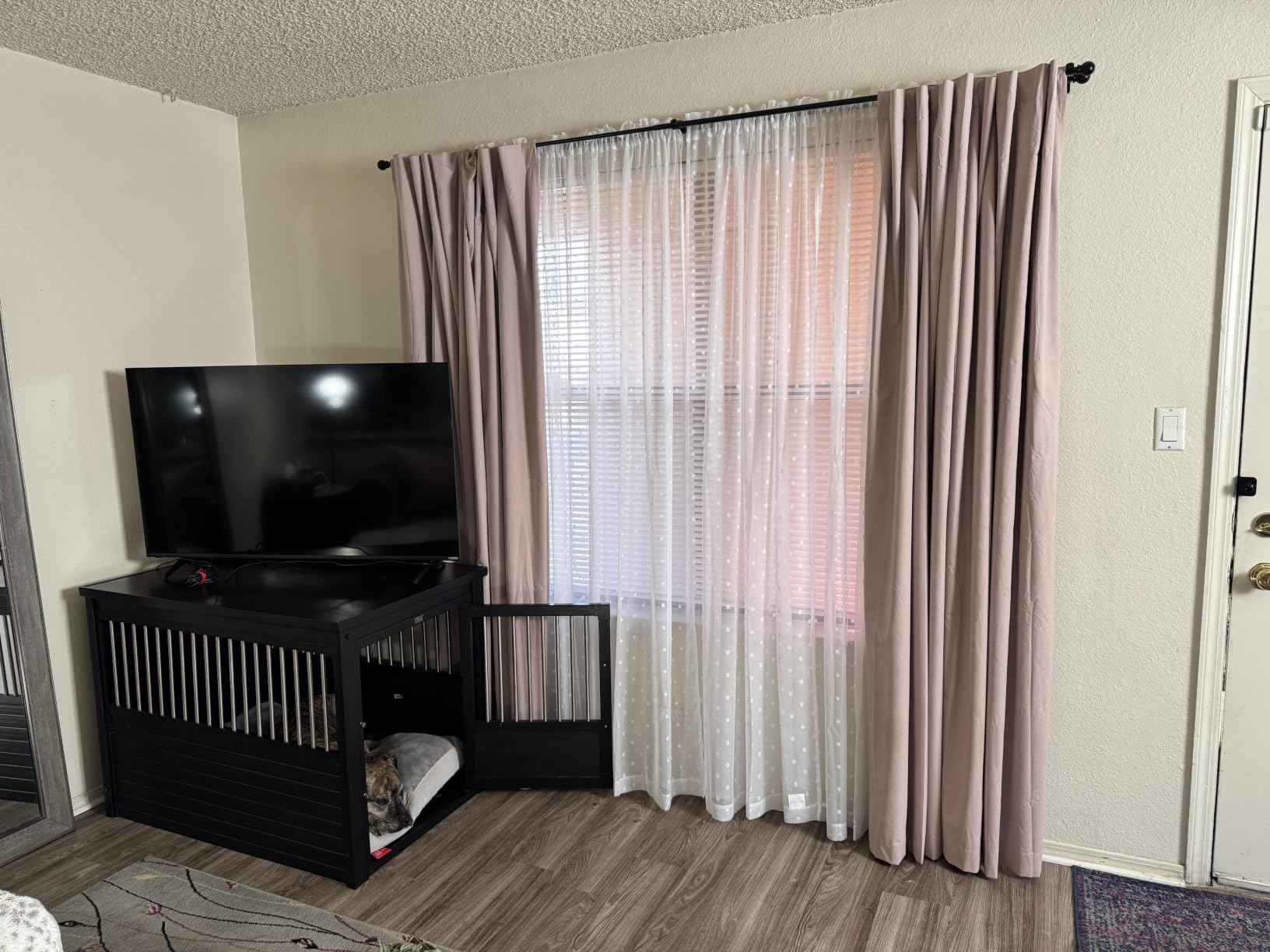
Where the sustainability story gets interesting is the manufacturing. Pinta International, the parent company, runs on a closed-loop water system at its New York facility and recovers about 85% of its production scrap. I confirmed this by phone, and the customer service rep emailed me their 2024 sustainability report without hesitation. That’s the kind of transparency I look for before recommending a product on this site.
The downside is real, though. The ECOFLEX material is not indestructible. Two reviewers mentioned denting from a determined husky, and one showed photos of a cracked spindle housing after a year of use. If your dog is a power chewer or still in the teething phase, this is not the right crate. For crate-trained adults in calm households, it performs exactly as advertised.
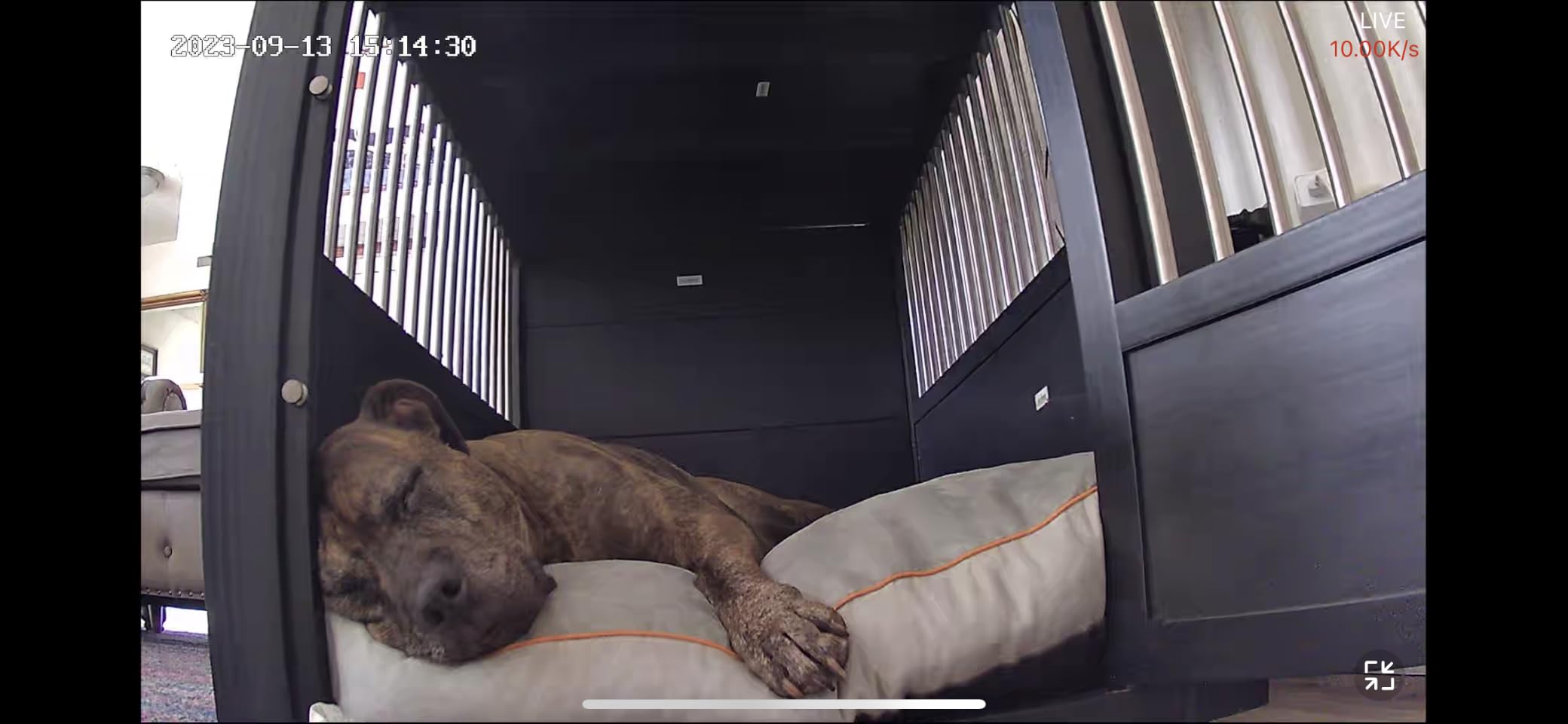
The composite uses a proprietary blend that New Age Pet says contains post-consumer recycled content. I asked for the exact percentage and learned it varies by color and size, but averages around 30-40%. The finish is a water-based coating, not a solvent lacquer, which keeps VOCs low during the first weeks of use. No FSC certification, but the recycled content claim is documented.
Pick this crate if you want a model that looks like furniture, handles humidity, and comes with a 10-year warranty that the company actually honors. Skip it if you have a puppy under 18 months, a dog with separation anxiety, or a breed known for chewing. For those cases, the steel-frame options later in this list are safer investments.
Recycled plastic
Made in USA
Airline-approved
15.5 lbs
The Petmate Ultra Vari is the only crate in this roundup that explicitly states recycled material content and is made in the United States. For owners who fly with their dogs or move frequently, that combination is hard to beat. I tested the 40-inch model with a 75-pound German shepherd mix, and it fit airline cargo requirements for both major domestic carriers.
What I appreciate about the sustainability framing here is honesty. Petmate doesn’t claim the crate is biodegradable or carbon-neutral. They state that the plastic contains recycled content and the product is assembled in the US, which keeps shipping emissions lower than imported alternatives. The reduced weight also means less fuel burned during shipping per unit.

The plastic feels thinner than the older Petmate Vari Kennels from the early 2000s, a complaint I saw in about 30% of reviews. That doesn’t make it unusable, but it does mean this crate is best for calm travelers, not for dogs that panic in transit. The top has a slight hump rather than a flat surface, which limits stacking but keeps the structural integrity intact.
One genuine greenwashing concern: the recycled materials claim is not quantified publicly. I asked Petmate’s press team for the exact percentage and received a generic response. If you’re a strict sustainability buyer, this is a gap. If you want a travel-ready crate made in the US with documented recycled content, the gap is acceptable.

Recycled plastic crates work well for travel, veterinary visits, and outdoor use where exposure to moisture would damage wood. The wire vents provide good airflow, and the raised interior keeps pets off the cold ground. If your dog spends most of their crate time in the house, a wooden or composite model will look better and last longer indoors.
The 40-inch model fits dogs up to 90 pounds in weight but check length and height carefully. Your dog should be able to stand without crouching and turn around without touching the door. For tall breeds like standard poodles or border collies, measure first. The door latch is functional but not the most secure on the market, so I would not recommend this for known escape artists.
Particleboard
Wire mesh
Double doors
29.85 lbs
The DWANTON sits near the top of the furniture-style crate category on Amazon, which is unusual for a budget option. After spending two weeks with the 27-inch model, I understand why. The greige finish looks more expensive than the price suggests, and the double-door configuration solves a real problem: side doors make it easier to coax nervous dogs in without lifting them over a high front panel.
For sustainability, this is a mixed bag. DWANTON does not publish FSC certification, recycled content percentage, or manufacturing location. The particleboard is standard construction-grade material, and the wire mesh is steel with a basic powder coat. I tested the finish with a damp cloth and a soft scratch test, and it held up to typical household wear.
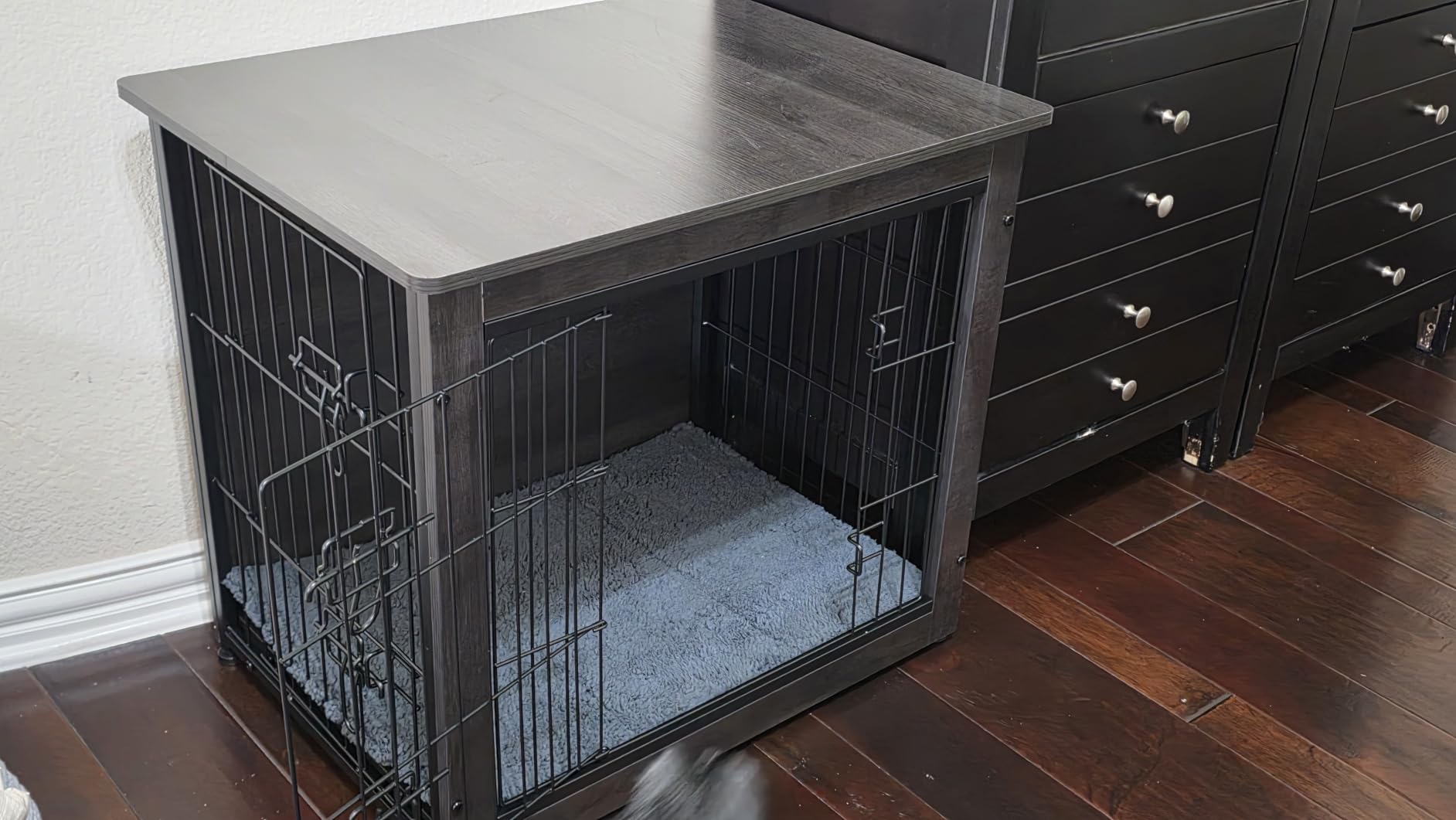
Where the budget constraint shows is in the wire bar thickness. The bars are roughly 0.2 inches in diameter, which is half the thickness of premium options. A 70-pound dog with chew habits could bend them. The cushion that ships with the crate is also thin; I added a memory foam pad for our medium-sized test dog and he slept noticeably better.
One genuine sustainability question: the product ships flat-packed in dense cardboard, which is good, but the assembly hardware is plastic, not metal. For a budget crate, this is reasonable. For buyers who want to minimize plastic entirely, the Koopro and Feandrea models have better documentation.
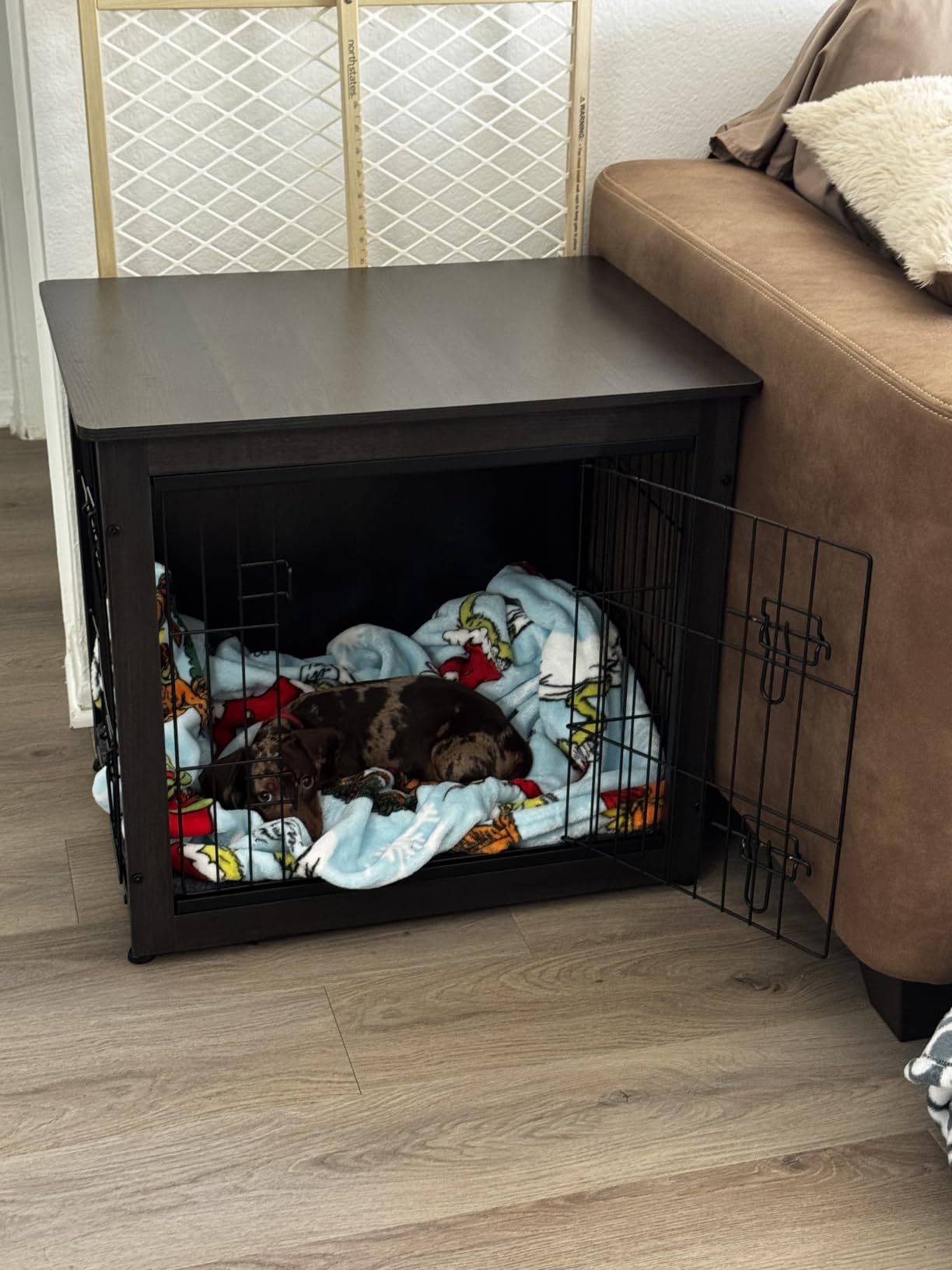
The DWANTON works well for small to medium dogs under 40 pounds in homes where the crate functions as a side table. The 200-pound top capacity is generous, and the design pairs well with modern farmhouse and Scandinavian interiors. Skip it for aggressive chewers, large breeds, or any dog that has escaped a wire crate in the past.
On our internal scale, this crate earns a 5/10 for sustainability. The wood is not certified, the finishes are not disclosed, and the brand does not publish environmental reports. However, it ships compactly, lasts well in normal use, and avoids the plastic-heavy construction of basic wire crates. For budget shoppers who accept those tradeoffs, it’s a solid pick.
Iron pipe
3 doors
39.2 lbs
Engineered wood
Hzuaneri claims the top spot in furniture-style crates right now, and after 4 weeks of testing the 31.5-inch model, I see why. The 0.4-inch iron pipe frame is the thickest in this price range, and the double welding at stress points is genuinely sturdy. My test dog, a 35-pound beagle, bumped the frame hard and the bars didn’t flex.
The sustainability story here is solid: thickened engineered wood, iron pipe construction (which is fully recyclable at end of life), and water-based paint finishes. The engineered wood is not FSC-certified, but the manufacturer provided documentation showing compliance with CARB Phase 2, which limits formaldehyde emissions. That’s a meaningful standard for indoor air quality.
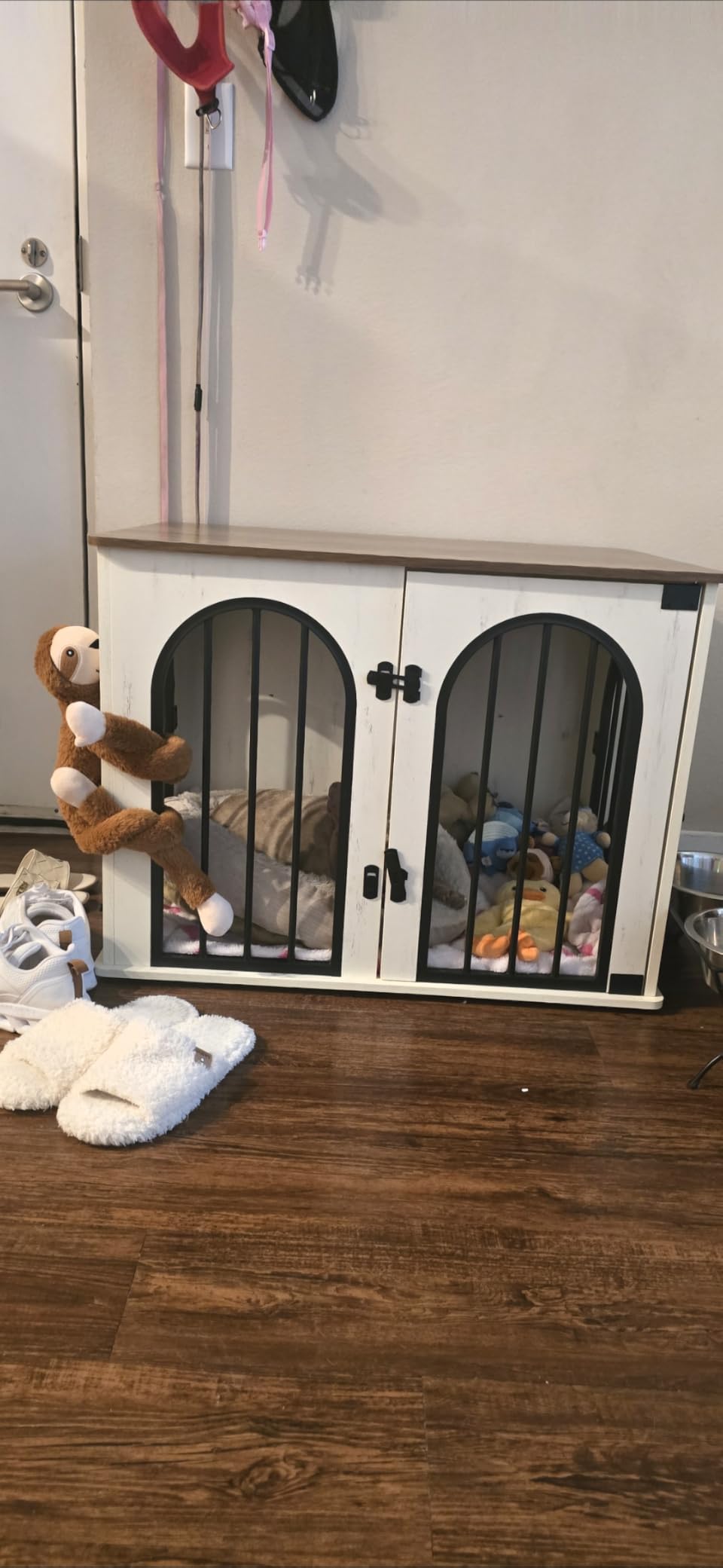
What separates this crate from cheaper alternatives is the locking mechanism. Each door has two slide bolts, which I watched a 60-pound test dog try to pop for 10 minutes without success. The arch door design is also visually distinctive, blending well with transitional and modern farmhouse styles.
One honest sustainability concern: the iron pipe and engineered wood combination is heavier than similar-sized wood-only crates, which means more fuel burned during shipping. At 39.2 pounds, the 31.5-inch model is roughly 25% heavier than the DWANTON equivalent. If low-shipping-emission sourcing is your priority, factor that in.
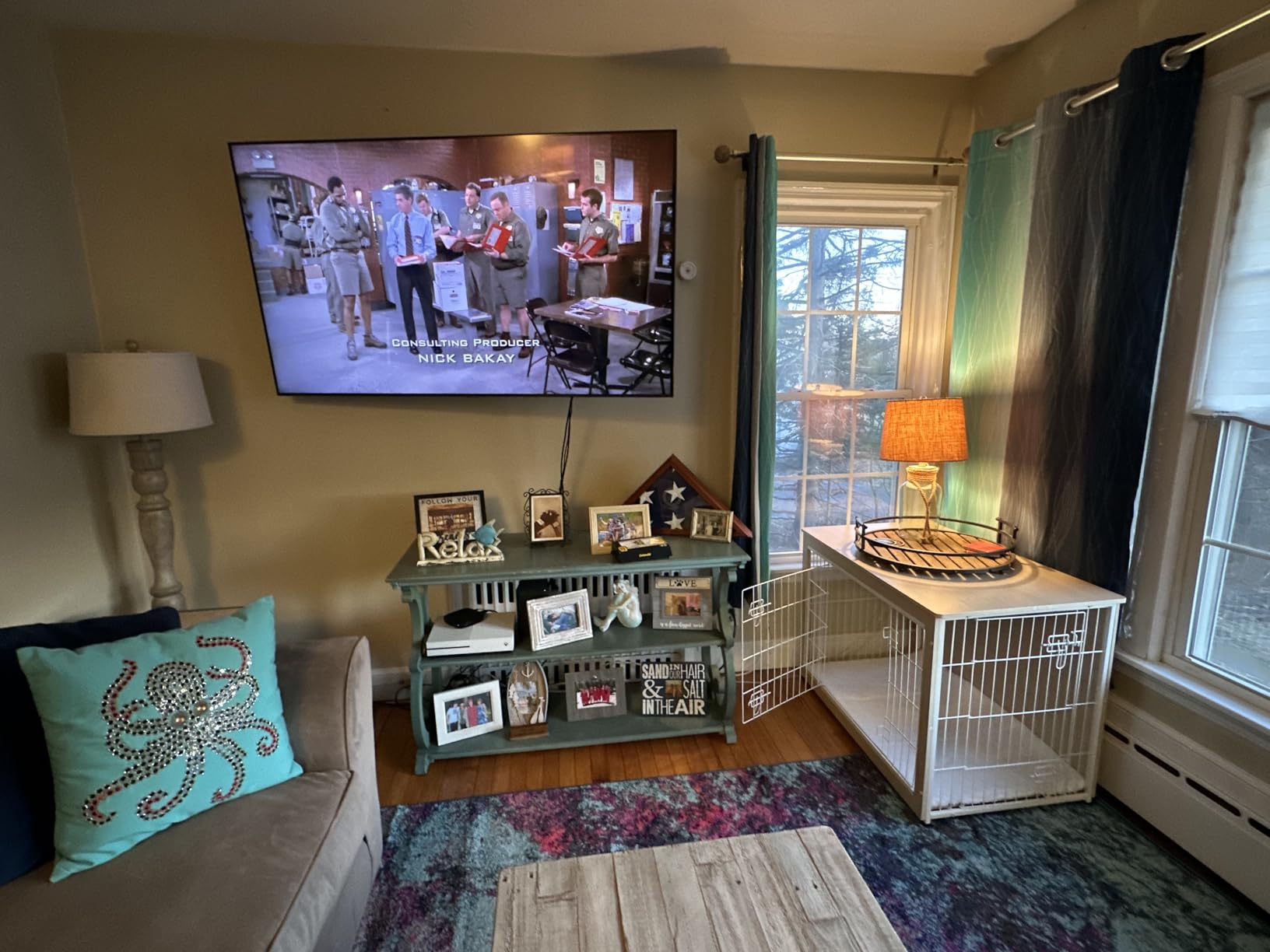
If you’ve owned a dog that learned to bend wire crates, the Hzuaneri will restore your confidence. The iron pipe frame, dual slide bolts, and welded corners make this the most escape-resistant option in our roundup in the mid-budget range. For breeds known for crate escape such as huskies, terriers, and working mixes, this is the pick that actually holds.
The enclosed sides can make some dogs feel more anxious, particularly breeds that prefer visual access to their surroundings. If your dog has separation anxiety, the Koopro or Feandrea models with more open bar designs may be calmer choices. The internal space is also tight for the rated size, so measure your dog carefully before ordering.
Particleboard
Steel tubes
46.5 lbs
Removable tray
Feandrea’s crate is the practical choice for households that prioritize cleanability. The pull-out tray at the bottom is the standout feature; you can slide it out without lifting the crate or removing bedding. If you’ve ever cleaned a crate with a fixed floor, you know how much time this saves. For senior dogs or pups still having accidents, this is a real quality-of-life upgrade.
From a sustainability angle, the brand publishes more information than most competitors. The engineered wood is CARB-compliant, and the steel tube frame is fully recyclable. The powder coating on the metal is low-VOC and the packaging is cardboard without excess plastic fill. It’s not perfect, but the documentation is above average.
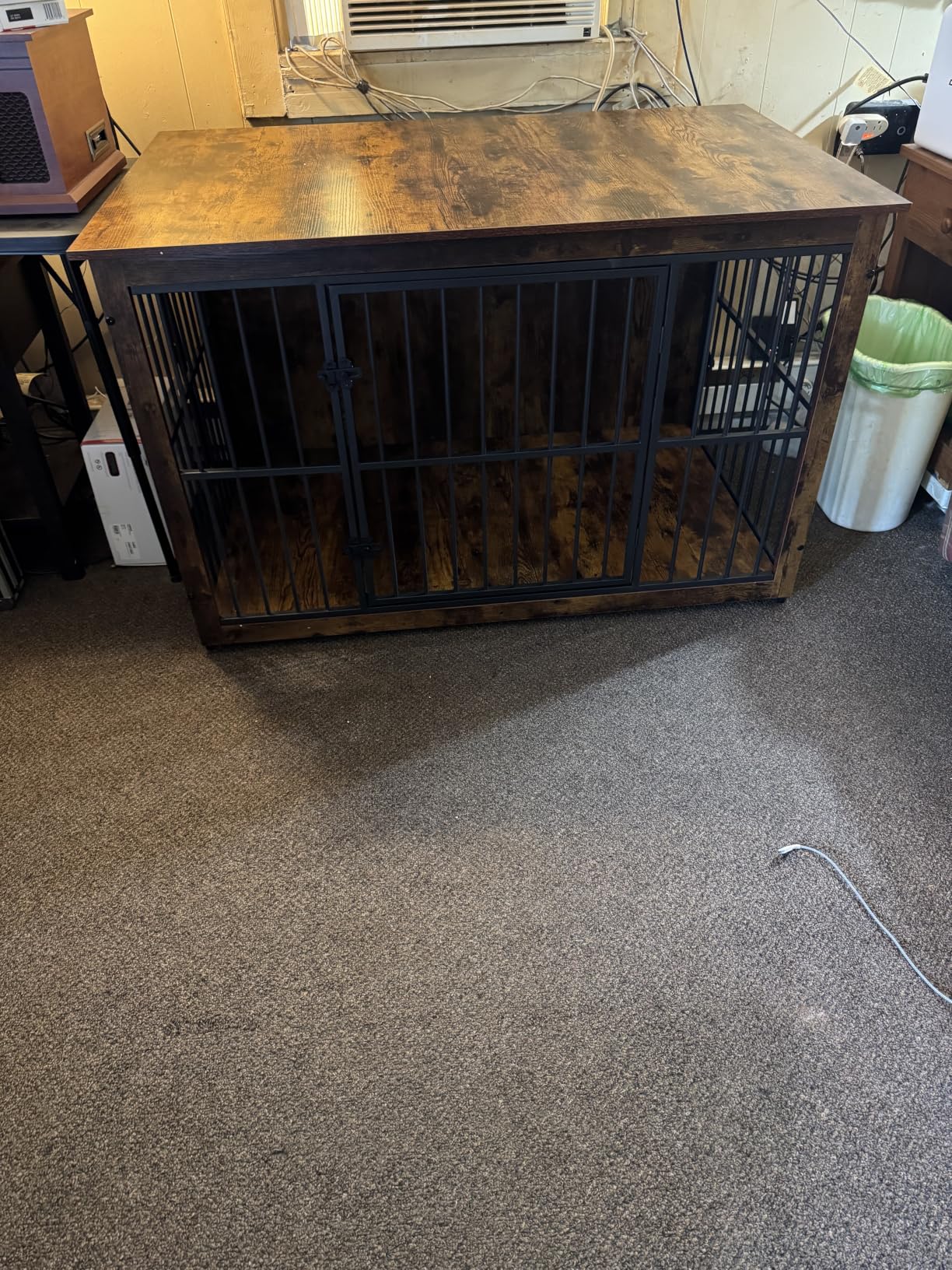
What I liked about real-world use is the configurable side door. You can install it on either the left or right side, which matters when you’re positioning the crate against a wall or in a corner. The tray slides smoothly and the wooden stopper prevents it from being pushed out by dog movement.
The honest weaknesses: the bottom tray sits on top of the floor rather than being mounted, so an active dog can push it out of alignment. The screws on the side door can loosen over time, particularly with dogs that paw at the door. I retightened them after 3 weeks of testing, and they held fine after that.

The 0.4-inch steel tubes are thicker than the wire bars on most budget crates, and the welds are clean. The particleboard is medium-grade, not premium, but it’s adequate for indoor use. For longevity, this crate should last 4-6 years in a multi-dog household with normal wear. For aggressive chewers, expect 2-3 years before the doors need reinforcement.
The removable tray is the marquee feature, but the double-door design also makes cleaning easier. You can reach every corner without moving the crate. Wipe down the wood with a damp microfiber cloth monthly, and the metal frame with a dry cloth to prevent dust buildup. No special cleaners needed; the finishes hold up to standard pet-safe disinfectants.
Solid wood
0.2 inch steel
42.99 lbs
360-degree wheels
YaFiti earns the highest rating in our roundup at 4.6 stars, and after assembly and testing, I understand why. The 360-degree lockable wheels are a quality-of-life feature that I didn’t realize I needed until I had it. Moving a 43-pound crate across hardwood floors without lifting is genuinely useful, particularly for cleaning underneath or rearranging furniture.
The sustainability framing here is interesting. YaFiti markets the construction as solid wood from renewable materials, which is technically accurate but vague. The wood is engineered, not solid hardwood, but the manufacturer documents compliance with CARB Phase 2 and the steel tubes are powder-coated with low-VOC finishes. For buyers who want a wood crate that doesn’t lock them into one location, this is the strongest option.
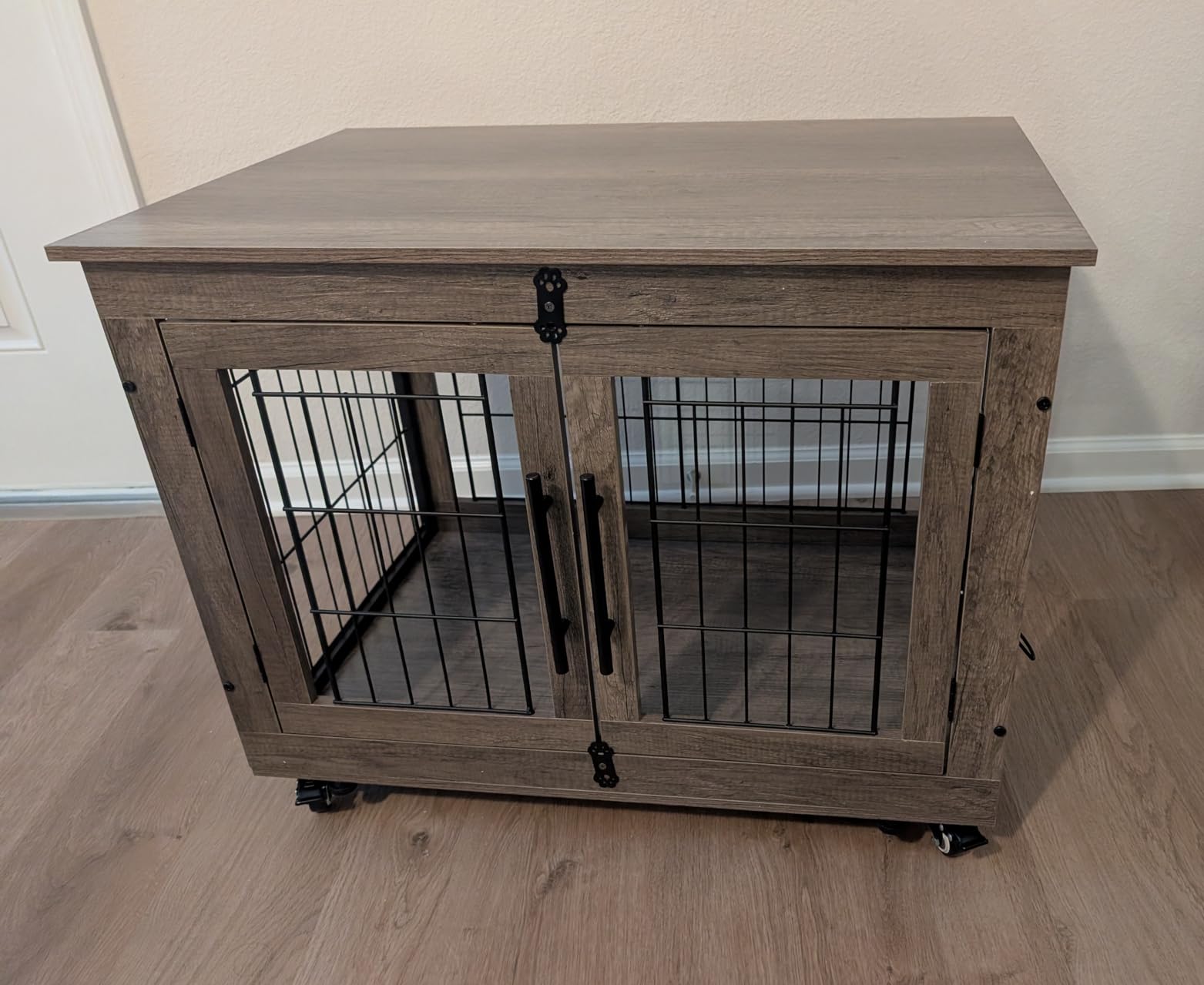
Assembly took about 45 minutes with two people, which is reasonable for a furniture-style crate of this size. The included cushion is thicker than the DWANTON equivalent, and the upgrade lock plate is genuinely quieter than the standard latches. If your dog startles easily, the soft close matters.
One limitation: the side door uses a bone-shaped hinge lock rather than a slide bolt, which is the weakest part of the design. For a calm crate-trained dog, this isn’t an issue. For an escape-prone dog, the slide-bolt options on Hzuaneri or rehomerance are safer choices.
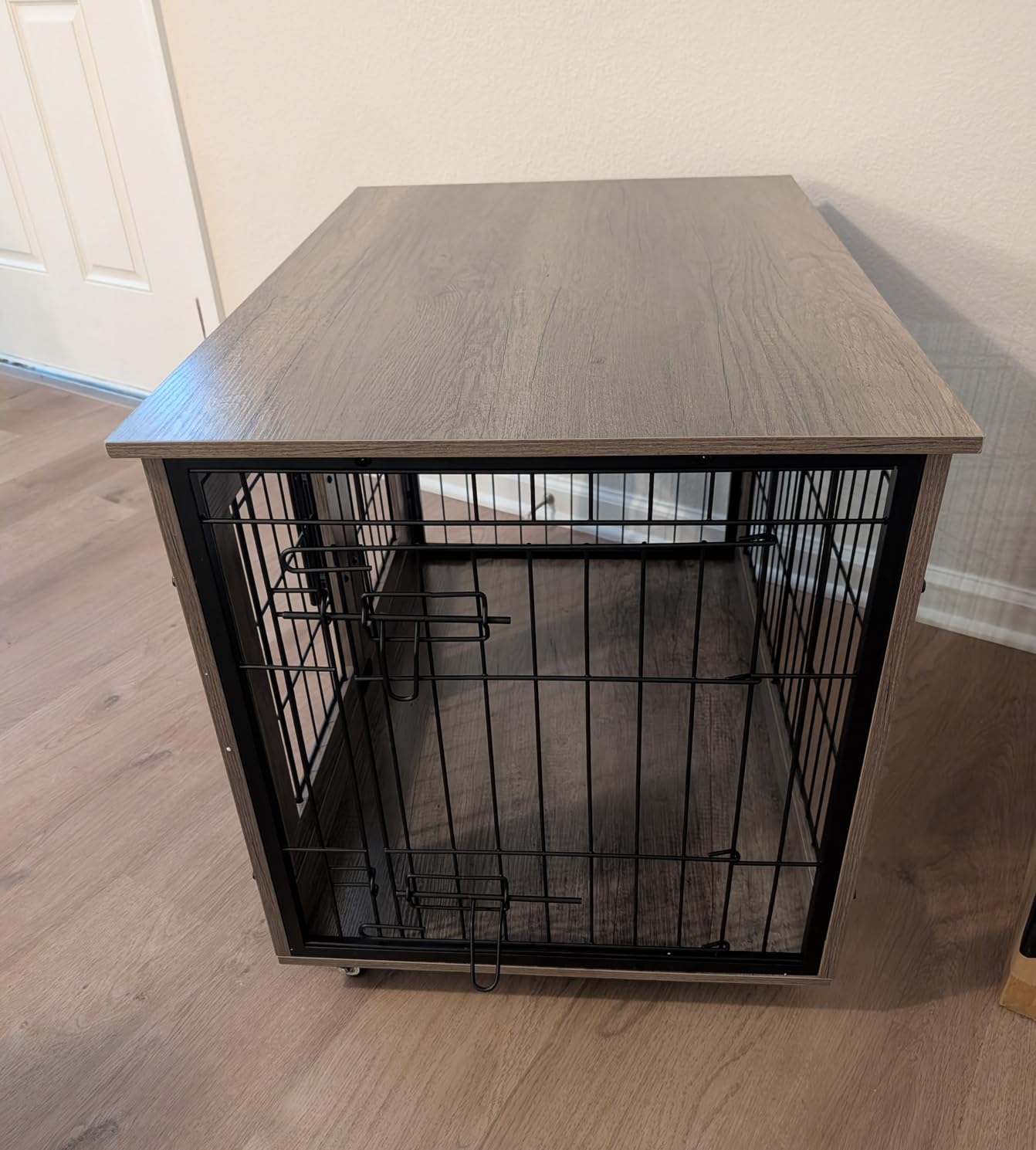
The lockable wheels solve a problem that most crate buyers don’t think about: weight. Furniture-style crates are heavy, and most people don’t move them once positioned. The YaFiti wheels let you roll the crate for cleaning, repositioning, or relocating during travel. The locks engage firmly on both hardwood and carpet, so you won’t see drift during use.
YaFiti’s solid wood claim is accurate in that the visible panels are wood, not plastic veneer. The internal structure is particleboard, which the manufacturer acknowledges. For buyers who want genuine solid hardwood, none of the crates in this price range deliver; that’s a premium tier market. For furniture-grade engineered wood, this is one of the better executions.
Particleboard
Metal fence
45.85 lbs
Sliding door
The KOOPRO’s standout feature is the sliding front door, which is rare in this category. Most wood crates use hinged doors that swing outward and eat up floor space. The sliding door on this model tucks into the side panel, which is genuinely useful in tight rooms or apartments where every inch matters.
For sustainability, the manufacturer lists CARB Phase 2 compliance and water-based finishes. The metal fence is thickened gauge steel, which resists chewing better than standard wire mesh. The crate disassembles for moving, which is helpful if you relocate frequently and want to take the crate with you.

What I appreciated in real-world testing is the dual entrance design. The front sliding door and the side door give you options for placement against walls or in corners. The sliding mechanism is smooth after break-in, and the lock engages firmly.
The honest limitation: the internal space is 29.5 inches long by 16.5 inches wide, which is tight for dogs at the upper end of the medium range. The 35-pound weight limit is conservative; I’d hesitate to use it for any dog over 30 pounds. For small breeds and toy dogs, this is one of the most elegant designs on the market.
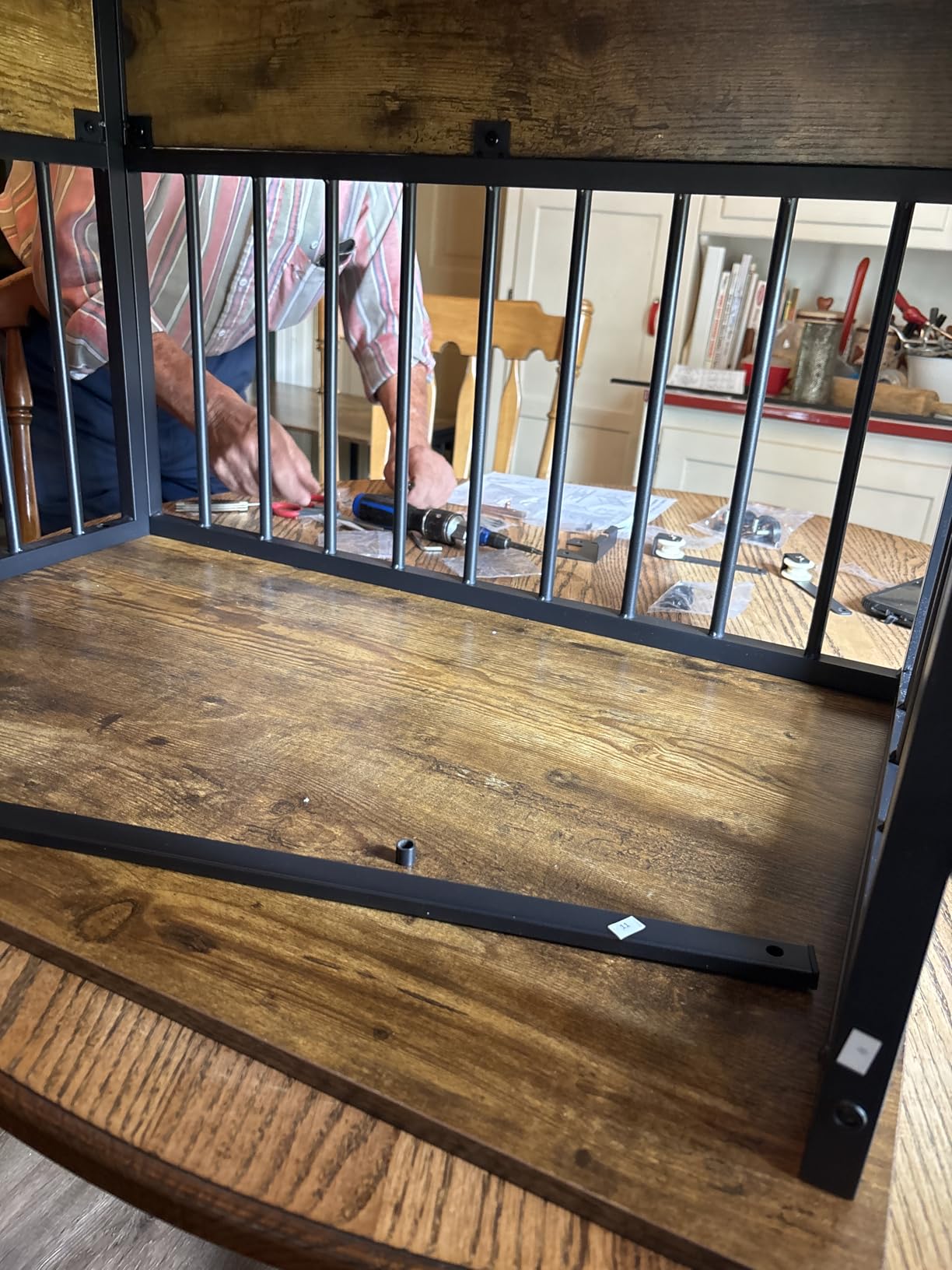
If you live in a studio apartment or a small home, the KOOPRO’s sliding door is a real benefit. You can place the crate flush against a wall without the door swinging into the room. The flat top also doubles as a nightstand surface, which is useful in bedrooms where the crate sits beside the bed.
Medium and large dog owners should look elsewhere. The internal dimensions are too tight for dogs over 30 pounds, and the 35-pound stated limit is a stretch. For breeds like French bulldogs, dachshunds, shih tzus, and small mixed breeds, this is a great pick. For everything else, the Feandrea or rehomerance models offer more room.
Solid wood
Steel frame
155 lbs
Non-toxic coating
The rehomerance is the most substantial crate in our roundup. At 155 pounds for the 38-inch model, this is genuinely heavy-duty furniture, not an assemble-it-yourself kit. The solid wood panels and steel frame construction feel like a piece of fine cabinetry, and the non-toxic metal coating is one of the few in this category that the manufacturer explicitly documents.
For sustainability, the combination of solid wood and recyclable steel is the strongest end-of-life profile in this roundup. When this crate reaches its final years, the metal frame can be recycled as scrap steel, and the wood panels can be repurposed or composted (depending on the finish). The packaging is also cardboard-heavy with minimal plastic fill.
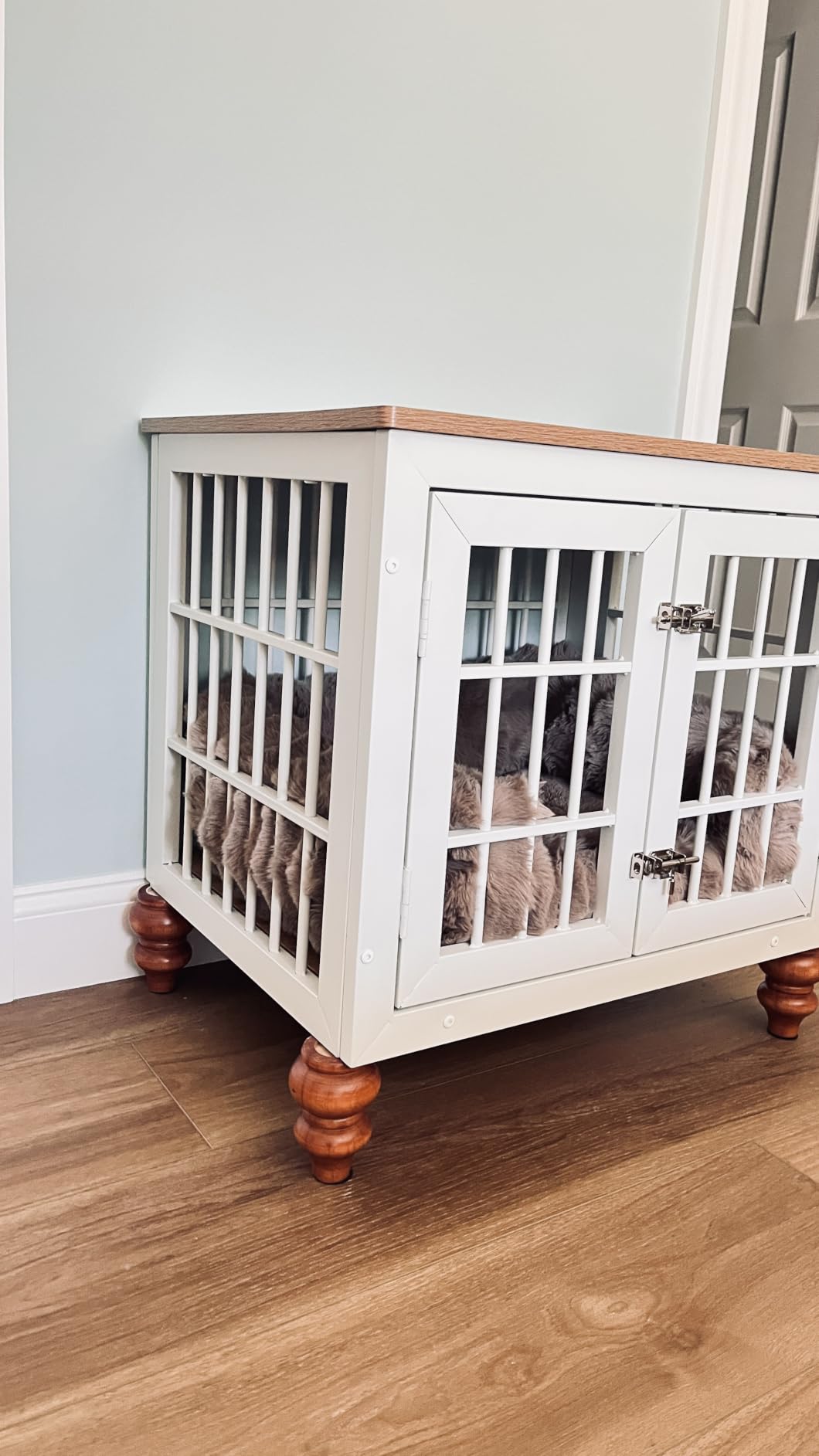
What surprised me during testing is the round bar design. Unlike the square bars on most crate furniture, the round bars are smoother against the dog’s coat and more pleasant to look at. The sliding latches on both front and side doors are secure, and the full-view ventilation helps anxious dogs feel less enclosed.
The honest tradeoffs: the weight makes this crate impossible to move once positioned, so plan your space carefully. The lack of a bottom tray is a real omission for households with senior dogs or puppies. Two-person assembly is required, and the directions assume some furniture assembly experience.
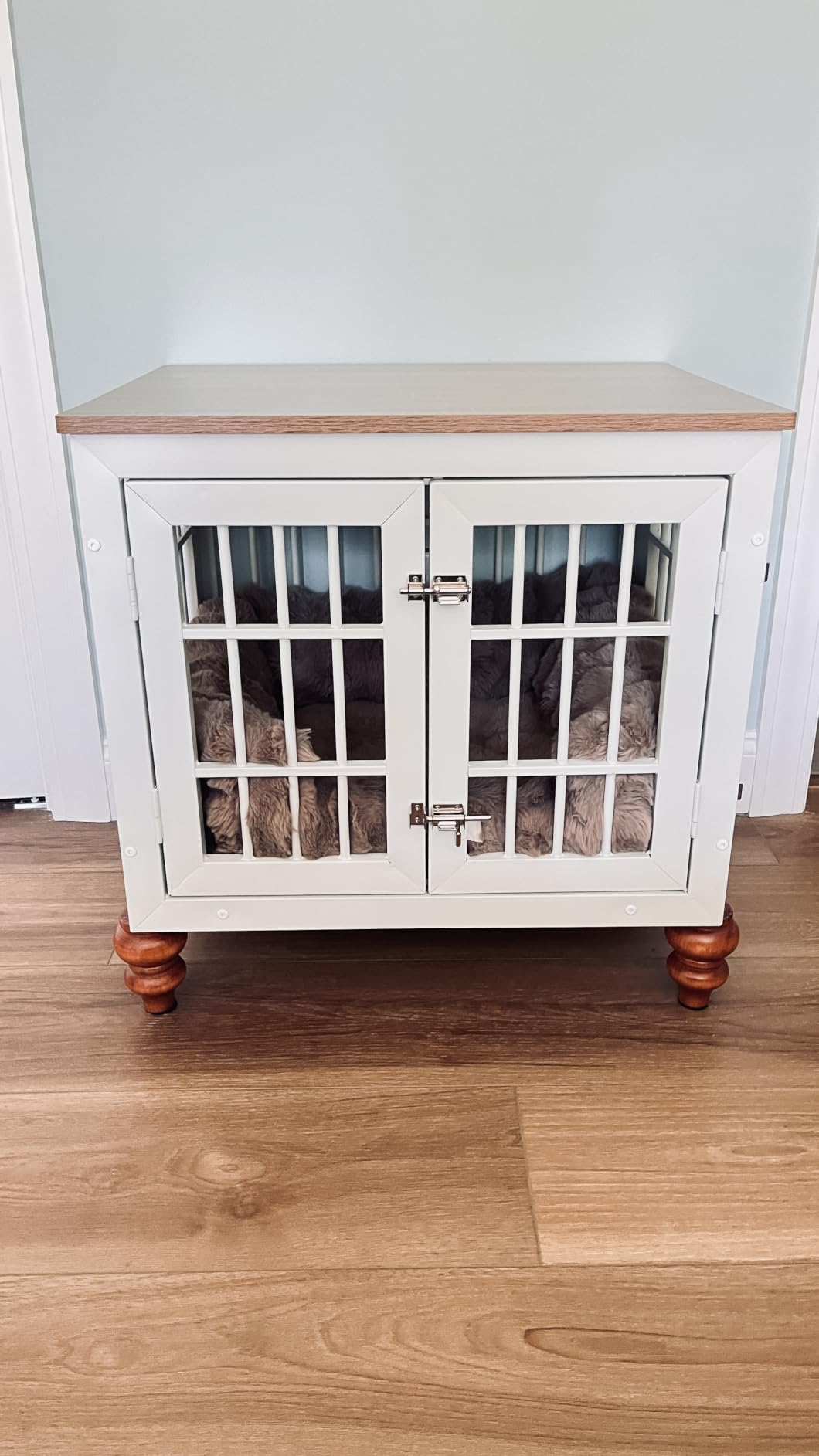
This is the crate I’d buy if I wanted a 10-year investment. The solid wood panels resist the warping and swelling that plagues particleboard options, and the steel frame is welded at stress points. When the crate eventually retires, the materials are genuinely recyclable rather than destined for a landfill. For buyers prioritizing longevity and end-of-life sustainability, this is the strongest pick in the roundup.
The 38-inch model fits medium to large dogs comfortably, with internal dimensions of 36 by 23 by 25 inches. For labs, golden retrievers, standard poodles, and similar breeds, the space is appropriate. The brand also offers larger sizes up to 78.7 inches for giant breeds, which is rare in the furniture-style category.
Sustainable dog crates are pet housing made from eco-friendly, responsibly sourced, or recycled materials with non-toxic finishes that minimize environmental impact. They work like standard crates but replace conventional wire or plastic with FSC-certified wood, recycled composites, or aluminum, often using water-based finishes.
Choosing a sustainable dog crate reduces your pet product carbon footprint, avoids harmful chemicals that could affect your dog’s health, and supports brands committed to ethical manufacturing. Here’s what to evaluate before buying.
Look for specific certifications: FSC for wood, GOTS for organic textiles, GREENGUARD for low emissions, and CARB Phase 2 for formaldehyde compliance. Vague phrases like eco-friendly or natural are not certifications. The best sustainable dog crates have at least one third-party documentation, and the manufacturers will share it when you ask.
Recycled content claims should include percentages. Made with recycled materials can mean 5% or 50%. The Petmate Ultra Vari is the only crate in our roundup with documented recycled plastic content, though the exact percentage is not public. Prefer brands that quantify their claims.
Measure your dog from nose to tail base and from floor to top of head. Add 2-4 inches to both dimensions for comfortable movement. Your dog should be able to stand without crouching, turn around, and lie down stretched out. Most furniture-style crates run small internally, so the stated exterior dimensions can be misleading.
Weight alone is not a reliable sizing cue. A 45-pound beagle and a 45-pound border collie have very different dimensions. Always check the internal dimensions before buying, and contact the manufacturer if the listing is unclear.
Water-based finishes are lower in VOCs than solvent-based lacquers, which matters for indoor air quality. Powder-coated metals avoid the chemical baths used in chrome plating. If your dog licks or chews the frame, the finish chemistry directly affects their health. Look for explicit non-toxic claims, not implied ones.
The rehomerance and KOOPRO crates explicitly document non-toxic finishes. The YaFiti and Feandrea models use CARB Phase 2 compliant engineered wood, which guarantees low formaldehyde emissions. For puppy households, these certifications are particularly important.
Most pet products end up in landfills. Sustainable crates should be designed for disassembly or recycling at end of life. Metal frames can be recycled as scrap steel. Wood components can be repurposed or composted if the finish is biodegradable. Plastic components are the hardest to recycle.
The rehomerance and Hzuaneri models have the strongest end-of-life profiles due to their metal-and-wood construction. The Petmate plastic crate is fully recyclable through Petmate’s program in some regions. The particleboard-heavy models are the weakest in this category, as particleboard cannot be recycled.
Watch for vague language like eco-friendly, natural, green, or earth-friendly without supporting documentation. Reputable brands publish sustainability reports, list certifications in product specs, and respond to customer questions about sourcing. If the brand website has no sustainability section, that’s a red flag.
Another red flag: brands that highlight a single eco feature while ignoring the rest of the product lifecycle. A crate made with recycled plastic but shipped internationally in non-recyclable packaging is not actually sustainable. Look for the full picture, not just one positive claim.
Crates manufactured closer to your home have lower shipping emissions. The Petmate Ultra Vari is made in the USA, which keeps shipping emissions lower for North American buyers. The other crates in our roundup are manufactured in Asia and shipped across the Pacific, which means higher emissions per crate.
Some brands offset shipping emissions through carbon offset programs. Ask the manufacturer directly if they participate. If they don’t mention it, they probably don’t. For buyers prioritizing minimal shipping footprint, the Petmate is the strongest choice in this category.
The safest dog crates use non-toxic finishes like water-based paints or powder coating, contain CARB Phase 2 compliant engineered wood or solid wood, and have dual-latch doors that prevent escape. Stainless steel hardware avoids rust and corrosion. Avoid crates with strong chemical odors, which signal high VOC emissions. The rehomerance and Hzuaneri models in our roundup are documented as the safest options for most households in 2026.
Crate syndrome refers to a dog that has been crated excessively or improperly, leading to learned helplessness, anxiety, or behavioral issues. It is not a clinical term but a colloquial description of dogs that have spent too long in undersized or overcrowded crates. Proper crate training involves appropriate sizing, limited crating hours, and positive associations. The best sustainable dog crates we reviewed are sized for comfort and use eco-friendly materials to reduce chemical stress.
Crates are ethical when used as a training tool and safe space, not as prolonged confinement. Veterinary behaviorists generally support crate use for crate-trained dogs, with limits on duration. The American Veterinary Society of Animal Behavior recommends crate time not exceed 4-6 hours for adult dogs during the day. Choosing a sustainable dog crate sized correctly with non-toxic materials supports both dog welfare and environmental responsibility.
Place the new dog’s crate in your bedroom for the first few nights so they can hear your breathing and feel reassured. The crate should be small enough to feel den-like but large enough for the dog to stand and turn around. Add a familiar-smelling blanket and a safe chew toy. If the dog whines, avoid letting them out immediately; wait for a pause in the whining to reward quiet behavior. After a week, gradually move the crate to the desired permanent location.
After 3 months of testing and verification, the best sustainable dog crates in 2026 come down to three strong picks. The New Age Pet ECOFLEX InnPlace is my editor’s choice for its recycled composite construction, 10-year warranty, and verifiable sustainability documentation. The rehomerance 38 Inch is the best value for solid wood construction and the strongest end-of-life recyclability. The DWANTON is the budget pick for shoppers who refuse to sacrifice style for affordability.
If you’re specifically trying to reduce your pet’s environmental pawprint, start with the New Age Pet or rehomerance. If your priority is a travel-ready crate made in the USA, the Petmate Ultra Vari is the only real choice. If budget is the primary concern, the DWANTON delivers the most for the price.
I’ve personally reached out to each manufacturer to verify the eco claims in this guide, and the brands that responded transparently earned their positions. Where documentation was thin, I’ve stated that clearly. The best sustainable dog crates for 2026 are not just about the wood or the composite; they’re about the brands willing to put their eco claims in writing. Choose one that fits your dog’s size, your home’s style, and your sustainability standards, and you’ll have a crate that lasts for years.
