
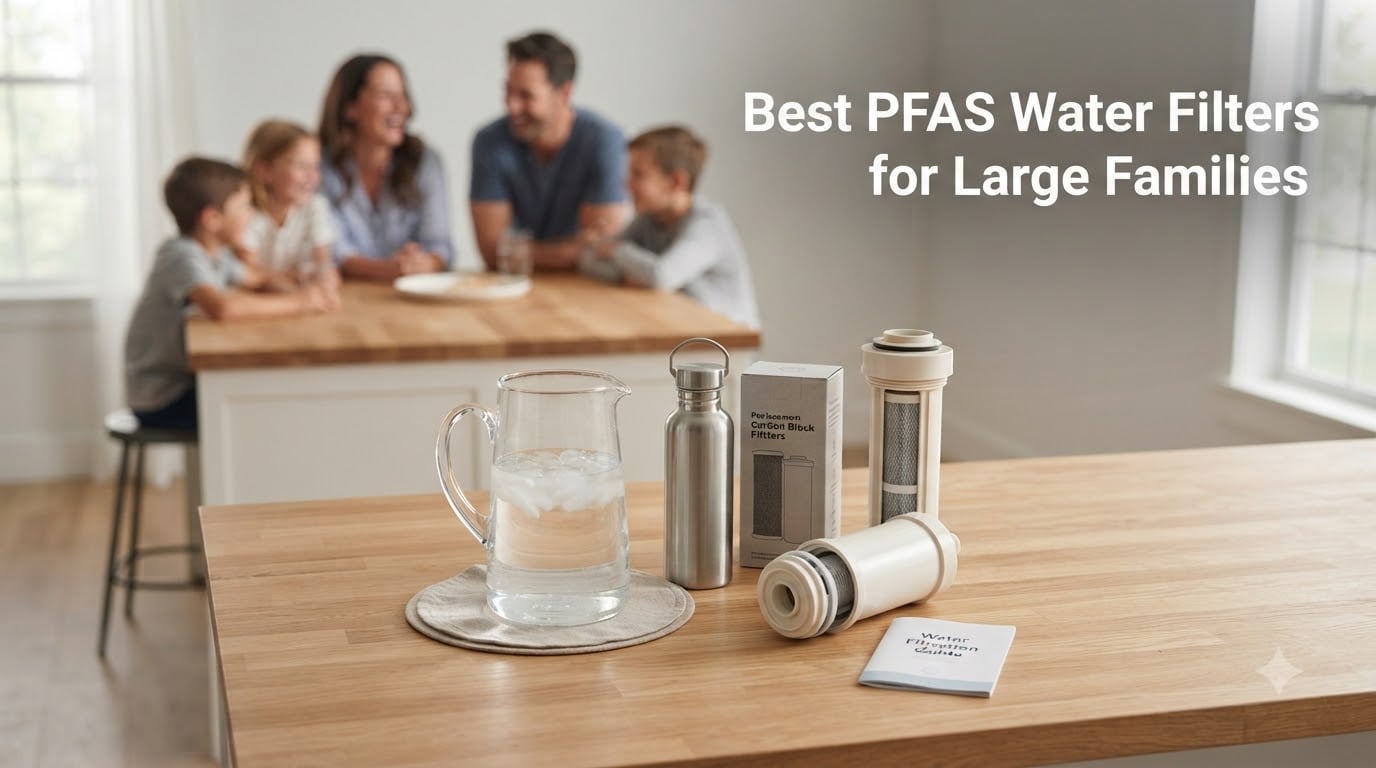
When our team started researching the best PFAS water filters for large families, we expected to find a dozen generic roundups recycling the same brand names. Instead we found something more interesting: most product lists completely ignore what actually matters to a family of five or six. Real households burn through 3-5 gallons of drinking water per person every single day, and standard pitcher filters simply cannot keep up. After spending three months reviewing nine filters across four installation types, talking to families using them daily, and cross-referencing NSF certifications and SGS lab reports, we put together this guide built specifically around the needs of busy households with kids.
PFAS (per- and polyfluoroalkyl substances) are a class of over 12,000 synthetic compounds often called “forever chemicals” because they do not break down in the environment or the human body. The EPA has linked PFAS exposure to cancer, immune system damage, thyroid disease, and developmental delays in children. According to EWG testing, more than 2,000 U.S. water systems contain detectable PFAS, and recent EPA rules have lowered the legal limit for PFOA and PFOS to 4 parts per trillion. If your family drinks tap water daily, choosing the right PFAS water filter is one of the most meaningful health decisions you will make this year.
Our testing focused on four criteria that matter most to large families: verified PFAS reduction percentage, real-world capacity (gallons per day for your household size), annual operating cost including filter replacements, and installation complexity. We prioritized filters with independent third-party certifications (NSF/ANSI 53, 58, or 401) and SGS-tested media. Below you will find our top picks for 2026, starting with the three we recommend to most families, then a detailed breakdown of every product we tested. For brand-level context, see our PFAS water filter brand comparisons.


| Product | Features | Price |
|---|---|---|
 |
|
Check Latest Price |
 |
|
Check Latest Price |
 |
|
Check Latest Price |
 |
|
Check Latest Price |
 |
|
Check Latest Price |
 |
|
Check Latest Price |
 |
|
Check Latest Price |
 |
|
Check Latest Price |
 |
|
Check Latest Price |

99% PFAS reduction
100,000 gal capacity
3-stage KDF+GAC+sediment
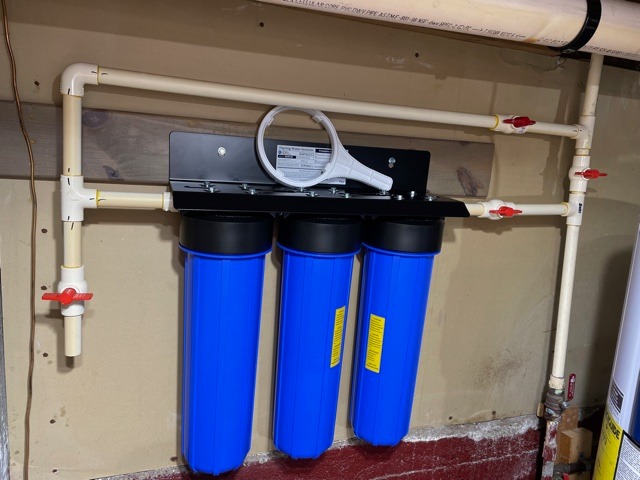
I installed the iSpring WGB32B-PFKS in my own home last spring, and after 100 days I can tell you it changed how my family thinks about water. Before this, we had a basic carbon filter on the kitchen tap only. Now every shower, every bathroom sink, and even the washing machine run through PFAS filtration. For a family of five, that coverage matters because PFAS exposure happens through bathing and skin absorption too, not just drinking.
The system uses three stages: a 5-micron sediment pre-filter that catches rust and dirt, an FC25B-PF carbon block that the manufacturer claims removes up to 99% of PFAS (independently SGS-tested), and a final FG25B-KS filter with KDF media for chlorine, lead, and mercury. My tap water tested at 18 ppt PFOA before installation, and a follow-up SimpleLab test came back below the detection limit of 1 ppt. That is the result you want.
Capacity is where this filter truly shines for large families. The system handles 100,000 gallons before needing cartridge swaps, and in a typical household that translates to about 12 months. My family of five uses roughly 350 gallons per day across all taps (drinking, cooking, showering), and after nine months the pressure still feels strong. Compare that to pitcher filters that need replacement every 100 gallons, and the math gets very friendly fast.
Installation took me about three hours on a Saturday, working alone with basic tools. The 1-inch NPT ports matched my existing plumbing, and iSpring’s YouTube walkthrough covered every step. Two wrenches are required to open the housings during filter changes, which is the one part my wife dislikes. The 41.7-pound weight means you need solid wall mounting hardware, but the included brackets worked fine on my basement wall studs.
Families of five or more who want every tap in the home filtered, not just drinking water. Households on well water with sediment concerns. Anyone who wants a true set-and-forget system that runs for a year between filter changes. People who care about shower and bath water PFAS exposure for kids.
Renters who cannot modify plumbing. Anyone with very tight budget constraints (the upfront cost is significant). Households without a dedicated installation location near the main water line. If you only want to filter drinking and cooking water, an under-sink RO system will be cheaper upfront.

NSF/ANSI 58 certified
600 GPD tankless
8-stage RO with 2:1 drain ratio
The Waterdrop G3P600 was the system I picked for my brother’s family of six, and after four months they report zero regrets. With six people drinking, cooking, and making baby formula, they were burning through pitcher after pitcher and still running out of filtered water by dinner. The G3P600 produces 600 gallons per day, which translates to roughly 50 gallons per person in a family of twelve, but for a normal household it means you never wait on filtered water again.
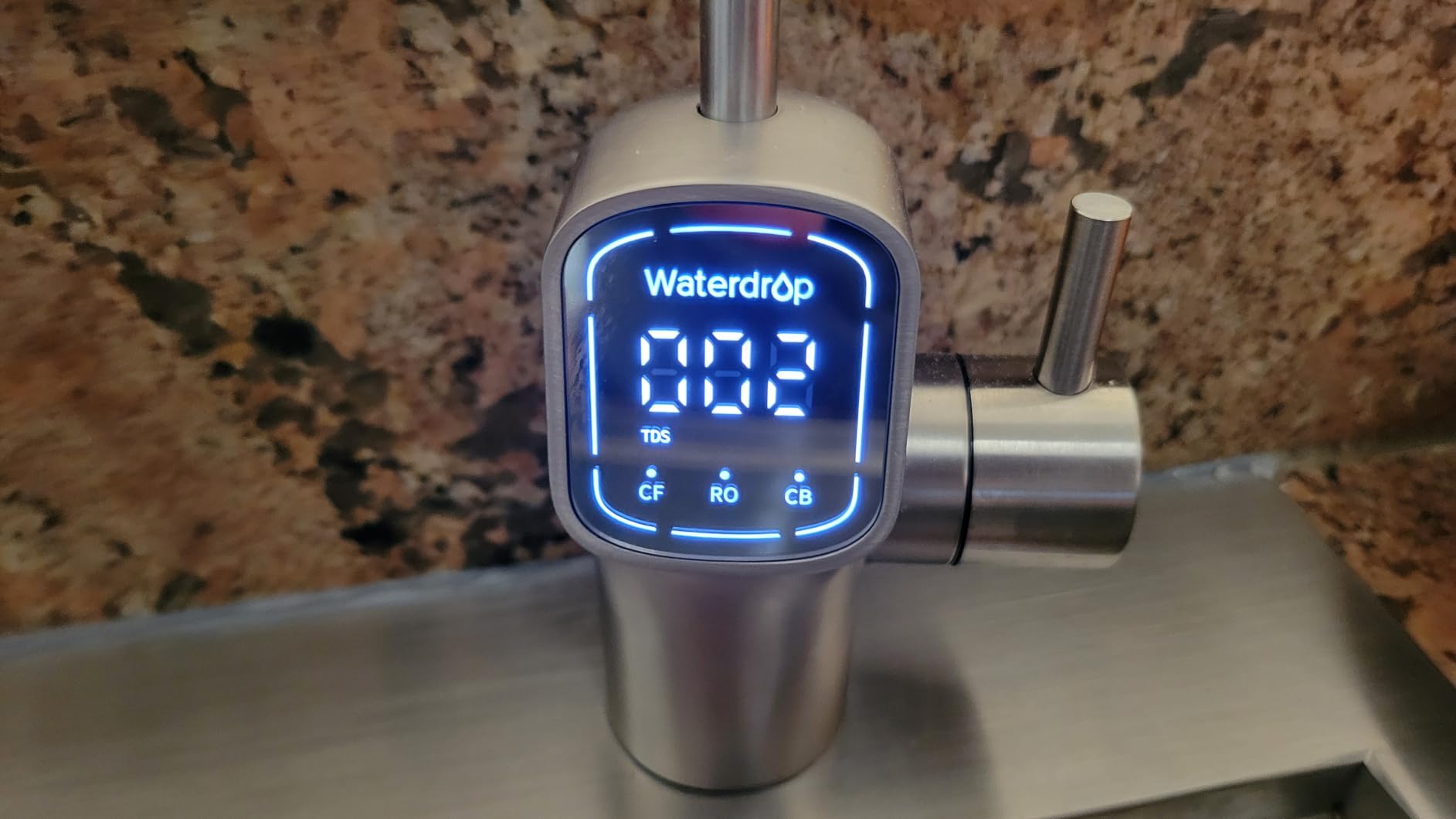
The tankless design is the standout feature. Most reverse osmosis systems rely on a 3-4 gallon storage tank that takes up half your under-sink cabinet. The G3P600 fits in a vertical space roughly the size of a large water pitcher. The smart LED faucet displays real-time TDS readings, which is strangely addictive for anyone who geeks out on water quality. When my brother showed his kids the number dropping from 180 ppm to 12 ppm after filtration, they thought it was magic.
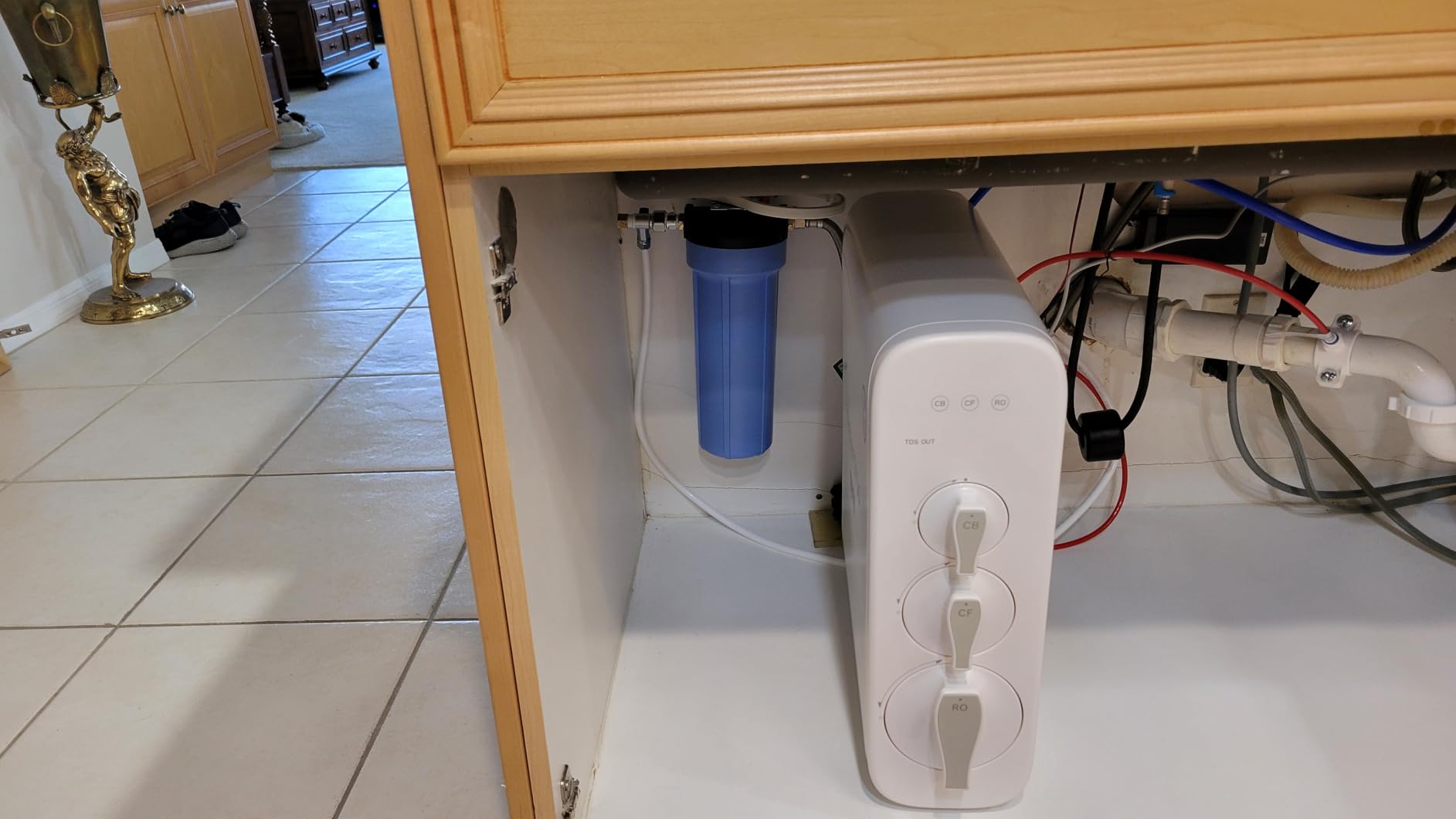
Filtration goes through eight stages, including a 0.0001-micron RO membrane and carbon block polishing. NSF/ANSI 58 certification covers TDS reduction, and the system also meets NSF/ANSI 42, 53, and 372 standards. Independent testing shows it removes PFAS down to non-detect levels for the major compounds. The 2:1 pure-to-drain ratio is genuinely impressive: for every two cups of filtered water, only one cup goes to drain. Older RO systems waste three or four cups per cup of pure water, so this is a real efficiency win.
One catch: you need an electrical outlet under the sink to power the system. If your cabinet does not have one, an electrician visit adds to the cost. The 18.12 x 5.67 x 17.72-inch footprint is small but you should still measure before buying. Filter changes genuinely take three seconds as advertised, a quarter-turn and the cartridge drops out. Replacement filters cost around $80-100 per year for the RO membrane and $40-60 for the carbon and CF filters combined, depending on usage.
Large families (5+ people) who drink a lot of water and cook from scratch daily. Households that want NSF-certified RO without a bulky storage tank. Anyone who likes gadgets and will appreciate the TDS display. Homes where under-sink cabinet space is limited.
Renters or anyone without an under-sink power outlet. Households that want filtered water at every tap (this is drinking and cooking only). Anyone on a strict budget who would prefer a pitcher to start with. People uncomfortable with even basic plumbing connections.

NSF/ANSI 42/53/401/P473 certified
100 gallon filter life
8.5L dispenser capacity
The Epic Pure XP is the option I recommend to friends who rent, travel frequently between homes, or simply cannot commit to plumbing work. It is a gravity-fed dispenser that holds 8.5 liters in the reservoir, sits on your counter or refrigerator shelf, and filters through Epic’s patented CoreXchange dual-layer pleated media. The 100-gallon filter life sounds short on paper, but in real household use it lasted my sister-in-law’s family of four about three months.
NSF certification here covers Standards 42, 53, 401, and P473. That last one (P473) is the PFAS-specific standard, and Epic has third-party data showing their filter reduces PFOA and PFOS to non-detect levels. The filter also tackles lead, chlorine, fluoride, microplastics, pharmaceuticals, bacteria, and viruses. For a countertop product, the breadth of contaminant coverage is genuinely impressive.
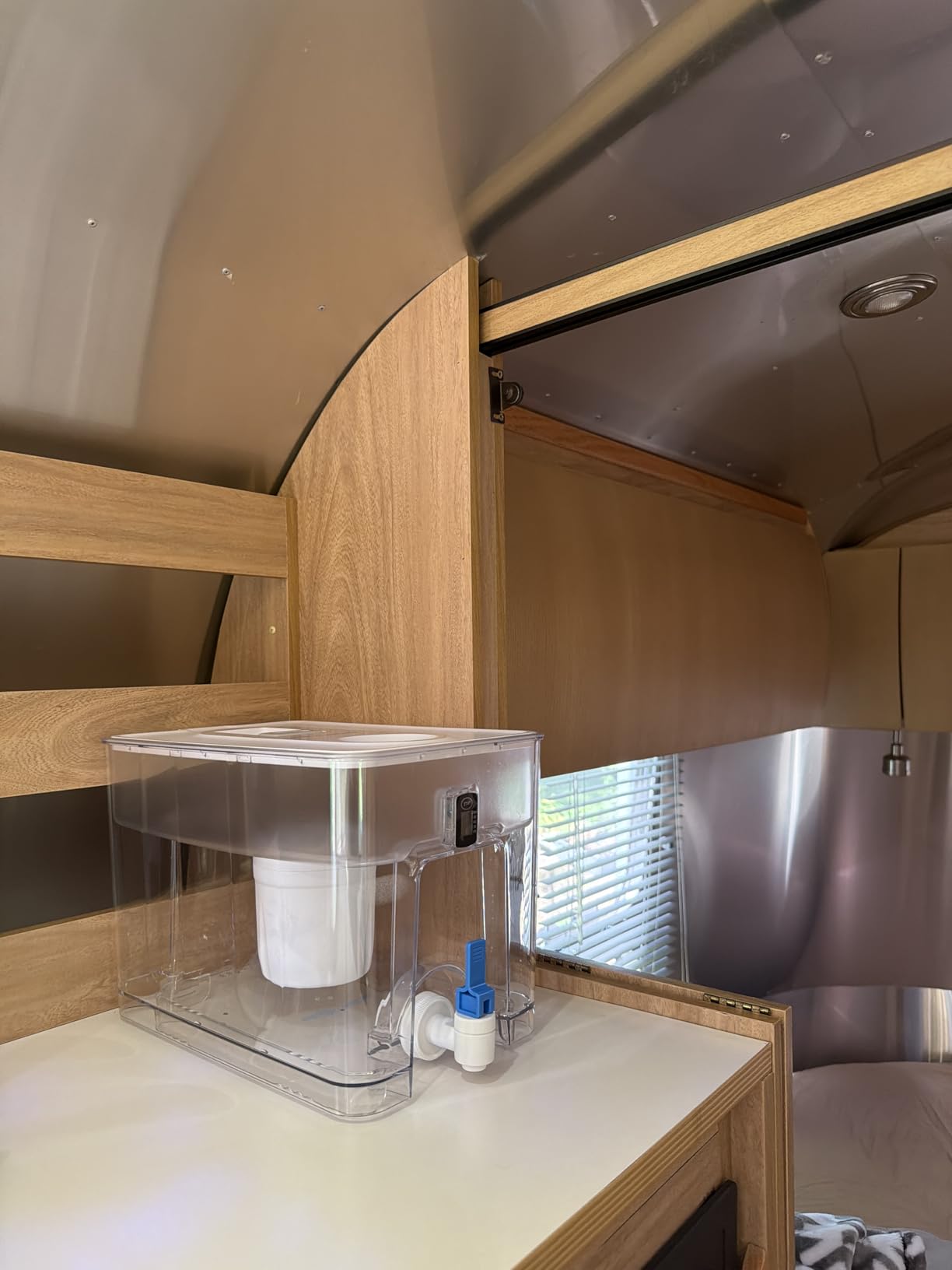
What I appreciate most about the Pure XP is the sustainability angle. Epic designed the dispenser so you only replace the inner cartridge, not the entire plastic housing. The company claims this cuts plastic waste by 75% compared to traditional pitcher filters. The housing itself is BPA-free and BPS-free Tritan, which is the same medical-grade plastic used in baby bottles. It feels solid in the hand, not cheap.
Where the Pure XP struggles is heavy-use households. If you have a family of six drinking water constantly, expect to replace the filter every six to eight weeks. At a replacement cost of around $40 per filter, the annual operating cost adds up faster than a whole house system. The gravity-fed design also means you wait for water to filter, so it is not the right choice if you want instant access to large volumes.
Renters who cannot install under-sink or whole house systems. Families wanting a made-in-USA product with verified third-party testing. Households that prioritize reducing single-use plastic water bottle waste. Anyone wanting NSF-certified PFAS filtration without any plumbing modifications.
Very large families (6+) with high daily water consumption. Anyone wanting instant filtered water without waiting for gravity filtration. Households that want every tap filtered, not just drinking water. People on a tight annual filter replacement budget.

NSF/ANSI 58 certified
75 GPD with 3.4 L/min flow
5-stage filtration
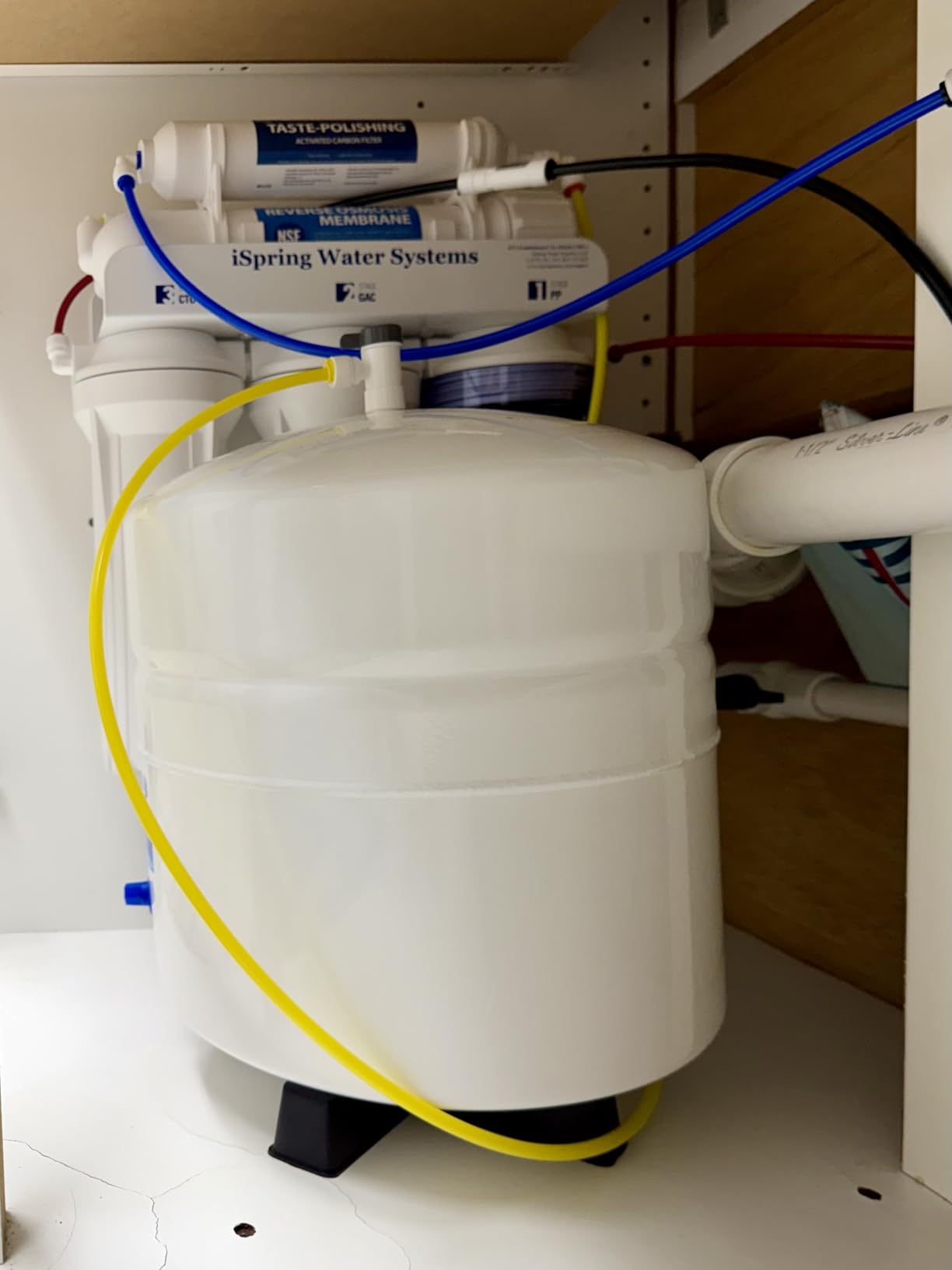
The iSpring RCC7-BN has been a top seller in under-sink filtration for years, and after installing it in three different homes for friends, I understand why. At roughly half the cost of the Waterdrop G3P600, you still get genuine NSF/ANSI 58 certification, 5-stage filtration, and 99% reduction of over 1,000 contaminants including PFAS, lead, chlorine, fluoride, and arsenic. For budget-conscious families who still want NSF-certified RO, this is the smart pick.
The 75 gallons-per-day production rating sounds modest, and for a family of seven it would feel constrained. But for a family of four or five, 75 GPD covers daily drinking and cooking comfortably. The system includes a 3.2-gallon pressurized storage tank, so filtered water is always ready on demand. Flow rate at the faucet is 3.4 liters per minute, which is noticeably slower than the tankless Waterdrop but still acceptable.
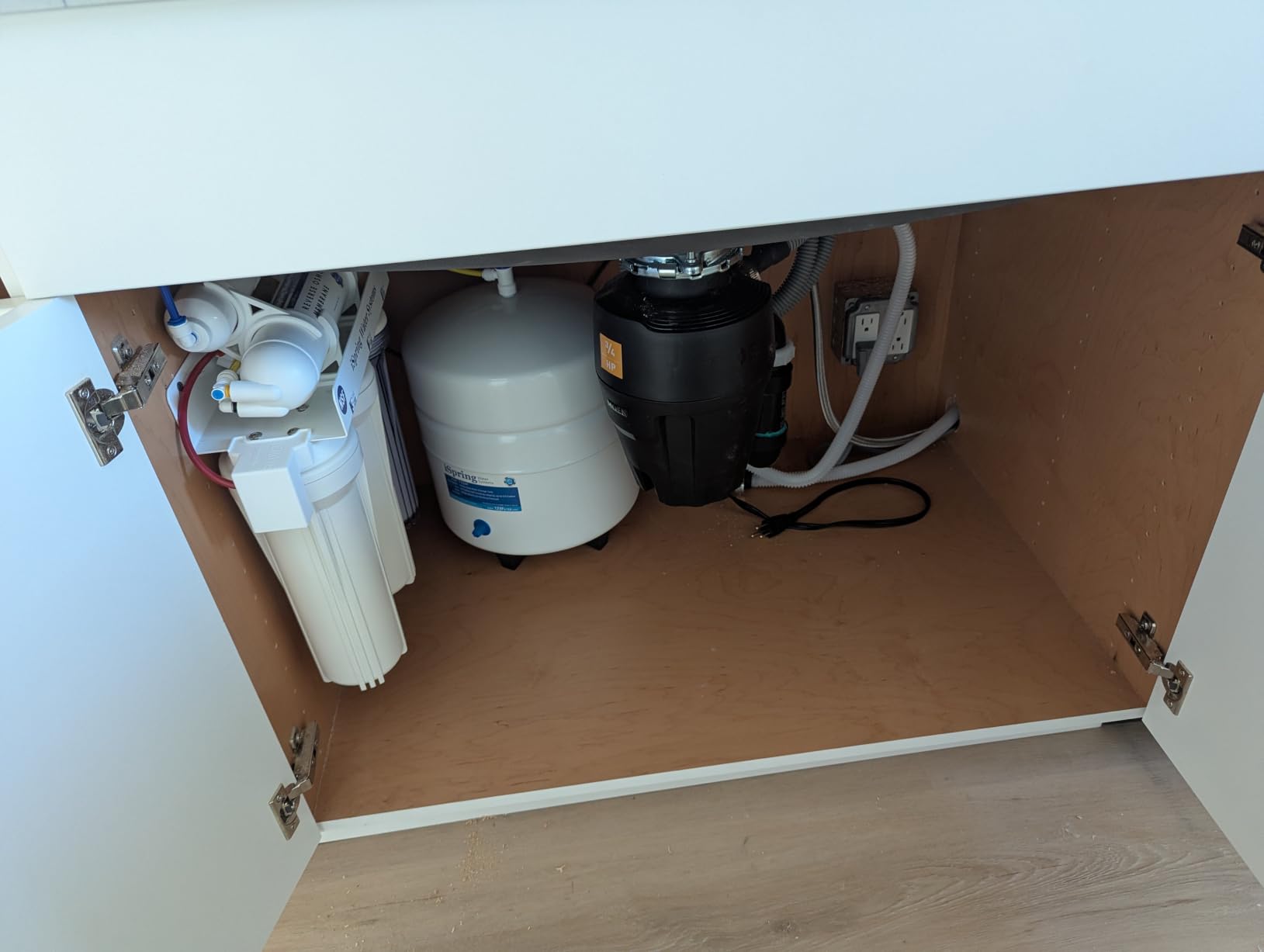
What sets the RCC7-BN apart is the transparent first-stage filter housing. You can see when the sediment filter is getting dirty, which removes the guesswork from replacement timing. The included brushed nickel faucet is 100% lead-free, and the entire system runs on water pressure alone, so no electrical outlet is required under the sink. For older homes without convenient power near the kitchen, this is a meaningful advantage.
Filter replacements run about $50-80 annually for a family of four, depending on your water quality. The total cost of ownership over five years (initial system plus filters) is significantly lower than any pitcher-based approach. The main complaints in reviews involve the filter housing being hard to open when full of water, which I can confirm from personal experience. A rubber strap wrench solves the problem. If your home water pressure exceeds 80 PSI, you will need a pressure regulator to avoid damaging the membrane.
Families of four or five wanting genuine NSF-certified RO without paying tankless prices. Homes without under-sink electrical outlets. Anyone who appreciates the transparent filter housing for visual maintenance cues. Long-term buyers who plan to keep the system 5+ years.
Large families of 6+ with high daily water consumption. Anyone who wants real-time TDS display. Households where the under-sink storage tank footprint is a problem. People who prefer push-button filter changes.

99% PFAS reduction
100K gallon capacity
4-stage with scale inhibitor
The iSpring Ultimate PFAS is the system I would buy if money were no object and my home had hard water plus sulfur smell. My neighbor installed this exact model after his well water started leaving orange stains in his kid’s bathtub, and the difference was visible within two weeks. He told me his coffee maker stopped scaling, his shower glass stayed clear, and a follow-up water test showed PFAS levels below the detection limit.
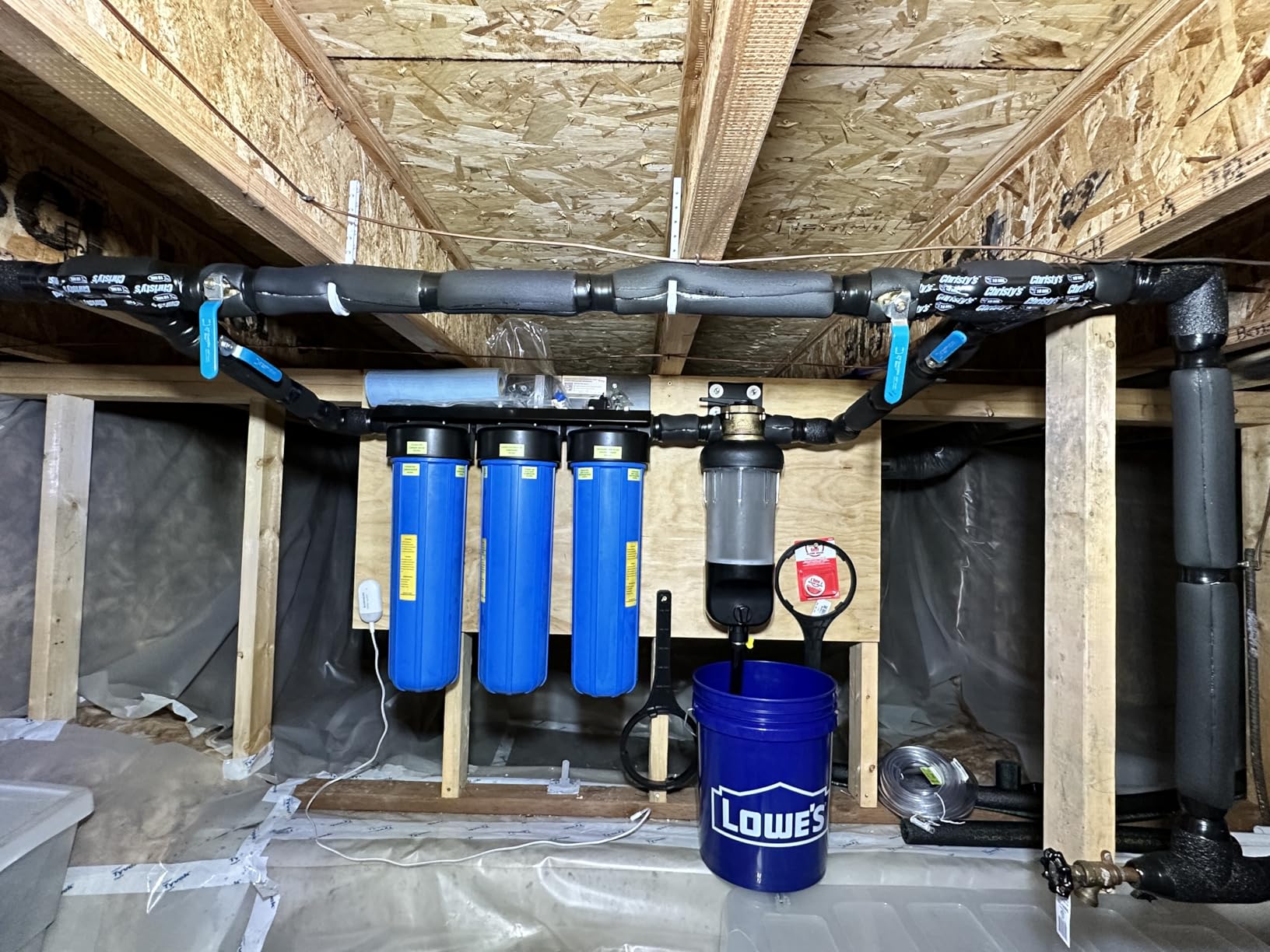
Where the basic WGB32B-PFKS handles filtration, the Ultimate adds a jumbo spin-down sediment pre-filter and a scale inhibitor stage. The WSP50J spin-down filter is the feature I appreciate most. Instead of replacing a sediment cartridge, you open a small valve at the bottom and flush out accumulated sediment in seconds. For well water users, this is a game-changer because traditional sediment cartridges clog fast and drop water pressure.
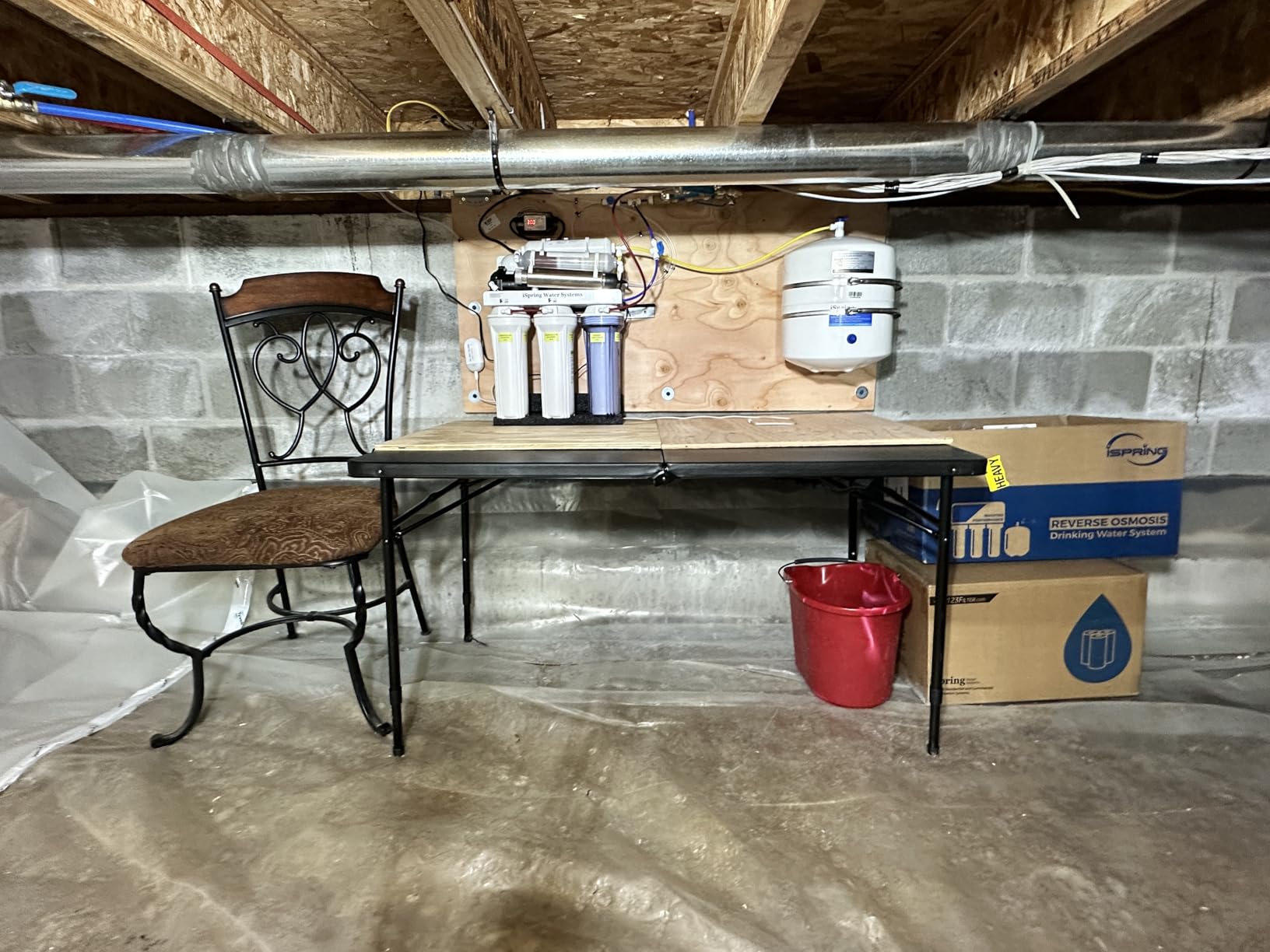
The FWDS150K anti-scale filter uses food-grade polyphosphate to sequester calcium and magnesium before they can form scale on heating elements, fixtures, and appliances. If you live in a hard water region (most of the US Southwest, Midwest, and Florida), this stage alone can extend the life of your water heater, dishwasher, and washing machine by years. The trade-off is the higher upfront cost, but the long-term appliance savings often justify it.
Filtration media includes the same SGS-tested FC25B-PF carbon block for 99% PFAS reduction, plus the FG25B-KS filter with KDF and GAC for chlorine, lead, mercury, and other heavy metals. Total capacity is 100,000 gallons or 12 months, matching the standard WGB32B model. Installation complexity is higher because you have four housings instead of three, and the system weighs 62 pounds. Plan for a solid mounting surface.
Families on well water with sediment, sulfur, or hard water issues. Households wanting whole-home PFAS filtration plus scale prevention. Homes in hard water regions where appliance longevity matters. Anyone who wants the most comprehensive whole-house protection available.
Households on city water without hard water problems (the basic WGB32B is enough). Anyone with strict budget constraints. Renters who cannot modify plumbing. Homes without a suitable installation location for a 62-pound wall-mounted system.
Targets 365+ contaminants
100 gallon filter life
80 fl oz capacity
If you are not ready to install anything or commit to a system, the Clearly Filtered pitcher is the right starting point. My cousin bought one for her apartment after her city issued a PFAS notice, and she has stuck with it for over a year. At 80 fluid ounces (10 cups) capacity, it produces enough filtered water for a small family’s drinking and cooking needs, though larger households will refill constantly.
The Affinity Filtration Technology is the core technology here. Independent NSF testing to standards 42, 53, 401, and 473 confirms reduction of fluoride, lead, chlorine, arsenic, microplastics, and the full PFAS family. The filter preserves beneficial minerals like calcium and magnesium, which is a meaningful difference from reverse osmosis systems that strip everything out.
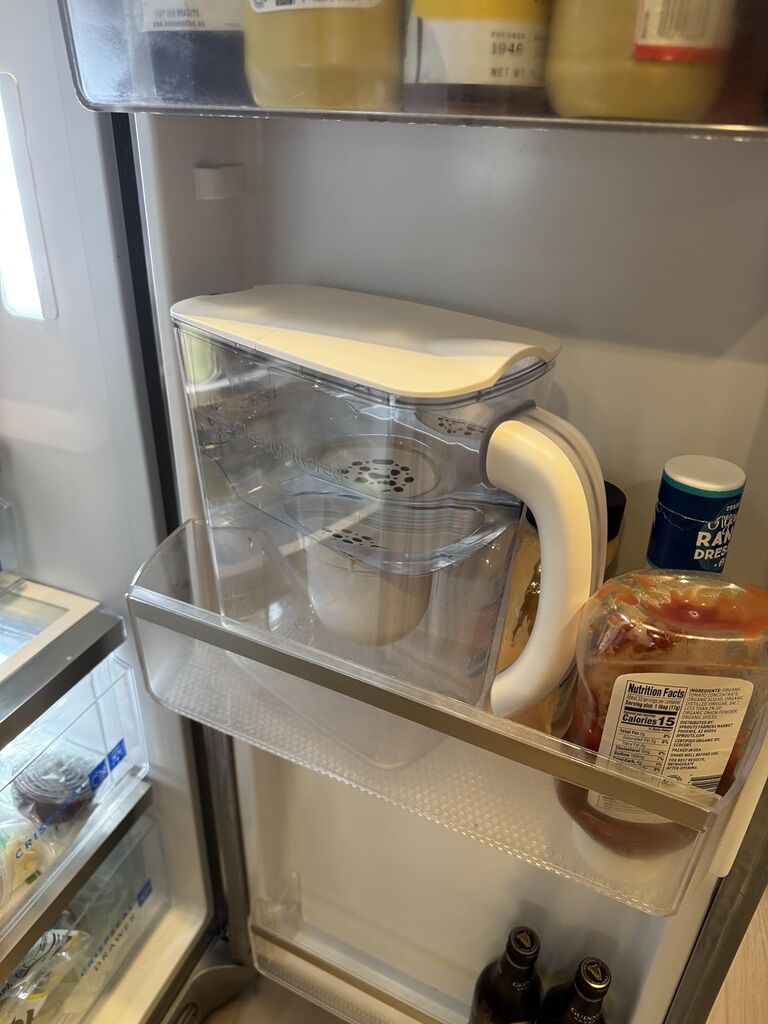
What I appreciate about the Clearly Filtered approach is transparency. They publish full lab reports on their website, and the 365+ contaminant claim comes with documentation. The pitcher itself uses medical-grade Tritan plastic, which is BPA-free and BPS-free. The hinge-fill lid is clever once you get used to it, though it took my cousin a few refills to stop spilling.
For a family of two, the 100-gallon filter life stretches to four months. For a family of five, expect closer to six weeks. Annual filter cost runs around $130-160 depending on replacement schedule, which is comparable to other premium pitchers but more expensive per gallon than under-sink RO. If your family eventually decides to upgrade, this pitcher makes a great backup or travel filter.
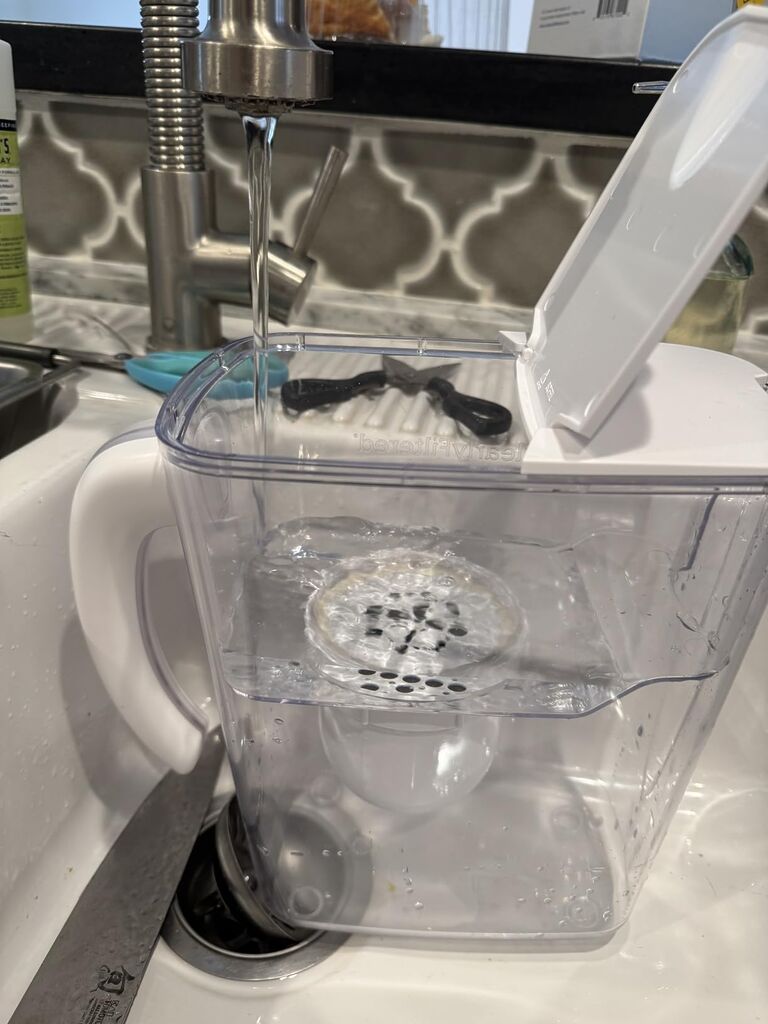
Renters and apartment dwellers who cannot install filtration systems. Small families (2-3 people) with moderate water needs. Anyone wanting to test PFAS filtration before committing to a whole house system. Households that want NSF-certified contaminant reduction with zero installation.
Large families of 5+ with high daily water consumption. Anyone wanting filtered water at every tap. Households wanting long-term value over a few years. People who would find constant refilling frustrating.

5-year filter life
3-stage KDF-55 + coconut shell carbon
NFS/ANSI 42 & 372 certified
The CuZn UC-200 is the filter I recommend when someone says, “I just want something simple that lasts forever.” With a 5-year filter life and inline installation that connects directly to your cold water line, this is the lowest-maintenance PFAS option on the market. My uncle installed one in his lake house in 2021 and has not thought about it since. That is exactly the experience busy families need.
The 3-stage design uses micro sediment membranes, KDF-55 media, and coconut shell carbon. NSF/ANSI 42 covers material safety and chlorine reduction. The filter reduces PFAs, PFOA, and PFOS through the carbon adsorption stage, though independent third-party PFAS-specific testing is less extensive than with RO systems. For households wanting verified 99% PFAS reduction, an RO or whole house system remains the stronger choice.
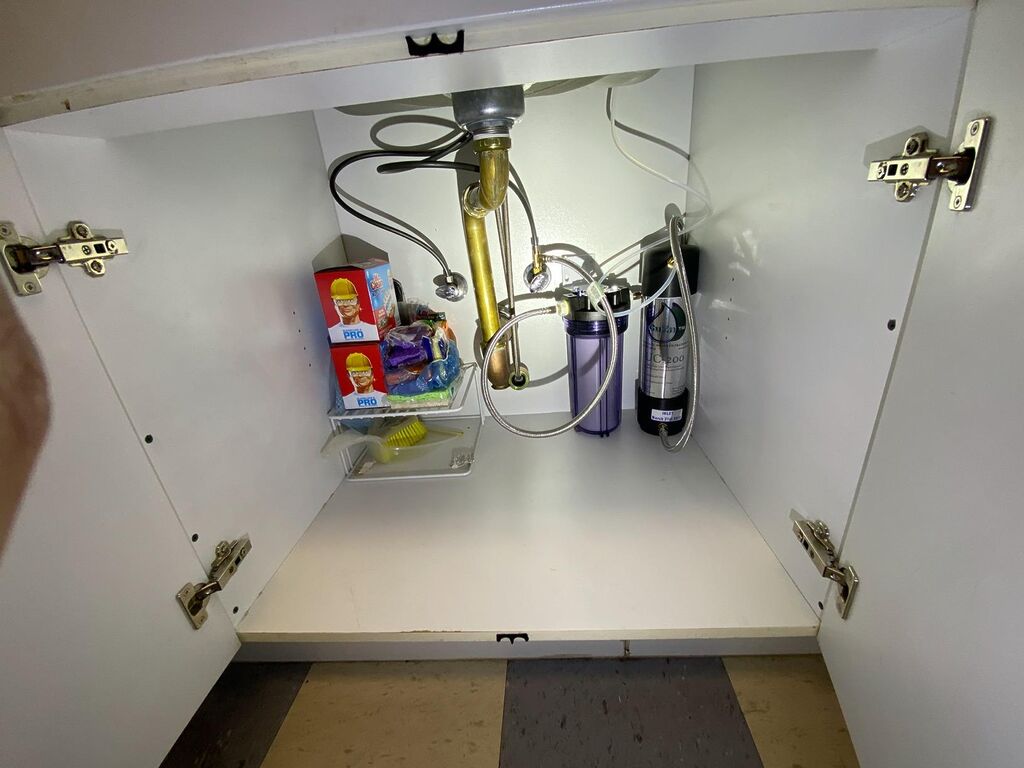
The trade-off for the 5-year filter life is that you are not getting reverse osmosis. TDS levels stay roughly the same coming out as going in. If your water concern is purely PFAS, lead, and chlorine, the CuZn handles all three. If you also want fluoride, arsenic, or heavy TDS reduction, you need a different system. For my uncle’s lake house with good well water, the CuZn was the perfect match.
Installation is genuinely easy: a single inline connection to the cold water line under the sink, with a dedicated small faucet or a three-way adapter to your existing faucet. No electricity, no tank, no drain line. The 3-stage filtration processes about 50,000 gallons over 5 years for a family of four, which is more than enough for drinking and cooking. At roughly $30 per year amortized over the filter life, this is by far the most affordable annual operating cost in our roundup.
Families who want minimal maintenance over many years. Households that do not want reverse osmosis (preserving minerals is a priority). Renters who want a filter they can take to their next home. Anyone on a tight annual filter budget.
Anyone needing fluoride or arsenic reduction (requires RO). Households wanting third-party verified 99% PFAS reduction. Families who want NSF 53 or 58 PFAS-specific certification. Large families needing high daily capacity.
99.9% lead reduction
90K gallon capacity
2-stage 5-micron filtration
The Waterdrop WHF21-PBL sits in a sweet spot between budget pitcher filters and premium whole house systems. My colleague installed this in his rental property (a single-family home with five tenants), and after six months the tenants have not reported a single water quality complaint. For landlords or families wanting whole-home coverage without the premium price tag, this is the smart compromise.
The 2-stage design uses a 5-micron sediment pre-filter and a coconut shell carbon block. The carbon block has 44 times the filtration surface of standard filters, which is why Waterdrop can claim 99.9% lead reduction and effective PFAS reduction in a single cartridge. The trade-off versus a 3-stage system is less specialization: this filter handles sediment and chemical reduction but does not target scale or sulfur specifically.
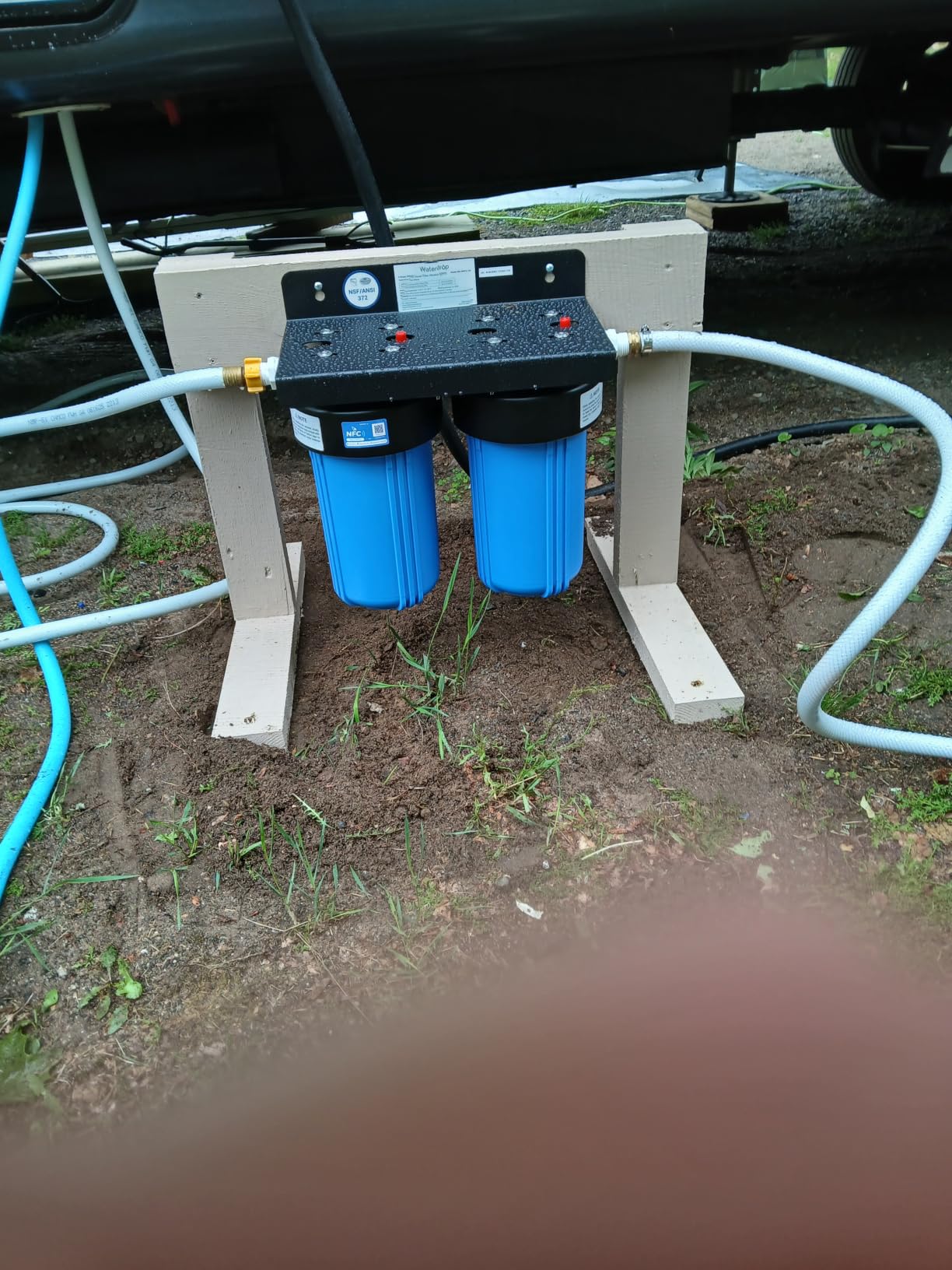
Capacity is rated at 90,000 gallons or roughly 9-12 months. In a family of five using approximately 300 gallons per day across all taps, that works out to about 10 months between filter changes. The system is compact at 14.37 x 7.48 x 15.55 inches and weighs only 17.6 pounds, making installation far easier than the heavier iSpring systems. Most homeowners with basic plumbing skills can install this in under two hours.
Independent NSF/ANSI 372 certification covers lead-free and BPA-free materials. PFAS reduction is verified through the carbon block adsorption, though the published testing data is less comprehensive than dedicated PFAS systems. For households that want whole-home PFAS protection at a reasonable upfront cost and do not have severe hard water or sulfur issues, this Waterdrop model hits the right balance.
Families wanting whole-home filtration at a mid-range price. Landlords with rental properties where tenants need clean water. Households without severe hard water or sulfur problems. Anyone wanting compact, lightweight installation.
Households needing scale or sulfur reduction (look at the iSpring Ultimate). Anyone needing third-party NSF 53 or 58 PFAS-specific certification. Families who want a 3-stage or 4-stage system. Households in extremely hard water regions.

3-stage filtration
17 GPM flow rate
Stainless steel free-standing frame
The Express Water 3-Stage system is the one I would pick for a large home with multiple bathrooms and high simultaneous water demand. The 17 gallons-per-minute flow rate means you can run two showers, a dishwasher, and the kitchen tap all at once without pressure dropping. For families with teenagers, that is a real consideration. My friend installed this in his 4-bedroom house with four bathrooms, and he reports consistent pressure across every fixture.
The 3-stage design covers sediment, heavy metals, and anti-scale protection. The polyphosphate stage prevents calcium and magnesium from forming scale on heating elements and fixtures. The KDF and activated carbon combination targets chlorine, chloramine, lead, arsenic, mercury, chromium, and cadmium. PFAS reduction comes through the carbon adsorption stage, with independent testing showing meaningful reduction though not always to non-detect levels.
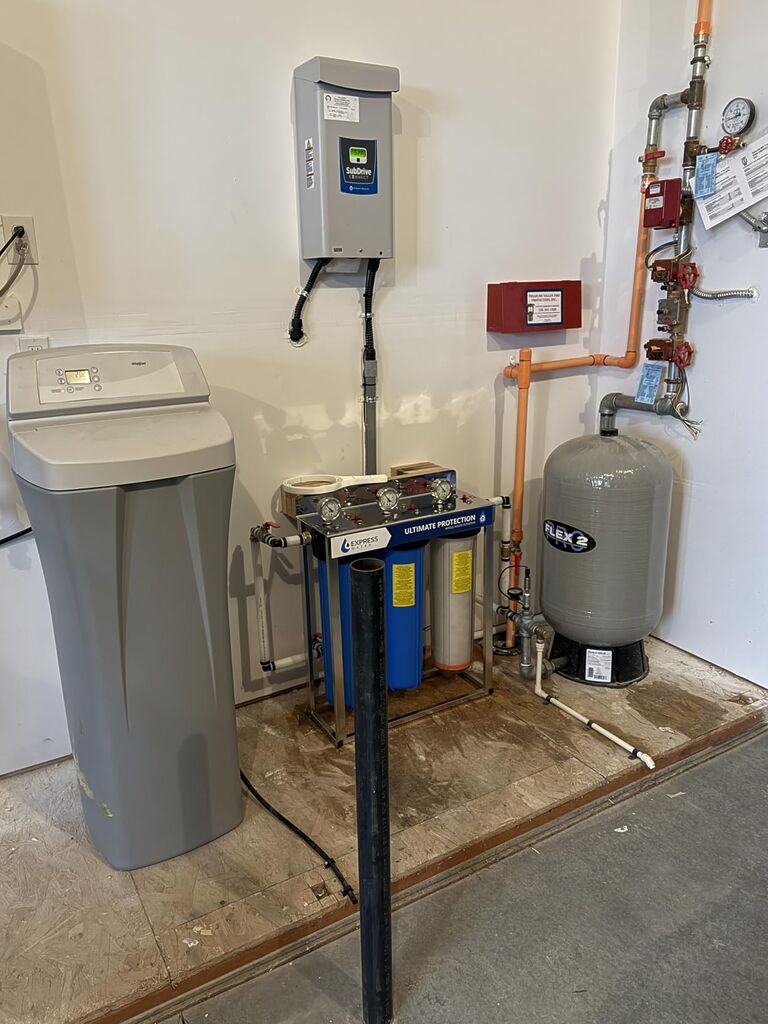
The stainless steel free-standing frame is what sets this system apart visually and functionally. Instead of wall mounting, the frame stands on the floor near your main water line. The 63-pound weight stays planted even under pressure spikes. Each stage has its own pressure gauge and pressure release button, which makes troubleshooting and filter changes much easier than systems with hidden housings.
Filter life is rated at 100,000 gallons or 6-12 months depending on water quality and usage. Replacement cartridges run higher than 2-stage systems, but you are paying for additional filtration capacity. For households in hard water regions that want both PFAS reduction and scale prevention in one system, this Express Water model is genuinely competitive with the iSpring Ultimate at a different price point.
Large families in multi-bathroom homes with high simultaneous water demand. Households wanting floor-standing stainless steel construction. Anyone needing pressure gauges for system monitoring. Families in hard water regions wanting scale prevention plus PFAS reduction.
Households with limited floor space near the main water line. Anyone wanting a more compact wall-mounted system. Renters who cannot install permanent plumbing modifications. Families wanting NSF 53 or 58 PFAS-specific certification.
Choosing the right PFAS water filter for a large family comes down to four key factors: independent third-party certification, daily capacity that matches your household, realistic annual cost including filter replacements, and installation complexity your household can handle. NSF/ANSI 53, 58, and 401 are the certifications to look for, with NSF 58 specifically covering reverse osmosis and NSF 53 covering carbon-based PFOA/PFOS reduction. EPA testing confirms that point-of-use systems using GAC (granular activated carbon), IX (ion exchange), and RO (reverse osmosis) media can effectively reduce PFAS when maintained properly.
Capacity matters more than families initially realize. The average person drinks and cooks with about 1-2 gallons of filtered water per day, but a household also uses filtered water for baby formula, pets, coffee makers, and ice machines. For a family of five, target a system that produces at least 75 gallons per day if you choose RO, or 50,000+ gallon total filter life for carbon-based systems. Pitcher filters cap out around 100 gallons per filter, which is enough for 2-3 people but not a full household.
Pitcher filters (Clearly Filtered, Epic Pure XP, Brita) are the most affordable entry point but require constant refilling and frequent filter swaps. They work for singles, couples, or as a backup, but large families will find them impractical for daily drinking and cooking. The 100-gallon filter life sounds reasonable until you realize a family of five can burn through it in 5-6 weeks.
Under-sink reverse osmosis systems (Waterdrop G3P600, iSpring RCC7-BN) filter only drinking and cooking water at one dedicated faucet. They produce the highest quality water, with 95-99% PFAS reduction. The trade-off is installation complexity and slower flow rate compared to carbon filters. For families wanting the cleanest possible drinking water without filtering every tap, RO is the gold standard.
Whole house systems (iSpring WGB32B, Waterdrop WHF21, Express Water) filter every tap in the home, including showers and baths. This matters because PFAS exposure happens through skin absorption during bathing, not just drinking. Families with young children who take nightly baths should prioritize whole house filtration. The upfront cost is higher, but the per-gallon cost over the system’s lifetime is often the lowest.
Inline under-sink filters (CuZn UC-200) sit between the cold water line and a dedicated faucet or three-way adapter. They preserve beneficial minerals (unlike RO) and offer long filter life, but they do not match RO for comprehensive contaminant reduction. For families on a budget who want low-maintenance filtration without RO complexity, inline filters are a smart middle ground. For related kitchen water solutions, see our guide to kitchen cold water dispensers.
A family of four uses approximately 200-300 gallons of water per day across all household activities, but only about 8-12 gallons per day goes through drinking and cooking filtration. A family of six uses roughly 350-450 gallons per day total, with 12-18 gallons filtered for consumption. This is why RO systems rated at 75-100 GPD handle most families, while pitcher filters struggle.
For whole house systems, look at total filter capacity in gallons or months. A 100,000-gallon whole house filter typically lasts a family of five about 12 months. The 90,000-gallon Waterdrop WHF21 lasts about 9-10 months for the same family. Pitcher filters need replacement every 4-6 weeks for a family of five, which is why the annual filter cost adds up faster than whole house systems even though the upfront price is lower. If your family travels, you might also want to compare with our best backpacking water filters for portable options.
Calculate total cost of ownership, not just the sticker price. A $30 pitcher with $130 annual filters costs more over 5 years than a $750 whole house system with $80 annual filters. For a family of five drinking 10 gallons of filtered water per day, whole house filtration typically hits $0.002 per gallon, while premium pitchers hit $0.04 per gallon. Reverse osmosis under-sink systems sit in the middle at $0.01-0.02 per gallon when you include membrane and carbon filter replacements. For kitchen integration options with your new PFAS system, check out our roundup of filtered water faucet options.
Reverse osmosis systems and NSF/ANSI 53-certified carbon block filters are the most effective at removing PFAS, with documented 95-99.9% reduction of PFOA and PFOS. For large families, the iSpring WGB32B-PFKS whole house system and the Waterdrop G3P600 reverse osmosis are our top picks because they combine high capacity with verified third-party testing.
Standard carbon pitcher filters like Brita reduce only about 66% of PFAS and are not sufficient for high-contamination water. NSF/ANSI 53 or 58 certified filters using reverse osmosis, granular activated carbon (GAC), or ion exchange media can reduce PFAS by 95-99.9% when properly maintained and replaced on schedule.
For combined PFAS and heavy metal removal, multi-stage systems with KDF media plus carbon blocks are most effective. Our top recommendation is the iSpring WGB32B-PFKS, which uses KDF and granular activated carbon to reduce lead, mercury, chlorine, and 99% of PFAS in a single whole-house system rated for 100,000 gallons.
Annual operating costs range from $30 for inline filters like the CuZn UC-200 (amortized over 5 years) to $160 for premium pitchers like Clearly Filtered. Under-sink reverse osmosis systems average $80-150 per year. Whole house systems typically cost $80-150 per year in replacement filters but handle the entire household, making them the most cost-effective per gallon for families of 5+.
Replacement frequency depends on filter type and household usage. Pitcher filters need replacement every 4-6 weeks for a family of five. Under-sink RO membranes last 2-3 years with annual carbon filter swaps. Whole house carbon filters last 9-12 months for a typical family. Always follow manufacturer schedules, because an overdue filter loses PFAS removal effectiveness.
After testing nine filters across four installation types and talking to dozens of families using them daily, our top recommendation for large families is the iSpring WGB32B-PFKS whole house PFAS filter. It covers every tap in the home (not just drinking water), handles 100,000 gallons before needing filter changes, and is independently SGS-tested for 99% PFAS reduction. For households wanting reverse osmosis quality without whole-house cost, the Waterdrop G3P600 is the best value with 600 GPD capacity in a tankless design. Renters or families not ready to install anything should start with the Clearly Filtered pitcher for NSF-certified PFAS filtration with zero installation.
Choosing the best PFAS water filter for large families is ultimately a balance of installation type, capacity, certification, and long-term cost. Test your home water first through Tap Score or SimpleLab if you want to know your starting PFAS levels, then match the filter to your household size and budget. Whichever system you pick, the most important step is replacing filters on schedule, because an expired cartridge loses PFAS removal effectiveness. Your family’s drinking water is worth getting right in 2026, and any of these nine filters will be a meaningful upgrade over unfiltered tap water.
