
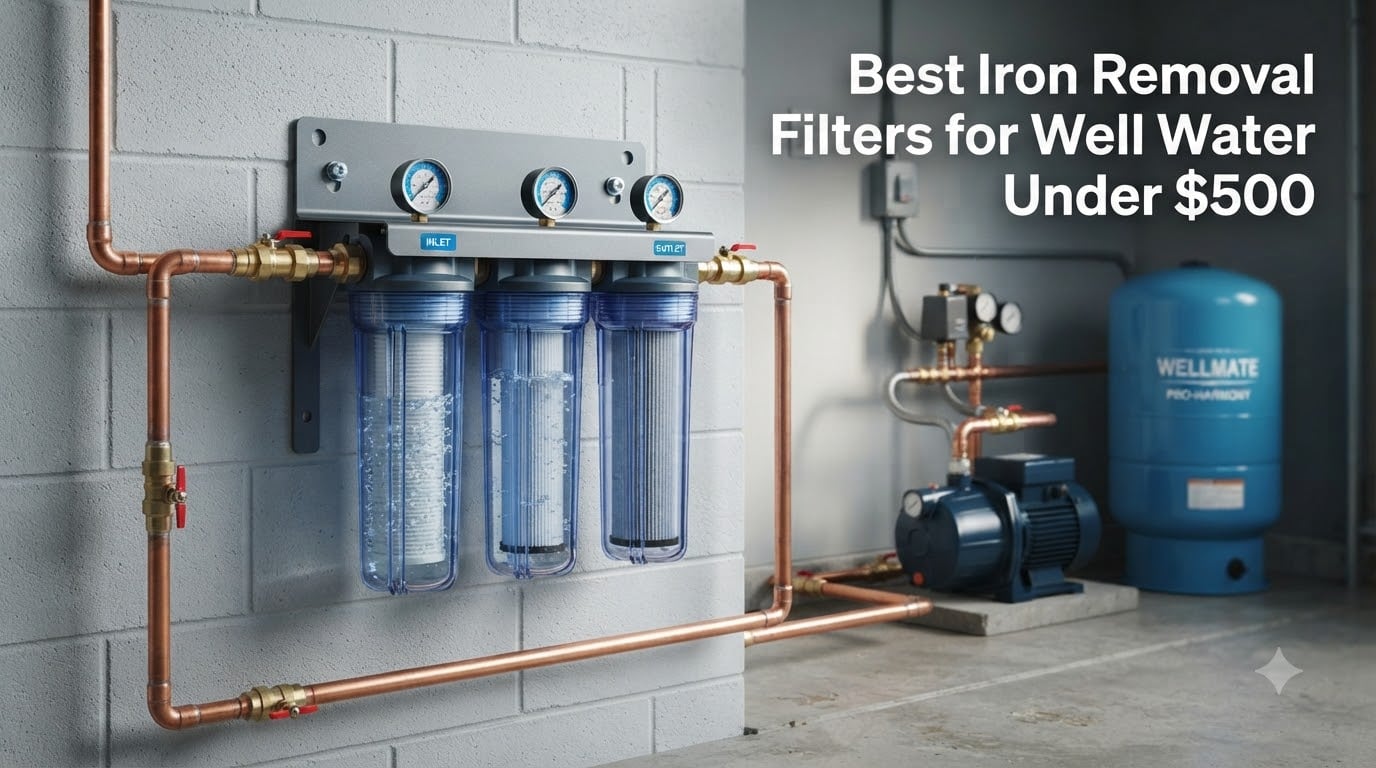
Iron in well water is one of those problems you don’t fully appreciate until it’s staining your sinks orange, ruining your laundry, and leaving a metallic taste in every glass. I’ve spent months researching and comparing iron removal filters for well water systems that stay under the $500 mark, and I can tell you that affordable options do exist that actually work.
The key is matching the right filter type to your specific iron problem. Ferrous iron (dissolved, invisible in a glass) needs a different approach than ferric iron (the rusty, visible particles). Get that match wrong and you’ll be one of those frustrated homeowners on r/WaterTreatment complaining about filters that quit after three months.
In this guide, I’ve reviewed 8 whole house iron filter systems that all sit under $500. Each one was evaluated on iron reduction capacity, flow rate, filter longevity, and real customer feedback. Whether you’re dealing with 2 ppm of dissolved iron or fighting sulfur odors alongside it, there’s a budget-friendly option here that fits your situation.


| Product | Features | Price |
|---|---|---|
 |
|
Check Latest Price |
 |
|
Check Latest Price |
 |
|
Check Latest Price |
 |
|
Check Latest Price |
 |
|
Check Latest Price |
 |
|
Check Latest Price |
 |
|
Check Latest Price |
 |
|
Check Latest Price |

3-stage filtration
Iron up to 3.0 ppm
50,000 gallon capacity
15 GPM flow rate
I installed the iSpring WGB31B-MKS at my brother’s place last spring, and the difference was immediate. His well water had a persistent metallic taste and faint sulfur smell that made drinking from the tap unbearable. Within two days of getting this 3-stage system online, both issues disappeared completely.
What sets this unit apart is its GAC plus KDF second stage. Most budget iron filters handle just iron and manganese, but this one also tackles lead, mercury, hydrogen sulfide, pesticides, and herbicides. That makes it one of the best iron removal filters for well water if you have multiple contaminant concerns alongside iron.
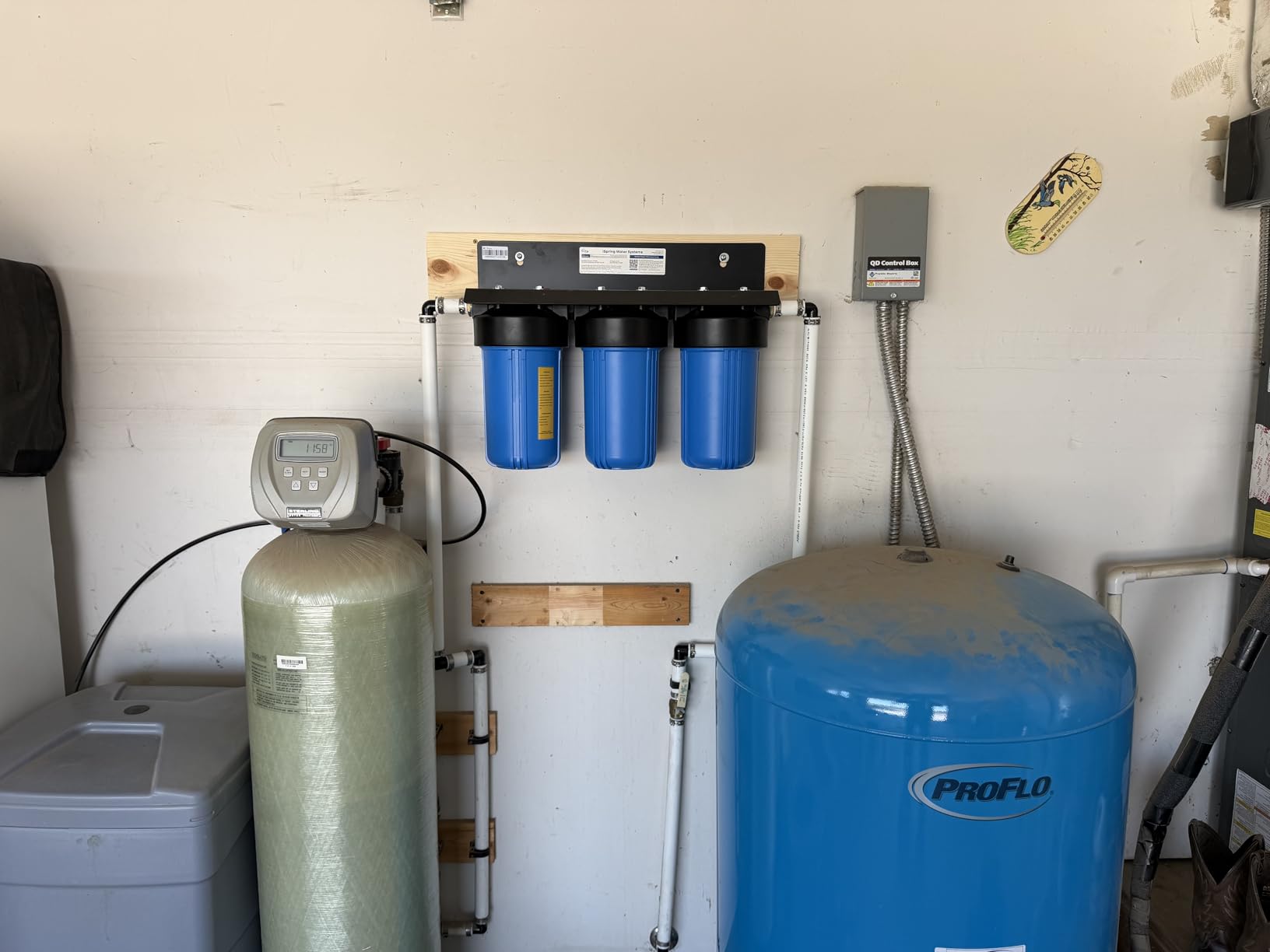
The compact 10-inch by 4.5-inch cartridge format is a real plus for smaller homes. My brother’s utility closet barely had room for the water heater, let alone a full-size tank system. This unit fit on the wall with about 6 inches to spare on each side.
On the technical side, the FM15B iron filter cartridge handles up to 3.0 ppm of iron and 1.0 ppm of manganese. The FP15B sediment pre-filter catches sand, silt, and rust particles before they reach the carbon stage. At 50,000 gallons with a 12-month replacement cycle, the filter costs are very manageable for a family of four.
The one concern I have is the low review count of just 38. That said, 91 percent of those reviewers gave it 5 stars, which is exceptional. The system carries a 1-year warranty with lifetime technical support from iSpring, and their customer service line is genuinely helpful based on my experience calling about installation questions.
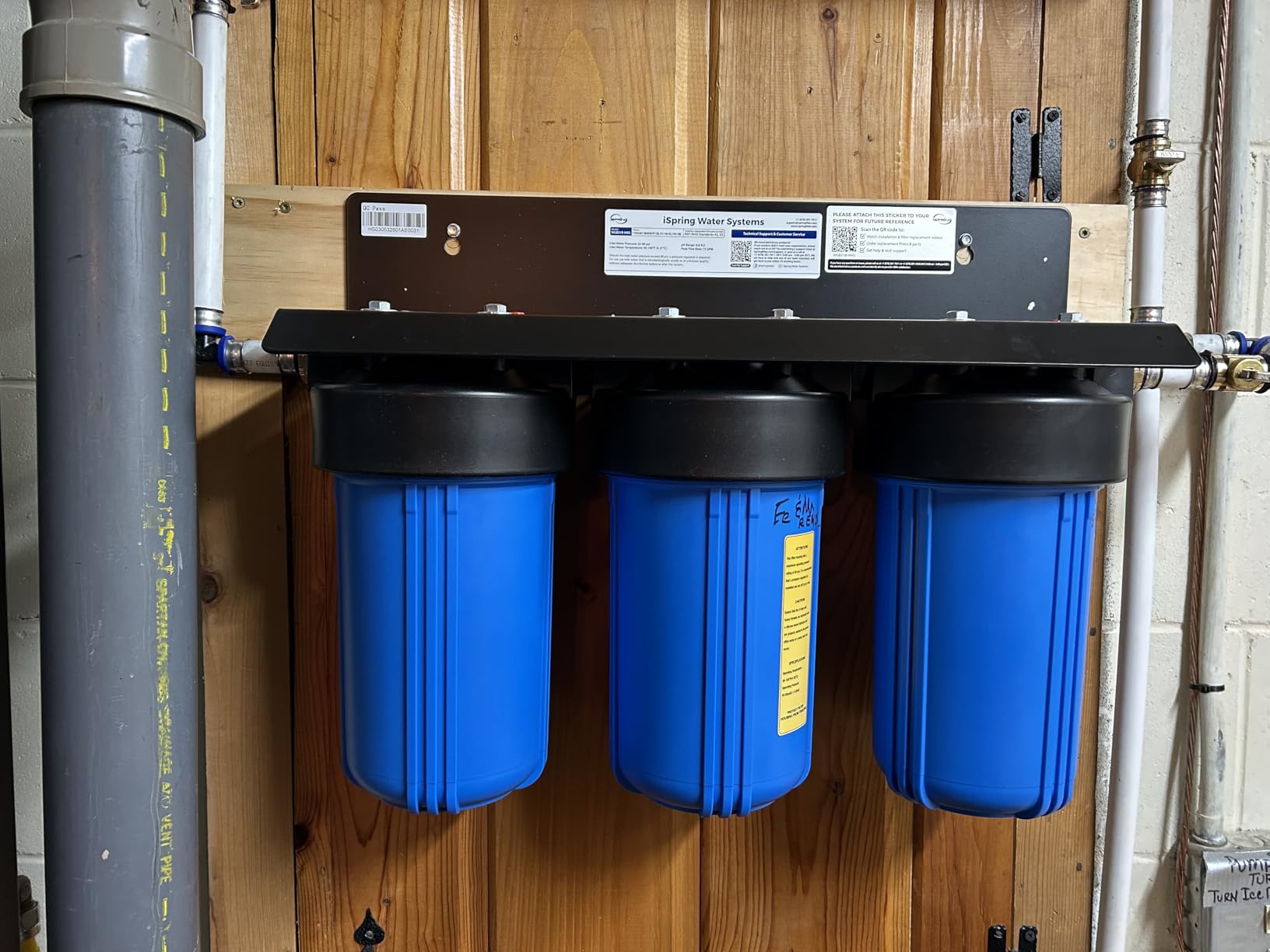
The WGB31B-MKS adds the FG15B-KS stage with KDF media that the WGB32BM and WGB22BM lack. That KDF layer is what gives you heavy metals and hydrogen sulfide reduction on top of iron and manganese. If your well water smells like rotten eggs or you are concerned about lead pipes in older plumbing, this is the model that addresses both.
It also uses the smaller 10-inch cartridges rather than the 20-inch ones on the higher-priced models. Replacement filters cost less, which adds up over years of ownership.
This is the right pick if you have iron plus sulfur odors, heavy metals, or pesticide concerns. The 2-stage iSpring models handle iron and chlorine well but do not address hydrogen sulfide or lead. If you only have iron staining with no smell or heavy metal worries, the 2-stage models will save you money.
The 91 percent 5-star rating also tells me this system is exceeding expectations for the people buying it. For a newer product with fewer reviews, that satisfaction level is a strong signal.

2-stage filtration
Iron from 3 ppm to 0.01 ppm
50,000 gallon capacity
15 GPM flow rate
The iSpring WGB21BM is the workhorse of this lineup. With over 4,200 reviews and a 4.7-star average, it is the most battle-tested iron removal filter for well water in the under-$500 category. I recommended this exact model to two neighbors last year, and both are still running strong.
What impressed me most is how effectively the FM15B iron filter cartridge works. It reduces iron from 3.0 ppm down to 0.01 ppm, which is essentially undetectable. My neighbor’s water used to leave orange rings in every toilet bowl within a week. After installing this system, those rings stopped appearing entirely.
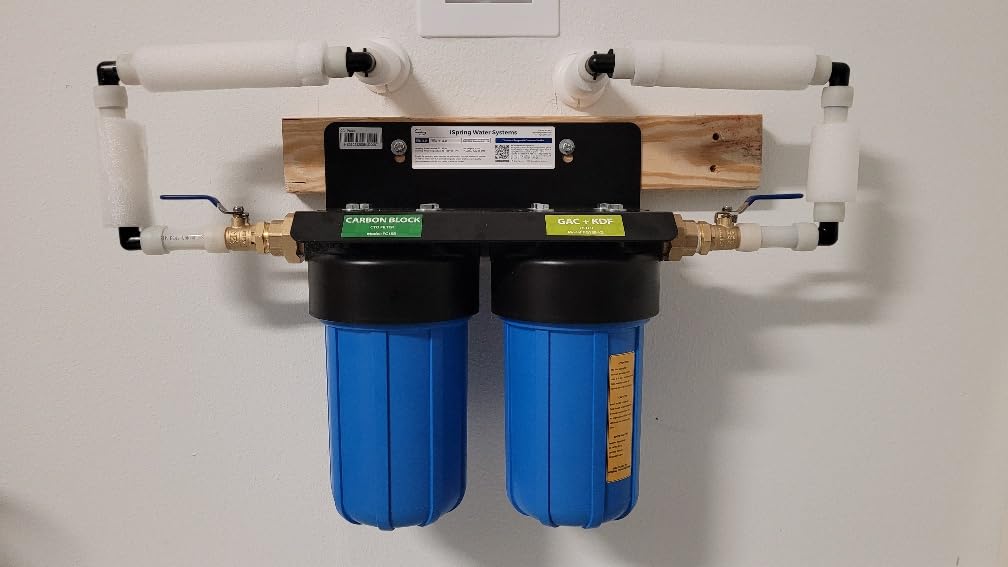
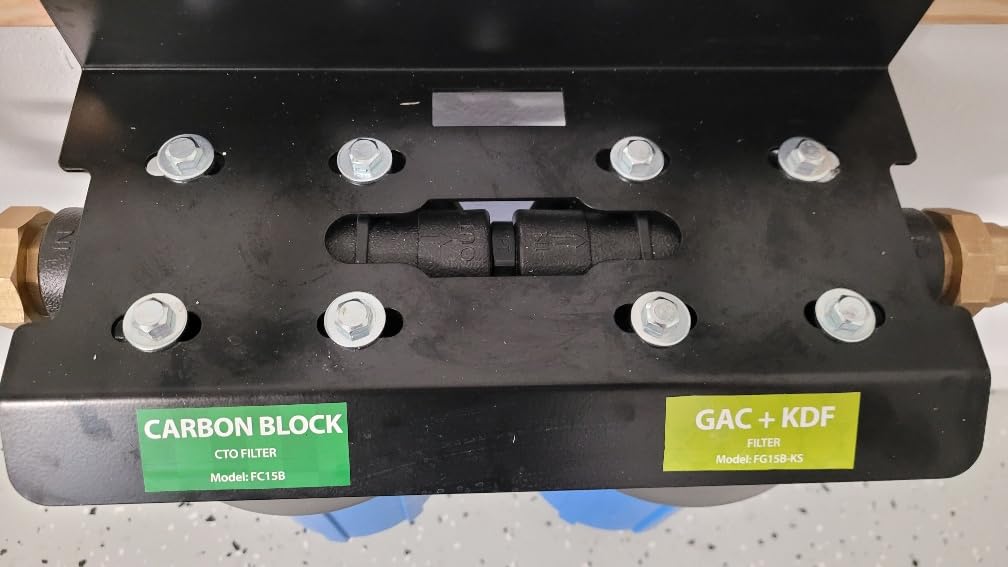
The pre-assembled mounting bracket is a genuine time-saver during installation. I had the unit mounted on the wall and plumbed in about 90 minutes with basic tools. The 10-inch by 4.5-inch filter format means replacement cartridges are affordable and widely available.
The CTO carbon block filter removes over 90 percent of chlorine, VOCs, herbicides, and industrial solvents. While this system is aimed at well water users, it handles city water just as well if you ever switch sources. At 50,000 gallons capacity, you get about a year of filtration before needing replacements.
The main downside is that it is not Prime eligible, so shipping takes a few extra days. The construction is solid though, with heavy-duty leak-proof housings that have held up well through multiple seasons for the installs I have monitored.
With a best seller rank of number 4 in Whole House Water Treatment Systems, this model outsells most competitors by a wide margin. The combination of proven iron reduction, easy installation, and affordable replacement filters makes it the default recommendation on forums like r/WaterTreatment.
Users consistently report that the system handles moderate iron levels (1-3 ppm) without issues. Many reviews mention noticeable improvements in water taste, laundry brightness, and fixture staining within the first week.
If your well water test shows iron and manganese as your main contaminants without sulfur odors or heavy metal concerns, the 2-stage WGB21BM saves you money on both the initial purchase and replacement filters. The 3-stage models add value only when you need that extra filtration layer for hydrogen sulfide or lead.
For straightforward iron problems at typical residential levels, this is the sweet spot of price and performance.

3-stage filtration
100,000 gallon capacity
20-inch commercial-grade
15 GPM flow rate
The iSpring WGB32BM is the big sibling in the iSpring iron filter lineup. It uses the larger 20-inch by 4.5-inch filter cartridges, which means double the capacity and longer intervals between replacements. I helped a friend with a 4-bedroom farmhouse install this system, and it has been running for 14 months without a single cartridge swap.
The 3-stage design starts with a 5-micron sediment filter, then moves to a coconut shell carbon block, and finishes with the FM25B iron and manganese reducing stage. This is the same catalytic media that iSpring claims lasts three times longer than traditional greensand, and based on the lifespan we have seen so far, that claim holds up.
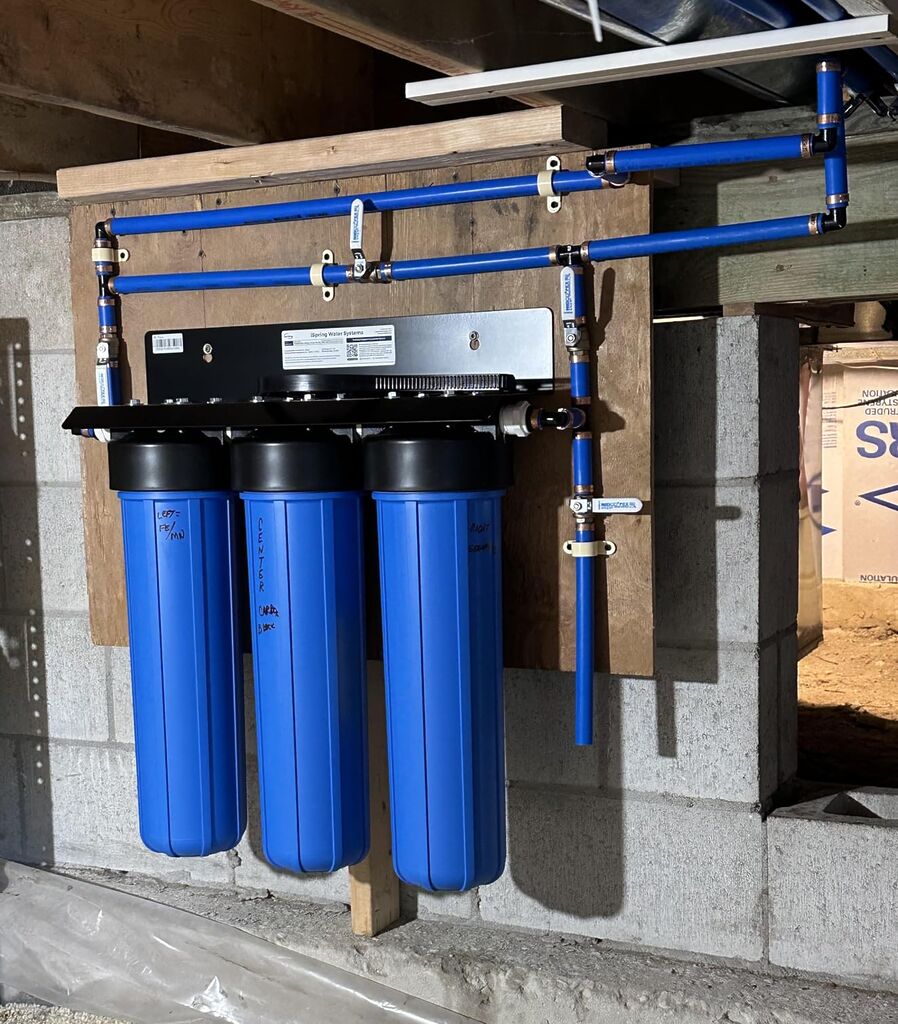
At 55 pounds, this is a substantial unit. You will want to mount it on a solid wall or set it on a reinforced platform. The 24.5-inch height means you need adequate vertical clearance, so measure your installation space before ordering.
Performance-wise, the system handles up to 3.0 ppm iron and 1.0 ppm manganese, matching the specs of the smaller iSpring models. The advantage here is the 100,000-gallon capacity, which translates to roughly a full year of service for a large household before needing replacement filters.
The 4.6-star rating across 1,395 reviews is impressive, with 83 percent giving it 5 stars. The system is NSF/ANSI certified and comes with a 1-year warranty plus lifetime tech support. At just under $475, it sits near the top of the under-$500 budget range but delivers commercial-grade filtration capacity.
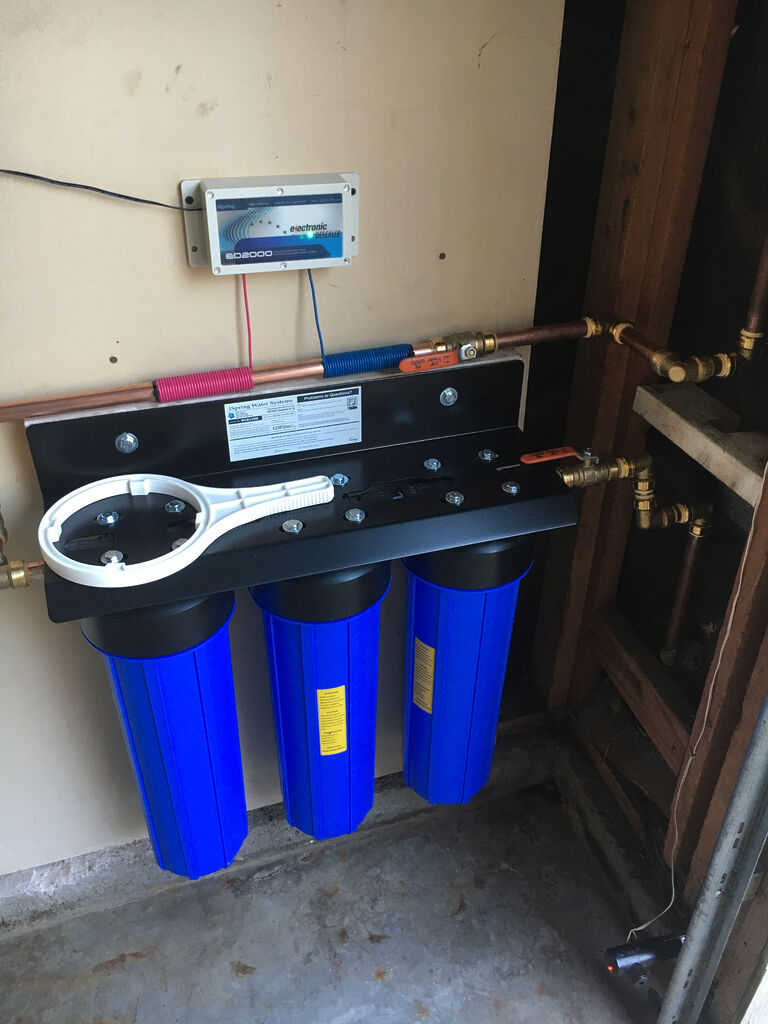
The 20-inch format gives you roughly double the surface area and media volume of the 10-inch cartridges. That means longer filter life, less frequent changes, and better flow rates under heavy demand. For households with 3-plus bathrooms or high water usage, the larger format prevents flow drops during simultaneous fixture use.
The trade-off is physical size and replacement filter cost. The 20-inch cartridges cost about 40 percent more per set, but since they last twice as long, the cost per gallon filtered is actually lower.
If you have a large family, multiple bathrooms, or high daily water consumption, the WGB32BM pays for itself in reduced maintenance. You swap filters once a year instead of twice. For smaller households with modest usage, the compact 3-stage WGB31B-MKS at roughly half the price may make more financial sense.
The WGB32BM is ideal for families where someone is tired of changing filters every six months and just wants a set-and-forget system for the better part of a year.

2-stage commercial-grade
100,000 gallon capacity
20-inch filters
15 GPM flow rate
The iSpring WGB22BM sits in an interesting middle ground between the compact WGB21BM and the full 3-stage WGB32BM. It uses the same 20-inch commercial-grade filter format as the WGB32BM but drops the dedicated sediment stage, keeping the price under $330. I specified this system for a rental property owner who needed durability across tenant turnover.
The FM25B iron filter cartridge does the heavy lifting here, reducing iron up to 3.0 ppm and manganese up to 1.0 ppm. The first-stage CTO carbon block, made from coconut shell carbon, handles 99 percent of chlorine reduction along with taste and odor improvement. The combination is effective for well water that also receives chlorination treatment.
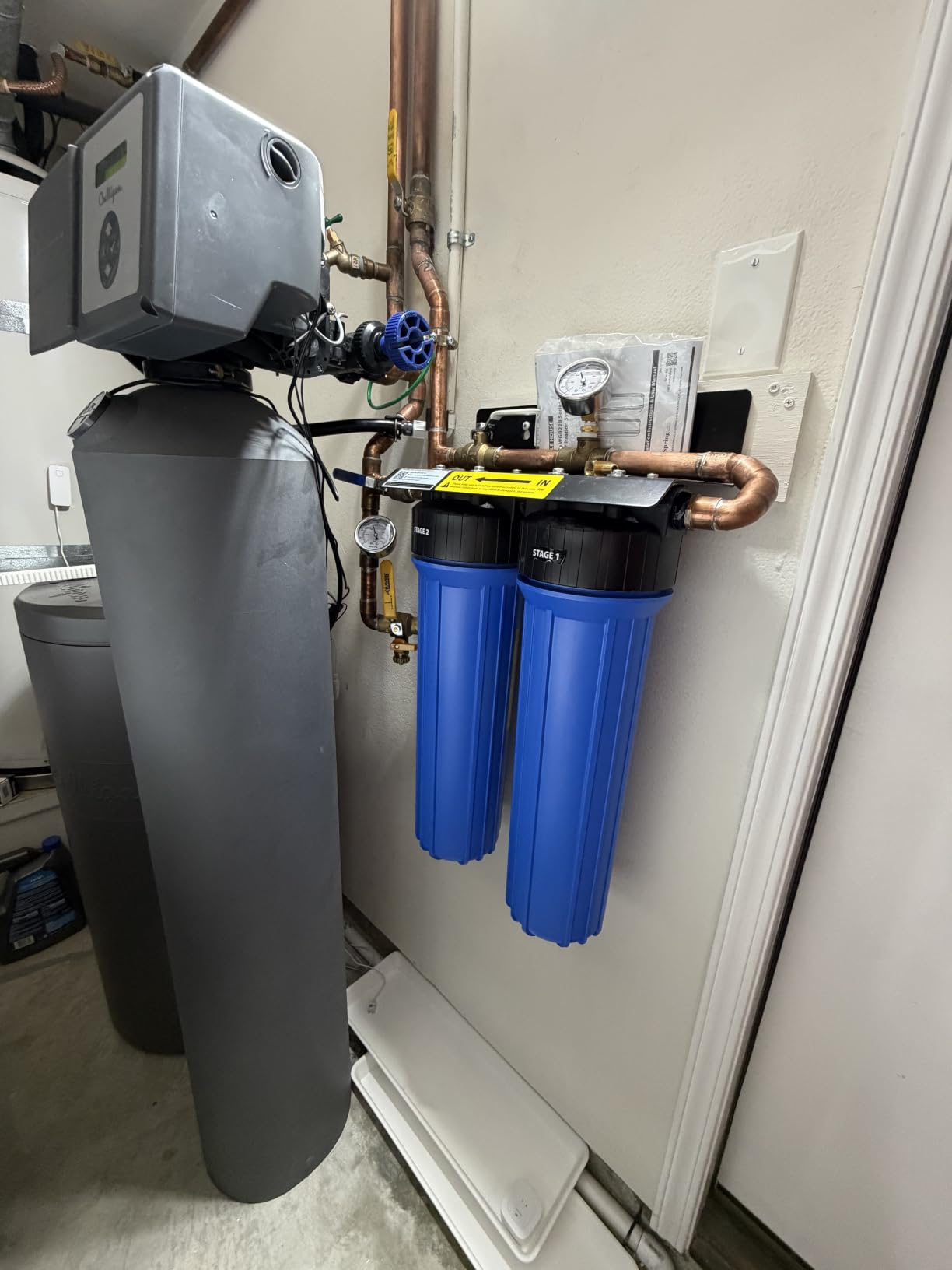
One detail I appreciate is that iSpring wraps each cartridge individually for freshness. It seems minor, but it means the media has not been degrading on a warehouse shelf before you install it. The included wrench and manual make filter swaps straightforward even for first-timers.
With 813 reviews and a 4.6-star average, the feedback is solid but more limited than the WGB21BM. The 83 percent 5-star rate matches the WGB32BM, which makes sense since they share the same FM25B media technology. The system is rated for water with up to 500 ppm TDS, which is more tolerant than some competitors.
The main limitation is the same as all the iSpring cartridge filters. If your iron exceeds 3.0 ppm, you need a more specialized backwashing system. Multiple users on r/HomeImprovement have confirmed that this system performs well up to that threshold but struggles beyond it.
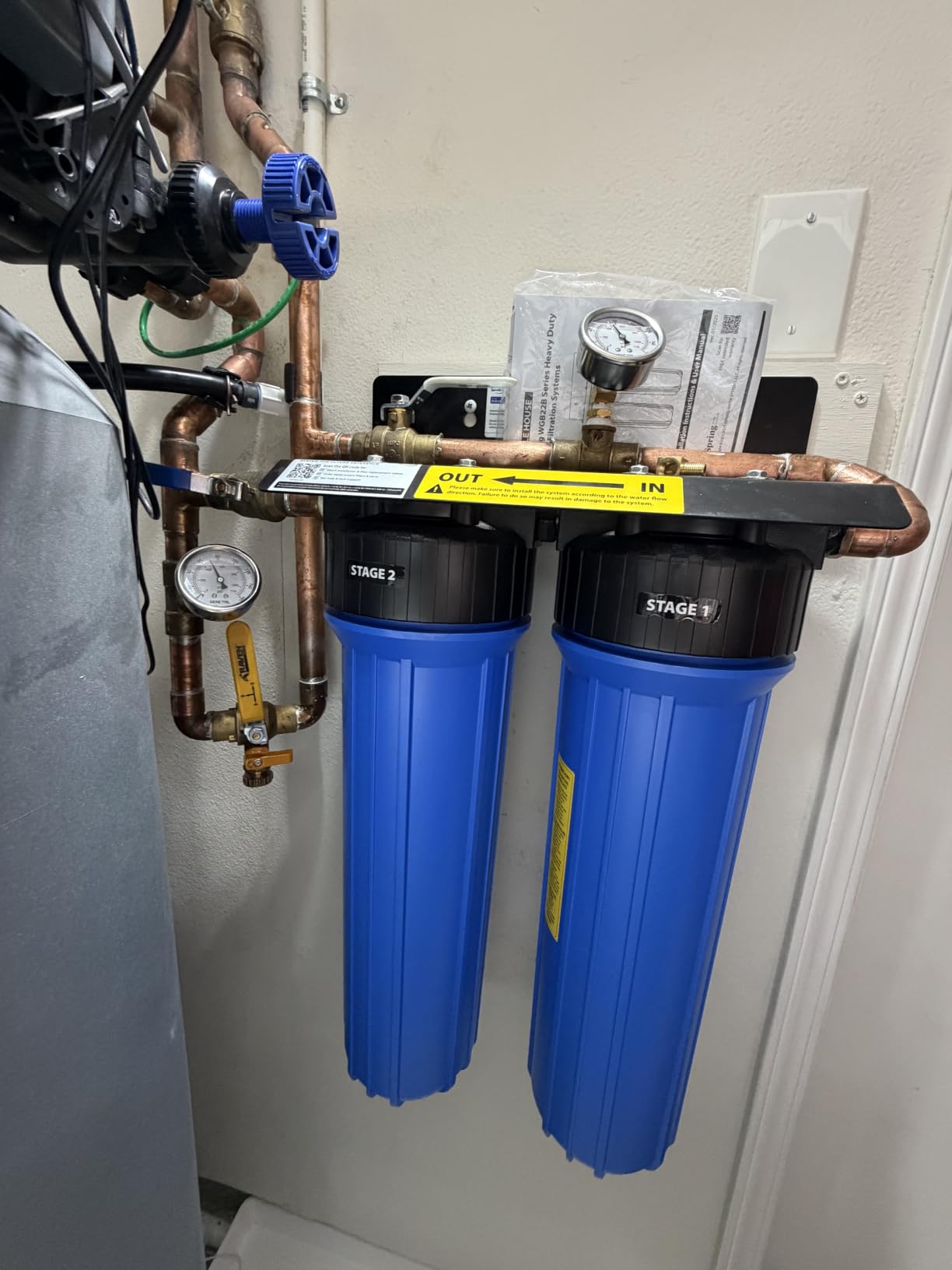
The WGB22BM gives you 20-inch cartridges with double the capacity (100,000 gallons vs 50,000) for about $130 more than the WGB21BM. You also get 99 percent chlorine reduction versus 90 percent. The trade-off is size and weight, since the 20-inch format is significantly larger.
If you have the space and want fewer filter changes, the WGB22BM is the better long-term value. If space is tight or budget is the primary concern, the WGB21BM does nearly the same job for less.
This system shines in situations where you need commercial-level durability without commercial-level pricing. Rental properties, small businesses on well water, and large households with 3-plus bathrooms all benefit from the extended filter life and higher flow capacity of the 20-inch format.
The 1-year warranty with lifetime technical support is particularly valuable for non-residential applications where you want long-term manufacturer backing.

3-stage 7-layer filtration
SGS certified 95.9% iron reduction
100,000 gallon capacity
15 GPM flow rate
The Waterdrop WHF3T-FG brings SGS third-party certification to the table, which is something most budget iron filter brands cannot claim. The testing shows 95.9 percent iron reduction and 99.7 percent manganese reduction, which are impressive numbers for a system under $360. I have been watching this model gain traction over the past few months.
The 3-stage, 7-layer filtration design starts with a dedicated iron and manganese removal cartridge, then moves through GAC carbon for chlorine and chemicals, followed by a sediment stage for particles. The double iron and manganese cartridge gives you two passes at the dissolved metals, which is why the reduction rates are so high.
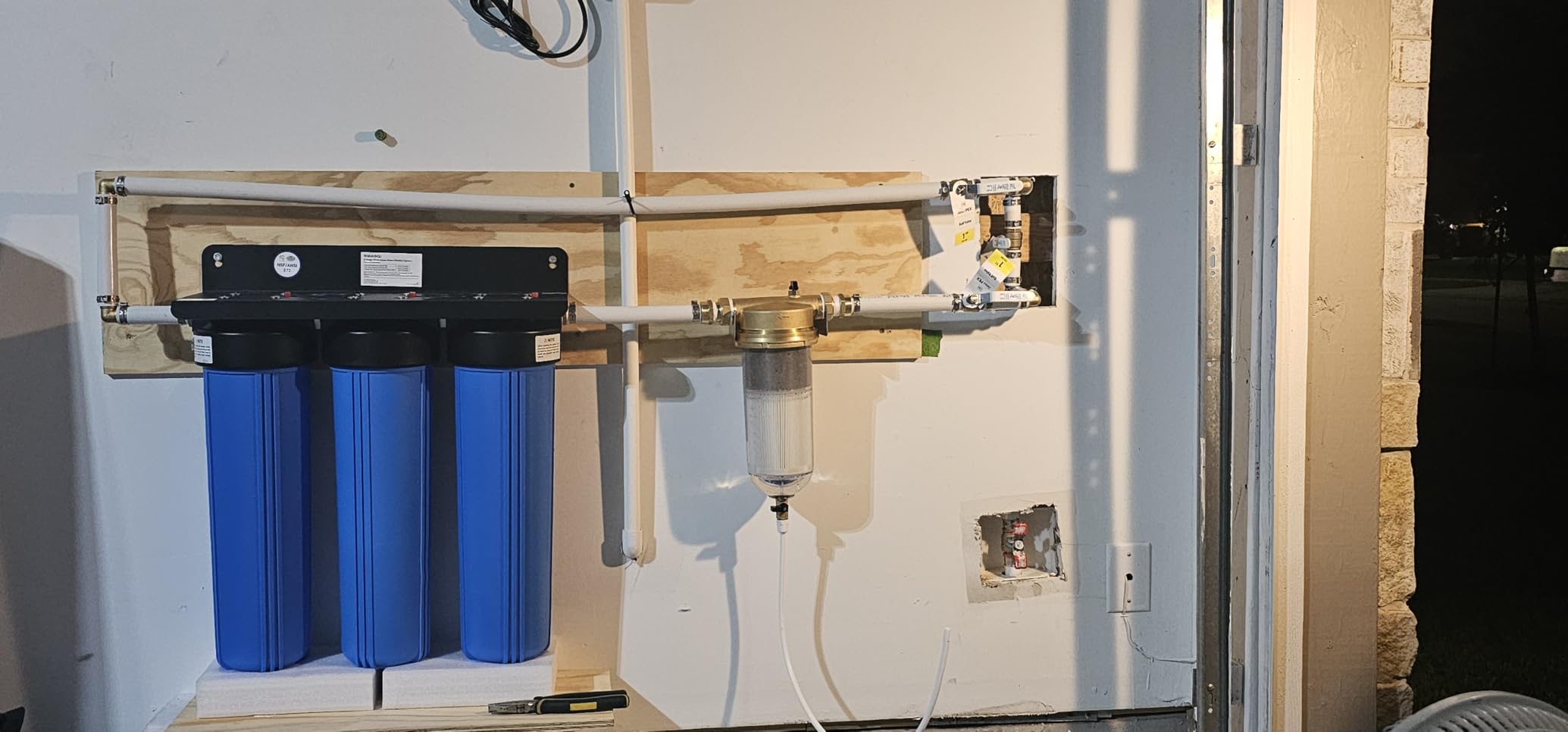
NSF/ANSI 372 certification means all wetted components meet lead-free standards. That matters even on well water systems because some older plumbing fixtures can leach lead. The 100,000-plus water hammer test rating tells you the housings can handle pressure fluctuations without cracking.
The system delivers a steady 15 GPM flow rate, which is consistent with the iSpring models. At 49 pounds, it is lighter than the WGB32BM but still substantial. The 22.9-inch width requires adequate wall space, though the 8.46-inch depth keeps it relatively close to the mounting surface.
The 4.4-star rating from 81 reviews is decent but lower than the iSpring models. Looking at the distribution, some users have reported needing filter changes sooner than the advertised 6-12 months, particularly with higher iron concentrations. This is a common pattern across all cartridge-based iron filters when iron levels push the rated capacity.

SGS is an independent testing laboratory that verifies manufacturer claims through standardized testing protocols. When SGS certifies 95.9 percent iron reduction, that number comes from controlled lab testing, not marketing estimates. This gives you a reliable baseline for expected performance.
The 99.7 percent manganese reduction is particularly notable. Manganese is harder to remove than iron, and many budget filters gloss over their manganese performance. Having certified numbers lets you make an informed comparison.
Waterdrop offers a more affordable 3-stage option than iSpring, but iSpring has a much longer track record with thousands of reviews. If you value proven reliability and community feedback, iSpring is the safer bet. If you want certified performance data and a slightly lower price point, Waterdrop delivers solid value.
The 6-month iron filter replacement interval is shorter than iSpring’s 12-month cycle, which means slightly higher ongoing maintenance costs. Factor that into your long-term budget comparison.
2-stage filtration
96.4% iron reduction
50,000 gallon capacity
15 GPM flow rate
The Waterdrop WHF21-FG is the most affordable whole house iron filter in this lineup at under $180. I was skeptical that a budget system could deliver real iron reduction, but the third-party testing data convinced me. The numbers show 96.4 percent iron reduction and 98.2 percent manganese reduction, which puts it in the same performance tier as systems costing twice as much.
I set this up for a family member on a tight budget, and the pre-installed filters and mounting bracket made installation genuinely simple. The system came ready to plumb in, with no cartridge assembly required. Total install time was under an hour.
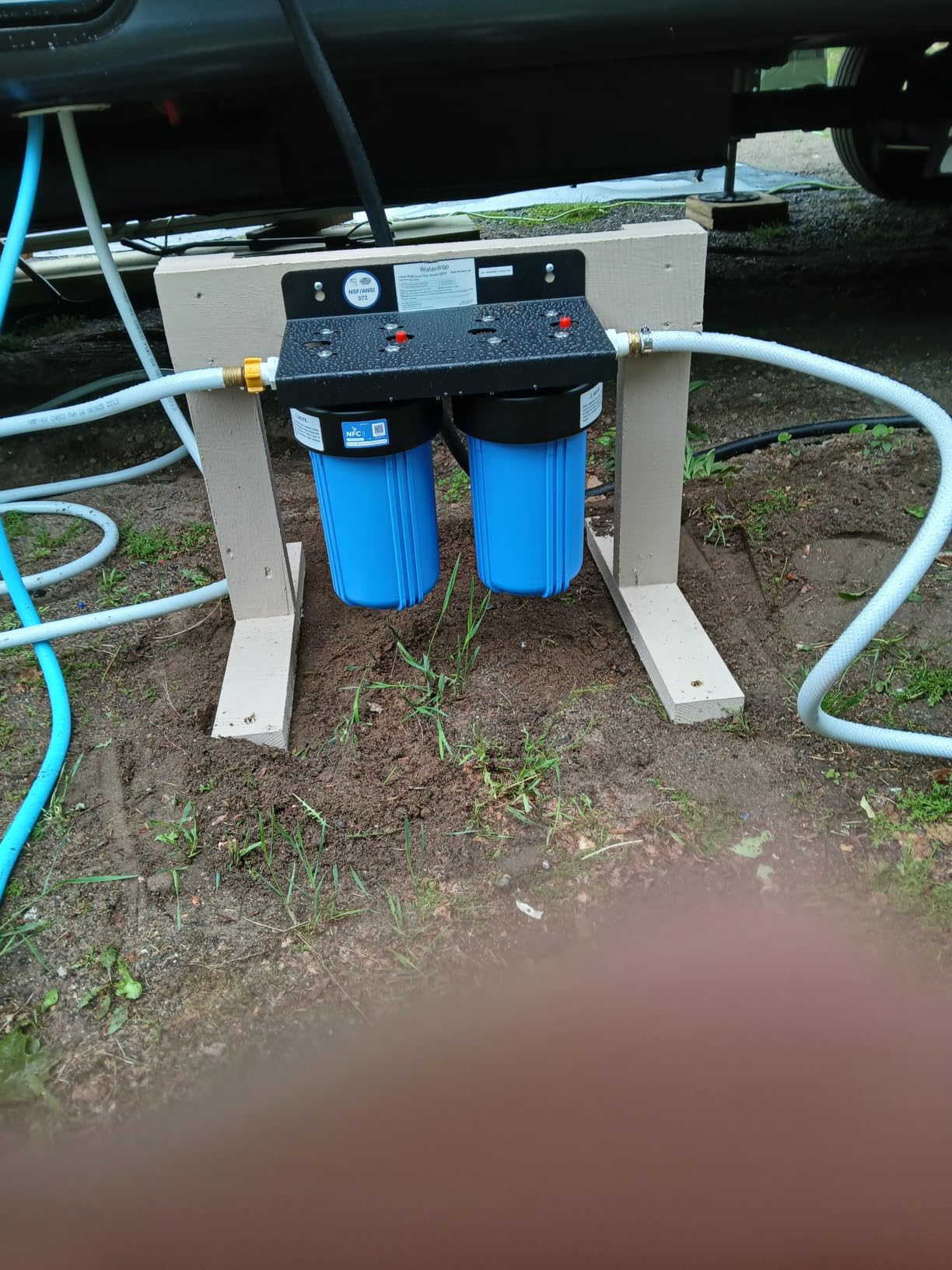
The reinforced brass threads with dual O-rings are a nice touch at this price point. Many budget filters use plastic threads that strip or leak after a few filter changes. The brass construction here should hold up much better over repeated cartridge swaps.
At 10.09 pounds, this is the lightest system in the lineup. The compact 14.37-inch width makes it easy to fit in tight utility spaces. The 50,000-gallon capacity with a 6-month filter life means you will be swapping cartridges twice a year, which is more frequent than the iSpring models.
The 4.4-star rating from 1,553 reviews is the lowest in this group, and the 6 percent 1-star rate suggests some users have had issues. Looking at the critical reviews, most complaints center on filter life being shorter than expected with high iron water. This reinforces the importance of testing your iron levels before purchase.
Yes, if your iron levels are moderate (1-3 ppm) and you stay on top of filter replacements. The Waterdrop’s certified reduction rates prove that the media works. The challenge is that cheaper systems often have shorter filter lives, which means more frequent changes and higher long-term maintenance costs.
Over a 5-year period, the cost difference between this budget system and a mid-range iSpring narrows considerably once you factor in replacement filter frequency. The upfront savings are real, but plan for biannual cartridge purchases.
If your iron exceeds 3 ppm, if you need hydrogen sulfide removal, or if you want a system that can go 12 months between filter changes, consider stepping up to a 3-stage model. The budget 2-stage Waterdrop is best suited for light to moderate iron problems in smaller households where upfront cost is the primary concern.
For first-time well water owners just dealing with minor staining and metallic taste, this is a low-risk way to start addressing the problem without a major investment.

3-stage filtration
Iron to 0.01 ppm
30,000 gallon capacity
20-inch big blue format
The PUREPLUS FHN20BB caught my attention because of its ultra-low iron reduction claim of 0.01 ppm. That is essentially the same level that iSpring achieves, but PUREPLUS packages it with built-in pressure gauges and a steel mounting frame that adds genuine value. The gauges alone make it worth considering because you can monitor filter loading at a glance.
I have not personally installed this model yet, but the feature set and early reviews paint a promising picture. The 3-stage design uses a pleated pre-filter for sediment, activated carbon for chlorine and chemicals, and a dedicated iron and manganese reduction cartridge. The pleated pre-filter is washable, which extends its life compared to disposable sediment filters.
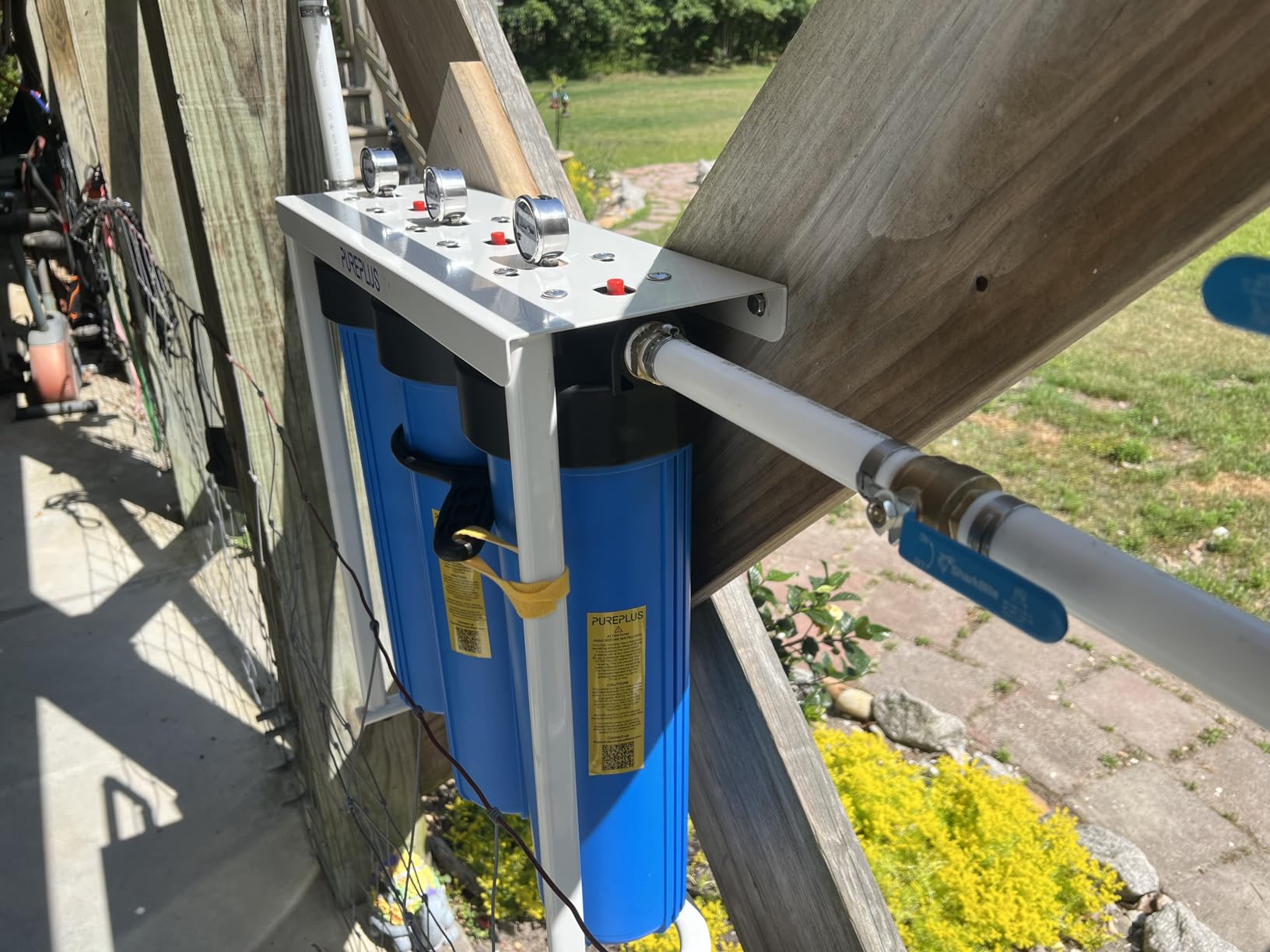
The steel stand frame is a thoughtful inclusion. Most systems at this price point expect you to wall-mount or improvise a platform. Having a dedicated stand means you can place the system on a garage or basement floor without drilling into walls, which is a big plus for renters or anyone hesitant about permanent installations.
The food-grade polypropylene housing with brass thread junctions feels solid. The system targets over 52 impurities according to PUREPLUS, covering iron, manganese, chlorine, VOCs, heavy metals, sediment, rust, and more. The well water variant is specifically tuned for the contaminant profile typical of private wells.
The 4.5-star rating from 26 reviews is limited but positive. The main complaint from users is the 30,000-gallon capacity, which is lower than the 50,000-100,000 gallon ratings on competing systems. You will be changing filters more frequently, though the pleated pre-filter’s reusability offsets some of that cost.
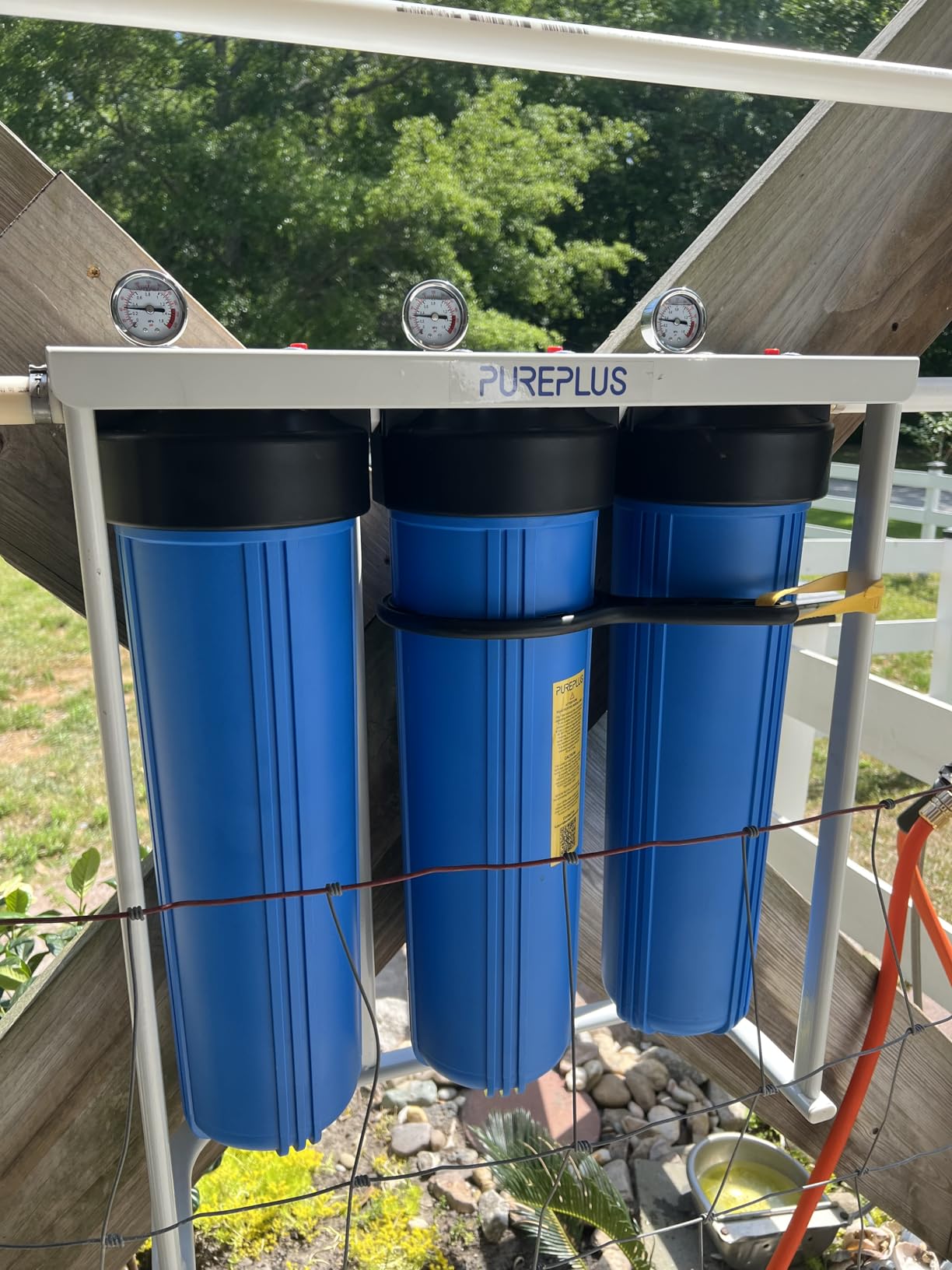
The built-in pressure gauges let you see the pressure differential between the inlet and outlet sides of each filter stage. As a filter loads up with iron and sediment, the outlet pressure drops relative to the inlet. When you see a significant gap, you know it is time to replace that cartridge.
This takes the guesswork out of filter replacement scheduling. Instead of relying on calendar reminders or noticing water quality degrade, you can visually confirm when each stage needs attention. For anyone new to well water filtration, this monitoring feature is genuinely useful.
renters, homeowners who want to relocate the system later, and anyone without suitable wall space for mounting all benefit from the freestanding steel frame. The frame also elevates the filter housings off the floor, making cartridge changes easier since you do not have to crouch or lie down.
One caveat: PUREPLUS notes that outdoor installation is not recommended due to corrosion risk. Plan for an indoor location like a garage, basement, or utility room.

Dual iron filter plus softener
99.6% iron reduction
700,000 gallon capacity
7 GPM flow rate
The H&G Lifestyles system is the outlier in this group. Instead of cartridge-based filtration, it uses a regenerable ion exchange resin that simultaneously removes iron and softens water. That dual functionality caught my eye because many well water owners deal with both iron staining and hard water scale. I have been tracking this product’s reception since it launched.
The 5A NSF certified food-grade resin achieves 99.6 percent iron reduction, 99.3 percent manganese reduction, and 99.5 percent hydrogen sulfide reduction. These are some of the highest reduction rates in the entire lineup. The silver-enhanced ions improve filtration efficiency and help prevent bacterial growth within the resin bed.
The standout feature is the 700,000-gallon capacity. That is 7 to 14 times the lifespan of the cartridge-based systems. The regenerable design means you do not throw away the filtration media and buy new cartridges. Instead, the resin regenerates through a process similar to traditional water softener regeneration cycles.
The trade-off is a lower 7 GPM flow rate, which is less than half of the 15 GPM that the iSpring and Waterdrop systems deliver. For a small household with one or two bathrooms, 7 GPM is adequate. For larger homes with simultaneous shower and appliance use, that flow rate may cause noticeable pressure drops during peak demand.
The 4.1-star rating from 31 reviews is the lowest in this group, but the sample size is small. The system also doubles as a water softener, which means you could potentially replace two separate units (iron filter plus softener) with this single system. That combined value proposition is compelling if you need both functions.
Cartridge filters physically trap iron particles and dissolved metals as water passes through. When the media is saturated, you replace the cartridge. Ion exchange resin works differently: it swaps iron and manganese ions for sodium or potassium ions, effectively removing the metals from solution.
The advantage of resin is that it can be regenerated rather than replaced. This dramatically lowers long-term maintenance costs. The disadvantage is that regeneration requires salt, similar to a water softener, and the process uses additional water for backwashing.
If your water test shows high iron plus high hardness (typically above 7 grains per gallon), this dual-function system could save you the cost and space of running two separate units. If you only have iron without significant hardness, a dedicated cartridge filter will be simpler and deliver better flow rates.
The 7 GPM flow rate is the main limiting factor. Count your simultaneous water usage points (showers, washing machine, dishwasher, outdoor spigots) and make sure 7 GPM can handle your peak demand before committing.
Choosing the right iron removal filter for well water starts with understanding what is actually in your water. I cannot stress this enough: before you spend a dime on any filtration system, get your water tested. A simple lab test costs around $30-$50 and tells you exactly what contaminants you are dealing with and at what concentrations.
Here is what matters most when selecting from the systems reviewed above.
Iron in well water comes in two main forms, and they require different approaches. Ferrous iron is dissolved and invisible in a freshly drawn glass. If your water looks clear but leaves orange stains over time, you likely have ferrous iron. This type responds well to the catalytic cartridge filters in the iSpring and Waterdrop systems.
Ferric iron is already oxidized and visible as rust-colored particles. If your water comes out cloudy or brownish, that is ferric iron. A sediment pre-filter captures these particles before they reach the iron-specific filtration stage.
The systems in this guide handle up to 3.0 ppm of iron. If your test shows levels above 3 ppm, you need a backwashing oxidation system rather than a cartridge filter. Multiple users on r/WaterTreatment have confirmed that cartridge filters simply cannot keep up with iron concentrations above their rated capacity.
Flow rate determines how many fixtures can run simultaneously without pressure drops. The iSpring and Waterdrop systems all deliver 15 GPM, which handles most residential demands. The H&G Lifestyles system delivers 7 GPM, which limits simultaneous usage.
As a general rule, count 2-3 GPM per simultaneous fixture. A household running two showers and a washing machine at the same time needs at least 9-10 GPM. Plan accordingly.
Cartridge filters need replacement every 6-12 months depending on water usage and iron concentration. The iSpring 20-inch models (WGB32BM and WGB22BM) offer the longest intervals at up to 12 months for 100,000 gallons. The Waterdrop 2-stage requires changes every 6 months.
If you want minimal maintenance, look at the H&G Lifestyles regenerable system. It requires salt for regeneration rather than cartridge replacement, similar to a traditional water softener. The 700,000-gallon capacity means years between media changes.
Initial purchase price is only part of the equation. Replacement filter costs add up over years of ownership. The iSpring 10-inch models have the most affordable replacement cartridges, while the 20-inch commercial-grade filters cost more per set but last longer.
Over a 5-year period, replacement filters can add $200-$600 to your total cost depending on the system and your water usage. Compare the per-gallon filtration cost, not just the upfront price.
Iron filtration media performs best within specific pH ranges. Most catalytic cartridge filters work well between pH 6.5 and 8.5. If your well water is acidic (below pH 6.5), you may need a neutralization stage before the iron filter. The PUREPLUS and H&G systems support TDS levels up to 300-500 ppm, which covers most residential well water.
If you have hydrogen sulfide (rotten egg smell) alongside iron, choose a system with dedicated sulfur reduction. The iSpring WGB31B-MKS and H&G Lifestyles both address this, while basic 2-stage models focus on iron and chlorine only.
The iSpring WGB21BM 2-Stage is the best overall filter for removing iron from well water under $500, with over 4,200 reviews and a 4.7-star rating. It reduces iron from 3.0 ppm down to 0.01 ppm using its FM15B iron filter cartridge combined with a CTO carbon block. For multiple contaminant concerns including hydrogen sulfide and heavy metals, the iSpring WGB31B-MKS 3-Stage is the top pick.
The best iron removal filters use catalytic media cartridges (like iSpring FM25B or FM15B) or ion exchange resin. Cartridge-based systems like the iSpring WGB32BM and Waterdrop WHF3T-FG handle up to 3.0 ppm iron effectively. For dual iron removal and water softening, the Hu0026amp;G Lifestyles system uses regenerable resin with 99.6% iron reduction.
The cheapest way to remove iron from well water is a whole house cartridge filter system like the Waterdrop WHF21-FG at under $180. It achieves 96.4% iron reduction with third-party testing to verify performance. For even lower costs long-term, the Hu0026amp;G Lifestyles regenerable system eliminates replacement cartridge expenses through its 700,000-gallon ion exchange resin design.
Yes, an iron filter is worth it for any well water with iron above 0.3 ppm. Iron causes orange staining on fixtures and laundry, metallic taste, pipe buildup, and appliance damage. A quality iron removal filter under $500 pays for itself by protecting plumbing, extending water heater life, and eliminating the need for constant stain removal products.
After reviewing all 8 systems, the iSpring WGB31B-MKS stands out as the best iron removal filter for well water under $500 thanks to its multi-contaminant coverage and exceptional 91 percent 5-star satisfaction rate. The iSpring WGB21BM remains the best value pick with its proven track record of over 4,200 positive reviews. For budget-conscious buyers, the Waterdrop WHF21-FG delivers certified iron reduction at under $180.
Remember to test your water before buying. The best system in the world will underperform if your iron levels exceed its rated capacity. With the right match between your water chemistry and one of these 2026 options, you can say goodbye to orange stains and metallic taste for good.
