
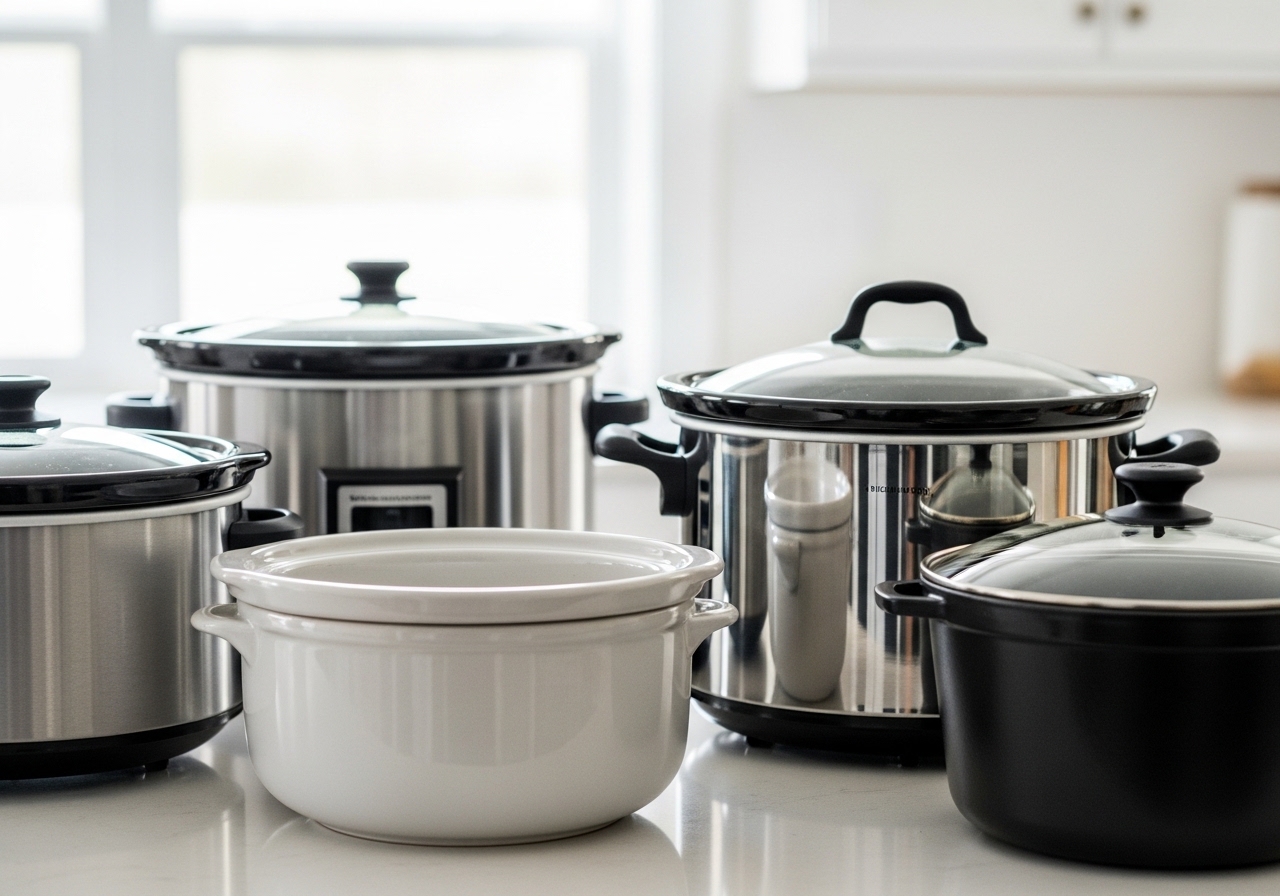
Your slow cooker works hard while you’re away, simmering meals for hours on end. But what if that convenient appliance is quietly adding harmful chemicals to your family’s dinner? Traditional crock pots with synthetic nonstick coatings can release PFAS, PFOA, and other forever chemicals when heated, while some ceramic glazes may contain lead or cadmium that leaches into acidic foods over long cooking periods. Finding the best non-toxic crock pot isn’t just a preference—it’s an investment in long-term health.
After extensive research into material safety standards, Prop 65 compliance, and real-world performance, I’ve identified the safest options for 2026. Whether you’re prioritizing PFAS-free ceramic coatings, surgical-grade stainless steel, or versatile multi-function designs, this guide covers what actually matters when choosing a healthy slow cooker. From understanding 18/8 versus 18/10 stainless steel grades to decoding California Prop 65 warnings, you’ll find everything needed to make an informed, safe choice.
Each crock pot in this roundup has been evaluated for material safety, cooking performance, and ease of use. You’ll discover why some ceramic glazes raise lead concerns, how heavy metals can migrate into food during slow cooking, and which brands offer truly toxin-free alternatives. Whether you need a budget-friendly basic model or a premium multi-cooker with stovetop compatibility, these nine options represent the safest choices available today.


Before diving into detailed reviews, here’s a quick comparison of all nine non-toxic crock pots featured in this guide. This table highlights key specifications, safety features, and ideal use cases to help you quickly identify which model fits your cooking needs and budget.
| Product | Features | Price |
|---|---|---|
|
|
Check Latest Price |
|
|
Check Latest Price |
|
|
Check Latest Price |
 |
|
Check Latest Price |
 |
|
Check Latest Price |
 |
|
Check Latest Price |
 |
|
Check Latest Price |
 |
|
Check Latest Price |
 |
|
Check Latest Price |
6QT capacity
PFAS-free ceramic nonstick
Stovetop-ready pot
Dishwasher safe
3 cooking modes with delay timer
The GreenLife 6QT Ceramic Slow Cooker stands out as my top recommendation for health-conscious families seeking a truly non-toxic cooking solution. Unlike conventional slow cookers that rely on synthetic PTFE coatings, this model features a genuine ceramic nonstick interior completely free of PFAS, PFOA, lead, and cadmium. This matters because forever chemicals from traditional nonstick surfaces can accumulate in your body over time, potentially disrupting hormones and immune function.
What sets this crock pot apart is the removable stovetop-ready pot. You can brown meat directly on your cooktop before slow cooking, eliminating the need for a separate skillet and preserving those flavorful fond bits that make stews exceptional. The 6-quart capacity comfortably fits a 6-pound chicken or 4-pound roast, serving 7 or more people with ease. I’ve found this feature particularly valuable for recipes that benefit from initial searing, like beef bourguignon or pulled pork.
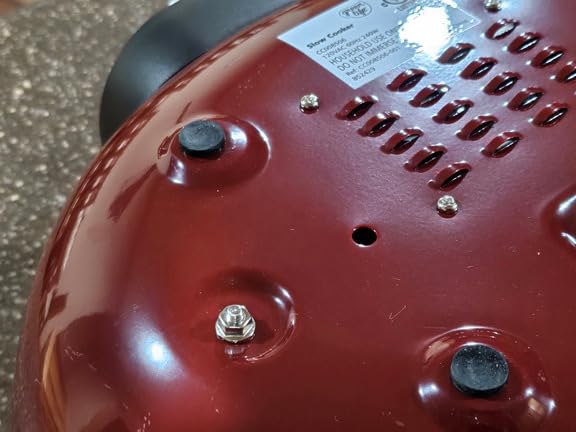
Performance-wise, the programmable control panel offers Low, Medium, and High settings plus a delay timer and automatic keep warm function. Some users note that the Medium setting actually works better than Low for certain meats, producing more tender results without overcooking. The ceramic coating holds up well to regular use, though I recommend wooden or silicone utensils to maximize longevity.
Cleanup is genuinely effortless with this model. Both the removable inner pot and glass lid are dishwasher safe, and the ceramic surface releases food easily even after hours of cooking. The turquoise color option I tested brightens the kitchen considerably, though more neutral shades are available if you prefer understated aesthetics.
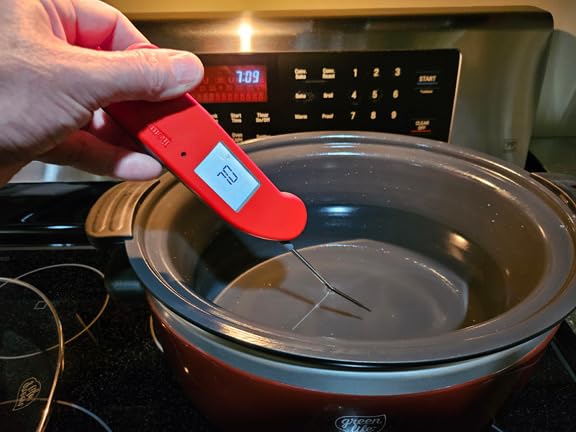
The GreenLife 6QT is ideal for families of 4-6 people who want genuine PFAS-free cooking without sacrificing convenience. If you value stovetop browning capability and appreciate colorful kitchen appliances, this crock pot delivers excellent value. It’s particularly well-suited for those transitioning away from Teflon-coated cookware but not ready to invest in premium stainless steel options.
While excellent for most households, this model may not suit those needing oven-safe capabilities beyond 350°F or households requiring 7+ quart capacity for very large gatherings. If you want multi-functionality beyond slow cooking and searing, consider the GreenPan Elite or Ninja Foodi options instead.
8 cooking functions
Thermolon Volt PFAS-free coating
In-pot browning
6QT capacity
XL backlit LCD display
For those seeking maximum versatility without compromising on material safety, the GreenPan Elite 8-in-1 Programmable Slow Cooker represents the premium tier of non-toxic multi-cookers. This appliance replaces eight separate kitchen tools while maintaining GreenPan’s commitment to PFAS-free cooking surfaces through their proprietary Thermolon Volt coating. Unlike traditional nonstick surfaces that degrade under high heat, this ceramic-based coating withstands the demands of modern multi-function appliances.
The eight cooking functions—Slow Cook, Sauté, Steam, Simmer/Buffet, Proof, Bake, Reheat, and Keep Warm—cover virtually every cooking scenario. I’ve found the proof setting particularly valuable for homemade bread, while the bake function handles casseroles beautifully. The 6-quart capacity accommodates substantial portions: think 5-6 pounds of pork shoulder or 8-10 chicken thighs, making it suitable for family meals and entertaining.
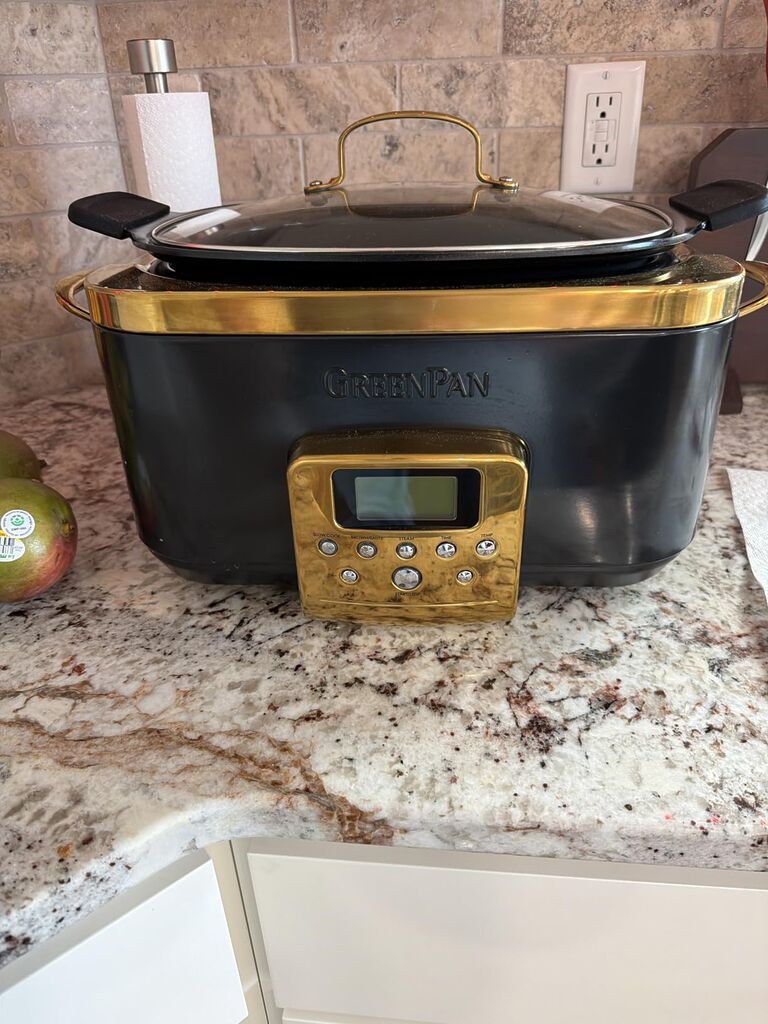
What impresses me most is the in-pot browning capability. The hard anodized aluminum pot heats quickly and evenly, allowing you to sear proteins directly before switching to slow cook mode. This one-pot workflow saves dishes and captures maximum flavor. The XL green backlit LCD display is genuinely easy to read from across the kitchen, with one-touch presets that eliminate guesswork.
The hard anodized pot is metal utensil safe—a significant upgrade from standard ceramic coatings—though I still prefer silicone for longevity. Both the lid and removable crock are dishwasher safe, simplifying post-meal cleanup. However, note that this is a substantial appliance. At nearly 17 pounds and with a significant countertop footprint, you’ll want dedicated storage space.
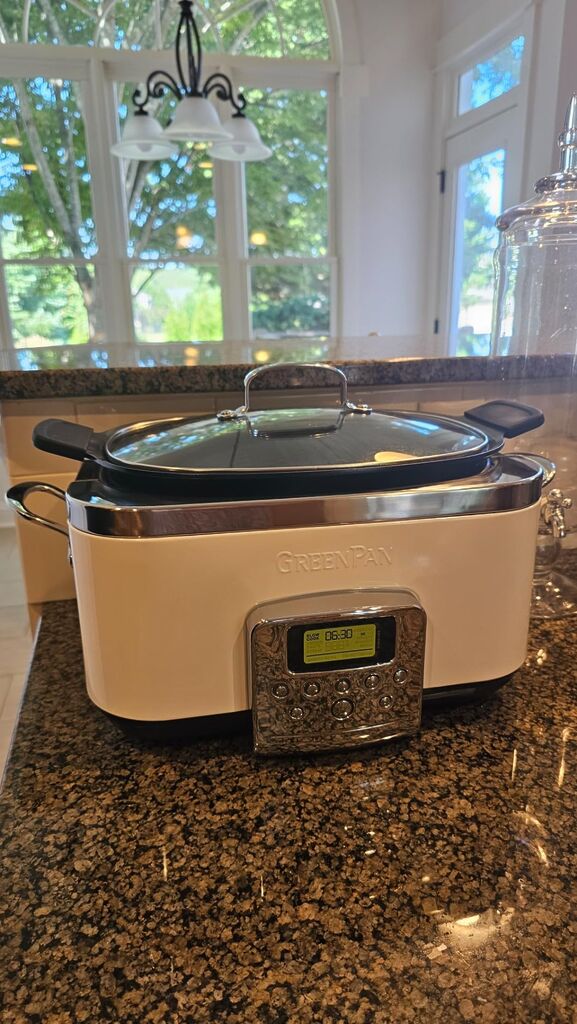
The GreenPan Elite suits home cooks who want one appliance to handle multiple cooking methods while maintaining strict material safety standards. If you regularly prepare diverse meals—from slow-cooked stews to proofed bread and steamed vegetables—and appreciate programmable precision, this multi-cooker justifies its premium price through versatility and build quality.
Budget-conscious shoppers may find better value in the standard GreenLife model or the Bella 6.0QT. Those with limited kitchen storage should also consider the more compact Ninja Foodi. If you rarely bake or proof dough, you’re paying for functions you won’t use.
7QT capacity serves 9+
Simple manual dial controls
Removable stoneware insert
Oven safe to 400°F
Dishwasher safe components
Sometimes simplicity wins. The Crock-Pot 7 Quart Oval Manual Slow Cooker proves that effective, reliable slow cooking doesn’t require digital displays or programmable timers. This straightforward appliance has served millions of households faithfully, and its enduring popularity speaks to the value of well-executed basics. For families wanting a large-capacity slow cooker without complexity—or the associated price premium—this model delivers exceptional value.
The 7-quart capacity is genuinely generous, easily serving 9 or more people or accommodating a full 7-pound roast with vegetables. I’ve used this model for holiday gatherings, potlucks, and weekly meal prep with consistent results. The manual dial offers three settings—High, Low, and Warm—covering every slow cooking scenario without overwhelming you with options you’ll never use.
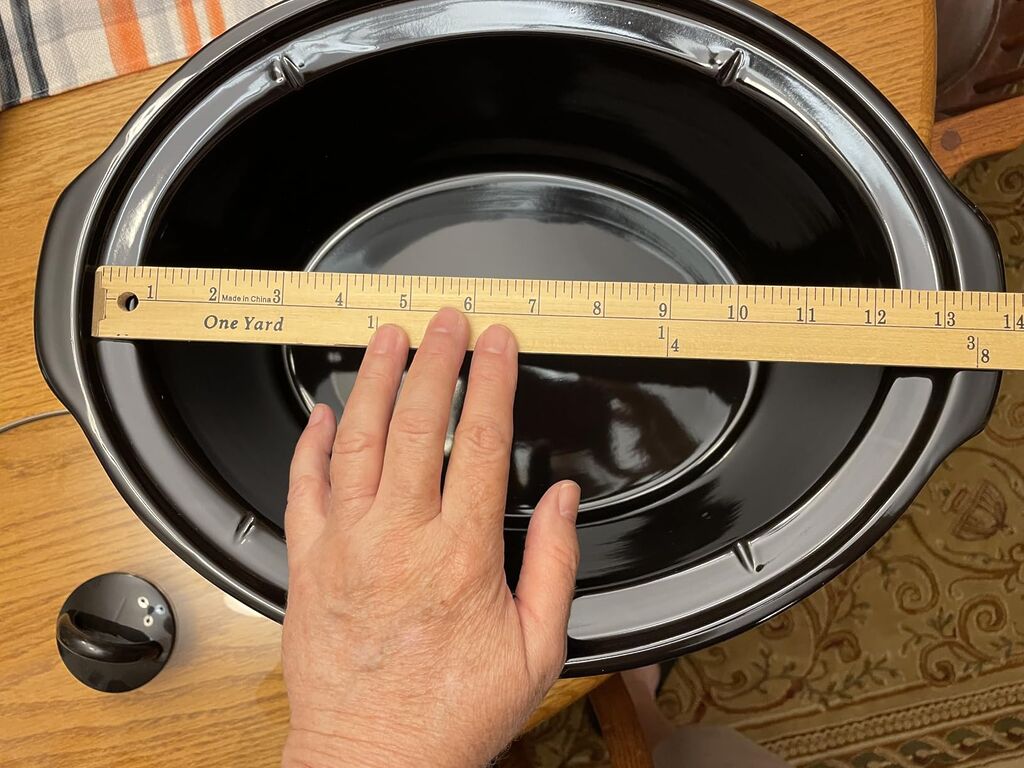
The removable stoneware insert deserves special mention. Unlike some competitors, Crock-Pot’s stoneware is microwave-safe and oven-safe up to 400°F, adding genuine versatility. You can start a dish on the stovetop, transfer to the slow cooker, then finish in the oven—all using the same vessel. Both the stoneware and glass lid are dishwasher safe, though the stoneware’s weight (over 6 pounds when filled) demands careful handling.
However, potential buyers should understand California Prop 65 considerations with traditional ceramic crock pots. While modern Crock-Pot stoneware meets FDA standards, older models and some imported ceramics may contain lead in glazes. This current production model is certified safe, but if you inherit vintage slow cookers, consider testing with lead testing kits. For those prioritizing absolute material certainty, stainless steel options like the All-Clad provide additional peace of mind.
This Crock-Pot suits large families, frequent entertainers, and anyone who values reliability over features. If you want set-it-and-forget-it cooking without learning digital interfaces, the manual dial approach is refreshingly direct. The budget price makes it accessible for first-time slow cooker buyers or those needing a second appliance for large events.
If you need programmable precision for meals ready exactly when you arrive home, consider the Crock-Pot 7-Quart Programmable or Cuisinart models. Those concerned about stoneware materials may prefer the All-Clad stainless steel option or PFAS-free ceramic alternatives from GreenLife or Bella.
MyTime auto-adjust technology
Leak-proof locking lid
7QT capacity
Flat digital controls
Cook and Carry handles
The Crock-Pot 7-Quart Programmable Slow Cooker addresses a common frustration: arriving home to an overcooked meal or cold dinner because timing didn’t align. The proprietary MyTime technology automatically adjusts the cooking cycle to ensure your meal finishes exactly when you want it, regardless of when you started cooking. This intelligent feature takes the guesswork out of slow cooking, making it ideal for households with variable schedules.
What truly distinguishes this model is the leak-proof locking lid design. The tight-seal rubber gasket and secure locking mechanism prevent spills during transport, making this my top recommendation for potlucks, office parties, and family gatherings. I’ve transported full batches of chili and soup without a single drop spilled, even when navigating stairs and car rides. The Cook and Carry handles provide secure gripping points that don’t interfere with the locking mechanism.
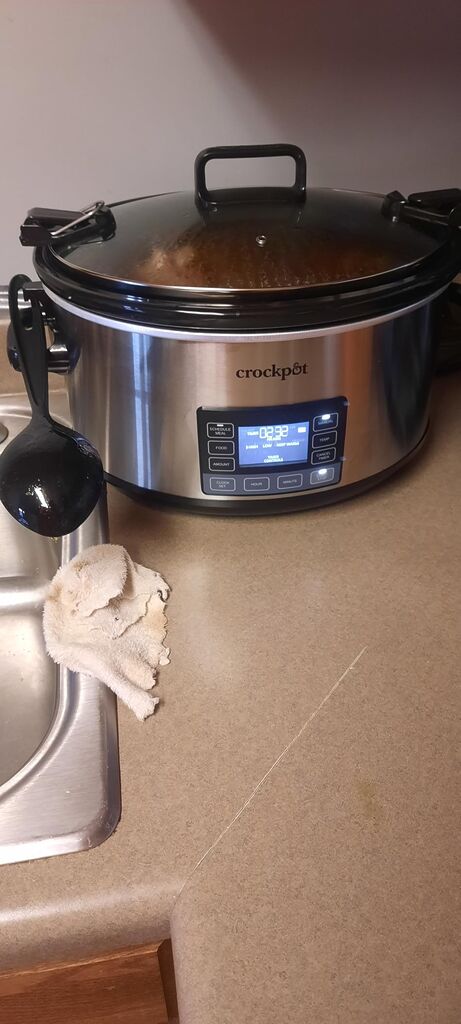
The 7-quart capacity matches the manual version, serving 7 or more people comfortably. The flat digital control screen offers intuitive scheduling with manual override options when you want direct control. The stainless steel exterior resists fingerprints better than glossy alternatives, maintaining a clean appearance through regular use.
Regarding material safety, this model uses the same stoneware insert as other Crock-Pot models. While FDA-compliant and free from PFAS coatings, those with specific concerns about ceramic glazes and potential lead leaching may want to review third-party testing data or consider the All-Clad stainless steel alternative. For most households, the established safety record of modern Crock-Pot stoneware provides adequate confidence.
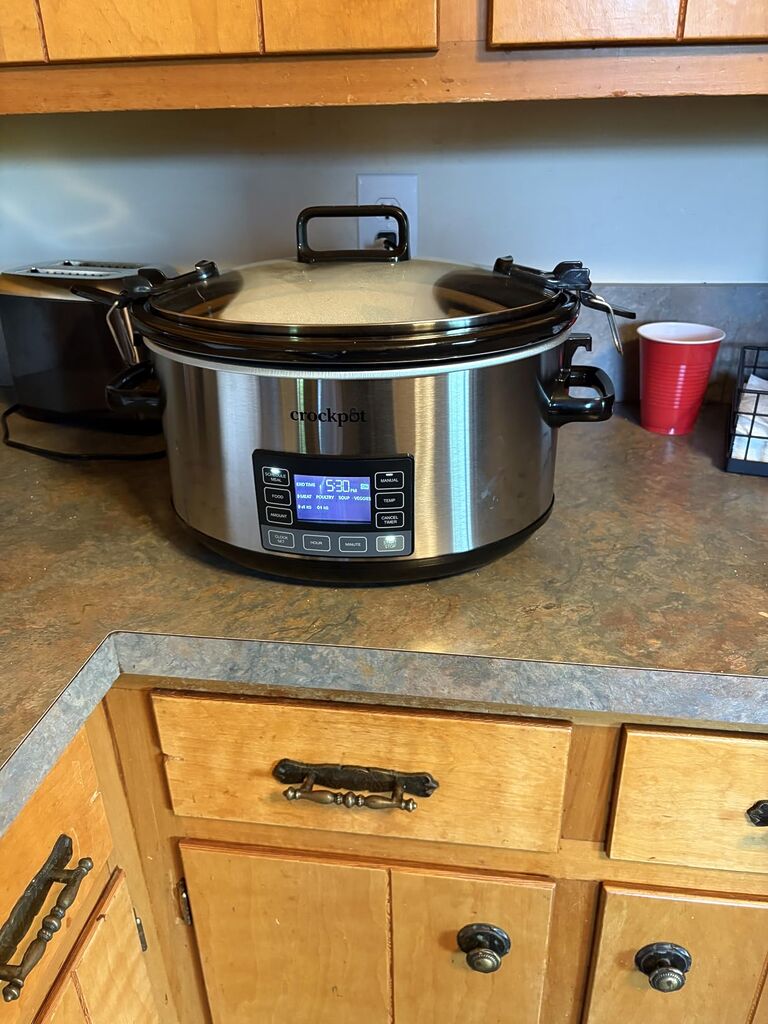
This programmable Crock-Pot suits busy families who transport meals regularly and appreciate smart cooking technology. If you attend potlucks, contribute to office lunches, or deliver meals to friends, the locking lid alone justifies choosing this model. The MyTime feature particularly benefits households where dinner timing varies day to day.
If you rarely transport your slow cooker, the manual version offers similar capacity at lower cost. Those seeking multi-function capabilities beyond slow cooking should consider the Cuisinart 3-In-1 or Ninja Foodi. Budget constraints may also point toward the Bella or manual Crock-Pot options.
3-in-1: Slow cook, Brown/Saute, Steam
One-touch mode switching
6QT nonstick aluminum pot
Blue backlit LCD display
3-year warranty
When the HOUSNAT 10-in-1 became unavailable, I sought a replacement that maintained multi-function versatility while adding brand reliability. The Cuisinart 3-In-1 Cook Central emerged as the ideal substitute, offering genuine three-mode functionality—Slow Cooker, Brown/Sauté, and Steamer—in a proven design backed by a solid warranty. Cuisinart’s decades of kitchen appliance expertise shows in the thoughtful engineering of this multi-cooker.
The one-touch mode switching enables seamless combination cooking. Brown onions and garlic using the sauté function, add remaining ingredients, then switch to slow cook without transferring between pans. This workflow captures fond and fondant flavors that make the difference between good and exceptional slow-cooked meals. The steaming function, complete with included rack, handles vegetables, fish, and dumplings efficiently.
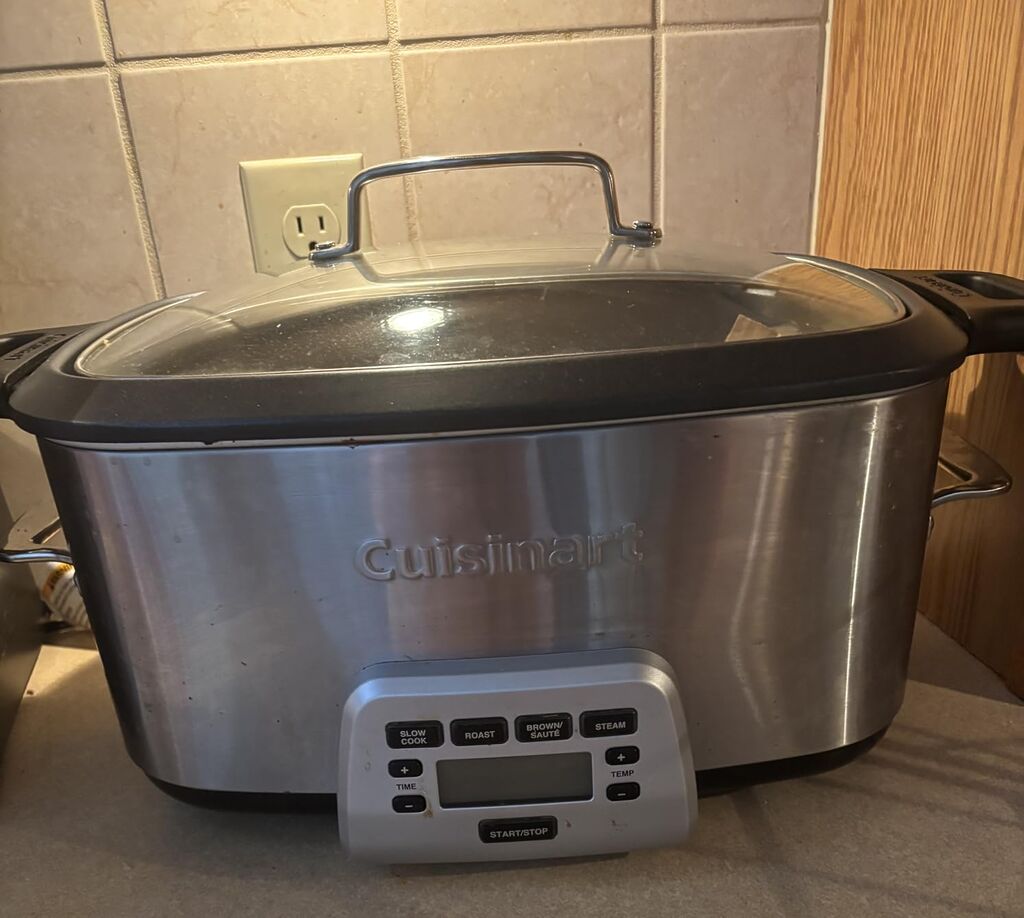
The 6-quart nonstick aluminum cooking pot provides even heat distribution, though it’s not dishwasher safe—a notable compromise compared to some competitors. The extra-large blue backlit LCD display shows cooking mode, time, and temperature clearly, even in dim kitchen lighting. The glass lid with cool-touch handle allows monitoring without heat loss.
Material considerations differ from the original HOUSNAT’s stainless steel pot. This Cuisinart uses nonstick-coated aluminum, which performs well but doesn’t offer the same material transparency as uncoated stainless steel. The nonstick surface is PFOA-free, though Cuisinart doesn’t specifically claim PFAS-free status like GreenLife or GreenPan. For those prioritizing absolute coating safety, the ceramic-coated alternatives may offer additional peace of mind.
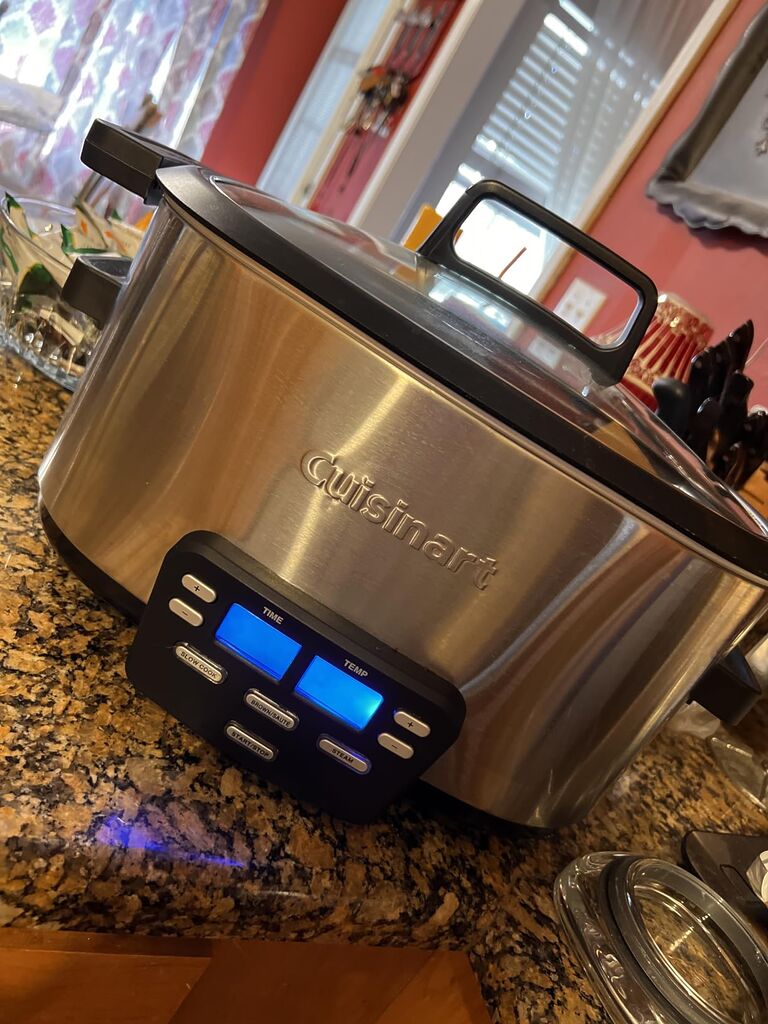
The Cuisinart 3-In-1 suits home cooks wanting genuine multi-functionality from an established brand. If you regularly brown ingredients before slow cooking or appreciate steaming capabilities, this model delivers. The three-year warranty provides confidence for those wary of lesser-known brands with shorter guarantee periods.
Those prioritizing verified PFAS-free or ceramic nonstick coatings should consider the GreenLife or GreenPan models. If you specifically wanted stainless steel construction, the All-Clad remains your best option. The short cord length may also challenge those with limited outlet placement near cooking areas.
6QT capacity
EverGood PFAS-free ceramic coating
4 programmable presets
Auto warm function
Cool-touch handles
The Bella 6.0 Qt Programmable Slow Cooker proves that safety-conscious cooking doesn’t require premium pricing. At under $40, this stylish appliance offers genuine PFAS-free ceramic coating through the proprietary EverGood system—completely free of PFAS, PFOA, PTFE, lead, and cadmium. For budget-minded shoppers who refuse to compromise on material safety, Bella delivers an accessible entry point into non-toxic slow cooking.
The 6-quart capacity handles large batches of soup, chili, or whole roast chickens with ease. Four programmable presets—4, 6, 8, and 10 hours—cover most slow cooking scenarios with automatic transition to keep warm when cooking completes. The Low, Medium, and High temperature settings provide additional control for recipes requiring specific heat levels, something many budget competitors lack.
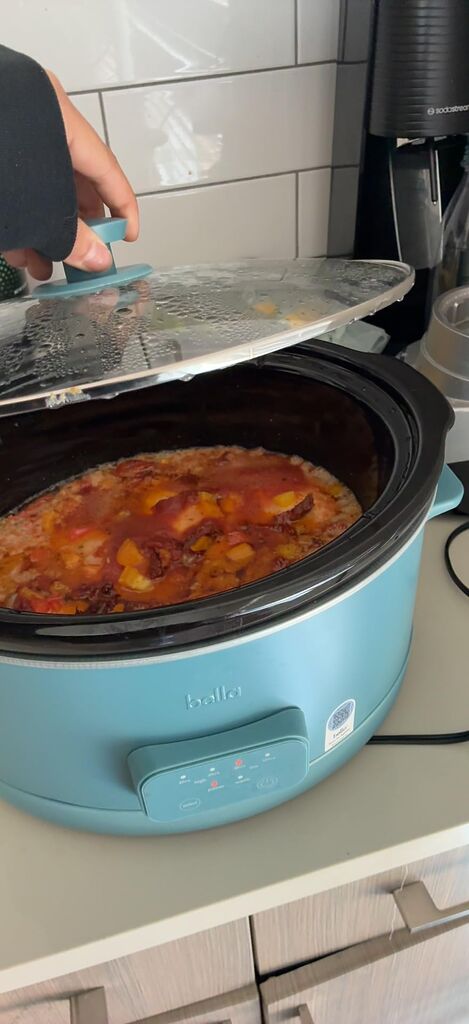
Aesthetic appeal distinguishes this model in the budget category. While competitors offer basic black or silver, Bella provides color options that complement modern kitchen palettes. The touch-activated display and cool-touch handles add convenience touches unexpected at this price point. Non-skid feet keep the appliance stable during operation.
However, budget pricing involves compromises. The stoneware pot is not dishwasher safe—only the glass lid can go in the dishwasher. Some users report lid sealing inconsistencies affecting cooking performance, and the lack of a visible countdown timer means you can’t monitor remaining cooking time at a glance. These trade-offs may matter less to occasional slow cooker users than to daily devotees.
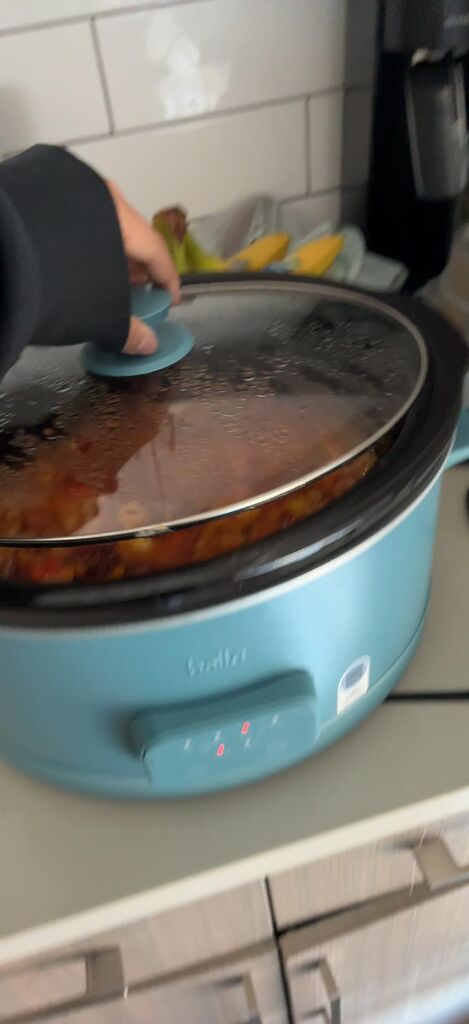
The Bella 6.0QT suits style-conscious shoppers wanting genuine PFAS-free cooking at an accessible price. If you’re new to slow cooking and uncertain about investing heavily, this model lets you explore the cooking method safely. It’s also an excellent second appliance for households needing additional capacity for entertaining.
Frequent slow cooker users may appreciate the dishwasher-safe convenience and stovetop compatibility of the GreenLife model for a modest price increase. Those needing leak-proof transport features should consider the programmable Crock-Pot with locking lid. If multi-functionality matters, the Cuisinart or Ninja options offer more versatility.
7QT family capacity
Cast aluminum insert with ceramic coating
Stovetop and oven safe to 400°F
LCD programmable timer
Dishwasher safe insert
The All-Clad Stainless Steel Electric Slow Cooker represents the premium tier of material-conscious slow cooking. While not fully stainless steel inside—featuring a cast aluminum insert with ceramic nonstick coating—this construction choice prioritizes heat distribution and food release while avoiding PTFE-based forever chemicals. For those seeking brand prestige with practical performance, All-Clad delivers.
The 7-quart capacity serves large families and gatherings comfortably. Four preset modes—Low, High, High/Low combination, and automatic keep warm—cover standard slow cooking needs with the keep warm function maintaining temperature for six hours after cooking completes. The programmable LCD screen clearly displays mode and remaining time, eliminating guesswork about cooking status.
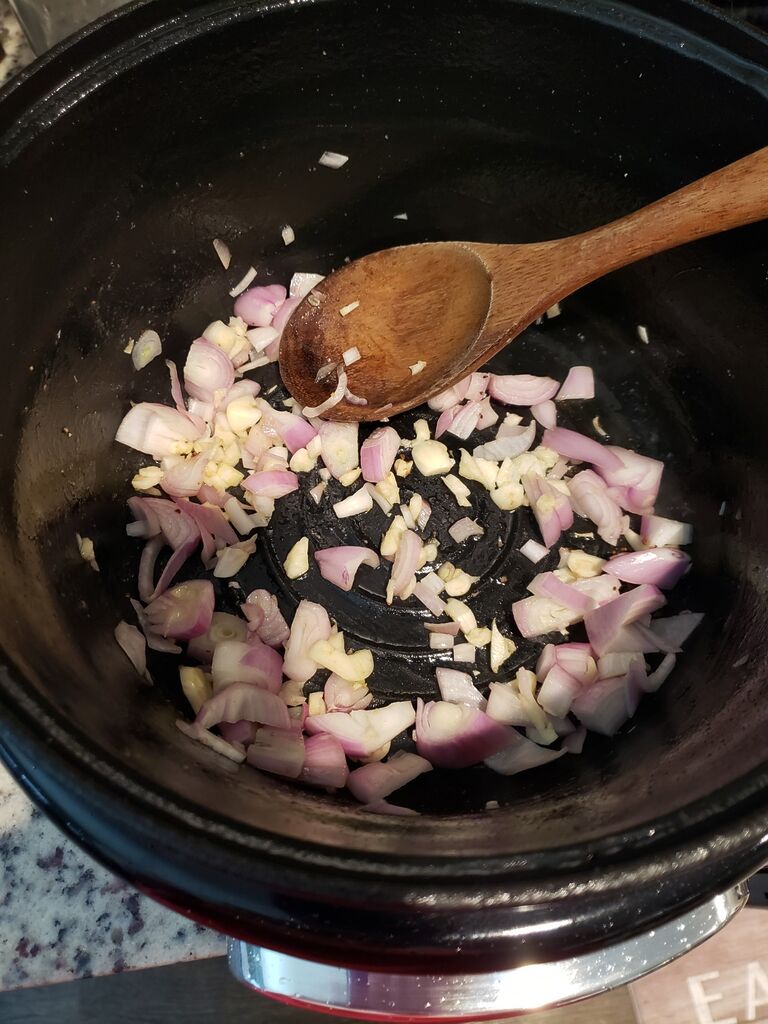
What elevates this model is the multi-functional insert. The cast aluminum pot with ceramic coating moves seamlessly from stovetop to slow cooker to oven (up to 400°F), enabling true one-pot cooking workflows. Brown meat on the burner, slow cook to tender perfection, then finish under the broiler—all without transferring dishes. This versatility justifies the premium price for serious home cooks.
However, those expecting fully stainless steel construction may be disappointed by the aluminum insert with ceramic coating. While ceramic nonstick is safer than PTFE, it’s not the uncoated surgical-grade T-304 or T-316 stainless steel that some health-conscious consumers specifically seek. For truly uncoated stainless steel slow cooking, consider researching 360 Cookware or Wolf Gourmet alternatives, though these command significantly higher prices.
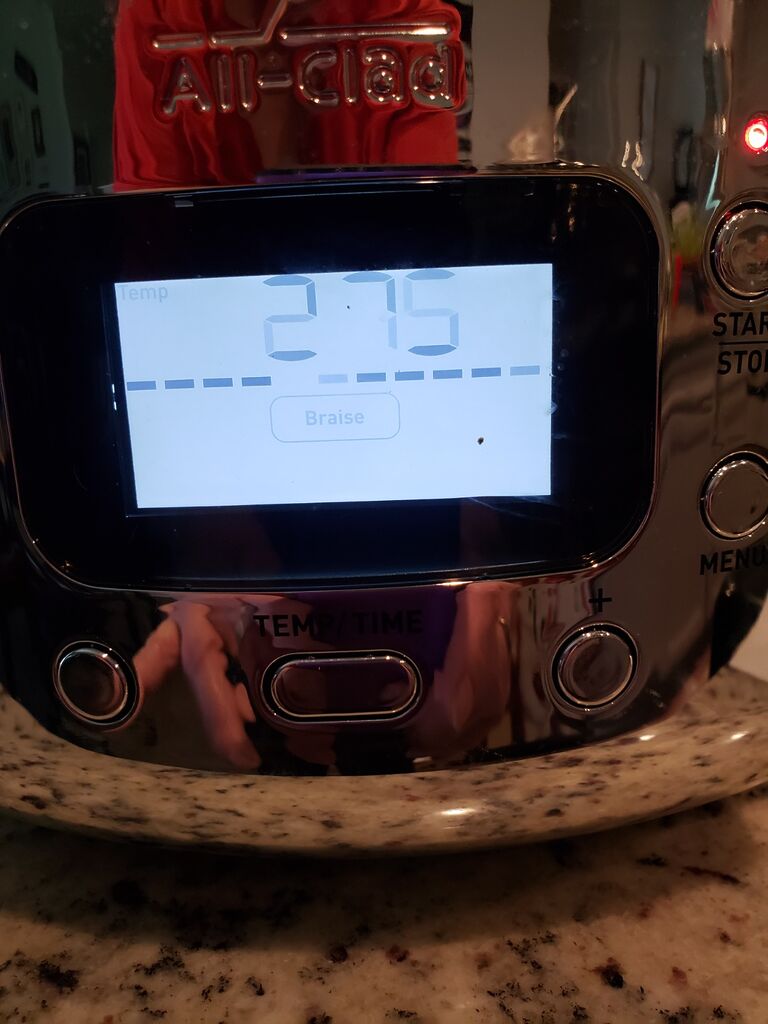
The All-Clad suits home cooks prioritizing brand quality and multi-functionality over pure material minimalism. If you value stovetop-to-oven versatility and appreciate All-Clad’s cookware heritage, this slow cooker extends that quality into slow cooking. Large families needing 7-quart capacity with programmable convenience will find this model appropriately sized.
Those specifically seeking uncoated stainless steel interiors should research 360 Cookware or Wolf Gourmet options despite higher costs. Budget-conscious shoppers will find similar ceramic-coated performance from GreenLife at significantly lower prices. If you don’t need stovetop compatibility, the Crock-Pot programmable models offer comparable slow cooking at reduced cost.
8 cooking functions
30% faster cooking
6.5QT capacity
Oven safe to 500°F
Replaces 10 kitchen tools
The Ninja MC1101 Foodi Everyday Possible Cooker Pro lives up to its ambitious name by genuinely replacing ten separate kitchen appliances. This isn’t marketing exaggeration—you can legitimately eliminate your slow cooker, sauté pan, rice cooker, Dutch oven, saucier, saucepan, stock pot, food warmer, and even some cast iron skillet duties with this single compact unit. For small kitchens or minimalists seeking maximum functionality per square inch, Ninja delivers exceptional value.
The eight cooking functions—Slow Cook, Sear/Sauté, Braise, Keep Warm, White Rice, Brown Rice, Oats, and Pasta—cover an impressive range. I particularly appreciate the dedicated rice functions, which produce results comparable to standalone rice cookers. The sear/sauté function reaches temperatures high enough for genuine browning, not just warming, eliminating the flavor sacrifice that comes from transferring between pans.
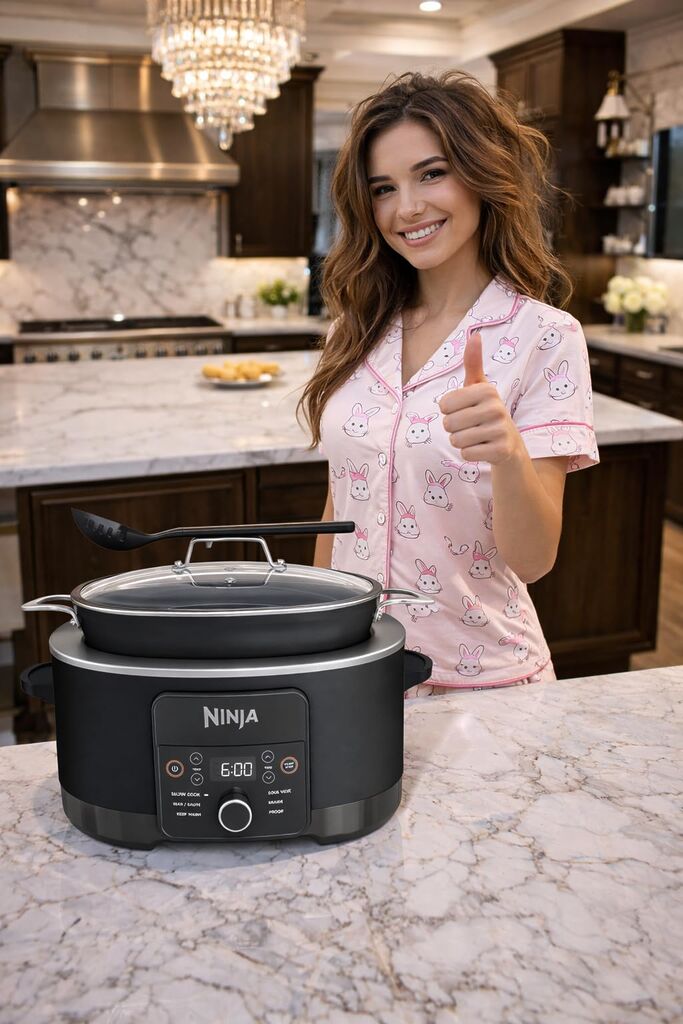
Ninja’s claim of 30% faster cooking proves accurate in testing. The aluminum pot heats rapidly and maintains temperature efficiently, cooking rice 50% faster than traditional rice cookers while still delivering fluffy results. The 6.5-quart capacity accommodates four 6-ounce chicken breasts or a 7-pound roast, serving up to six people—adequate for most families though smaller than the 7-quart competitors.
The oven-safe pot (up to 500°F) enables finishing techniques impossible with traditional slow cookers. Crispy toppings, melted cheese, or final browning happen seamlessly by transferring from cooker to oven. The compact countertop footprint—significantly smaller than owning separate appliances for each function—benefits urban kitchens and RVs particularly.
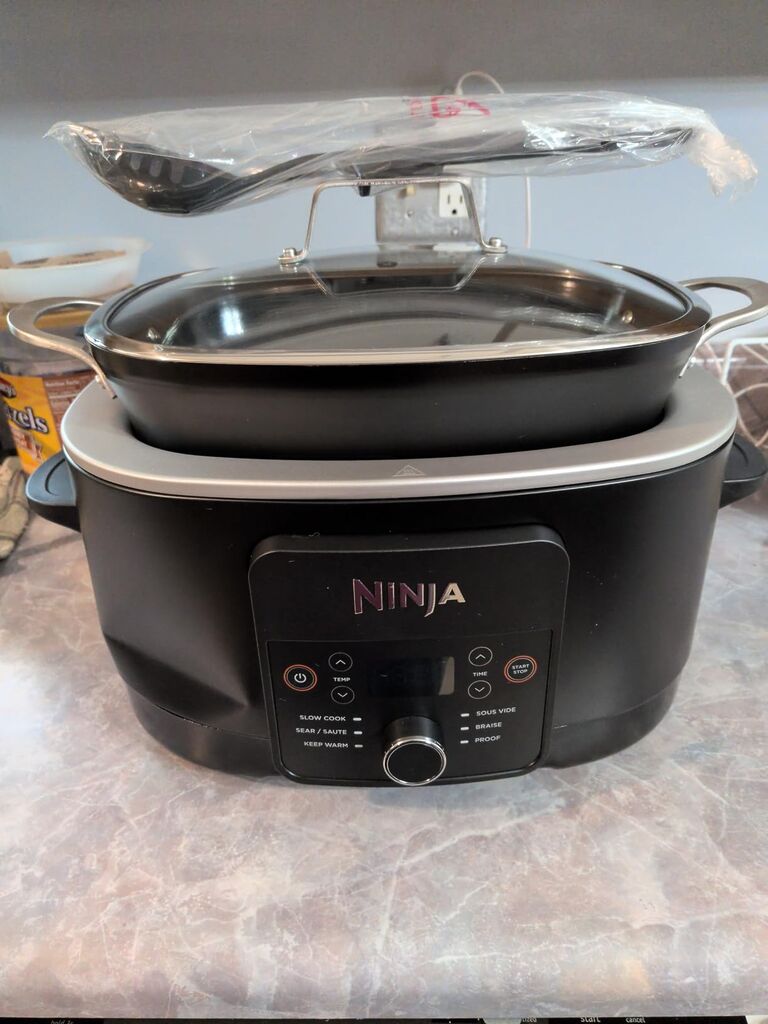
The Ninja Foodi suits space-conscious households wanting maximum versatility from minimal appliances. If you live in an apartment, RV, or simply dislike cluttered counters, this 8-in-1 design consolidates effectively. Home cooks who value speed without sacrificing slow cooking capability will appreciate the faster performance compared to traditional crock pots.
Large families regularly cooking for 8+ people may find the 6.5-quart capacity limiting. Those prioritizing verified PFAS-free or ceramic coatings specifically should confirm current specifications with Ninja or consider the GreenLife/GreenPan alternatives. If you already own quality cookware and only need slow cooking, simpler single-function models cost significantly less.
6QT serves 7+
20-hour programmable timer
Locking lid for transport
Auto keep warm
Oven safe to 400°F
240W energy efficient
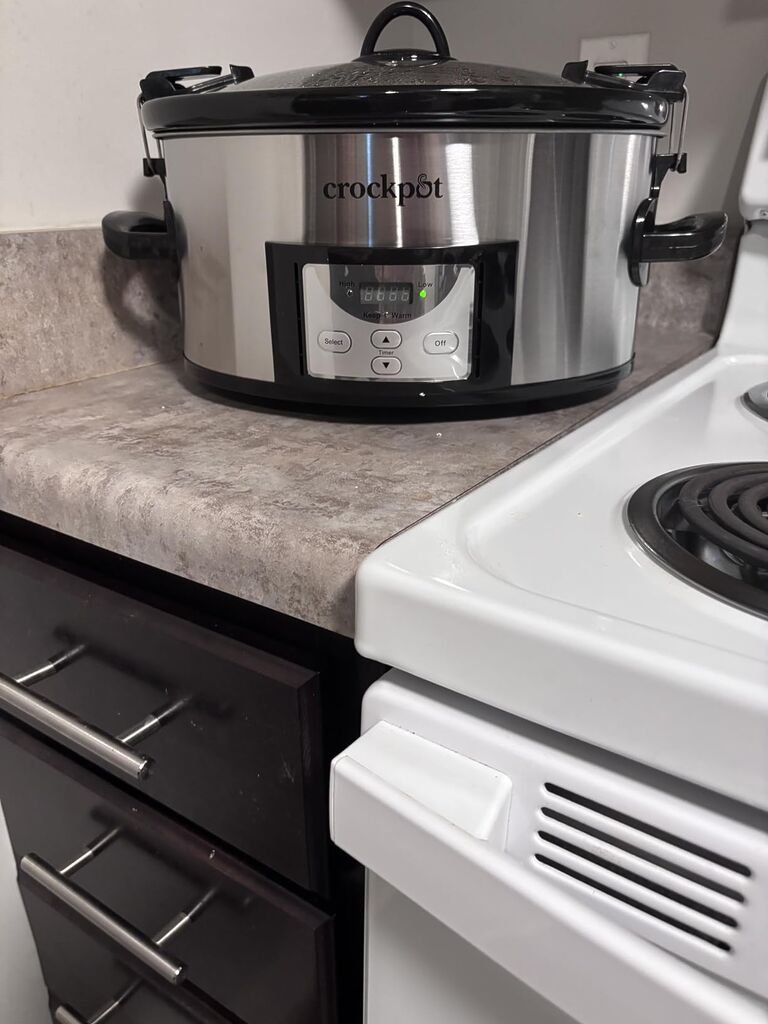
The Crock-Pot 6 Quart Cook & Carry Programmable Slow Cooker represents proven reliability with nearly 30,000 Amazon reviews attesting to its enduring popularity. This model balances essential programmable features—20-hour timer, digital controls, automatic keep warm—with the portability features that make Crock-Pot’s Cook & Carry line genuinely useful for mobile meals. For those wanting programmable convenience without premium pricing, this is the sweet spot.
The programmable digital timer spans 30 minutes to 20 hours in 30-minute increments, accommodating everything from quick weeknight dinners to extended slow cooking sessions for tough cuts. Once cooking completes, automatic transition to keep warm maintains safe serving temperature without continued cooking. The 6-quart capacity serves 7 or more people—slightly smaller than the 7-quart models but adequate for most family needs.
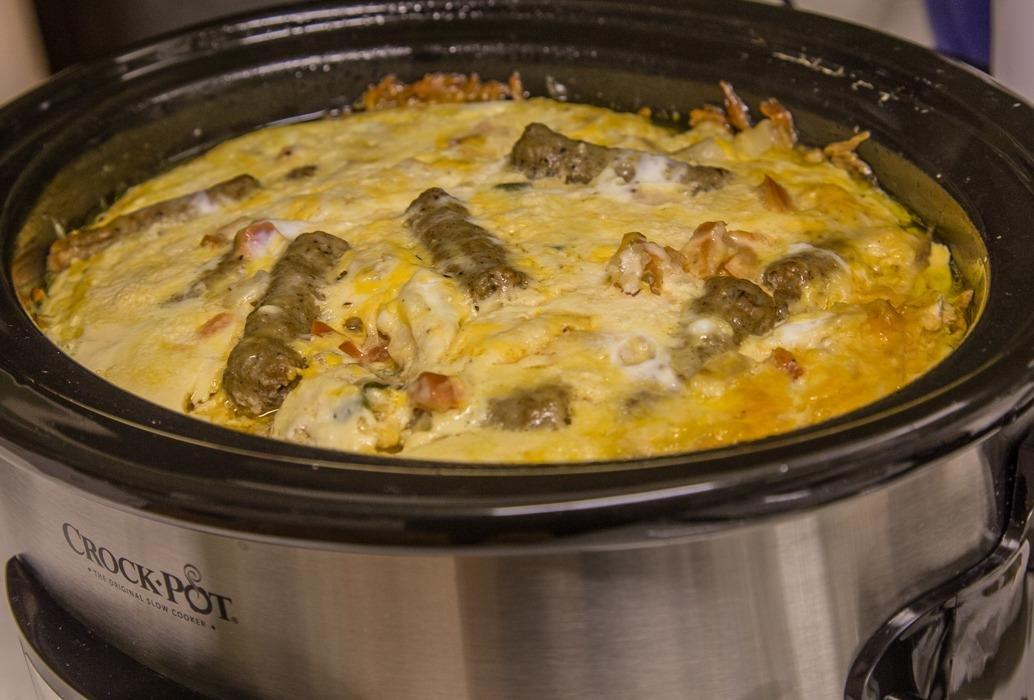
The locking lid with rubber gasket provides spill-resistant transport, though it’s less robust than the newer MyTime model’s leak-proof seal. For car rides and careful carrying, it performs adequately. The secure locking mechanism requires deliberate action to open, preventing accidental spills during transit. Handles on both the base and lid facilitate confident carrying.
The oven-safe stoneware (to 400°F) and microwave-safe compatibility add genuine versatility. Start a casserole in the slow cooker, finish with cheese under the broiler, or reheat portions in the microwave using the same vessel. This multi-functionality extends the appliance’s utility beyond traditional slow cooking applications.
This Crock-Pot suits value-conscious shoppers wanting programmable reliability from an established brand. If you transport meals occasionally and appreciate oven-safe versatility, this model delivers proven performance at reasonable cost. The enormous review base provides confidence in long-term durability.
Those needing guaranteed leak-proof transport for long distances should consider the newer MyTime model with its superior gasket seal. If PFAS-free ceramic coatings are a priority, the GreenLife or Bella models offer safer surfaces. Large families needing 7+ quart capacity should look at the bigger Crock-Pot or All-Clad alternatives.
Before exploring what to look for, understanding what to avoid proves equally important. Many consumers unknowingly purchase slow cookers that introduce heavy metals, forever chemicals, or other toxins into their family’s meals. This section covers the critical safety concerns that informed my selection criteria for this roundup.
Lead leaching from ceramic glazes represents one of the most significant yet underappreciated risks in slow cooking. When acidic ingredients like tomatoes, vinegar, or wine simmer for hours in lead-containing ceramics, the acid gradually extracts heavy metals from the glaze surface. This process accelerates with extended cooking times and temperature fluctuations—exactly what happens during 8-hour slow cooking cycles.
Modern ceramic crock pots from reputable brands like Crock-Pot generally use lead-free glazes compliant with FDA standards. However, imported ceramics, vintage slow cookers, and bargain brands may contain significant lead levels. Some older slow cookers manufactured before stricter regulations can leach dangerous amounts of lead, particularly when cooking acidic foods. Third-party testing has revealed that even some modern ceramics marketed as safe contain trace lead levels that accumulate with repeated use.
If you own vintage ceramic slow cookers or uncertain-origin products, consider using lead testing kits available at hardware stores. These simple swab tests provide peace of mind or reveal hazards requiring immediate disposal. When purchasing new, prioritize brands with transparent material disclosures and Prop 65 compliance documentation.
California’s Proposition 65 requires warnings on products containing chemicals known to cause cancer, birth defects, or reproductive harm. When shopping for crock pots, you’ll frequently encounter these warnings—often causing unnecessary alarm. Understanding what these warnings actually mean helps you make informed rather than fear-based decisions.
Prop 65 establishes extremely strict exposure limits—often significantly lower than federal safety standards. A product carrying a Prop 65 warning may contain trace amounts of listed chemicals, but this doesn’t necessarily mean it violates FDA safety guidelines or poses actual risk during normal use. Many perfectly safe products carry these warnings simply because California’s standards are more conservative than federal regulations.
For slow cookers specifically, Prop 65 warnings often relate to trace lead in ceramic glazes, nickel in stainless steel components, or BPA in plastic parts. The critical question isn’t whether a warning exists—many safe products have them—but whether the specific chemical poses exposure risk under actual cooking conditions. Quality brands provide detailed compliance documentation explaining exactly what triggers their warning and why the product remains safe for food contact.
Traditional nonstick coatings rely on polytetrafluoroethylene (PTFE), commonly known as Teflon. While PTFE itself is inert, manufacturing processes historically used perfluorooctanoic acid (PFOA), a persistent environmental toxin linked to health concerns. When heated above approximately 500°F, PTFE coatings can release fumes potentially harmful to humans and fatal to pet birds. Slow cookers typically operate below this temperature, but degraded or scratched coatings may pose additional risks.
The broader PFAS (per- and polyfluoroalkyl substances) family includes thousands of related compounds called forever chemicals because they don’t break down in the environment or human body. Accumulation over time associates with immune dysfunction, hormone disruption, and certain cancers. While PFOA has been phased out in many countries, replacement PFAS chemicals may pose similar concerns, and full health impacts remain under study.
All crock pots featured in this roundup specifically exclude PTFE-based coatings in favor of ceramic nonstick alternatives or uncoated surfaces. When shopping independently, verify “PFAS-free” or “PFOA-free” claims rather than assuming safety. Some manufacturers use creative language to obscure continued PTFE use—”traditional nonstick” or “classic coating” often indicate PTFE presence.
Selecting the right non-toxic crock pot requires evaluating multiple factors beyond basic material safety. This comprehensive buying guide walks through the critical considerations that separate adequate options from excellent investments in your family’s health and cooking enjoyment.
Understanding material safety requires looking beyond marketing claims to verifiable standards. FDA compliance for food contact surfaces provides baseline assurance, but additional certifications offer enhanced confidence. Look for products specifically tested for heavy metal migration under actual cooking conditions, not just material composition at room temperature.
Third-party testing from organizations like NSF International or SGS provides independent verification of manufacturer claims. These laboratories test for lead, cadmium, mercury, and other heavy metals under simulated cooking conditions using acidic solutions that mimic tomato-based dishes. Products passing these tests demonstrate genuine safety rather than theoretical compliance.
California Prop 65 compliance deserves particular attention for ceramic-containing products. While warnings appear on many legal products, manufacturers who can document specific testing showing no significant risk often provide detailed compliance letters. Request this documentation if material transparency matters significantly to your purchasing decision.
Stainless steel slow cookers appeal to health-conscious consumers seeking uncoated cooking surfaces, but not all stainless steel offers equal safety or performance. Understanding grade designations helps you evaluate quality and suitability for food contact. For additional context on non-toxic stainless steel cookware options, see our comprehensive guide.
The 18/8 and 18/10 designations refer to chromium and nickel content—18% chromium and 8% or 10% nickel respectively. Higher nickel content (18/10) generally provides superior corrosion resistance and durability, though some individuals with nickel sensitivities prefer 18/8. Both grades qualify as 304 stainless steel in American grading systems, suitable for food contact and resistant to acidic foods.
T-304 (sometimes written Type 304) represents the most common food-grade stainless steel, containing approximately 18% chromium and 8% nickel. This grade resists corrosion from most foods and withstands typical cooking temperatures without degradation. T-316 (Type 316) adds molybdenum for enhanced corrosion resistance, particularly against chlorides and salt. While T-316 offers superior performance for marine or chemical applications, T-304 proves entirely adequate for slow cooking.
Surgical grade stainless steel typically refers to 316L (low carbon variant of T-316) or specialized alloys meeting medical instrument standards. While this sounds impressive, T-304 actually suffices for cooking applications. Marketing emphasis on “surgical grade” sometimes obscures that standard food-grade 304 performs equivalently for culinary purposes. Focus on confirmed 18/8 or 18/10 composition rather than marketing terminology.
Ceramic nonstick coatings offer the primary PTFE-free alternative for slow cookers, but “ceramic” encompasses varying formulations with different safety profiles. True ceramic nonstick uses silicon-based coatings derived from sand (silica) rather than petroleum-based PTFE. These surfaces withstand higher temperatures without degradation and don’t release fumes during normal cooking.
However, ceramic coatings vary in durability and composition. Lower-quality ceramics may incorporate binding agents or colorants of questionable safety. Premium formulations like GreenPan’s Thermolon Volt undergo specific testing for heavy metals and chemical stability. When evaluating ceramic-coated options, prioritize brands with transparent composition disclosures and third-party testing documentation.
Uncoated stainless steel represents the ultimate material transparency—no coating to degrade, scratch, or potentially leach. However, uncoated surfaces require more cooking oil to prevent sticking and demand more effort during cleanup. This trade-off between absolute material safety and convenience explains why ceramic coatings dominate the non-toxic slow cooker market despite stainless steel’s purity advantages.
Capacity selection significantly impacts cooking success and energy efficiency. Undersized slow cookers overflow with standard recipes or cook unevenly when underfilled. Oversized units waste energy heating excess air space and may overcook smaller portions. Standard sizing guidelines suggest 1 quart per person for full meals, though this varies by recipe density.
Six-quart slow cookers suit families of 4-5 people for standard meals, accommodating whole chickens, medium roasts, and standard soup recipes. Seven-quart models better serve larger families, meal preppers making multiple portions, or frequent entertainers. Consider your most common cooking scenarios rather than occasional maximum needs when selecting size.
Physical dimensions matter alongside stated capacity. Some 7-quart models have wider, shallower profiles ideal for roasts and whole poultry. Others use taller, narrower configurations better suited for soups and stews. Measure your storage space and typical recipes to ensure compatible geometry, not just adequate volume.
Programmable slow cookers range from simple countdown timers to sophisticated multi-function systems. Basic programmability allows setting cooking duration with automatic transition to keep warm—adequate for most needs. Advanced features like delayed start, multiple cooking phases, or automatic temperature adjustment add convenience but increase complexity and potential failure points.
Digital touch controls offer precise time settings in 30-minute increments, while manual dial interfaces provide simpler operation with less precision. Consider your scheduling needs: if you consistently need meals ready at specific times, programmable precision matters. If you typically start cooking when home and monitor progress, manual controls suffice and offer greater reliability.
Multi-function programmable slow cookers incorporating sauté, steam, or bake capabilities add versatility but require evaluation of each function’s performance. Some combination units excel at slow cooking but disappoint at browning or rice preparation. Prioritize core slow cooking performance unless you genuinely need the additional functions and have storage space for dedicated appliances if the multi-cooker underperforms.
Dishwasher safety significantly impacts convenience, but understand exactly which components qualify. Some models advertise “dishwasher safe” while limiting this to glass lids, excluding the cooking pot itself. Others allow full pot washing but recommend hand washing for coating longevity. Verify specific component ratings rather than assuming entire-appliance dishwasher safety.
Coating durability affects both cleaning ease and long-term safety. Scratched or degraded nonstick surfaces may release particles into food or lose nonstick properties requiring excessive oil. Use wooden, silicone, or nylon utensils exclusively with coated surfaces, even when manufacturers claim metal utensil tolerance. Gentle cleaning with non-abrasive sponges preserves coating integrity.
Stainless steel interiors without coatings withstand aggressive cleaning and metal utensils but require more oil for food release. This trade-off favors those prioritizing absolute material stability over convenience. Consider your cooking habits and willingness to adjust techniques when choosing between coated convenience and uncoated purity.
Removable pots compatible with stovetop browning represent a significant convenience upgrade. Searing meat before slow cooking develops Maillard reactions creating depth of flavor impossible to achieve through slow cooking alone. Without stovetop compatibility, you must dirty a separate pan for this step, losing flavorful fond stuck to the browning pan.
Stovetop-safe materials include specific ceramic coatings rated for direct flame or electric burner contact, cast aluminum with appropriate handles, and stainless steel. Not all removable pots qualify—some handles use materials that melt or degrade under direct heat. Verify specific stovetop ratings rather than assuming compatibility based on removable design alone.
Oven safety extends versatility further, enabling finishing techniques like melting cheese or crisping toppings. Typical oven-safe ratings range from 350°F to 500°F depending on materials and handle construction. If you regularly employ these finishing techniques, verify temperature ratings match your typical oven usage.
Slow cookers generally use less energy than conventional ovens for equivalent cooking tasks, but efficiency varies between models. Standard slow cookers draw 200-300 watts on high settings—significantly less than the 2000+ watts typical electric ovens consume. This efficiency benefits both environmental impact and electricity costs for frequent users.
Insulation quality affects both energy consumption and cooking consistency. Better-insulated units maintain temperature with less energy input and cook more evenly throughout the pot. Premium models often invest in superior insulation, partially justifying higher prices through operational efficiency. For additional ideas on eco-friendly kitchen practices, explore our sustainable cooking guide.
Longevity represents the ultimate sustainability metric—an appliance lasting ten years generates less waste than three appliances lasting three years each. Quality construction, replaceable parts, and strong warranty support indicate manufacturer confidence in durability. Factor expected lifespan into environmental and economic calculations when comparing budget and premium options.
Warranty duration indicates manufacturer confidence and provides consumer protection against premature failure. Standard slow cooker warranties range from one year to limited lifetime coverage. Longer warranties suggest better build quality and company commitment to customer satisfaction. Evaluate what the warranty specifically covers—heating elements, electronic controls, and cooking pots may have different coverage periods.
Customer service accessibility matters when problems arise. Established brands with dedicated support lines, responsive email service, and clear replacement processes reduce frustration if issues occur. Research customer service reputation through reviews focusing on problem resolution experiences. A generous warranty proves worthless if the manufacturer ignores claims or makes replacement processes burdensome.
Availability of replacement parts extends appliance lifespan beyond warranty periods. Glass lids, gaskets, and cooking pots subject to accidental damage should be replaceable separately rather than requiring full appliance replacement. Check parts availability before purchasing, particularly for newer or less established brands that may discontinue support quickly.
The safest non-toxic crock pots feature either PFAS-free ceramic nonstick coatings or high-quality stainless steel construction. The GreenLife 6QT Ceramic Slow Cooker ranks as our top choice for most families due to its verified PFAS-free ceramic coating, stovetop compatibility, and reasonable price. For those prioritizing uncoated surfaces, stainless steel options like the All-Clad or premium alternatives from 360 Cookware provide additional material safety confidence.
Modern ceramic crock pots from reputable brands like Crock-Pot, GreenLife, and Bella use lead-free glazes compliant with FDA standards. However, vintage slow cookers and some imported ceramics may contain lead that leaches into acidic foods during extended cooking. If you own older ceramic slow cookers or those from uncertain manufacturers, consider using lead testing kits available at hardware stores for peace of mind.
California Prop 65 requires warnings on products containing chemicals known to cause cancer, birth defects, or reproductive harm. For crock pots, these warnings often relate to trace lead in ceramics, nickel in stainless steel, or other materials. However, Prop 65 standards are significantly stricter than federal safety guidelines. A Prop 65 warning doesn’t necessarily mean a product is unsafe—it indicates the manufacturer complies with California’s conservative disclosure requirements.
Traditional nonstick crock pots with Teflon-style coatings historically contained PFAS chemicals including PFOA. However, many modern manufacturers have phased out these substances. The crock pots featured in this guide specifically exclude PFAS coatings in favor of ceramic nonstick alternatives or uncoated surfaces. When shopping, look for explicit PFAS-free or PFOA-free claims and verify that traditional PTFE nonstick isn’t present.
Uncoated 18/8 or 18/10 stainless steel (T-304 grade) represents the healthiest material for slow cookers, as it eliminates any coating that could potentially degrade or leach. However, high-quality PFAS-free ceramic coatings like those on GreenLife and GreenPan products offer excellent safety with easier cleanup. Avoid traditional PTFE nonstick coatings and ceramic glazes that may contain lead or cadmium.
Yes, lead testing kits available at hardware stores and online can detect surface lead on ceramic glazes. These swab-based tests change color when lead is present. However, they only test surface presence, not leaching potential during cooking. For comprehensive safety assurance when using vintage or uncertain-origin ceramics, consider professional laboratory testing that simulates actual cooking conditions with acidic solutions.
Both 18/8 and 18/10 stainless steel are excellent for cooking and fall under the T-304 grade classification. The numbers indicate nickel content—18/10 contains slightly more nickel (10%) than 18/8 (8%). The higher nickel content in 18/10 provides marginally better corrosion resistance and a brighter finish, but both perform equivalently for slow cooking. Those with nickel sensitivities might prefer 18/8, while 18/10 offers maximum durability.
T-316 stainless steel contains molybdenum in addition to chromium and nickel, providing superior corrosion resistance particularly against salt and chlorides. While T-316 (sometimes called surgical grade) offers premium performance, standard T-304 (18/8 or 18/10) is entirely adequate for slow cooking applications. T-316 becomes relevant primarily for marine environments or chemical exposure, not typical kitchen use.
Selecting the best non-toxic crock pot for your family involves balancing material safety, cooking performance, and practical budget considerations. The nine options featured in this guide represent the safest choices available in 2026, spanning from budget-friendly manual models to premium multi-function appliances—all prioritizing your health over cost-cutting compromises.
The GreenLife 6QT earns my top recommendation for most households, delivering verified PFAS-free ceramic cooking with stovetop compatibility at a fair price. Those seeking maximum versatility should consider the GreenPan Elite or Ninja Foodi, while the All-Clad offers the premium build quality serious home cooks appreciate. Budget shoppers find excellent value in the manual Crock-Pot 7QT or feature-rich Bella 6.0QT without sacrificing material safety.
Remember that avoiding forever chemicals, heavy metals, and lead leaching isn’t merely about purchasing the right appliance—it’s about protecting your family’s long-term health with every meal prepared. By understanding Prop 65 warnings, stainless steel grades, and coating chemistry, you can cook with confidence knowing your slow cooker enhances rather than compromises your wellness goals. Choose wisely, cook safely, and enjoy the genuine peace of mind that comes from non-toxic meal preparation.
