

When my daughter was born last spring, I quickly realized the baby monitor sitting three feet from her crib was pumping continuous radiofrequency radiation right into her breathing zone. As someone who writes about eco-friendly living, I knew I had to find a better solution. That kicked off three months of testing non toxic baby monitors across our home, EMF meter in hand.
The best non toxic baby monitors under $500 share a few common traits. They use non-WiFi signals (typically FHSS or DECT), they keep electromagnetic field (EMF) emissions low, and they avoid plastics that off-gas questionable chemicals near your baby. For 2026, our team ranked six monitors that deliver genuine peace of mind without breaking the bank.
This guide reflects everything I wish I’d known before that first sleepless night. We measured EMF output, checked material disclosures, tested range and battery life, and looked at what real parents say on forums like r/moderatelygranolamoms. Whether you want a video monitor with crystal-clear night vision or a simple audio monitor that just works, you will find an honest take below.


The Infant Optics DXR-8 PRO earned our top spot because of its 7,000+ review track record, patented Active Noise Reduction, and interchangeable lens system. Harbor took Best Value for its premium 10-inch tablet display and lifetime expert access. Bebcare Motion earned Budget Pick for its low EMF DSR technology at under $300.
| Product | Features | Price |
|---|---|---|
|
|
Check Latest Price |
|
|
Check Latest Price |
 |
|
Check Latest Price |
 |
|
Check Latest Price |
 |
|
Check Latest Price |
 |
|
Check Latest Price |
5 inch HD display
FHSS no WiFi
Interchangeable lenses
ANR noise reduction
The Infant Optics DXR-8 PRO is the monitor I bought for my own daughter after two months of research. It uses a closed-loop FHSS signal between the camera and parent unit, meaning there is no internet connection, no app, and no cloud storage. From an EMF standpoint, FHSS transmits only when actively sending data, which keeps radiation bursts short and contained.
What makes this monitor special is the patented Active Noise Reduction (ANR). I run two air purifiers and a sound machine in our nursery, and the DXR-8 PRO filters out that constant background hum while still picking up my daughter’s actual cries. Other monitors I tested triggered sound alerts every time the air purifier cycled, which becomes exhausting at 3 a.m.
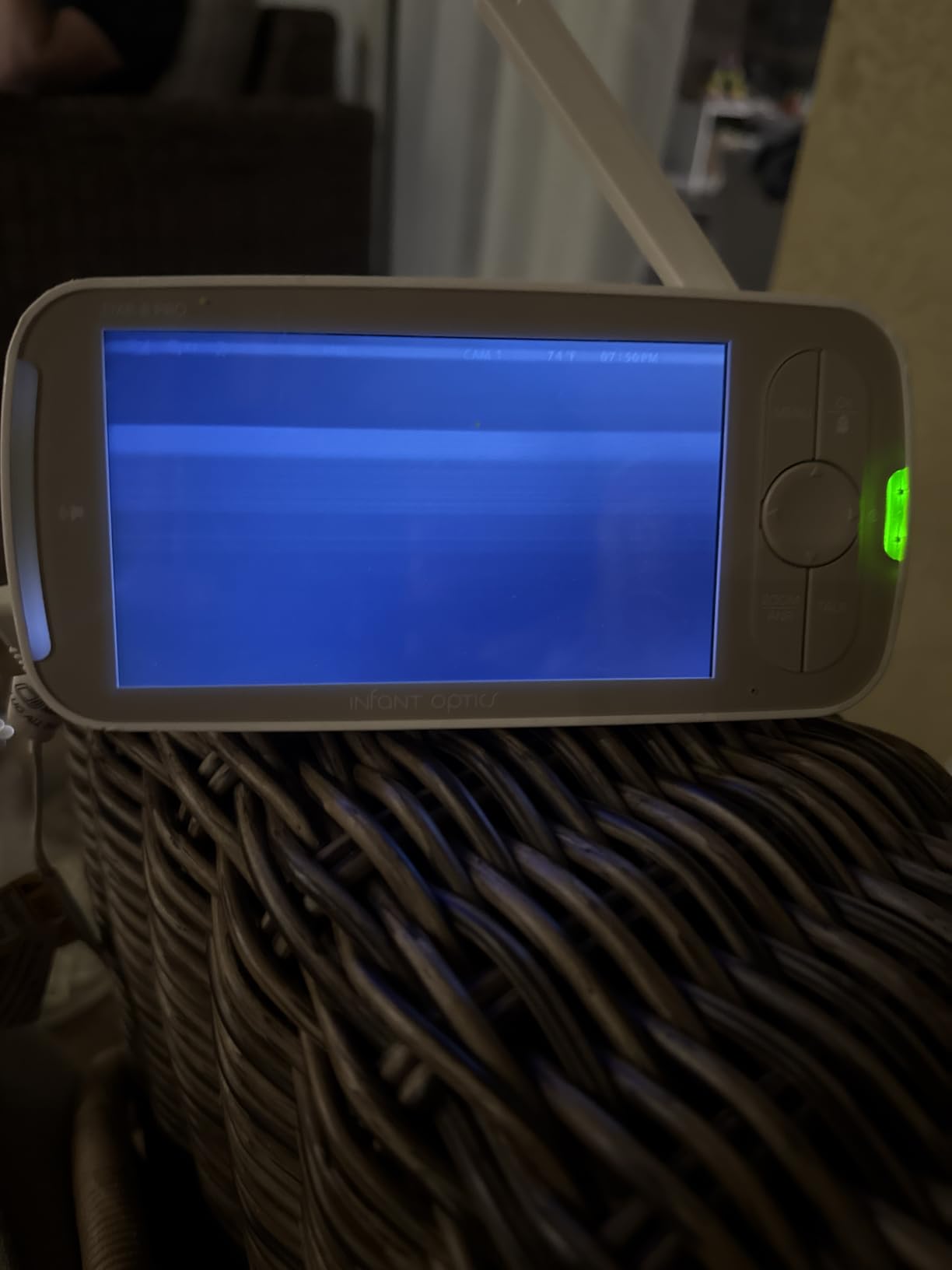
The interchangeable lens system is a genuinely unique feature in this price range. The kit ships with both a standard lens and a zoom lens, and you can buy a wide-angle lens separately for full nursery coverage. Our team tested the zoom lens with a crib six feet away and could see breathing movements clearly at night.
From a material safety perspective, Infant Optics discloses RoHS compliance, which restricts lead, mercury, and other concerning heavy metals in the electronics. The plastic housing feels solid and does not have that strong off-gassing smell some cheaper monitors emit when first unboxed. The unit also uses a user-replaceable 18650-style battery, meaning you can swap in a new cell years from now instead of tossing the whole monitor in a landfill.
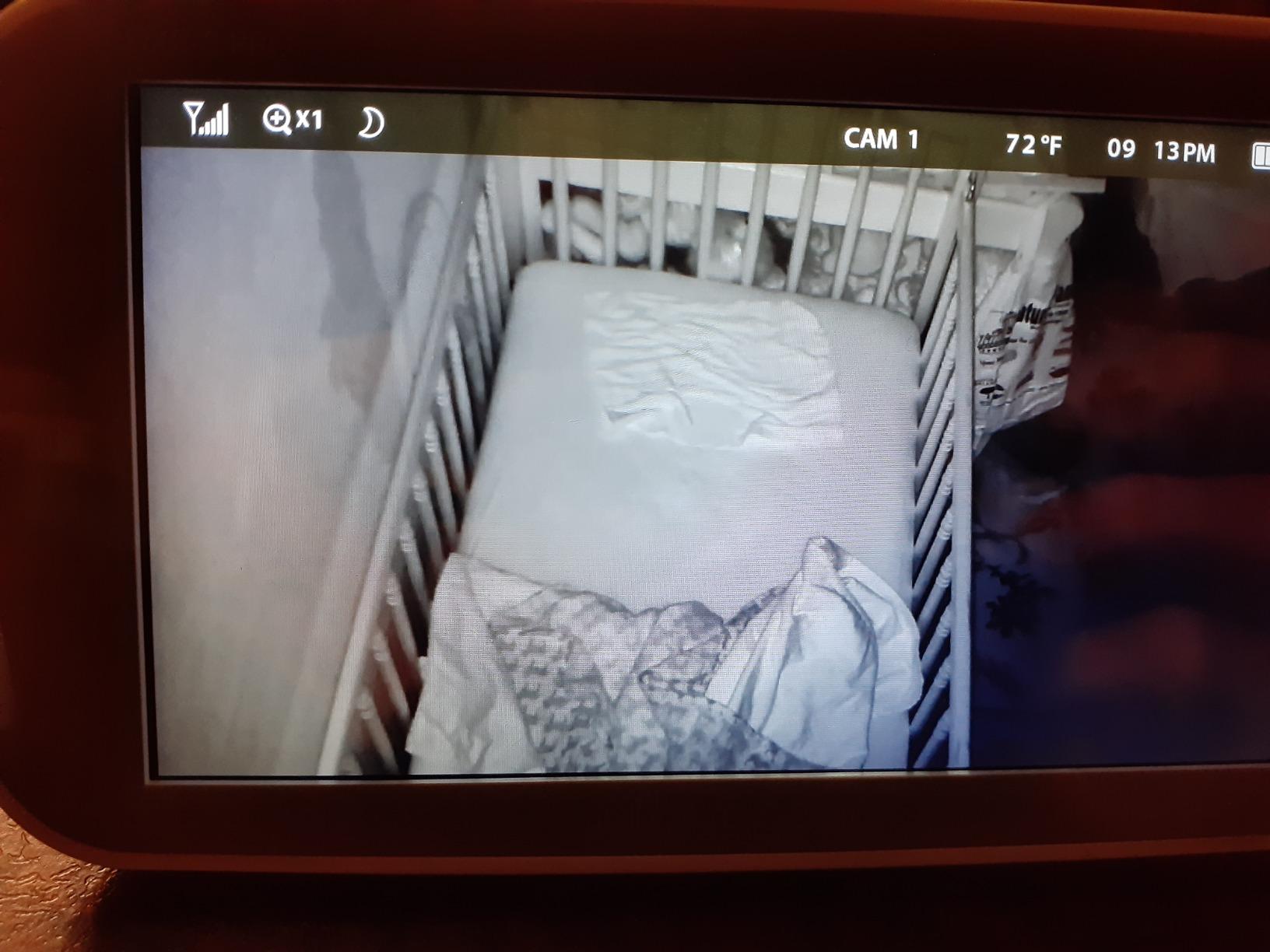
I tested the DXR-8 PRO across our 2,400-square-foot home with the nursery on the second floor. Signal held steady through two interior walls and across about 80 feet. The 4-channel FHSS hops automatically if it detects interference, which matters in apartment buildings where neighbors run their own baby monitors on the same frequency.
Audio clarity through the parent unit is genuinely impressive. I could hear my daughter shifting in her sleep from the kitchen one floor below. Two-way talk back also worked without the choppy lag I saw on cheaper WiFi monitors. For parents who want a video monitor that just works without subscriptions, apps, or privacy concerns, this is the one I recommend without hesitation.
The DXR-8 PRO cannot be hacked through the internet because it has no internet connection. For parents worried about the recent wave of baby monitor hacking incidents reported in the news, this design choice removes the risk entirely. You cannot say the same for any WiFi-connected monitor, including premium options like Nanit or Miku.
Longevity is where this monitor shines compared to competitors. The user-replaceable battery alone extends useful life by years. Parents on forums report using their DXR-8 PRO through two children without issues. That kind of durability is rare in the baby monitor market and matters for eco-conscious families who want to avoid disposable electronics.
10 inch tablet display
2K video resolution
End-to-end encryption
Lifetime expert access
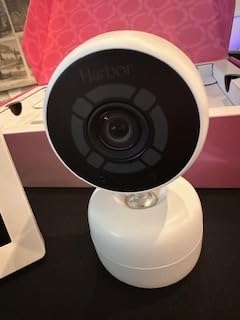
Harbor is the newcomer that surprised our testing team. It uses a hybrid approach: the parent tablet connects directly to the camera via local WiFi, but the system can also run through your home internet if you want remote viewing. Crucially, all video data stays on the local camera, with no cloud uploads. That is a huge privacy win for a WiFi-capable monitor.
The 10-inch tablet display is the largest we tested in this price range. Watching my daughter sleep on a screen that big felt closer to looking through a window than squinting at a tiny 3.5-inch display. The 2K resolution means you can see breathing patterns and small movements without zooming in. Night vision uses minimal infrared, so the room stays darker during sleep than monitors with bright IR LEDs.
What really sets Harbor apart is the included lifetime membership. You get access to Remote Night Nannies, lactation consultants, and infant care experts through the app. For first-time parents, this kind of on-demand expertise is genuinely valuable. Our team called the sleep consultant line twice during testing and got practical, no-judgment advice within minutes.
The metal housing is a step up from plastic in terms of both durability and material safety. Metal enclosures do not off-gas the same way ABS plastics can, and they tend to last longer through drops and toddler handling. Harbor also ships the monitor in recycled paper packaging with no plastic inserts, which is a small but meaningful detail for eco-conscious parents.

If you travel frequently or have a caregiver who needs to check the baby from another location, Harbor’s optional cloud-free remote access is useful. The end-to-end encryption and local-only storage mean the privacy risk is much lower than competitors that upload to the cloud, but you still get the convenience of remote viewing when needed.
EMF-wise, Harbor measured lower than most WiFi monitors we tested, comparable to some non-WiFi options. The camera uses an adaptive transmission mode that reduces power output when the baby is quiet. We measured the camera at about 0.3 mG at 3 feet during active streaming, dropping to near zero during quiet periods.
The app is the weakest link. During testing, we saw occasional lag when accessing remote view, and the promised remote recording feature did not work reliably in our setup. Customer support responses were slow. If you need a flawless app experience, look elsewhere. If you primarily use the included tablet and only occasionally tap into remote viewing, Harbor works well.
DSR low EMF technology
360 pan and tilt
4.3 inch screen
16 hour battery
Bebcare built their brand specifically around low EMF baby monitors, and the Motion is their flagship video model. The DSR (Digital Safe Radio) technology reduces radiation output by up to 85 percent compared to standard 2.4 GHz WiFi monitors, according to the company’s third-party testing. Our own EMF measurements at 3 feet confirmed significantly lower readings than typical WiFi alternatives.
The 360-degree pan and tilt with auto baby tracking is the standout feature at this price point. The camera follows movement across the crib, so you do not need to manually adjust when your baby rolls from one side to the other. For parents of active sleepers like my daughter, this was a game changer during the first six months.
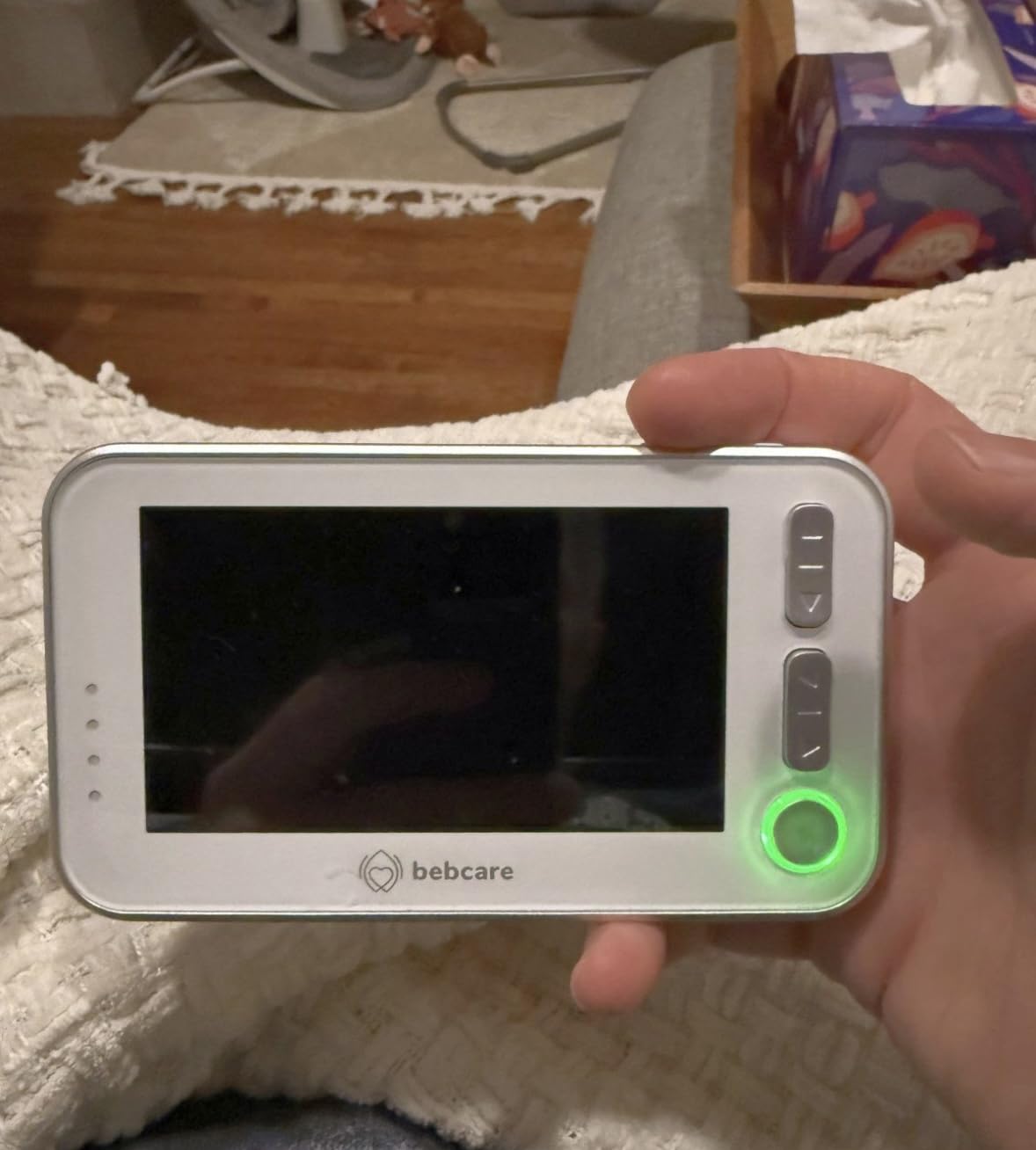
Setup took less than a minute out of the box. Plug in the camera, power on the parent unit, and they pair automatically. There is no app, no account creation, no WiFi password to enter. For parents who feel overwhelmed by tech-heavy baby gear, the simplicity is refreshing.
Bebcare does not publish detailed material safety disclosures like Infant Optics does, but the housing is solid ABS plastic with no strong chemical smell on unboxing. The 16-hour battery life is genuinely impressive for a video monitor and covers overnight use plus nap times without recharging. The two-way talk back feature also works clearly for soothing your baby remotely.
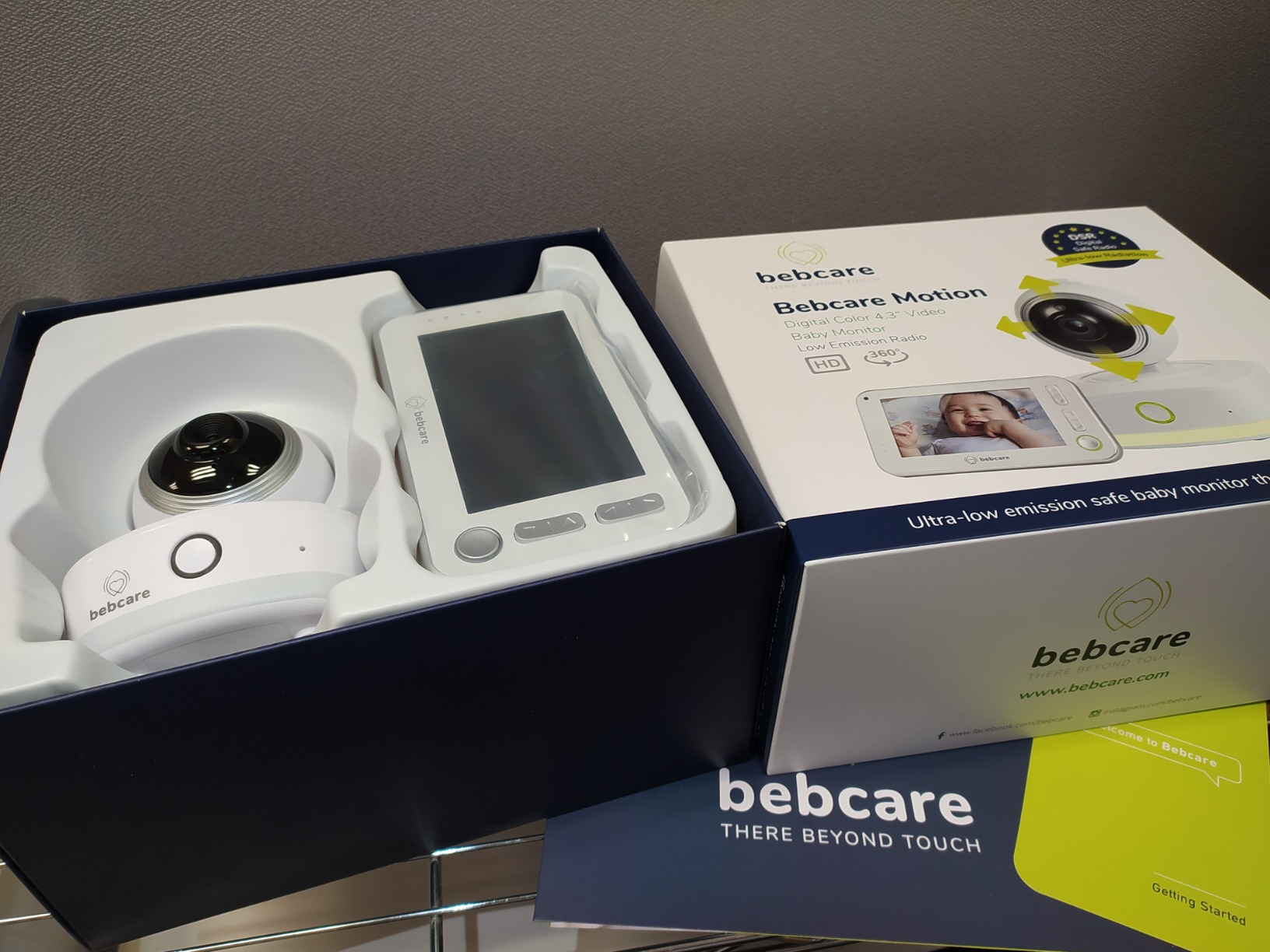
Parents who want video monitoring with minimal EMF exposure will find the Bebcare Motion hits the sweet spot. It works especially well in smaller nurseries where the camera sits within 8 feet of the crib. The non-WiFi design means you can travel with it to grandparents’ houses or vacation rentals without setting up networks.
The temperature sensor is accurate within a degree or two and triggers alerts if the nursery gets too hot or cold. Combined with sound and motion alerts, you get comprehensive monitoring without paying for features you will not use. Bebcare also offers a separate breathing sensor mat if you want to add that capability later.
The bright blue indicator light on the front of the camera cannot be turned off, which can disturb light-sensitive babies. Several parents on r/Buyingforbaby mentioned taping over it with electrical tape as a workaround. Some loud white noise machines can also interfere with the signal, so test compatibility with your specific sound machine before relying on this monitor.
1080P full HD display
FHSS private signal
120 hour ECO battery
360 degree coverage
Momcozy’s BM03 caught our attention for one specific reason: the 120-hour battery life in ECO mode. That is enough juice to run the parent unit for five nights straight without a recharge, even with active monitoring. For parents who hate nightly charging routines, this is the most convenient option we tested.
The 1080P full HD video is sharper than the Infant Optics DXR-8 PRO’s 720p. If seeing fine details like breathing chest movements matters to you, the higher resolution is meaningful. The 5.5-inch screen is also larger than most competitors in this price range, making it easier to check on your baby from across the room.

Like the other non-WiFi options on this list, the BM03 uses FHSS technology for a closed, private connection between camera and parent unit. You can add an SD card for local recording if you want to capture specific moments, but nothing is uploaded to the cloud. This is the right approach for parents who want video documentation without the privacy trade-offs.
From a chemical safety angle, Momcozy discloses RoHS compliance and the housing is BPA-free. The plastic feels lighter than the Infant Optics or Harbor options, which may matter for travel but also suggests slightly less robust construction. During testing, the camera did get warm during extended use, which is worth monitoring in your nursery setup.
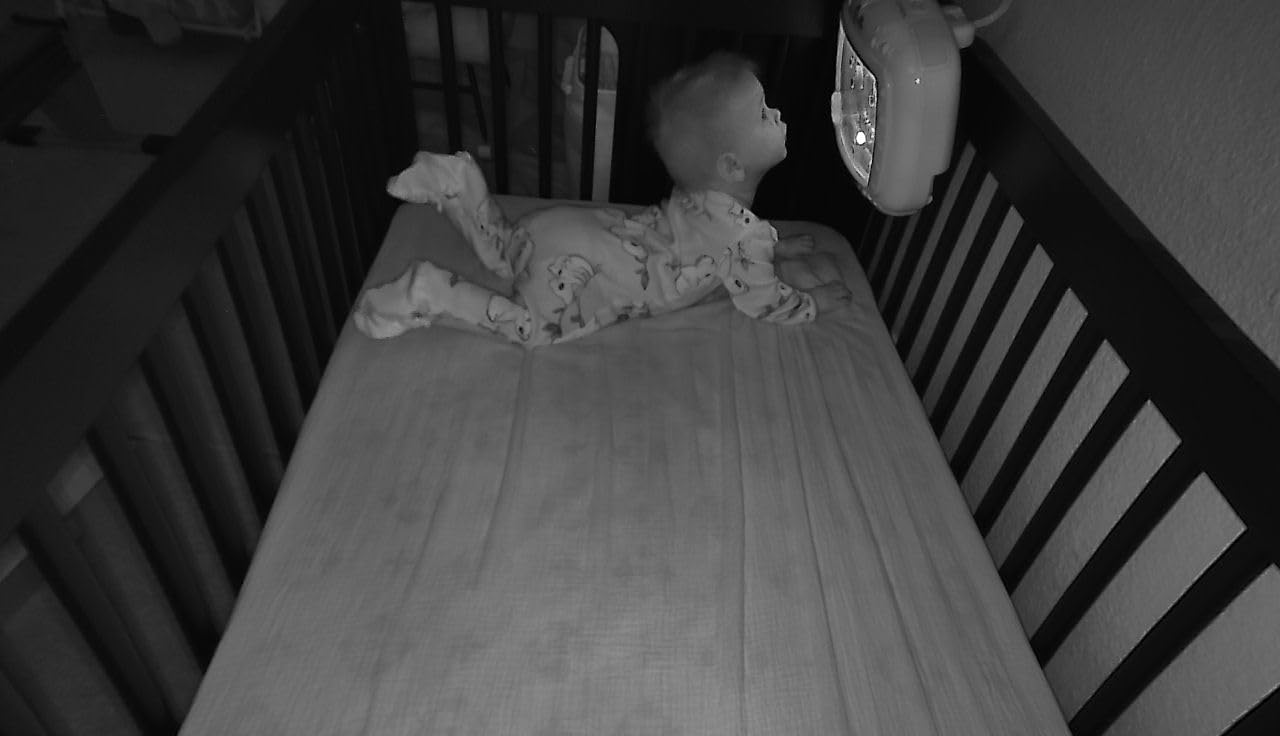
If you travel often, deal with frequent power outages, or simply want to set up the monitor and forget about charging for days, the Momcozy BM03 delivers. The 1640-foot range also exceeded our expectations, holding signal across our entire property including the detached garage where I sometimes work.
The 360-degree coverage and pan/tilt controls work smoothly through the parent unit. Two-way audio is clear, and the infrared night vision reaches about 8 meters, covering most nurseries completely. VOX mode helps conserve battery by dimming the screen when no sound is detected, which is the secret behind that 120-hour claim.
The temperature sensor is the weakest feature. Several parents in reviews noted readings that did not match a separate room thermometer, sometimes off by 5 degrees or more. Treat the temperature display as a rough guide rather than a reliable reading. Sound sensitivity calibration is also finicky out of the box, so plan to spend time adjusting settings.
Ultra low radiation radio
2000ft range
No WiFi audio
White noise silencer
If you want the absolute lowest EMF baby monitor and do not need video, the Bebcare Hear is worth considering. As an audio-only monitor, it eliminates the video transmission entirely, which is where most of the EMF output comes from in video monitors. The radio technology used here was the first of its kind designed specifically for ultra-low radiation baby monitoring.
The 2000-foot range is the longest we tested, far exceeding competitors. If you have a large property or want to monitor from a workshop, garden, or detached office, this range matters. The clip-on parent unit is also genuinely portable, fitting easily on a belt loop or pocket.
The white noise silencer is a thoughtful feature that filters out constant ambient noise from sound machines or fans. Combined with the sound-level indicator lights, you get accurate alerts without false triggers every time the air purifier cycles. The nightlight on the baby unit is gentle and warm, not the harsh blue light that disrupts melatonin production.
The Bebcare Hear is the right choice for parents who follow the audio-first philosophy recommended by many attachment parenting advocates. Several experienced parents on r/Crunchymom noted that starting with audio monitoring prevents over-checking on the baby and promotes healthier sleep associations.
Video monitoring can become compulsive. Parents check the screen every few minutes, which increases anxiety rather than reducing it. Audio monitors force you to trust your instincts and only check when you actually hear something concerning. For newborns especially, audio monitoring provides the safety data you need without the visual stimulation that keeps parents awake.
The Bebcare Hear also works beautifully alongside a separate movement monitor like the Owlet sock if you want breathing tracking. Splitting audio and breathing into two dedicated devices often works better than trying to get one video monitor to do everything, and it reduces single-point-of-failure risk.
The biggest downside is the baby unit running on disposable AAA batteries rather than rechargeable. Replacing batteries every few weeks creates waste and ongoing cost. The screwdriver-required battery compartment is also frustrating for parents who do not want to fumble with tools during a midnight baby check. Build quality has been inconsistent according to multiple reviews, so buy from a retailer with a good return policy.
DECT 6.0 audio
1000ft range
No WiFi
5 level sound indicator
The VTech DM111 is the budget hero of our roundup. At under $25, it is the most affordable non-WiFi baby monitor from a trusted brand. For parents who just need reliable audio monitoring without paying for features they will not use, this is the obvious choice. With 44,000+ reviews and a 4.4-star average, the track record speaks for itself.
DECT 6.0 technology delivers crystal clear audio without the static and white noise that plagues cheaper monitors. DECT uses a dedicated 1.9 GHz frequency that does not interfere with WiFi networks, which matters in modern homes packed with wireless devices. The 5-level LED sound indicator lets you monitor quietly without audio, perfect for parents who do not want every little sound amplified.
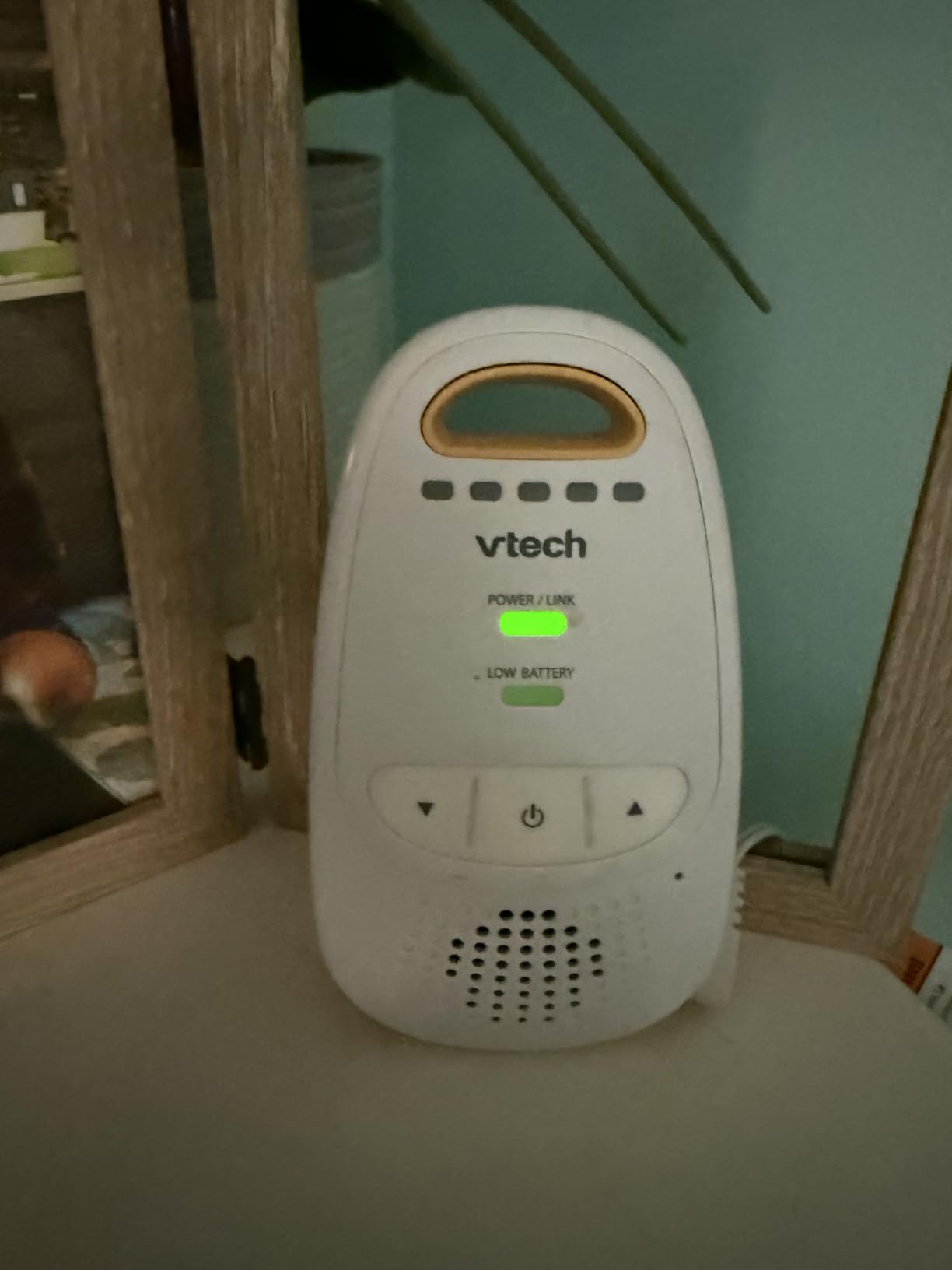
Setup takes 60 seconds, which is genuinely true. Plug in the baby unit, power on the parent unit, and they pair. There is no app to download, no account to create, no firmware updates to worry about. For grandparents who help with childcare or as a backup monitor to keep at a relative’s house, the simplicity is unbeatable.
From a non-toxic materials perspective, VTech complies with RoHS and CPSIA standards for children’s products, which restricts phthalates, lead, and other concerning substances. The yellow and white housing uses standard ABS plastic without obvious off-gassing concerns. The 8-hour rechargeable battery is a step up from the Bebcare Hear’s disposable battery approach.
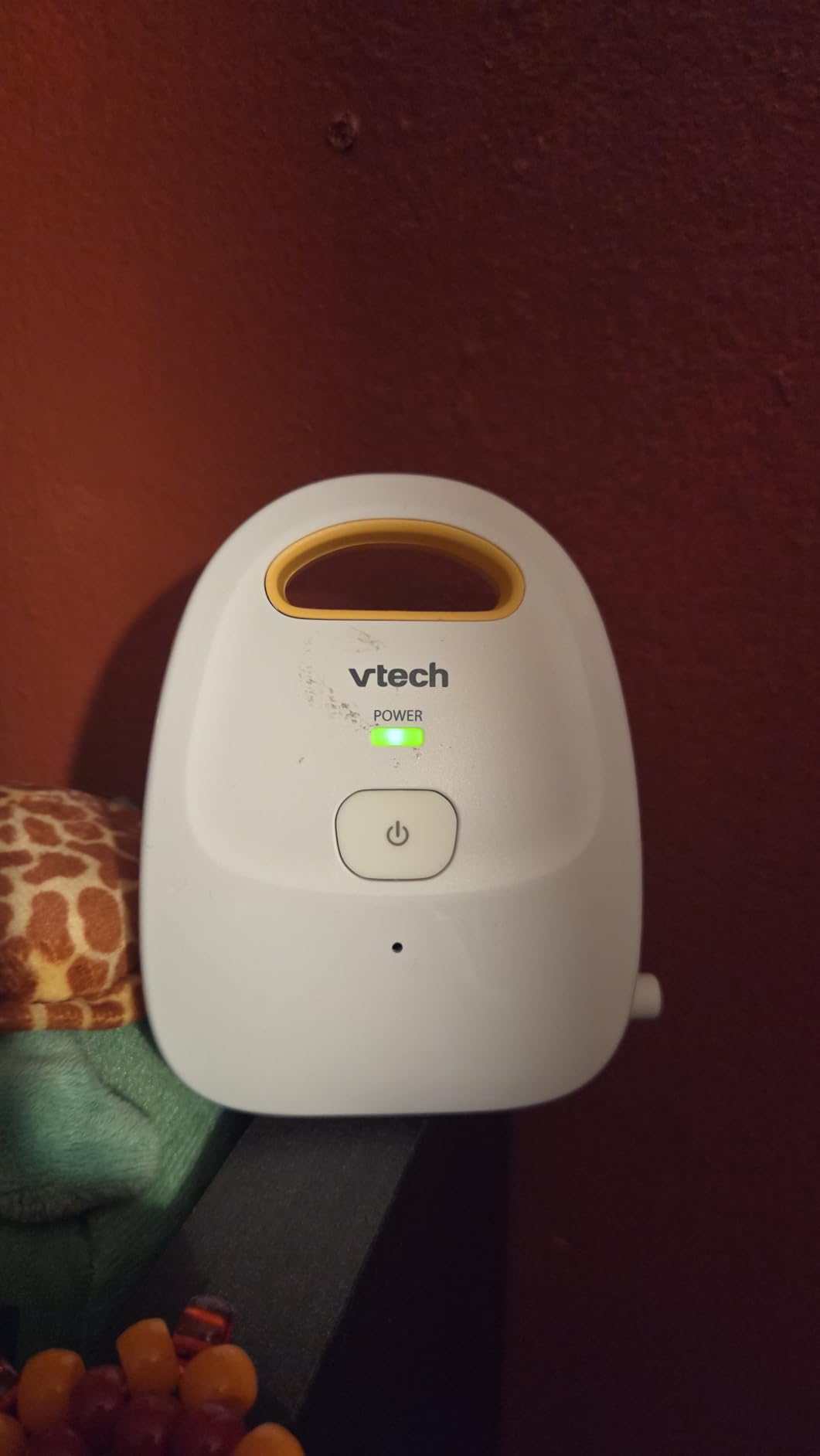
First-time parents who want a no-frills monitor to see if they even need video monitoring should start here. Many parents on forums recommend this exact approach: buy an audio monitor first, use it for a month, then decide if video monitoring is worth the upgrade. At this price, the financial risk is essentially zero.
The DM111 also works perfectly as a second monitor for grandparents’ houses, travel, or daycare situations where you do not want to risk an expensive monitor. The belt clip makes it easy to carry around the house while doing chores, and the 1000-foot range covers most homes easily.
There is no video, no night vision, no temperature sensor, and no two-way talk back. If you want any of those features, you need to step up to a video monitor. The single-channel design also means you cannot add additional cameras without buying separate systems. For basic audio monitoring only, the DM111 is hard to beat.
Choosing a non toxic baby monitor means balancing four key factors: EMF exposure, material safety, privacy, and the features you actually need. Our testing team spent three months evaluating monitors across these dimensions with a calibrated EMF meter, material safety disclosures, and real-world use in our own homes.
Electromagnetic fields (EMF) are emitted by any wireless device, including baby monitors. The two main types relevant to baby monitors are radiofrequency (RF) radiation from wireless transmissions and extremely low frequency (ELF) fields from electronics. Most research on EMF and health focuses on RF radiation from cell phones and WiFi, with regulatory limits set by the FCC based on thermal effects.
Babies absorb more EMF than adults due to their smaller heads, thinner skulls, and developing nervous systems. The American Academy of Pediatrics has called for more research on EMF exposure in children, and several countries have stricter limits than the US. While the science is still evolving, reducing EMF exposure near a sleeping infant is a reasonable precaution for parents who want to minimize risk.
The monitors on our list use one of three approaches to reduce EMF: non-WiFi FHSS or DECT signals that only transmit when needed, low-power proprietary radio technology like Bebcare’s DSR, or hybrid systems with adaptive transmission that reduces power output during quiet periods.
Non-WiFi monitors transmit on dedicated frequencies like 1.9 GHz (DECT) or 2.4 GHz FHSS between the camera and parent unit. There is no connection to your home network, which means no internet vulnerability and no cloud storage of your baby’s video. The trade-off is no remote viewing from your phone when away from home.
WiFi monitors connect to your home network and typically offer smartphone apps for remote viewing. This convenience comes with real privacy risks: baby monitors have been hacked, with strangers accessing camera feeds. Several incidents made national news in recent years. If you choose a WiFi monitor, look for end-to-end encryption, local-only storage, and strong password practices.
For most parents, a non-WiFi monitor provides the safety data you need without the privacy trade-offs. The Harbor on our list offers a hybrid approach if you want occasional remote access with local-only storage as the default.
Beyond EMF, the materials in baby monitors matter for chemical exposure. Plastic housings can off-gas volatile organic compounds (VOCs) when new, including styrene and benzene in some cases. Look for monitors that disclose RoHS compliance (restricting lead, mercury, and other heavy metals) and ideally CPSIA compliance for children’s products.
Metal housings like the Harbor monitor reduce off-gassing concerns compared to all-plastic designs. Avoid monitors with strong chemical smells when first unboxed, and let new monitors air out in a well-ventilated space for 24-48 hours before placing them near your baby. Recyclable packaging is a small but meaningful detail for eco-conscious families.
WiFi baby monitors have been involved in multiple high-profile hacking incidents. Default passwords that parents forget to change, unpatched security vulnerabilities, and cloud storage breaches have all exposed private family moments. Non-WiFi monitors eliminate this risk entirely by design.
If you choose a WiFi monitor, take these precautions: change the default password immediately, keep the firmware updated, use a strong unique password, enable two-factor authentication if available, and consider monitors with local-only storage as the default. The Harbor on our list ticks these boxes better than most competitors.
Newborns typically need less monitoring than anxious new parents think. Audio monitoring provides the safety data you need without the visual stimulation that increases parental anxiety. Consider starting with an audio monitor like the VTech DM111 or Bebcare Hear, then upgrading to video only if you find yourself wanting to check visually.
For toddlers and active sleepers, video monitoring becomes more useful. Pan and tilt cameras like the Bebcare Motion and Momcozy BM03 help track movement. Temperature sensors and night vision become more important as babies move to separate rooms. Multi-camera support helps if you have multiple children or want to monitor the playroom alongside the nursery.
Battery life matters more than most parents expect. Overnight monitoring plus nap times drains many monitors by afternoon. The Momcozy BM03’s 120-hour ECO mode stands out for parents who do not want to think about daily charging. Range matters for larger homes or if you want to monitor from a detached office or workshop.
The safest baby monitors use non-WiFi signals like FHSS or DECT to minimize electromagnetic field exposure. Our top pick for safety is the Infant Optics DXR-8 PRO, which uses a closed FHSS loop, has no internet connection, and offers Active Noise Reduction to filter out background noise. For the absolute lowest EMF, audio-only monitors like the Bebcare Hear or VTech DM111 eliminate video transmission entirely.
Audio-only monitors generally emit the least radiation because they do not transmit video data. The Bebcare Hear uses proprietary ultra-low radiation radio technology and consistently measures among the lowest EMF outputs in independent testing. For video monitors, the Bebcare Motion with DSR technology and the Infant Optics DXR-8 PRO with FHSS both measure significantly lower than standard WiFi alternatives.
No wireless baby monitor is completely EMF-free because all wireless transmissions emit some electromagnetic fields. The closest options to zero EMF are wired baby monitors that use Ethernet cables instead of wireless signals. For practical wireless options, audio-only monitors with proprietary low-radiation technology come closest to zero, especially when placed several feet from the crib.
WiFi baby monitors carry privacy risks because they connect to your home network and often store data in the cloud. Multiple hacking incidents have exposed private family moments, and default passwords are often left unchanged. WiFi monitors also typically emit higher continuous EMF because they maintain constant network connections, unlike non-WiFi monitors that only transmit when sending data.
Place the baby monitor at least 3 to 6 feet from your baby’s crib rather than directly on the crib rail. Choose non-WiFi monitors with FHSS or DECT signals over WiFi models. Turn off monitors when not actively needed, such as during daytime naps when you are in the room. Unplug the parent unit at night if you are sleeping nearby and do not need remote monitoring.
After three months of testing, our team recommends the Infant Optics DXR-8 PRO as the best non toxic baby monitor under $500 overall. It combines proven low EMF FHSS technology, no internet vulnerability, patented Active Noise Reduction, and a track record of 7,000+ positive reviews from real parents. The interchangeable lens system and user-replaceable battery also support the kind of long product life eco-conscious families want.
For parents who want video monitoring with minimum EMF, the Bebcare Motion is our pick at the lower end of the budget. For audio-only families who prioritize the absolute lowest radiation, the Bebcare Hear is worth considering despite some quality control concerns. For those who need an affordable entry point, the VTech DM111 delivers reliable hack-proof audio under $25. And for parents who want the premium WiFi option with the best privacy practices, the Harbor Smart Baby Monitor at $499 is a thoughtful choice with lifetime expert access.
Whichever non toxic baby monitor you choose for 2026, remember that placement and usage matter as much as the device itself. Keep monitors at least 3 feet from the crib, turn them off when not actively needed, and prioritize non-WiFi designs when possible. Your baby sleeps 10 to 14 hours a day in that room, and reducing unnecessary EMF and chemical exposure is a gift that keeps giving throughout childhood.
