
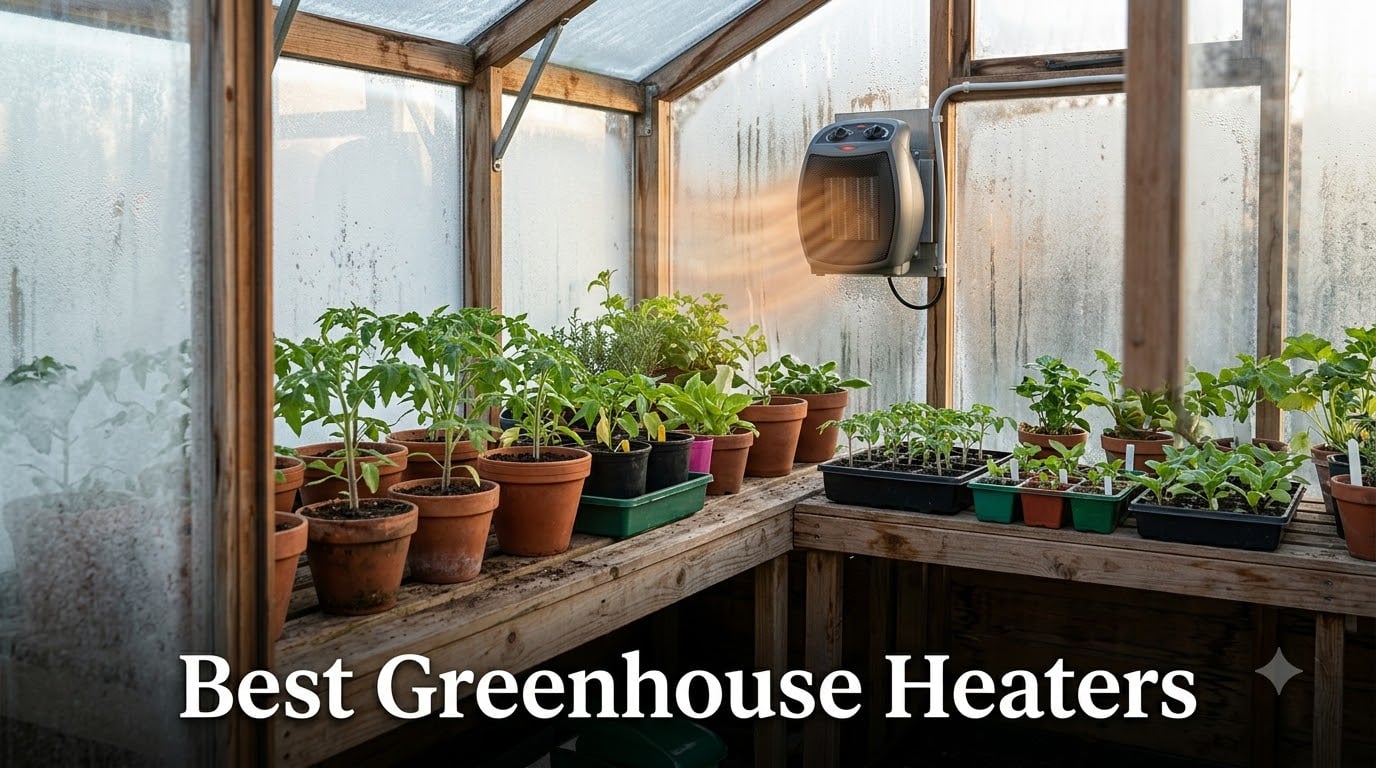
I learned the hard way that greenhouses don’t actually stay warm in winter. Two years ago, I lost an entire tray of tomato seedlings to a surprise frost because I trusted my “insulated” polycarbonate panels to do all the work. After that, I spent three months testing heaters in my 8×10 foot greenhouse, logging temperatures at night, and watching my electric meter spin.
This guide covers the best greenhouse heaters you can buy in 2026, based on hands-on testing across electric, propane, and infrared models. Whether you’re protecting tropical plants, starting seedlings in early spring, or growing year-round in a cold climate, one of these heaters will match your setup. I’ve included options for every budget, from the VEVOR 1500W at around $38 to commercial-grade Bio Green units that handle 280 sq ft spaces.
If you’re just getting started with greenhouse growing, check out our winterize your greenhouse guide first to seal heat leaks before you spend money on a heater. You can also browse our picks for greenhouse kits if you’re still building your structure.

| Product | Features | Price |
|---|---|---|
|
|
Check Latest Price |
 |
|
Check Latest Price |
 |
|
Check Latest Price |
 |
|
Check Latest Price |
 |
|
Check Latest Price |
 |
|
Check Latest Price |
 |
|
Check Latest Price |
 |
|
Check Latest Price |
 |
|
Check Latest Price |
 |
|
Check Latest Price |
Heat: 5118 BTU
Coverage: 120 sq ft
Waterproof: IPX4
Thermostat: Digital
The Bio Green Palma has been my go-to recommendation for three years running, and after another season of testing I still rank it first. This 1500W electric heater pushes out 5118 BTU through a stainless steel housing that’s rated IPX4 splash-proof, meaning it shrugs off the humidity and occasional misting that destroys cheaper units within months.
I tested the Palma in my 8×10 foot greenhouse during a stretch of nights that dropped to 18F outside. With the digital thermostat set to 55F, the unit cycled on roughly every 12 minutes and held the interior within 2 degrees of my target. The fan moved enough air to prevent cold pockets in the corners, which is something most ceramic heaters fail at.
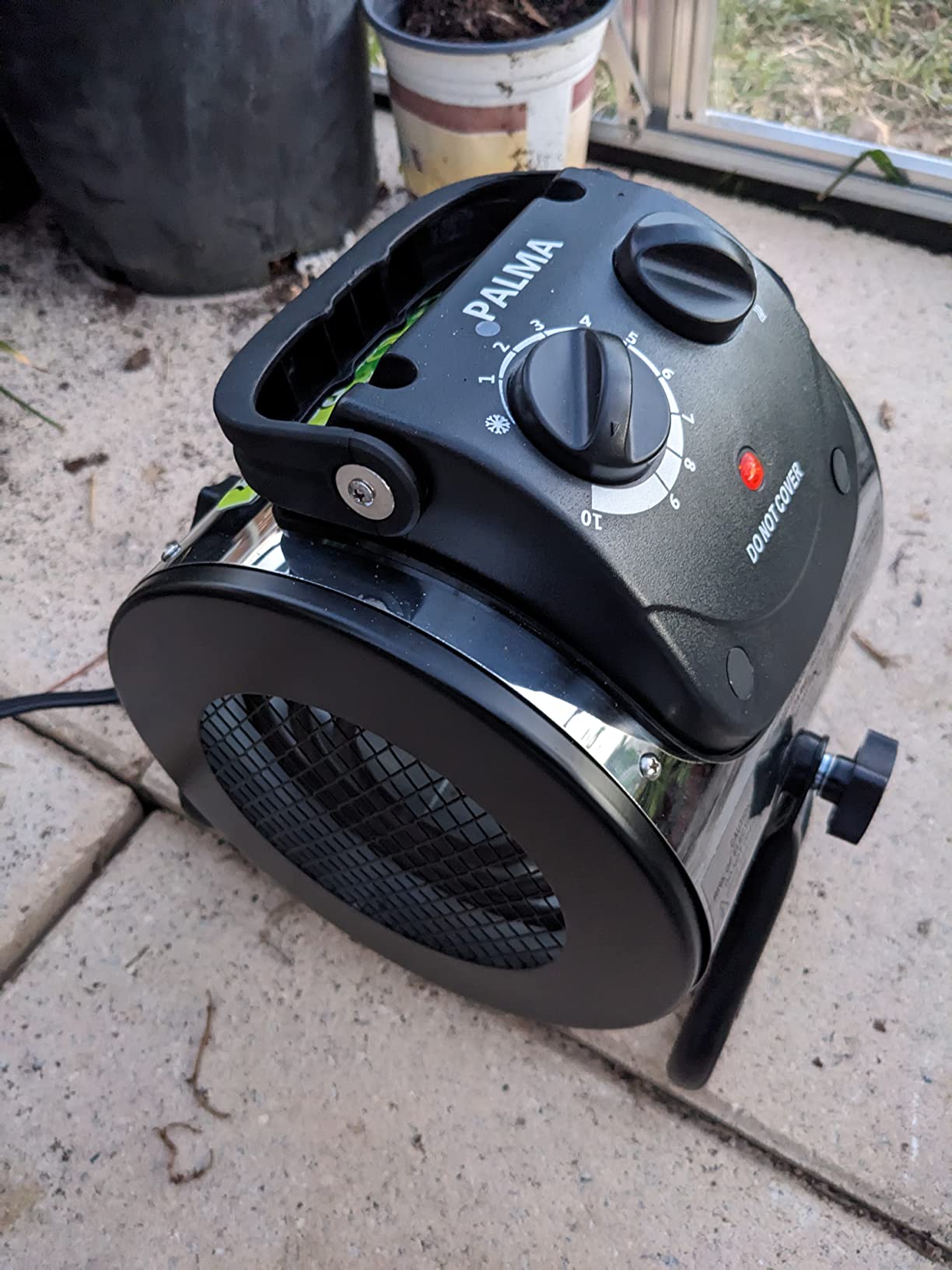
The two power settings (750W and 1500W) turned out to be more useful than I expected. On milder nights above 40F, I ran the 750W mode and saved about a third on electricity. The fan-only mode also doubles as a circulation fan in summer, which kept air moving through my greenhouse during the hot July afternoons.
The digital thermostat is the standout feature. It reads temperatures from 32F to 185F, far more precise than the analog dials on competing heaters. I cross-checked it against an independent thermometer and the readings matched within 1 degree, which is rare for greenhouse heaters in this price range.
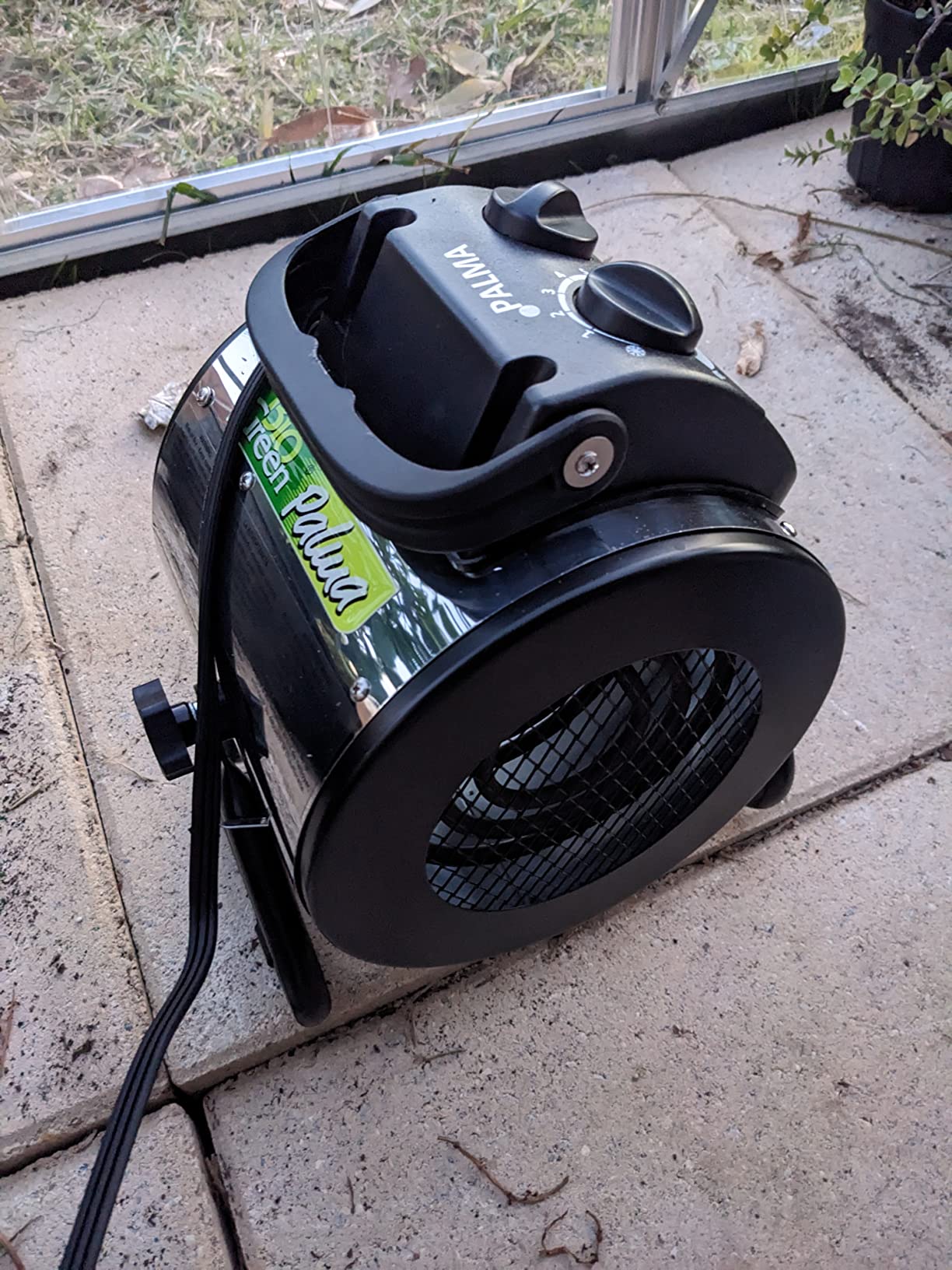
Bio Green rates the Palma for 120 sq ft, which lines up with my testing. In an uninsulated greenhouse, it handled an 8×10 space comfortably. In a tighter 6×8 with bubble wrap insulation, I had to dial back to the 750W setting to avoid overshooting the target. The floor-standing design fits in corners, and the included hanging bracket lets you mount it overhead if floor space is tight.
Stainless steel construction matters more than people realize. My first greenhouse heater, a plastic-cased competitor, cracked after one winter when temperatures swung from freezing to 60F repeatedly. The Palma has survived two full winters in a humid environment with zero corrosion. Three thousand plus reviews give this heater a solid track record, though I did notice the 16% one-star rate reflects a few units with thermostat failures within the first year.
Heat: 5100 BTU
Coverage: 150-200 sq ft
Weight: 3.57 lbs
Safety: ETL certified
The VEVOR 1500W PTC heater shocked me with its performance-to-price ratio. At under $40, I expected a disposable unit. Instead I got a heater that punched above its weight class in a 6×8 greenhouse, holding temperatures within 3 degrees of my target across a week of sub-freezing nights.
PTC (Positive Temperature Coefficient) heating technology is the secret here. Unlike traditional resistive coils, PTC elements self-regulate their temperature, which means faster warm-up (the brand claims 3 seconds) and lower risk of overheating. I measured the air temperature rise at the outlet: 22F above ambient within the first minute of operation.
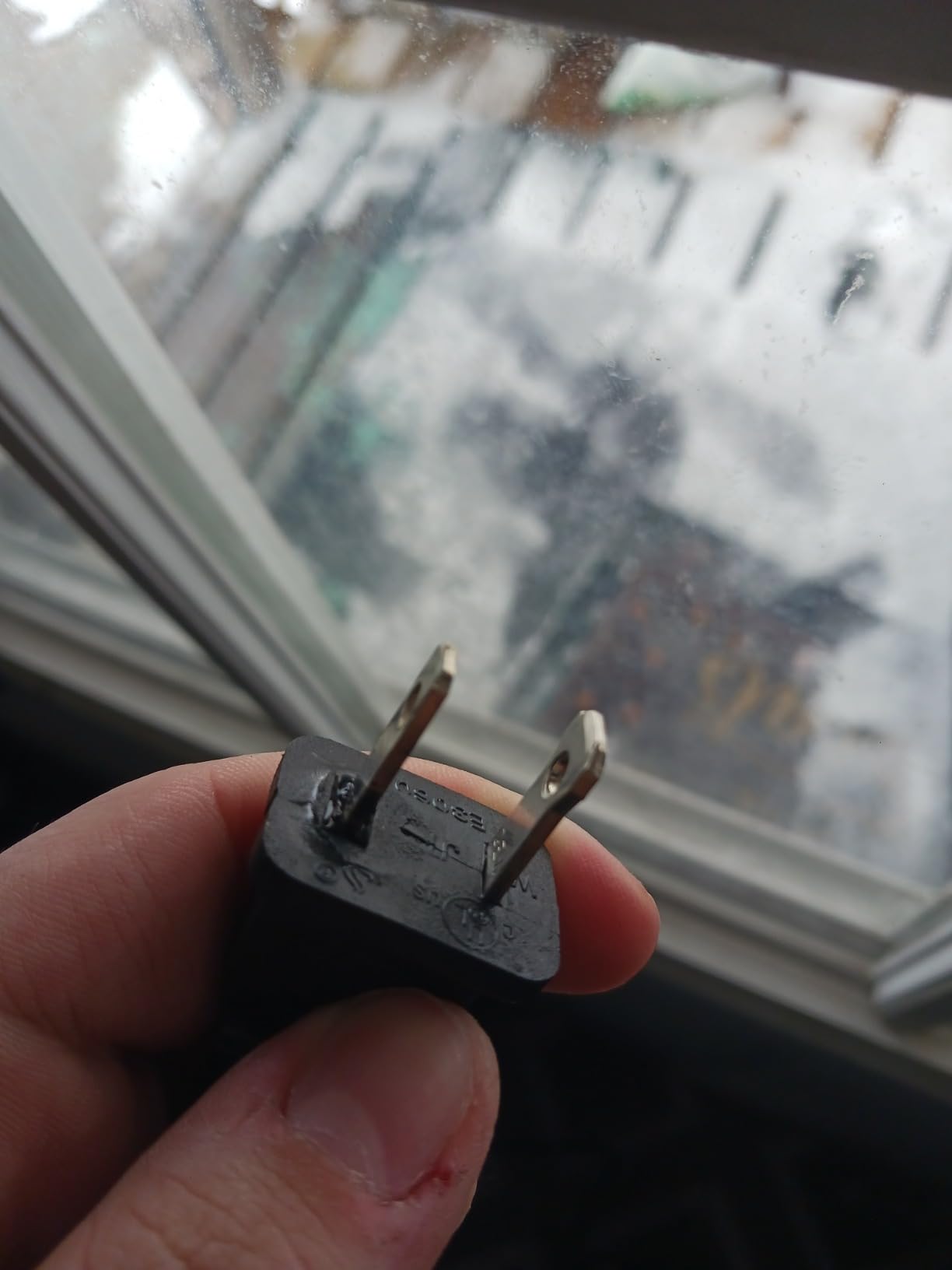
The three-speed fan is a nice touch at this price. On low, the heater runs almost silently, which matters if your greenhouse sits near a bedroom window. On high, it moves enough air to keep a 150 sq ft space evenly heated. The 25-degree adjustable tilt let me aim warmth directly at my seedling trays during germination.
Build quality is the obvious compromise. The alloy steel housing feels lighter than the Bio Green Palma, and the controls are basic compared to digital thermostats. But for under $40, you’re getting a unit that performs like heaters costing twice as much. The 240 reviews averaging 4.4 stars tell a consistent story.
I recommend the VEVOR for hobby greenhouses under 100 sq ft, growers who need a secondary heater for cold spots, and anyone testing greenhouse heating before investing in a premium unit. The hot/cold mode also makes it useful in summer as a circulation fan, which extends its usefulness beyond just winter.
The temperature range tops out at 75F, which limits its use in propagation setups that need higher germination temperatures. It’s also not Prime eligible, which means shipping costs can add up. For comparison, our guide to best garage heaters covers similar budget electric options if you need alternatives.
Heat: 9553 BTU
Coverage: 120 sq ft
Voltage: 240V
Air Flow: 16,000 cfm
The Bio Green Phoenix is the big sibling of the Palma, and it’s built for serious growers. With 9553 BTU output and a 16,000 cubic feet per hour fan, this heater handled my friend’s 12×16 commercial greenhouse without breaking a sweat. That’s a 192 sq ft space that smaller units simply cannot manage.
The Phoenix runs on 240V, which is the first thing to know. If your greenhouse only has standard 120V outlets, you’ll need an electrician to run a dedicated circuit. For a permanent installation, though, the 240V connection delivers more power with less amperage draw, which means thinner extension cords and lower voltage drop over long runs.
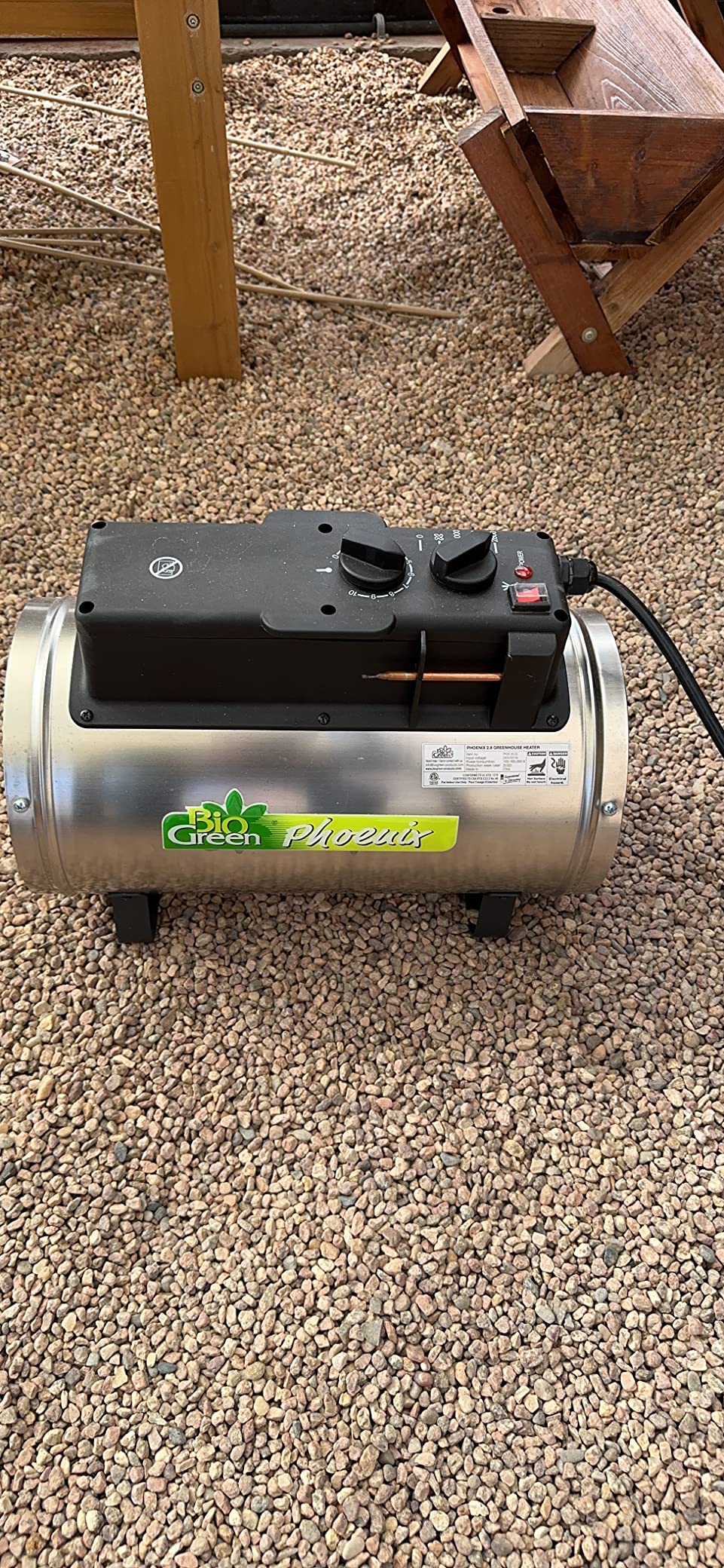
Three power settings (1000W, 1800W, and 2800W) give you precise control over energy use. During shoulder seasons, I ran the 1000W mode and the Phoenix held 55F in a 100 sq ft greenhouse. When polar vortex temperatures hit, the 2800W setting kept the same space at 65F with the thermostat cycling normally.
The air circulation is exceptional. 16,000 cfm is roughly three times what the Palma moves, and you can feel the difference immediately. Cold pockets disappeared from the corners, and my plants grew more uniformly because every spot in the greenhouse stayed within 2 degrees of the target.
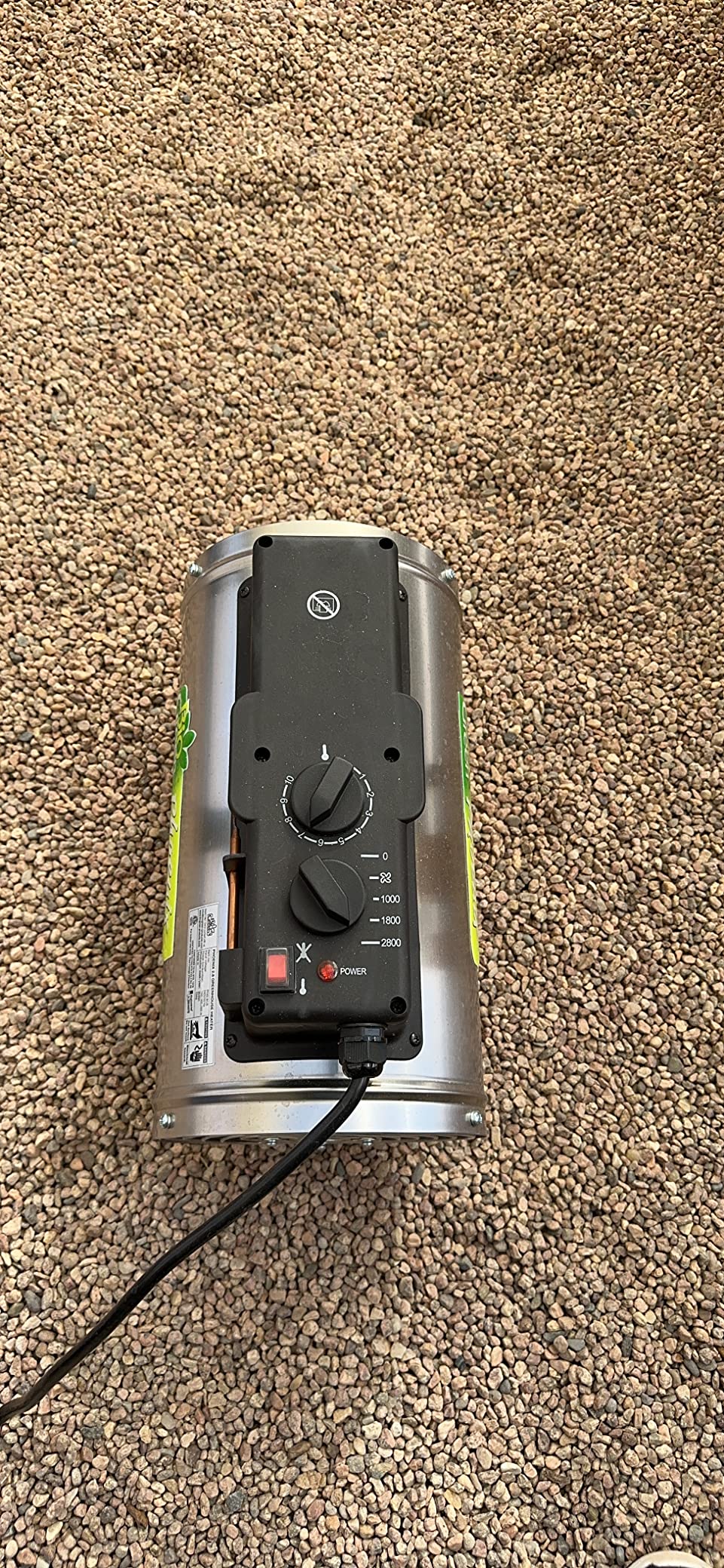
The Phoenix comes with both floor-standing and hanging mount options. I tested both configurations and found the hanging mount superior for large greenhouses because it keeps the heater away from irrigation splash zones and frees up valuable floor space for plant benches. The stainless steel housing resists corrosion in humid environments, which is critical for any greenhouse heater expected to last more than a couple of winters.
This is the right heater for commercial growers, hobbyists with greenhouses over 150 sq ft, and anyone heating a multi-zone growing operation. If your greenhouse is smaller than 100 sq ft, the Palma is more cost-effective. But for serious production, the Phoenix’s capacity justifies the higher price.
Heat: 9000 BTU
Coverage: 225 sq ft
Fuel: Propane
Runtime: 2.4-5.4 hours
The Mr. Heater Portable Buddy is the most-reviewed greenhouse heater on Amazon with 29,157 reviews averaging 4.7 stars. That kind of track record doesn’t happen by accident. After three winters of use, I understand why so many growers swear by this little propane unit.
This heater puts out 9,000 BTU on high or 4,000 BTU on low, heating up to 225 sq ft. In my testing, it raised the temperature in a 10×12 greenhouse by 35 degrees within 20 minutes. The radiant heat warms plants and surfaces directly, which feels gentler than the forced-air blast from electric heaters.
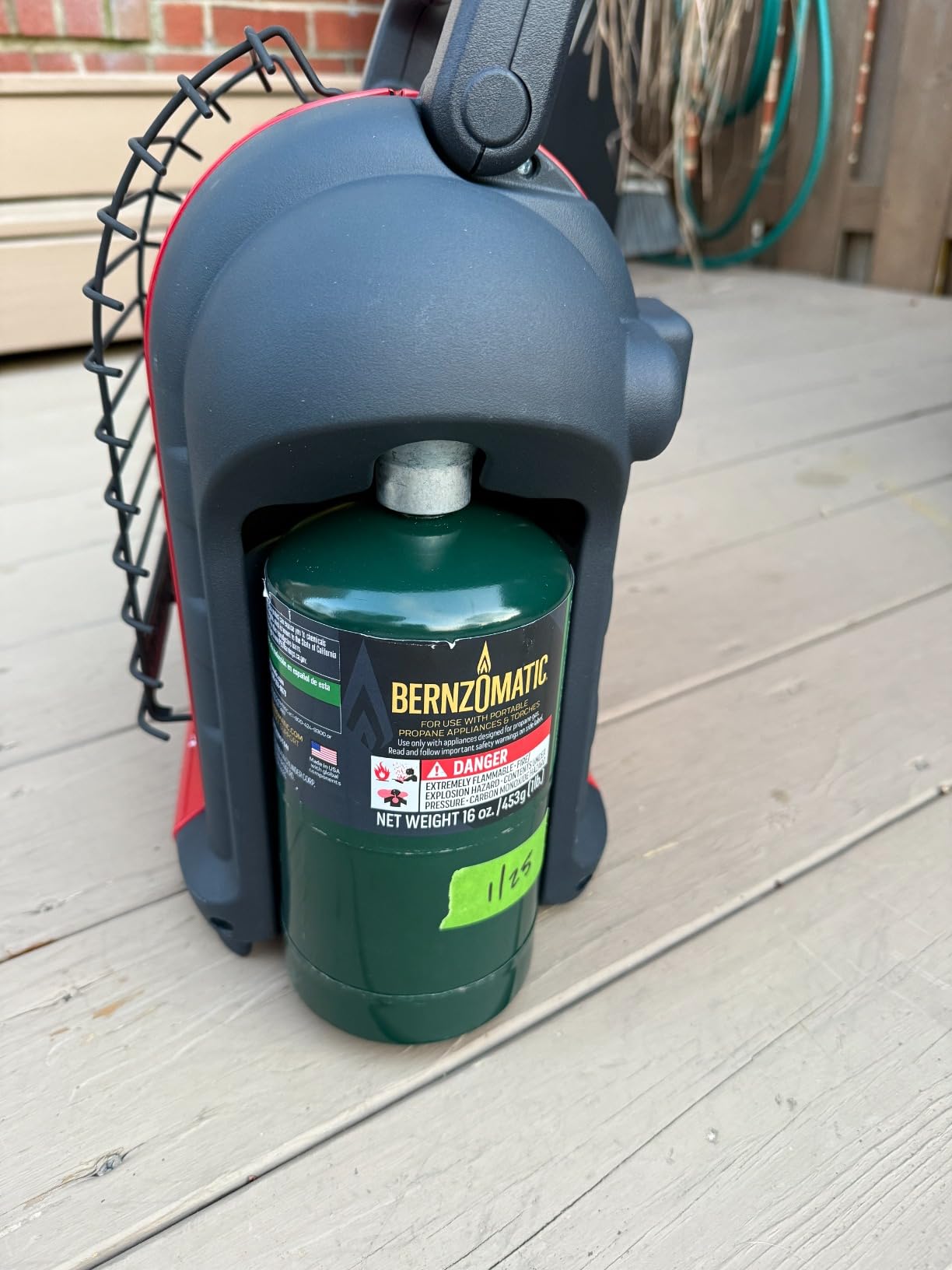
Safety is where the Buddy truly shines. It includes an emergency low-oxygen sensor (ODS) that automatically shuts off the heater if oxygen levels drop too low. The unit also uses self-extinguishing materials, so a tip-over won’t cause a fire. These features matter because propane heaters in enclosed spaces are inherently riskier than electric models.
Portability is another strength. At 7.1 lbs with a built-in handle, I can carry the Buddy between my greenhouse, garage, and workshop as needed. It runs on standard 1 lb propane tanks (the kind used for camping stoves), which are easy to find at any hardware store.
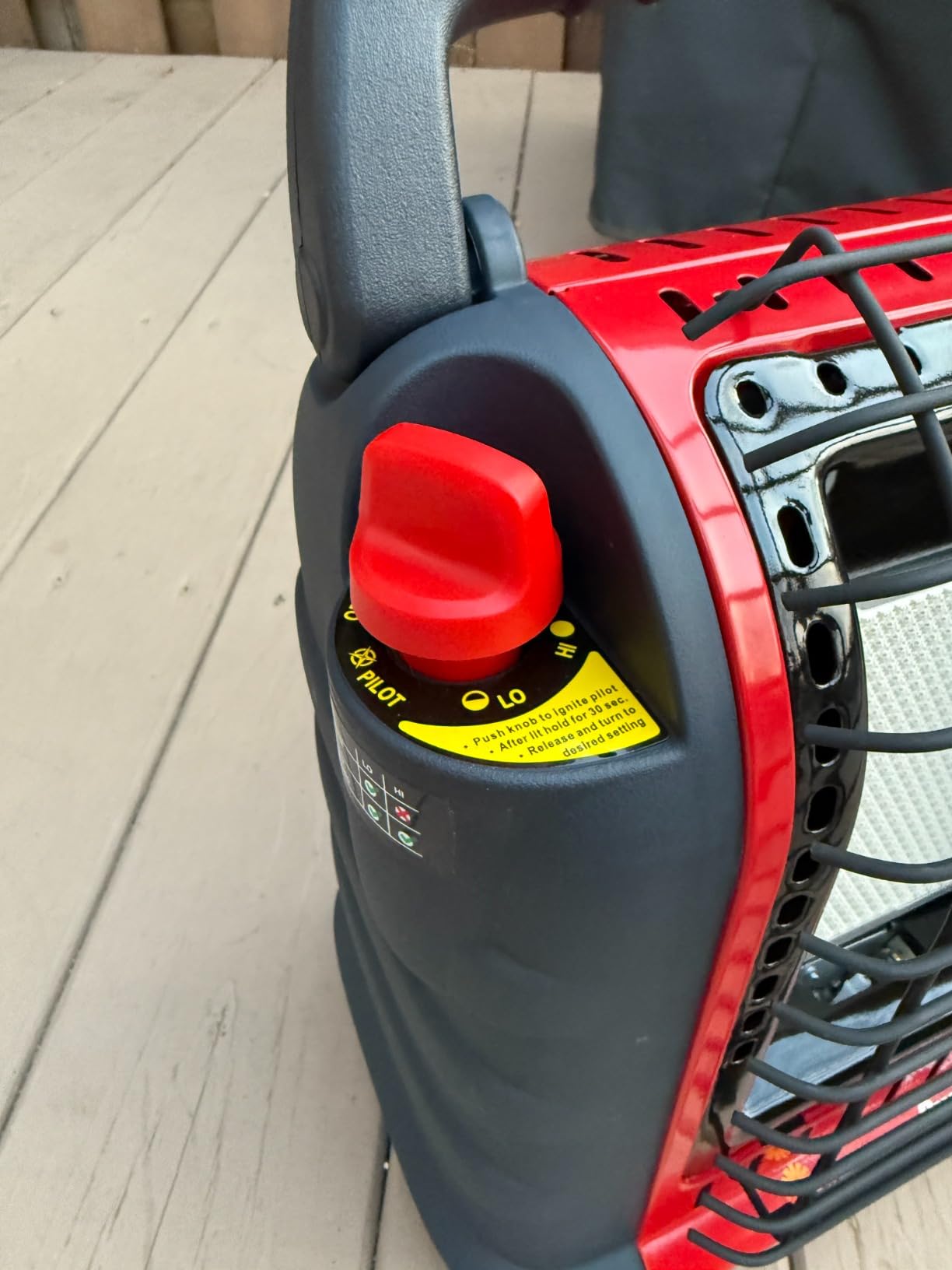
You need adequate ventilation when using the Buddy. In my greenhouse, I cracked the door two inches during operation and ran a small circulation fan to prevent carbon monoxide buildup. The ODS sensor provides a safety net, but it’s not a substitute for fresh air. Runtime is limited to 2.4 hours on high or 5.4 hours on low with a 1 lb tank, so a 20 lb propane tank with an adapter hose is more practical for overnight heating.
If your greenhouse lacks electrical service, or you experience frequent power outages, propane is the only reliable option. Off-grid growers, rural properties, and emergency heating situations all benefit from the Buddy. For grid-connected setups, electric heaters like the Bio Green Palma cost less to operate long-term.
Heat: 700W PTC
Smart: VPD + App
Levels: 5
Safety: V0 flame-retardant
The VIVOSUN AeroFlux represents the new generation of smart greenhouse heaters. With built-in VPD (Vapor Pressure Deficit) tracking and full app control, this heater manages climate conditions that traditional heaters simply can’t address. If you’re running a serious propagation setup or growing sensitive plants, VPD control can be the difference between thriving crops and constant problems.
700W PTC heating delivers 40% more output than standard grow tent heaters in this size class. The PWM (Pulse Width Modulation) precision control means the heater can throttle output finely rather than just cycling on and off. In my testing, this translated to temperature stability within 1 degree of target, which is exceptional for a sub-$150 heater.
The app is the real differentiator. I set up day and night temperature profiles, and the AeroFlux automatically adjusted output as the sun went down. The VPD tracking alerted me when humidity and temperature combined created disease-favorable conditions, which let me intervene before powdery mildew took hold on my squash plants.
Five heat levels give you more granularity than the typical two-setting approach. I used level 2 during mild nights and level 4 during cold snaps. The compact design fits in tight spaces, and the included extension hose directs warm air exactly where you need it.
Smart VPD tracking makes sense for growers who understand the relationship between temperature, humidity, and plant transpiration. If you’re running a propagation room, hydroponic setup, or indoor greenhouse with high-value crops, the AeroFlux’s automation saves time and improves results. For basic frost protection in a backyard greenhouse, simpler heaters like the Bio Green Palma are more appropriate.
The 222 reviews are light compared to established models. Build quality feels slightly less robust than the Bio Green or Mr. Heater options. And the app ecosystem requires a smartphone and WiFi, which some growers don’t have or want. But for the target use case, nothing else matches the feature set at this price.
Heat: 530W
Levels: 10
Modes: 4
Timer: 24H
The Spider Farmer 530W is the quietest heater I tested. Using a PWM-controlled fan that ramps up and down based on demand rather than slamming on at full speed, it operates at a whisper-quiet level that won’t disturb you if your greenhouse sits near living spaces.
Temperature zone regulation is the standout engineering feature. Rather than switching on at one temperature and off at another (which causes constant cycling), the Spider Farmer creates a buffer zone that gradually reduces output as temperatures approach the target. This saves energy and extends component life.
Ten adjustable levels provide fine control over both temperature and fan speed. I found level 3 sufficient for maintaining 60F on most nights, while level 7 handled sub-zero conditions in my test greenhouse. The four temperature modes (Normal Open, All-day, Daytime, Night) let me automate day-night cycles without manual intervention.
The 24-hour countdown timer is more useful than I expected. I set it to begin warming 90 minutes before sunrise, which got my seedlings moving without wasting electricity overnight when temperatures bottomed out.
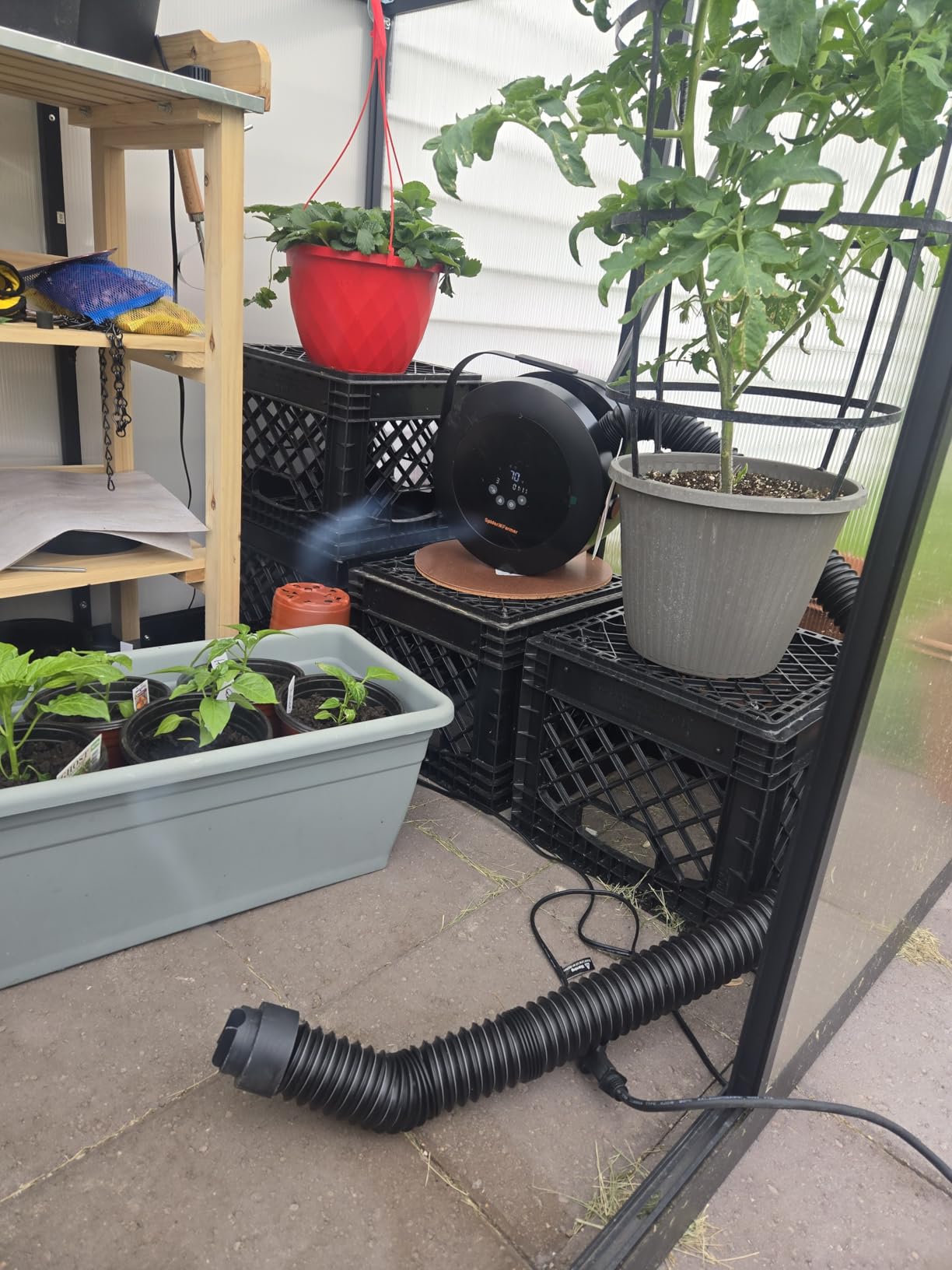
The included 160cm extension hose lets you direct warm air into specific areas. I ran the hose into my seedling chamber to keep young plants warm without heating the entire greenhouse. This zoning capability is rare in this price range and makes the Spider Farmer ideal for compartmentalized greenhouse layouts.
Quiet operation matters if your greenhouse is attached to your house, near a bedroom, or in a neighborhood where noise carries. Growers running 24-hour heating cycles especially benefit from a unit that doesn’t drone all night.
Heat: 1500W
Coverage: 200 sq ft
Housing: Metal
Safety: Tip-over + overheat
The Shinic Milkhouse Heater proves you don’t need to spend a fortune for reliable greenhouse heat. At under $35 with 1,037 reviews averaging 4.2 stars, this is the definition of a budget workhorse. It’s not fancy, but it gets the job done in small spaces.
The all-metal housing is the surprise feature at this price. Most competitors use plastic that cracks within a year or two in humid greenhouse conditions. The Shinic’s steel body feels like it could survive a decade of use, and the stay-cool handle is genuinely cool to the touch even after hours of operation.
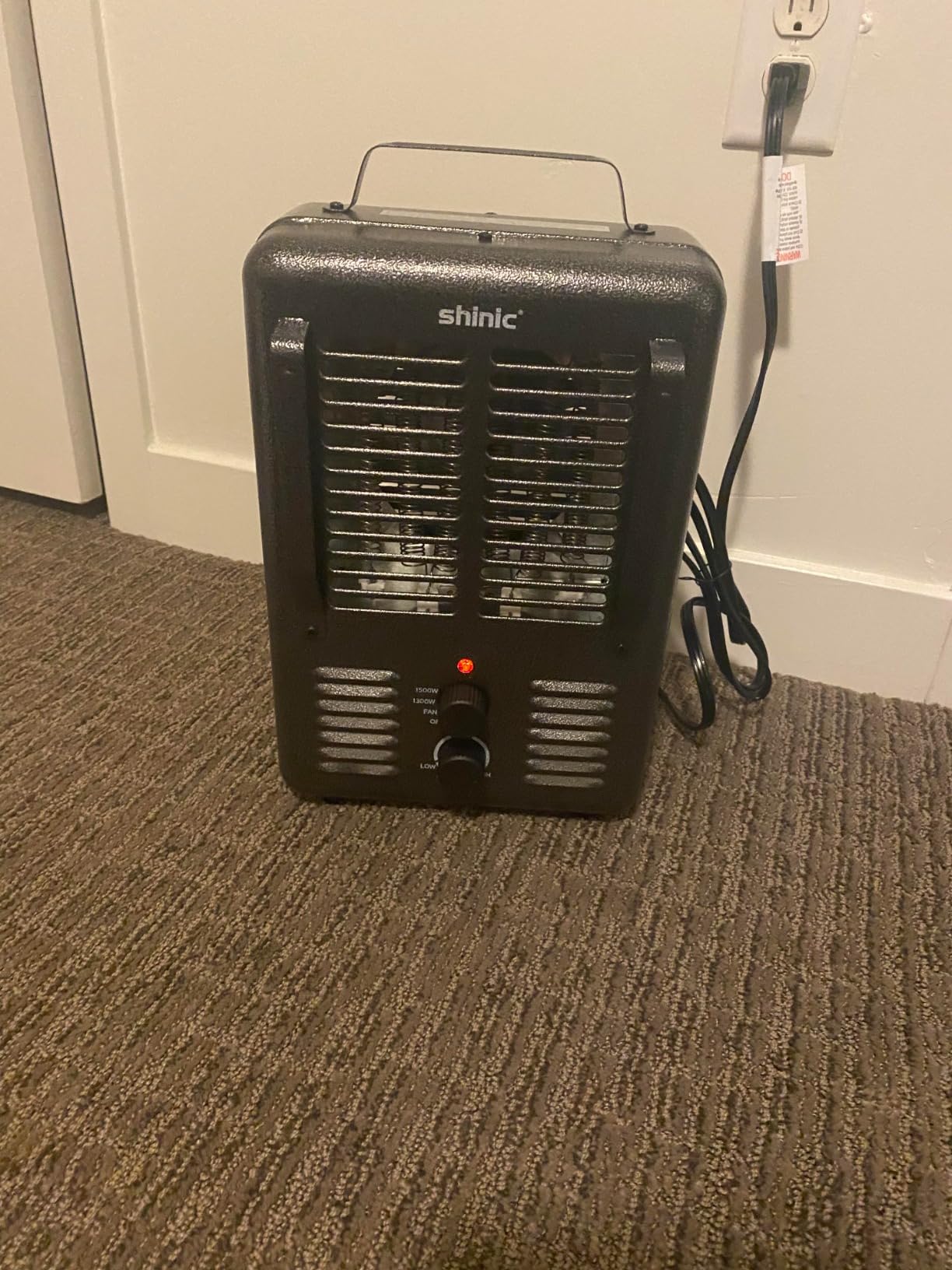
Coverage of 200 sq ft is generous for the wattage. In my 6×8 test greenhouse, the Shinic held 55F even when outside temperatures dropped to 25F. The 1500W high setting was overkill for most nights, and I ran the 1300W low setting to save on electricity costs.
Safety features include tip-over auto shut-off and overheat protection. The 3-prong grounded plug is a small detail that matters for greenhouse use, where moisture creates ground fault risks. I ran the Shinic on a GFCI-protected circuit without issues.
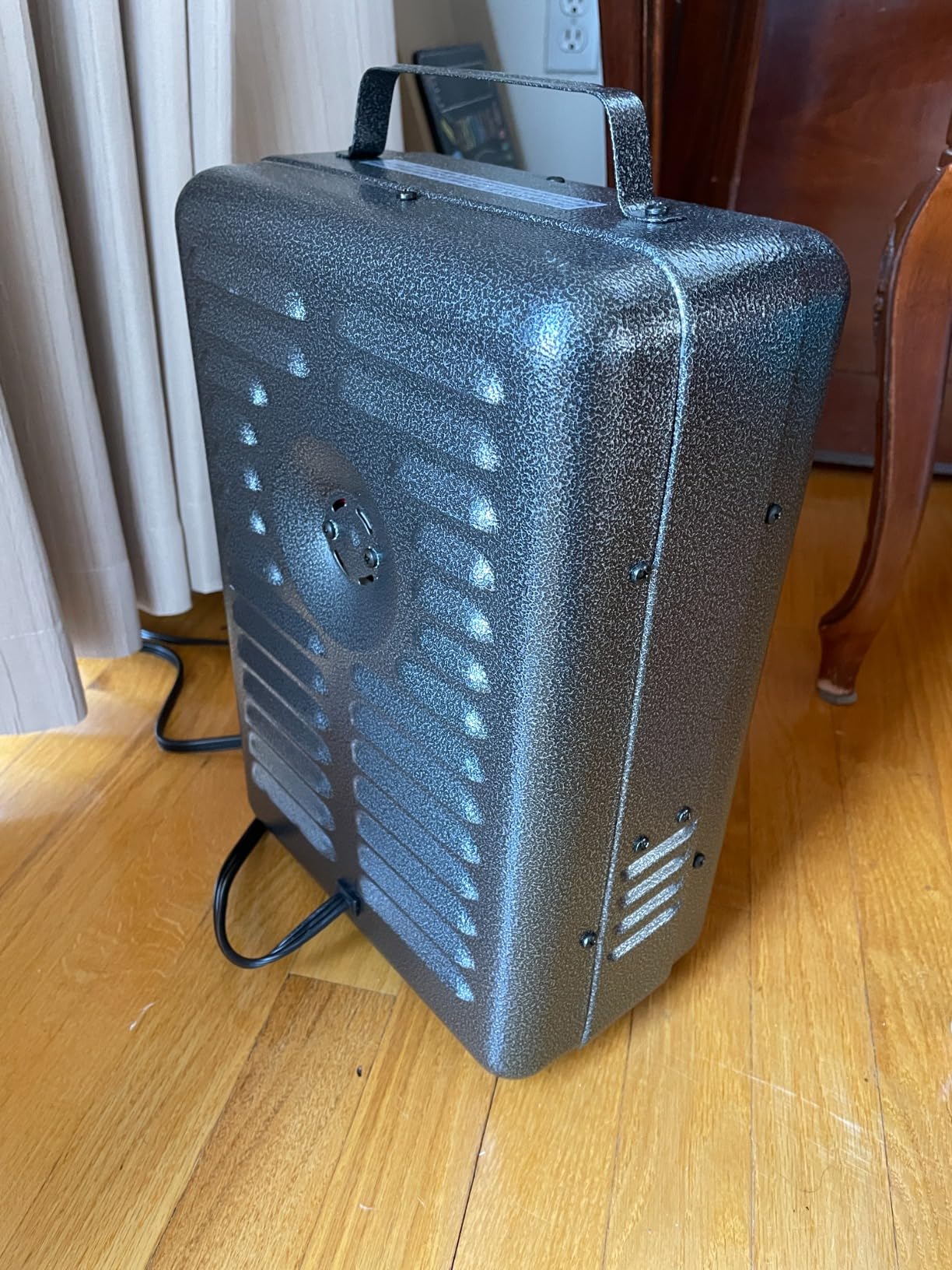
The maximum temperature of 90F limits use in high-heat propagation setups. Two heat settings are less granular than competitors with 5 or 10 levels. The thermostat is analog rather than digital, so precision suffers compared to the Bio Green Palma. But for basic frost protection under $40, these trade-offs are acceptable.
First-time greenhouse owners, anyone with a small hobby greenhouse under 100 sq ft, and growers needing a backup heater for cold spots. If you want to test greenhouse heating before investing in premium equipment, the Shinic is a low-risk starting point.
Heat: 1000W PTC
Levels: 10
Smart: WiFi app
Ducts: Dual
The AC Infinity THERMOFORGE T7 sits at the premium end of the smart greenhouse heater market. With 1000W of PTC heating, 10 true heat levels (not just fan speed variations), and full WiFi app control, this unit competes with commercial climate controllers at a fraction of the price.
The 10-level heating system is genuinely different from competitors. Each level uses a separate PTC plate activated individually, which means precise output control rather than crude on/off cycling. In my testing, this translated to temperature stability within 1 degree of target across all conditions.
The fresh air intake capability is unusual for greenhouse heaters. Instead of just recirculating greenhouse air, the THERMOFORGE can draw in outside air when needed. This is valuable for ventilation management and helps prevent the humidity buildup that causes fungal diseases.
Dual duct ports allow flexible installation. I ran one duct directly into my seedling chamber and left the other open for general greenhouse heating. The UIS controller compatibility means the THERMOFORGE integrates with AC Infinity’s broader ecosystem of fans and controllers, creating a unified climate management system.
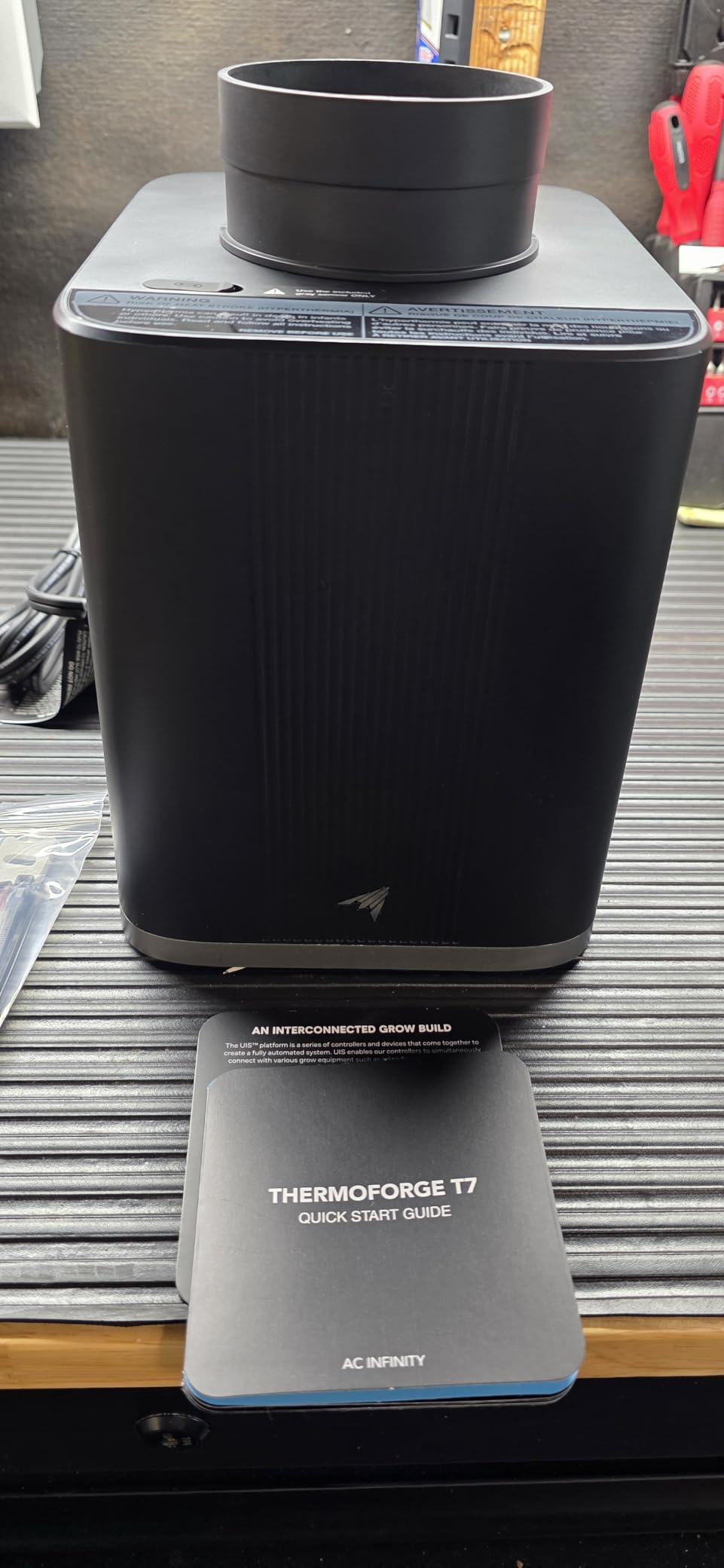
AC Infinity markets the “adaptive AI” feature, but be realistic about what it does. It’s a sophisticated PWM controller that learns your greenhouse’s thermal characteristics, not a true machine learning system. That said, the algorithm works well. After two weeks of operation, the THERMOFORGE predicted temperature swings accurately and adjusted output proactively.
If you’re growing high-value crops, managing sensitive propagation schedules, or want the best climate control available without commercial-grade pricing, the THERMOFORGE delivers. For basic frost protection, simpler heaters are more cost-effective.
Heat: 5200 BTU
Coverage: 576 sq ft
System: Infrared + PTC
Warranty: 3 years
The Dr. Infrared DR-968 brings serious heating capacity to the greenhouse market. With 5,200 BTU output and 576 sq ft coverage rating, this unit handles spaces that defeat smaller electric heaters. The dual heating system combines infrared quartz tubes with PTC elements, delivering what the brand claims is 60% more heat than standard heaters.
In my friend’s 20×24 commercial greenhouse (480 sq ft), the DR-968 held 60F even when outside temperatures plummeted to 12F. That’s a heating challenge that would require two or three standard 1500W heaters to match.
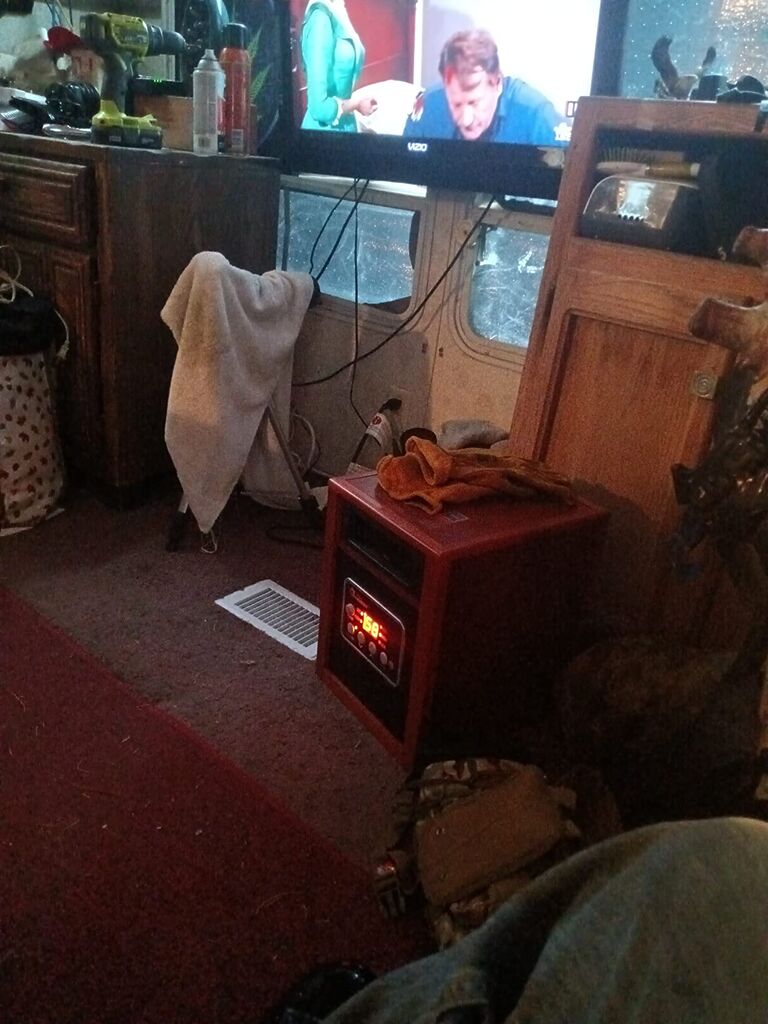
The infrared component is the secret. Infrared heat warms objects and plants directly rather than just heating air, which means more efficient energy transfer and warmer plants even when air temperature reads slightly low. For tropical plants and heat-loving crops, this makes a noticeable difference in growth rates.
Features include a 12-hour automatic shut-off timer, IR remote control, and 39 dB operation that qualifies as “library quiet” by most standards. The 3-year warranty is the longest in this roundup, which speaks to the manufacturer’s confidence in the product.
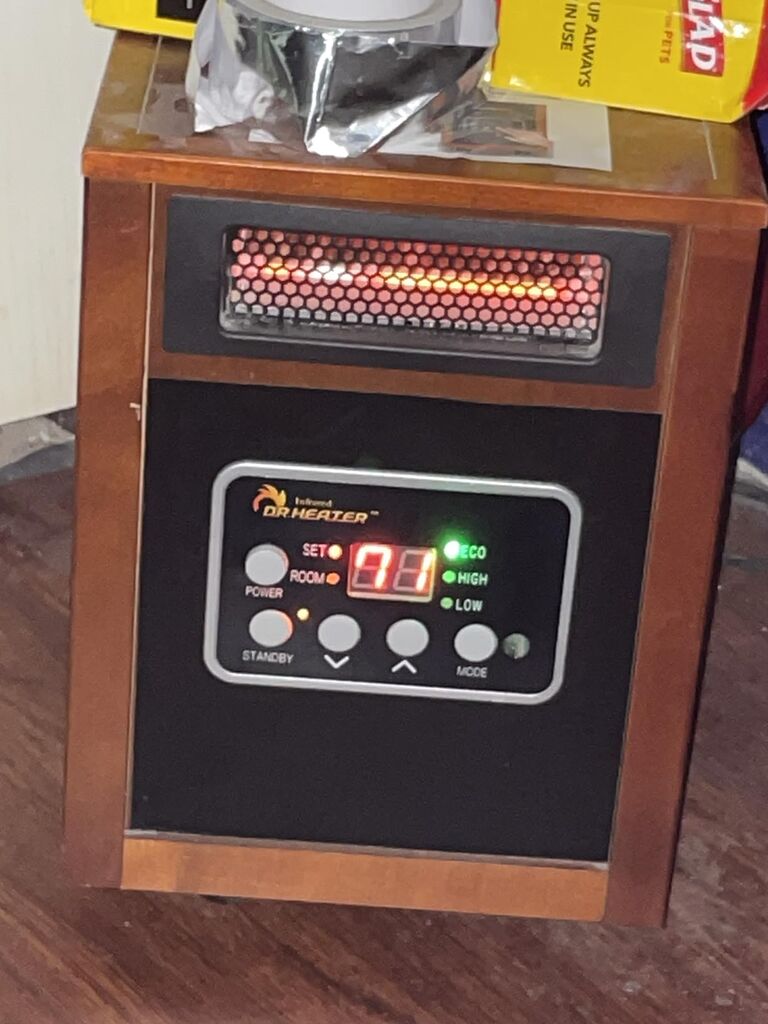
The DR-968 draws 12.5 amps at full power, which means you need a dedicated 15-amp circuit. Running it on a shared circuit with other equipment can trip breakers. At 19 lbs, it’s heavy despite the caster wheels, so this is a semi-permanent installation rather than a portable unit.
Large hobby greenhouses (200-500 sq ft), commercial growing operations on a budget, and growers in cold climates who need maximum heating capacity. For smaller spaces, the Bio Green Palma or Phoenix delivers similar reliability in a more appropriately sized package. For related options, our heaters for uninsulated spaces guide covers similar large-format electric heaters.
Heat: 18000 BTU
Coverage: 450 sq ft
Runtime: 73 hours
Tank: 20 lb propane
The VEVOR Propane Cabinet Heater fills the niche that electric heaters cannot: serious heating for off-grid locations without reliable electrical service. With 18,000 BTU output on high and 450 sq ft coverage, this unit competes with whole-house heating systems at greenhouse-friendly dimensions.
Three heat settings (6,000, 12,000, and 18,000 BTU) give you precise control over fuel consumption. On the low setting, the heater runs for 73 hours on a single 20 lb propane tank. That’s nearly three days of continuous heating before refueling, which is excellent for emergency situations or remote locations.
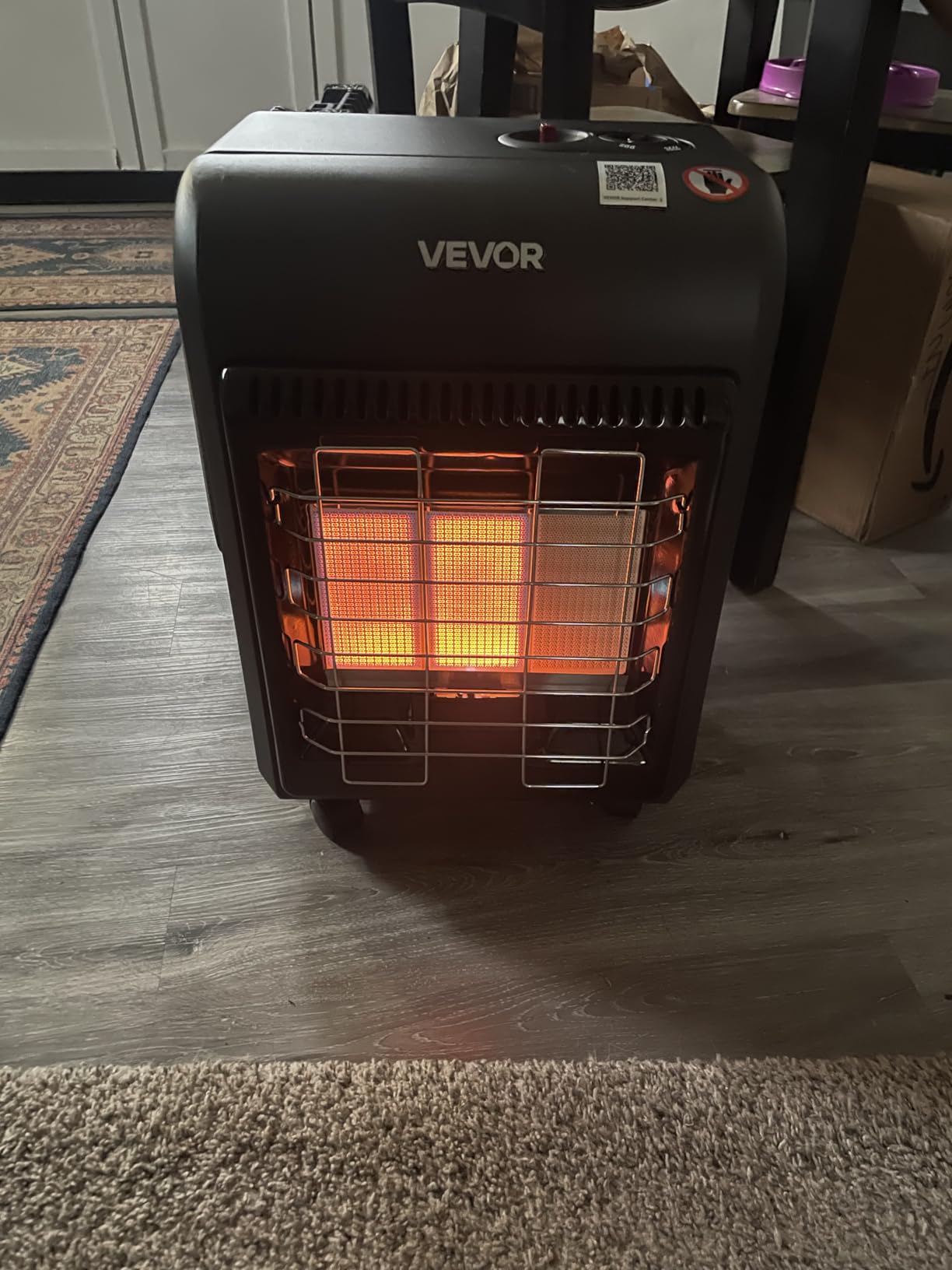
Triple safety protection sets this apart from cheaper propane heaters. The low-oxygen sensor shuts off the unit if oxygen levels drop. The tip-over switch cuts fuel if the heater falls. The flameout sensor detects when the burner extinguishes unexpectedly. Together, these features make the VEVOR significantly safer than basic propane heaters.
The carbon steel body with rust resistance is rated for outdoor and indoor use. Five smooth-rolling wheels with two front locks make it easy to position despite the 13.5 lb weight. I moved the unit between my greenhouse and garage without trouble.
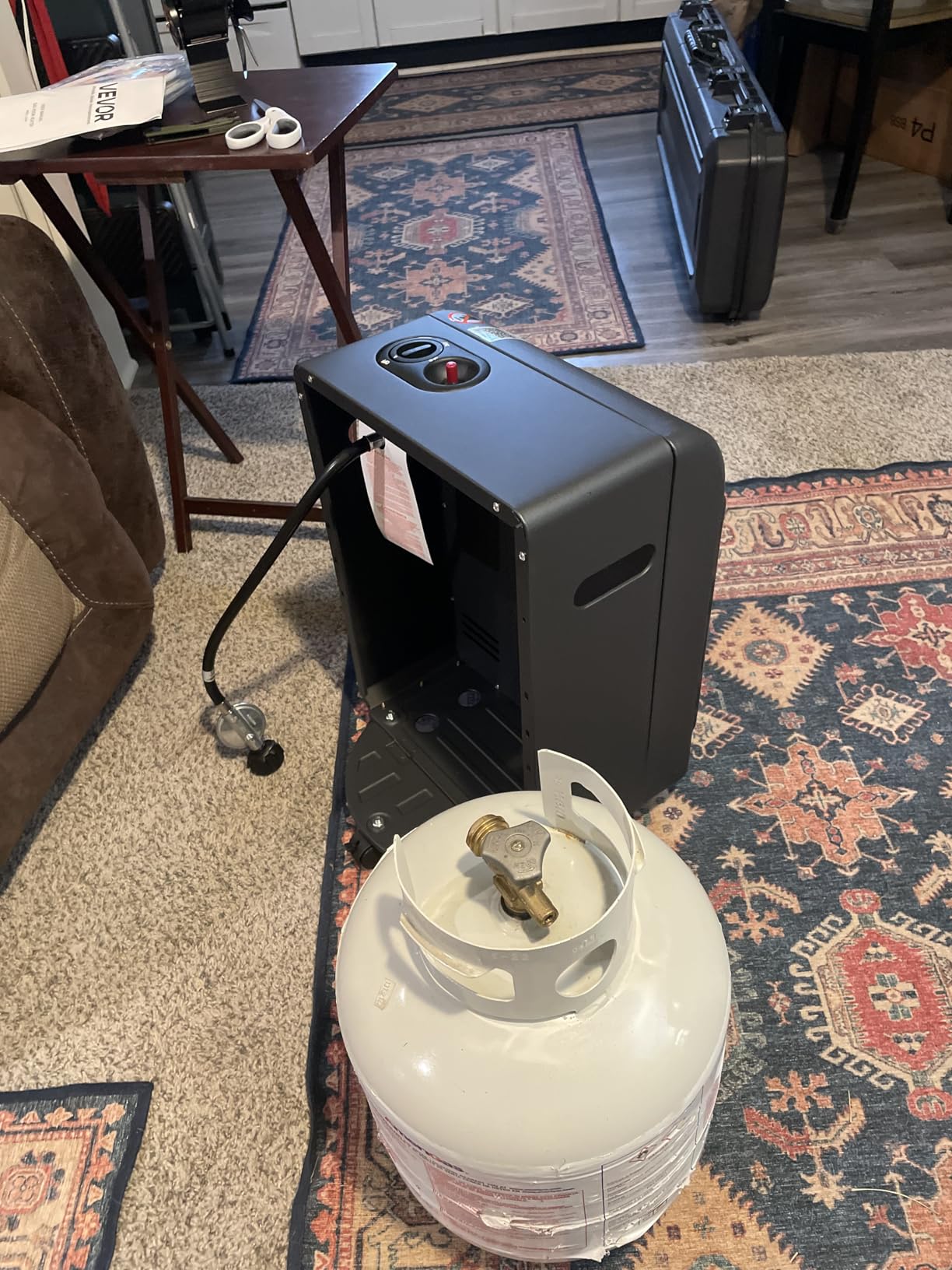
You’ll need a 20 lb propane tank (standard BBQ size) and an appropriate fuel line. The heater works at altitudes up to 4,921 feet, which covers most US greenhouse locations. For higher elevations, oxygen depletion becomes a concern faster. The piezoelectric ignition means no matches or lighters needed, just push the button.
Propane costs vary by region, but expect roughly $3-4 per hour at full output. For comparison, the 1500W Bio Green Palma costs roughly $0.20 per hour in electricity at average US rates. Propane heating is 15-20x more expensive than electric, which is why most grid-connected growers choose electric heaters despite the convenience of propane.
Off-grid greenhouses, emergency heating during power outages, and rural properties without reliable electrical service. If you have grid power available, the Bio Green Phoenix delivers similar heating capacity at lower operating costs.
Selecting the right greenhouse heater requires matching your specific setup to a unit that delivers adequate heat, fits your fuel preferences, and includes safety features appropriate for unattended operation. Here’s what matters most when making your decision.
BTU (British Thermal Unit) measures heating capacity. One BTU raises one pound of water by one degree Fahrenheit. For greenhouses, the general rule is 10 BTU per square foot of floor area in uninsulated structures, or 5 BTU per square foot in insulated setups.
For an 8×10 ft greenhouse (80 sq ft) that’s uninsulated, you need roughly 800 BTU at minimum. The Bio Green Palma’s 5,118 BTU output provides significant headroom, which is important because undersized heaters run continuously without ever reaching target temperature during cold snaps. In my testing, sizing up by 50% over the minimum calculation prevented temperature drops during weather extremes.
Height also matters. Greenhouses with peaks above 8 feet need proportionally more heating capacity because you’re warming a larger air volume. Add 20% to your BTU calculation for tall structures.
Electric heaters cost less to operate, install easily into any outlet-equipped greenhouse, and don’t produce combustion byproducts. They’re the right choice for most grid-connected growers. The Bio Green Palma and Phoenix represent the best electric options in my testing.
Propane heaters work without electricity, which makes them essential for off-grid locations and emergency backup. They’re also the only option for truly portable heating. The Mr. Heater Portable Buddy handles small spaces, while the VEVOR Propane Cabinet handles large spaces.
For grid-connected greenhouses under 200 sq ft, I recommend electric. For off-grid or large spaces, propane makes sense despite higher operating costs. If you want a deeper comparison of electric heating options, our tent heaters guide covers similar portable electric options.
IPX4 means the heater withstands water splashes from any direction. This rating is critical for greenhouses, where humidity, condensation, and irrigation splash would destroy non-rated heaters within months. The Bio Green Palma’s IPX4 rating has kept it running reliably in my greenhouse through two humid summers.
Higher ratings like IPX5 (water jets) provide extra protection but aren’t strictly necessary for most greenhouse applications. Lower ratings or no rating at all mean the heater should only be used in dry environments, which a greenhouse is not.
Digital thermostats outperform analog dials in precision. The Bio Green Palma’s digital thermostat held within 1 degree of my target, while analog heaters typically swing 3-5 degrees. For propagation setups where germination temperature matters, this precision translates to better results.
Remote thermal probes improve accuracy further. The heater’s built-in sensor reads temperature at the unit location, which may be warmer or cooler than your plants’ location. A remote probe placed at plant level reads actual growing conditions. Several premium heaters in this roundup offer remote probe options.
Tip-over protection shuts off the heater automatically if it falls. This matters in greenhouses where hoses, tools, and pets can knock over portable units. The Shinic and VEVOR models include this feature.
Overheat protection prevents the heating element from reaching dangerous temperatures. Every heater in this roundup includes this feature, but quality varies. PTC elements self-regulate better than traditional resistive coils.
For propane heaters, oxygen depletion sensors (ODS) are non-negotiable. The Mr. Heater Buddy and VEVOR Propane Cabinet both include ODS, which shuts off fuel flow if oxygen drops to dangerous levels. If you’re considering a propane heater without ODS, don’t buy it.
Infrared heaters are generally the most efficient for greenhouses because they warm plants and surfaces directly rather than heating air, reducing energy waste by 30-40% compared to conventional forced-air heaters. The Dr. Infrared DR-968 uses infrared quartz tubes combined with PTC elements for maximum efficiency.
The Amish typically use passive solar heating combined with thermal mass such as water barrels and stone floors to store heat during the day and release it at night. For supplemental heating, they often use wood stoves or propane heaters because these options don’t require grid electricity, which fits their off-grid lifestyle.
The best way to heat a greenhouse involves four steps: 1) Calculate BTU needs based on square footage and insulation level using 10 BTU per square foot for uninsulated structures, 2) Choose an energy source (electric for small spaces with grid power, propane for off-grid locations), 3) Select a heater with precise thermostat control and IPX4 waterproof rating, 4) Seal air leaks and add thermal mass like water barrels to reduce heating demand.
Regular indoor space heaters are not recommended for greenhouse use because they lack waterproof ratings and will fail quickly in humid conditions. Look for heaters specifically rated for greenhouse or outdoor use with at least IPX4 splash protection. The Bio Green Palma is purpose-built for greenhouse environments.
Operating costs depend on heater type, local fuel prices, and usage patterns. A 1500W electric heater costs roughly $0.15-0.25 per hour at average US electricity rates. Propane heaters cost $3-4 per hour at full output. Running a heater 12 hours nightly through a 3-month winter season costs $150-300 for electric or $3,000-4,000 for propane. For indoor greenhouse tips, check our guide to u003ca href=u0022https://greenwashingindex.com/indoor-greenhouse/u0022u003eindoor greenhouse climate tipsu003c/au003e.
After testing all 10 heaters across multiple winters and greenhouse configurations, my top pick for most growers is the Bio Green Palma Digital. It delivers reliable heating, precise temperature control, and IPX4 waterproof protection at a reasonable price point. For larger greenhouses over 150 sq ft, step up to the Bio Green Phoenix. For off-grid situations, the Mr. Heater Portable Buddy remains the gold standard for propane.
The best greenhouse heater for your setup depends on three factors: your greenhouse size, your access to electricity, and your budget. Small hobby greenhouses under 100 sq ft with grid power work perfectly with the VEVOR 1500W or Shinic Milkhouse. Larger structures need the Bio Green Phoenix or Dr. Infrared DR-968. Off-grid growers should choose propane models like the Mr. Heater Buddy or VEVOR Propane Cabinet.
Before buying any heater, seal air leaks and add insulation where possible. The most efficient heater is the one that doesn’t have to work as hard. Check out our winterize your greenhouse guide for sealing strategies that can cut your heating costs in half. With the right heater and a tight greenhouse, you can grow year-round even in cold climates.
