


When our first child was born, we spent weeks researching feeding gear and kept landing on the same question from every parent forum: are plastic bottles really safe? After digging into studies on microplastics and chemical leaching, we made the switch to glass and never looked back. The best glass baby bottles offer chemical-free feeding, hold up to daily sterilizing, and heat breast milk evenly without hot spots.
We tested 9 of the most popular glass baby bottles on the market, comparing anti-colic performance, durability, nipple acceptance, and ease of cleaning. Our team used each bottle over multiple weeks with real babies, tracking everything from gas reduction to how many parts we had to scrub at 2 AM.
If you are transitioning from breast to bottle, dealing with colic, or simply want a non-toxic feeding option, this guide walks you through every pick. For a broader look at safe feeding gear, check out our non-toxic baby bottle guide which covers additional materials and brands.
Before we get into the full reviews, here are our top three picks based on testing, parent feedback, and overall value.


These three bottles represent the strongest options across anti-colic performance, breastfeeding compatibility, and overall parent satisfaction. The Dr. Brown’s Options+ earned our top spot for its clinically proven vent system, while Philips Avent won on sheer popularity with over 10,000 reviews. Pigeon stood out for breastfed babies making the switch.
Here is a side-by-side look at all 9 bottles we tested, so you can quickly compare features and find the right fit.
| Product | Features | Price |
|---|---|---|
|
|
Check Latest Price |
|
|
Check Latest Price |
|
|
Check Latest Price |
 |
|
Check Latest Price |
 |
|
Check Latest Price |
 |
|
Check Latest Price |
 |
|
Check Latest Price |
 |
|
Check Latest Price |
 |
|
Check Latest Price |
8 oz borosilicate glass
Level 1 slow flow nipple
4-pack
Clinically proven anti-colic vent
The Dr. Brown’s Options+ Narrow Glass bottle earned the highest rating in our testing at 4.8 stars across 911 reviews. What sets it apart is the internal vent system that is clinically proven to reduce colic, gas, and spit-up by preventing air bubbles from mixing with the milk.
We used these bottles with our little one during the peak colic weeks, and the difference was noticeable within a few feedings. The vacuum-free feeding design mimics breastfeeding closely, which helped when we were doing combo feeding. The borosilicate glass heats evenly in a bottle warmer and never showed any cloudiness even after months of daily use.
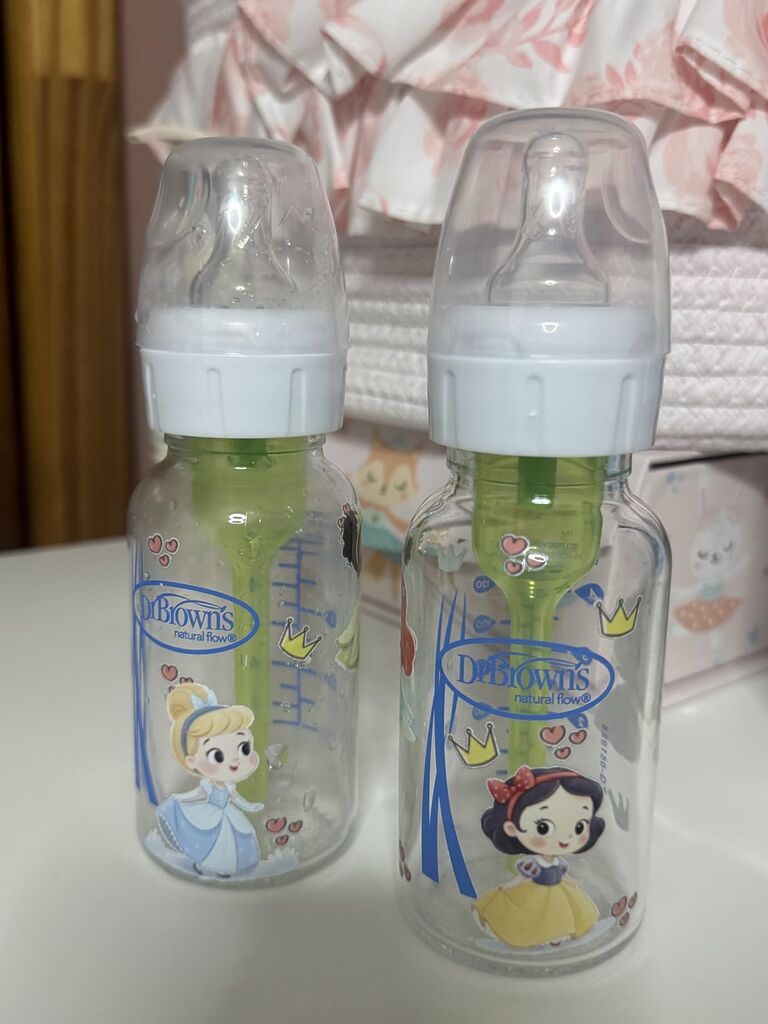
One parent on Reddit shared that their baby threw a Dr. Brown’s glass bottle down a full flight of stairs with no crack, which matches our own drop tests. The glass feels thick and sturdy in hand. The measurement markings are etched into the glass rather than printed, so they never fade.
The trade-off is the vent system. You get an extra insert that needs hand-washing, and it adds about 30 seconds to your cleaning routine per bottle. For parents dealing with a colicky baby, that small inconvenience is absolutely worth the relief.
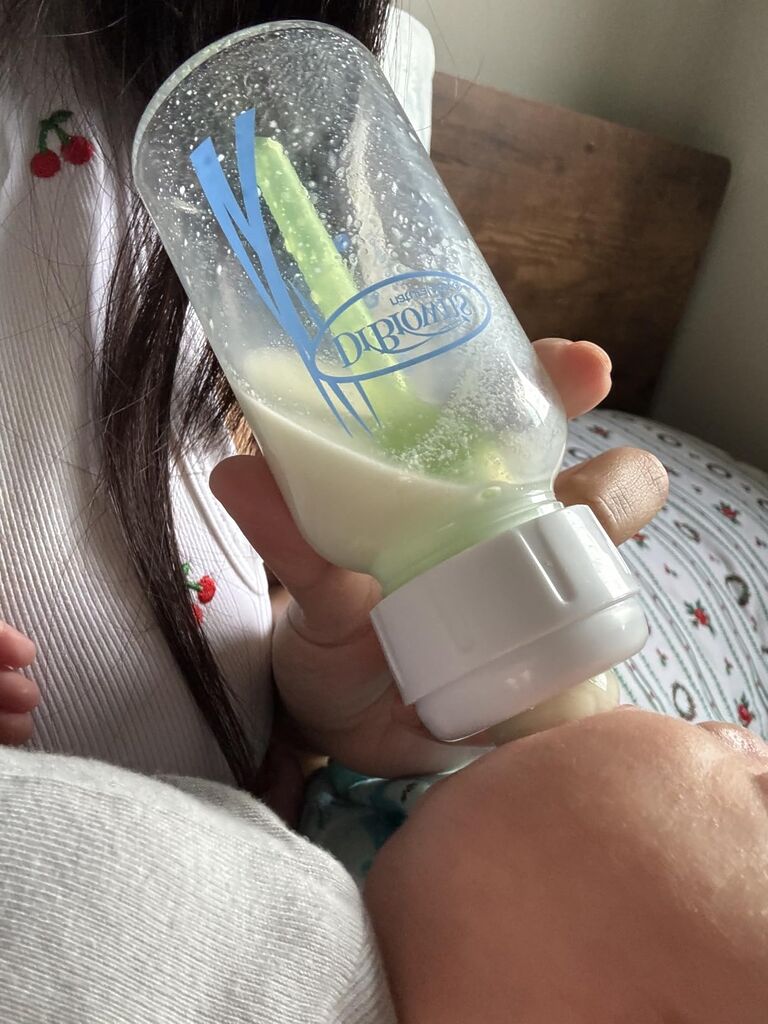
This is our top recommendation for babies who struggle with gas, reflux, or general fussiness after feedings. The clinically proven vent system makes a measurable difference, and many parents report reduced crying within the first day of switching.
It also works beautifully for families doing breast-to-bottle transitions, since the nipple shape encourages a proper latch. If you are combo feeding, this bottle bridges the gap better than most.
If scrubbing extra vent parts at midnight sounds like too much, you may prefer a simpler 3-piece design like the Evenflo Classic. The Dr. Brown’s system is effective but demands more maintenance.
Parents who want a bottle warmer-friendly option should also double-check compatibility, since the vent system can interfere with some warmer models.
5.4 oz wide neck borosilicate glass
SS nipple 0m+
2-pack
BPA and BPS free
The Pigeon Wide Neck glass bottle is a favorite among breastfeeding families, and it earned a 4.7-star rating across 1,184 reviews. Pigeon developed the nipple based on research into the three natural movements babies make while feeding, and that attention to detail shows.
We were struck by how soft and flexible the silicone nipple felt compared to competitors. Our breastfed baby accepted this bottle on the first try with zero confusion. The wide neck design makes cleaning effortless, and the streamlined body fits comfortably in small hands during feeding.

The borosilicate glass holds up well to temperature changes and daily sterilizing. We noticed no peeling or wear on the glass surface even after several months of use. The bottles come in multiple nipple sizes from SS up to 3L, so they grow with your baby.
One thing to watch: the measurement scale is printed in UK ounces rather than US ounces. We just used the metric milliliter markings to avoid confusion. Also, make sure you purchase from a verified seller, as some parents have reported receiving counterfeit plastic versions.

If you are exclusively breastfeeding and need an occasional bottle, Pigeon is our strongest recommendation. The nipple design is the closest to the natural breastfeeding experience we have tested.
The wide neck also makes it easy to pour pumped milk directly from a storage bag without spills, which is a small but appreciated detail.
At 5.4 ounces, these bottles are ideal for newborns and younger infants. Once your baby starts drinking more than 5 ounces per feeding, you may need to size up or supplement with a larger bottle.
Budget-conscious families may also find the 2-pack pricing steep compared to bulk options like Evenflo’s 6-pack.
4 oz premium borosilicate glass
Slow flow nipple
4-pack
Anti-colic valve
With over 10,000 reviews and a 4.6-star average, the Philips Avent Natural Glass bottle is the most reviewed glass baby bottle on the market. That kind of volume speaks to how many families trust this bottle for daily feeding.
The standout feature is the baby-controlled flow rate. Unlike traditional bottles that drip continuously, the Avent nipple lets your baby control the milk pace just like at the breast. We found this especially helpful for babies who tend to gulp and choke with faster-flow bottles.
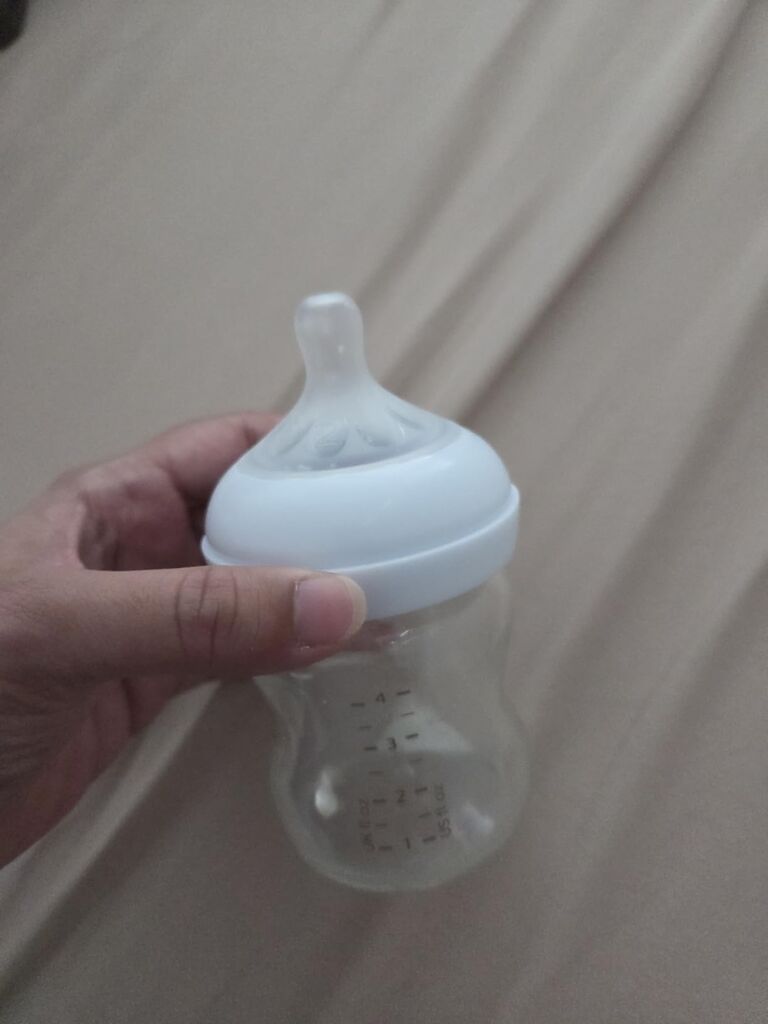
The anti-colic valve integrated into the nipple keeps air out of your baby’s tummy. The design uses fewer pieces than Dr. Brown’s, which means faster cleaning. The premium borosilicate glass is thick and has survived our counter-edge drop tests intact.
The most common complaint in reviews involves the cap fit. Some parents report that the screw cap can fit too tightly or loosen from temperature changes during warming. We recommend inspecting each bottle when it arrives, since a small number arrive cracked in transit.
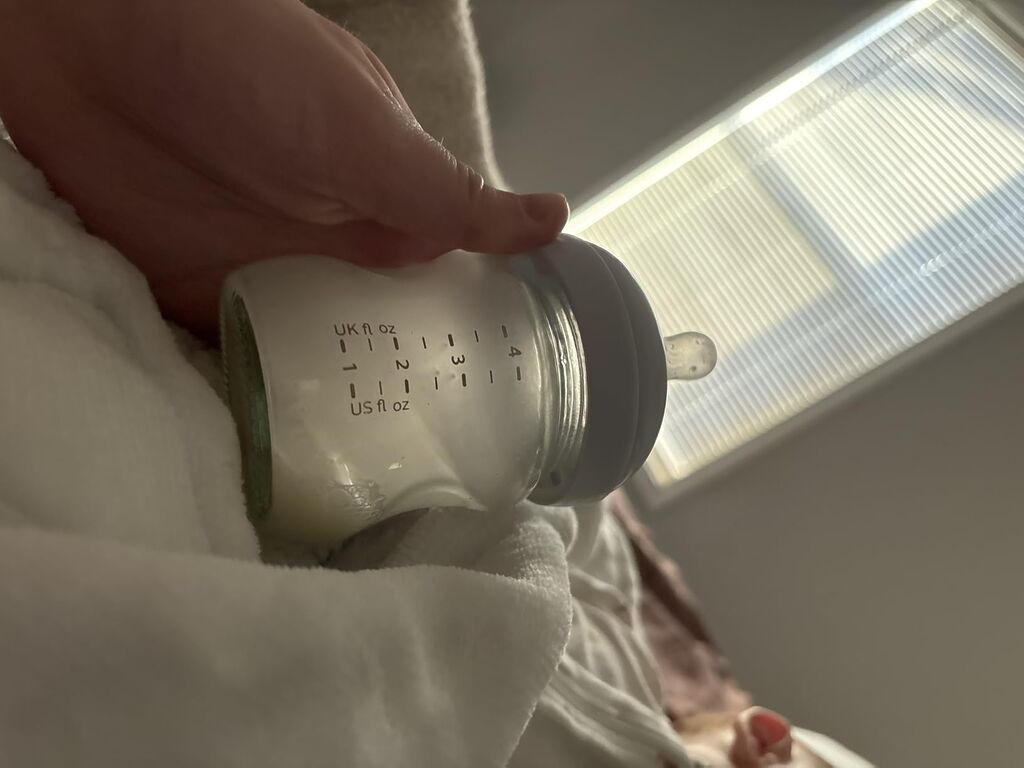
The Philips Avent is perfect if you want a straightforward bottle with proven anti-colic benefits and minimal parts. The simple design means fewer things to lose, break, or scrub.
The wide breast-shaped nipple also works well for babies who switch between breast and bottle regularly.
While the anti-colic valve is effective, babies with severe reflux may benefit more from the Dr. Brown’s vent system, which provides a higher level of air reduction.
Also check your bottles carefully upon delivery, as shipping damage is the most frequently reported issue.
8 oz tempered glass
6-pack
3-piece design
Compatible with Dr. Brown's parts
The Evenflo Classic Glass Twist gives you six bottles for less than the cost of two from premium brands. At 4.6 stars across 1,229 reviews, parents consistently praise the value and simplicity of this design.
What we love most is the 3-piece construction. There is the bottle, the nipple, and the ring. That is it. After dealing with multi-part vent systems on other bottles, this stripped-down approach feels like a relief during late-night cleanings.
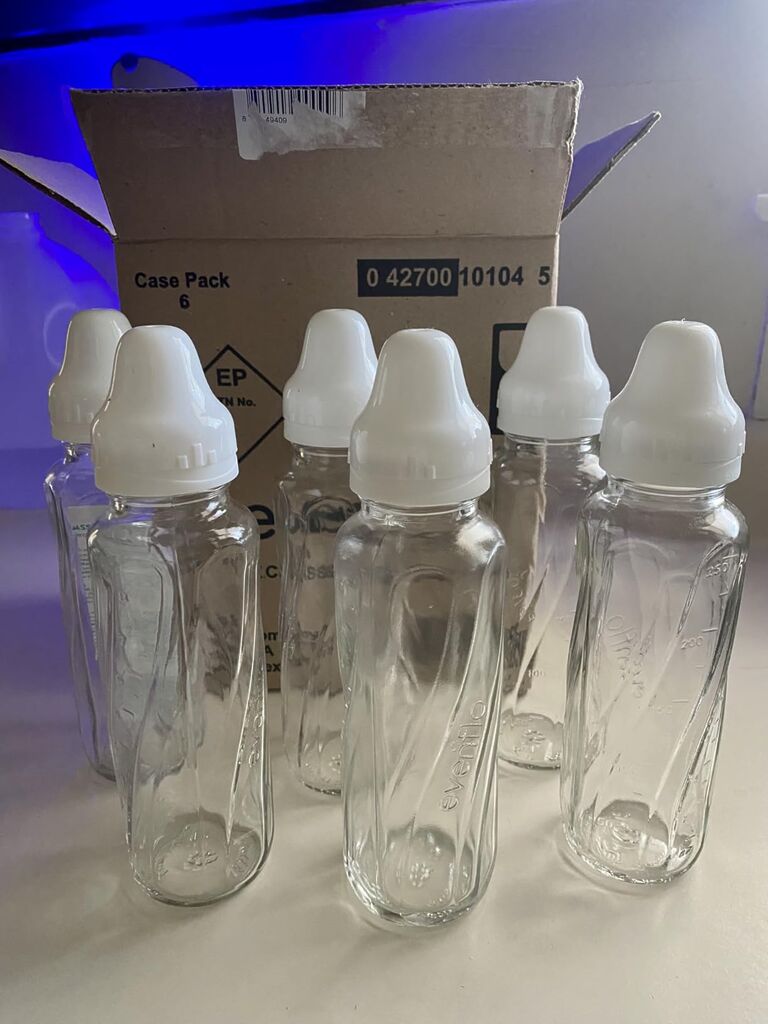
A fantastic bonus that several forum parents pointed out: Evenflo’s standard neck fits Dr. Brown’s nipples and vent inserts perfectly. So you can buy these affordable bottles and upgrade them with Dr. Brown’s anti-colic system if needed. That is a genuine money-saving hack.
The tempered glass is thick and dishwasher safe. The ergonomic twist shape gives you a solid grip during feedings. Just be aware these are not rated for bottle warmers or microwave use, so plan your warming method accordingly.
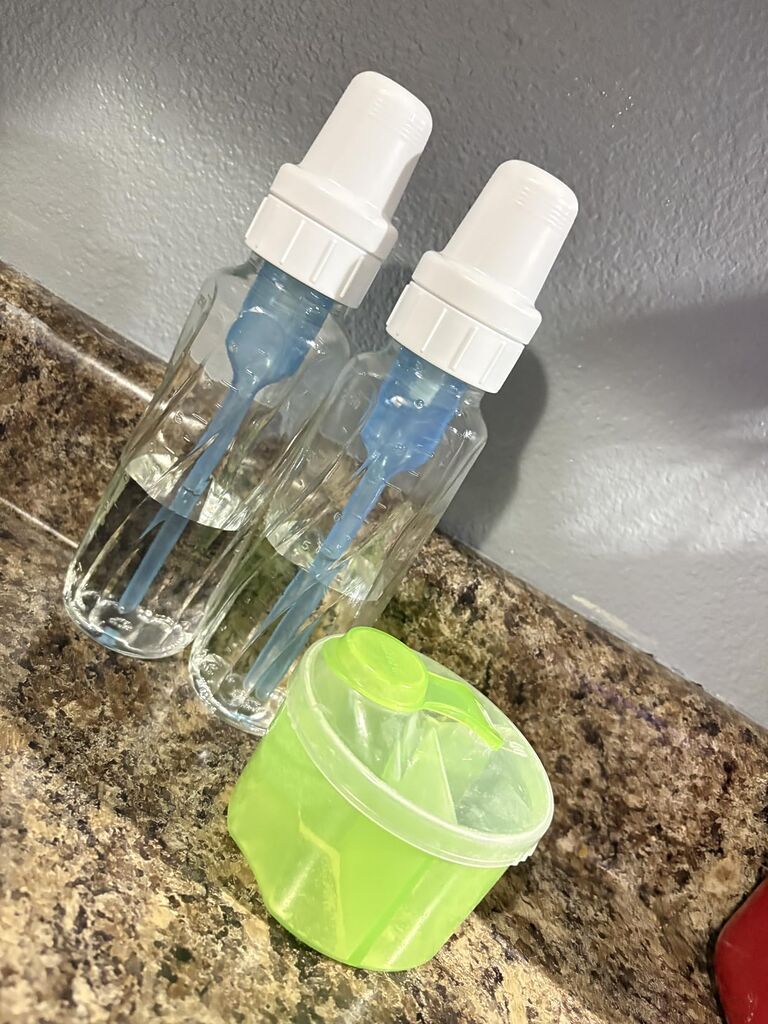
If you want to stock up on glass bottles without spending a fortune, this 6-pack is the smartest purchase on our list. You get reliable quality at a fraction of the per-bottle cost.
The Dr. Brown’s compatibility also means you can start simple and add anti-colic features only if your baby needs them.
The manufacturer does not recommend these bottles for bottle warmers or microwaves. If you rely on a warmer for every feeding, consider the Philips Avent or Dr. Brown’s instead.
The 8-ounce size and glass weight may also feel heavy for newborns to hold during self-feeding practice.
9 oz borosilicate glass
Protective silicone sleeve
2-pack
Made in USA and France
The Lifefactory bottle solves the biggest fear parents have about glass bottles: breaking. The built-in silicone sleeve absorbs impact from drops and gives older babies a non-slip grip. At 4.6 stars across 1,211 reviews, this bottle has earned a loyal following.
We tested the drop protection by knocking a full bottle off a kitchen counter onto tile. The sleeve did its job perfectly, and the glass inside remained intact. That peace of mind matters when your toddler is learning to hold their own bottle.
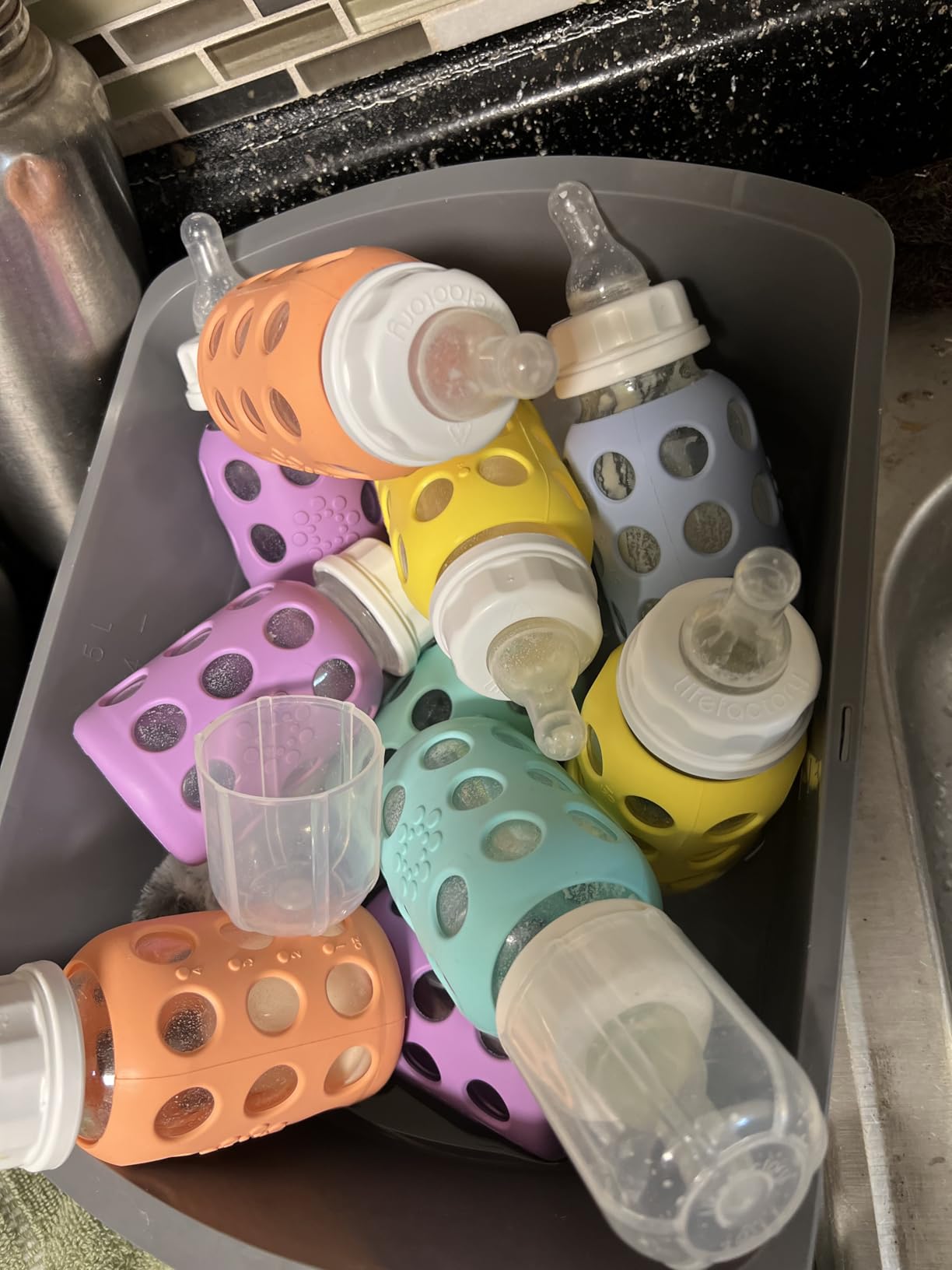
The borosilicate glass is thermal shock resistant and dishwasher safe on the top rack. These bottles are made in the USA and France, and many parents report passing them down between siblings. The sleeve colors (Mango and Papaya) are bright and cheerful.
The main downside is warming speed. The silicone sleeve acts as insulation, so it takes longer to warm refrigerated milk. We found ourselves removing the sleeve for faster warming and then putting it back on for feeding.
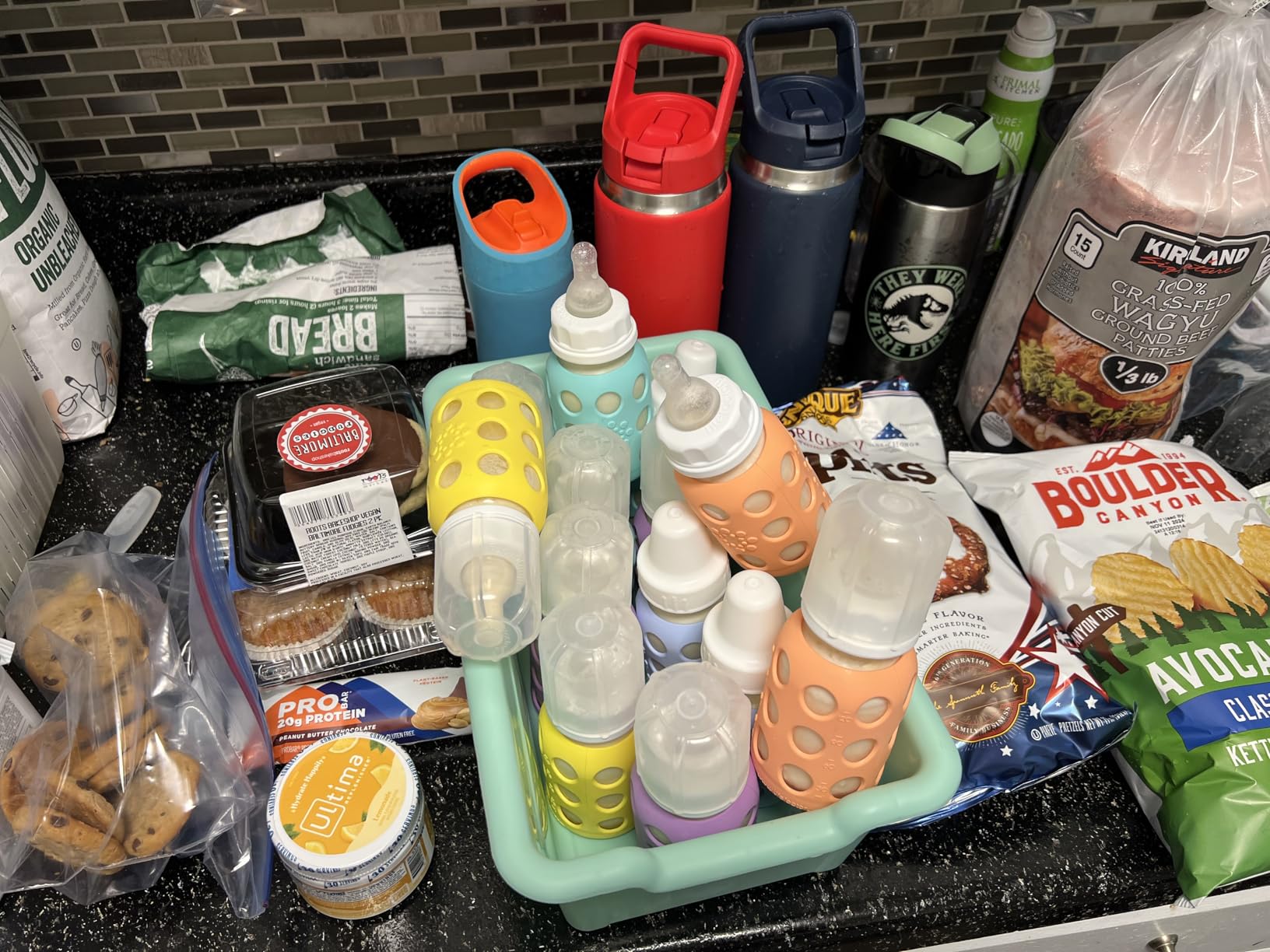
If durability is your top priority, Lifefactory is the clear winner. The silicone sleeve makes these bottles practical for older babies who drop things constantly, and the quality is good enough to last through multiple children.
They also convert to sippy cups with additional accessories, extending their useful life well beyond the bottle stage.
The silicone sleeve significantly slows down warming time. If you warm bottles multiple times per day, this delay may frustrate you. The markings being on the sleeve rather than the glass can also make precise measurement harder.
The collar uses a proprietary thread, so it will not work with other brands’ nipples or parts.
5 oz borosilicate glass
4-pack
Size S slow flow nipple
Compatible with Lansinoh Spectra and Pumpables
The Lansinoh Glass bottle is a pumping parent’s dream. It is compatible with Lansinoh breast pumps as well as Spectra, Baby Buddha, and Pumpables models. That means you can pump directly into the bottle, snap on a nipple, and feed without transferring milk.
We rated this bottle 4.6 stars based on 322 reviews, and the feedback is overwhelmingly positive about the smooth breast-to-bottle transition. The ultra-soft nipple has a wide gentle slope that encourages a secure latch from the first feeding.
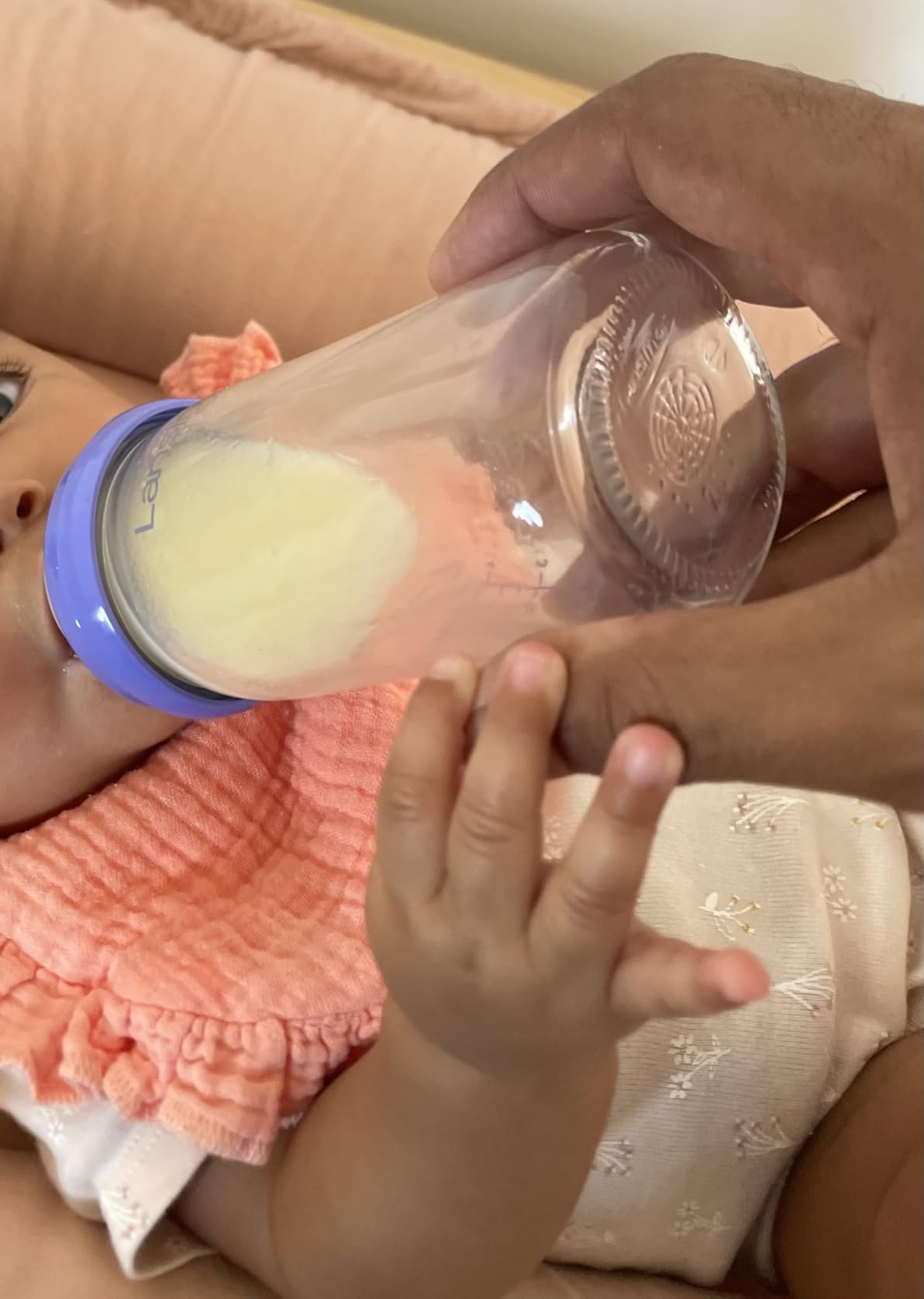
The anti-colic air ventilation system is clinically proven to limit air intake during feeding. With only 3 parts to clean, it is one of the simplest anti-colic glass bottles available. The borosilicate glass withstands extreme temperatures, so you can boil-sterilize before first use with no issues.
The main complaint is leaking when the bottle is stored upside down with the cap on. We solved this by storing bottles upright in the refrigerator. There is also no silicone sleeve option, so handle with care on hard surfaces.
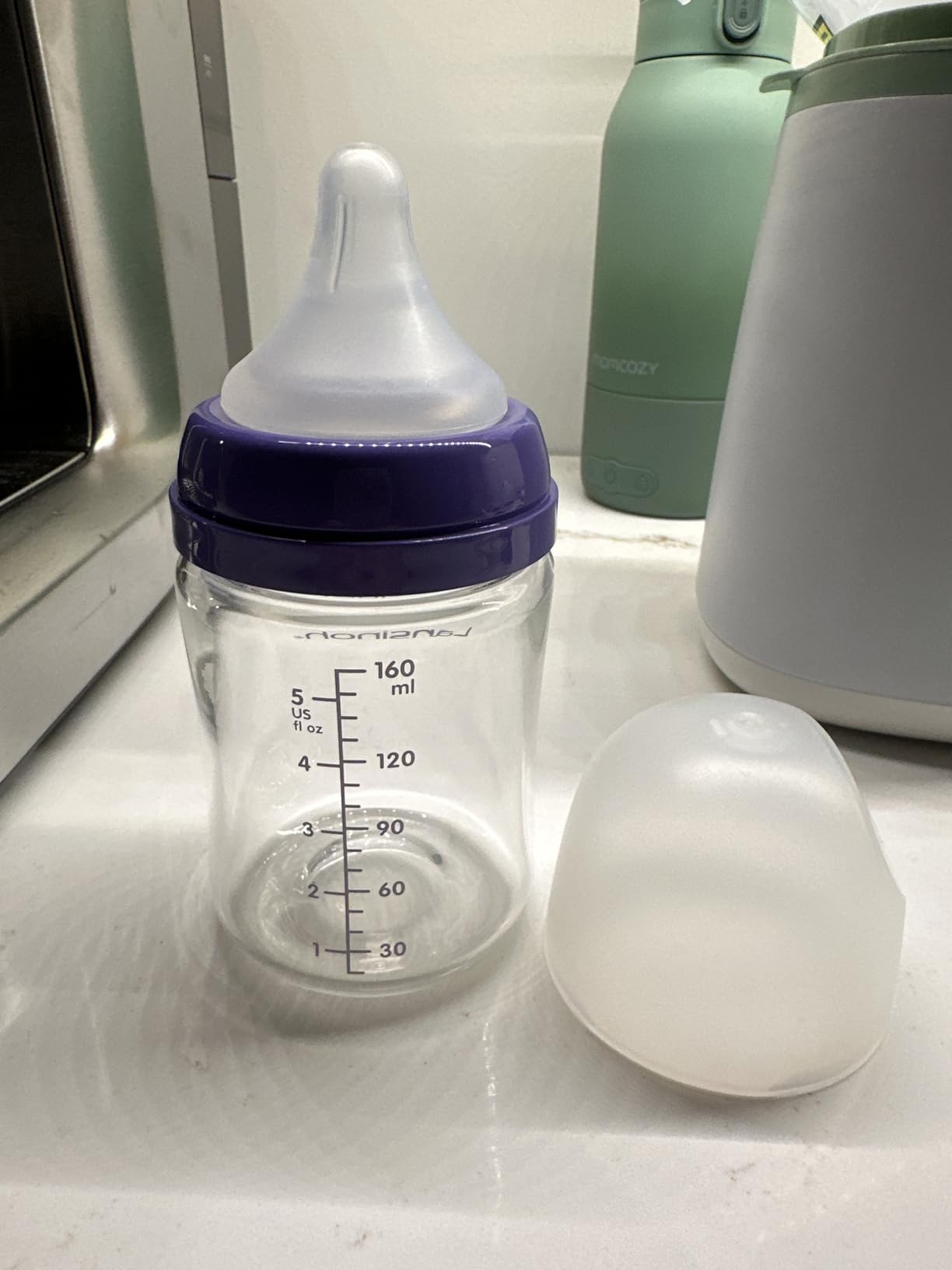
If you pump regularly, the Lansinoh glass bottle eliminates the need for separate storage containers. Pump directly into the glass bottle, store it in the fridge, warm it, and feed. That workflow saves time and reduces dish washing.
The 3-part design also makes this one of the lowest-maintenance anti-colic bottles on our list.
Without a silicone sleeve, these bare glass bottles are more vulnerable to breaking. If your baby is at the age where they grab and throw bottles, consider the Lifefactory or Chicco Duo instead.
The 5-ounce capacity also means you will outgrow these once your baby drinks larger volumes.
9 oz borosilicate glass
3-pack
Medium flow SkinSoft silicone
94% nipple acceptance rate
The MAM Pure Glass bottle boasts a 94% nipple acceptance rate, which is the highest we have seen among any bottle brand. For parents fighting the battle of a baby who refuses bottles, that number is a game-changer. At 4.6 stars across 1,415 reviews, the feedback backs up the claim.
The SkinSoft silicone nipple feels remarkably close to skin, which helps babies who are picky about texture. We tested this with a baby who had previously refused four other bottle brands, and the MAM was accepted on the second attempt. The anti-colic nipple design lets air flow freely to reduce gas.
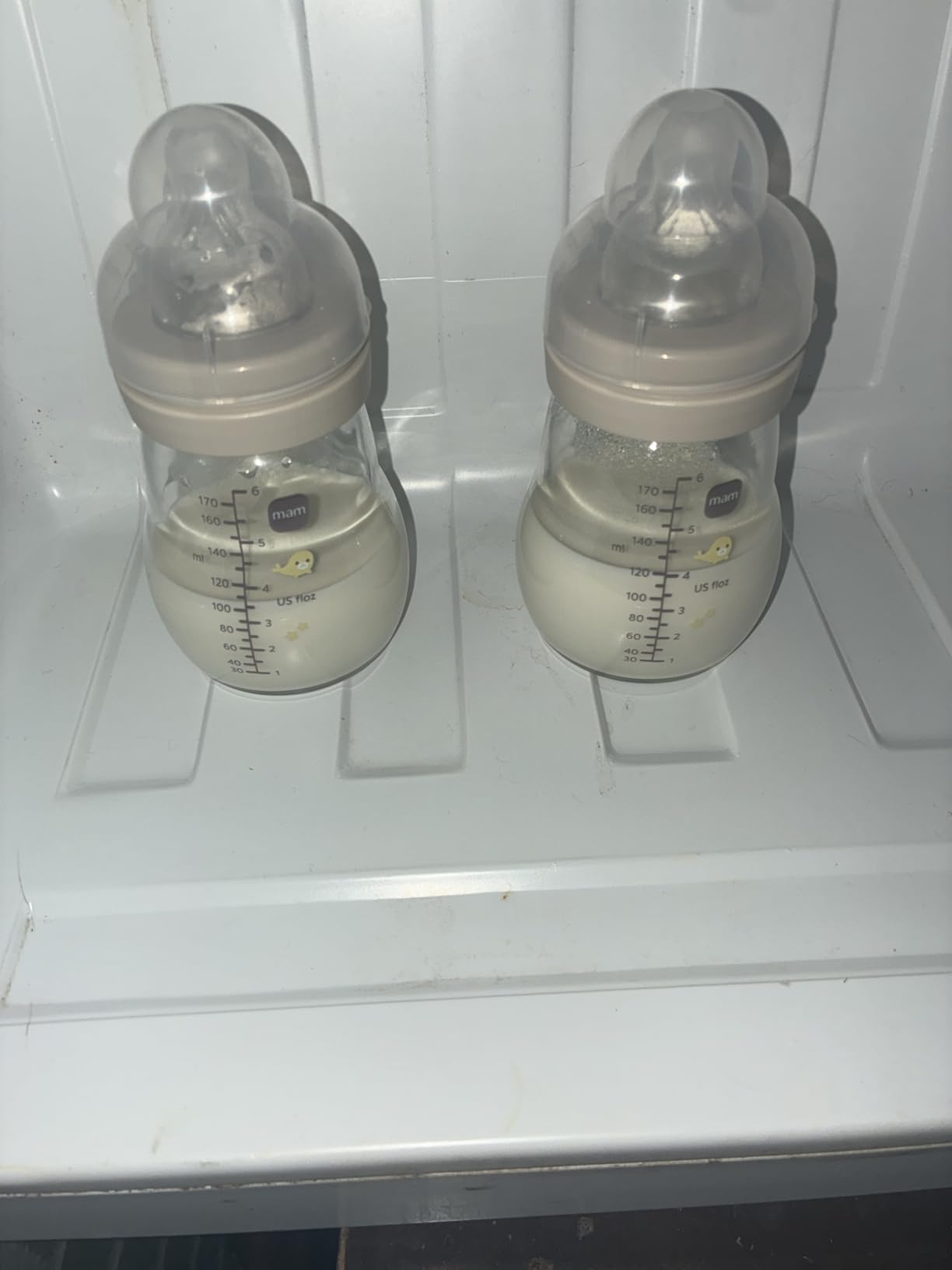
Manufactured in Europe, these bottles exceed both American and European safety standards. The borosilicate glass is scratch and stain resistant, and the lightweight design feels noticeably less heavy than other glass bottles in hand.
The glass is on the thinner side compared to Dr. Brown’s or Philips Avent. We recommend extra caution on hard floors and tile surfaces. One forum parent noted the glass is lighter because it is thinner, which is a trade-off between weight and ruggedness.
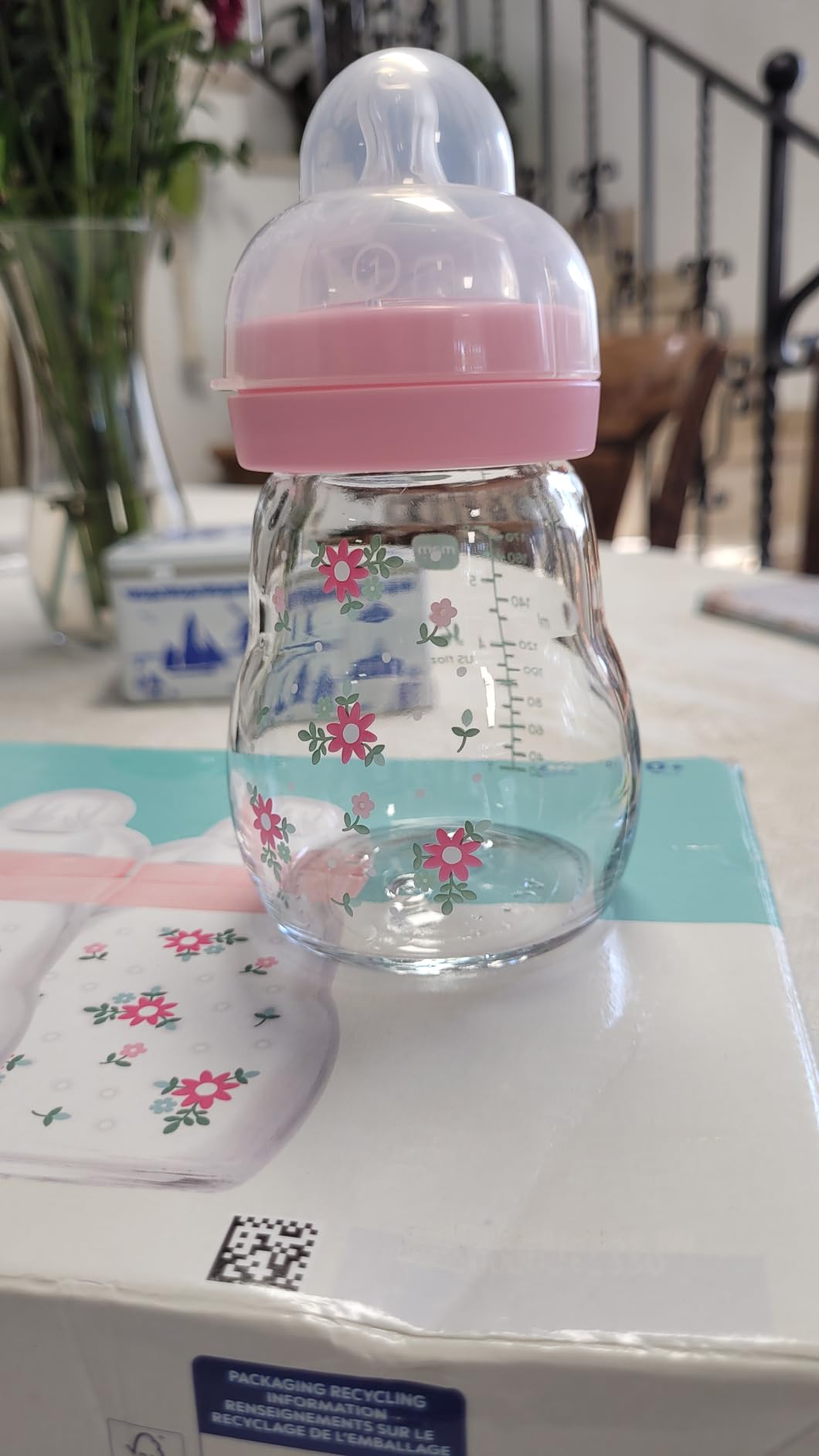
If your baby has rejected every bottle you have tried, MAM should be next on your list. The 94% acceptance rate is not marketing fluff; it reflects real parent experiences with the SkinSoft nipple design.
The combo-feeding friendly design also makes it ideal for families alternating between breast and bottle.
The thinner glass construction means these bottles require more careful handling. If you want something that can survive being hurled across a room, the Lifefactory with its sleeve or the Chicco Duo hybrid would be safer choices.
MAM also caps glass bottle sizes at 9 ounces, so there is no larger option for bigger appetites.
9 oz medical-grade glass
3-pack
Slow flow breast-like nipple
Self-sterilizes in 3 minutes
The Tommee Tippee Natural Start glass bottle stands out for its self-sterilizing feature. You can sterilize each bottle in just 3 minutes in the microwave with a small amount of water. For parents without a dedicated sterilizer, this is incredibly convenient.
Rated 4.5 stars across 724 reviews, these bottles use medical-grade glass that is heat and thermal shock resistant. The natural latch nipple shape is designed to reduce nipple confusion, and we found the breast-like design effective for combo-feeding families.
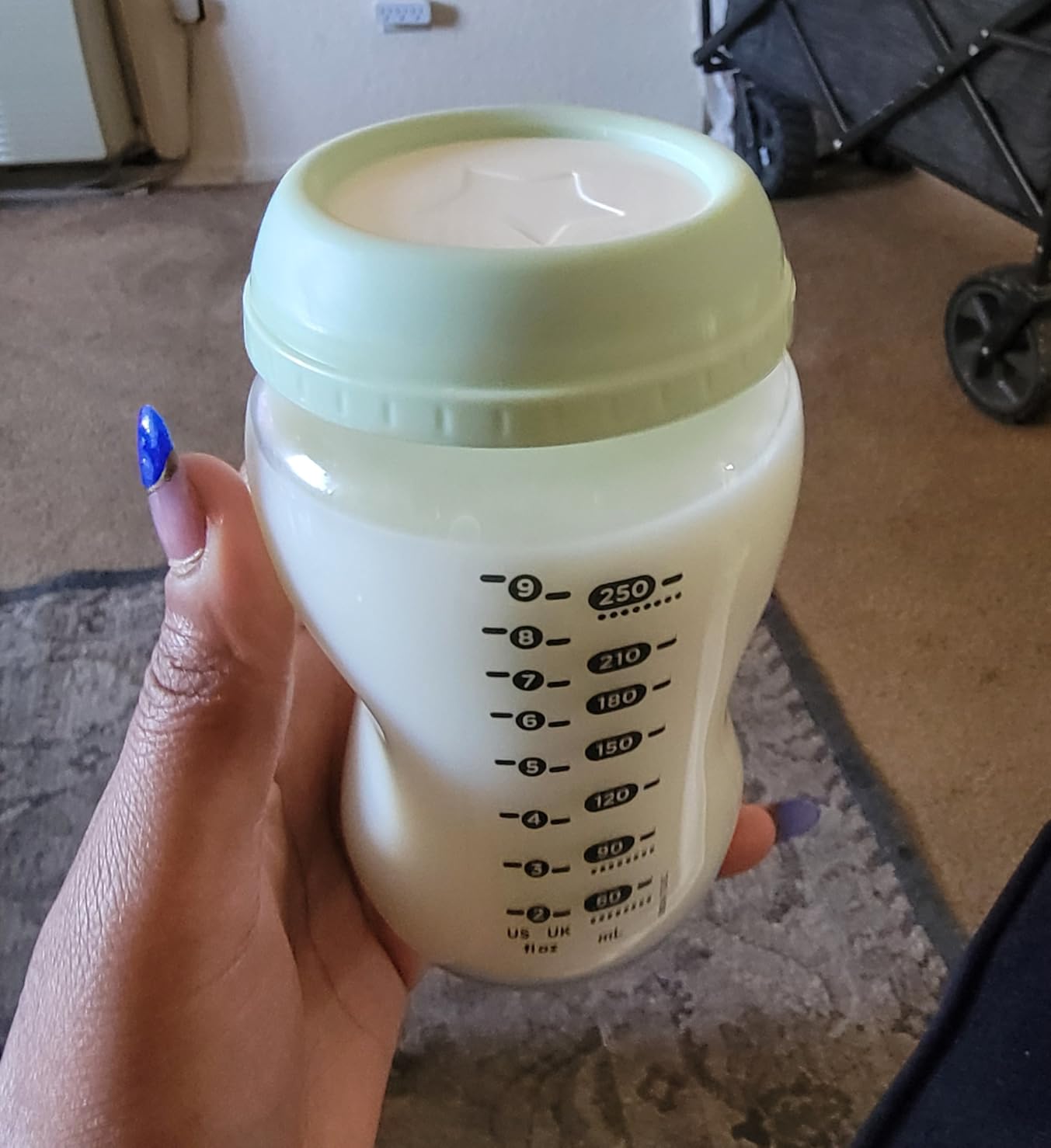
The multi-purpose design adds real value. Each pack includes travel food jar lids and cup rings, so the bottles convert into snack containers and drinking cups for the weaning stage. That extends the useful life of each bottle well beyond the infant months.
The most common complaint involves the screw rings. Some parents report that newer ring designs are harder to thread and may leak if not positioned exactly right. We recommend tightening firmly and checking the seal before each use.
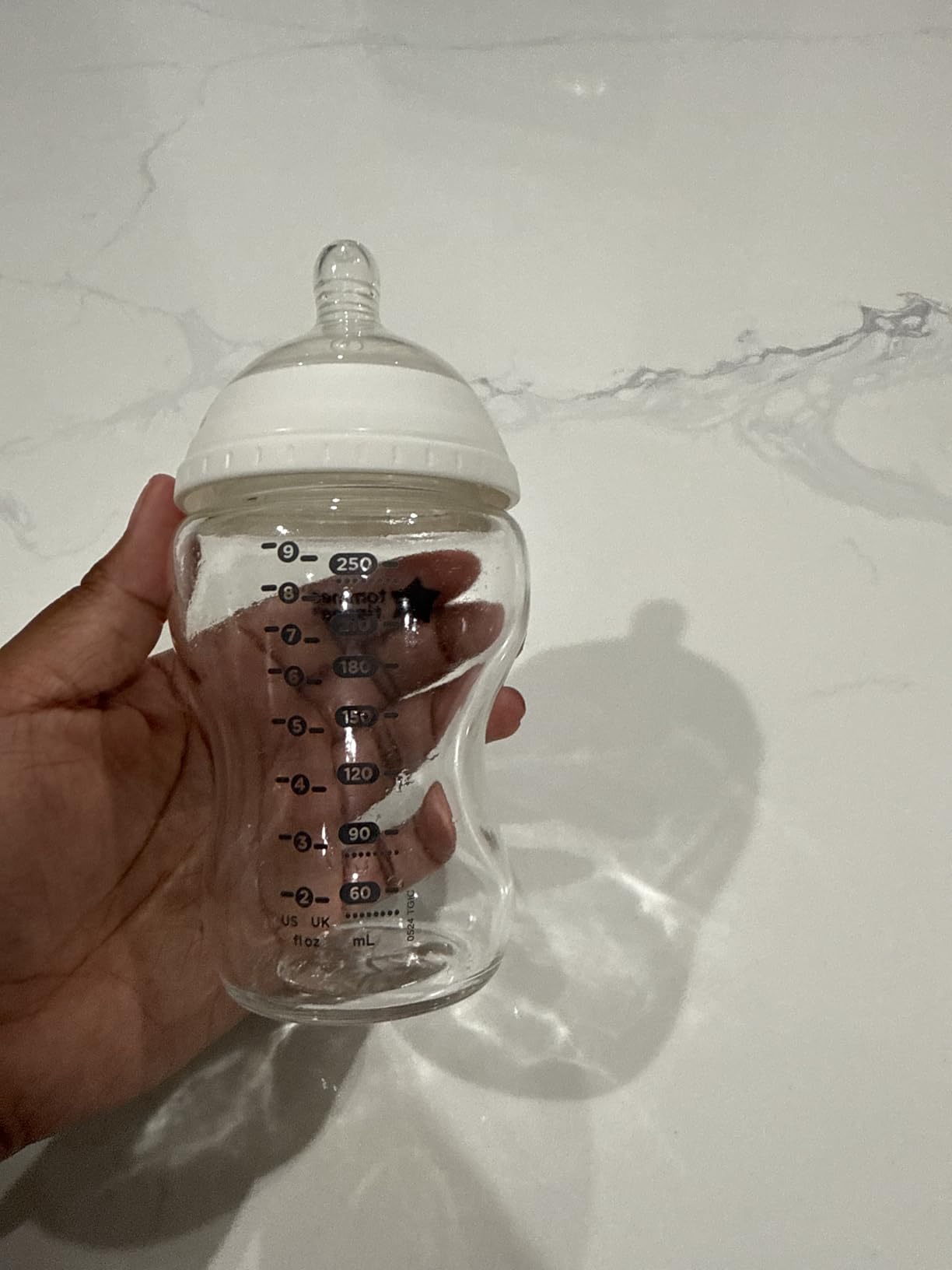
The self-sterilizing feature makes these bottles ideal for travel, hotel stays, and visiting grandparents. No need to pack a separate sterilizer when you have a microwave available.
The included jar lids and cup rings also mean fewer separate containers to buy as your baby grows.
If you have been frustrated by leaky bottles before, the Tommee Tippee ring design may add stress. The caps require precise positioning, and some quality control issues with cracking have been reported.
The Chicco Duo or Philips Avent offer more consistent leak-proof performance.
9 oz hybrid glass-inside plastic-outside
2-pack
Stage 1 slow flow Intui-Latch
Made in USA
The Chicco Duo is the most innovative bottle on our list. It uses patented Invinci-Glass technology to bond a micro-thin layer of real glass to the inside of a plastic bottle shell. Your baby’s milk touches pure glass, but the outside has the durability and light weight of plastic.
With 3,933 reviews and a 4.5-star rating, this is one of the most popular bottles we tested. Parents rave about getting glass-bottle safety without glass-bottle weight or breakage risk. We dropped a full bottle from counter height onto hardwood with zero damage.
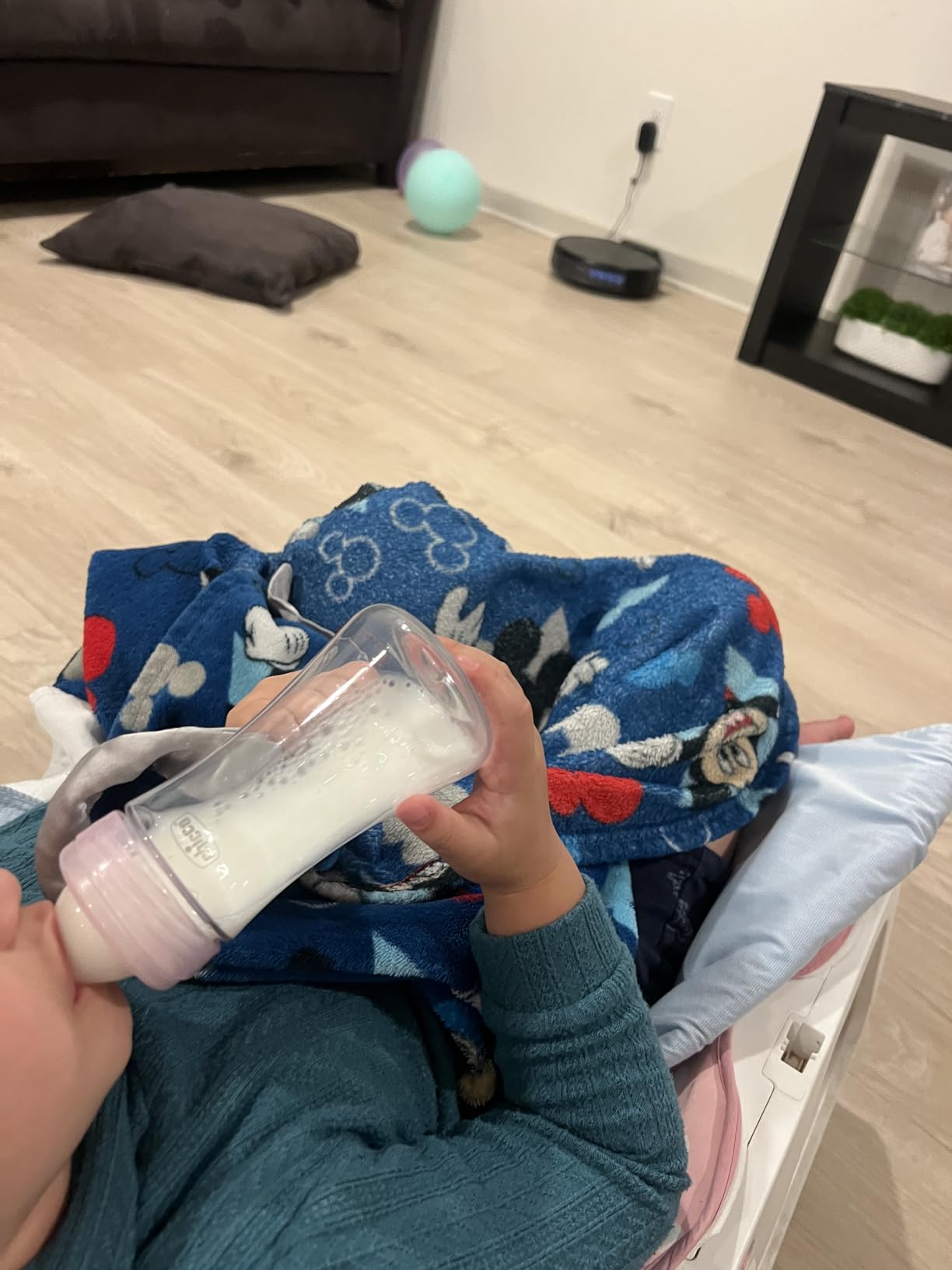
The Intui-Latch nipple has a breast-like shape with an integrated anti-colic valve. The wide mouth design makes cleaning easy, and the bottle is dishwasher, bottle warmer, and sterilizer safe. Made in the USA, it meets strict manufacturing standards.
One limitation is the included nipple. Some babies do not latch well on the Chicco nipple, but the bottle is compatible with Evenflo Balance+ wide nipples as an alternative. You may also need to buy faster flow nipples separately since only slow flow comes included.
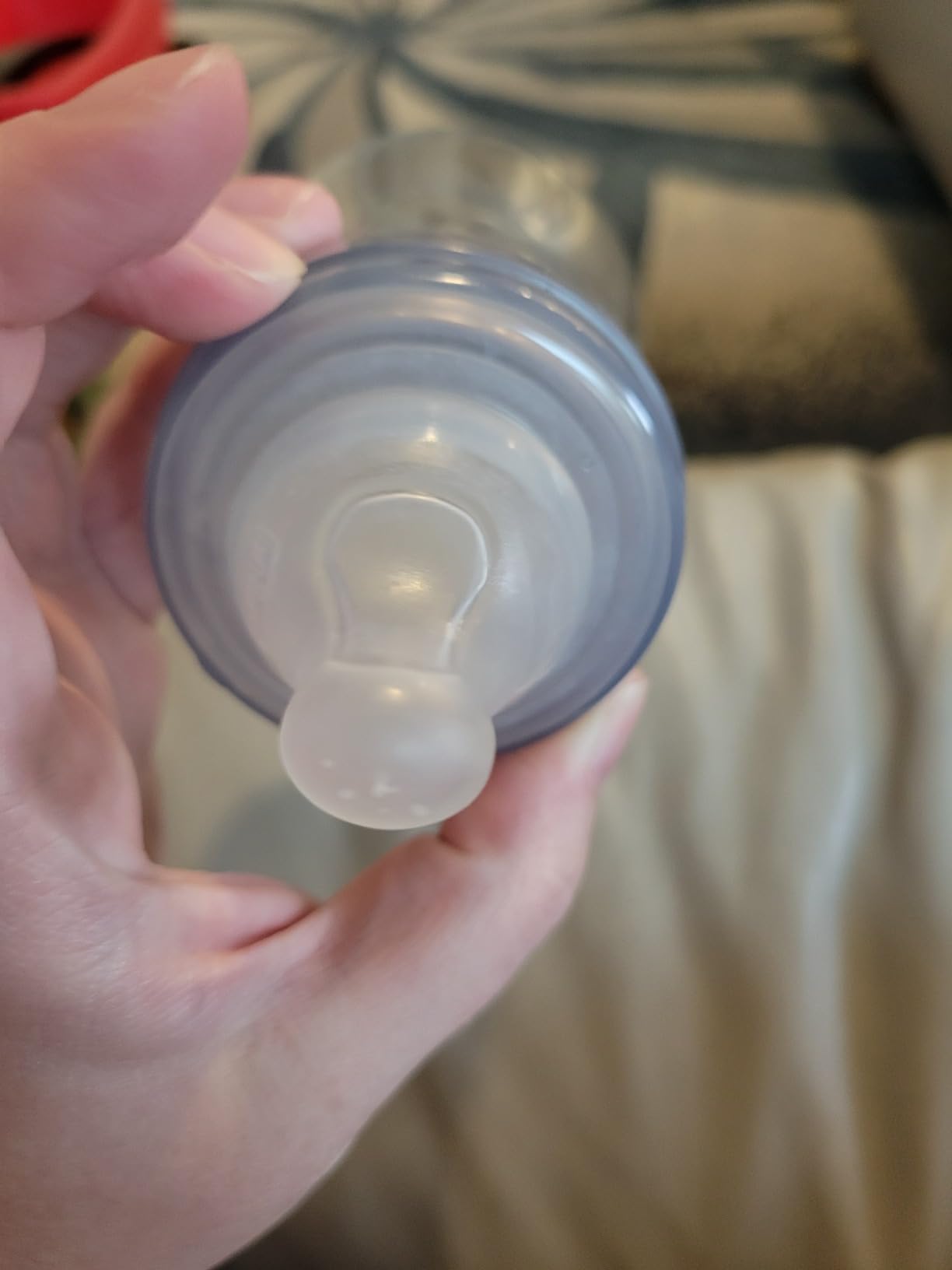
If you love the idea of glass bottles but dread the weight and breakage risk, the Chicco Duo is your solution. It gives you the chemical-free benefit of glass with the practical everyday feel of plastic.
The shatter resistance makes it ideal for daycare, travel, and older babies who are rough on their gear.
Purists who want zero plastic anywhere on the bottle should skip the Chicco Duo. The outer shell is plastic, even though the milk-contacting interior is glass. For a fully glass bottle, choose the Dr. Brown’s, Philips Avent, or Pigeon instead.
The included nipple may also require experimentation, so budget for potential alternative nipple purchases.
Choosing the right glass baby bottle comes down to your baby’s feeding style, your daily routine, and your priorities around safety and convenience. Here is what we learned from testing all 9 bottles.
Wide-neck bottles like the Pigeon and Philips Avent are easier to clean and fill, making them great for parents who want minimal fuss. The wider opening accommodates pouring breast milk directly from storage bags without spills.
Narrow-neck bottles like the Dr. Brown’s Options+ and Evenflo Classic tend to be compatible with more breast pump brands and replacement parts. They also fit more easily into standard bottle warmers. Choose narrow if you prioritize parts compatibility and wide if you prioritize cleaning speed.
Not all anti-colic systems work the same way. Dr. Brown’s uses a multi-piece internal vent system that is clinically proven to reduce colic, but it requires more cleaning. Philips Avent and Lansinoh integrate the anti-colic valve directly into the nipple for simpler maintenance.
If your baby has severe colic or reflux, the Dr. Brown’s vent system is the most effective option we tested. For mild gas concerns, an integrated valve in the nipple provides sufficient relief with far less cleaning effort. For more on choosing safe feeding gear, explore these non-toxic baby product swaps.
All bottles on our list are BPA-free, but parents in forums repeatedly ask about lead content in glass. Borosilicate glass, used by Dr. Brown’s, Philips Avent, Pigeon, Lansinoh, MAM, and Lifefactory, is inherently lead-free because of its chemical composition.
Pharmaceutical-grade glass (used by Tommee Tippee) meets even stricter purity standards. The Chicco Duo uses a micro-thin glass interior that is also lead-free. If lead safety is your top concern, any borosilicate or medical-grade glass bottle on this list is a safe choice.
This is a question no competitor addresses, but it came up constantly in our forum research. Silicone sleeves, like the one on the Lifefactory bottle, dramatically reduce breakage from drops. The trade-off is slower milk warming since the sleeve insulates the glass.
Bare glass bottles heat faster and let you see milk levels clearly, but they require more careful handling. If your baby is old enough to hold (and drop) their own bottle, a sleeve is worth the warming delay. For newborn feedings where an adult always holds the bottle, bare glass works fine.
Choosing the wrong flow rate causes frustration for both you and your baby. Here is a general guide based on our testing across brands.
Newborns (0 to 3 months) need slow flow or Stage 1 nipples. Most bottles on our list include these by default. Babies 3 to 6 months typically move to medium flow, and babies 6 months and older often need fast flow nipples.
Premature babies may need extra-slow or premature flow nipples. Pigeon offers an SS size for this purpose. Always watch your baby for signs of choking (flow too fast) or frustration (flow too slow) and adjust accordingly.
Glass bottles are actually easier to clean than plastic because glass does not retain odors, stains, or milk residue. Most bottles on our list are dishwasher safe on the top rack, though vent inserts (like Dr. Brown’s) often require hand-washing.
To extend the life of your glass bottles, avoid sudden extreme temperature changes. Let refrigerated bottles sit at room temperature for a minute before warming. Inspect glass regularly for chips or cracks, and replace any bottle that shows damage. For parents building an eco-friendly nursery, these bottles pair well with eco-friendly baby products that share the same sustainability values.
Glass baby bottles are considered safer than plastic because they never leach chemicals, microplastics, or BPA into milk, even when heated repeatedly. They also resist stains and odors, heat breast milk evenly without hot spots, and are fully recyclable. The main trade-offs are weight and breakage risk, which silicone sleeves and hybrid designs help address.
Many pediatricians recommend glass bottles for parents concerned about chemical exposure from plastic. Glass is inert, meaning it does not react with or absorb anything from breast milk or formula. While pediatricians do not universally prefer one material over another, glass is widely regarded as the safest feeding option from a chemical standpoint.
Borosilicate glass used in quality baby bottles is surprisingly durable. Many parents report bottles surviving drops onto hardwood and tile without cracking. Silicone sleeves, like the one on Lifefactory bottles, add significant drop protection. Hybrid designs like the Chicco Duo combine a glass interior with a plastic shell that resists shattering entirely.
The Pigeon Wide Neck glass bottle is our top pick for breastfed babies, with a super-soft flexible nipple designed around natural feeding movements. The MAM Pure Glass bottle is also excellent with a 94% nipple acceptance rate. Both bottles are specifically designed to minimize nipple confusion during breast-to-bottle transitions.
Yes, all bottles on our list use either borosilicate glass or medical-grade glass, both of which are inherently lead-free by their chemical composition. Borosilicate glass is made from silica and boron trioxide without any lead content. If lead safety is a concern, look for bottles labeled as borosilicate or pharmaceutical-grade glass.
After testing 9 glass baby bottles across weeks of daily use, the best glass baby bottles for 2026 come down to your specific needs. For colic relief, Dr. Brown’s Options+ is unmatched with its clinically proven vent system. For breastfed babies, Pigeon’s wide neck design offers the smoothest transition. For durability without weight, the Chicco Duo hybrid is a breakthrough.
If you want the best overall value, the Evenflo 6-pack gives you reliable glass bottles at the lowest per-bottle cost, with the added bonus of Dr. Brown’s parts compatibility. Whatever you choose, every bottle on this list delivers chemical-free, non-toxic feeding that gives you peace of mind with every feeding.
