
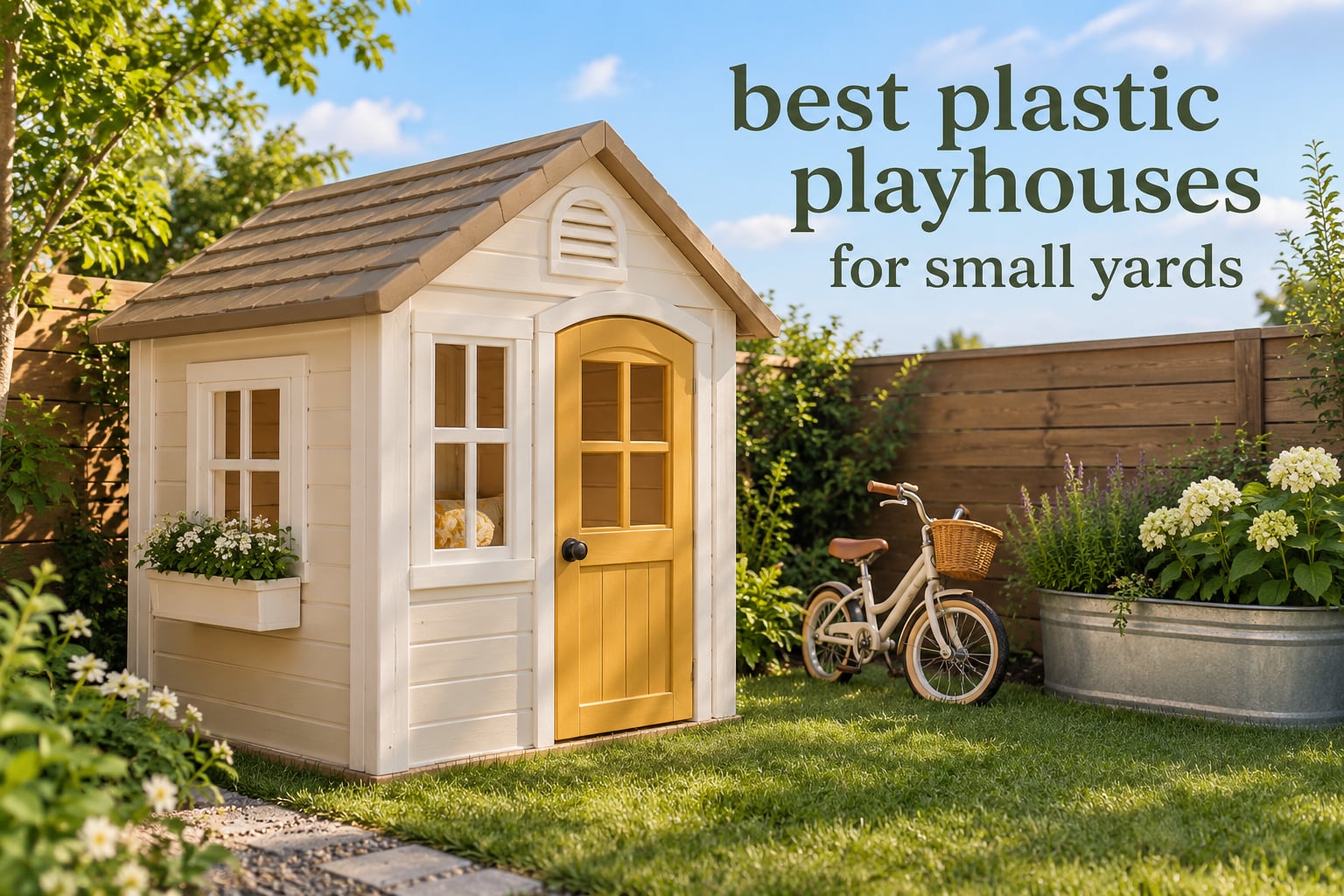
A small-yard plastic playhouse is an indoor-outdoor kids’ play structure, usually 4 to 6 feet wide, made of double-walled molded plastic, that fits on a patio, deck, or compact lawn without swallowing the whole space. The best plastic playhouses for small yards are judged on one thing above all else: assembled footprint, followed by how well they stay put in wind and how they handle summer heat.
That constraint is what separates a good compact house from a disappointing one. A playhouse with a working doorbell is fun for a week. A playhouse that leaves an adult room to walk around the door, does not block the mower, and does not tip into the neighbour’s fence in a gust is the one that survives a full summer of daily use. Most roundups ignore that math entirely and just stack feature lists.
So we did the footprint work instead. We compared all eight molded-plastic playhouses in this lineup on assembled dimensions, panel wall type, weight, age range, anchoring options, and how the interior feels in July. Every house here is a true plastic structure, not a wooden kit, a pop-up tent, or a full-size shed. The eight below are the only molded-plastic houses that cleared our review floor, and the order reflects how well each one handles a tight outdoor space.
If your outdoor space is tight in other ways too, our guide to garden design ideas for small yards covers how to lay out what little lawn you have around a play structure.
The three picks below are the ones we would put in a genuinely compact yard. The Little Tikes Cape Cottage takes the top slot for its 35 inch width and 32 pound weight. The Step2 All Around Playtime Patio leads on rating and features. The Step2 Neat and Tidy Cottage packs the most play value into a deep floor plan.


Width is the number that decides most small-yard purchases, so it is the first figure in every row below. Heights matter less unless you are under a low patio cover, and depth only matters if the house sits against a fence where nobody walks behind it.
| Product | Features | Price |
|---|---|---|
 |
|
Check Latest Price |
 |
|
Check Latest Price |
|
|
Check Latest Price |
 |
|
Check Latest Price |
 |
|
Check Latest Price |
 |
|
Check Latest Price |
 |
|
Check Latest Price |
 |
|
Check Latest Price |
Assembled 42.8D x 35W x 49H inches
Weight 32 lbs
Ages 2 plus years
2 windows
Of the eight houses here, the Cape Cottage is the narrowest full-height cottage at 35 inches, and that single number is why it leads this list. Depth is 42.8 inches and height is 49 inches, so it is a real cottage rather than a toddler dome. At 32 pounds one adult can move it when the lawn needs cutting.
Reviewers consistently praise the styling, which reads as a modern cottage rather than a bright primary-colour blob, and the working door, windows, and shutters. Parents also note the mail slot and flag holder, which are small touches that give a 3 or 4 year old a reason to keep going back inside. The rating sits at 4.5 stars across nearly 14,700 reviews, which is by far the largest verified review base in this group.

The honest criticism is the material. Owners describe the plastic as thinner and floppier than earlier Little Tikes models, and a child leaning on a window panel will flex it in a way a cedar wall would not. That is a fair trade for a house two people can pick up, but it is a trade. We also saw reports of a damaged panel or a missing flag pole piece on arrival, and of doors that do not latch flush.
Two things make it manageable. The 49 inch height gives a 4 year old proper standing headroom, which is the real test of whether a house fits a child rather than a toddler. And the snap-together build means the whole thing can come apart and go back into a closet over winter, which matters if the corner you chose gets wet in November.
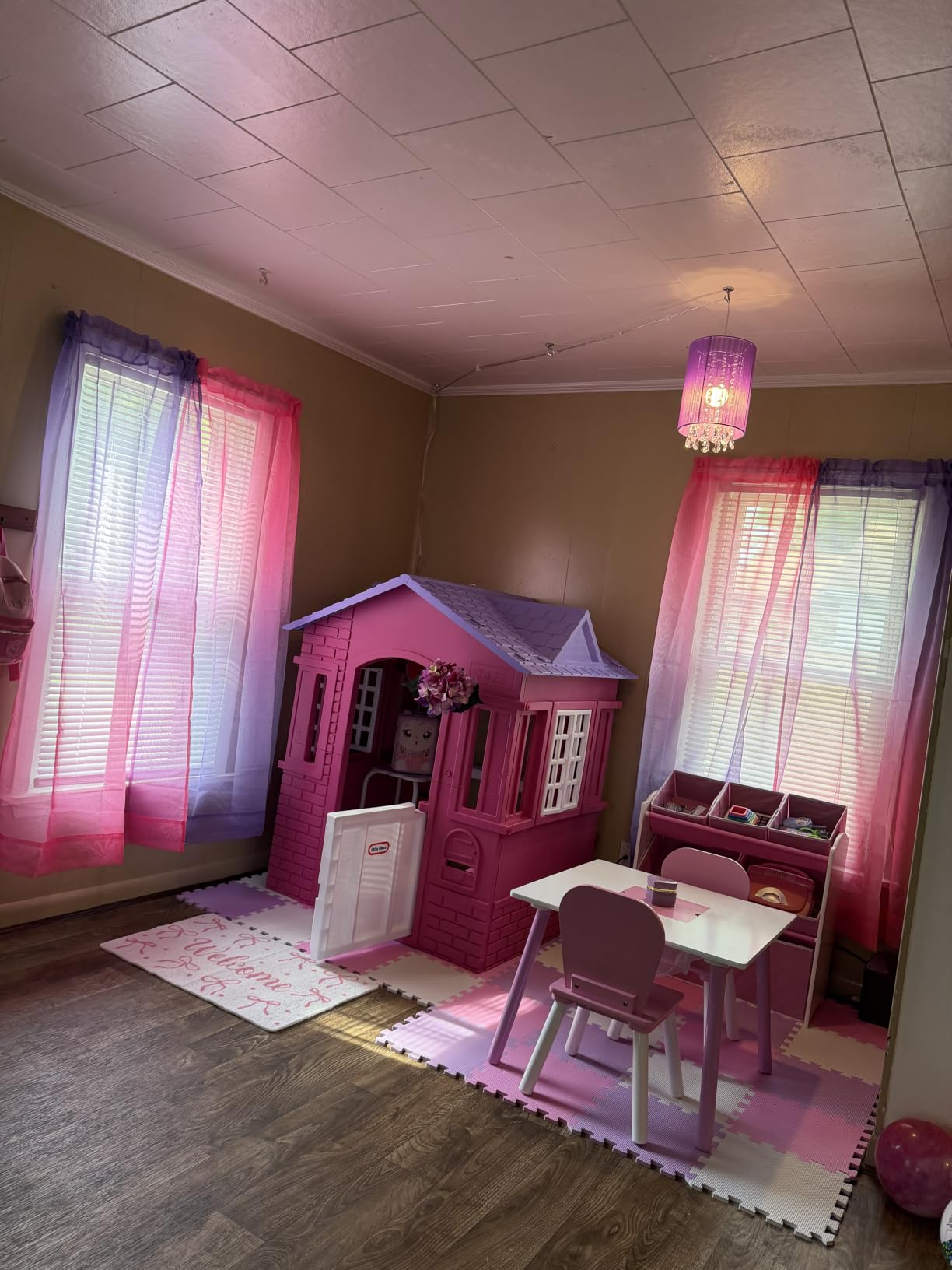
It suits the yard with a 4 foot by 4 foot usable corner and a 4 or 5 year old who has outgrown a ball-drop maze but has not started asking for a clubhouse with a kitchen. The working shutters, the door that swings, and the mail slot are exactly the pretend-play load that preschool children cycle through.
It also suits anyone who wants indoor-outdoor use. This house is the same unit in a playroom, a mudroom, or a covered patio, and moving it is a one-person job. For a balcony or a rented patio with no lawn at all, that portability is the deciding factor.
Skip it if your site is open and windy. A 32 pound house presents a much larger sail than a 50 pound one, and reviewers report needing to anchor it in gusty conditions. If the spot is unsheltered and you are not willing to stake or ballast it, the wind risk is real.
Skip it also if you want a real play kitchen. There is no water table, no countertop, and no grill, so the interior is a role-play room rather than a pretend kitchen. Choose a Step2 unit if cooking play is the draw.
Assembled 47.5D x 54W x 60H inches
Weight 20.2 kg
Ages 2 to 8 years
4 windows
This is the highest rated house in the lineup at 4.7 stars across 3,700 reviews, and the removable canopy is why. In a small yard the canopy matters more than in a large one, because there is usually no tree overhead to shade the roof. Pull it on and the house works in full sun; take it off indoors and the same unit is a play kitchen for wet days.
Assembled it measures 47.5 inches deep by 54 inches wide by 60 inches high, so the 54 inch width is the widest dimension and the one to measure against your space. Note that the 54 inch span in the technical details includes the canopy frame, which is why the marketing dimensions are often quoted narrower. At 20.2 kg it is a two-person move, and unlike the Cape Cottage it will not be casually shoved under a bench.
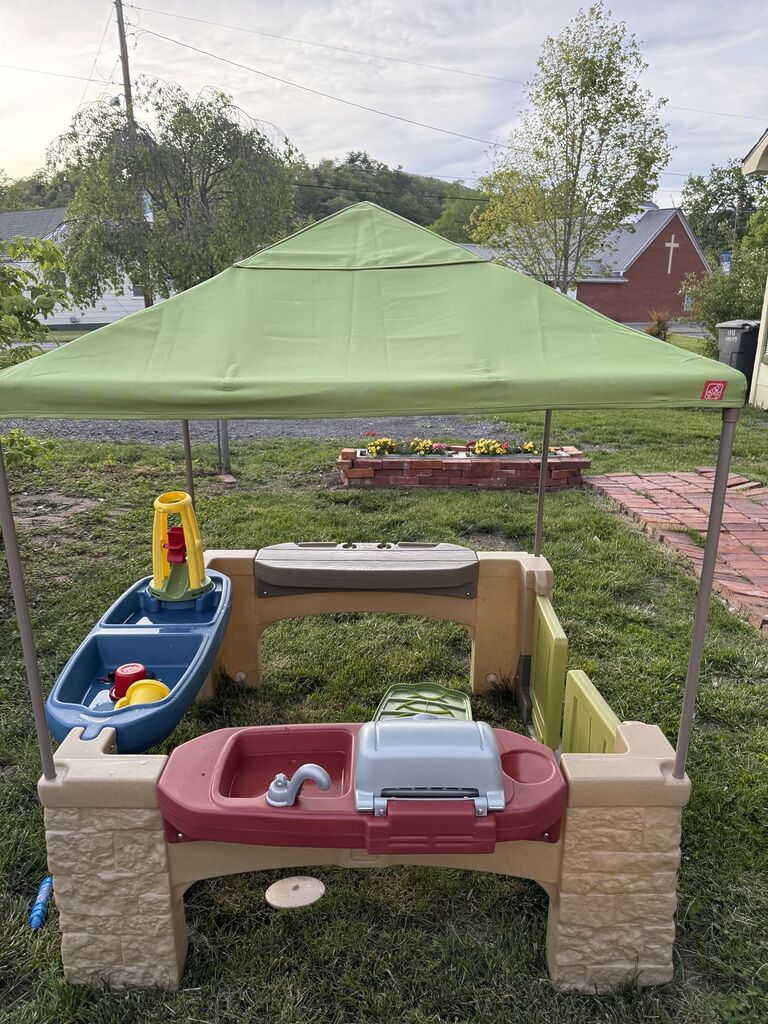
The play surface is the strongest part. A pretend grill, a large countertop, a water table, and a sand table create a sustained activity pattern rather than a corner to sit in, and reviewers specifically call out that several toddlers can share the space at once, including a child using a wheelchair. Double-walled plastic is claimed to resist chipping, fading, and cracking, and the wipe-clean surface takes household cleaners without fuss.
The friction is assembly. Owners describe unclear instructions and screws that are difficult to start in hard plastic, and a few report missing parts in the box. The included 16 piece accessory set also runs out fast, so most families add their own toy food. A minority of reviewers pull the panels apart if extra screws are not fitted, so treat the hardware bag as optional rather than decorative.
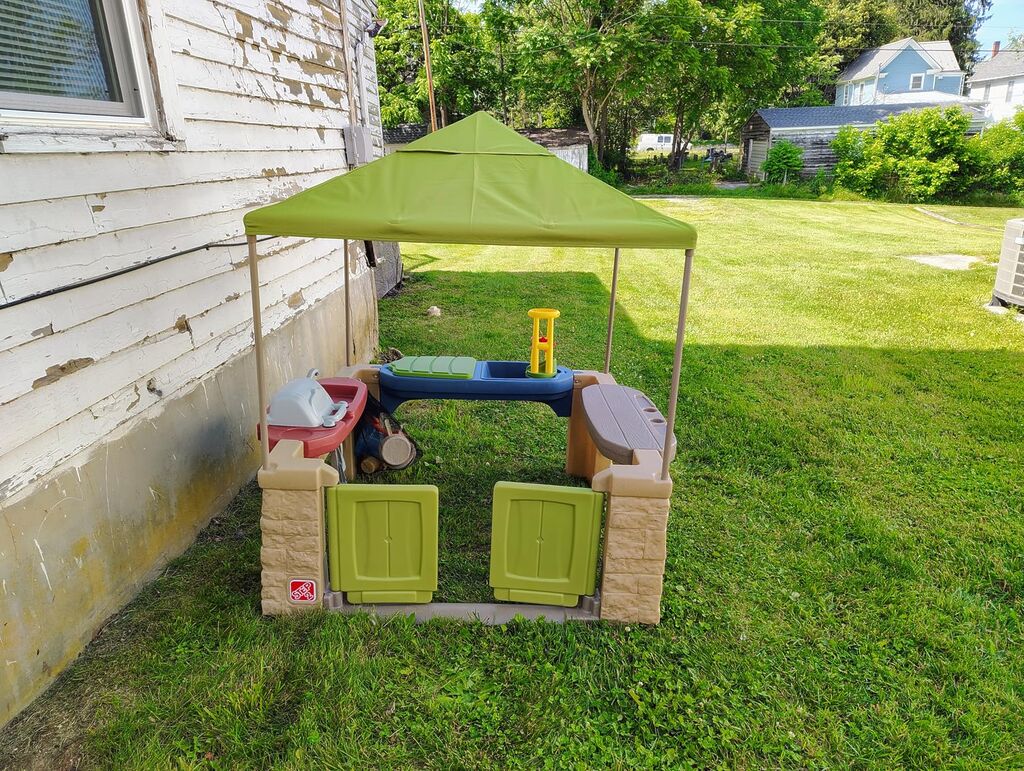
It fits a yard where the play surface is a bare patio slab or a deck rather than grass, because the water and sand tables are supposed to spill and a hard surface drains better than a lawn. It also fits families with more than one child, where a single-seat toddler house would cause queueing within a week.
For a full-sun yard it is the safest pick in the lineup, since the canopy is the only real shade device offered by any of these eight. A 3 year old and a 6 year old can share it, which is why the stated age range runs to 8 years.
It falls short on width, plain and simple. At 54 inches it is one of the wider houses here, so a 4 foot side yard is a stretch. The 60 inch height also means it will not go under a low covered porch or a standard-height patio pergola without checking clearance first.
It also falls short on weight for the price of effort. Nobody moves this alone, and if your future plans involve clearing a corner in an afternoon, pick something lighter.
Assembled 33.75D x 53.25W x 49.75H inches
Weight 28.78 kg
Ages 18 months to 10 years
The Neat and Tidy Cottage inverts the usual tradeoff. It is wide at 53.25 inches but unusually deep at 33.75 inches, so the floor area is closer to a small studio than a garden shed. Reviewers pick up on exactly this, calling out the deep floor plan as the reason several children fit inside at once. Four molded features sit on the perimeter without crowding the middle.
It is the only house here with a stated age range from 18 months to 10 years, and the working doorbell, play phone, shutters, drive-thru window, and barbecue give a 2 year old something to press and a 9 year old something to script. Double-walled plastic is specified as resistant to chipping, fading, cracking, and peeling, which is the durability claim you actually want in a yard.
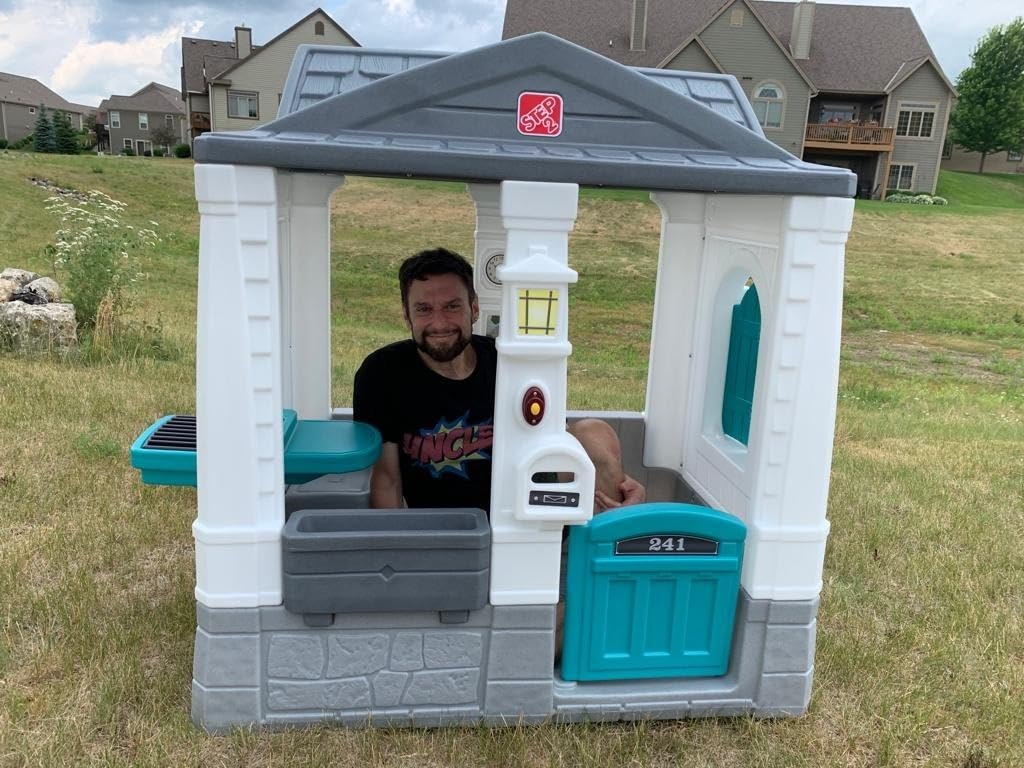
The weight is the real cost. At 28.78 kg, this is close to 64 pounds, which makes relocating it a two-person job and makes it a poor choice for anyone who mows on a schedule. The 53.25 inch span also demands more side clearance than several rivals here, so it rewards a yard that is long rather than wide.
Owners of this model report that colours hold up after sun and water exposure, and that adding a few screws to the snap-together joints makes the structure feel solid. That is a recurring pattern across Step2 reviews: the design is sound, the fasteners are the weak point, and five minutes with a driver changes the feel of the house completely.
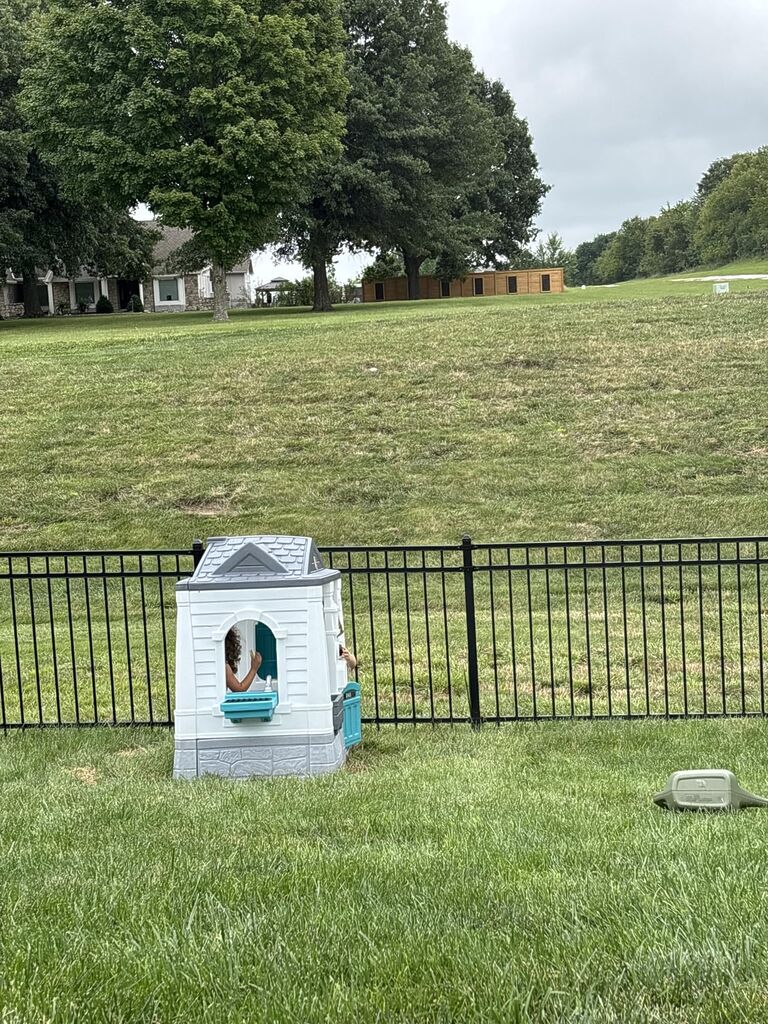
It works for a family that has already moved past the toddler phase and wants a house that will still be interesting at 7 or 8. The age range on this unit is wider than anything else we looked at, which makes it the lowest-maintenance choice per year of use if the child is already four or five.
It also works where the play needs to be organised. A kitchen with a molded-in sink, tabletop, fireplace, and skylight gives a small interior an obvious purpose, and a drive-thru window handles delivery play that a plain cottage door cannot.
Pass if the yard is a corner rather than a run. That 53.25 inch width needs a clear stretch of fence or lawn, and in a tight corner it will block access to whatever is behind it. Also pass if you plan to move the house seasonally.
Pass if assembly is a one-person job. The 2 year limited warranty is a little shorter than the 3 year cover on the Step2 All Around, which is a fair signal that the joints are doing more work than the panels.
Assembled 11.6D x 41.7W x 33.1H inches
Weight 15 kg
Ages 24 months and up
6 windows
This cottage is the odd one in the lineup on depth. The listed 11.6 inch depth against a 41.7 inch width and 33.1 inch height means it sits like a shallow garden store, with a 159 by 103 by 104 cm footprint. If your play area is a narrow strip beside a fence, that shallow profile is genuinely useful, and six windows make it the brightest interior of the lineup.
Assembly is the strongest argument. The click-clack system needs no screws and no drill, so it goes together in a fraction of the time a Step2 unit takes, and there is nothing to over-tighten. Reviewers like the folding windows, the letterbox, the barbecue, and the cat flap, which are exactly the kind of small mechanisms that hold a child’s attention.
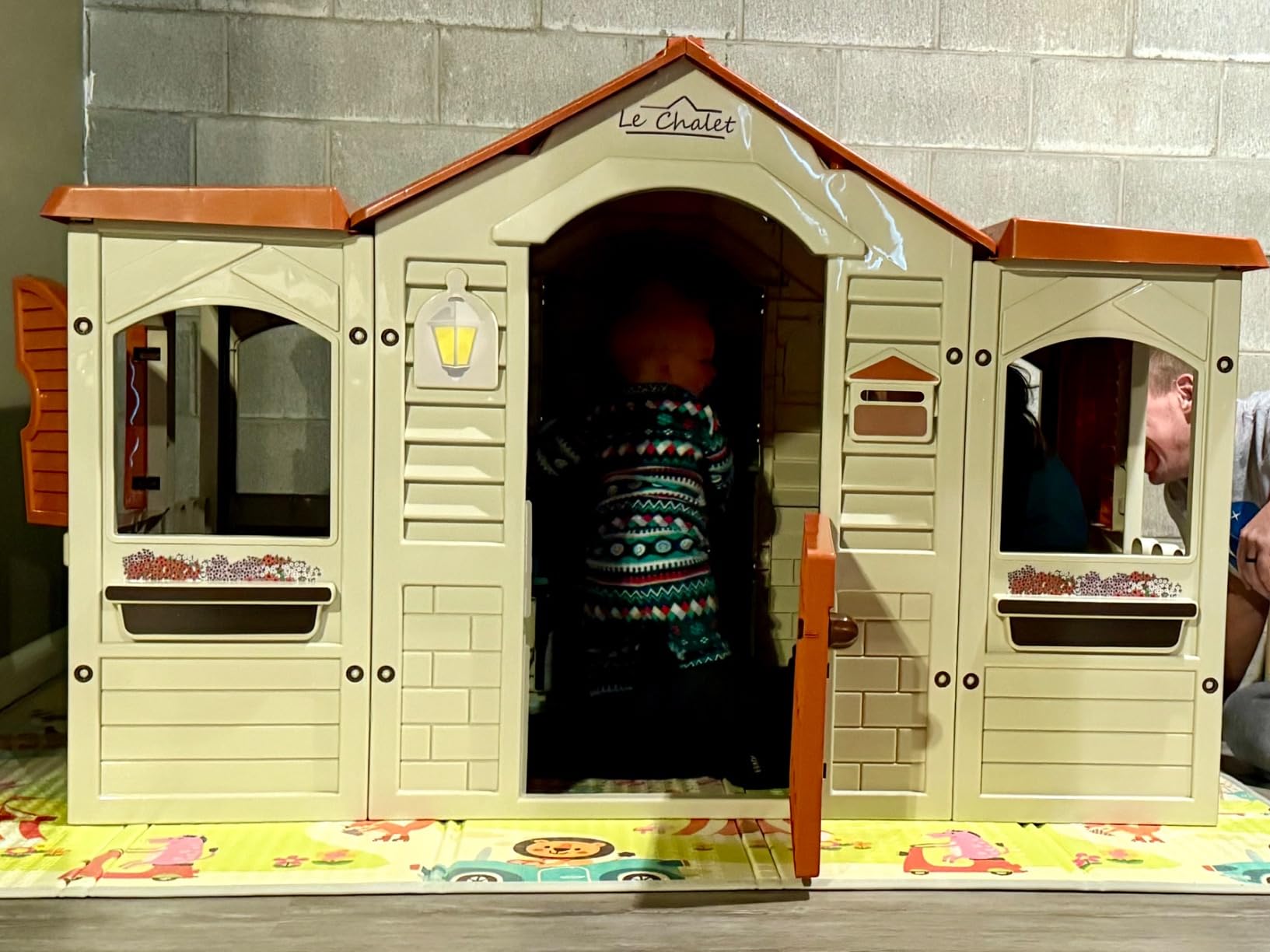
What holds it back is the 4.0 star average across 690 reviews, the lowest in this group, with one-star reviews reaching into double digits. The pattern in the reviews is not a failure of function but a mismatch of expectation: buyers describe a spacious interior and a genuinely tool-free build, then feel the plastic and the overall value do not justify what they paid.
Be clear-eyed about that when you compare it with a Step2 house. You are trading a sturdier double-walled build and a longer warranty for quicker assembly and better visibility. That is a reasonable trade in a sheltered corner, and a poor one if the house sits in full sun and full view.
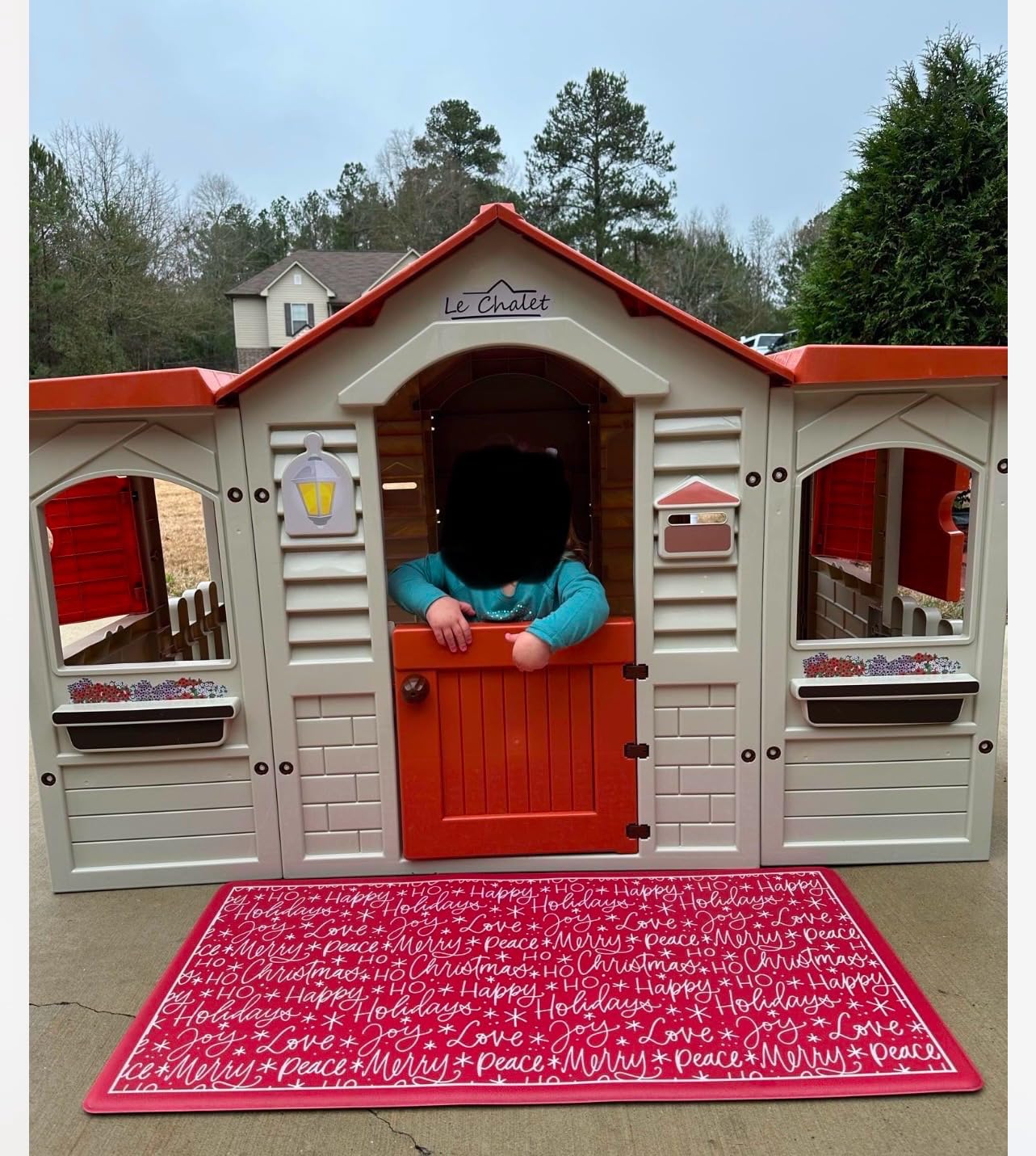
It wins wherever a parent needs to see inside. Six windows beat every other house here for keeping sight of a small child from a kitchen window or a patio table, and folding shutters let you regulate that visibility when the light is hard. For a house placed against a fence where you cannot stand beside the door, that matters more than any play feature.
It also wins on build day. A tool-free click-clack system means you can assemble it in a single session without a power driver, which is the difference between a Saturday project and a Sunday one. Families with a single adult available will feel that difference most.
It falls down on rating consistency and on span. At 41.7 inches wide it is wider than the two most compact units here, and the review spread suggests the quality control is less even than the well-reviewed alternatives.
It also falls down as a value pick. This sits at the upper end of the price range for the group, and the reviews do not suggest it earns that position the way a higher-rated double-walled unit does.
Assembled 32.75D x 31.5W x 41.75H inches
Weight 12.7 kg
Ages 1 plus years
Kitchenette and ball maze
At 31.5 inches wide by 32.75 inches deep, this is the only house here that fits into a genuine corner without stealing usable lawn. That is the entire point of it. If your outdoor space is the strip between a fence and a patio door, a 3 foot by 3 foot footprint is the difference between a playhouse and a project you abandon.
It is also the only house here rated from 12 months, which suits a household with a first-year child and a second child on the way. The ball-drop maze, kitchenette, and 15 piece accessory set give a one year old something to do, and the built-in storage means the accessories do not end up scattered under the mower.
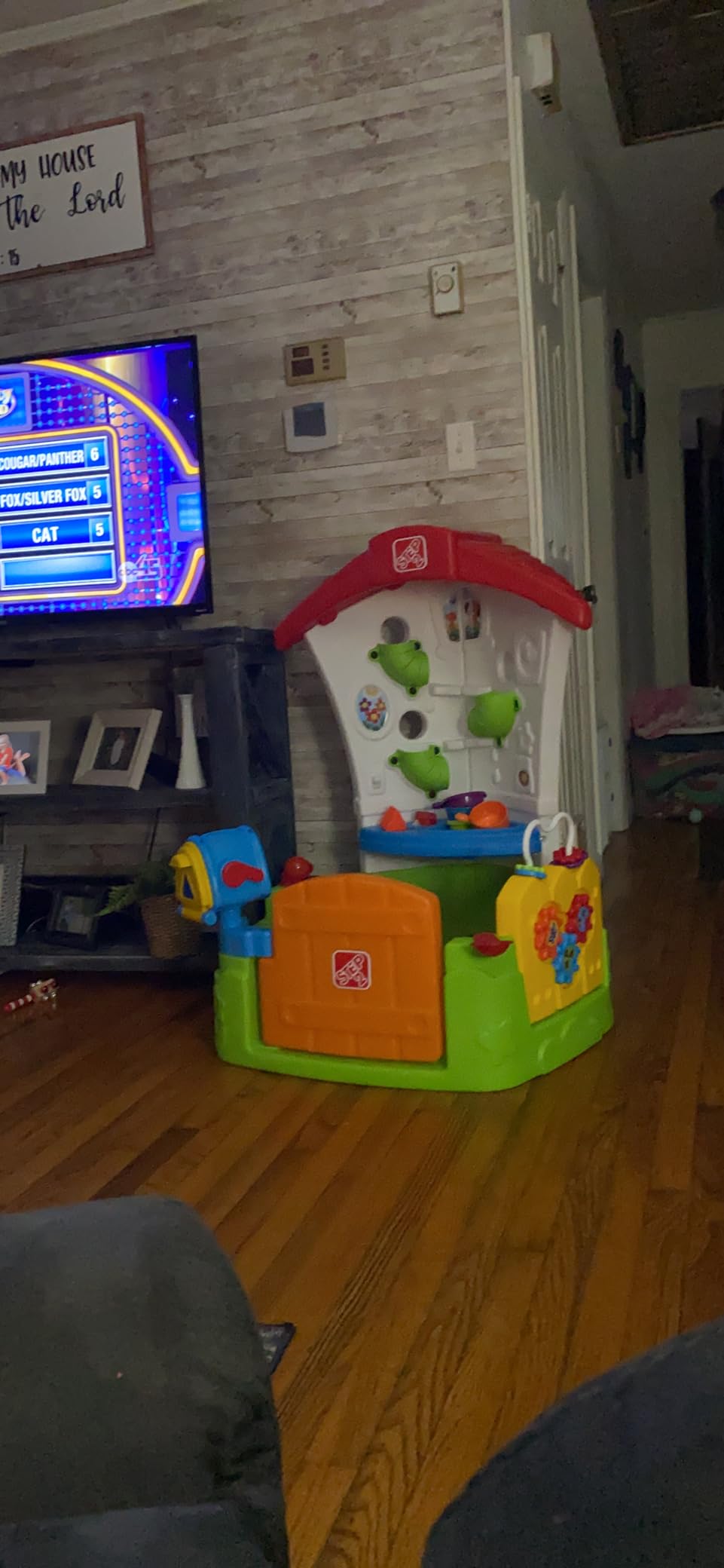
Assembly is the dominant complaint. The screw holes are not pre-drilled, so the hard plastic demands real force and there are a lot of screws, and owners describe the process as the hardest part of the entire purchase. Budget an evening and a screwdriver with a decent grip, and treat the printed instructions as a rough guide rather than a precise map.
Two other details deserve attention before you commit. The bench-like ledge on one side is an easy climb-up spot for a toddler, so supervise rather than assume. And the angled design is built to sit in a corner, which means freestanding in the middle of an open lawn it looks and works oddly.
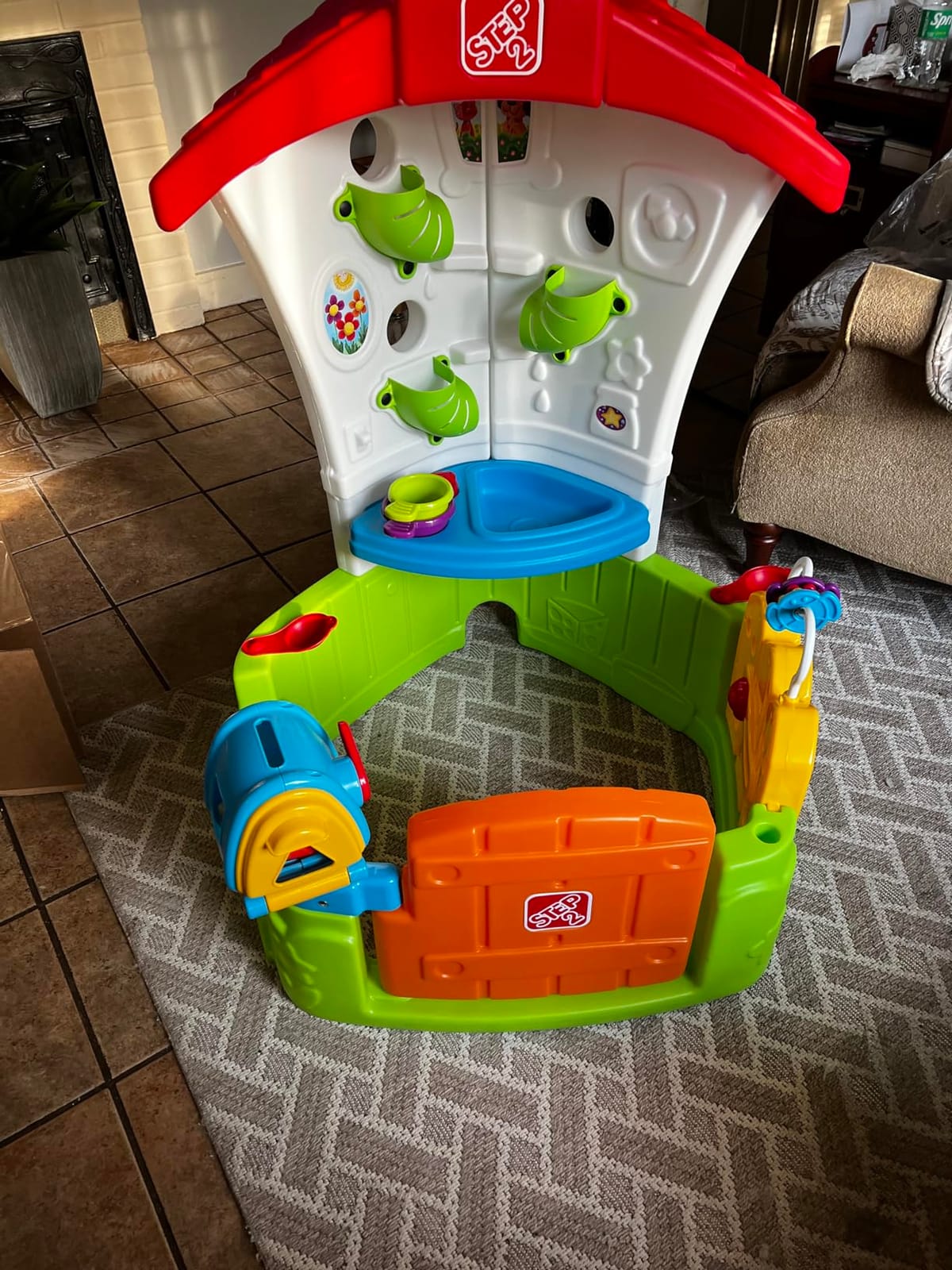
It earns its spot because it answers a question the other seven do not: what do you buy when there is no room? A 31.5 inch width is close to the narrowest useful clear span in a side yard, and five of the eight houses in this lineup are 41 inches wide or more.
It also has a second life. Reviewers frequently describe converting it into a mud kitchen once the toddler years end, which stretches the value well past the age label. At 12.7 kg it is light enough to drag across grass to wherever the digging is happening.
It is wrong for a 4 or 5 year old, who will find the interior cramped and the features thin. The stated age range stops at 4, and the scale of the structure communicates that clearly.
It is also wrong if you want assembly to be painless. With un-drilled holes and a high screw count, this is the least forgiving build in the lineup, and the tool-free Chicos units are the opposite choice.
House size 48.0 x 40.6 x 40.9 inches
Weight 14.57 kg
Ages 24 months and up
5 windows
The Grand Cottage XL is listed at 48.0 by 40.6 by 40.9 inches, which makes it one of the roomier interiors in the group even though its technical depth figure of 11 inches describes the wall profile rather than the floor. The practical result is a house two children can share without negotiating, and five windows keep it bright without an electric light.
Like the other Chicos units it assembles with a click-clack system and no tools at all, and the plastic is rated for both indoor and outdoor use. Reviewers like the generous interior and the traditional beige body with red roof, which sits more quietly in a garden than a bright moulded colour scheme.
It works for a family that wants a shared play space more than a themed one. Where a narrow house forces one child in and one child waiting, a wider interior keeps both engaged, and the window count means a supervising adult can keep a view without crouching.
It also works for anyone who cannot commit an afternoon to assembly. A tool-free build on a hard surface is a genuine advantage in a small yard, where you may only have a driveway or a strip of decking to work on.
Look elsewhere if you care about long-term finish quality. A 4.2 star average with 8 percent one-star reviews points to a wide spread of experience, and that usually means inconsistent panels or finish rather than one recurring defect.
Also look elsewhere if your yard is under 5 feet across. A 41.7 inch width plus clearance on both sides is a lot to ask from a small space, and one of the more compact units would serve you better.
Measures 48 x 40.5 x 40.9 inches
Weight 11.7 kg
Ages 24 months to 5 years
2 windows
At 11.7 kg this is the lightest house in the lineup by a clear margin, and that is the headline. Nothing else here can be picked up and moved to a different corner by one adult without a second pair of hands, which in a small yard is a real advantage when the sun moves and the shade does not.
The fantasy styling is the reason most families choose it. Two to five is exactly the age band where a pink cottage with a shaped roof and decorative details reads as a castle, and the tool-free snap-together build needs no screws at all. Highly resistant plastic made in Spain is the material claim, and it works indoors and outdoors.
It fits a household with a preschooler and one older sibling who does not need to play inside, because the 2 to 5 year band is narrow by design. It also fits a patio, balcony, or a rented space where the house may need to come indoors at the end of summer.
It fits anyone who wants a themed look without stickers or paint. The decoration is molded into the structure, so there is nothing to peel off in the first wet month.
The two-window layout is the real limitation. It gives noticeably less natural light and less outside visibility than the Grand Cottage models, and in a shaded corner that darkness is worse. If you plan to supervise from a window, this is not the one.
It also stops at 5 years on the age label, and 7 percent one-star reviews suggest some buyers were disappointed with the finish. Compare it against the Step2 Toddler Corner House, which is smaller but rated to a 4.6.
Assembled 29.5D x 57.75W x 58.25H inches
Ages 18 months to 6 years
Double-wall plastic
This is the one to buy if the yard is bigger than the house in the photo suggests, or if you have a deck or driveway with a 5 foot run. Assembled it measures 29.5 inches deep by 57.75 inches wide by 58.25 inches high, so it is the widest and tallest unit in this lineup and needs a genuinely long space.
What you get for that span is a two-level structure with a climbing ramp and ladders with foot and hand holds, a pretend kitchen, drink holders, an art board with a marker tray, two working doors with mail slots, a lower crawling space, and a rooftop peek portal. Double-wall plastic is specified as weather and UV resistant with rounded child-friendly edges, and it fits through a standard door frame, which is how it moves between inside and out.
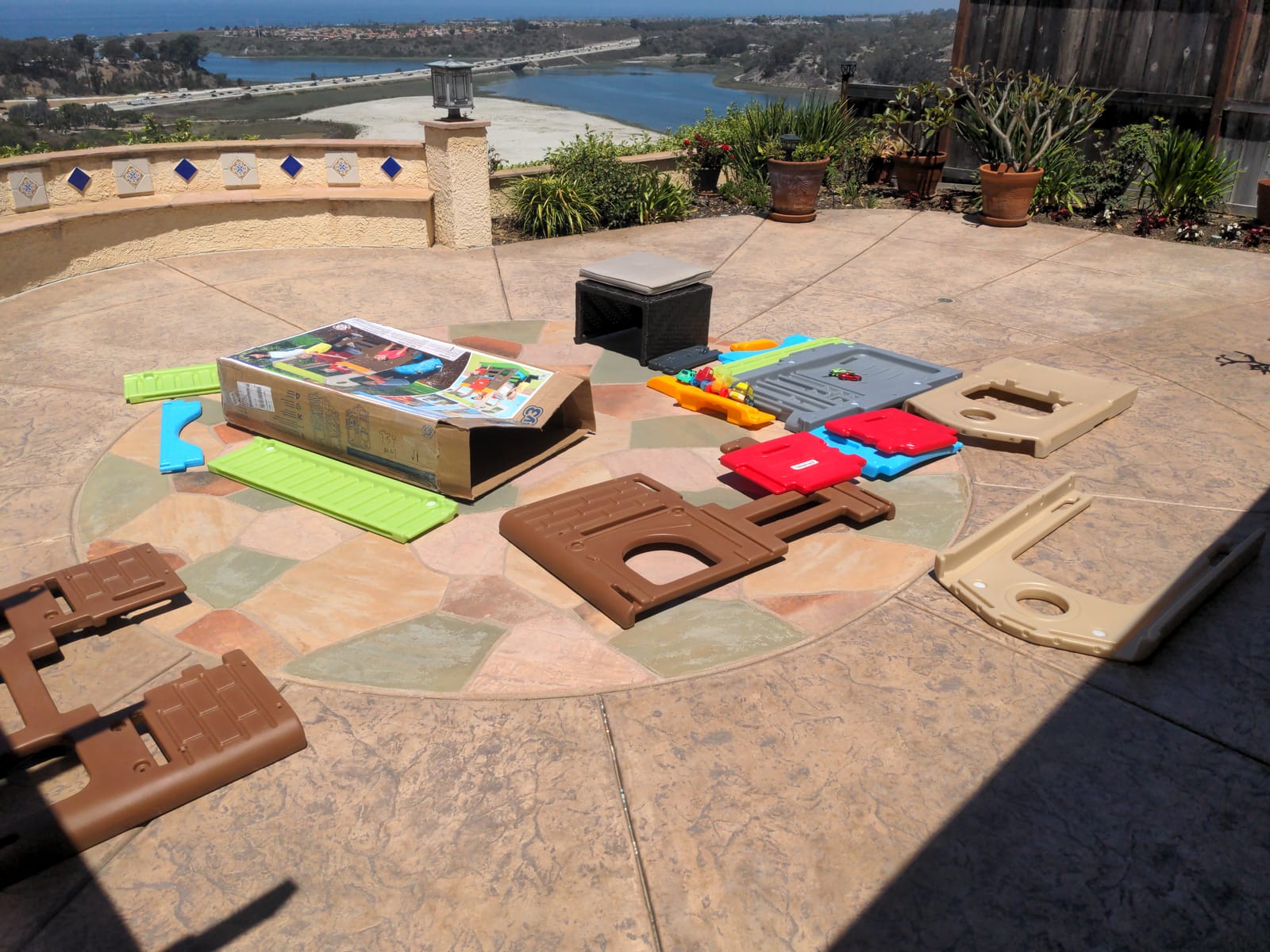
The 278-review base is the smallest here, so treat the ratings as promising rather than proven. Owners do value the climbing-plus-kitchen combination and the made-in-USA construction, and the modular design lets it join a wider Young Explorers set if your space ever allows it.
The recurring trade-off is exactly the one this article is about. A 57.75 inch width is close to 5 feet, and in a small yard that footprint plus walk-around clearance is where the usable lawn disappears. Reviewers recognise this, and it is why this house sits at eight rather than one.
It earns a place for gross motor play. Most of the lineup is standing and sitting pretend play, and this is the only house here with climbing, a crawling zone, and vertical levels. For a 4 year old who has already mastered a play kitchen, that is the next thing they want.
It also earns a place if you plan to expand later, since the modular design means the clubhouse can be one part of a larger system. Weather and UV resistant double-wall plastic is a durable specification, and the made-in-USA build is easy to find replacement information for.
It is last because the small-yard constraint is the organising principle of this roundup, and 57.75 inches wide with 58.25 inches of height breaks that constraint in most yards. It is also the tallest house here, so it will not sit under a low cover or a mature tree canopy.
If your space is a long side area or a generous patio rather than a compact lawn, reverse the order and put this one first.
Start with width, because that is the dimension that decides whether a house fits. Measure the clear span between the fence, the wall, and any fixed obstacle at the narrowest point, not the widest. Then subtract 18 inches on each side, which is the clearance an adult needs to walk around the door, kneel to clean, and reach the back corner.
Next, work out the usable square footage. A 6 foot by 8 foot patch of lawn is 48 square feet, and a 4 foot by 5 foot playhouse eats 20 of them, leaving room for a path. A 4 foot by 6 foot house in the same patch takes 24 square feet and starts to feel like furniture rather than play equipment.
Finally, check the surface. On grass, lay a paver or a rubber mat under the footprint so water does not pool at the base and so the base sits flat. On a patio or deck, check that the structure is not blocking the only path to a door or a bin, and that the deck boards can take the point load. Our notes on lawn mowers for small yards cover the clearance problems that come up when a playhouse narrows an already tight mowing lane.
Renters and apartment households can skip the lawn math entirely. A shallow unit such as the Chicos Pink Princess or the Grand Cottage XL sets up on a balcony or a ground-floor patio without any fixings at all, and both come apart again in an afternoon. That reversibility is the single biggest advantage plastic has over a cedar house in a space you do not own.
Wind is the most repeated physical complaint about plastic playhouses, and it is a physics problem rather than a quality problem. A hollow double-walled house is broad and light, which is exactly the shape that catches air. Plan for it before you build.
Heat is the second issue, and no competitor roundup addresses it. A fully enclosed plastic house in direct July sun traps air with no chimney effect, so the interior can feel markedly warmer than the shade outside. The mitigations are simple: use a house with a removable canopy, keep a door or window propped open during play, and orient the door away from the sun-facing wall so light does not pour straight onto the plastic bench.
On fading, be realistic. Double-walled plastic is specified by Step2 and Simplay3 as resistant to chipping, fading, and cracking, and owners of those units report colours holding after a full season of sun and water. The thinner single-wall builds in this category are where we see complaints about stickers and surface finish dulling. A cover stored dry over winter makes more difference than any product claim.
On materials, treat BPA-free and phthalate-free claims as a filter rather than a selling point. We looked at the specifications for all eight houses here and found no plastic that is meaningfully worse than the rest, so this is a check to run rather than a differentiator to rank on. Our guide to non-toxic household products sets out the same scepticism about unverifiable claims, and our piece on composting petroleum-based plastic covers what happens to a playhouse panel at end of life, which is worth knowing before you buy a bonded double-wall build you cannot separate.
For a small yard, plastic wins on three counts: weight, footprint, and reversibility. A plastic house can be moved by one adult for mowing or turned around for sun, and a shallow unit fits a corner that a cedar cabin with a pitched roof simply cannot occupy. Wood wins on two: it is structurally rigid against leaning, and it can be painted, sealed, and repaired indefinitely.
The honest catch is that plastic becomes brittle in prolonged sun, which is the point raised consistently on wood-focused forums, and the thin-walled units in this category are the ones where that shows first. Our advice is to treat the material debate as secondary to anchoring and shading. A staked, shaded plastic house in a small yard will outlast an unanchored cedar cabin in the same spot, and it costs a fraction of the effort to move.
Among the eight we compared, the Step2 Toddler Corner House has the smallest footprint at roughly 31.5 inches wide by 32.75 inches deep, and it weighs 12.7 kg so one adult can move it. The Little Tikes Cape Cottage is the narrowest full-height cottage at 35 inches wide and 49 inches high, and it stays under 35 pounds. If your usable span is under 4 feet, those two are the realistic options; anything at 50 inches or wider needs a longer strip of yard or a patio.
Use the stake holes or anchor points moulded into the base flange. Drive a ground stake at an angle away from the house through each point on grass, and use a weighted ballast on a deck or patio instead. Light houses present the biggest sail, so anchor before the first windy day rather than after. Recheck the fixings each season, because panel flex in summer heat loosens anything that felt tight in spring.
Most units in this category are rated from 24 months, and the Step2 Toddler Corner House starts at 12 months. Look for rounded edges, a crawl-through door, and sight lines from the door, and check whether any ledge or sill is climbable by a toddler. Age labels are honest about scale, so a 2 to 5 year house will feel cramped to a 4 year old even when it is still within the stated range.
Double-walled plastic is specified by Step2 and Simplay3 as resistant to chipping, fading, and cracking, and owners of those units report colours holding after a full season of sun and water. The thinner single-wall builds are where we see complaints about finish dulling and cracked roof joins. Anchoring it, keeping a canopy or cover on it, and storing it dry over winter all extend its life more than any product claim.
Yes, and for a small yard or a rental it is often the better choice. A shallow unit such as the Chicos Pink Princess or the Grand Cottage XL sets up on hard ground with no fixings and comes apart again in an afternoon. Put a mat or pavers under the base so it sits flat and drains, use weighted ballast rather than stakes on a deck, and check that the structure is not blocking the only route to a door or bin.
On grass, a paver pad, a rubber mat, or a shallow gravel bed keeps the base flat and stops water pooling where the walls meet the ground. On a patio or deck, a washable mat is enough. Avoid bare soil, which turns to mud and pulls at the base flange, and check that whatever you lay can still be lifted if you ever need to move the house for mowing.
A moulded plastic house needs only an evening of assembly, since the click-clack models need no tools and the screw-together units need one screwdriver. A cedar build typically takes far longer for a single adult and adds a stain or sealer on top. Building wins only if you want a custom size or a roof pitch a stock house cannot give you, which is exactly the reason most small-yard buyers choose a ready-made plastic unit instead.
The Little Tikes Cape Cottage wins this roundup for a specific reason: at 35 inches wide and 32 pounds, it is the narrowest full-height cottage here and still moves with one adult. That combination is what a small yard demands, and nothing else in this lineup pairs it.
For a full-sun patio, take the Step2 All Around Playtime Patio, where the removable canopy and water table earn the highest rating in the group at 4.7 stars. For a corner that barely fits anything, the Step2 Toddler Corner House does the job at a 31.5 inch width, and it is the only house here rated from 12 months.
Whatever you choose, measure the width first, leave 18 inches of clearance on each side, and anchor it before the first gust of the season. Those three steps decide more about how the house performs in 2026 than any feature list on the box.
