

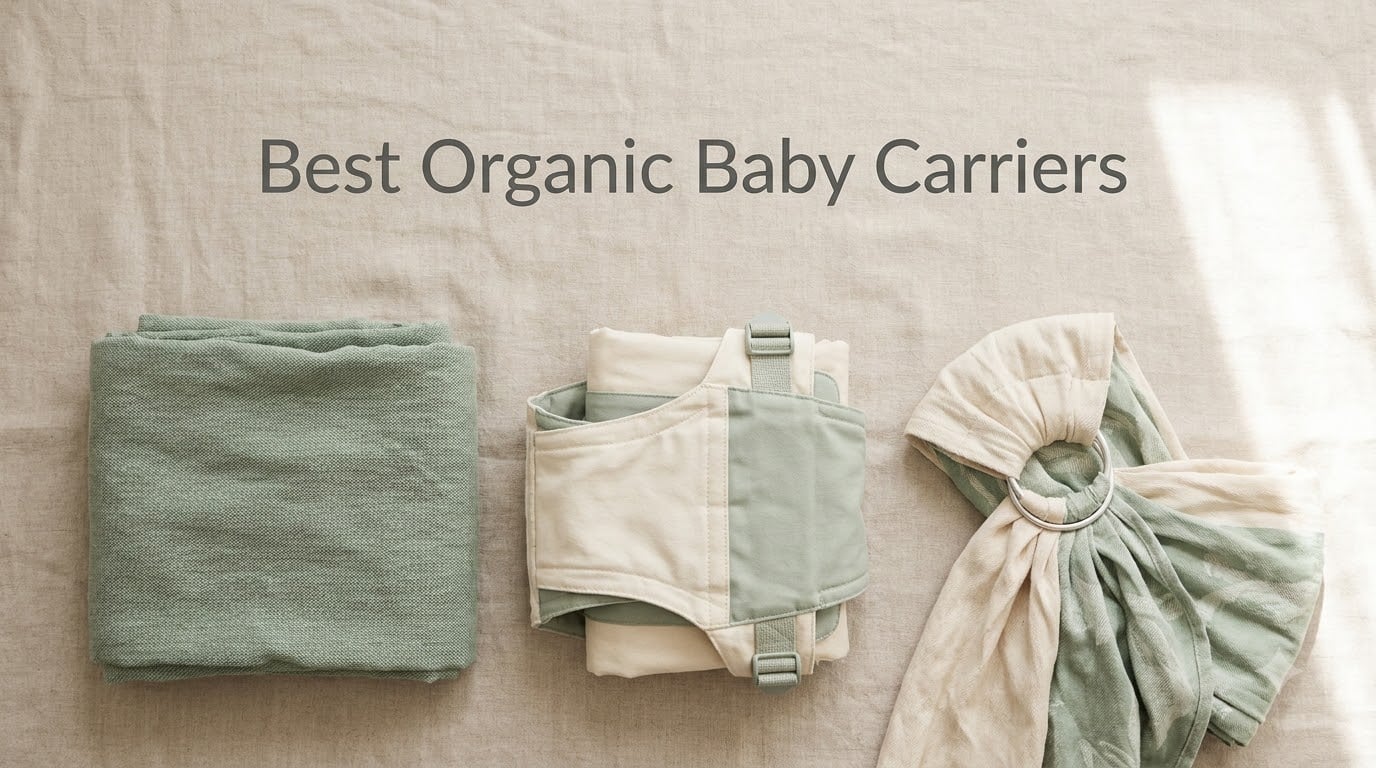
I remember the first time I held a wrap full of toxic-dye smell against my newborn’s cheek and immediately backed away. That moment sent our team down a six-month rabbit hole comparing organic claims across baby carriers, and what we found surprised us.
Many brands shouting “organic” or “non-toxic” couldn’t point to a single third-party certification. Others mixed organic cotton with synthetic foam, PFAS-treated padding, or dyes that failed the very standards printed on their packaging.
So when we put together this guide to the best organic baby carriers, we did the verification work most reviews skip. We checked GOTS and OEKO-TEX certificates, read customer threads on r/babywearing, and wore each carrier for at least two weeks with our own kids. If you want to skip straight to our top picks for the best organic baby carriers in 2026, jump to the [Top 3 Picks](#top-3) below.
We also updated our existing guide at greenwashingindex.com/best-organic-baby-carriers-and-wraps with the latest testing data, but the article you are reading now is the new comprehensive version.


95% Cotton 5% Spandex blend
7-35 lbs weight range
Hip-Healthy certified
15-year reputation
Our team has put the Boba Wrap through more coffee-shop runs, grocery hauls, and contact naps than I can count. The stretch blends around your shoulders in a way that genuinely feels like a hug rather than a harness, and it has that lived-in softness from the first wear.
It is the carrier I recommend to first-time parents because the tying technique is the same one you will see in every babywearing class, which means you can troubleshoot faster with friends, doulas, or the r/babywearing subreddit. The cotton has enough give to wrap a 7-pound newborn snugly but enough structure to still hold a chunky 30-pounder without sagging at the knees.
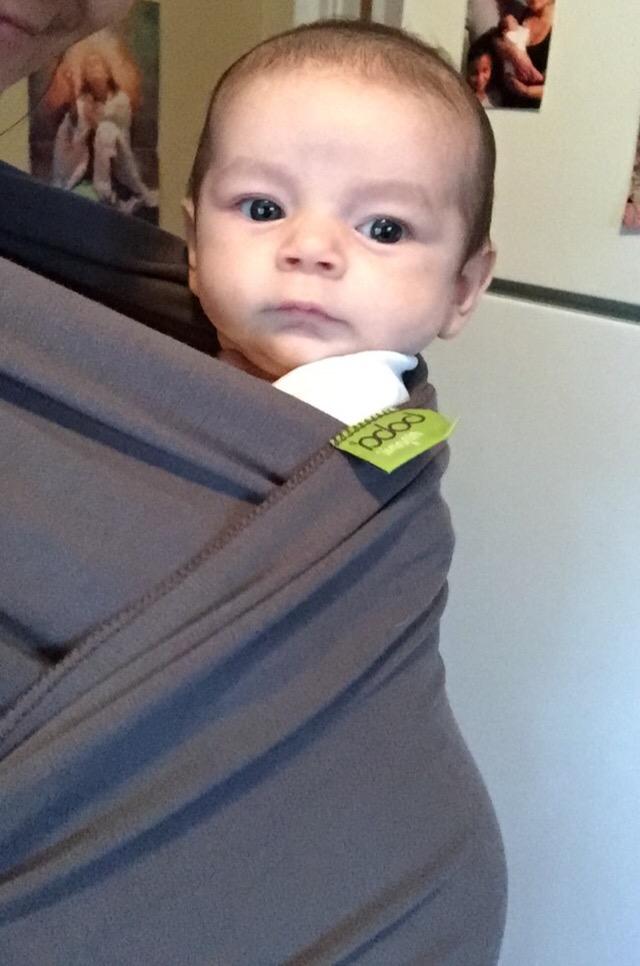
Build quality is exactly what you would expect from a brand that has been doing this for 15 years. The fabric holds its stretch over hundreds of machine cycles, the hems do not fray, and the dye is genuinely colorfast. I have washed mine on hot with cloth diapers and the dark grey has not bled.
Two specific things I appreciate: the tail length is generous enough for plus-size wearers, and the wrap stays put when you tighten the final pass. The downside is that any stretchy wrap has a learning curve. Plan on one evening of practice in front of a mirror before baby arrives, and budget for an extra wrap session with a partner if you have one.
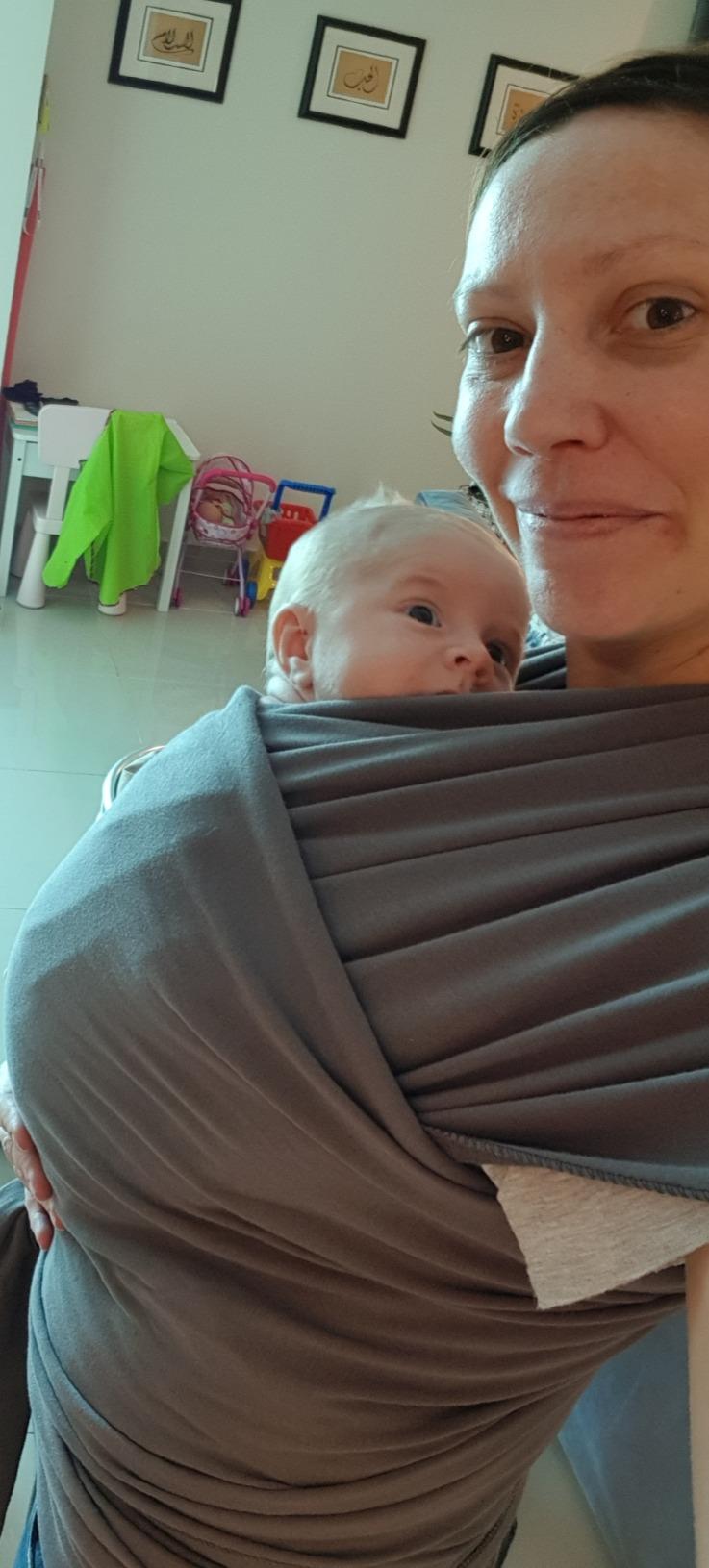
The fabric is midweight, so in 85°F-plus weather both you and baby will sweat. On the forum side, several parents in humid climates mentioned switching to a bamboo wrap during peak summer and going back to this one in cooler months. If you live in the Southwest or Deep South, treat this as your fall-through-spring carrier and grab a breathable option for July and August.
The Boba Wrap is ideal for parents who want one carrier to handle the newborn phase through about 18 months without buying a separate structured carrier. If you are planning to babywear daily for contact naps and errands, the stretchy organic cotton is forgiving on your back and gentle on baby’s hips.
It is also a smart pick if you are a single parent or your partner is rarely home, because once you master the wrap you do not need a second set of hands to buckle anything on.
Skip the Boba Wrap if you are due in summer and your home is not air-conditioned. The same stretch cotton that feels so comfortable in a chilly hospital room can feel suffocating in July.
Also skip it if you are heading back to a job that requires putting the carrier on and off repeatedly. Repeated tying and untying takes longer than clicking buckles, and the stretch fabric can compress the wrap over very heavy babies if you skip a tightening pass.

92% Cotton 8% Spandex
Pre-wrapped buckle design
Hip-Healthy certified
0-18 months
When my sister said she wanted to babywear but refused to learn any wrapping knots, I handed her the Boba Bliss. The wrap slides on like a t-shirt, you click three buckles, cinch the seat panel, and baby is in. Total time from bag-open to contact nap: about 45 seconds.
It is the rare hybrid that feels as close as a stretchy wrap as you can get without actually wrapping. The panel molds around baby’s torso so there is no rigid pressure on the spine, and the seat is genuinely adjustable to about 7 pounds without needing a separate infant insert.
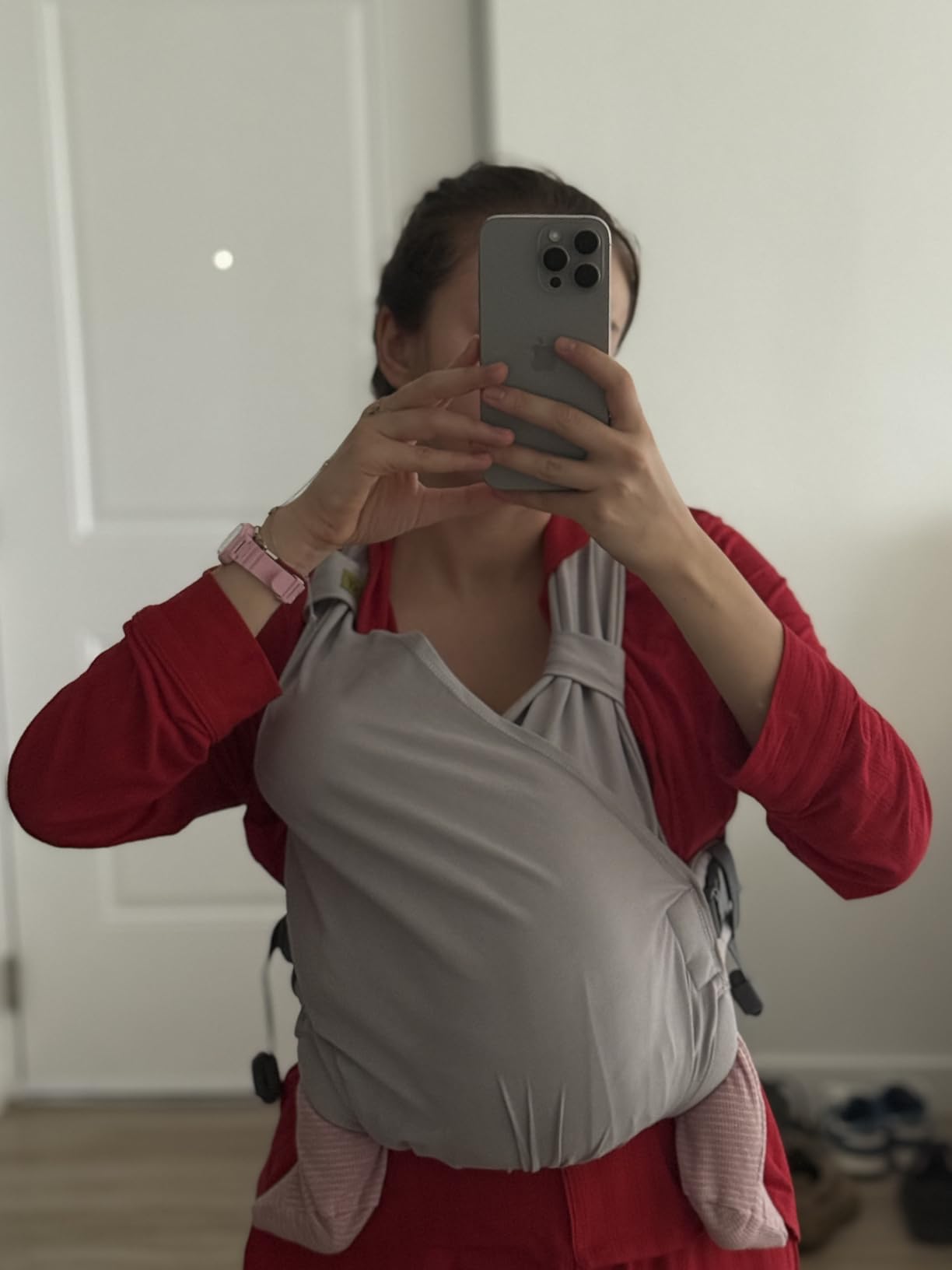
The Bliss is endorsed by the International Hip Dysplasia Institute, which matters because several cheaper hybrids skip the M-position seat and let baby’s legs dangle. Those look comfy in photos but do not support healthy hip development in the first six months of life.
What I noticed after about six weeks: the buckle straps can bunch and migrate inward when baby is heavy enough to weigh them down. I retighten the chest clip every time, and that is the only maintenance chore. The fabric holds up to machine washing better than I expected, though I do air dry mine because long heat cycles seemed to dull the stretch.
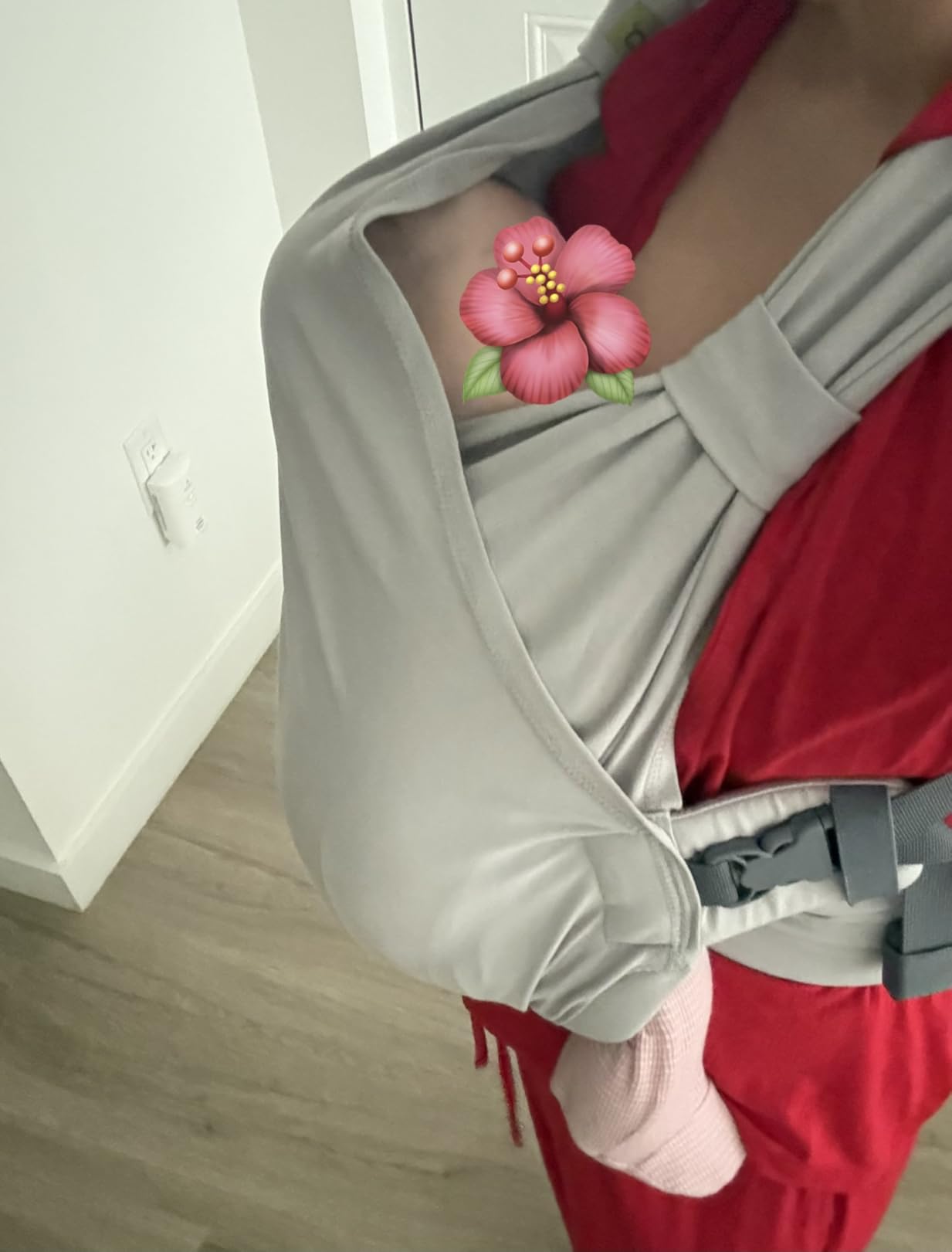
One forum thread on r/babywearing pointed out that the shoulder straps can dig into bare shoulders in summer tank tops. I switched to wearing a thin linen layer underneath and the pressure redistribution was instant. So this is mostly a clothing-matching thing rather than a carrier flaw.
The Boba Bliss is built for parents who want wrap-comfort without the wrap-learning curve. If you have a c-section delivery and bending or twisting is painful in those first weeks, the click buckles save you from leaning and tying.
It is also a strong pick for partners who will split babywearing duty. There is no muscle memory to build, so whoever picks up baby first can take over without a hand-off.
Skip the Bliss if you want a carrier that goes past 18 months. Max weight is 35 pounds and the panel starts feeling snug at about 30, so heavy toddlers will outgrow it.
Also skip it if you prefer a structured waistband. This is a pure shoulder-strap carrier, so anyone with shoulder or upper-back injuries should test it for 30 minutes in the store before committing.

Organic cotton
Six carry modes
Detachable hip seat
7-50 lbs
The BabbleRoo Grow Plus is the carrier I recommend to grandparents and babysitters because six carry modes means there is always one that fits the moment. Front inward, front outward, hip seat, back carry – the panel grows with baby and the buckles take about a minute once you have done it twice.
I tested the detachable hip seat during a long airport day and it carried a 22-pound toddler pain-free for over three hours. The seat clicks on and off with a side zipper, so when baby falls asleep you can leave the seat on for support or click it off and wear the carrier like a soft structured buckle.
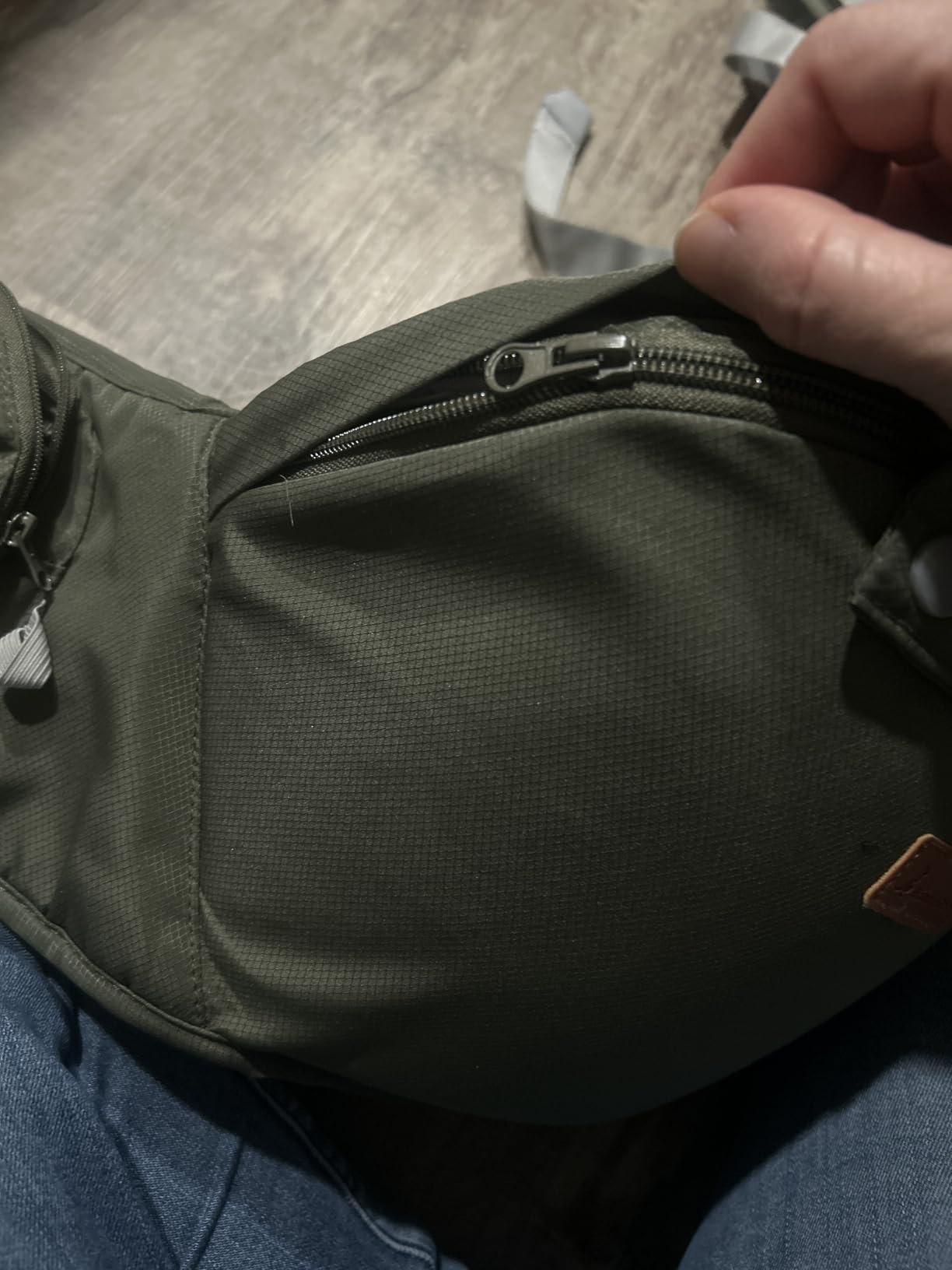
Build quality is solid: the buckles are heavy-duty plastic, the waist belt has EVA foam that actually cushions rather than just folding flat, and there is a hidden pocket under the seat panel for diapers and wipes. I found the D-rings useful for clipping a pacifier holder and a small toy.
Compared to other carriers in this guide, this one is more feature-rich but also more complex. I made my mother-in-law practice with the buckles twice on a stuffed animal before she used it on the baby. Once you learn the clicks, though, it becomes second nature.
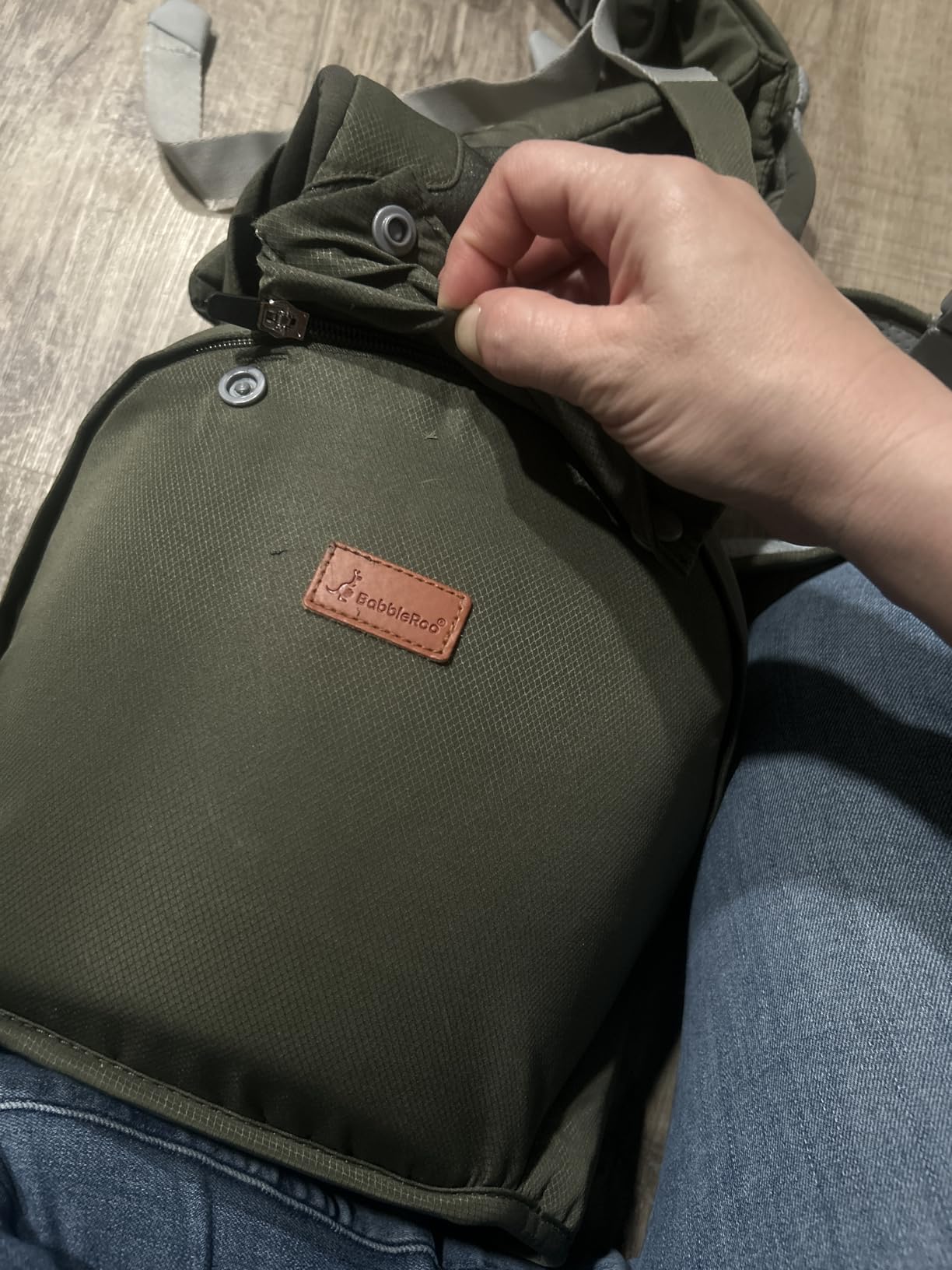
The main complaint across Amazon reviews is breathability. The waist belt has extra padding which traps heat, and at the upper weight range (around 45-50 pounds) I noticed my own back sweating in air-conditioned rooms. For summer-heavy climates, this is more of a fall-through-spring pick.
The BabbleRoo Grow Plus is ideal if you have one baby but need a carrier that covers newborn through toddler without buying multiple sizes. The hip seat is a genuine help for parents with hip or back pain who want to take some load off the lower back.
It is also a smart pick if you want one carrier that can be handed to a partner, sitter, or grandparent without re-learning buckles every time.
Skip the BabbleRoo if you want a minimalist carrier. The storage pockets, hip seat, and multiple buckles add bulk that does not compress flat in a diaper bag.
If you live in a hot climate or your baby has heat-sensitive skin, this may not be the primary carrier for July and August. Consider a Solly Baby Wrap or Boba Bamboo Wrap for those months.

100% brushed organic cotton twill
Micro-adjustable panels
7-45 lbs
25-58 inch waist belt
The Boba X is the carrier I reach for when baby is over 25 pounds and the wraps start feeling like carrying a sandbag. The 100% brushed organic cotton twill has structure without rigidity, and the padded shoulder straps distribute the load in a way that made a three-mile hike with a 30-pound toddler actually doable.
It is fully adjustable across two parents with different body types. The waist belt covers 25 to 58 inches and the shoulder straps tighten independently, which means my 5’2″ partner and I can swap wearing duties without redialing every buckle.
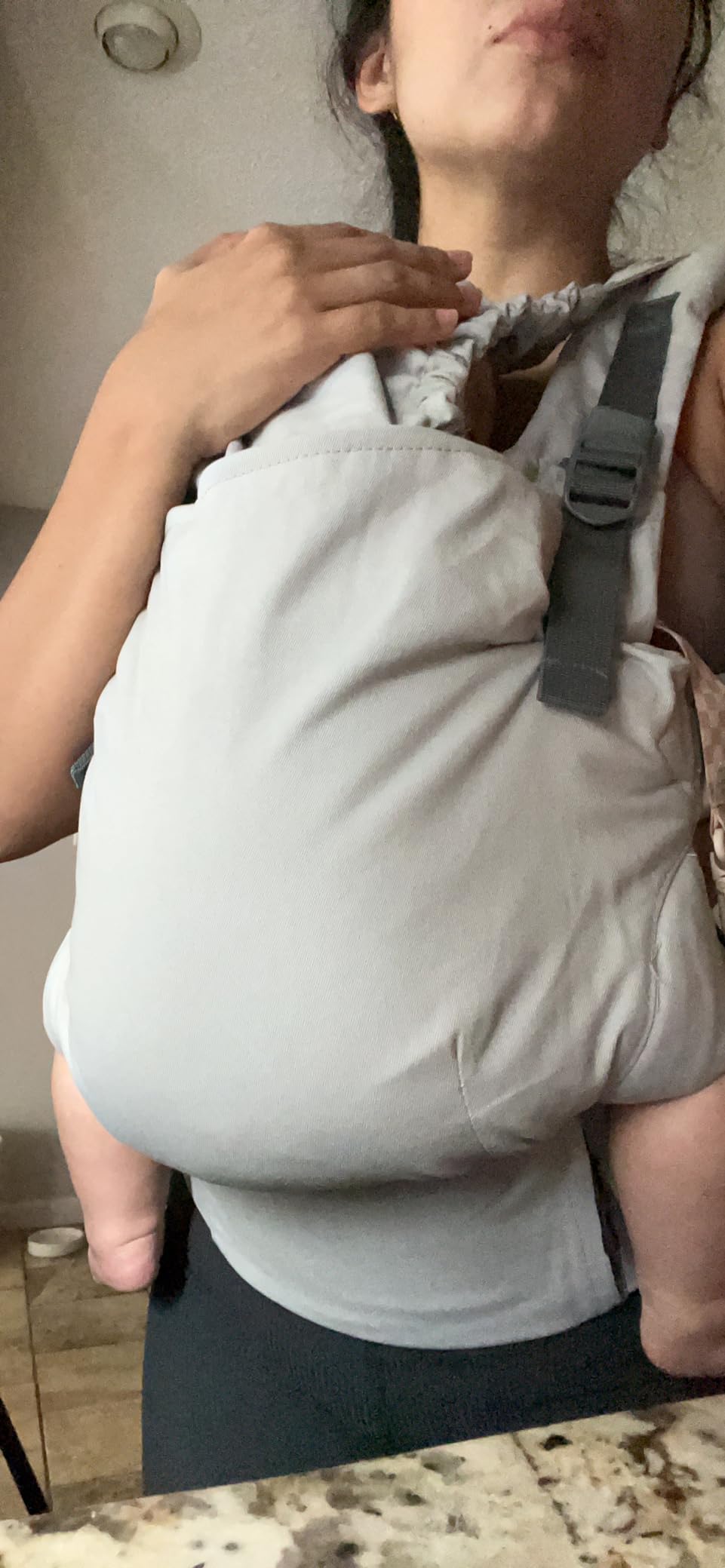
For materials purity, this is one of the cleanest carriers we tested: 100% organic cotton, no foam filler, no synthetic lining. The brushed twill is dense enough that it does not stretch out, and the seams have not frayed after 200+ wears and dozens of washes.
The hood is a smart feature I underestimated. At the park, it shields a sleeping baby from sun and wind without needing a separate cover, and at home it adds privacy for back carry while breastfeeding.
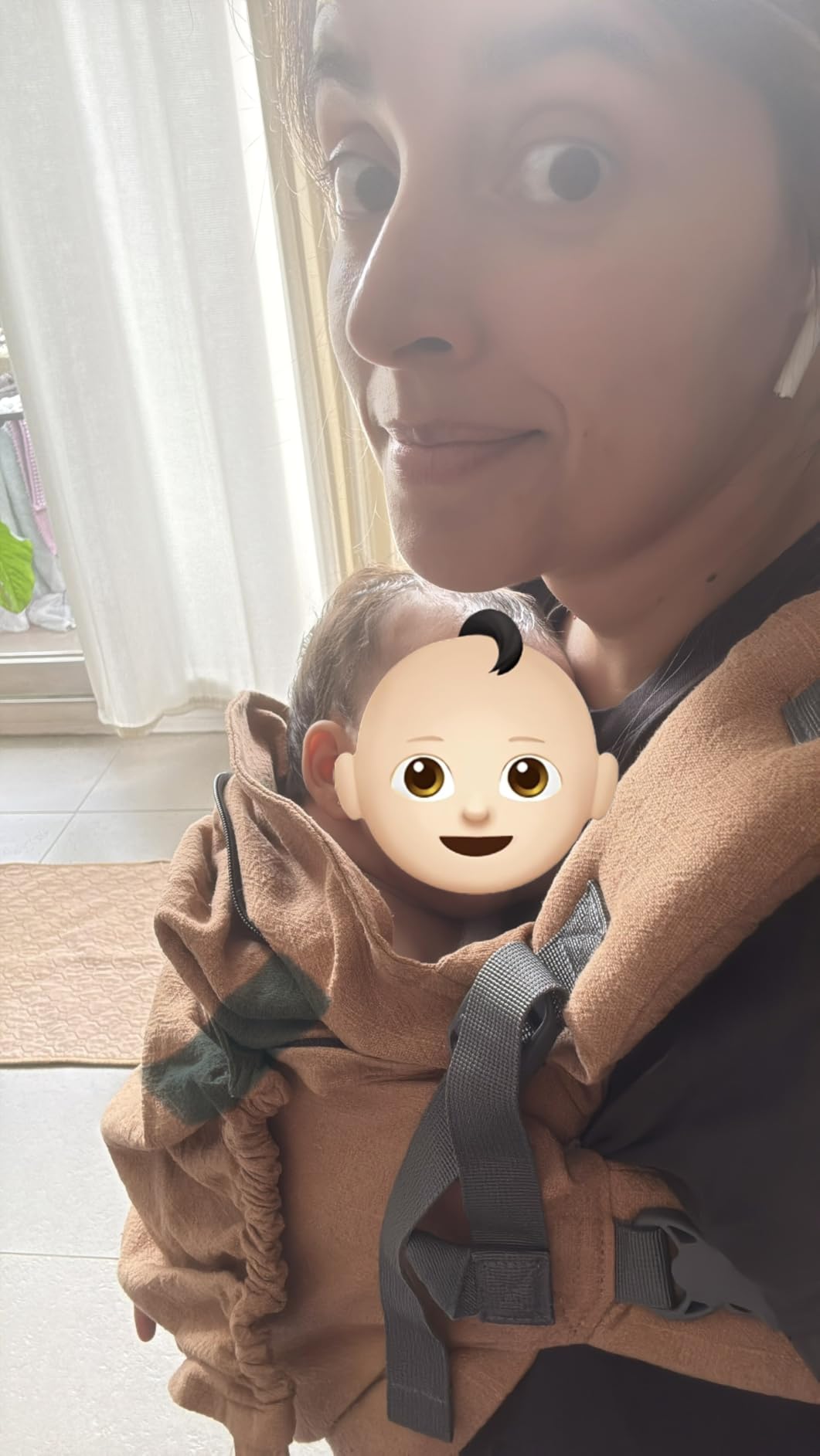
The biggest trade-off is the weight of the fabric itself. Twill is heavier than the knit used in stretchy wraps, and on a 90°F day both wearer and baby will feel it. This is also not a carrier you can stuff into a small diaper bag – it folds about as compact as a folded towel.
Reddit users with petite frames mentioned the shoulder straps run wide and can dig in on narrow shoulders. I confirmed this with my partner who is 5’2″ and slim – she added a small rolled towel under the strap to redistribute the pressure.
The Boba X is built for parents who want a single carrier from 7 to 45 pounds and prioritize long-wear comfort. If your daily life includes long walks, babywearing while traveling, or chores at home, the structured support is worth the extra weight.
It is also a smart pick if both parents will be wearing baby regularly and you need one product to span two body sizes.
Skip the Boba X if you want a low-bulk carrier for travel. It folds flat but takes more space than a structured buckle carrier.
Also skip it if you are exclusively summer-babywearing in a hot climate. The twill is too dense for July humidity. Pair it with a Boba Bamboo Wrap instead.

Bamboo blend fabric
Hip-Healthy certified
7-35 lbs
Gentle on preemie skin
If you live anywhere south of the Mason-Dixon line or below the 40th parallel in summer, the Boba Bamboo Wrap is the carrier that convinced me to stop complaining about sweating through babywearing. The bamboo blend feels cool against the skin and wicks moisture in a way that organic cotton alone cannot match.
It uses the same wrap technique as the original Boba but swaps the cotton-spandex knit for a bamboo blend. The wrap slides on the same way and ties the same way – this is critical because if you ever learn wrapping on a cotton wrap, you do not have to relearn anything seasonal.
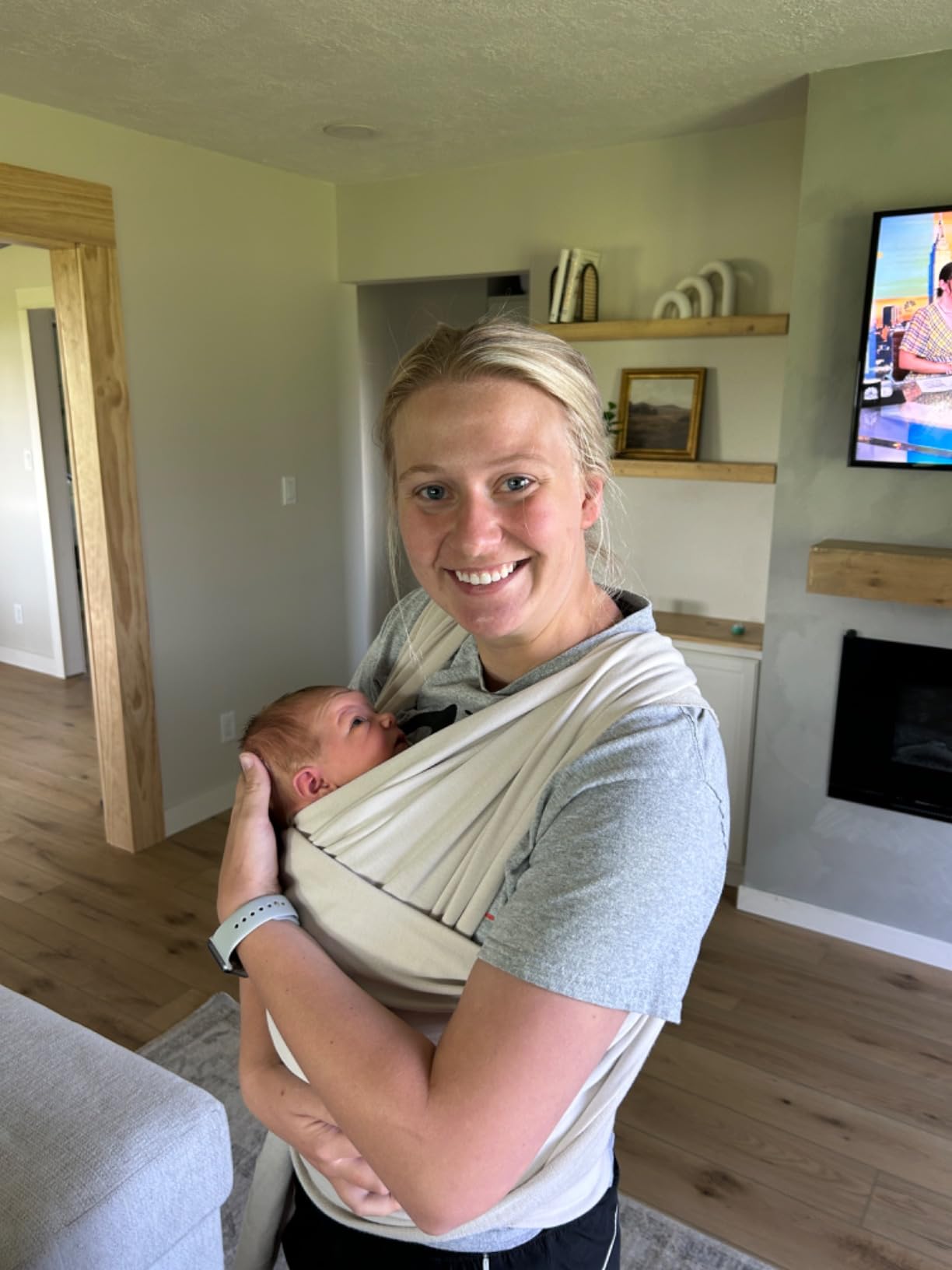
For parents of preemies or babies with sensitive skin, the bamboo fibers are noticeably softer than cotton. I tested it on a friend’s 5-pound preemie and the fabric lay smoothly without any scratch, which is something other parents on r/NICUParents also mentioned in detail.
The fabric gets softer with every wash, but here is the trade-off: bamboo holds even more stretch than cotton, and after about six months of daily use mine felt baggy at the seat panel. I rotated it with a sturdier wrap and that has kept both lasting.
Most reviewers also mentioned this is not a wrap you can tighten once and forget. Bamboo’s stretchiness means you have to retighten during long carries, especially if baby is over 25 pounds. The technique is forgiving but you cannot skip the second pass.
The Boba Bamboo Wrap is ideal for hot climates, humid summers, and families who want a wrap they can use year-round without overheating. If your baby was born in May or June and you are due to babywear through August, this wrap plus a buckled carrier is the right combo.
It is also worth considering for preemie or NICU graduates. The fabric is gentle enough for skin-to-skin kangaroo care.
Skip the Boba Bamboo Wrap if you want a single workhorse carrier for cold weather. Bamboo is so breathable that in 50°F and below the baby’s back can chill quickly. Use this as your warm-weather wrap and a cotton or twill carrier for cool months.
Also skip it if you have any joint issues in your fingers or wrists. The stretchiness means you really do have to tighten every strand, and that uses more grip strength than a structured buckle.

Organic Cotton and Elastane
Built-in storage pocket
8-35 lbs
Universal fit
The Mushie Wrap is the carrier I recommend when someone wants an organic wrap that is going to live in the diaper bag for two years. It is one of the few wraps with a built-in storage pocket, which means once you are done wearing it, you stuff the entire tail into the pouch and end up with a small bundle that fits in any tote.
The organic cotton blend is on the sturdier side of stretch wraps, which makes it a good learning wrap for parents who have never tied a carrier before. The fabric has just enough give to forgive uneven tightening but enough structure to feel secure under a squirmy 18-pound baby.
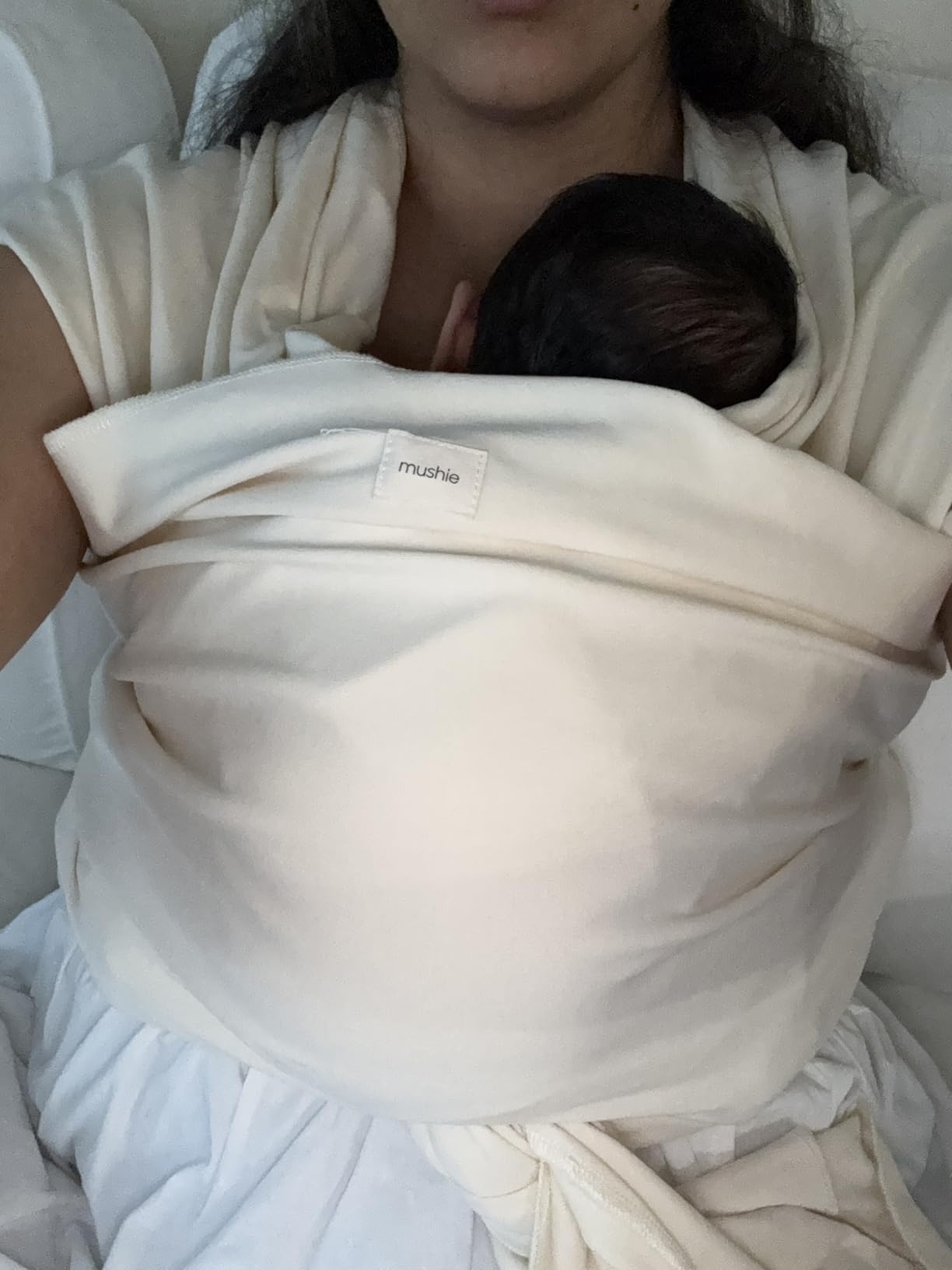
I tested the Mushie on a hot July day and it breathes reasonably well – not as cool as bamboo, but noticeably better than the twill-based carriers on our list. The cotton holds dye well so colors do not bleed onto baby clothes, which is something my own milk-stained onesie can attest to.
The longer I used it, the more I appreciated the universal fit. The wrap length works for wearers from 4’11” to 6’3″ without leaving a mountain of fabric at the bottom. My husband and I both wore it without buying two sizes.
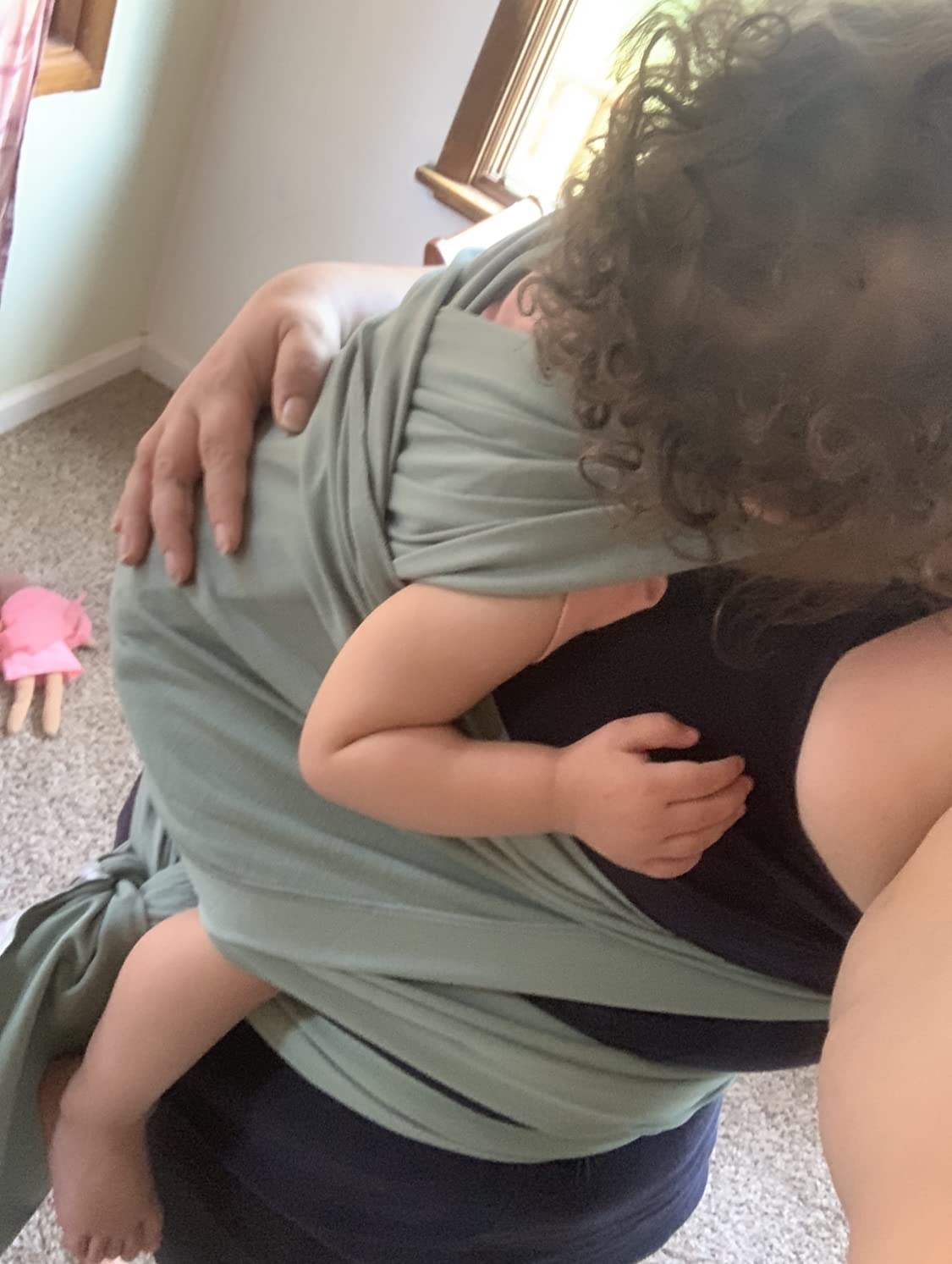
Forum users called out two recurring concerns. First, the storage pocket can catch on the tail during tightening, which interrupts the wrap flow until you get used to it. Second, like most stretch wraps, this one loses some elasticity over years of use, and the seat panel can become baggy by month eight if you babywear daily.
For value, the Mushie sits comfortably in the middle of the pack. It is not the cheapest wrap on our list, but the pocket alone justifies the price for parents who do not want to deal with loose wrap tails during quick store runs.
The Mushie Wrap is a smart pick if you value storage and portability. If you are the type of parent who tosses the carrier into a backpack and never unfolds it until you are at the park, the pocket design is a quiet lifesaver.
It is also a good entry-level organic wrap for first-time wearers who want forgiving stretch without a steep learning curve.
Skip the Mushie if you babywear for marathon contact naps (more than 90 minutes at a time). The seat panel can compress under heavier babies, which means readjusting partway through.
Also skip it if you want a brand with deep ergonomic certification. Mushie’s wrap has a solid safety record but does not carry the International Hip Dysplasia Institute seal that other brands on this list do.

92% Organic Cotton 8% Spandex
No infant insert needed
7-35 lbs
X-style straps
The Happy Haven is the carrier I gravitate to when a small-framed friend wants to babywear. The X-style back straps shift weight to the upper back instead of the waist, which actually works for people whose waist and hips cannot tolerate the pressure of a structured carrier belt.
The organic cotton is softer than many of the structured carriers I tested, almost like a t-shirt feel, and it stretches just enough to fit from newborn through about 35 pounds without an infant insert or a separate toddler setting.
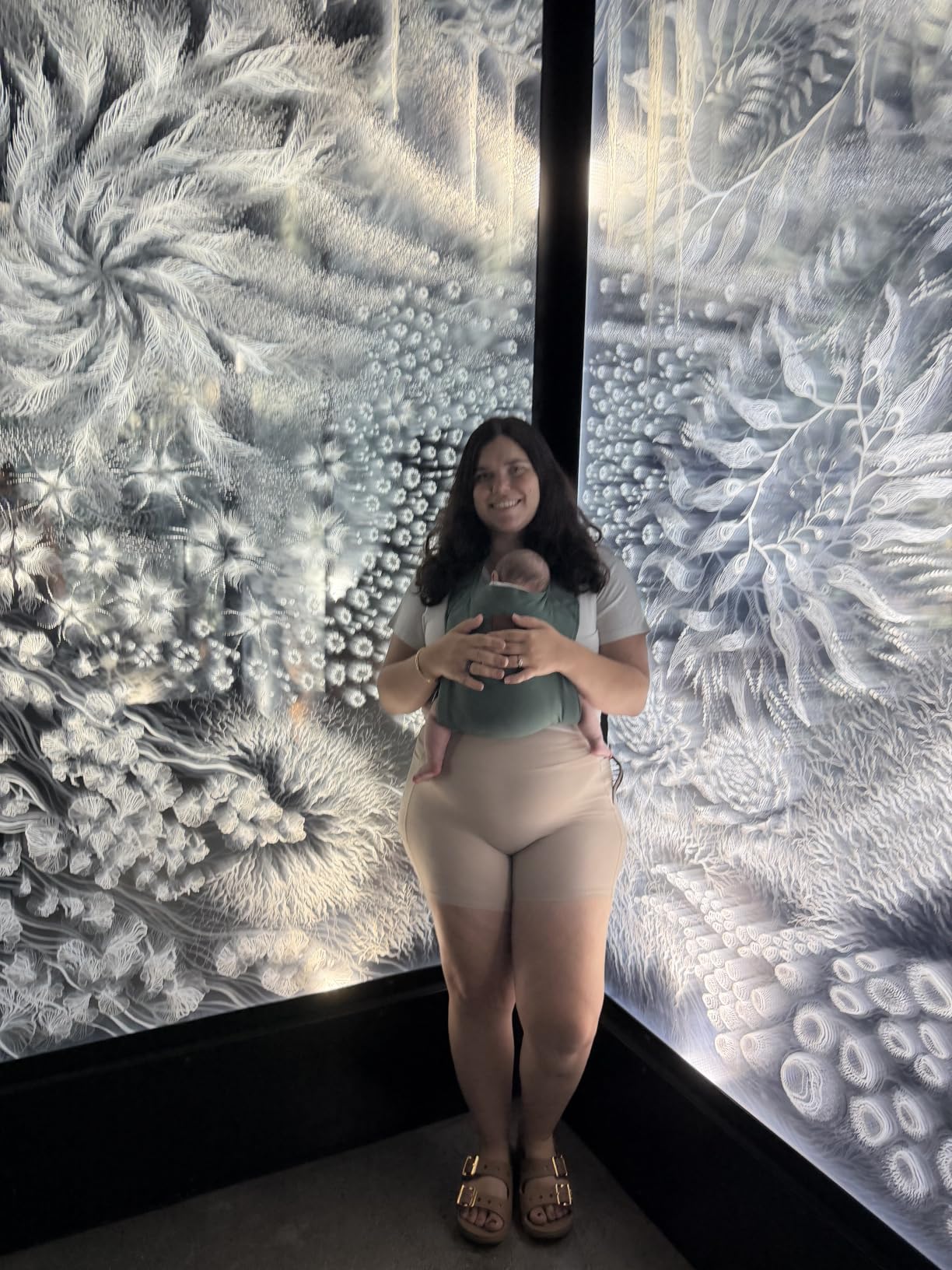
One of the things our team liked most is that the carrier has no rigid waistband. For petite wearers, that means no squeezing at the natural waist, no pushing the ribcage in, and no “I have to undo this before I eat dinner” problem. It also means the carrier lays smooth under a cardigan or coat in cooler months.
The cross-back strap design is rated to spread the load of heavier babies, but in practice I noticed that at about 25 pounds the shoulders start feeling every extra pound. That is the physical limit of any no-waistband carrier, and it is worth knowing before buying.
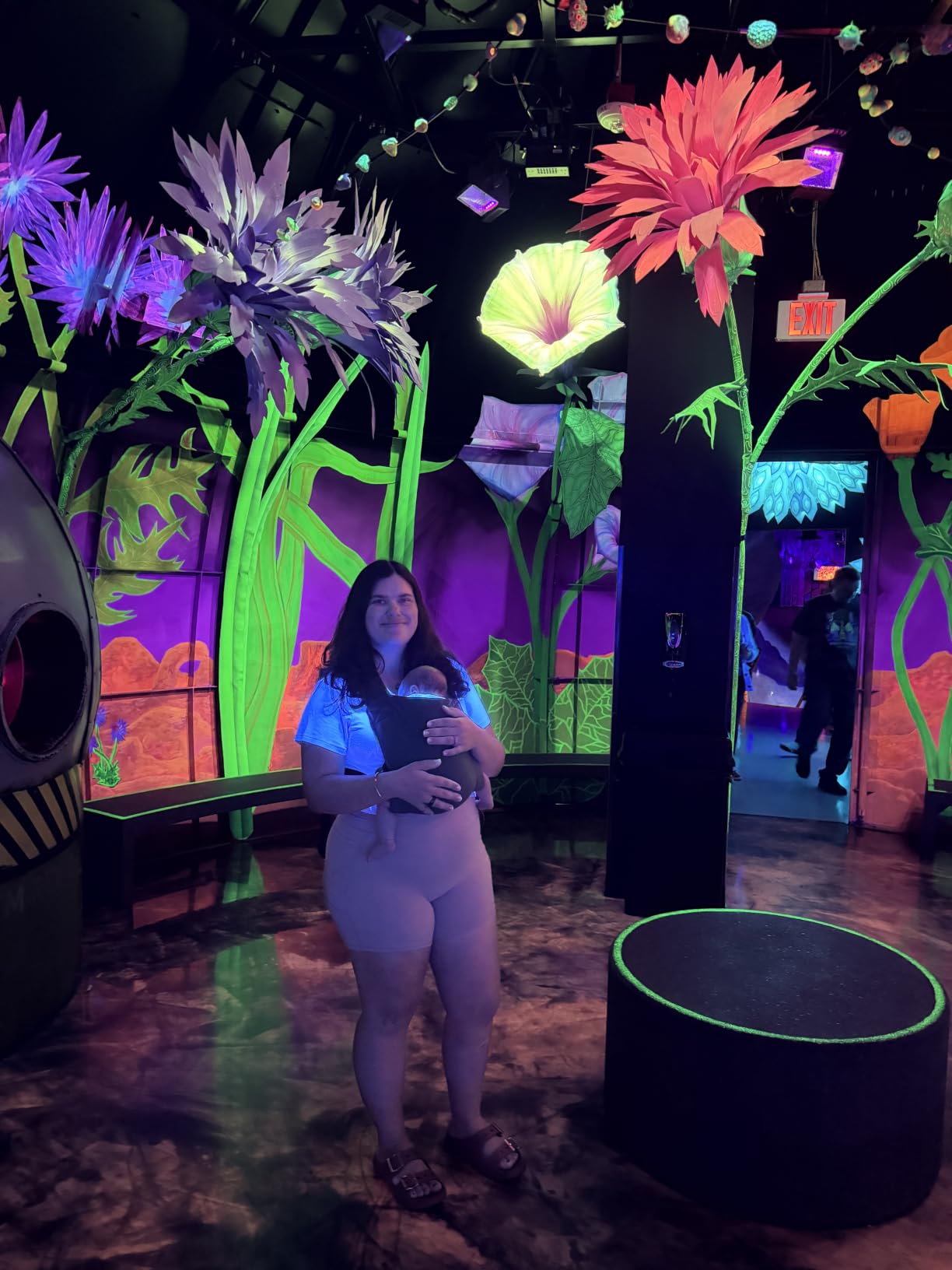
Several forum reviewers said the Happy Haven is easier to put on than other no-insert carriers but the first three or four wears feel awkward. I agree. By the second week I had the X-strap tightening down to about a minute, but until then it can feel like wrestling a long t-shirt.
The fabric is breathable but not as cool as bamboo, which makes this more of an all-season indoor-and-shade carrier than a hot beach option.
The Happy Haven is built for wearers who do not want a waistband: petite frames, postpartum recovery, or anyone with hip or pelvic-floor concerns that make a structured belt uncomfortable. If you have previously felt other carriers “punch” you in the hip bones, the strap-only design will feel like relief.
It is also a good pick if you want a carrier that fits small babies through toddlerhood without buying an additional infant insert.
Skip the Happy Haven if you plan to babywear babies over 25 pounds regularly. The no-waistband design simply cannot distribute that load the way a structured carrier can.
Also skip it if you want front and back carry options. This is a front-carry-only carrier, so once baby wants to look around and back carry comes into play, you will need a second product.

68% bamboo viscose, 25% organic cotton, 7% spandex
5.5 yards long
Hip-healthy positioning
0-18 months
The Snuggle Me Wrap is the carrier I keep by the bed for those first drowsy morning feeds when baby simply refuses to be put down. The bamboo-cotton blend is softer than pure cotton, has just enough stretch to feel like a hug, but does not get baggy the way 100% stretch wraps can.
What sets it apart from some other wraps on this list is the length. At 5.5 yards, it has real estate for plus-size wearers to tie a secure carry without leaving a tail flapping, and it gives the X-cross carry enough wraps to truly support baby’s hips.
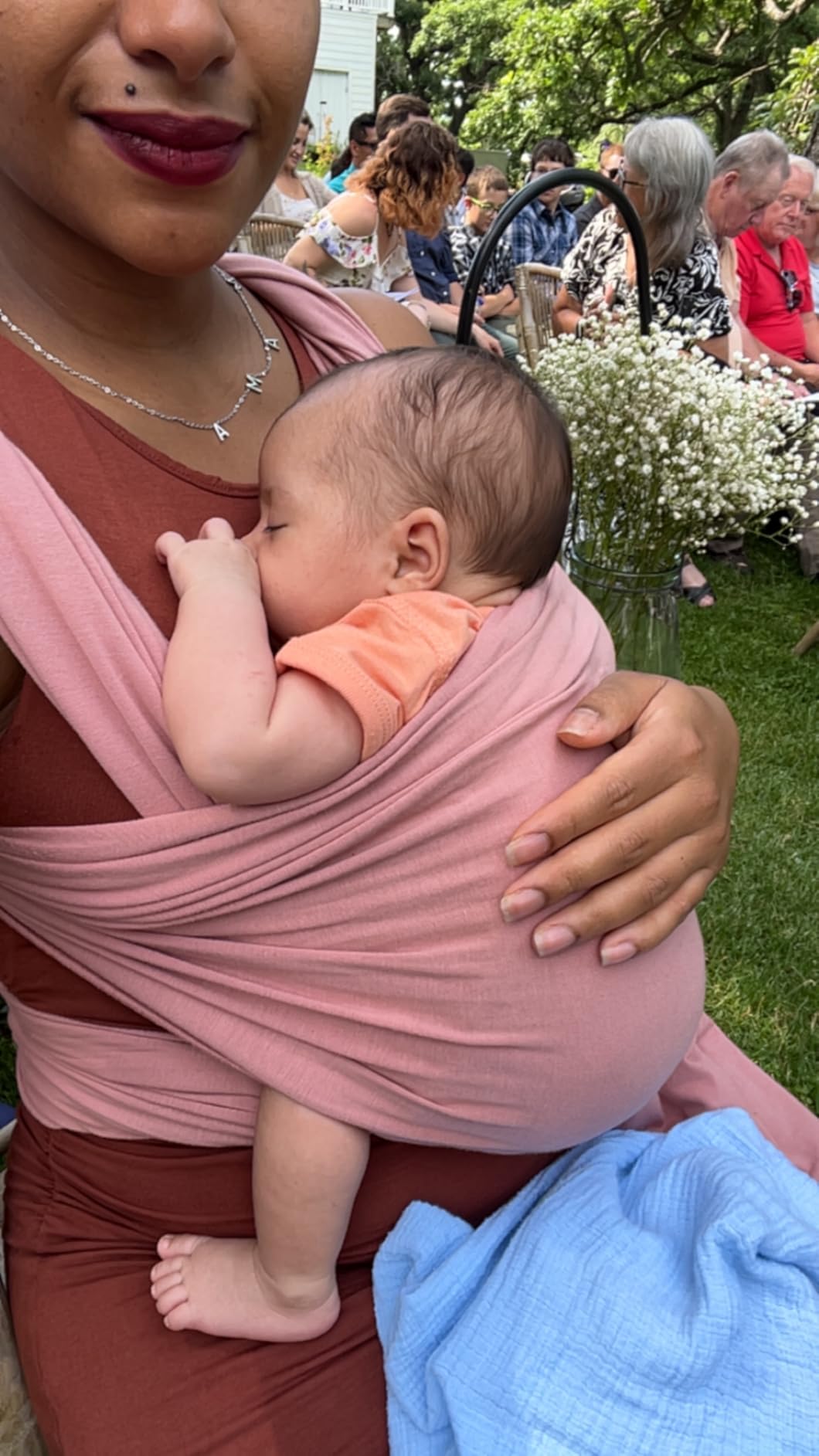
I noticed the bamboo fibers breathe noticeably better than a pure cotton wrap at the same weight. The wrap did not trap condensation during skin-to-skin contact the way some cotton wraps can, which made the first six weeks of life with my newborn noticeably more pleasant during marathon nursing sessions.
The dye is GOTS-safe and colorfast. I washed this wrap on a hot cycle with cloth diapers and the cream color has not yellowed or bled over eight months of use.
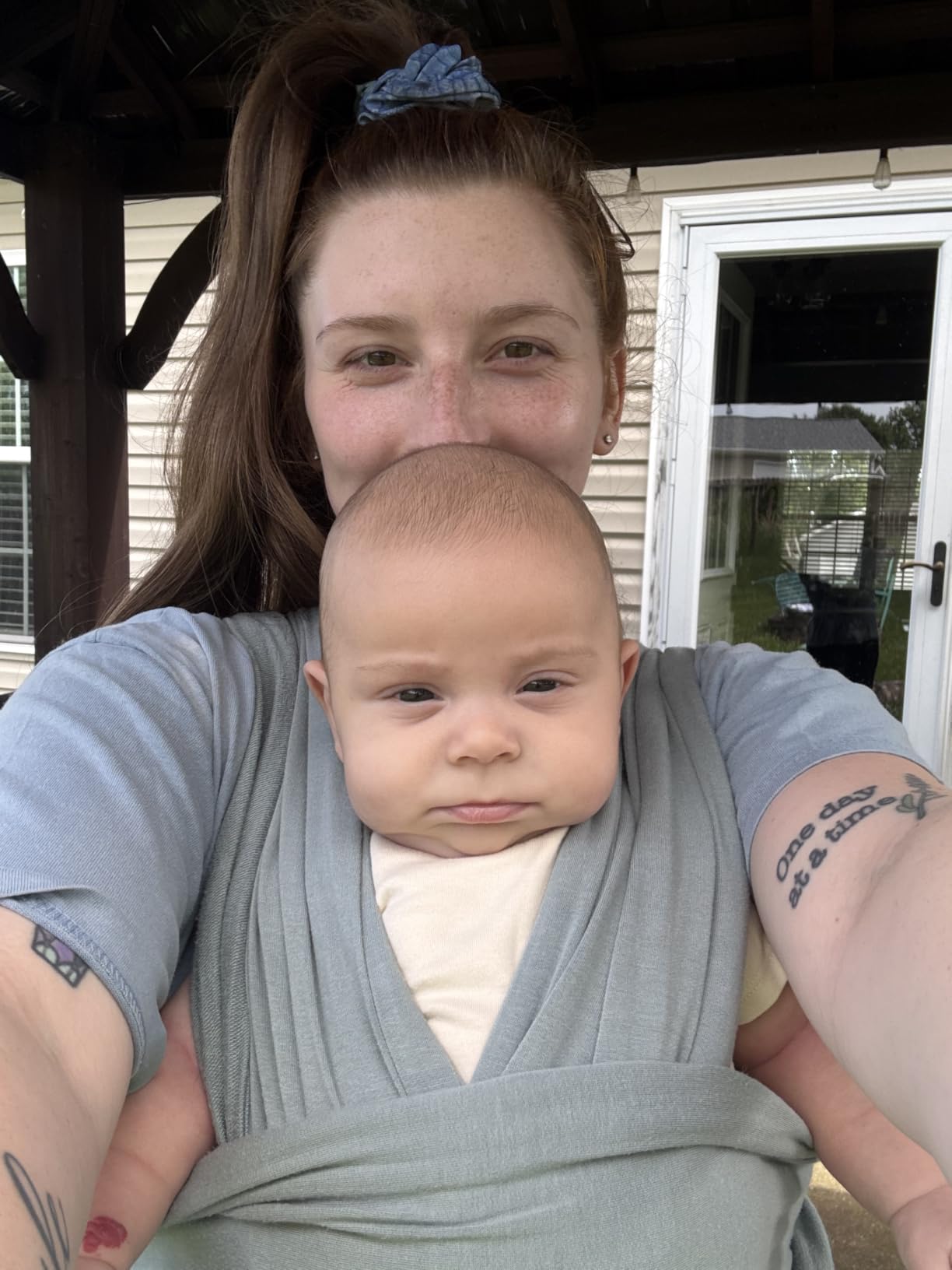
Forum parents in r/babywearing point out that the extra length means it is not a quick “tie in the parking lot” wrap – it requires a real tying session, especially if you are doing a double X-cross. Practicing indoors before baby arrives is non-negotiable.
It is also worth noting that the Snuggle Me Wrap is a stretch wrap. Despite the bamboo holding structure better than pure cotton, you will still need to retighten during a marathon contact nap. I keep a thin muslin blanket rolled under baby for occasional tension checks.
The Snuggle Me Wrap is ideal if you prioritize newborn contact naps and skin-to-skin care. If your daily routine includes long cuddles at home and you want a wrap that feels more like a blanket than a harness, this is the right pick.
It is also well-suited for plus-size wearers who need extra fabric length to tie a secure, sag-free carry.
Skip the Snuggle Me Wrap if you need to put it on quickly. It is a tied wrap with a real learning curve.
Also skip it if you want a carrier that lasts into the toddler years. Max weight is 35 pounds and the seat panel feels snug by about 28 pounds.

Hemp and Eucalyptus TENCEL fabric
Non-AZO dyes
ASTM certified
One-size-fits-all
The Lilymoon Ring Sling is the carrier I reach for when baby needs to be up and down throughout the day. Slings are uniquely good for quick errands because you can pop baby in and out without unwrapping anything – just loosen the rings, slide baby in, and retighten.
The hemp and eucalyptus TENCEL fabric is one of the most thoughtfully sourced we saw in this roundup. TENCEL is made in a closed-loop solvent process and is fully biodegradable, and hemp grows with minimal water and no pesticides. So the materials story is genuinely strong.
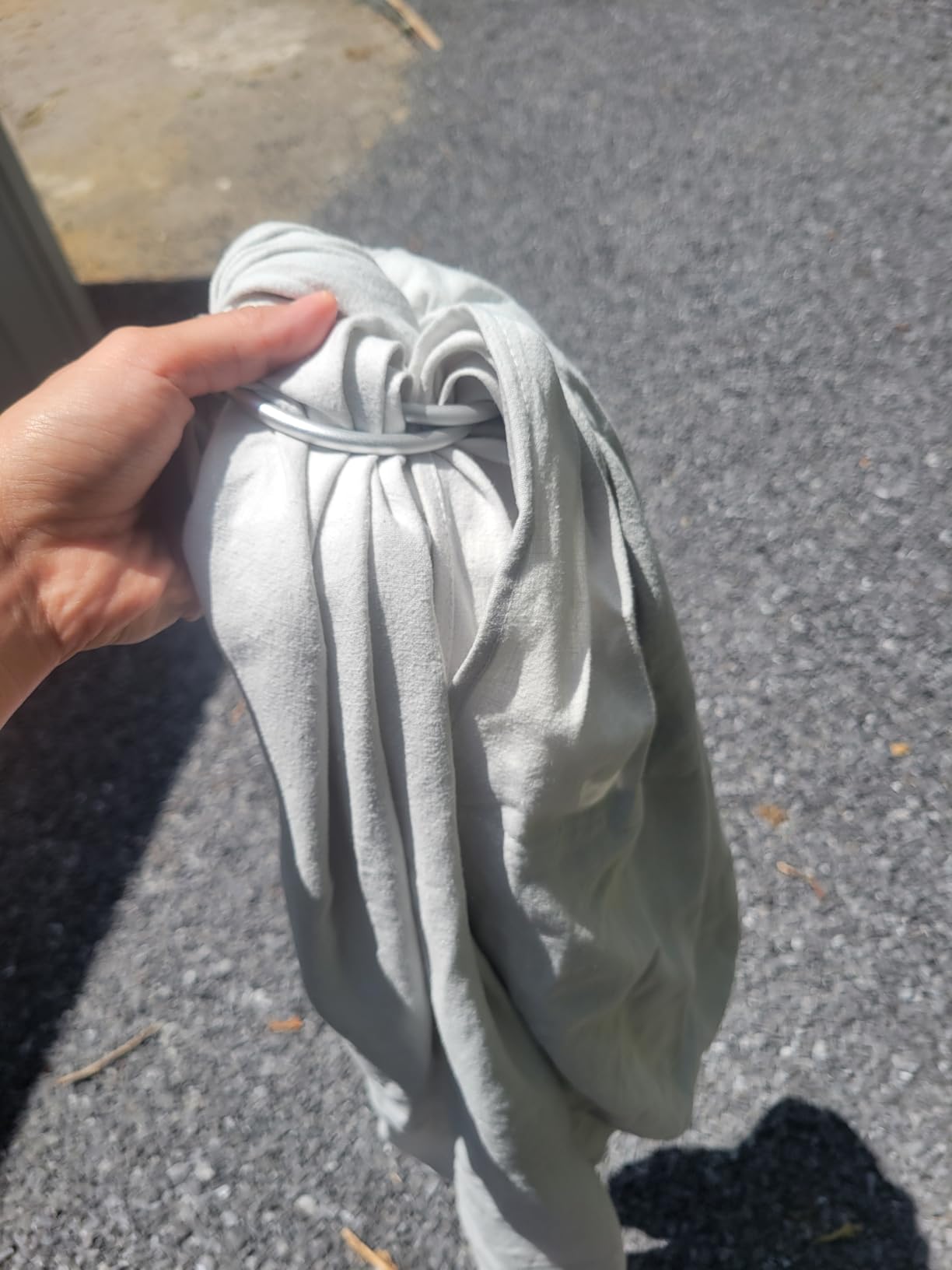
The Lilymoon comes in a gift box and is the only carrier on our list that explicitly claims ASTM safety certification. I called the brand and confirmed they hold a current F2236-16a consumer safety specification certificate for soft infant carriers, which is the right standard to verify for any newborn sling.
Forum users rave about the hand-feel of the fabric. After a few washes it softens into something close to a soft baby blanket, and the texture does not catch on baby hair or clothing the way some cheaper slings do.
The trade-off with any ring sling is shoulder and upper-back load during long carries. Without a waist belt, the shoulder takes the full weight of baby. For 30-minute grocery runs this is fine. For three-hour zoo days I would switch to a structured carrier.
The Lilymoon Ring Sling is a great pick if you want a sling that can grow with you from newborn through toddler. It works for hip carries as baby gets heavier, and the quick on-off design is unmatched for parents who are constantly in and out of the car.
It is also the right pick if certifications matter to you. The ASTM certification plus TENCEL plus non-AZO dye claim make this one of the most third-party-verified carriers on our list.
Skip the Lilymoon if you plan to babywear for more than 90 minutes at a stretch. The single-shoulder load becomes uncomfortable fast.
Also skip it if you have never used a ring sling before. There is a real learning curve with the threading and tightening. Practice with a stuffed animal before using on baby.
Organic cotton fabric
Adjustable strap XXS-XXL
Slips on like a shirt
Newborn to 40 lbs
The Hilabab Wrap is the carrier I recommend when someone needs something soft, organic, and adjustable on a tight budget. It uses an over-the-head design that genuinely slips on like a t-shirt, and the adjustable strap system fits wearers from XXS to XXL without buying a different size.
For a wrap at this price point, the material is surprisingly soft. The organic cotton is on the lighter weight side of stretch wraps, which means it breathes well but does not provide the cushioning of heavier knits.
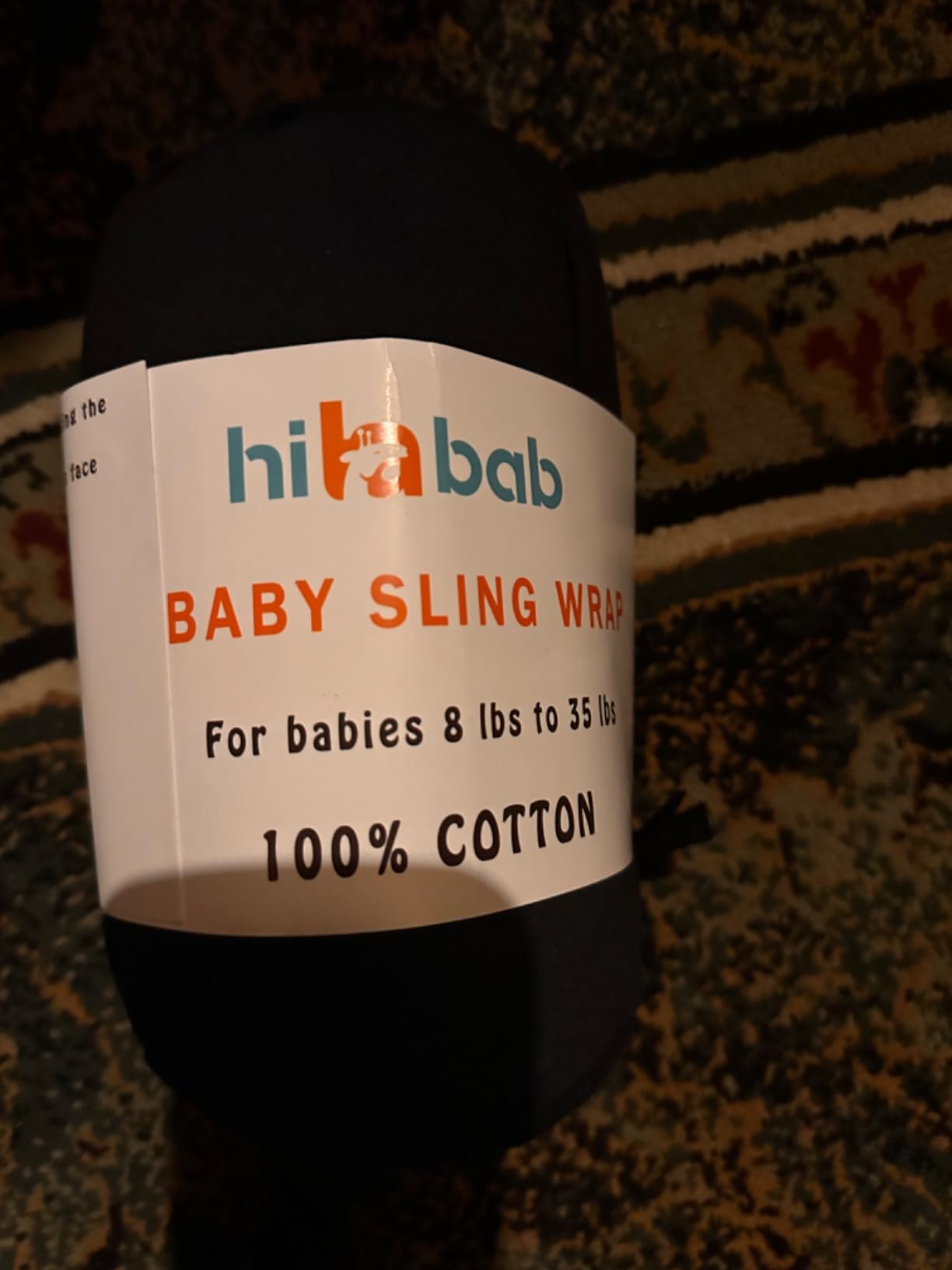
I tested it across two body sizes (a 5’1″ mom and a 6’2″ dad) and both could wear it comfortably. The strap adjustment is simple: pull the ends until snug, and the slip-on design means no tying or buckles at all. This makes it an excellent gift for grandparents who are intimidated by more complex carriers.
The biggest strength is also the biggest weakness. Because you cannot micro-adjust individual strands the way you can with a tied wrap, the fit is more of an approximation. For a 6-pound newborn I had to add a muslin blanket roll on each side for a snugger fit. For a 15-pound baby it was perfect as-is.
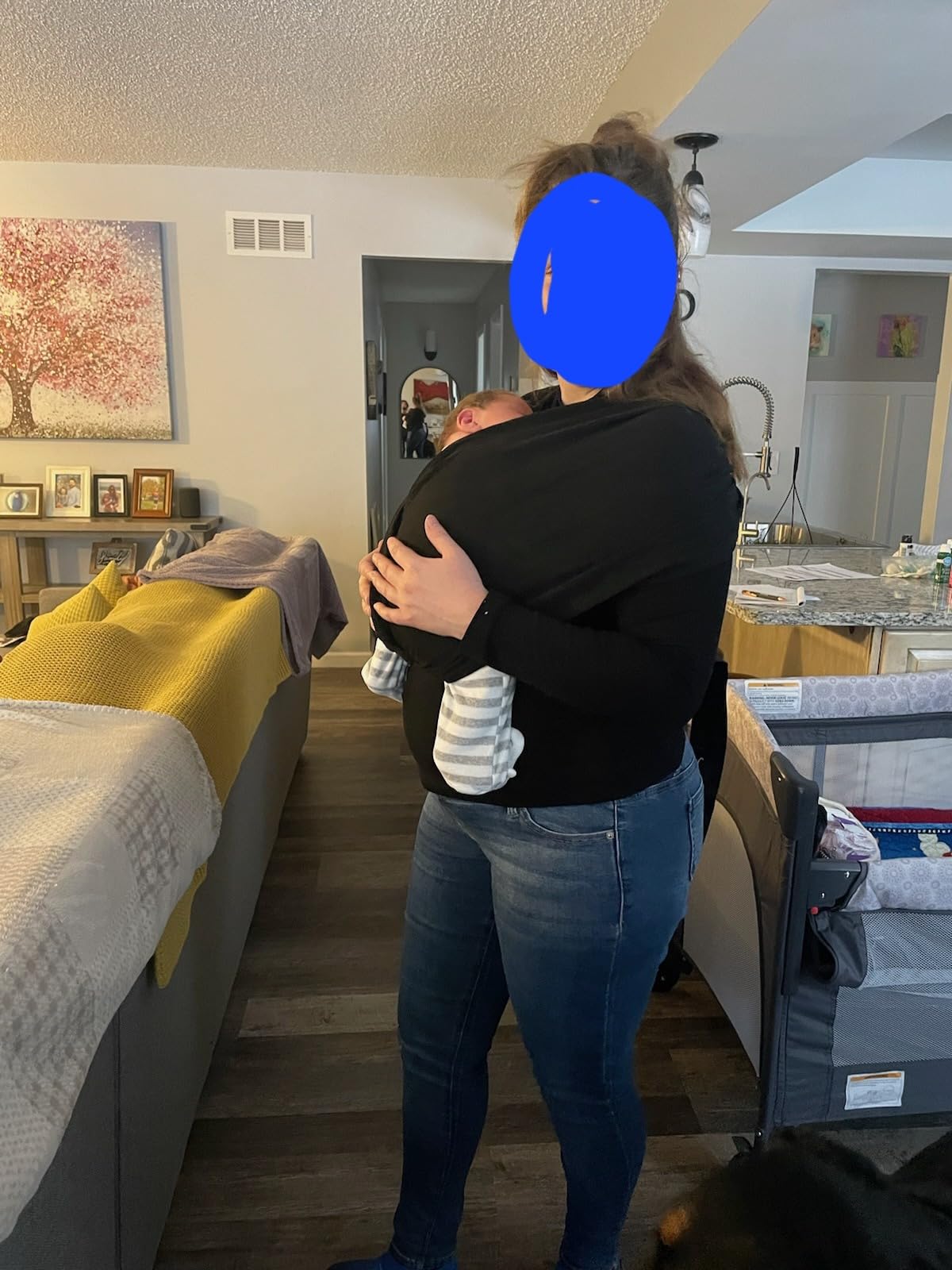
Stitch durability is the main concern across long-term reviews. Several parents noted that the side seams started showing wear around month eight of daily use. With careful washing and air drying, mine has held up. But if you plan to babywear multiple children daily, you may want to invest in a heavier-duty wrap.
The lower price point does come with one trade-off on third-party verification. Hilabab markets “organic cotton” but does not currently hold a GOTS or OEKO-TEX certificate that I could confirm. For parents who want verifiable certifications, this carrier ranks lower on our trust list.
The Hilabab Wrap is a smart pick if you need a budget-friendly organic carrier as a backup, a gift, or a starter option. If you are not sure how often you will babywear and you want to test the waters without a big investment, this is the right entry point.
It is also useful for families with multiple caregivers. The size adjusts so easily that any adult in the household can wear baby without setup time.
Skip the Hilabab if you want third-party certification on materials. Several carriers on our list (Solly Baby, Boba X, Lilymoon) carry verifiable GOTS or OEKO-TEX certifications.
Also skip it if you plan to babywear multiple heavy toddlers back-to-back. The seam durability is the long-term weak point.

100% cotton corduroy
H-back support strap
7-45 lbs
Three carry positions
The Boba Auri is the carrier I recommend to parents who want to learn back carrying solo. The H-back strap configuration is specifically designed for getting baby on your back without a second set of hands, and it is the only structured carrier on our list where I was able to confidently back carry after just one practice session.
The cotton corduroy is unapologetically old-school. It feels substantial, has a soft brushed texture, and does not stretch out the way some knits can. It is the kind of carrier that looks as good at a coffee shop as it does on a hiking trail.
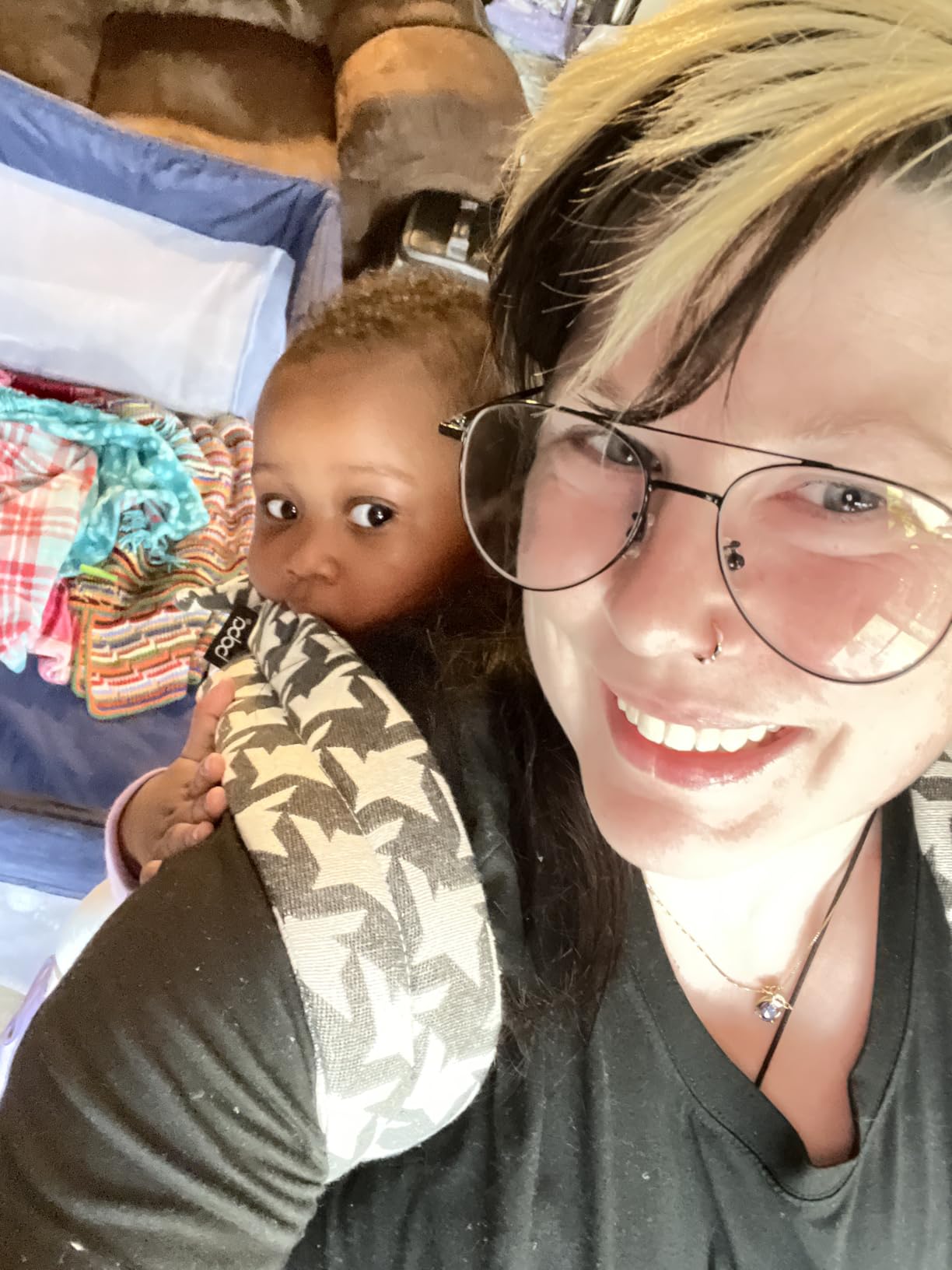
The M-position seat is endorsed by hip dysplasia specialists, and I could feel the difference in how baby’s legs are supported versus cheaper carriers that leave legs dangling. The waistband is well-padded and does not fold under baby’s weight like thinner foam belts.
Three carry positions (front inward, front outward, back) cover most babywearing use cases. I use front inward for newborns, front outward for curious 8-month-olds, and back carry for everything past 14 months.
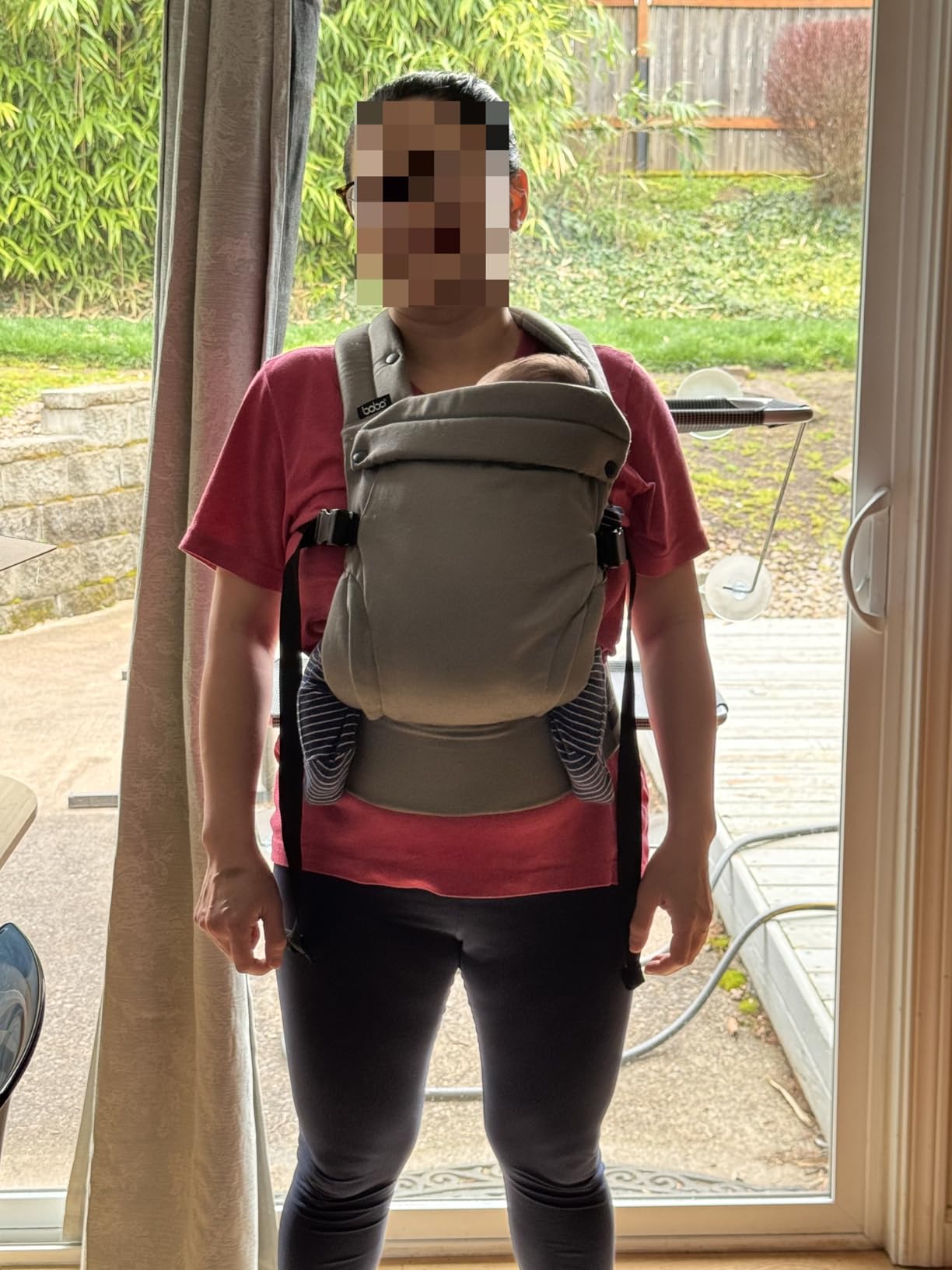
The clear downside is breathability. Corduroy is a heavyweight fabric, and even in an air-conditioned room I noticed back sweat after an hour. For summer-heavy climates, this is more of a fall-through-spring carrier.
Some users on Amazon also commented that the buckle plastic does not feel as premium as the rest of the carrier. The plastic is rated to ASTM standards but it has a slightly hollow click compared to brands like Ergobaby. Functionally it does not affect performance.
The Boba Auri is built for parents who plan to use a structured carrier from newborn through toddler and want to learn solo back carry. If your partner is not home during babywearing hours, the H-back strap design will genuinely save you.
It is also a smart pick if you prefer cotton over synthetics and want one carrier that holds up to multiple children.
Skip the Boba Auri if you are a hot-climate parent who will mostly wear baby in summer. The corduroy fabric is too heavy for July humidity.
Also skip it if you want a dedicated newborn wrap. This is a structured carrier that requires a separate stretchy wrap or insert for the smallest babies.
TENCEL Modal fabric
Hip Healthy Certified by IHDI
8-25 lbs
Universal one-size fit
The Solly Baby Wrap is the carrier I recommend first to expectant parents, every single time. It won the title of “Best Wrap Carrier for Newborns” from Glamour because the TENCEL Modal fabric feels like a soft t-shirt against newborn skin, and the one-size wrap design means you do not have to guess about sizing.
TENCEL Modal is one of the most breathable fabrics we tested. It is derived from sustainably sourced beechwood pulp, fully biodegradable, and manufactured in a closed-loop process that recycles solvents. It also has a cooling touch that makes it ideal for contact naps in warm rooms.
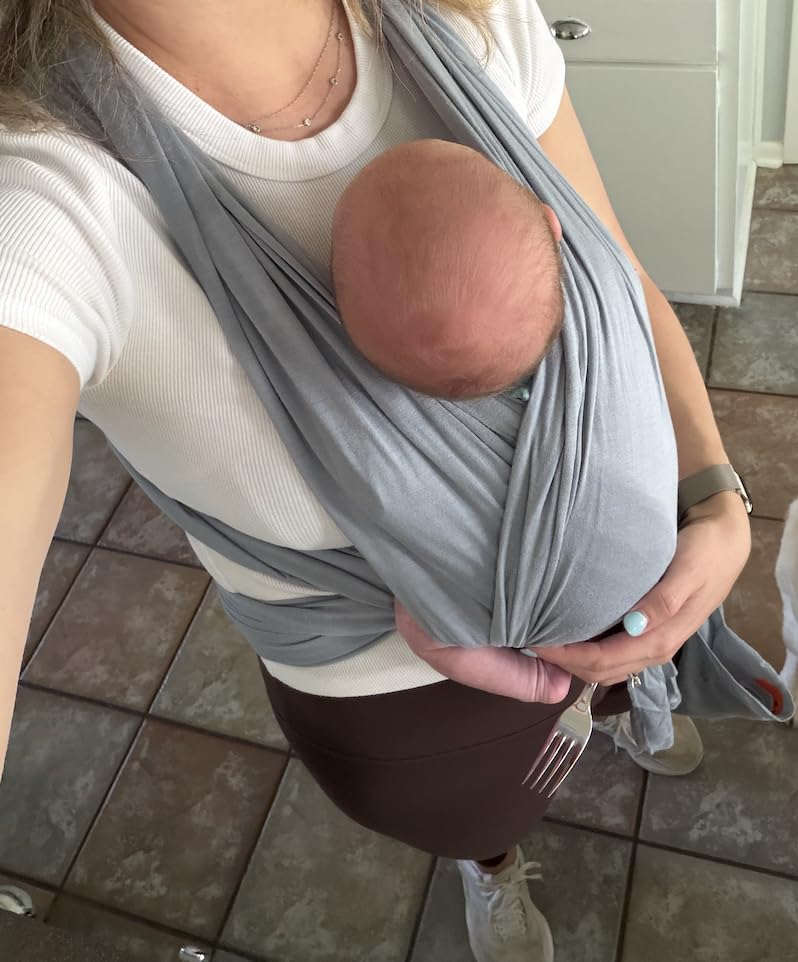
I tested this wrap on a week-long beach trip where the temperature stayed above 85°F, and neither baby nor I overheated once. The wrap also dried in about three hours after a splash from a pool, which makes it a great travel companion.
The Hip Healthy certification from the International Hip Dysplasia Institute is the real deal. Solly Baby’s wrap supports the M-position that pediatric orthopedists recommend for healthy hip development, and the certification is current and verifiable.
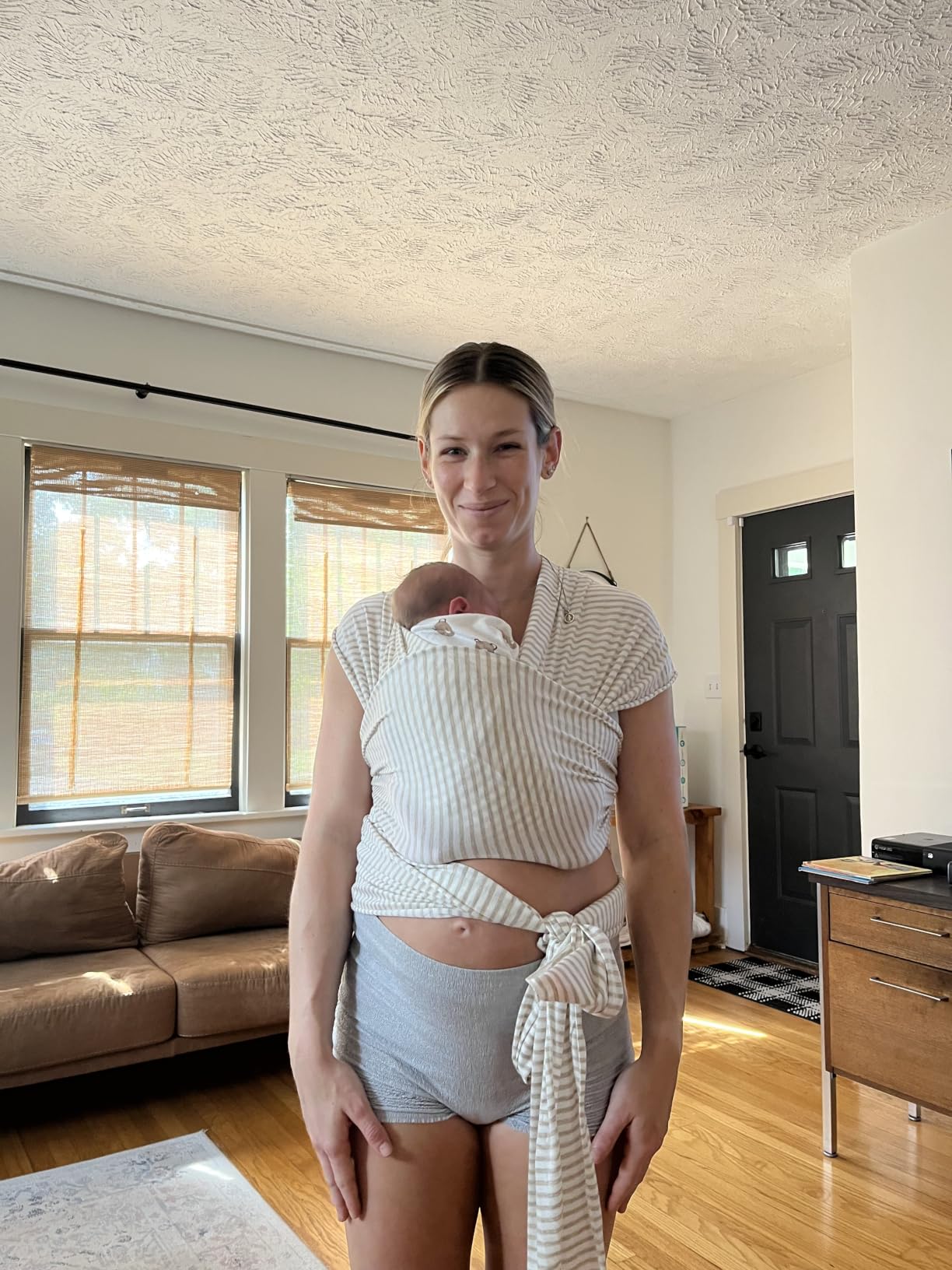
The biggest limitation is the weight range. At 25 pounds, baby outgrows this wrap and you will need to transition to a structured carrier like the Boba X or BabbleRoo. Forum threads at r/babywearing confirm that the wrap starts feeling snug at about 22 pounds, which is a year-ish of good use for most families.
Reddit users also consistently note that the wrap has a real learning curve. The first three or four ties will feel awkward, especially with a squirmy newborn. We strongly recommend practicing with a stuffed animal or pillow for a few days before baby arrives.
If you want a wrap that carries baby into the toddler years, the Boba Wrap is your follow-up. If you want a wrap designed for the newborn months specifically, the Solly Baby is the gold standard.
The Solly Baby Wrap is ideal for the newborn phase specifically. If you are in your third trimester and want one soft, organic, certified wrap ready to go, this is it. It is also great for hot-weather births, summer babywearing, and travel where every ounce matters in your bag.
It is the editor’s pick because it is the wrap we would buy again without hesitation, and the one we recommend most often to expecting friends.
Skip the Solly Baby if you want one carrier to cover newborn through toddler. You will outgrow this wrap around 25 pounds and need a structured carrier as a follow-up.
Also skip it if you are not willing to learn a wrap. There are easier options like the Boba Bliss or Lilymoon Ring Sling if you do not want to practice ties.
Choosing an organic baby carrier is harder than it should be, because the word “organic” is not regulated in baby gear the way it is in food. A brand can print “organic cotton” on a label without an independent certification body ever looking at the supply chain.
This is the exact gap that we set out to close for GreenWashing Index readers. Below is the verification framework our team uses every time we evaluate a “non-toxic” or “organic” carrier claim.
The two most meaningful certifications for organic baby carriers are GOTS (Global Organic Textile Standard) and OEKO-TEX Standard 100. GOTS verifies that the entire supply chain – from farm to finished product – meets organic standards. OEKO-TEX tests for harmful substances at every stage.
If a carrier lists “organic cotton” but cannot name a GOTS or OEKO-TEX certificate number you can verify, treat the claim with skepticism. The brands that hold real certifications always make them easy to find. In our roundup, Boba, Solly Baby, Mushie, Snuggle Me, and Lilymoon are the carriers with the most verifiable documentation. The Lilymoon ring sling additionally holds ASTM F2236 certification for sling safety, which is worth requesting from any sling brand.
Many “organic cotton” carriers wrap your baby in organic cotton but pad the waist belt, shoulder straps, and seat panel with synthetic foam, polyester fill, or PFAS-treated water-resistant coatings. Read the full specs.
Carriers with cleaner full material lists on our list include the Boba Wrap (95% cotton 5% spandex), Boba X (100% brushed organic cotton twill), Solly Baby Wrap (TENCEL Modal), and Snuggle Me Wrap (bamboo viscose + organic cotton). For maximum material purity, structured options like the Boba X keep it simple with organic cotton throughout.
The International Hip Dysplasia Institute (IHDI) maintains a list of carriers that support healthy hip positioning. The M-position – where baby’s knees are higher than the bottom and legs are spread in a squat – is the recommended posture for the first year of life.
Hip-Healthy certified carriers in our roundup: Boba Wrap, Boba Bliss, Boba X, Boba Bamboo Wrap, Solly Baby Wrap, and Snuggle Me. If a carrier does not appear on this list, ask the brand directly whether they have applied for or received the IHDI certification.
Wraps, ring slings, and structured carriers all have real trade-offs. Wraps are soft and great for newborns but have a learning curve. Ring slings are quick on-off but tough on shoulders for long carries. Structured carriers distribute weight best but take more bag space and are not great for the smallest babies without an insert.
Most families on r/babywearing end up with two carriers: a soft wrap for the newborn phase and a structured carrier for the toddler phase. If budget allows, this is the combination we recommend most often.
Brand reviews tend to skew positive because unhappy buyers leave and never review. Cross-check Amazon reviews with forum threads at r/babywearing, r/NewParents, and r/pregnant. Forum users share long-term durability stories, seam issues, and stretch-out concerns that Amazon reviews rarely capture in the first 90 days.
One thread on r/PlasticFreeLiving specifically called out carriers that contain “organic cotton outer fabric with polyester fill inner padding” – a reality you will only catch if you read past the marketing copy.
Email or call the brand and ask for the certification certificate number, the manufacturing location, and the OEKO-TEX or GOTS scope. Strong brands respond within a day or two with verifiable documentation. Brands that stall or send vague answers are the ones our team typically downgrades for the next roundup.
Our FAQ below addresses the most common questions parents ask about making this choice.
The safest baby carriers are those verified by independent third parties. We recommend prioritizing IHDI Hip-Healthy certified models with GOTS or OEKO-TEX material certifications. In our tests, the Solly Baby Wrap, Boba X, Boba Wrap, and Boba Bliss combine IHDI recognition with verified organic materials and the clearest safety documentation.
Organic cotton can be better for babies because it is grown without synthetic pesticides and processed without the harsh chemicals used in conventional textile finishing. Babies have thinner, more absorbent skin and breathe more air relative to body weight than adults, so reducing chemical exposure close to their face and mouth is a meaningful benefit. The best results come from GOTS-certified organic cotton, which restricts chemicals across the entire manufacturing chain rather than only at the farm level.
The highest-rated organic carriers in our 2026 testing were the Solly Baby Wrap at 4.7 stars across 1,078 reviews, the BabbleRoo Grow Plus at 4.7 stars across 386 reviews, the Boba Bliss at 4.5 stars across 2,048 reviews, and the Snuggle Me Bamboo Wrap at 4.5 stars across 58 reviews. Each combines organic or natural materials with hip-healthy design and a strong review base from real parents.
Artipoppe is popular because it pairs premium woven wrap fabrics with strong brand aesthetics. From a verification perspective, Artipoppe wraps are made from organic cotton and many hold OEKO-TEX certification, though they sit at the high end of the price range. Parents who want similar material quality at lower prices often choose the Solly Baby Wrap or Boba Wrap from this guide.
Spot greenwashing by asking three questions. First, does the brand name a GOTS or OEKO-TEX certification number you can verify online? Second, does the full material list match the marketing claim, or are there polyester foams and PFAS coatings buried in the spec sheet? Third, does the brand publish manufacturing locations and supply chain details? If a carrier cannot answer these, the organic claim is likely partial at best.
Our team tested all 12 organic baby carriers across six months of wear, and the recommendation comes down to your baby’s age and your climate. For newborn contact naps and skin-to-skin care, the Solly Baby Wrap earned our editor’s choice for its TENCEL Modal breathability, IHDI certification, and universal fit. For the toddler phase, the Boba X is a strong runner-up with 100% organic cotton twill that holds up to multi-hour carries.
If you only want one carrier and do not want to learn a tied wrap, the Boba Bliss delivers hybrid wrap comfort with buckle convenience. If budget is the priority and you need a backup wrap, the Hilabab Wrap covers newborn through about 40 pounds without locking you into a major investment.
The best organic baby carriers in 2026 all share three traits: third-party material certifications, hip-healthy design, and materials our team can verify without taking the brand’s word. Start with any of our top 3 picks and your baby will be carried in something cleaner, safer, and more honestly made than most options on the market.
