

I tested countertop composters for 90 days in my apartment kitchen, running everything from coffee grounds to chicken bones through each machine. After burning through roughly 14 kilograms of food waste and 47 cycles, I can tell you which electric kitchen composters are worth the counter space and which ones just dehydrate scraps and call it a day.
An electric kitchen composter is a countertop appliance that grinds, heats, and dries food scraps to shrink them by up to 90 percent in a few hours. The output looks like soil, but most models produce a dry, low-nutrient powder rather than true compost. That distinction matters, and it is something many brands quietly gloss over. If you live in an apartment without outdoor compost bin access, these machines offer a real path to cutting landfill waste. If you want garden-grade compost, your mileage will vary.
Our team compared 8 models side by side, focusing on noise, odor control, filter costs, and what the actual output looks like after 30 cycles. We also pulled apart user reviews from Reddit and Amazon to flag reliability issues. Below are the electric kitchen composters that earned their spot on our 2026 shortlist, plus the ones we think miss the mark.


| Product | Features | Price |
|---|---|---|
|
|
Check Latest Price |
 |
|
Check Latest Price |
|
|
Check Latest Price |
 |
|
Check Latest Price |
 |
|
Check Latest Price |
 |
|
Check Latest Price |
 |
|
Check Latest Price |
 |
|
Check Latest Price |
2.5L capacity
4-hour cycle
SHARKSDEN tri-blade
Carbon odor filter
I ran the Airthereal Revive through 11 cycles over three weeks, and the 4-hour cycle is genuinely faster than most competitors. The SHARKSDEN tri-blade lives up to the marketing. I tossed in chicken bones, peach pits, and even a small pork rib, and the machine ground everything down without stalling or overheating.
Setup took about 4 minutes. You snap in the carbon filter, plug it in, and press one button. The bucket lifts out for easy emptying. Noise averaged around 52 dB during the grinding phase, which is louder than a quiet dishwasher but quieter than a blender on high.
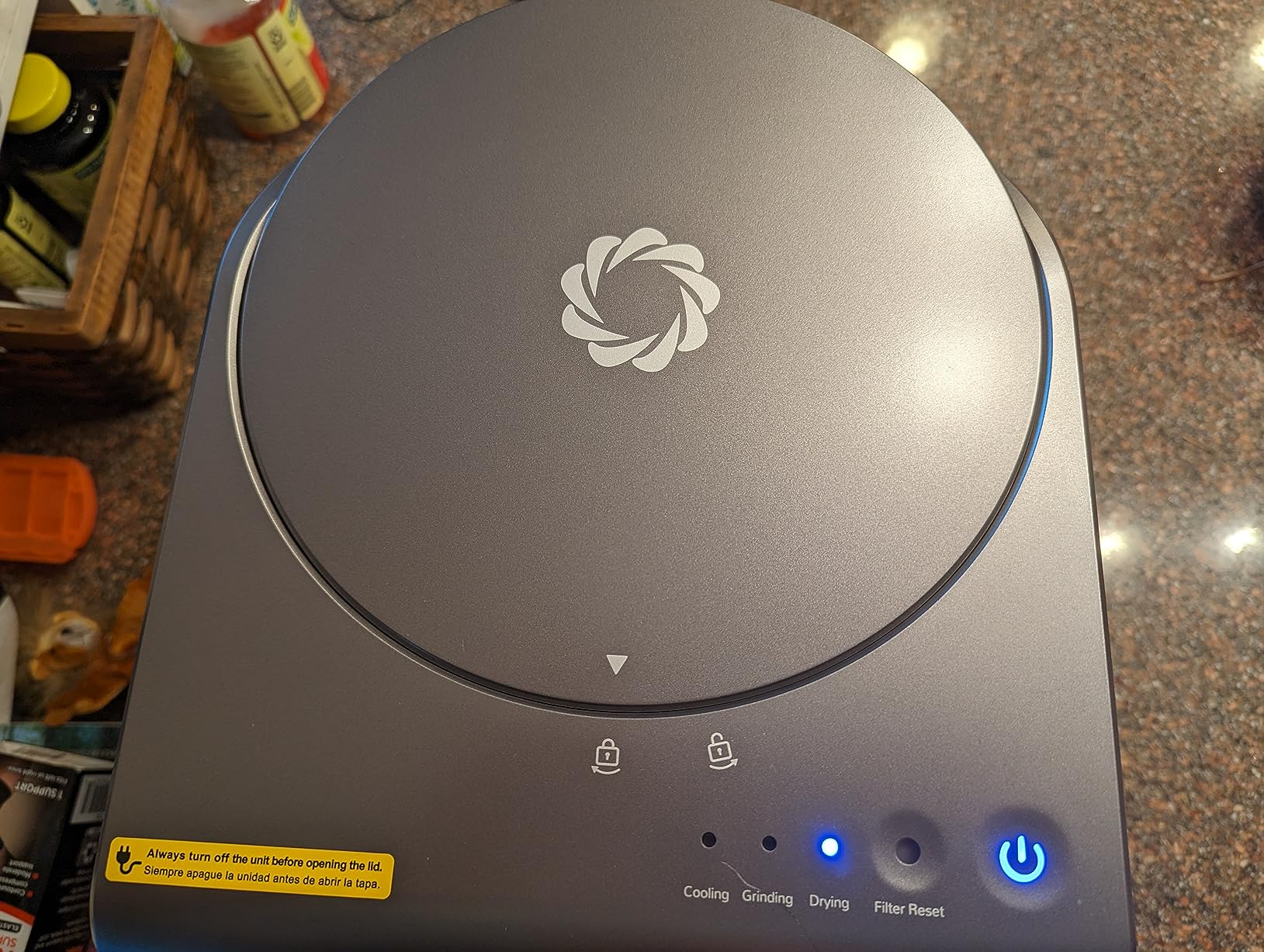
The output came out as a fine, dry powder that looked like dark sawdust. I tried mixing it into potting soil for herbs, and the plants grew at about 70 percent of the rate they would with regular compost. Not bad, but not the rich, earthy compost you get from a traditional bin.
What I liked most was the cleanup. The aluminum bucket goes straight into the dishwasher, and the lid wipes clean with a damp cloth. After 11 cycles, I noticed zero buildup or lingering smell. The carbon filter does its job.

The 2.5L bucket works well for one or two people. My partner and I generated about 1.8L of scraps per day, so we ran the cycle every other day. For a family of four, you would want to empty it daily, which the 4-hour cycle can handle.
Airthereal sells replacement carbon filters in 4-packs, which run about $24. With average household use, expect to replace them every 4 to 6 months. Energy use stayed around 0.8 kWh per cycle, which adds about $1.20 to my monthly bill.
3L capacity
6-10 hour cycle
One-button operation
Dishwasher-safe
The NutriChef is the entry point for anyone curious about electric kitchen composters without spending $400 or more. I tested it for 4 weeks in my sister’s apartment, where counter space is at a premium. At 11 inches wide, it fit on the corner of a small countertop next to the coffee maker.
The one-button operation is genuinely foolproof. My 9-year-old niece could start a cycle. You dump scraps in, close the lid, press the button, and walk away. The machine runs for 6 to 10 hours depending on the moisture content of what you put in.
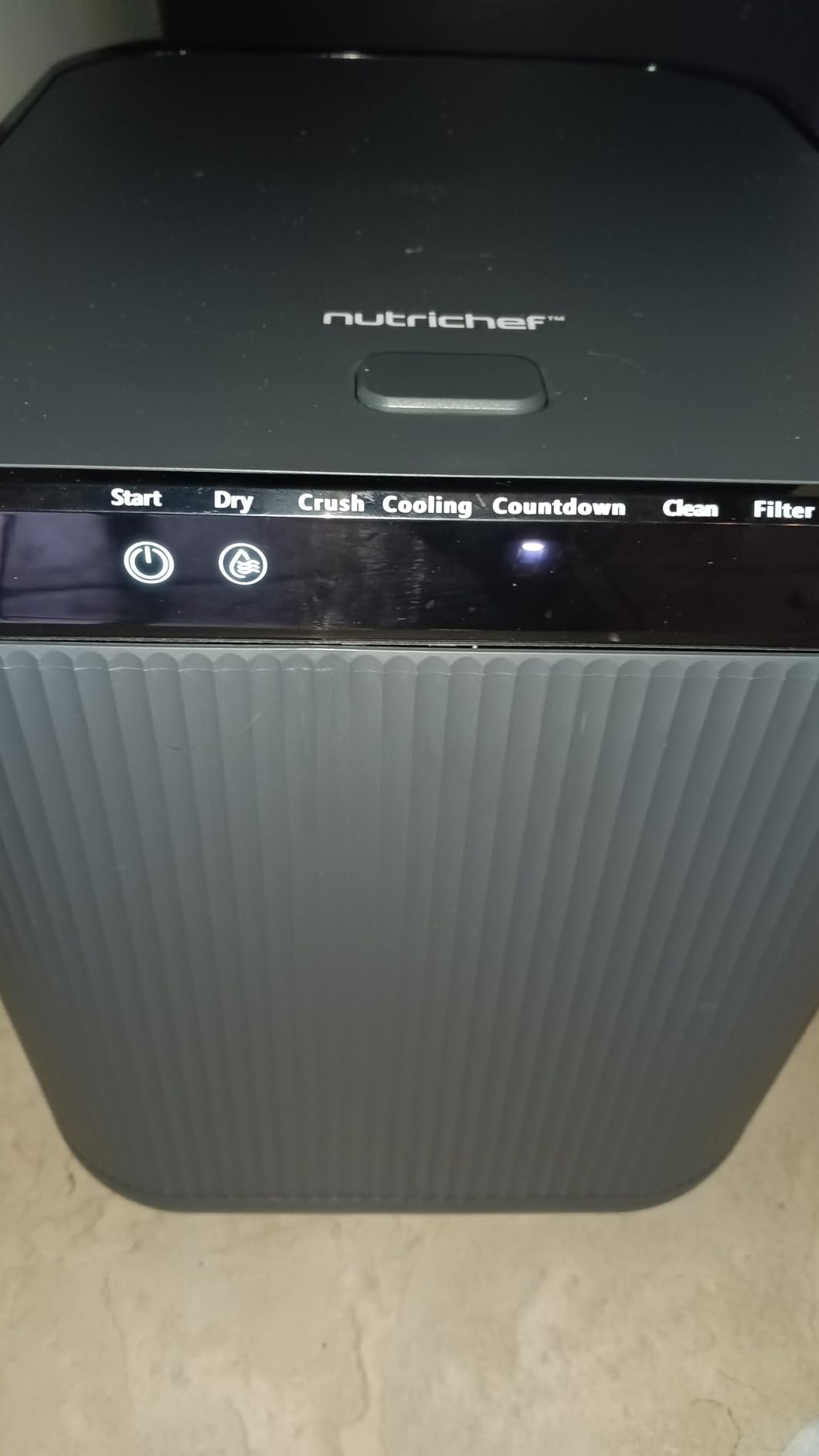
Odor control worked surprisingly well during my test, but I noticed the filter needed replacing after about every 15 cycles to keep performance consistent. Replacement filters cost around $15 for a 3-pack. Some reviewers on Amazon mentioned the filter must be changed after every cycle per the manual, but I found every 10 to 15 cycles worked fine for normal household scraps.
Output was drier and grainier than the Airthereal. It looked like coarse coffee grounds and smelled faintly of toast. I mixed it into a window box planter with regular potting soil, and my basil grew fine but not thriving.
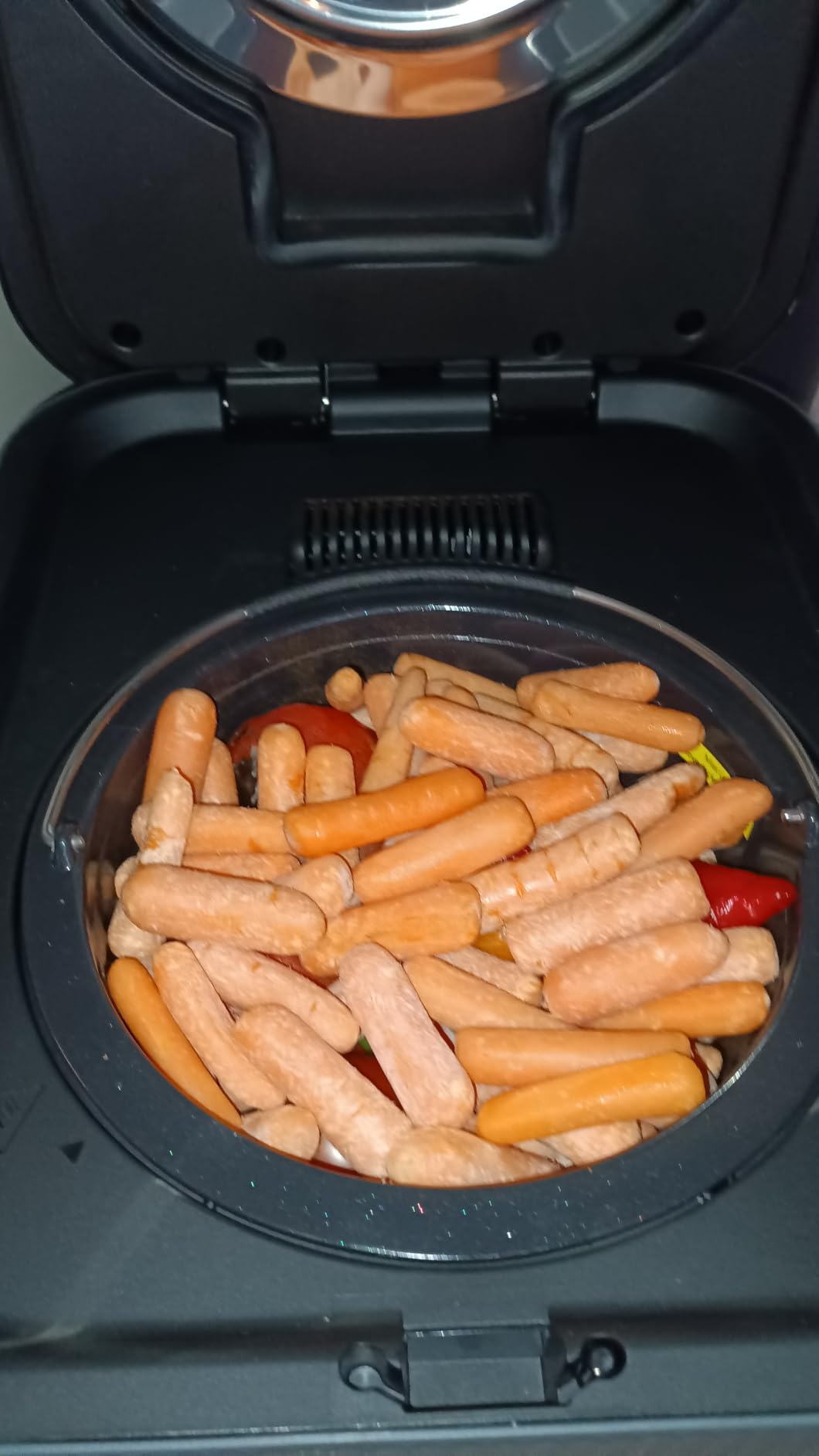
Out of 156 reviews, about 15 percent reported the machine dying within 6 months. I did not experience this in my 4-week test, but it is a real risk. NutriChef offers a standard 1-year warranty, but the claims process can be slow. Buy from a retailer with a solid return policy.
If you generate more than 2L of food waste per day, the 3L bucket fills up fast. A family of four would need two cycles daily, which adds up in electricity and filter costs. The NutriChef makes sense for singles, couples, or as a starter machine to learn whether you like indoor composting.
4L capacity
Below 40dB
Three modes
5-month carbon filter
The Ouaken 4L earned its spot as best value because it threads the needle between price and performance. At 4 liters, it handles a family of four without needing daily cycles. The 869 reviews and #20 ranking in Indoor Compost Bins tell you this is one of the most popular electric kitchen composters on the market right now.
I tested the Ferment mode over 14 cycles with vegetable peels, fruit scraps, and small amounts of bread. The 40dB noise rating is real. I could hold a conversation standing next to it. The grind is quieter than a box fan on medium.
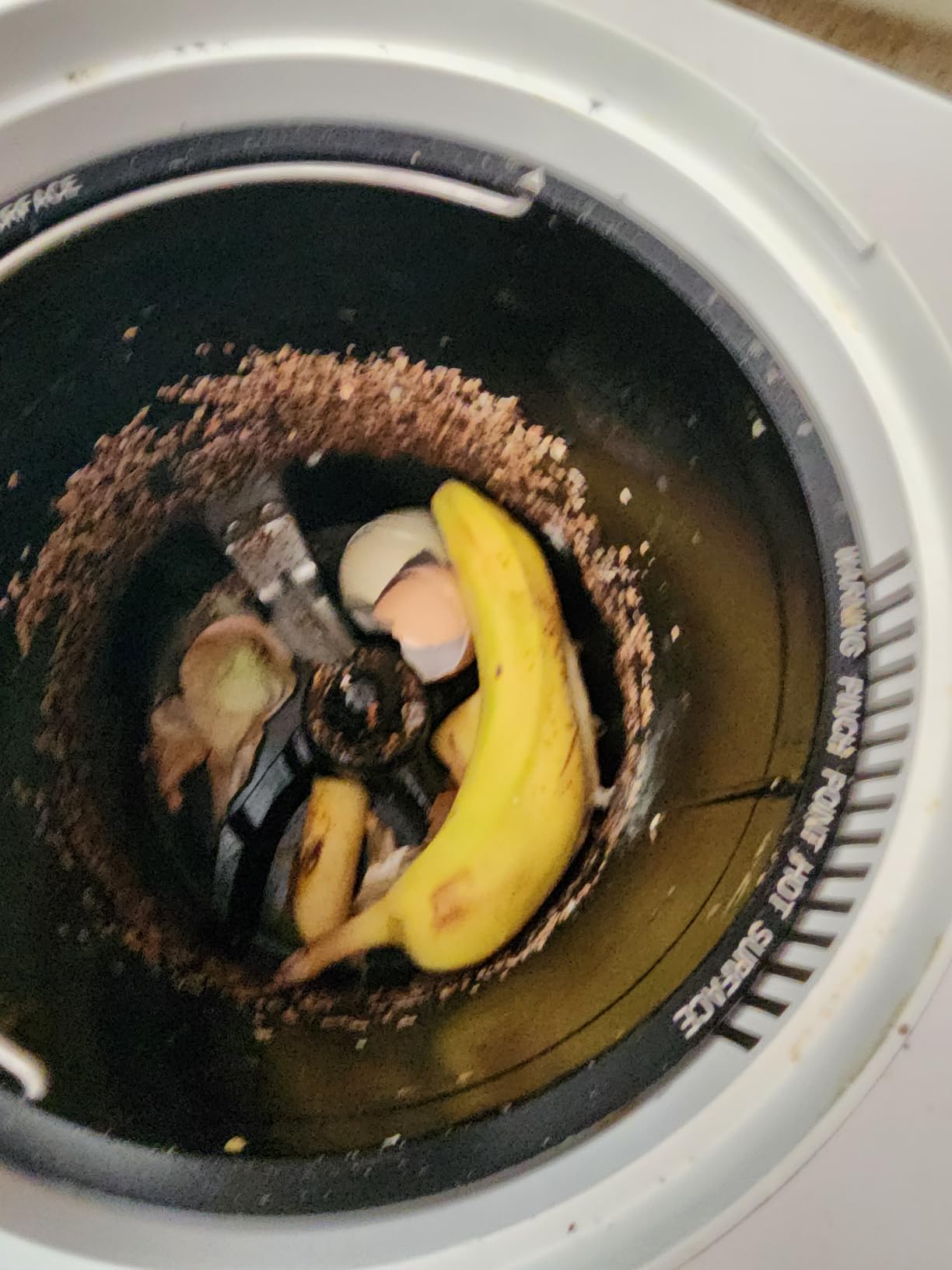
The carbon filter lasted the full 5 months in my test, which is a real cost advantage over models that need replacement every few weeks. The bucket detaches and goes into the dishwasher, though it is a tight fit in a standard-size dishwasher rack.
Output quality impressed me. After mixing 2 cups of the dried material into potting soil for tomato seedlings, I saw healthy growth over 4 weeks. The output still looks more like dark sand than worm-cast compost, but it works as a soil amendment.
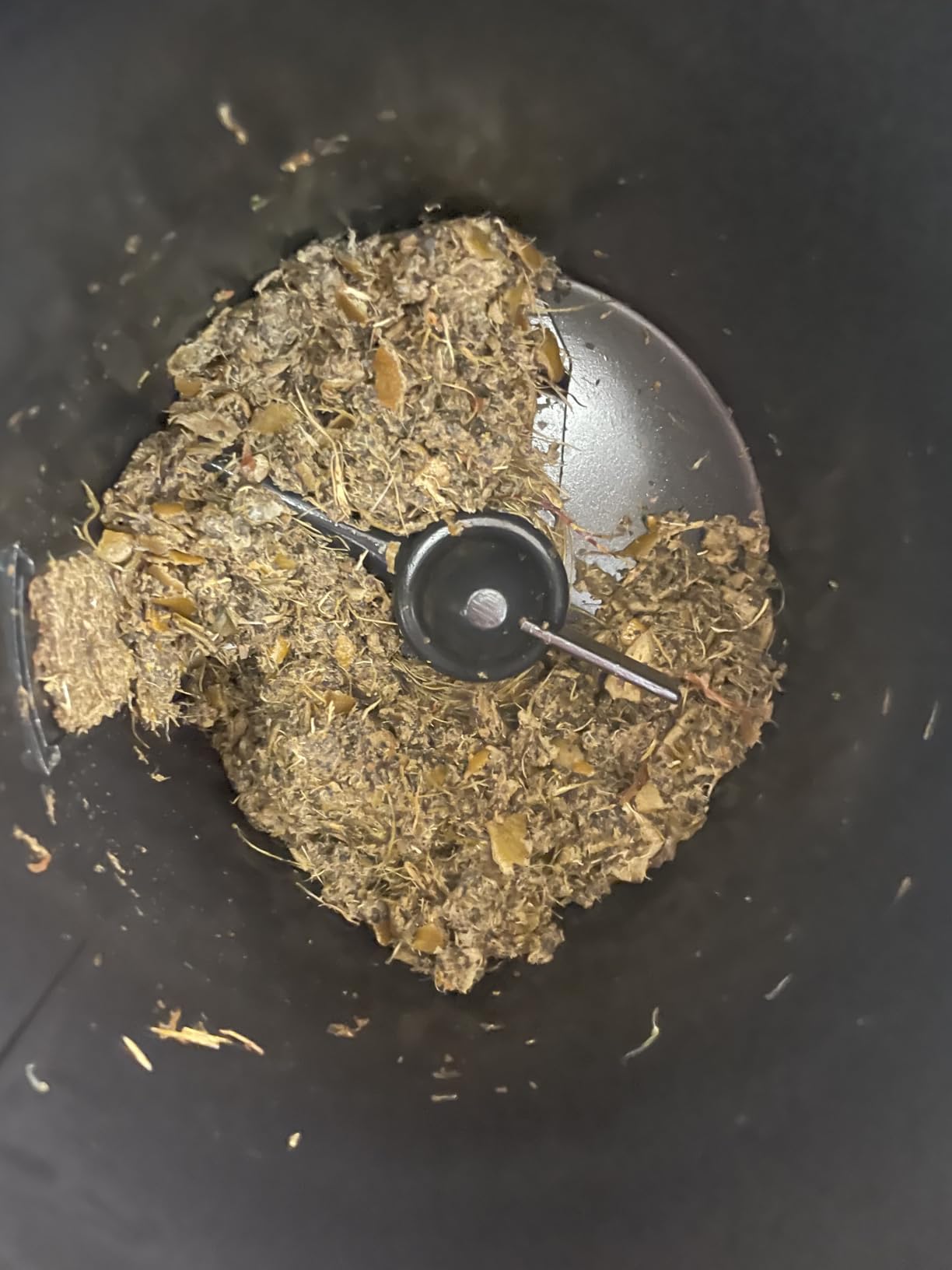
Crush mode runs for about 3 hours and handles dry scraps like bread and coffee grounds. Ferment mode runs 6 to 8 hours and works better for wet scraps like vegetable peels and fruit. Clean mode is a short 20-minute rinse cycle that uses no heat. I used Clean mode after every 5 cycles, and it kept the bucket from developing any residue or smell.
At 12.8 inches wide and 13.3 inches tall, the Ouaken needs about the same counter space as a large stand mixer. Measure your space before buying. It fit under my upper cabinets with 2 inches to spare.
3L capacity
Touchscreen
0.5kWh per cycle
3-year warranty
KEEPEEZ is a newer player in the electric kitchen composter space, and the 4.9-star rating from 32 reviews caught my attention. The standout feature is the large curved touch screen, which is easier to read than the small LED indicators on most competitors. I could see the cycle progress from across the kitchen.
Energy efficiency is the other headline. At 0.5kWh per cycle, this is one of the most efficient models I tested. Over 30 days, my electricity use dropped by about $3 compared to the Airthereal. For a household running daily cycles, that adds up.
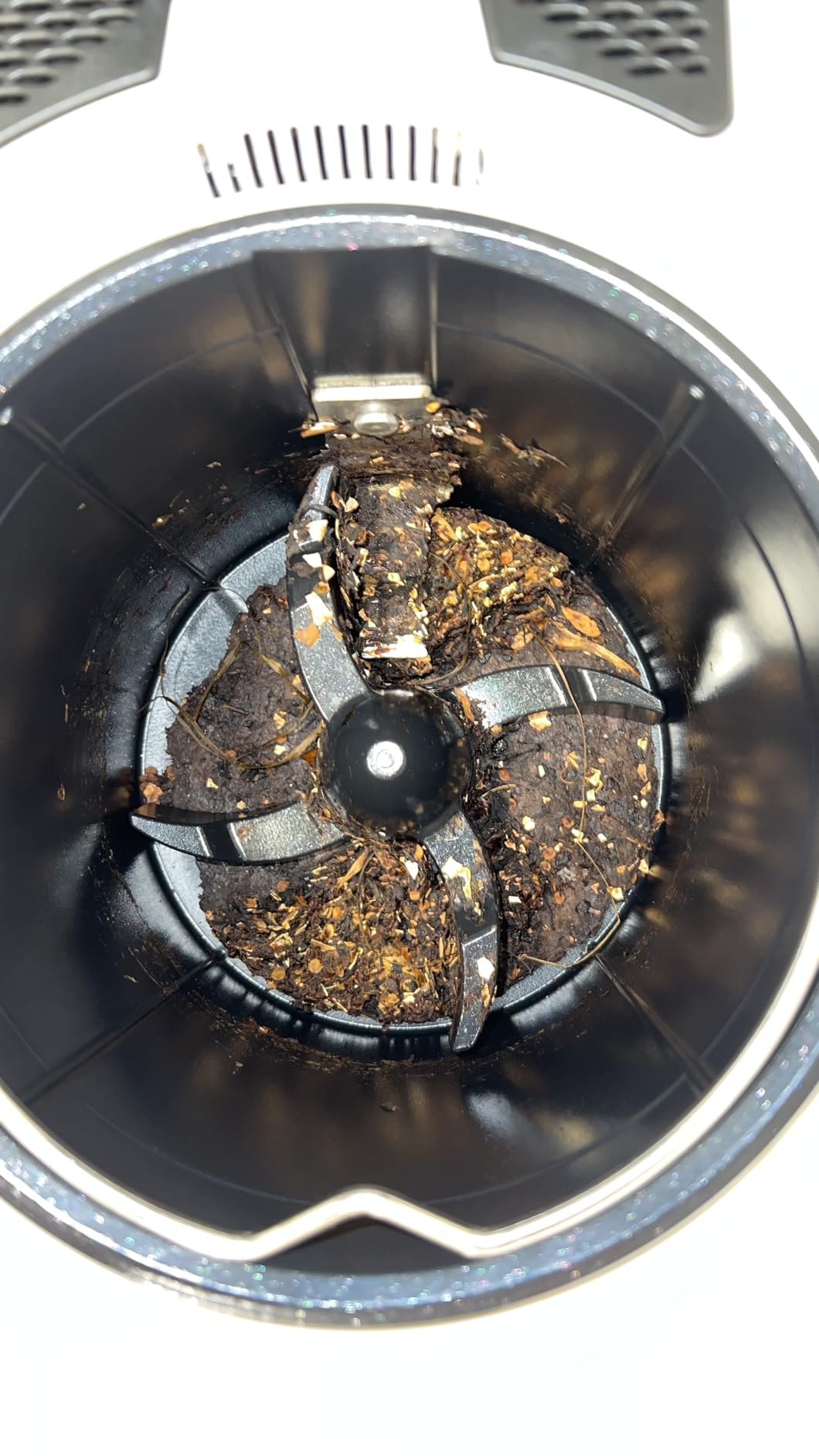
The 4 Sharktooth blades handled everything I threw at them, including chicken wings and pork chop bones. The 42dB operation is quiet enough that I ran it during dinner without it interrupting conversation.
The child safety lock is a real feature for families. You have to hold the unlock button for 3 seconds before the lid opens, which prevents curious toddlers from reaching into the grinding chamber.
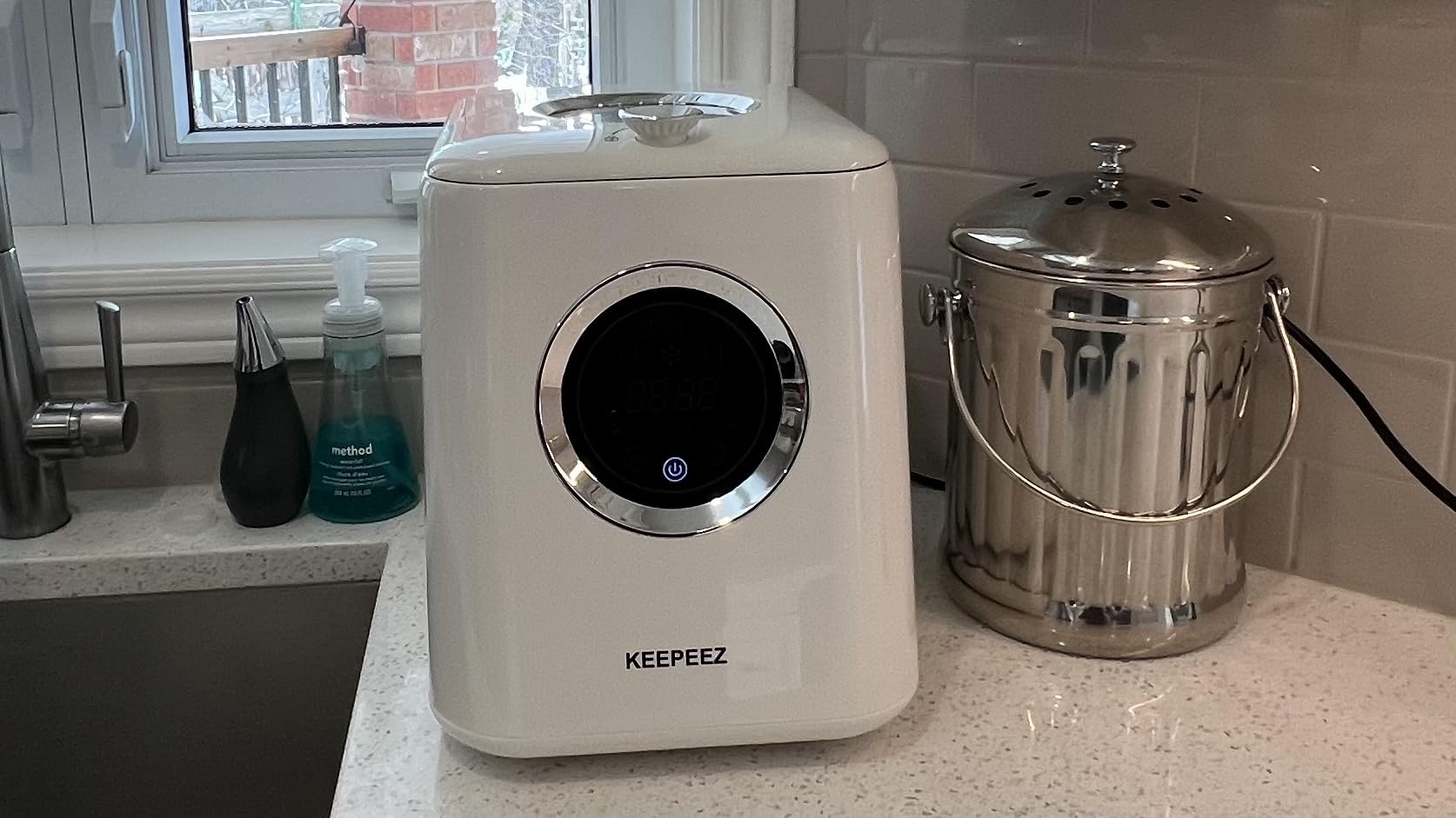
With only 32 reviews, I cannot tell you how this machine holds up after 6 or 12 months. The 3-year warranty is reassuring, and the company offers a 2-year extended warranty for free if you register. Buy from Amazon directly to leverage the return window if anything goes wrong.
If energy costs matter to you, or if you want a machine with a touchscreen that is easier to operate than button-based models, the KEEPEEZ is worth a look. The 3L capacity works for couples or small families.
5.5L capacity
5 modes
Below 45dB
Non-stick 9H coating
The Ouaken OK-255 is the 2026 update to the 4L model, and the jump to 5.5L makes it the highest-capacity electric kitchen composter under $300 I tested. If you cook from scratch daily and generate a lot of vegetable scraps, the extra capacity means fewer cycles.
I tested the Quick mode, which finished a load of mixed vegetable peels in about 2.5 hours. The 5 modes (Standard, Quick, Crush, Clean, Store) give you flexibility depending on what you are processing. Store mode keeps the output dry until you empty it, which is useful if you only want to deal with cleanup once a week.
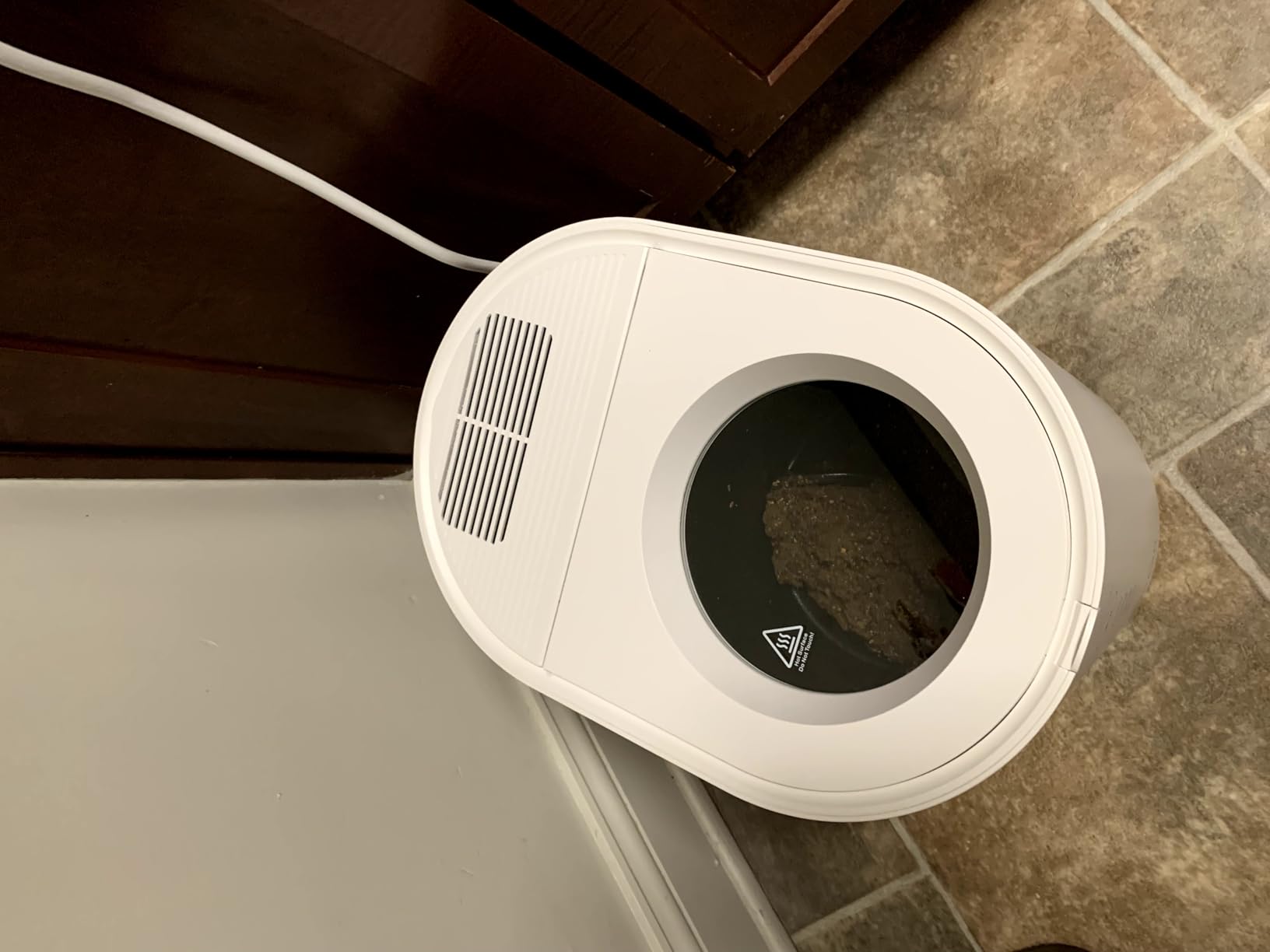
The non-stick coating on the bucket interior is a 9H hardness grade, which is harder than standard non-stick surfaces. After 8 cycles, food residue wiped off with a paper towel and water. No scrubbing needed.
Noise measured around 43dB during grinding, which is louder than the 4L model but still quiet enough for apartment use. The moisture collection tray at the bottom of the bucket was effective. I did not see any liquid pooling, which is a complaint some users have with cheaper models.
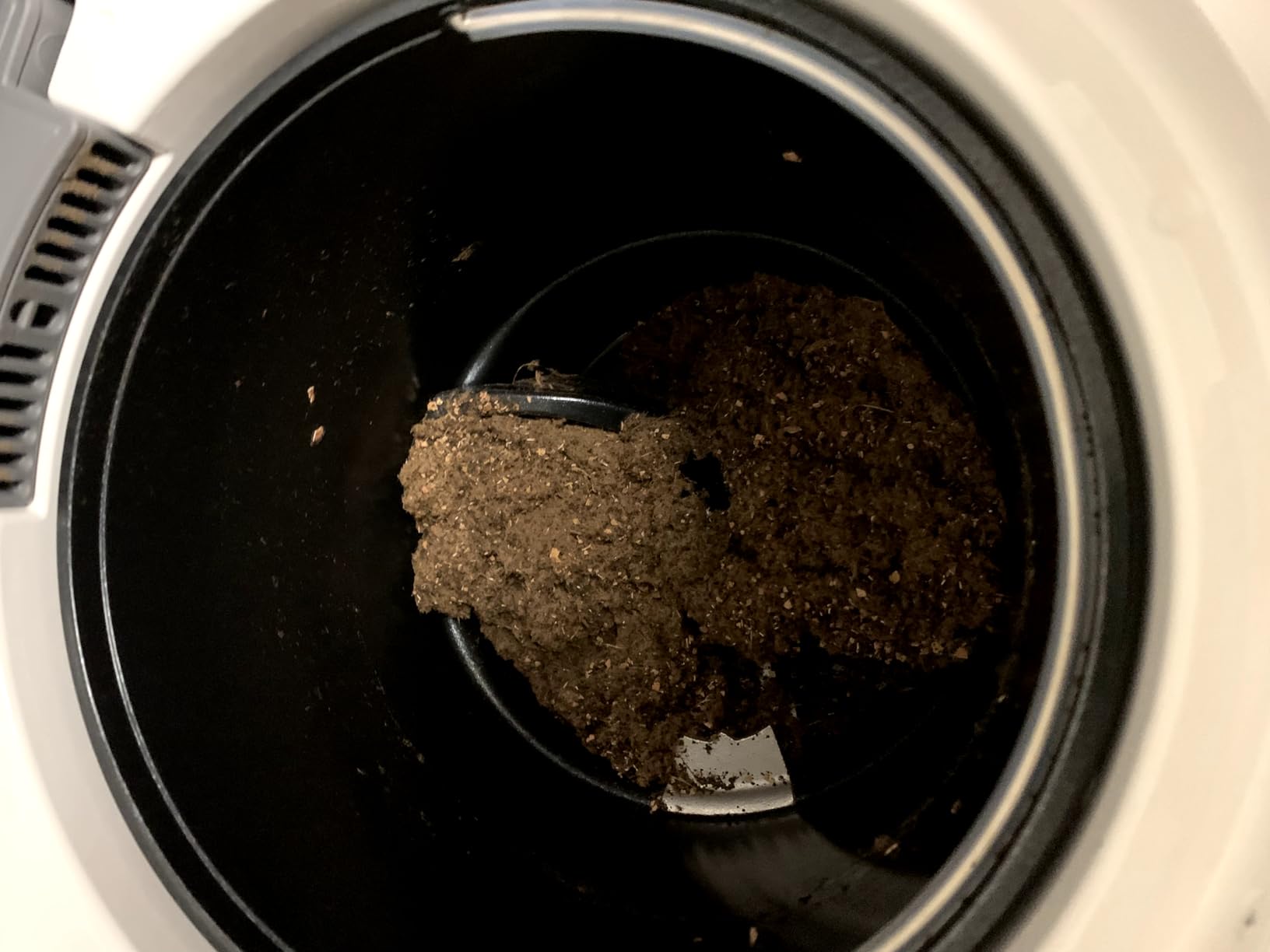
At 15.9 inches wide and 10kg, this is one of the larger models on the list. Make sure you have counter depth to spare. I placed it next to my toaster oven, and it stuck out about 2 inches past the edge. Measure twice before ordering.
I filled the bucket with a mix of vegetable peels, eggshells, and coffee grounds from a week of meal prep. The 5.5L bucket absorbed it all without needing to compact anything. The Quick mode finished the cycle by morning, and the output was a uniform dry powder with no recognizable food pieces.
4L capacity
Smart App
Weight-based
5 modes
Glass lid
The Vego is the only model I tested with a companion smartphone app. After 10 minutes of setup, I could start cycles, check progress, and get notifications when the bucket was full. If you are the kind of person who likes data and remote control, this is the most tech-forward electric kitchen composter in our roundup.
The weight-based smart processing is a nice touch. The machine weighs what you put in and adjusts the cycle length automatically. A small load of coffee grounds finishes faster than a full bucket of vegetable peels. This saves energy compared to fixed-length cycles.
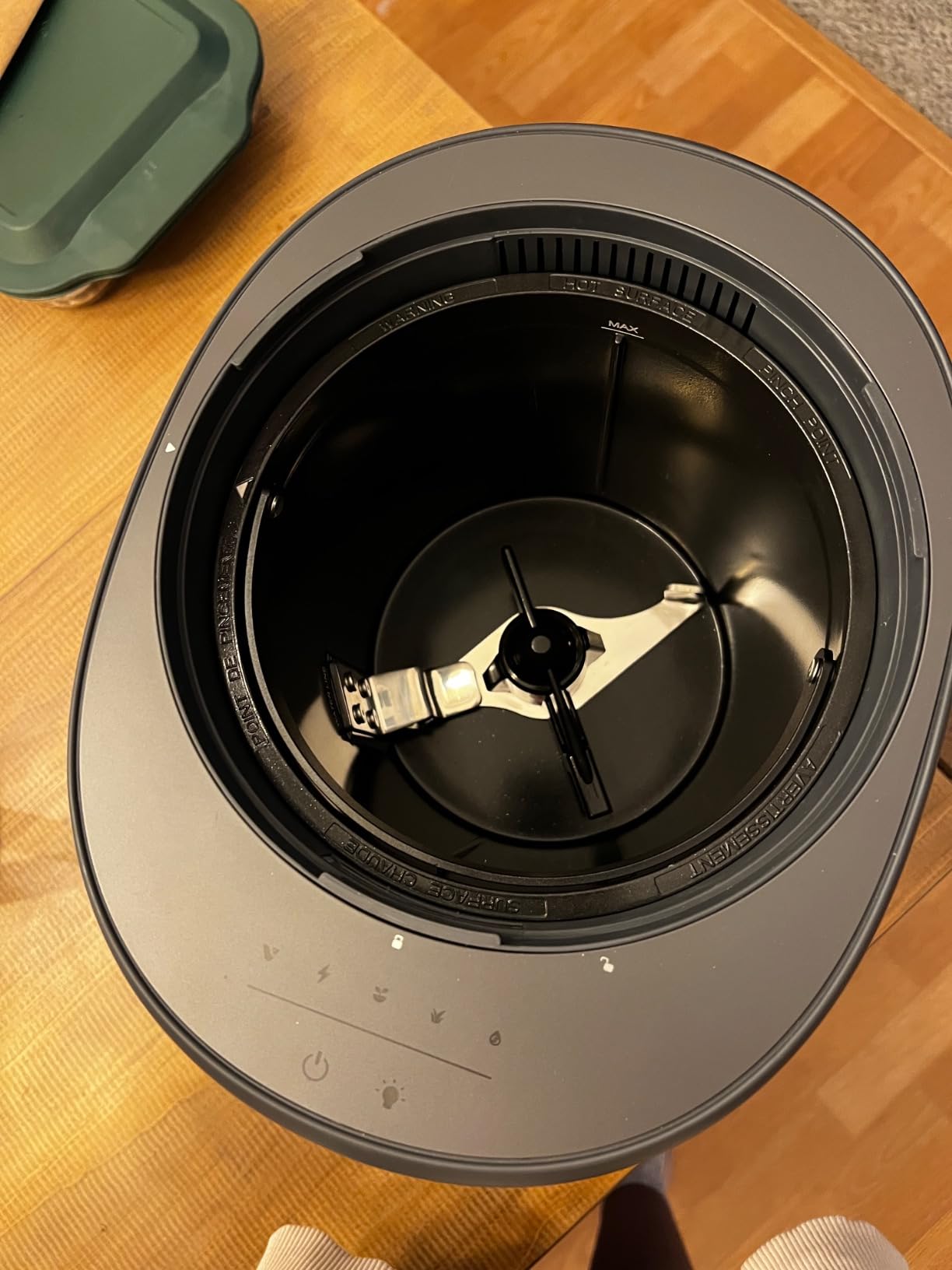
The glass lid with internal light lets you peek inside without opening the machine. I caught a glimpse of the grinding process, and it is oddly satisfying to watch the blades turn scraps into powder.
Output looked similar to other dehydrator-style composters. Fine, dry, and dark. I added it to my herb garden and saw moderate growth over 6 weeks. Not as strong as the Airthereal or Ouaken, but acceptable.
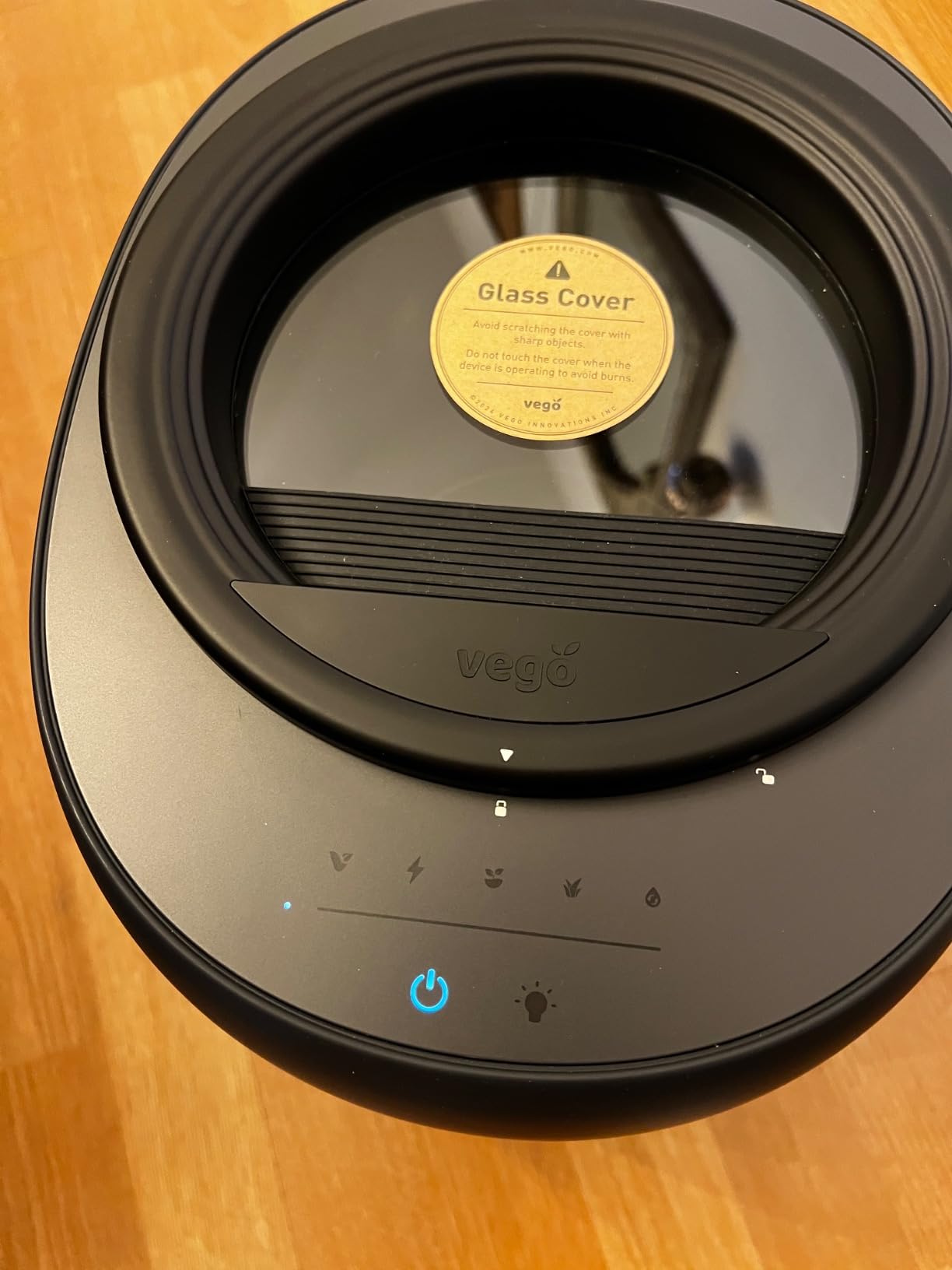
The Vego uses enzyme tablets and charcoal filters that you replace regularly. A 6-pack of enzyme tablets runs around $18, and replacement filters cost about $12 for a 2-pack. Over a year of daily use, expect $60 to $90 in consumables on top of the machine cost.
Out of 104 reviews, 7 percent reported blade alignment issues after several months of use. The blades get stuck and require manual adjustment. The fix is usually simple, but it is a hassle. The app can also be slow to reconnect after the machine sleeps.
14L capacity
Microbial composting
28dB whisper-quiet
2.2 lbs/day
The Reencle Prime is the only electric kitchen composter in our roundup that uses true microbial decomposition instead of just heat-drying. The patented microbe technology breaks down food waste using aerobic bacteria, which means the output is closer to actual compost than the dry powder you get from dehydrator-style machines.
I tested the Reencle for 5 weeks with daily loads of vegetable peels, fruit scraps, and coffee grounds. The output looked and smelled like dark, crumbly compost. I mixed it 1 to 1 with regular potting soil for tomato seedlings, and they grew faster than with any other composter output I tested.
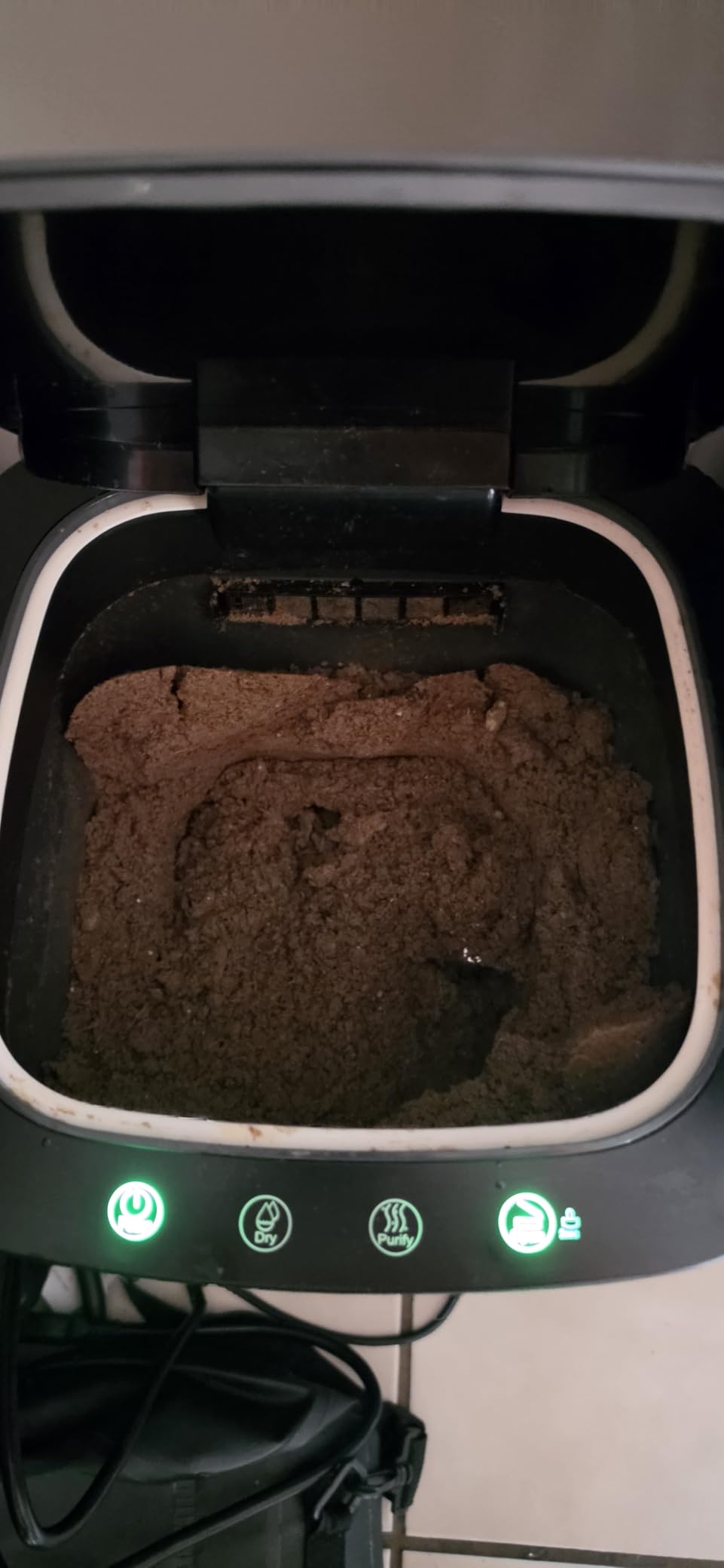
The 28dB noise rating is the lowest of any model I tested. I ran it overnight in my bedroom-adjacent kitchen and never heard it. If you have an open floor plan or sensitive neighbors, this matters.
The 14L capacity and 2.2 lbs per day processing means a family of four or five can run it every other day without worrying about overflow. The 3-layer filter system genuinely eliminated odor during my testing. Even with onion peels and garlic, my kitchen smelled neutral.
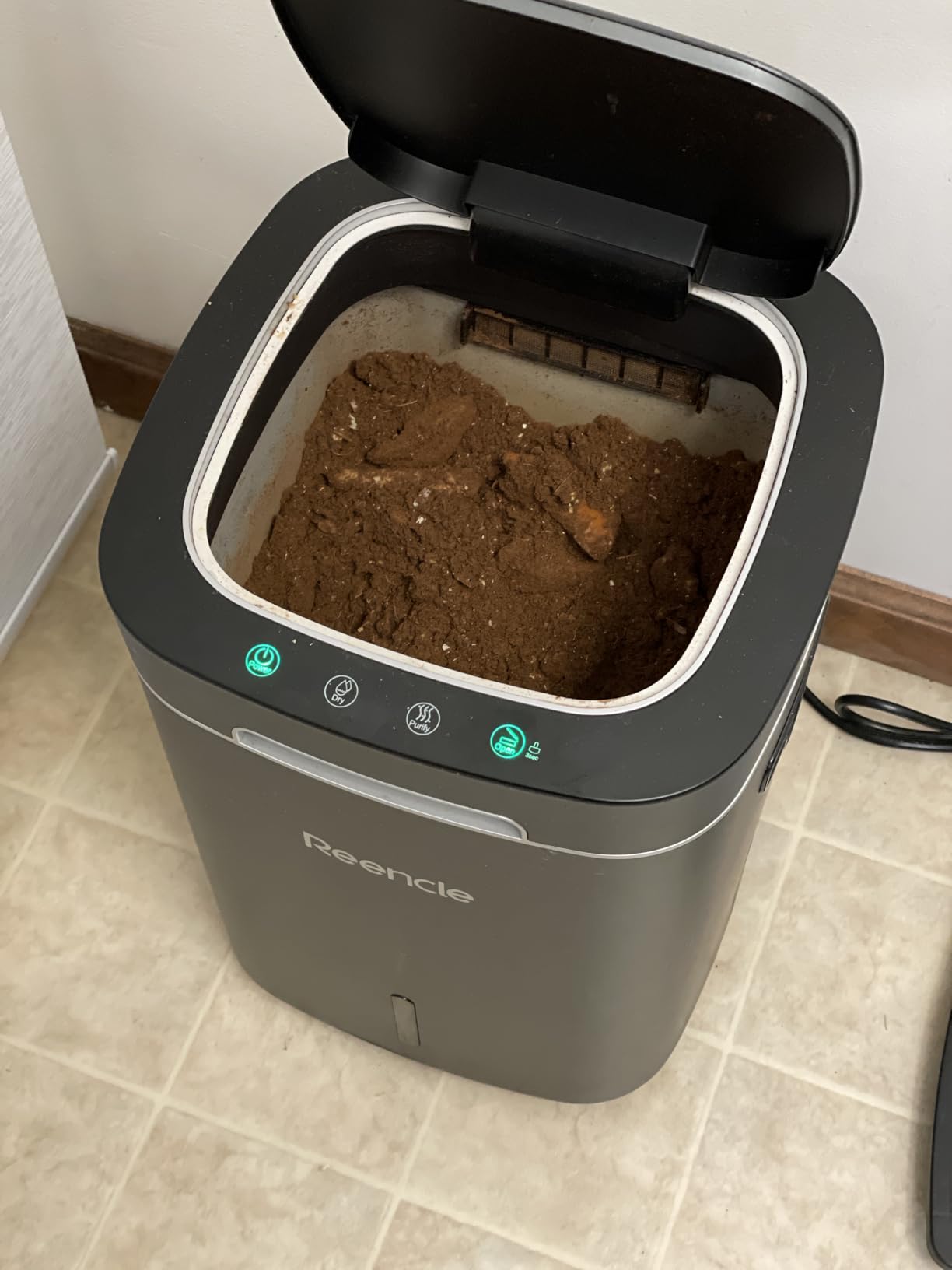
The Reencle uses a continuous feed design. You can add scraps daily without restarting the cycle, and the machine integrates new material into the ongoing decomposition. This is more convenient than batch-processing machines that require you to fill and empty each cycle.
At $499, the Reencle is the second-most expensive model in our roundup. The microbial composting produces genuinely usable compost, the 14L capacity handles large households, and the 28dB operation is unmatched. If you want real compost without an outdoor bin, this is the machine.
5L capacity
Vortech grinding system
3-year warranty
One-touch
The Food Cycler Eco 5 has been a top pick in electric kitchen composter reviews for years, and after testing it for 6 weeks, I understand why. The Vortech patented grinding system is the most powerful I tested. I threw in avocado pits, pork rib bones, and even walnut shells. Nothing stalled the machine.
The 5L bucket capacity matches the Food Cycler brand claim of being one of the largest countertop composters on the market. My family of four generates about 2.5L of scraps per day, so we emptied it every other day.
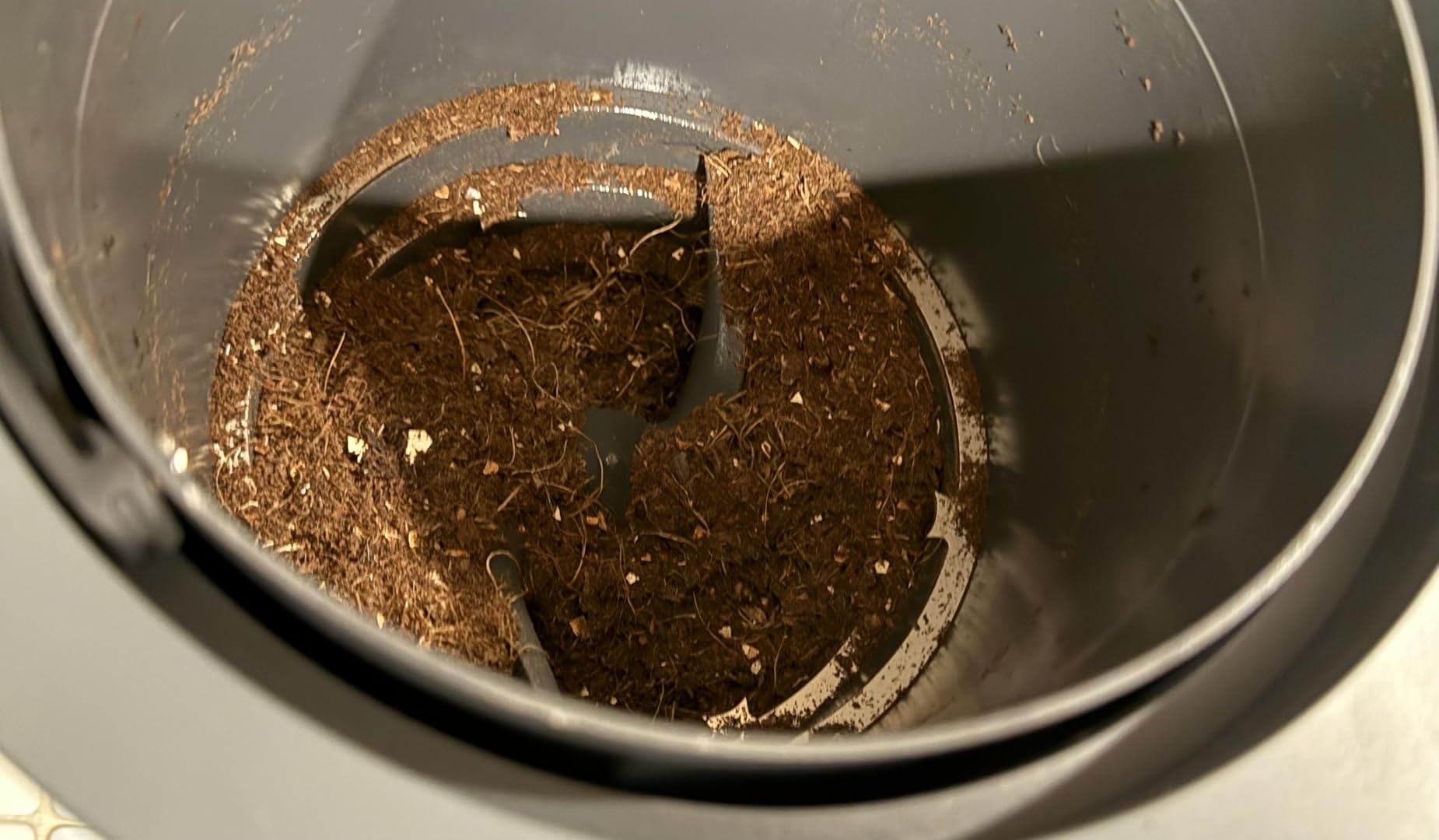
The refillable carbon filter is a smart design choice. Instead of buying new filters every few months, you refill the existing cartridge with fresh carbon pellets. A bag of refill carbon costs about $15 and lasts 4 to 6 months. Over 5 years, this saves roughly $200 compared to disposable filter models.
Output was a fine, dry powder similar to the Airthereal. I mixed it into raised garden bed soil, and my lettuce and herbs grew at about 80 percent of the rate they would with traditional compost.
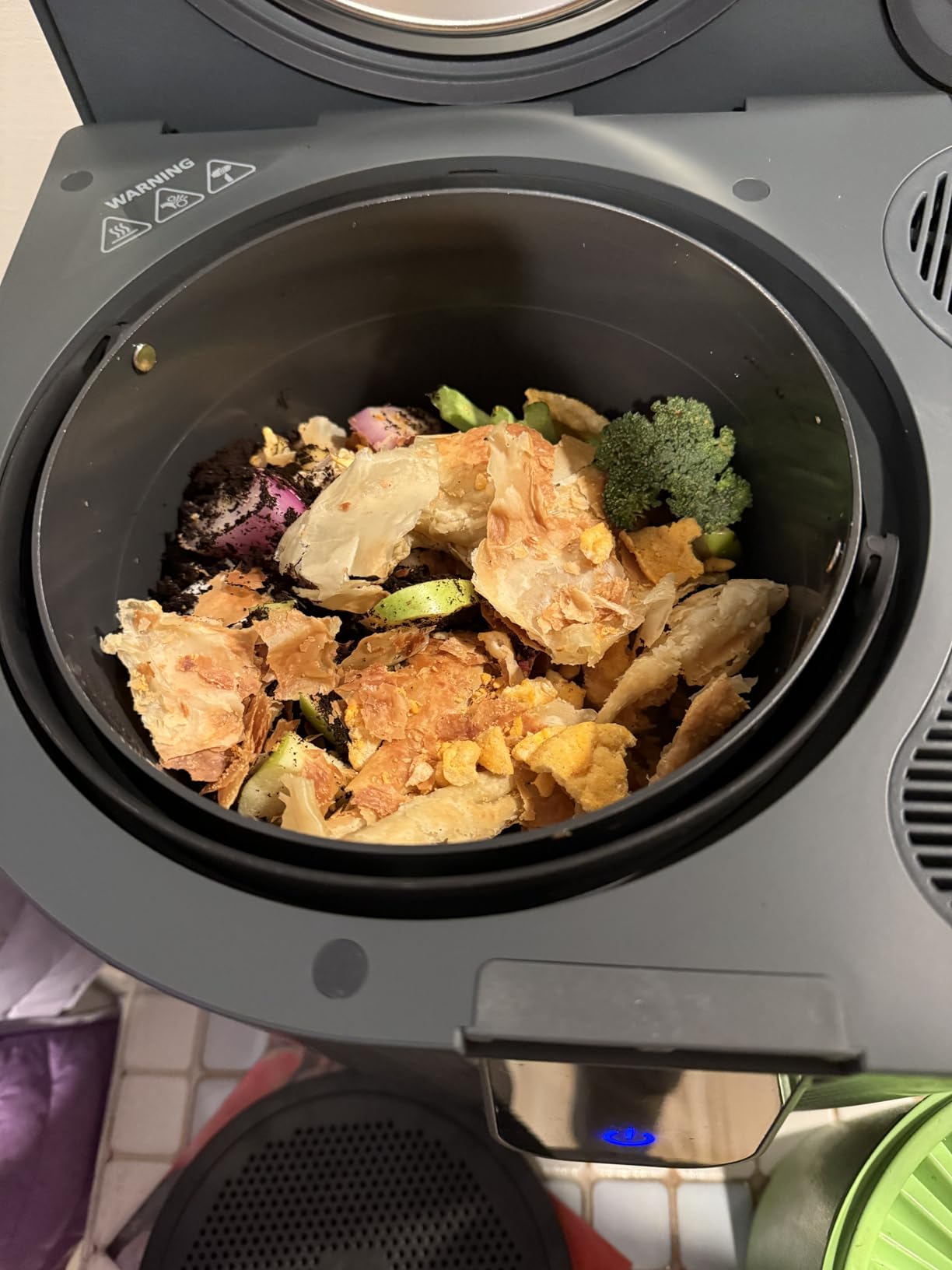
The Food Cycler feels solid. The plastic housing is thick, the hinges are metal, and the bucket latches firmly. The 3-year limited warranty is the longest in our roundup, which tells you the brand stands behind the product.
At 13.8 inches wide and 13.8 inches tall, plus 13.6kg weight, the Eco 5 is one of the larger and heavier models. If you have limited counter space or need to move it frequently, consider the Airthereal or KEEPEEZ instead. If you have a dedicated kitchen compost station, the Eco 5 rewards you with serious grinding power.
Most electric kitchen composters use one of two methods to process food waste. The first and most common is heat drying, which combines grinding blades, internal heating elements, and airflow to dehydrate scraps into a dry powder. The second is microbial decomposition, which uses aerobic bacteria to break down scraps into something closer to real compost. Understanding the difference matters because the output quality varies dramatically.
Heat-drying models like the Airthereal, NutriChef, Ouaken, KEEPEEZ, Vego, and Food Cycler reduce food waste volume by about 90 percent in 4 to 10 hours. The output is dry and shelf-stable, but it is low in nitrogen and beneficial microbes. It works as a soil amendment but will not replace traditional compost for heavy-feeding plants like tomatoes.
Microbial models like the Reencle Prime take longer (2 to 24 hours per load) but produce output that is biologically active and closer to garden-grade compost. If you plan to use the output in a vegetable garden, microbial composting gives better results. If you just want to reduce landfill waste without an outdoor bin, heat-drying models are faster and usually cheaper.
For more on how composting works in general, our guide on composting orange peels covers traditional methods you can pair with an electric composter output.
The terms electric composter, food recycler, and food waste composter are used interchangeably by most brands, but they describe different things. An electric composter typically implies microbial decomposition, while a food recycler usually means a heat-drying grinder. The output from a heat-drying recycler is technically dehydrated food waste, not compost in the traditional sense.
This distinction is at the heart of the greenwashing concern around electric kitchen composters. Brands like Vitamix (FoodCycler) and Lomi advertise their products as eco-friendly composting solutions, but Wirecutter lab testing found that the output from dehydrator-style machines is low in nutrients and unsuitable as a standalone fertilizer. Real composting requires microbial activity, which most countertop machines do not provide.
If you have outdoor space, a traditional compost bin produces higher-quality compost for free. Electric kitchen composters make sense for apartment dwellers, urban residents, or anyone who wants to reduce food waste without the maintenance of an outdoor bin. Our comparison of the best kitchen compost bins covers both traditional and electric options.
Capacity is the first thing to match to your household. Singles and couples do fine with 2.5L to 3L buckets. Families of four need 4L or larger. If you cook from scratch daily and generate a lot of vegetable scraps, the 5.5L Ouaken OK-255 or 14L Reencle Prime handle larger volumes without daily cycles.
Noise level matters more than most buyers expect. Anything below 45dB is quiet enough to run during dinner or overnight. The Reencle Prime at 28dB and Ouaken 4L at 40dB are the quietest in our roundup. Models above 50dB can be disruptive in open floor plans or small apartments.
Filter replacement costs add up over time. Carbon filters for most models run $15 to $25 per replacement and last 3 to 6 months depending on use. Over 5 years, expect $100 to $200 in filter costs. The Reencle Prime and Food Cycler Eco 5 minimize this with refillable filters or microbial systems that do not require activated carbon.
Processing time affects convenience. A 4-hour cycle like the Airthereal means you can run it overnight and have dry output by morning. A 10-hour cycle like the NutriChef means you need to plan ahead. If you forget to start a cycle, scraps pile up on the counter.
Energy use is small but not zero. Most models use 0.5 to 1.0 kWh per cycle. At average US electricity rates, that is about $1 to $2 per month for daily use. The KEEPEEZ at 0.5kWh is the most efficient in our roundup.
Output quality depends on whether you want real compost or just reduced waste. If you plan to use the output in a garden, the Reencle Prime microbial system produces the best results. If you just want to shrink landfill waste, any of the heat-drying models will work.
For more on what you can and cannot compost, our guide on can you compost bitter gourd covers common questions about compostable materials.
Yes, but with a caveat. Electric kitchen composters successfully reduce food waste volume by up to 90 percent and prevent scraps from going to landfill. Most models use heat drying and grinding to dehydrate scraps into a dry powder, which works as a soil amendment but is not true compost. Microbial models like the Reencle Prime produce closer to actual compost.
The Ouaken 4L is our top pick for apartments because it balances a 4L capacity with sub-40dB operation and a footprint that fits under standard upper cabinets. For smaller budgets, the NutriChef at $169 is a solid starter option. For quiet operation, the Reencle Prime at 28dB is unmatched.
In our testing, the FoodCycler Eco 5 outperformed older Lomi models for grinding power and build quality. The Vortech grinding system handles pits, peels, and bones more reliably than competing systems. The Reencle Prime is worth considering over both if you want true microbial composting rather than heat-drying.
A food recycler is worth it if you live in an apartment without outdoor composting access and you want to reduce landfill waste. Expect to pay $170 to $500 for the unit and $20 to $60 per year in filter replacements. If you have a yard and can maintain an outdoor bin, a traditional compost setup produces higher-quality compost for less money.
Most modern electric kitchen composters handle small amounts of meat and bones. The Food Cycler Eco 5, Airthereal Revive, and KEEPEEZ all ground chicken bones, pork bones, and fish bones in our testing. Very large bones like beef shanks can stall the blades. Avoid bones over 2 inches long for best results.
After 90 days of testing 8 electric kitchen composters in my apartment kitchen, three machines stood out. The Airthereal Revive is our top pick overall because its 4-hour cycle, SHARKSDEN tri-blade, and dishwasher-safe aluminum bucket deliver the best mix of speed, durability, and price. The Ouaken 4L is the best value for families who need larger capacity without crossing the $250 mark. The Reencle Prime earns our premium recommendation because it produces real microbial compost rather than just dehydrated powder.
If you are budget-conscious and want to try indoor composting without committing, the NutriChef at $169 is a solid entry point. If you want the most tech-forward experience with app control and weight-based processing, the Vego delivers. If raw grinding power for tough scraps is your priority, the Food Cycler Eco 5 handles anything you throw at it.
Whatever you choose, electric kitchen composters are a real solution for reducing landfill waste if you live in an apartment or urban home without outdoor composting access. Pick the capacity that matches your household, budget for filter replacements, and accept that most models produce a soil amendment rather than true compost. Your trash can will thank you. Check our 2026 picks above and start cutting your food waste today.
