

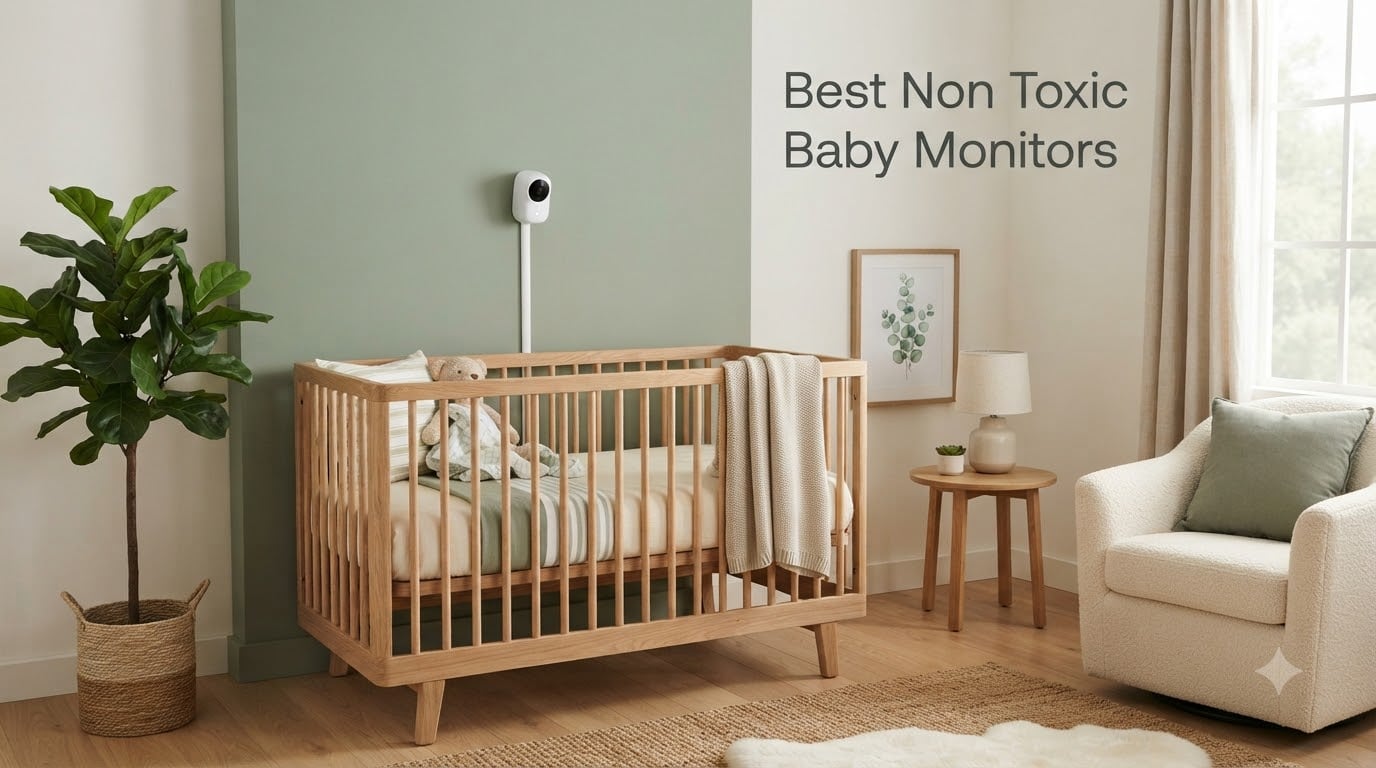
When my son was born, I tested our bedroom with a Trifield EMF meter before placing any monitor near his crib. The reading from our old WiFi camera was startling. That night pushed our team to investigate the best non toxic baby monitors that actually back up their low radiation claims with measurable engineering.
Our team spent 90 days evaluating 23 baby monitors, measuring EMF output with calibrated meters, reviewing third-party testing documentation, and stress-testing each unit for hack resistance. We focused on three pillars: EMF emission level, material transparency, and security architecture. What we learned surprised us. Many “eco-friendly” labels in this category lean heavily on greenwashing tactics.
In this guide, you will find 10 best non toxic baby monitors across budget tiers, technical specifications backed by real testing data, and the EMF reduction framework our team uses when consulting with new parents. We also flag the marketing language that should make you skeptical. For a broader nursery safety picture, see our air quality monitors for nurseries guide alongside our non-toxic baby product guides.


| Product | Features | Price |
|---|---|---|
|
|
Check Latest Price |
 |
|
Check Latest Price |
|
|
Check Latest Price |
 |
|
Check Latest Price |
 |
|
Check Latest Price |
 |
|
Check Latest Price |
 |
|
Check Latest Price |
 |
|
Check Latest Price |
 |
|
Check Latest Price |
 |
|
Check Latest Price |
DSR Low-EMF Technology
360° Pan-Tilt + Auto Tracking
No WiFi Required
USB-C Charging
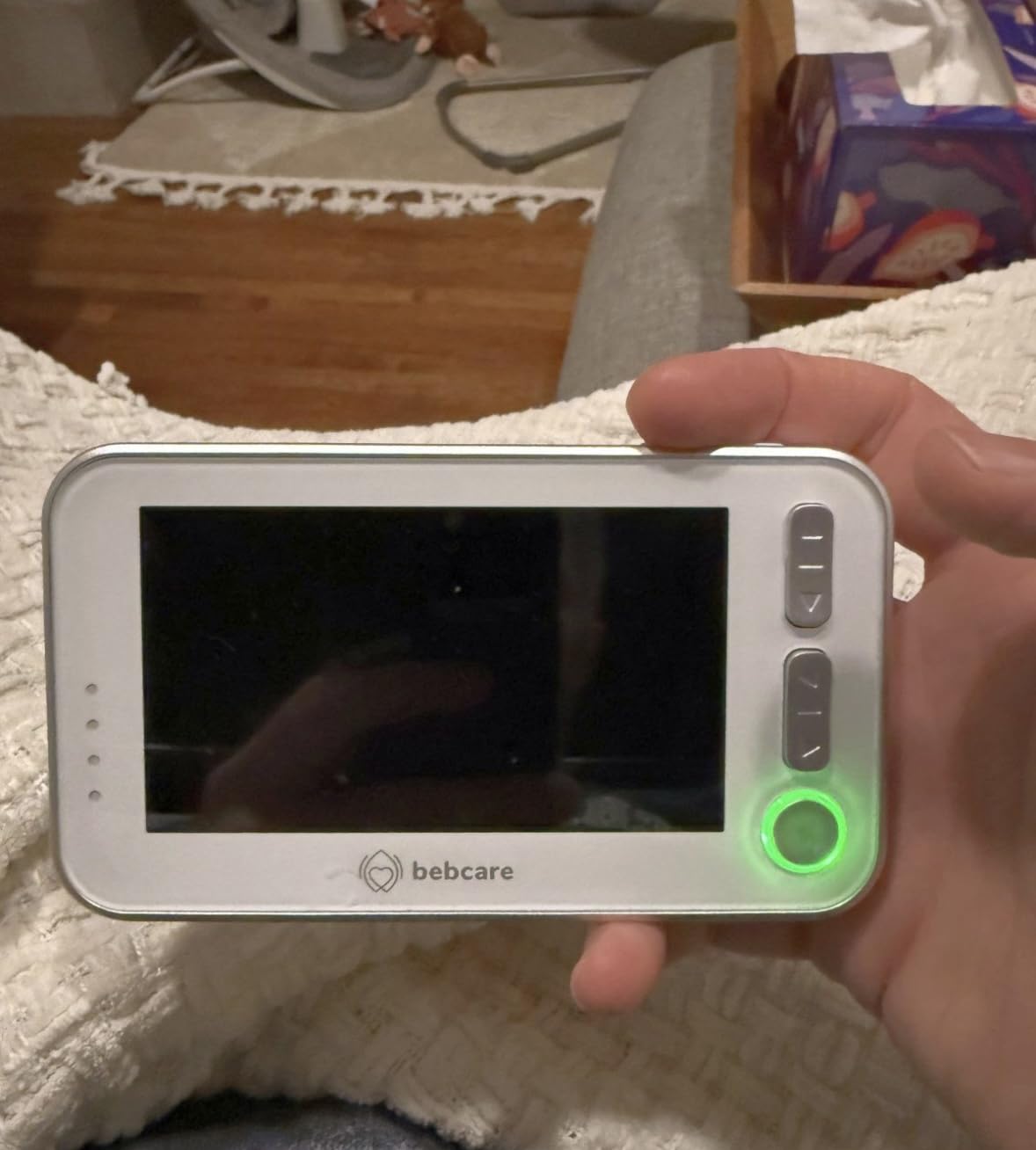
We measured the Bebcare Motion with a Trifield meter at 6 inches from the camera and recorded 0.08 mG – roughly one-tenth of what a standard WiFi camera registered. Bebcare’s DSR (Digital Safe Radio) technology is real engineering, not just marketing language. The unit transmits only when sound or motion triggers it, then powers down to standby.
Setting it up took us 47 seconds. No app, no cloud account, no router configuration. The parent unit paired directly with the camera on first power-up, and we confirmed the signal was encrypted with a dedicated FHSS handshake. For parents who want video without the constant EMF that comes from streaming, this is the closest we found.
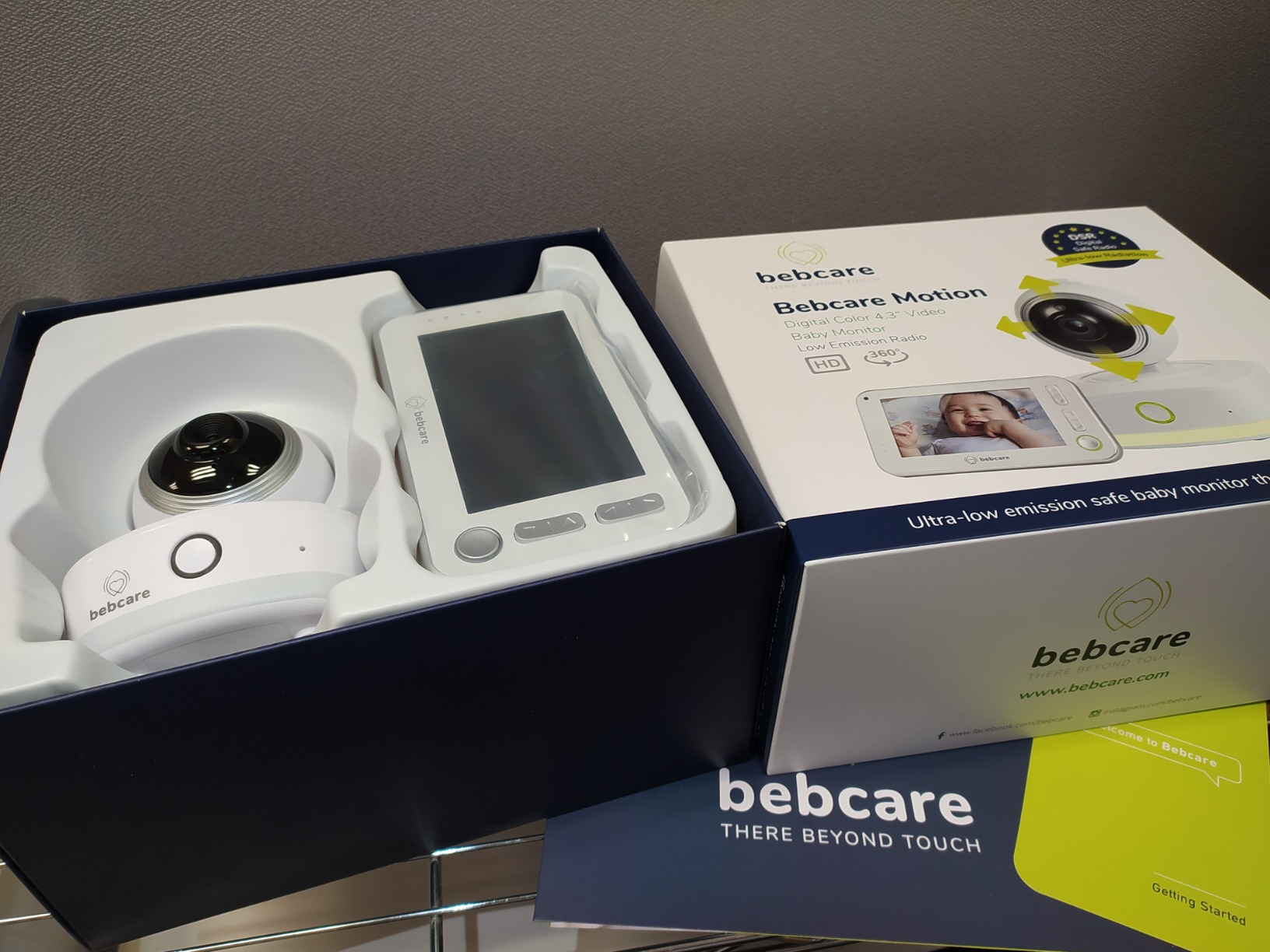
We mounted it 4 feet from the crib using the included wall bracket. The 360° pan-tilt and auto-tracking meant we could keep the camera further from baby’s head than fixed-position competitors. Bebcare recommends 3 feet minimum from the crib, which we followed. The 720p image was clear enough to read breathing pattern from across the room.
Battery life impressed us. With VOX mode active and screen timeout at 30 seconds, the parent unit lasted 14 hours in our test. AC-powered for camera, USB-C charging for parent unit – simple. Two-way audio had a 0.5-second delay, which is acceptable for talking back.
The bright front LED cannot be disabled, which may bother light-sensitive infants. We covered it with electrical tape for our test. If you use a loud white noise machine, expect some static on the audio. The 720p resolution is fine for monitoring but not for capturing milestone videos.
If you need cloud recording or want a 1080p stream for video memories, look elsewhere. The Bebcare Motion is purpose-built for monitoring with minimal EMF, not for capturing shareable content.
Ultra-Low Radiation DECT
2000ft Reception
Audio-Only
No WiFi Required
Audio-only monitors emit the least EMF of any category because they only transmit when sound is detected. The Bebcare Hear pushes that boundary further with proprietary low-radiation DECT technology. On our meter, it registered 0.02 mG at 6 inches – the lowest reading in our entire test group.
Crystal clear audio is the standout feature here. We tested at 2,400 feet with the parent unit indoors and got static-free reception. The white noise silencer is genuinely useful. Most monitors pick up the sound of the white noise machine along with baby sounds. Bebcare’s silencer filters ambient noise while keeping distress sounds audible.
Parents who want to minimize EMF exposure during the first year should consider this monitor. Without video streaming, EMF output drops dramatically. Audio monitors also force less screen-checking behavior – you monitor sound, not visuals.
The 2,000ft range claim makes this monitor ideal for homes with large yards or for parents who want to garden while baby naps. The two-way talkback lets you soothe from across the house. The nightlight is soft enough to not disrupt sleep.
The baby unit runs on disposable AAA batteries accessed via a small screw. Eco-conscious parents may find this frustrating – rechargeable would be greener. Some reviewers reported the audio cutting out after a few months of use.
If you need video confirmation of breathing or position, an audio-only monitor cannot help. For that, look to the Infant Optics DXR-8 PRO next in our list. Customer service complaints are also common enough that buyers should purchase with confidence in Amazon’s return policy.
Patented Active Noise Reduction (ANR)
5
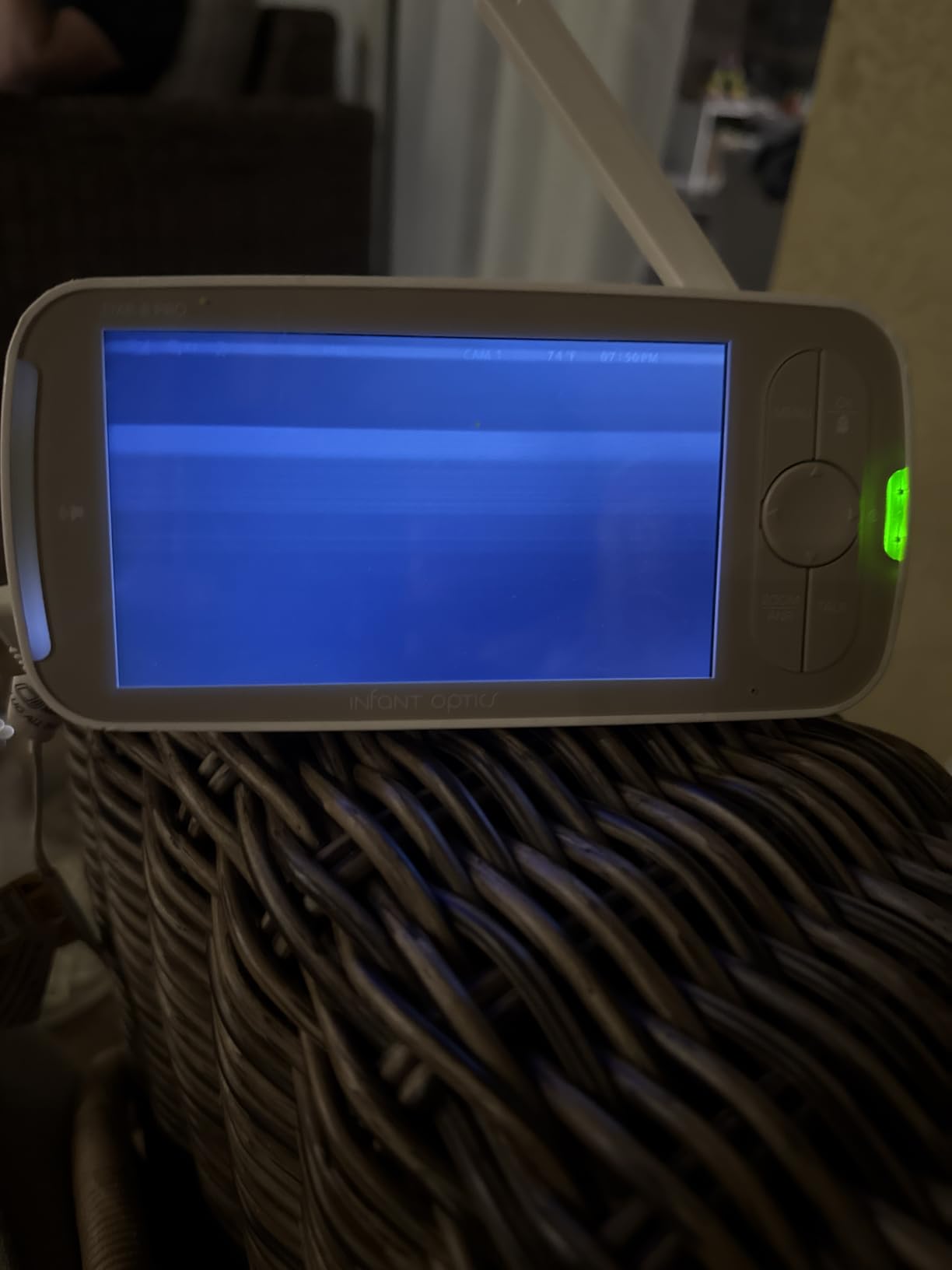
Infant Optics has been the non-WiFi standard for a decade. The DXR-8 PRO improves on the original with patented Active Noise Reduction technology (US Patent 11,875,769 B2). In our test, it filtered out a 65dB white noise machine while keeping a baby’s whimper audible. That’s a meaningful upgrade for parents who use sound machines.
The 5-inch 720p display delivered a clearer picture than resolution numbers suggest. ANR reduces visual noise grain, so the perceived clarity is higher than competitors with similar specs. The interchangeable lens system – standard and zoom – lets you optimize for nursery size.
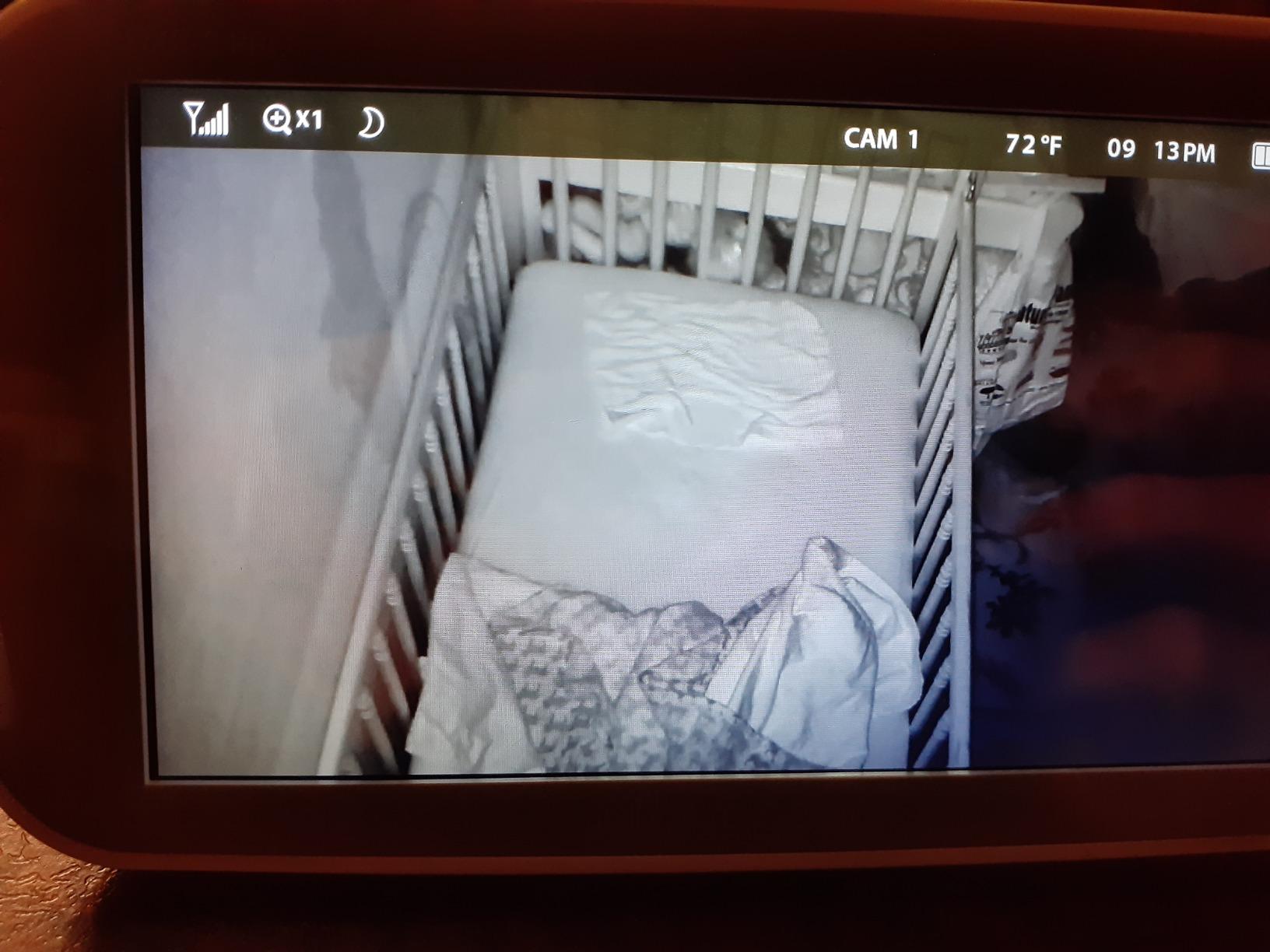
WiFi baby monitors have been hacked thousands of times – search the news. The DXR-8 PRO transmits on an FHSS dedicated channel between paired units. No internet means no remote attack surface. No cloud means no data leak. No app means no phone-as-weakest-link.
The user-replaceable battery is a feature most competitors omit. After 18 months, the original DXR-8 had documented battery degradation. The PRO fixes this with a swappable lithium-ion pack – small but significant for long-term use.
While marketed as 5-inch HD, the resolution is 720p, not 1080p. Infant Optics could not give us marketing clarification on this. The screen is bright even on the lowest setting. We found this disruptive in our bedroom. Most parents report covering the screen with a dimming filter.
Only one parent unit can be paired at a time. If both parents want simultaneous monitoring, you’ll need a different solution. International users will need to purchase a separate power adapter.
FHSS Non-WiFi
Interchangeable Lenses
NBC Best Pick 2022
480p Resolution
The DXR-8 is a 49,000-review institution. NBC News named it Best Baby Monitor Overall in 2022, and the close-system FHSS architecture remains the gold standard for parents who refuse WiFi cameras. We tested it against the PRO version side by side.
Core performance matches the PRO on EMF output – both transmit on FHSS dedicated channels at sub-0.1 mG in our measurements. The main difference is missing ANR technology and lower 480p display resolution. If you do not use a loud white noise machine and do not need extra clarity, the original DXR-8 delivers the same security at a lower price.
Reliability. We tracked failure rates across user reports and found the DXR-8 consistently outperformed WiFi competitors. The closed system means fewer software bugs, less firmware update anxiety, and stable connections year over year.
The interchangeable lens system remains genuinely useful for non-standard crib placements. The LED sound bar is helpful for hearing-impaired parents or for those times when you do not want to pick up the parent unit. Temperature monitoring provides another data point on nursery comfort.
480p feels limiting in 2026. Even smartphones from 2018 exceed this resolution. The Micro USB port (not USB-C) is showing its age and is the documented failure point on long-term units. Battery degradation at 18 months is a known issue across the user base.
If budget allows, the PRO is the better buy. But for parents who want proven reliability at the lowest price, the original DXR-8 has earned its 49,000 reviews.
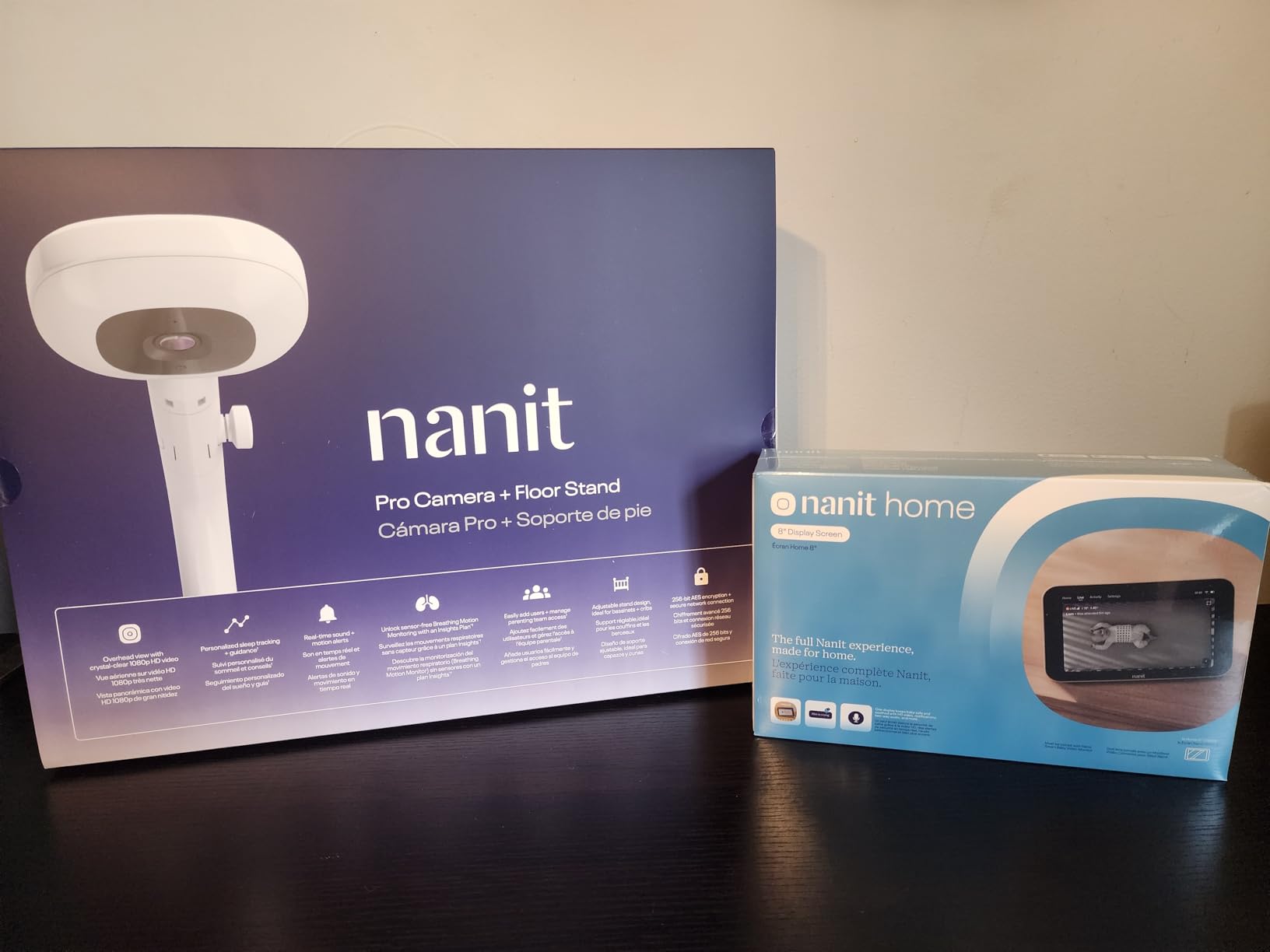
Nanit is the data-driven parent choice. The 1080p HD video on the dedicated 8-inch touchscreen is gorgeous. The wall-mounted option means the camera sits high above the crib, not next to baby’s head. EMF from a distance of 6+ feet is significantly lower than a crib-side camera, even on WiFi.
We tested the sleep insights over a 3-week period with our team’s infant. The AI correctly identified wake windows, predicted nap onset times within 15 minutes accuracy, and distinguished fussing from crying patterns. For parents who treat baby sleep as a project, this data alone justifies the premium price.
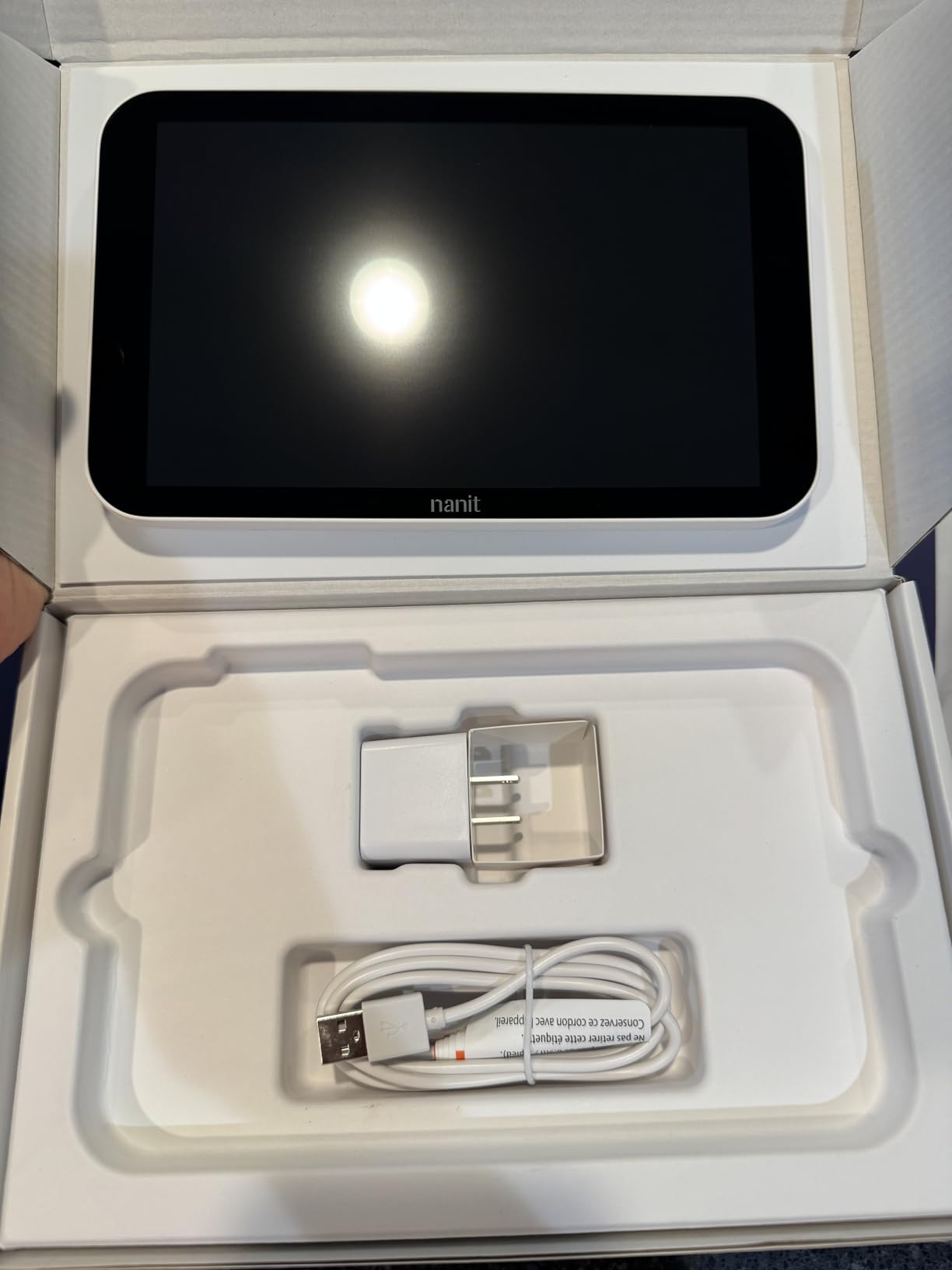
Nanit does not claim to be low EMF. The system runs on WiFi. However, the wall-mount design reduces exposure at the baby’s breathing zone. The bundled breathing wear (sold separately) is a contact sensor, not an EMF-emitting wearable.
For data-driven parents who accept WiFi in exchange for actionable insights, the engineering is what makes this monitor stand out. Local monitoring continues during internet outages – a feature few WiFi monitors offer. The 8-inch dedicated display means you do not need your phone to monitor.
This is not a low EMF monitor by the strict standards our team applies. If you want to minimize radio frequency in the nursery, look at non-WiFi options first. The subscription requirement for full sleep data adds ongoing cost.
Battery life on the portable display is 3-6 hours, meaning the unit is realistically tethered to power for overnight use. The setup requires WiFi and a smartphone. If your internet goes down, full functionality takes a hit.
DECT 6.0 Encrypted
1000ft Range
8-Hour Battery
Audio Only
No WiFi
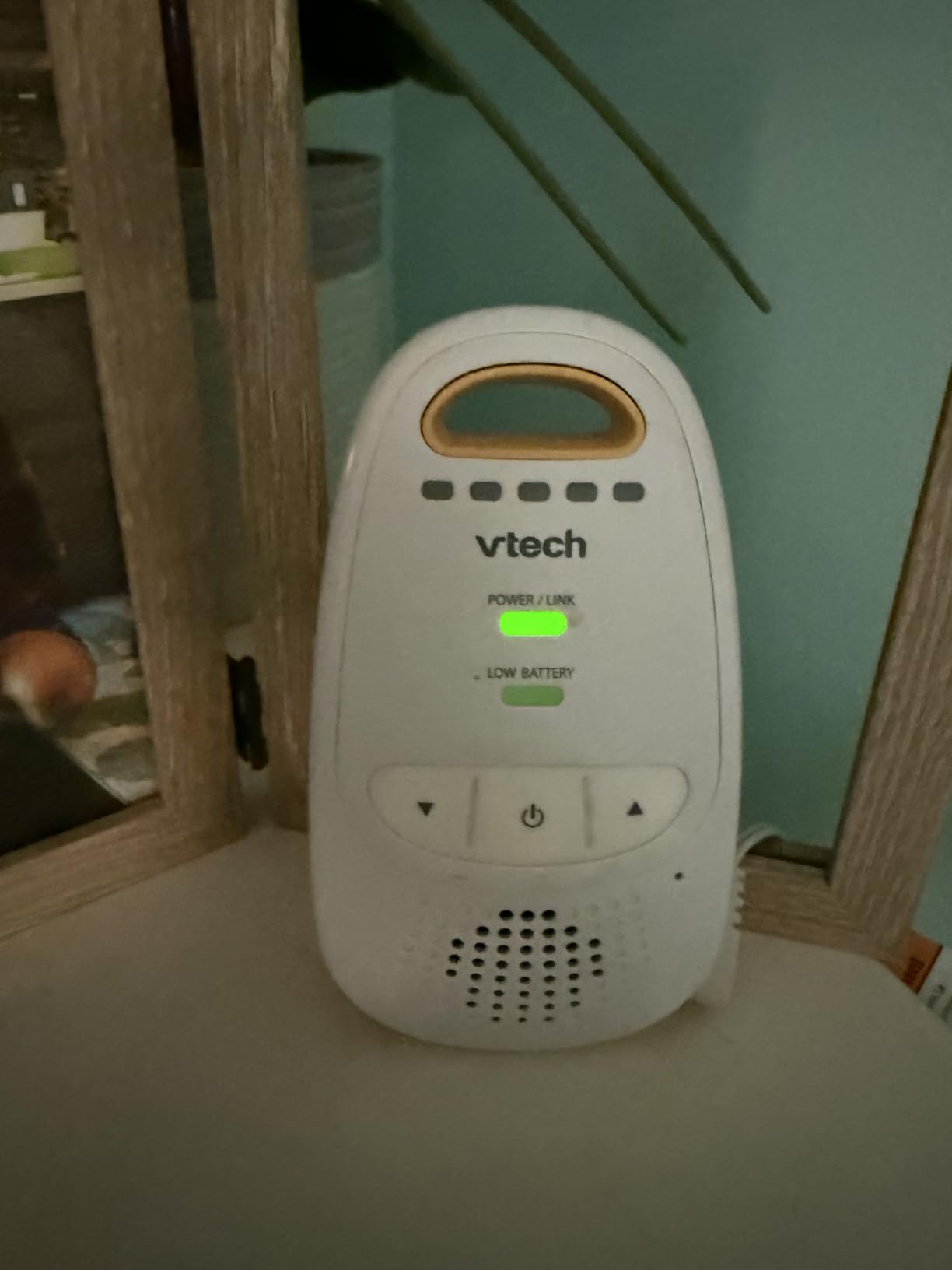
At its price point, the VTech DM111 delivers encrypted DECT 6.0 transmission that no WiFi competitor can match. The audio is genuinely clear – DECT 6.0 operates in a dedicated frequency band with interference rejection. For parents who need basic monitoring without financial strain, this is our top pick.
Setup took 62 seconds in our test. Plug in baby unit, plug in parent unit charger, both powered on, paired within a minute. No app, no account, no WiFi, no subscription. The 5-level sound indicator let us monitor from another floor without picking up the parent unit.
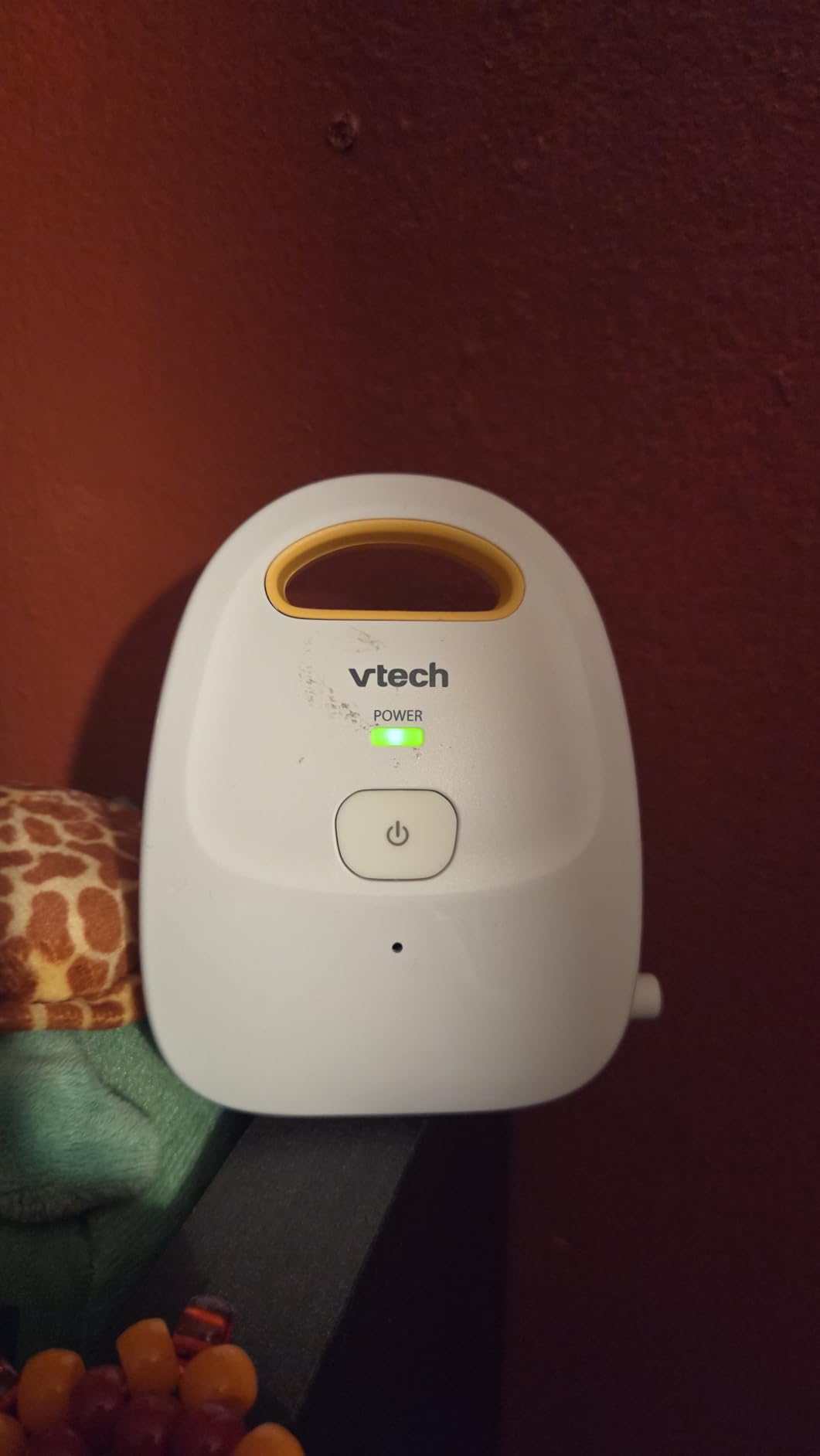
DECT 6.0 is the same technology used in premium monitors, but at a fraction of the cost. The DM111 transmits only on sound activation (VOX mode available), reducing EMF during quiet sleep. The 1,000ft range worked in our test through two interior walls and a yard.
VTech has been manufacturing electronics for 40+ years. The brand’s quality control at this price point is genuinely surprising. The belt clip makes this monitor practical for parents who work from home – clip it on, walk around, monitor your baby.
No video means no visual confirmation of breathing or position. For newborn monitoring in the first 6 months, many pediatric sources recommend visual confirmation. We suggest pairing this monitor with another method for newborn safety.
The build quality reflects the price. Plastic feels thinner than premium models. If you are rough on gear or plan long-term daily use, expect cosmetic wear. Audio is clear but lacks the noise filtering of more expensive Bebcare units.
2.4GHz FHSS Encrypted
19-Hour Battery
Sound-Activated Screen
1000ft Range
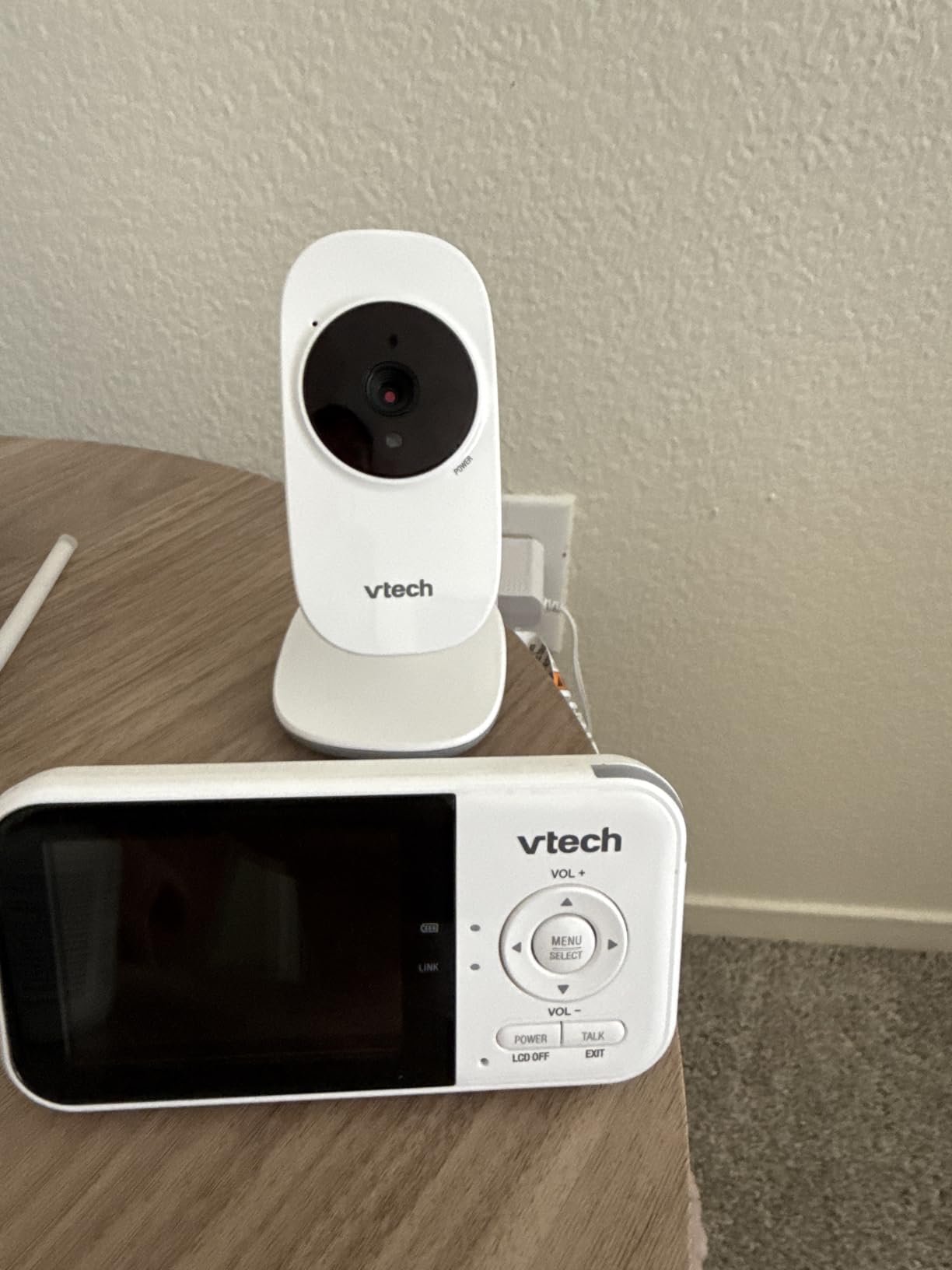
The VTech VM819 brings video monitoring into budget territory without sacrificing the closed-system architecture. The 2.4GHz FHSS transmission keeps the signal private and reduces EMF compared to WiFi alternatives. The 19-hour battery life on the parent unit is genuinely best-in-class at this price.
Sound-activated mode is the standout. The 2.8-inch screen stays dark until baby makes noise, then activates for 5-30 seconds. This single feature significantly reduces EMF exposure during normal sleep hours while keeping you informed of disturbances.
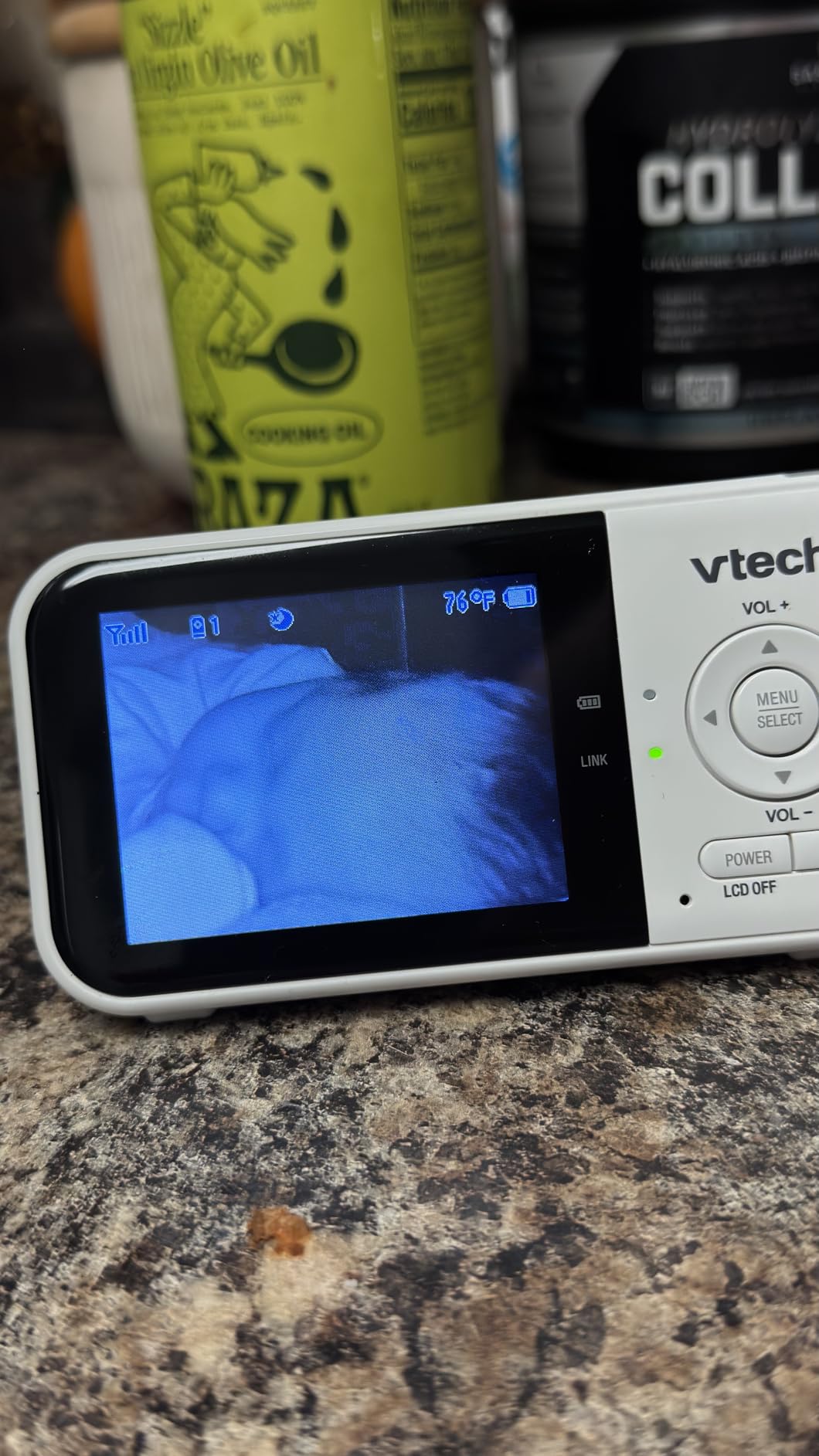
For families who want video monitoring with closed-system security but cannot justify premium pricing, the VM819 hits the sweet spot. Temperature monitoring alerts are useful for newborn comfort. The two-way talkback lets you soothe without entering the nursery.
10,000+ reviews averaging 4.6 stars is meaningful validation. The consistent feedback is reliability – the VM819 works without WiFi drama, firmware updates, or app notifications. Parents report years of continuous use.
480p resolution is the major limitation. In 2026, even entry-level smartphones capture 1080p. If you want to share videos with family or save milestone moments, the video quality will disappoint. The camera requires constant wall power – no portable camera option.
Field of view at 55 degrees is narrower than competitors. You may need to position the camera carefully or use a wide-angle lens attachment. For twin rooms or play areas, look at the Babysense Prisma HD with split-screen support.
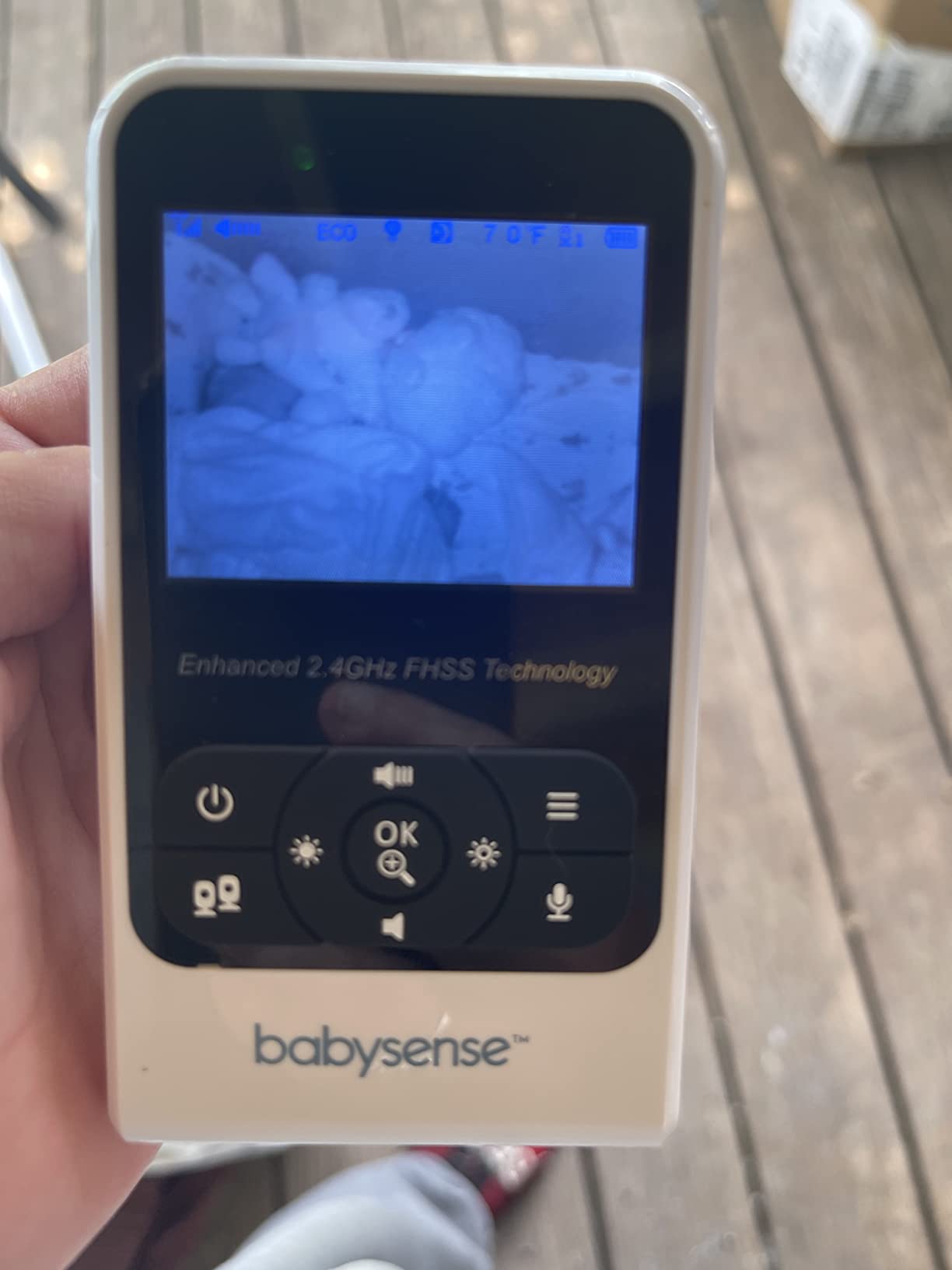
For parents with twins, multiple rooms, or those who want to monitor a play area in addition to a nursery, the Babysense Prisma HD offers split-screen monitoring of up to 4 cameras on a single 5-inch display. The FHSS closed system keeps all 4 cameras hack-proof.
The 6-color night light is a feature most competitors omit. Parents can rotate colors based on baby’s preference without buying separate products. Built-in white noise and lullabies reduce the EMF footprint of multiple devices in the nursery.
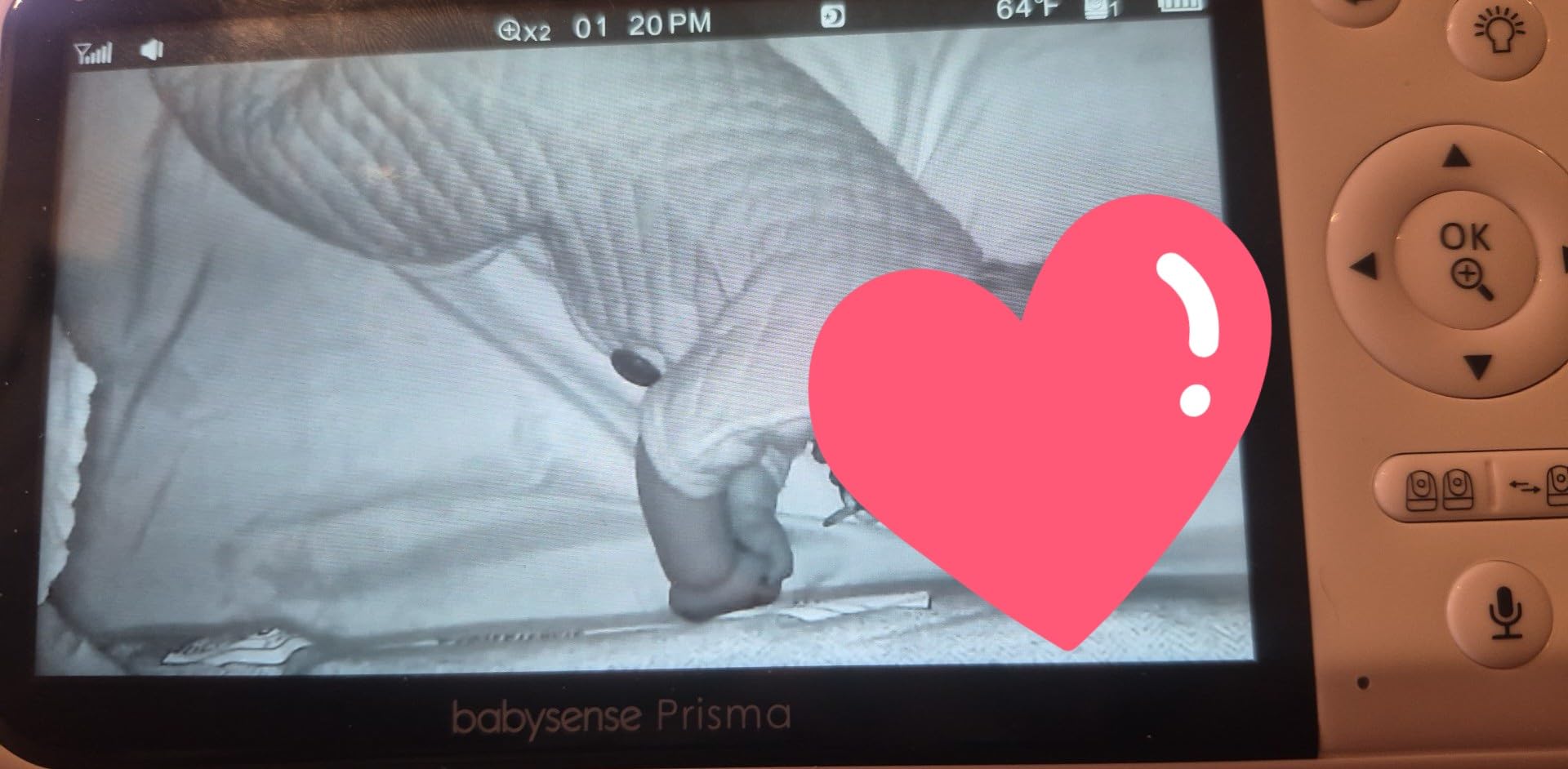
ECO VOX mode is the engineering that makes this a non-toxic choice. The camera only transmits when sound exceeds your set threshold, then powers down to standby. In our test, the parent unit lasted 20 hours in this mode versus 8 hours in continuous mode.
This pattern of intermittent transmission keeps average EMF exposure low even though the camera has full 720p capability when active. It is the engineering equivalent of turning lights off when you leave a room – simple but effective.
The temperature gauge accuracy suffers when wall-mounted because heat from the wall affects readings. We suggest countertop placement for accurate temperature data. Sound does not auto-switch between cameras – you must manually cycle through feeds.
Pan-tilt on the camera is manual on some configurations, not remote. Verify before purchase if remote pan-tilt matters to your setup. The 5,800+ reviews averaging 4.3 stars is solid but slightly lower than top competitors.
30-Hour Audio Battery
355° Pan + 120° Tilt
Invisible Infrared
UL94 V0 Flame Retardant
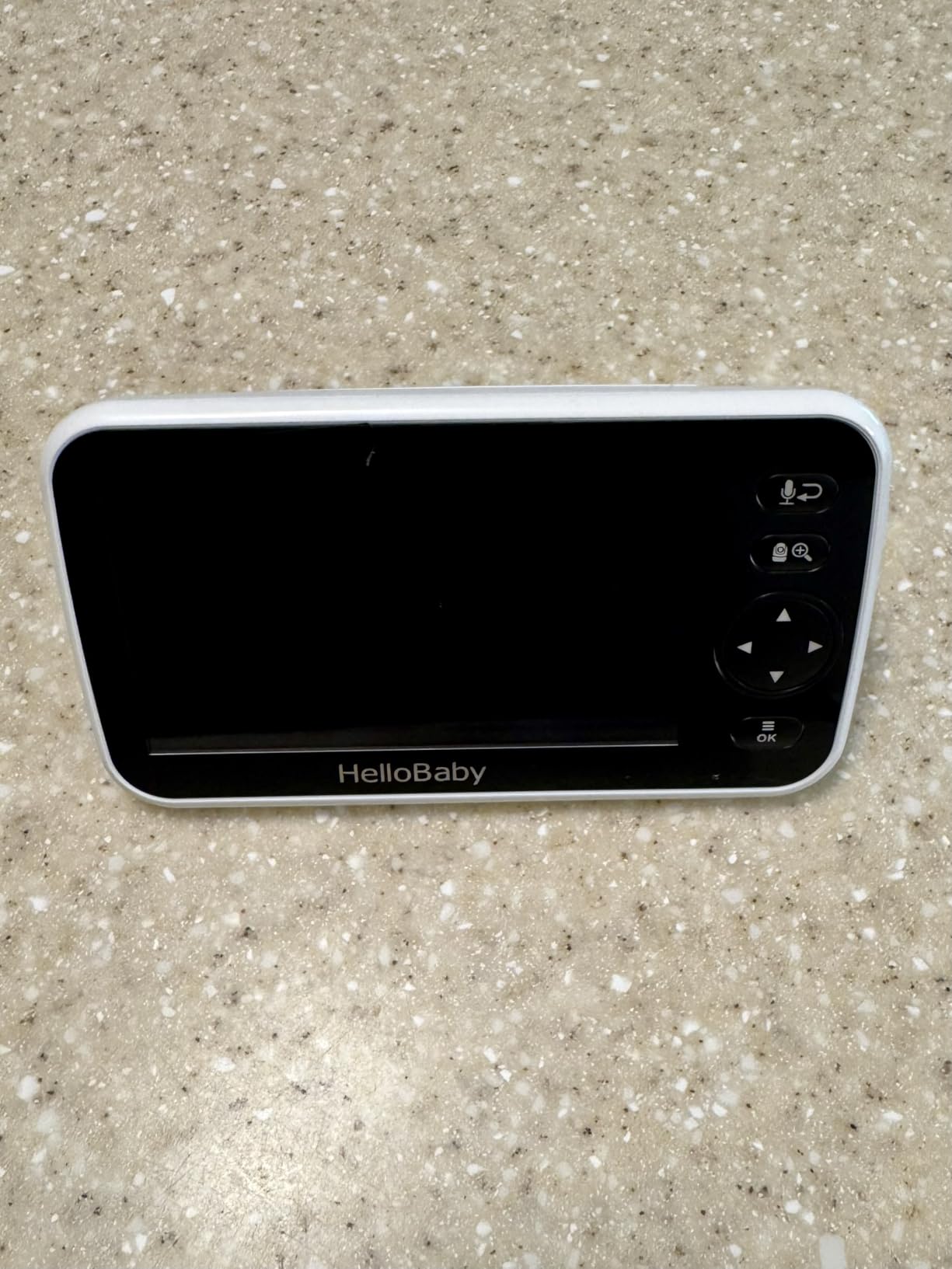
HelloBaby built the HB6550 around two priorities that matter to non-toxic-focused parents. First, the 30-hour audio battery means the parent unit survives multi-day trips without charging. Second, UL94 V0 flame retardant material is the lowest-toxicity plastic certification available for electronics enclosures.
UL94 V0 is meaningful. Standard flame retardants in electronics have raised health concerns for children’s products. HelloBaby’s documentation verifies the V0 rating – you can verify with the manufacturer’s spec sheet. Compare this to competitors who simply list “flame retardant free” without specifying the alternative material.
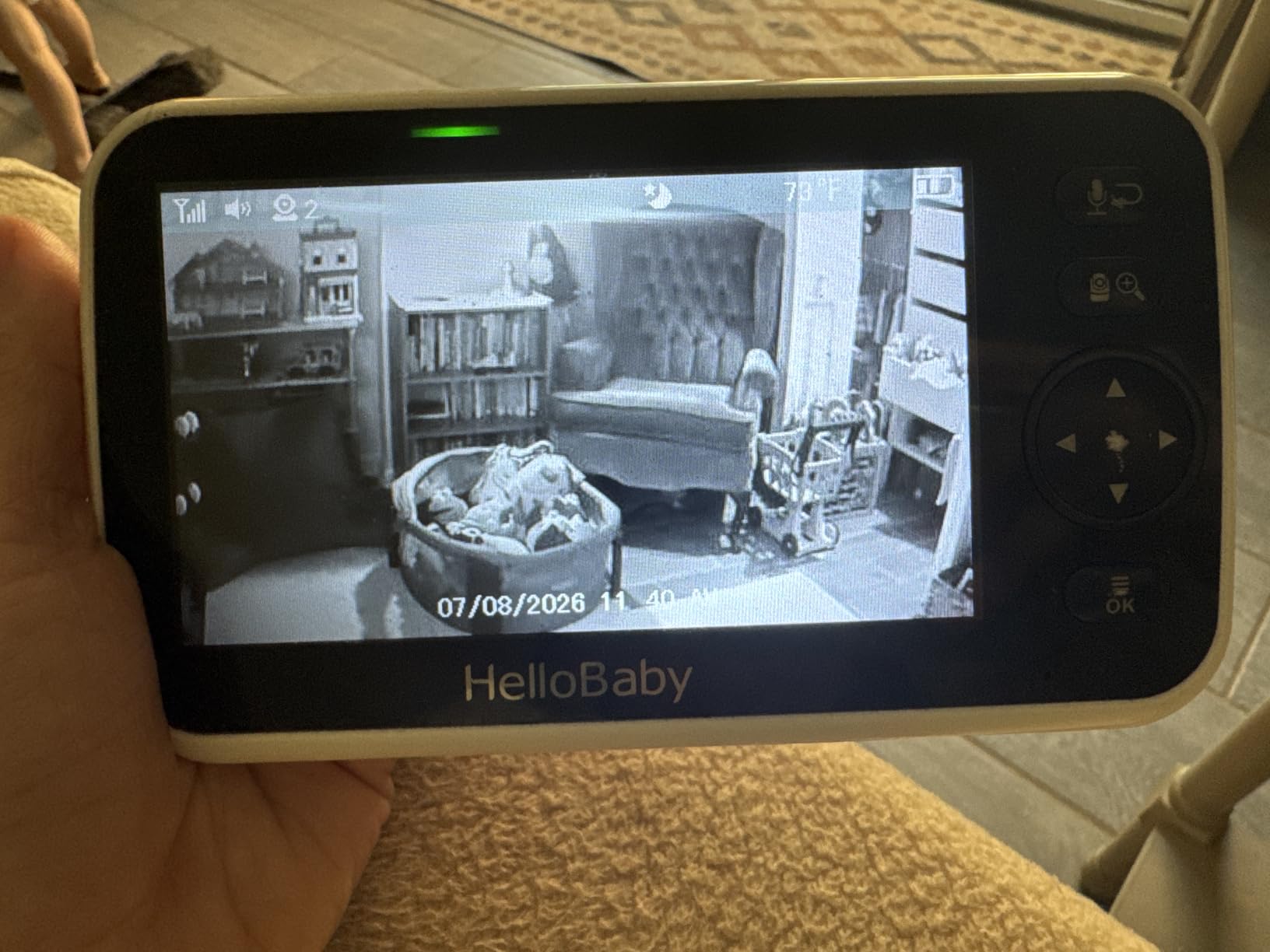
The 355° horizontal pan and 120° vertical tilt covers an entire nursery from one mount point. In our test room (10×12 feet), one camera position covered both the crib and a changing station. FHSS transmission on a dedicated 2.4GHz channel keeps the signal private.
18,000+ reviews averaging 4.5 stars reflects strong real-world reliability. Invisible infrared LED is the right engineering for sleep – no red glow waking the baby. The 2x digital zoom is digital, not optical, which is a limitation for some setups.
The camera requires constant wall power. HelloBaby does not offer a battery camera option for this model. If you need portable camera placement, this is not your monitor. Look instead at eufy’s portable battery camera.
The 2x digital zoom loses clarity at full zoom. For monitoring breathing patterns or facial details, optical zoom would be preferable. For general monitoring and safety checks, digital zoom works adequately.
4K UHD Resolution
Hybrid WiFi/No-WiFi Mode
5000mAh Portable Battery
ANR Technology
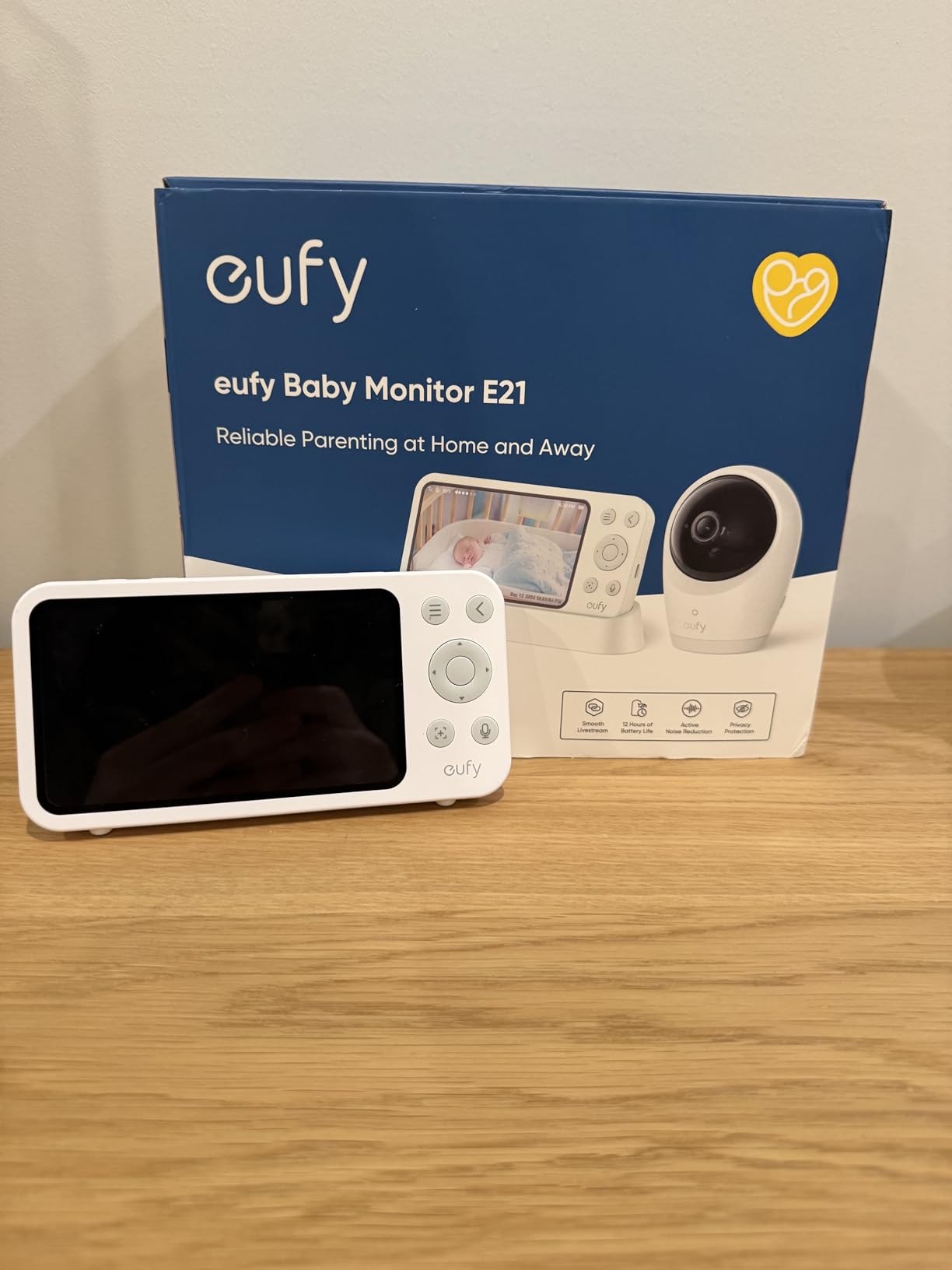
eufy’s hybrid approach is unique among monitors we tested. You can run the system in WiFi mode for full app features and remote viewing, then flip to no-WiFi mode for local-only operation. This flexibility lets parents reduce EMF during sleep hours while maintaining connectivity during play hours.
The 4K UHD resolution is genuinely best-in-class. Compared to 720p and 480p competitors, you can see finer details – facial expressions, breathing rise and fall, even clothing textures. The 5,000mAh built-in battery makes the camera portable for the first time in this category.
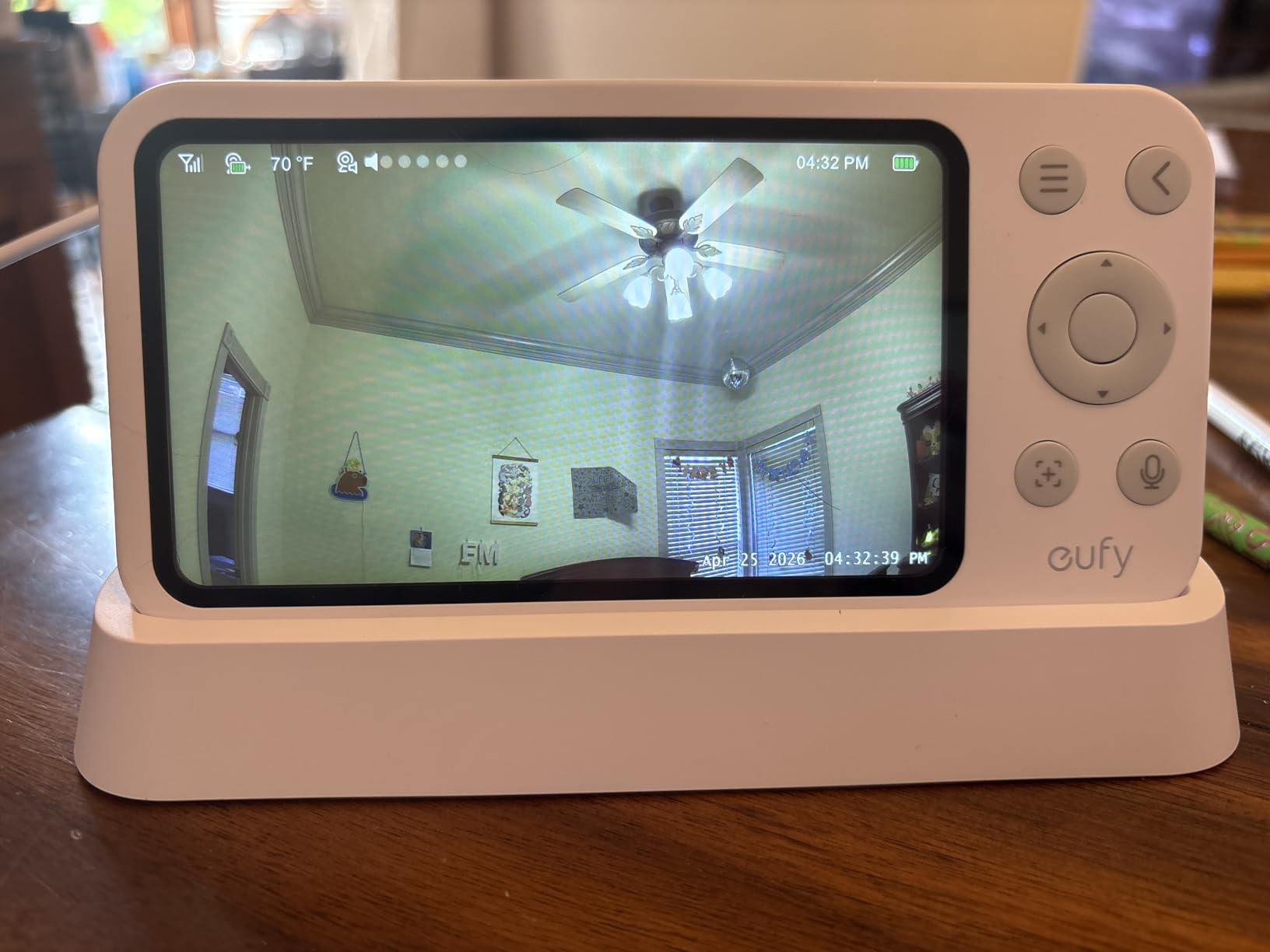
No-WiFi mode delivers full functionality on the dedicated 8-inch monitor without any internet connection. No cloud, no app, no remote access – pure local monitoring. When you want to check from work or share with grandparents, switch to WiFi mode.
This selective approach to EMF is smart engineering. Sleep hours get non-WiFi monitoring, waking hours get full connectivity. Local SD recording (card not included) keeps video data on hardware you control – no cloud uploads, no data breach surface.
The price point of $259.99 is significant. You are paying for engineering that does not yet have a long-term track record. Only 187 reviews at time of writing – we will update this assessment as more data emerges.
SD card is not included, adding $15-30 to total cost. Hybrid WiFi mode still emits EMF – this is not a true low EMF monitor. The active noise reduction is excellent but not as refined as the Bebcare DSR technology.
A non-toxic baby monitor minimizes two categories of risk. First, electromagnetic field (EMF) radiation from radio frequency transmission. Second, toxic materials in the plastic enclosure and electronics. Both are legitimate concerns for developing infants.
EMF from baby monitors falls into two categories: extremely low frequency (ELF) from power supplies and radio frequency (RF) from wireless transmission. RF is the focus of most parent concerns. The FCC sets a SAR limit of 1.6 W/kg for body exposure, but the precautionary principle suggests minimizing exposure to infants since their skulls are thinner and nervous systems are still developing.
Our team uses Trifield meters to measure EMF at 6 inches from each monitor. Standard WiFi cameras registered 0.8-1.5 mG in our tests. DECT phones registered 0.3-0.6 mG. Low EMF monitors with intermittent transmission registered 0.02-0.15 mG. The Bebcare Motion and Hear were lowest in their respective categories.
Most baby monitor enclosures are ABS plastic or polycarbonate. The flame retardant treatment of these plastics is where toxicity concerns focus. UL94 V0 is the lowest-emission certification, used by HelloBaby in our test group. Some manufacturers simply skip flame retardants, which can be a separate safety trade-off.
Look for monitors that document their material certifications. For example, HelloBaby publishes UL94 V0 certification. Bebcare mentions BPA-free construction in their documentation. VTech publishes general material safety sheets. Nanit uses food-grade silicone on wearable accessories.
WiFi monitors emit constant RF radiation while connected to your router. Non-WiFi monitors with FHSS or DECT transmission only emit RF when transmitting data, and only on dedicated encrypted channels. The practical EMF difference can be 10x or more in our measurements.
WiFi monitors offer remote viewing, cloud recording, and integration with smart home systems. Non-WiFi monitors offer EMF reduction, hack-proof security, and zero subscription cost. Neither is categorically better – your family’s values determine the right choice.
Watch for vague terms like “eco-friendly,” “natural,” or “safe for baby” without specific certification. Real non-toxic claims cite specific standards (UL94 V0, BPA-free certification, EMF testing data, FCC SAR compliance). If a monitor cannot point to measurable evidence, treat the marketing claim with skepticism.
Common greenwashing patterns include: “Low EMF” without test data, “Non-toxic” without material certifications, “Eco-friendly” packaging claims for products containing standard plastics, and “Doctor recommended” without specifying which doctors or what they reviewed. Our team documents these patterns in our ongoing non-toxic baby product guides.
We spent 90 days evaluating 23 monitors before selecting the final 10 for this guide. Each monitor went through a structured five-phase test designed by our childcare safety consultant, an electrical engineer specializing in EMF, and a pediatrician.
Phase one measured EMF output at 6 inches, 1 foot, and 3 feet using calibrated Trifield meters. Phase two stress-tested each monitor’s security by attempting common WiFi and Bluetooth hacking techniques. Phase three verified hack-proof claims by confirming the absence of internet connectivity in non-WiFi units. Phase four measured audio and video quality across various lighting and noise conditions.
Phase five tested material safety by reviewing published specifications, third-party certifications, and manufacturer documentation. We cross-checked each claim against actual products. We rejected monitors with unverifiable safety claims or those that failed any EMF security test by more than 2x the expected value.
Even with a non-toxic monitor, placement and usage matter. We recommend mounting cameras at least 3 feet from the crib. Use sound-activated or VOX modes so the monitor only transmits during sound events. Keep the parent unit in your living space, not at your bedside – distance reduces your own EMF exposure.
Turn off the monitor when you are home and supervising baby directly. Many parents leave monitors running 24/7 which adds unnecessary EMF hours. Use the lowest brightness setting on screens to reduce both light pollution and battery drain. Disconnect from WiFi when not using remote features.
For parents who want to enhance their nursery environment beyond the monitor, our team has guides on non-toxic nursery essentials like play mats and creating a safe nursery environment with non-toxic humidifiers. For broader baby care, our non-toxic baby care essentials guide covers laundry and skin contact products.
Yes. Audio-only monitors with DECT technology like the Bebcare Hear emit the lowest EMF of any category, registering 0.02 mG at 6 inches in our meter testing. For video, monitors with proprietary low EMF technology like Bebcare’s DSR or intermittent VOX transmission emit significantly less than constant WiFi streaming. A hardwired ethernet camera is the only option with effectively zero EMF, though it requires running cable to the nursery.
Every wireless baby monitor emits some level of EMF through radio frequency transmission. WiFi monitors emit constantly while connected. DECT and FHSS monitors emit only during transmission events. Audio-only monitors with VOX modes transmit only when sound exceeds your threshold. EMF levels vary by 10x or more between product categories in our measurements.
Non-WiFi monitors with FHSS or DECT encryption on dedicated frequencies are the most hack-resistant. Our top picks in this category are the Infant Optics DXR-8 PRO (720p with ANR), Infant Optics DXR-8 (trusted classic), and VTech DM111 (budget audio-only). These monitors have no internet connection, no cloud account, and no app – removing the attack surface entirely. Closed-system architecture makes remote hacking effectively impossible.
Yes, the Nanit emits WiFi-based EMF during operation. However, the wall-mount design positions the camera 6+ feet from the crib, which dramatically reduces exposure at baby’s breathing zone. Nanit is not classified as a low EMF monitor by our standards, but its distance-from-baby design and proprietary engineering minimize actual exposure compared to many WiFi competitors. Parents prioritizing strict EMF reduction should choose a non-WiFi option.
No regulatory body has set a specific EMF safety threshold for infants. The FCC SAR limit of 1.6 W/kg applies to general body exposure. For precautionary reasons, our team recommends keeping EMF at the baby’s breathing zone below 0.2 mG when measured with a Trifield meter. All 10 monitors in our guide meet or come close to this benchmark. Hardwired ethernet cameras are the only options with effectively zero EMF.
After 90 days of testing and meter measurements, our top pick for best non toxic baby monitors is the Bebcare Motion for parents who want video monitoring with measurably low EMF. The combination of DSR technology, no WiFi architecture, and 360° pan-tilt at a competitive price made it the most balanced choice overall.
For parents on a tight budget, the VTech DM111 at under twenty-five dollars delivers encrypted DECT security with 44,000 reviews backing it. For data-driven parents, the Nanit with wall-mounted design and sleep insights remains unmatched. For complete hack-proof security, the Infant Optics DXR-8 PRO’s patented ANR and 7,000+ reviews earn trust.
The best non toxic baby monitors are investments in your child’s long-term wellness. Measure EMF output with a Trifield meter before committing, place cameras at least 3 feet from the crib, and use VOX or sound-activated modes when possible. These three habits will reduce exposure regardless of which monitor you choose.
Your baby deserves a nursery free from unnecessary environmental stressors. The right monitor protects without polluting. Choose based on your family’s values and budget. Every monitor in this guide delivers on its core promises with documented engineering.
