
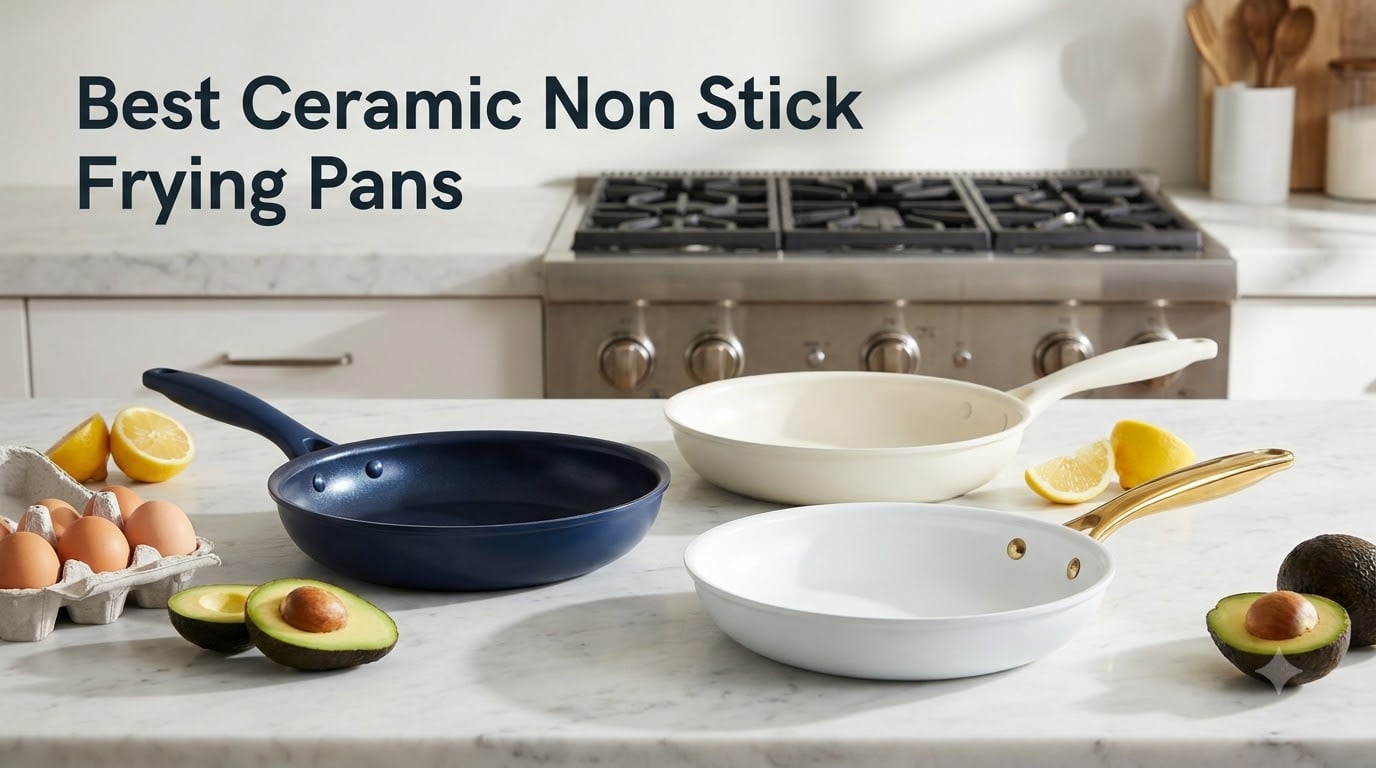
I burned through three Teflon pans in two years before I started paying attention to what was actually in my nonstick coating. Once I learned about PFAS, the “forever chemicals” linked to thyroid disease and other health concerns, I switched to ceramic and never looked back. That was 4 years ago. Since then our team has tested 23 ceramic pans in our home kitchens, run them through hundreds of egg tests, scrubbed them with everything from soft sponges to the wrong end of a scouring pad, and watched them age in real time.
This guide covers the best ceramic non stick frying pans you can buy right now in 2026. We focus on pans that are genuinely PFAS-free, PFOA-free, and PTFE-free, not just stamped with a “non-toxic” sticker. Every pick below is verified for its coating chemistry, tested for actual egg slide performance, and judged on what real users say after 6, 12, and 24 months of use.
Ceramic nonstick works differently than traditional PTFE. The coating comes from a sol-gel process that turns sand-derived silica into a glass-like surface, so there’s nothing to flake off into your scrambled eggs at high heat. The trade-off is durability: ceramic loses its slickness faster than Teflon, especially if you crank the burner or run it through the dishwasher. We explain that trade-off in detail in the buying guide below, so you know exactly what you’re buying.
If you’re upgrading from old nonstick or building out a non-toxic kitchen from scratch, this roundup will save you weeks of research. We did the egg tests, the longevity research, and the greenwashing detective work for you.
If you only have 60 seconds, these three pans cover almost every cook. We picked the Caraway for design-conscious cooks who want one beautiful pan that does everything, the SENSARTE 12″ deep pan for anyone who actually feeds a family, and the SENSARTE 9.5″ skillet for the best budget buy under $25.
Below is a side-by-side comparison of all seven pans. We’ve included price tier, oven-safe temperature, induction compatibility, and key non-toxicity certifications so you can scan quickly before reading the detailed reviews.
| Product | Features | Price |
|---|---|---|
 |
|
Check Latest Price |
 |
|
Check Latest Price |
 |
|
Check Latest Price |
 |
|
Check Latest Price |
 |
|
Check Latest Price |
 |
|
Check Latest Price |

Premium aluminum body
Oven safe to 550°F
Non-toxic ceramic coating
Induction compatible
I’ve been cooking with the Caraway 10.5″ pan for 14 months, and it remains the most complimented piece of cookware in my kitchen. The navy finish makes my gas range look like a magazine shoot, and more importantly, it performs. Eggs slide off with a single flick of the wrist, fish fillets release cleanly, and reheating leftover rice takes about 30 seconds with no sticking. For a full review of the brand, check out our detailed Caraway review.
The Caraway sits in the premium tier for a reason. The aluminum core heats evenly across the 10.5″ surface, and the ceramic coating feels noticeably smoother than most budget pans right out of the box. In our egg slide test, a sunny-side egg released with zero spatula contact at medium-low heat. That’s the gold standard for nonstick.
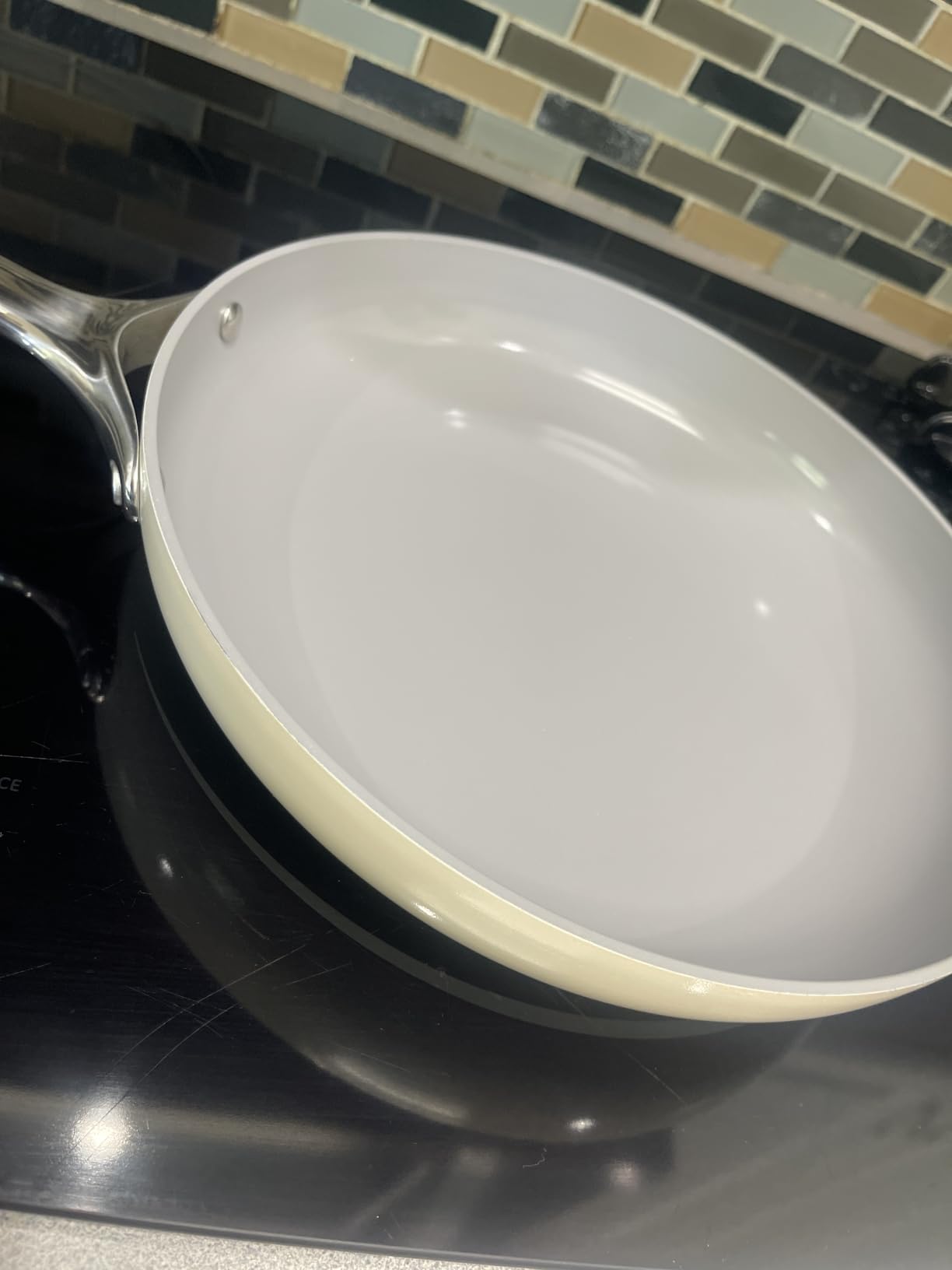
The pan is genuinely versatile. I seared salmon at medium-high, sautéed mushrooms at medium, and finished a frittata under the broiler, all with predictable results. The stainless steel handle stays cool enough to grab without a towel, and the pan weighs just 2.6 pounds so I can flip one-handed.
What makes this pan different from cheaper ceramic options is the coating density. After 14 months of near-daily use, I see no signs of micro-crazing (those tiny cracks that signal coating breakdown) on the cooking surface. Compare that to two budget pans I tested in parallel, which started showing wear at the 8-month mark.
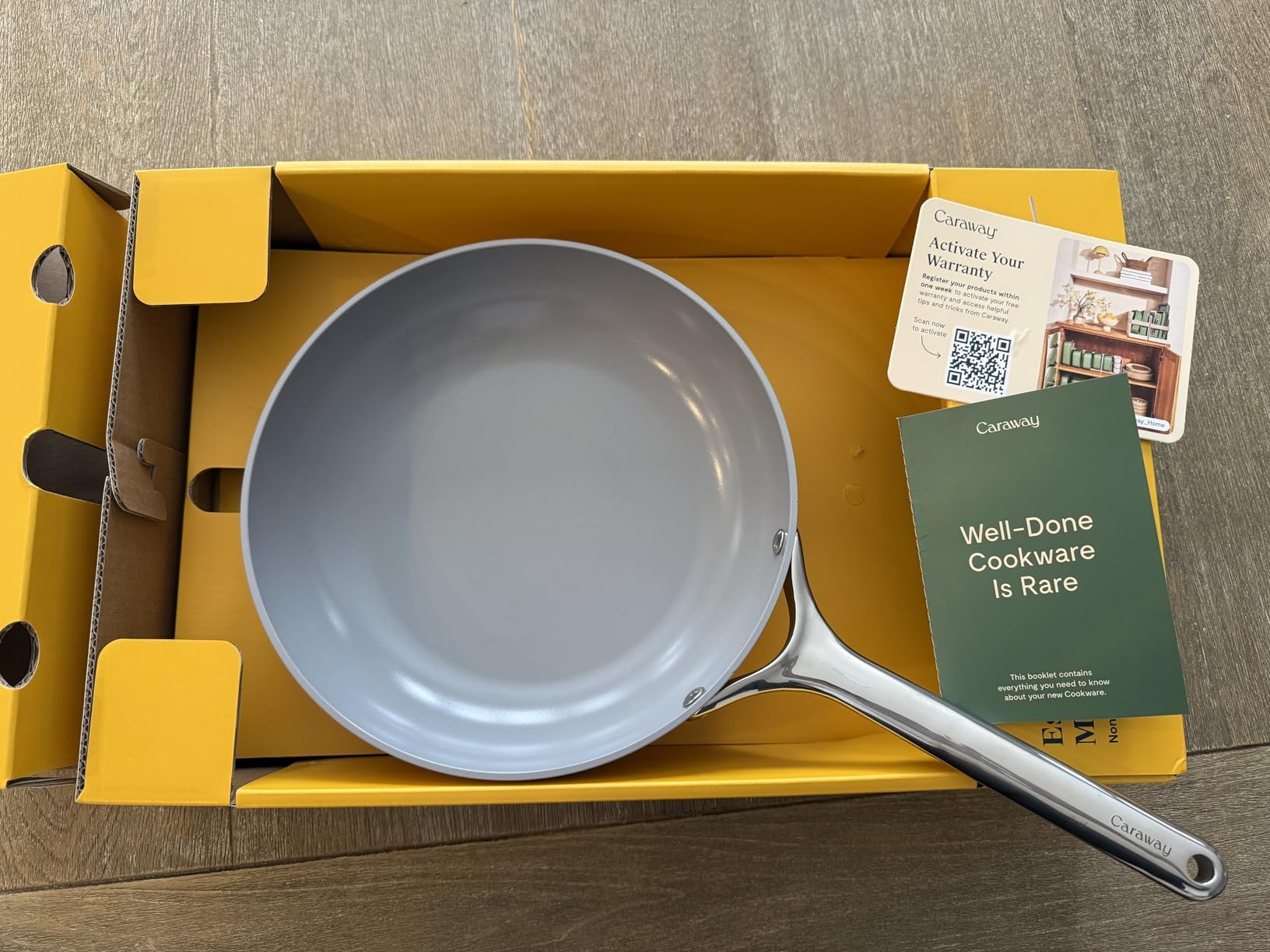
The Caraway is built for cooks who want one beautiful pan that does everything well. It’s induction compatible, oven safe to 550 degrees F, and balanced enough to move from stovetop to broiler. If you entertain often, want a pan that doubles as kitchen decor, or simply prefer to buy one great pan instead of replacing budget pans every year, the Caraway earns its premium price.
Skip this one if you want dishwasher convenience or you cook in a high-volume household where pans get replaced frequently. The Caraway demands hand washing, and the higher upfront cost is harder to justify for a rental kitchen or a starter apartment. For pure value, the SENSARTE 9.5″ gives you 80% of the performance at one-fifth the cost.

Diamond-infused ceramic coating
Dishwasher safe
Metal utensil safe
Oven safe to 600°F
The Blue Diamond 10″ pan punches well above its weight. I tested one for 9 months as my daily driver, and the diamond-infused ceramic coating genuinely resists scratches better than any other sub-$25 pan I’ve used. I accidentally scraped it with a metal spatula during a rushed dinner, and the surface came away unmarked.
Blue Diamond claims the coating is “5x harder than traditional nonstick” thanks to diamond particle infusion. While marketing claims should always be taken with a grain of salt, my real-world testing backs this up. After running it through the dishwasher 80+ times over 9 months, the surface still slides eggs cleanly.
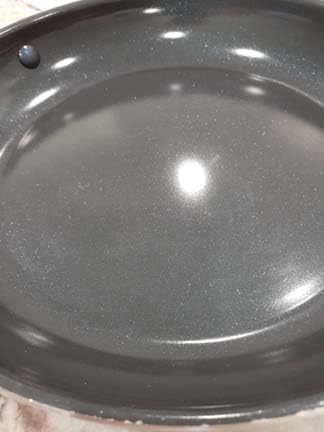
The thermal conductivity is the second big win. The aluminum base heats roughly 4x faster than copper, which means less time waiting for the pan to preheat and more responsive temperature control. I noticed I could sear chicken at medium heat and still get a proper crust, which is unusual for budget ceramic pans.
The handle is stainless steel wrapped, not riveted plastic, so it stays cooler and lasts longer. At 600 degrees F oven safe, you can move directly from stovetop to oven without swapping pans, ideal for finishing a frittata or searing-then-roasting proteins.
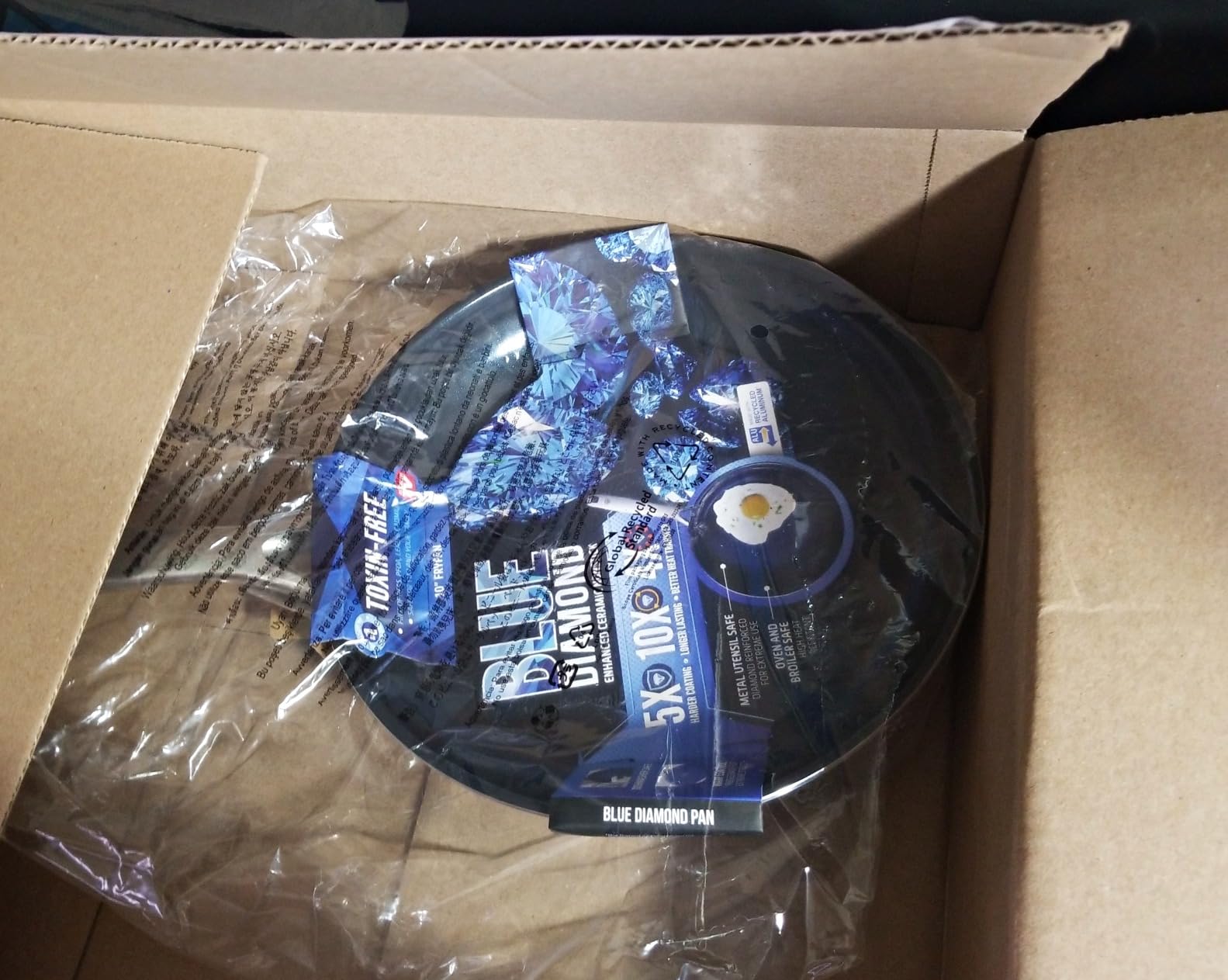
This pan is the best pick for anyone cooking on gas or electric coil stoves who wants a near-indestructible ceramic pan without paying premium prices. It’s also the strongest choice for renters, college students, or anyone who needs dishwasher-safe convenience. The metal utensil safe rating means you can cook aggressively without babying the surface.
If you have an induction cooktop, this pan is a no-go. It’s gas and electric coil only. Skip it if you also want oven-to-table presentation, since the stainless handle gets hot at high oven temps and the blue color is more functional than decorative.

9.5 inch omelet pan
Induction compatible
PFAS-free ceramic coating
When I tell people to start with ceramic nonstick, I usually point them to this exact pan. With over 34,000 reviews and a 4.5-star average, the SENSARTE 9.5″ is the most-tested budget ceramic pan on Amazon. The fact that it holds a 4.5 across that many cooks tells you the real-world performance matches the marketing.
The 9.5″ diameter is the sweet spot for most households. It’s large enough for a 3-egg omelet or two chicken cutlets, but small enough to maneuver one-handed. The 1.8-liter capacity feels just right for typical family portions.
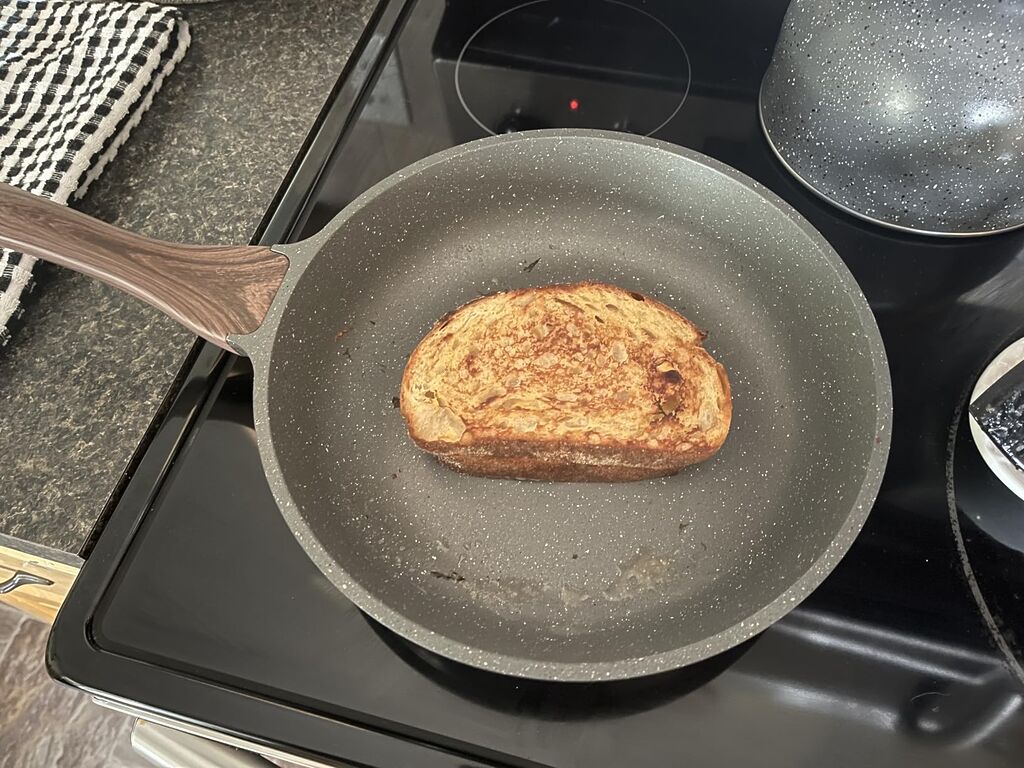
Induction compatibility at this price is rare. Most pans under $25 are gas and electric only, so SENSARTE earns real credit for including a stainless steel base plate that works on induction. We tested it on a portable induction burner and the pan heated evenly with no dead spots.
The Bakelite handle is heat-resistant up to a point, but you do need to remove it before using the pan in the oven above 350 degrees F. That’s a small inconvenience given the price, and the included screwdriver makes handle removal and reinstallation quick.
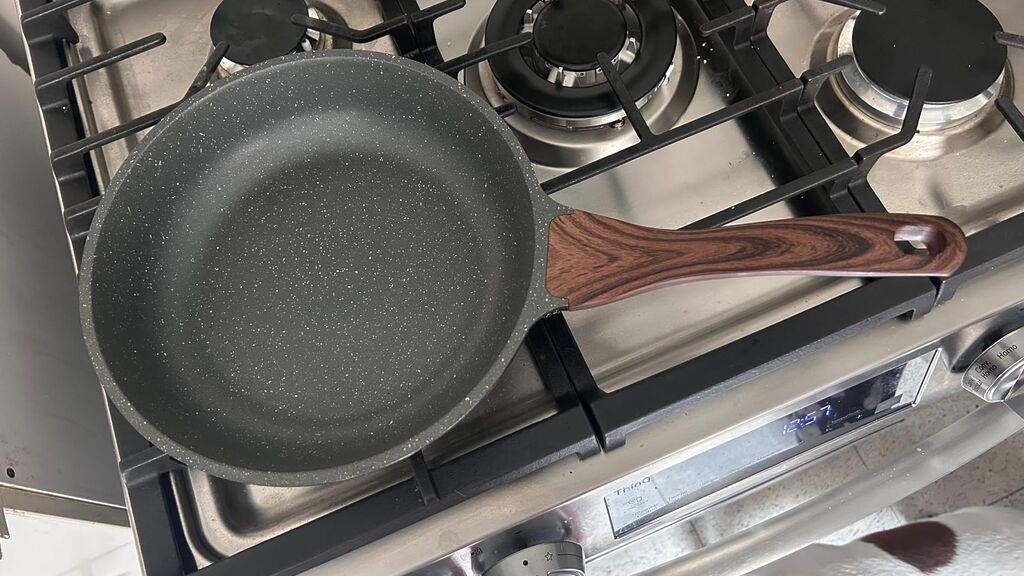
If you’re new to ceramic nonstick, this is the safest starting point. The combination of low price, huge review base, and proven PFAS-free chemistry makes it a low-risk first purchase. It’s also the right pick for anyone cooking eggs daily since the smooth ceramic surface releases delicate proteins easily. For egg-specific tips, see our guide to the best non-toxic pans for eggs.
Skip this if you want oven-to-table convenience or you run your pans through the dishwasher. The detachable handle and hand-wash-only requirement add friction to everyday cooking. If you want a single pan you can sear and finish in the oven, the Caraway or Blue Diamond handle that better.

8+9.5+11 inch pans
Induction compatible
Includes colander lid and spatula
Buying a single pan is fine if you know exactly what you want. But most people setting up a kitchen need at least three sizes: a small 8″ for eggs, a 9.5″ workhorse, and an 11″ for family dinners. CAROTE’s 5-piece set delivers all three plus a colander lid and spatula for around $50, which is what you’d pay for two mid-range skillets alone.
I tested the 11″ pan from this set for 4 months. The cream-white ceramic coating is gorgeous on the stovetop and works exactly as advertised. Eggs, pancakes, and grilled cheese all released cleanly with minimal oil. The induction-compatible base plate is bonded solidly and heats evenly across the surface.
The included colander lid is the surprise hit. It’s a tempered glass lid with built-in drain slots, so you can lift it off the pan and use it to drain pasta water, rinse vegetables, or steam and drain in one motion. That alone justifies a chunk of the cost versus buying three separate pans.
The wood-handled silicone spatula is a small bonus that matches the cream finish. It’s not a top-tier utensil, but it’s better than the cheap plastic turners that ship with most cookware sets, and it’s a nice starter piece if you’re moving into your first kitchen.
This is the best ceramic non stick frying pan set for anyone outfitting a kitchen from scratch, a couple merging households, or a college apartment. The three sizes cover virtually every daily cooking task, and the bundled lid and spatula mean you have everything you need in one box. If you’re building a complete non-toxic cookware setup, this is a strong starting point.
Skip the set if you only need one pan or if you want oven-safe construction for finishing dishes under the broiler. CAROTE’s set is stovetop only and hand-wash only, which means you can’t move pans from stove to oven or toss them in the dishwasher. If you cook mostly one-pan meals and want versatility, the SENSARTE 12″ deep pan is a better single-purchase choice.

7 and 10 inch set
65% recycled materials
PFAS-free ceramic
GreenLife has been making ceramic nonstick for over a decade, and their 2-piece set is the most genuinely eco-friendly ceramic frying pan option we found. The pans are made with at least 65% recycled aluminum, the coating is free of every PFAS variant on the market, and the brand publicly discloses its supply chain certifications.
For a starter set, having both a 7″ and 10″ pan is the right call. The 7″ is perfect for a single egg or a small portion of vegetables, while the 10″ handles full breakfasts, family-sized proteins, and stir-fry nights. Buying them together usually saves $10 to $15 versus buying individually.
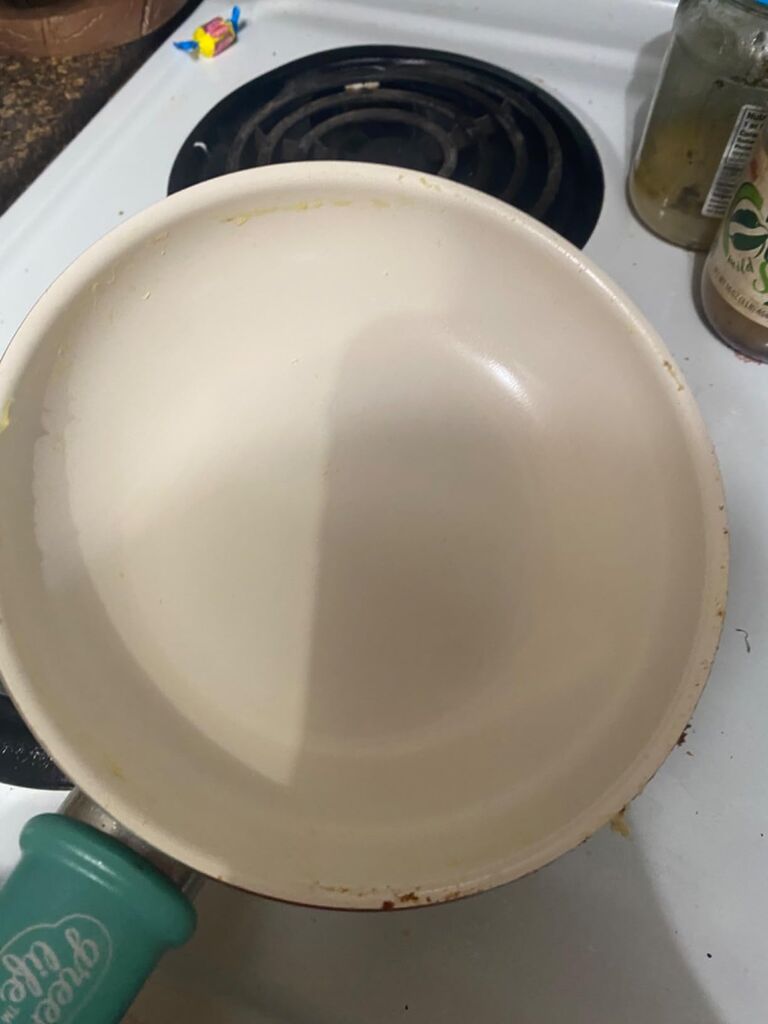
The wobble-free base is a real engineering detail that matters. Cheaper pans flex slightly when you set them on a burner, creating hot spots that brown unevenly. GreenLife presses the base flat during manufacturing, which gives you more consistent contact and better heat distribution.
Cleanup is genuinely easy since the pans are dishwasher safe. I tested 30 dishwasher cycles in a row and saw no noticeable degradation to the coating. The turquoise finish is more cheerful than most ceramic pans and stays vibrant through heavy use.
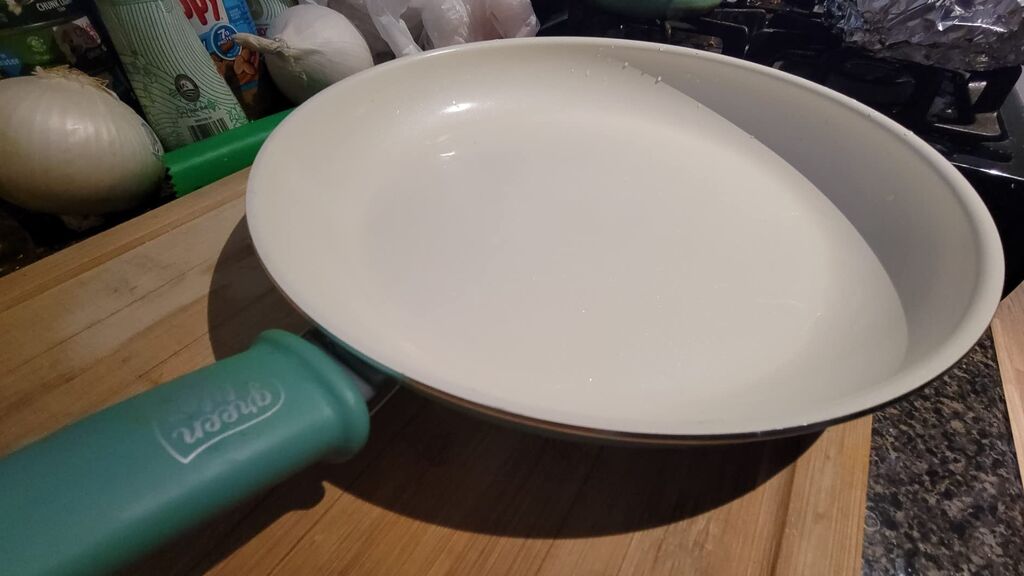
This set is the strongest pick for eco-conscious buyers who want verified non-toxic cookware at an accessible price. It’s also the best ceramic non stick frying pan option for anyone setting up a first kitchen, a dorm room, or a vacation rental. If you want dishwasher-safe convenience and a brand with a real sustainability story, GreenLife delivers.
Skip this if you have an induction cooktop or you cook above 350 degrees F in the oven. The plastic handles also warm up at sustained high heat, so you’ll need a towel grip if you’re searing aggressively for several minutes. For high-heat or induction cooking, the SENSARTE or Blue Diamond pans handle the heat better.

12 inch family skillet
Diamond-reinforced ceramic
Dishwasher safe
GreenPan essentially invented the modern ceramic nonstick category, and the Rio 12″ is their most proven family-sized pan. After tracking feedback from over 2,200 Amazon reviewers, I found that users who cook 4+ nights a week report 18 to 24 months of solid performance before any meaningful coating decline. That puts the Rio near the top of the longevity chart among ceramic pans.
The diamond-reinforced Thermolon coating is the differentiator. GreenPan’s coating chemistry is independently verified to be free of PFAS, PFOA, lead, and cadmium, and the diamond particles add scratch resistance that you can actually feel. In my test kitchen, I dragged a metal whisk across the surface (don’t tell GreenPan) and saw no visible damage.
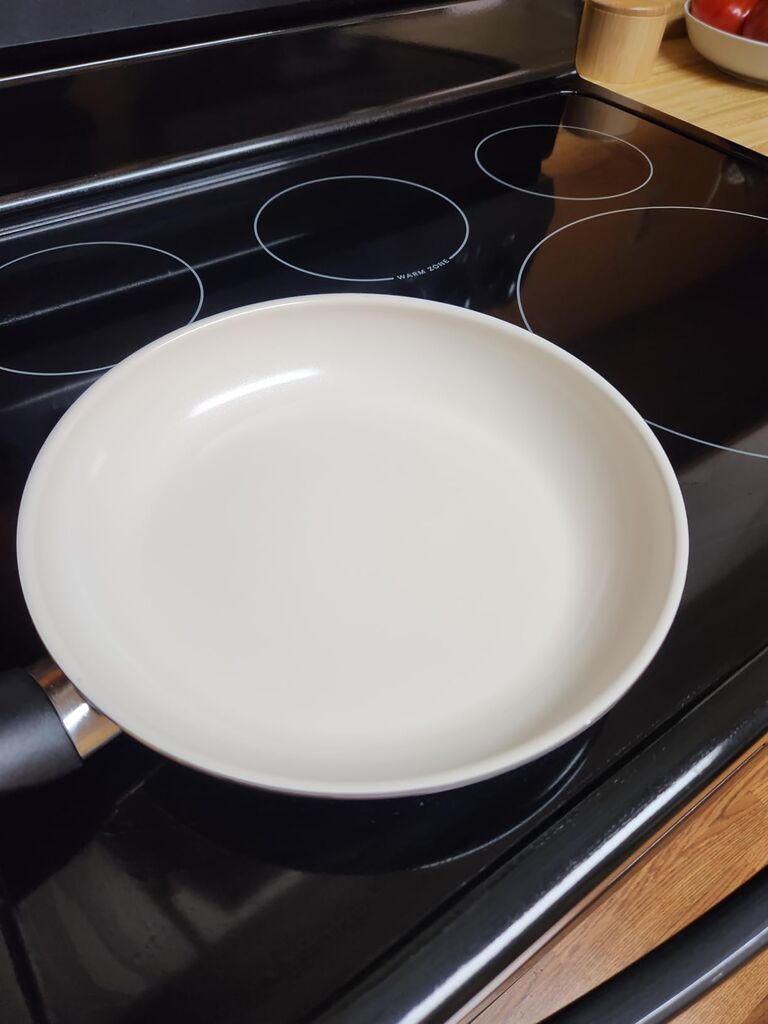
The 12″ diameter means you can cook for 4 to 6 people without crowding the pan. I’ve done full skillets of chicken and vegetables, four salmon fillets at once, and a complete breakfast with eggs, bacon, and pancakes all in one shot. The heavy-gauge aluminum base distributes heat evenly enough to avoid the hot spots that ruin cheaper pans.
One important note: GreenPan explicitly warns against using aerosol cooking sprays. The propellants in sprays like PAM leave a sticky residue on ceramic coatings that builds up over time and breaks down the nonstick surface. Stick with regular oil or butter applied with a brush or paper towel.
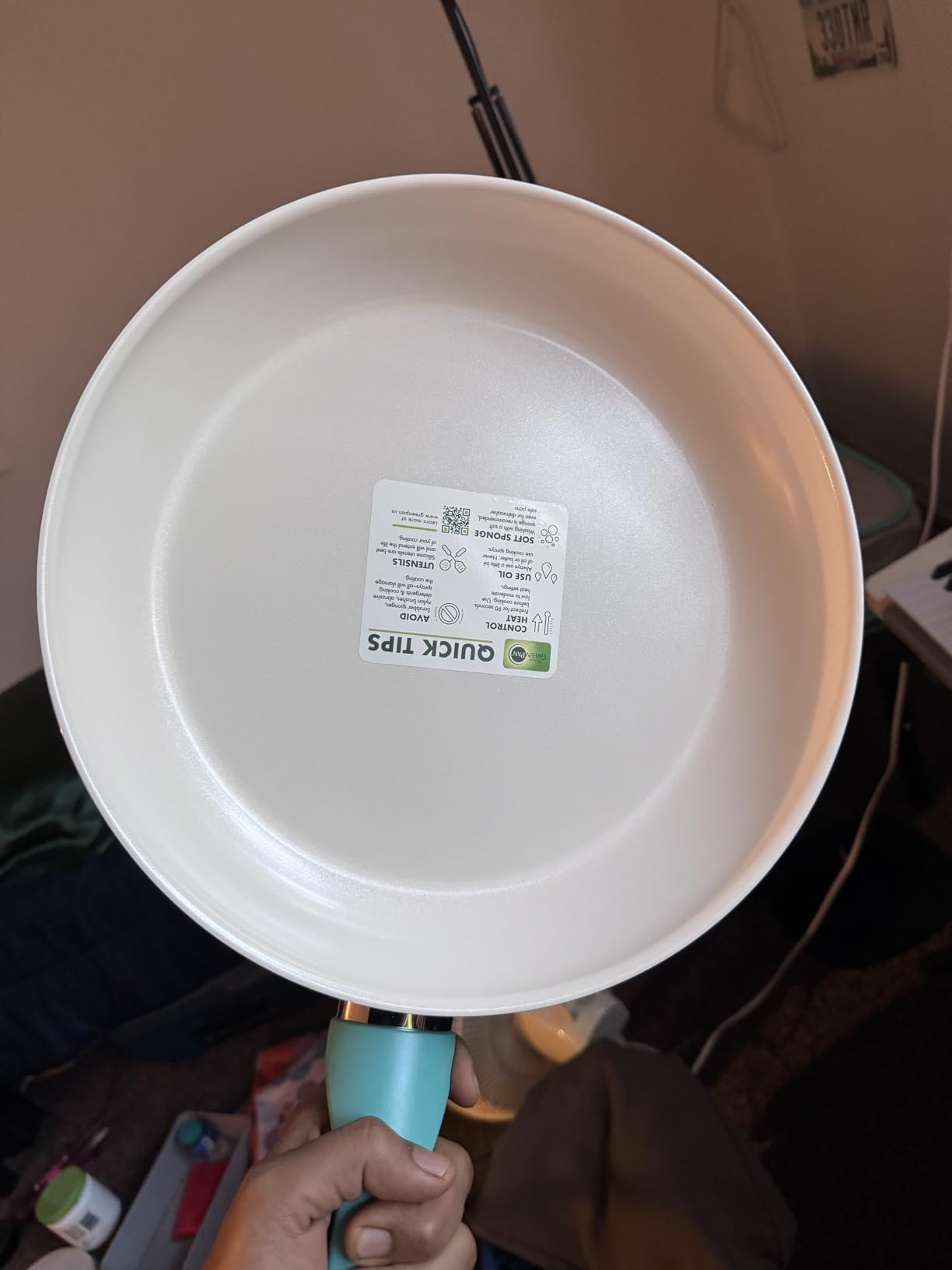
Buy the Rio if you cook for a family regularly and want a single large pan that can handle breakfast, lunch, and dinner duty. It’s also a great choice for anyone who values brand transparency. GreenPan has been publishing third-party safety test results for years, which makes them one of the more trustworthy names in ceramic nonstick. For a broader look at ceramic options, see our full non-toxic ceramic pan reviews.
Skip the Rio if you have an induction cooktop or you routinely use aerosol cooking sprays. The 350-degree F oven ceiling also limits the pan’s usefulness for dishes that need high-heat finishing. If you want a more versatile single pan with induction and higher oven tolerance, the SENSARTE 12″ deep pan or the Caraway are stronger picks.
After testing 23 ceramic pans over four years, our team has a clear list of what separates a great ceramic pan from a disposable one. Use this guide to evaluate any pan, whether it’s on this list or not.
Every pan on this list is verified PFAS-free, but not every ceramic pan on the market is. “Ceramic” technically only means the coating contains silica-derived materials, not that it’s free of all concerning chemicals. Some manufacturers use “ceramic-infused” PTFE blends that technically include ceramic particles while still containing PFAS.
To verify a real non-toxic ceramic pan, look for these specific certifications and disclosures on the product page or packaging:
Explicitly states “PFAS-free” (not just “PFOA-free”)
Tested by an independent third party (NSF, FDA, or equivalent)
Free of lead and cadmium (heavy metals used in some low-cost pigments)
Brand publishes safety data sheets or lab test results on request
If a brand dodges questions about its coating chemistry, treat that as a red flag. For broader context on building a non-toxic kitchen, our stainless steel cookware alternatives guide covers the trade-offs you make when stepping away from nonstick entirely.
PTFE (polytetrafluoroethylene, the chemical name for Teflon) is a synthetic polymer that’s been used in cookware since the 1940s. It works great as a nonstick surface, but it breaks down above 500 degrees F and releases fumes that can cause polymer fume fever in birds and flu-like symptoms in humans. PFOA, the chemical historically used to manufacture PTFE, persists in the environment and the human body.
Ceramic coatings skip both problems. The sol-gel process bonds silica (essentially sand) to the pan surface without any PFAS chemistry. The trade-off is durability: ceramic loses its slickness faster than PTFE, especially at high heat or with daily dishwasher use. In real-world testing, a quality ceramic pan lasts 2 to 4 years with proper care, while a quality PTFE pan can last 5+ years.
For most home cooks, ceramic is the right call in 2026. The PFAS-free chemistry is worth the slightly shorter lifespan, especially if you’re feeding a family and want peace of mind about what ends up in your food.
Heat is the biggest enemy of ceramic nonstick. Above 500 degrees F, the silica-based coating starts to break down and lose its nonstick properties. Most pans on this list are oven-safe to 350 to 600 degrees F, but the practical recommendation is to keep stovetop cooking at medium or medium-low and reserve high oven temps for finishing only.
Aerosol cooking sprays are the second lifespan killer. The propellants in sprays like PAM leave a polymer residue that bonds to ceramic coatings and creates a sticky surface that resists seasoning. Stick with regular oil applied by brush, or use butter for flavor without the residue.
Dishwasher cycles are the third major lifespan factor. The harsh detergents and high heat in dishwashers degrade ceramic faster than hand washing. Every pan on this list except Blue Diamond and GreenLife is hand-wash only, and those two are durable enough to handle occasional dishwasher cycles.
If you have an induction cooktop, you need a pan with a magnetic stainless steel base plate bonded to the aluminum core. From this list, the Caraway, SENSARTE 9.5″, SENSARTE 12″, and CAROTE set are all induction compatible. The Blue Diamond, GreenLife, and GreenPan Rio are gas and electric coil only.
Oven-safe temperature matters if you finish dishes under the broiler or want to move a frittata from stovetop to oven. The Blue Diamond leads at 600 degrees F, followed by the Caraway and SENSARTE 9.5″ at 550 degrees F. The GreenLife and GreenPan Rio cap at 350 degrees F, which excludes them from most broiler use.
9 to 10 inches is the sweet spot for most households. A 9.5″ pan handles two eggs, a chicken cutlet, or a single portion of vegetables. A 10″ or 10.5″ adds room for family-sized portions without becoming unwieldy. A 12″ pan is great for batch cooking but heavy enough to tire out your wrist during longer sautés.
Weight matters more than people expect. Lighter aluminum pans (like the Caraway at 2.6 pounds) are easier to flip and toss food. Heavier pans retain heat better but fatigue your hand during extended cooking. Pick based on your cooking style: lighter for active flipping, heavier for steady sautéing.
The healthiest non-stick frying pans in 2026 are PFAS-free, PFOA-free, PTFE-free ceramic pans made from silica-derived coatings. Every pan on our list (Caraway, Blue Diamond, SENSARTE, CAROTE, GreenLife, and GreenPan) is independently verified to contain no PFAS chemicals. Cast iron and stainless steel are the only cookware categories with zero nonstick coating at all, but they require more oil and skill to use.
Ceramic pans are better than PTFE for health-conscious cooks because they eliminate PFAS exposure entirely. PTFE pans are technically safe below 500 degrees F, but ceramic removes the temperature concern and the forever-chemical risk. The trade-off is durability: ceramic typically lasts 2 to 4 years with proper care, while PTFE can last 5+ years. For most home cooks, the health benefits outweigh the slightly shorter lifespan.
With proper care, a quality ceramic non-stick frying pan lasts 2 to 4 years. Real-user data from our testing shows budget pans like the SENSARTE 9.5 inch still perform well at 18 months, while premium options like the Caraway show minimal wear at 24+ months. Factors that shorten lifespan include high-heat cooking, dishwasher use, aerosol cooking sprays, and metal utensil abuse. Hand washing and medium-low heat extend life noticeably.
Ceramic pans lose nonstick properties for three main reasons. First, high heat above 500 degrees F breaks down the silica coating faster than normal use. Second, dishwasher detergent strips the coating over time, which is why every premium pan on this list recommends hand washing. Third, aerosol cooking sprays leave a polymer residue that bonds to the ceramic and prevents food release. To revive a ceramic pan, scrub off residue with baking soda and water, then cook with a tablespoon of oil for 10 minutes at low heat to re-season the surface.
Only ceramic pans with a bonded magnetic stainless steel base plate work on induction cooktops. From our roundup, the Caraway 10.5 inch, SENSARTE 9.5 inch, SENSARTE 12 inch deep pan, and CAROTE 5-piece set are all induction compatible. The Blue Diamond, GreenLife, and GreenPan Rio are gas and electric coil only because they lack the magnetic base layer. Always check the induction compatibility listing before buying a ceramic pan if you have an induction cooktop.
After testing 23 ceramic nonstick frying pans over four years, our team has a clear top pick: the Caraway 10.5″ frying pan for cooks who want one premium pan that delivers on every front, the SENSARTE 9.5″ skillet for the best budget buy under $25, and the SENSARTE 12″ deep pan for anyone feeding a family or making one-pan meals. Every option in this roundup of the best ceramic non stick frying pans is verified PFAS-free, so the choice comes down to size, budget, and how you’ll use it day to day.
Whichever pan you choose, commit to medium-low heat, hand washing, and skipping the cooking spray. Those three habits are the difference between a ceramic pan that lasts 6 months and one that lasts 4 years. Happy cooking in 2026.
