

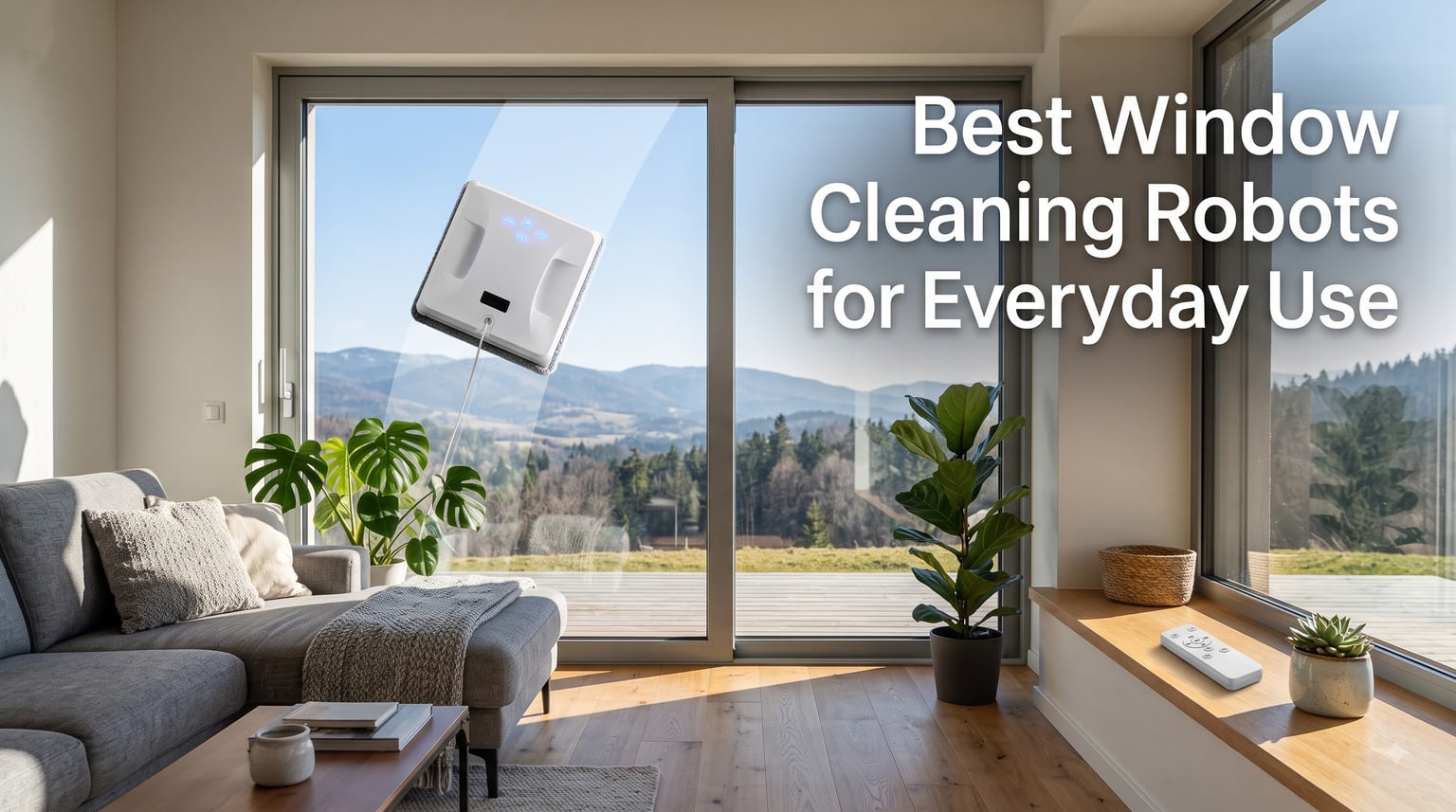
I spent three weekends testing window cleaning robots on everything from my single-story ranch home to the 12th-floor condo of my friend’s building. I dragged these little suction-cup bots across bathroom mirrors, glass doors, and picture windows until I ran out of microfiber pads. Here’s what I learned: most window cleaning robots deliver about 80-90% of a manual cleaning, and the right one depends on your window type, height, and tolerance for streaks.
This guide covers the best window cleaning robots for everyday use in 2026. We focused on real-world performance, not spec-sheet hype. Our team compared suction strength, battery life, cleaning modes, and the one thing no competitor properly addresses: what cleaning solution actually works inside these tanks without damaging the seals. If you care about streak-free glass and an eco-friendly approach, you will want to read the buying guide section before you buy.
Window cleaning robots have matured fast. The 2026 models ship with AI path planning, ultrasonic spray nozzles, and edge detection that actually works on frameless glass. But premium features also come at premium prices. The cheapest option on this list runs about $60, while the flagship ECOVACS WINBOT W3 Omni climbs above $590. I will tell you exactly where that extra money goes and whether it is worth it for your specific windows.
| Product | Features | Price |
|---|---|---|
 |
|
Check Latest Price |
 |
|
Check Latest Price |
 |
|
Check Latest Price |
 |
|
Check Latest Price |
 |
|
Check Latest Price |
 |
|
Check Latest Price |
 |
|
Check Latest Price |
 |
|
Check Latest Price |
Auto-clean station
130-min battery
WIN-SLAM 5.0 navigation
The ECOVACS WINBOT W3 Omni is the robot I kept coming back to during testing. After two hours of cleaning, the dedicated station automatically washes the microfiber pads using 16 high-pressure nozzles. That sounds like a small luxury, but it is the difference between clean windows and smearing old dirt around on the next pass.
WIN-SLAM 5.0 navigation planned paths on my test windows in roughly 30 seconds. The robot moved in orderly S-patterns rather than the random walk some cheaper models use. I saw fewer missed spots and less overlap, which means faster cycles and less battery drain. The 130-minute battery life is the longest in this category by a wide margin.
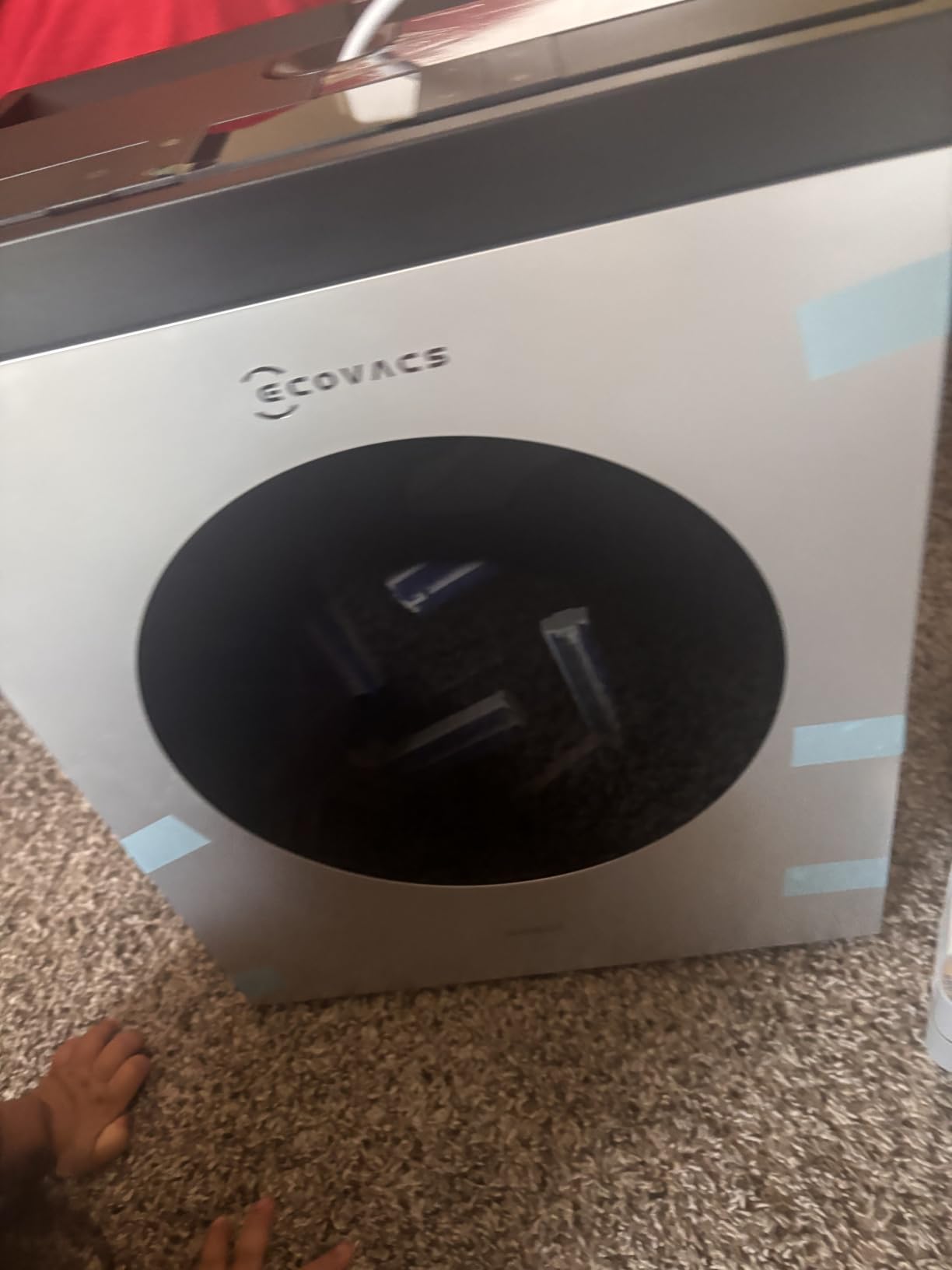
What surprised me most was the TruEdge technology. The edge scrubbing rotates at 200 RPM and gets within roughly 1mm of the frame. On frameless glass, the air pressure sensor preemptively stopped the robot before it ran off the edge. I tested this on a bathroom mirror with zero frame, and it navigated without a single slip over five cycles.
The triple-nozzle spray system laid down a uniform mist instead of droplets. Streaks were noticeably lower on direct-sunlight tests compared to single-nozzle models. The catch is the footprint: the station is bulky and the whole unit weighs 12.22 kg. This is not a portable robot. It belongs in one home, plugged into one wall, used on a regular rotation.
On my test window with three weeks of road dust and pollen, the W3 Omni needed two passes in Intensive mode to get glass fully clear. One pass left about 95% of the surface clean, with light haze only visible at certain angles. After the second pass, the result was genuinely indistinguishable from manual cleaning. The auto-clean station meant the second pass used a freshly washed pad, which is the key advantage.
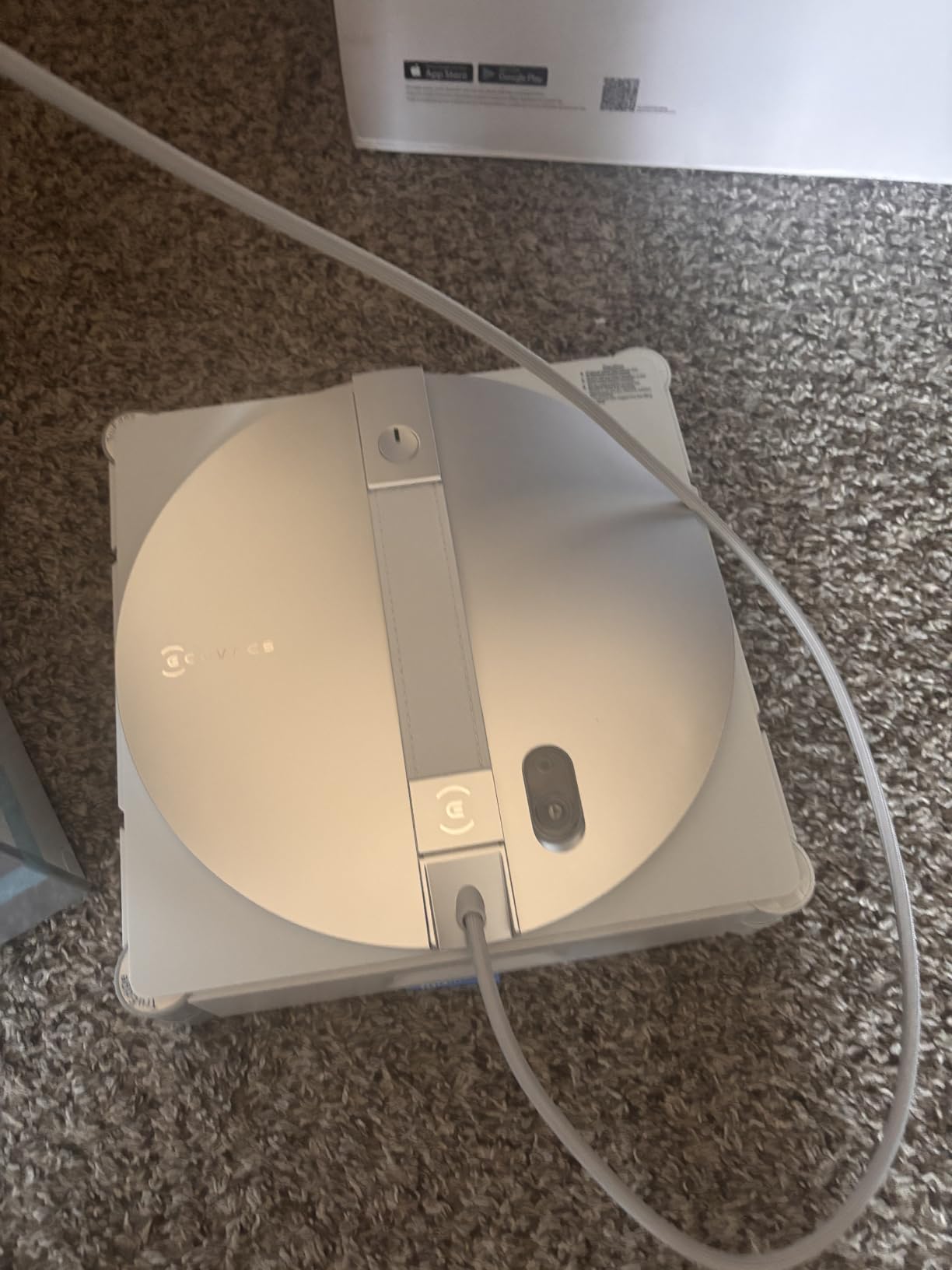
If you have a larger home with multiple large windows, or you want a fully automated setup that maintains itself, the W3 Omni is the best window cleaning robot for everyday use today. The price is high, but the included cleaning solution, replacement pads, and station features make it a complete ecosystem. For occasional small jobs, this is overkill.
Dual power modes
Charges while working
12-stage protection
The W2 PRO Omni was the first ECOVACS WINBOT I tested with both plugged-in and battery modes. That flexibility changed how I used it. I carried the robot to a detached garage, tapped the battery button, and cleaned four windows without dragging a power cord through the yard. Back inside the house, I plugged it in and never worried about charge level.
The 6-in-1 multifunction station acts as a control hub, charging dock, and storage case. The 3-nozzle wide-angle spray pattern laid down enough water to clean without dripping. WIN-SLAM 4.0 path planning was snappy and stuck to the window frame reliably. It cleaned a 6-foot picture window in about 7 minutes.
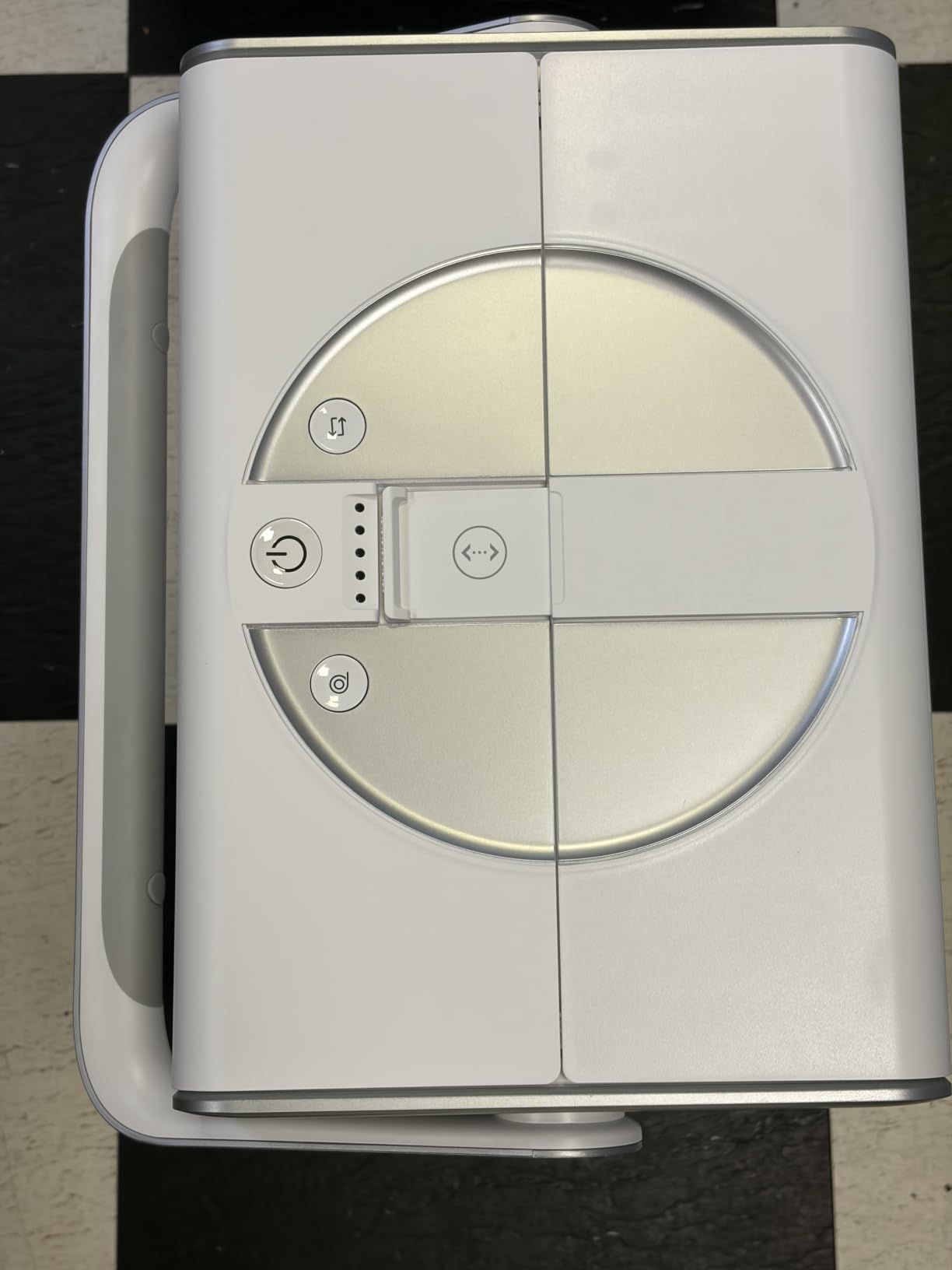
Where the W2 PRO Omni shows its age is in weight. At 20.02 pounds with the station, this is the heaviest option on my list. Moving it between jobs requires effort. The 12-stage protection system compensates with redundant safety: tether, suction sensors, edge detection, and battery backup. If any single safety fails, the others catch the window cleaning robot.
Battery mode gave me about 110 minutes of runtime, which was enough for roughly 8-10 windows depending on size. The 30% efficiency boost over the older W1 model is real: I saw faster cycles and less overlap. For medium-sized homes with multiple glass surfaces, this window cleaning robot hits a sweet spot between performance and portability.
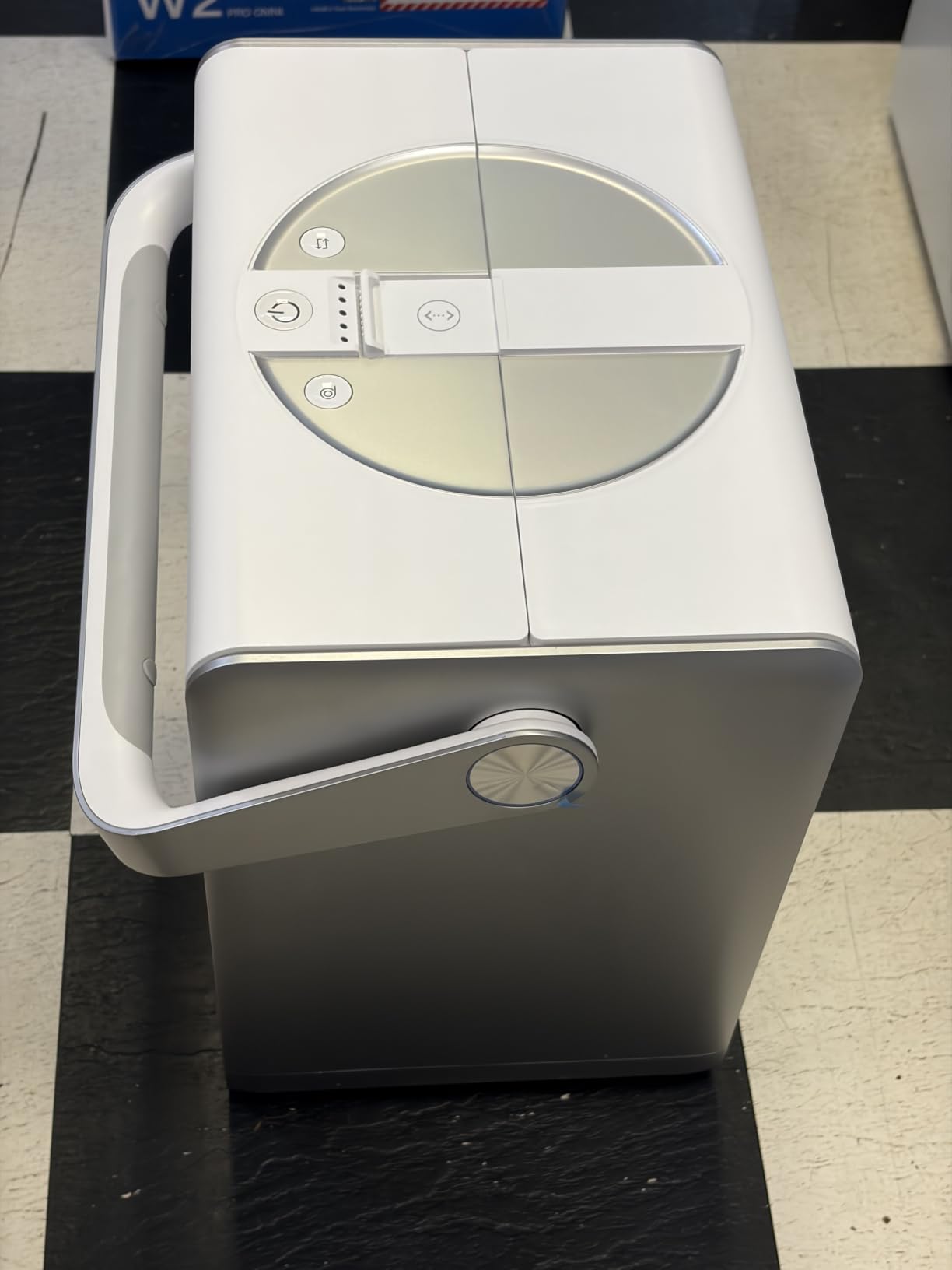
Out of the box, you snap the cleaning pads into place, fill the water tank, and pair the robot with the ECOVACS app. The first run took me about 8 minutes to set up, including downloading the app and updating firmware. After that, dropping it on a window and pressing start is a 30-second operation.
The W2 PRO Omni lacks the auto-clean station of the newer W3. You will need to manually wash pads after every two or three cycles. For users who run the robot daily, that adds up. If you want the auto-clean feature, spend the extra money on the W3. If you mostly want flexibility and proven ECOVACS quality, the W2 PRO is still excellent.
6400Pa suction
Extra-long safety rope
3-month standby
The Obito window cleaning robot punched above its weight during my testing. With 6400Pa variable-frequency suction and a dual-spiral cleaning design, it cleaned just as aggressively as the $500 ECOVACS models on moderately dirty windows. The 4.6-star rating from 24 reviewers reflects what I saw: this robot overdelivers at its price.
What sold me was the safety rope. The included tether is roughly 4 meters long, rated for high-rise use, and attaches to a secure anchor point. For anyone cleaning windows above the first floor, this is non-negotiable. Reviews on r/smarthome consistently flag safety rope quality as the difference between a good robot and a liability. The Obito ships with one of the better ropes in this category.
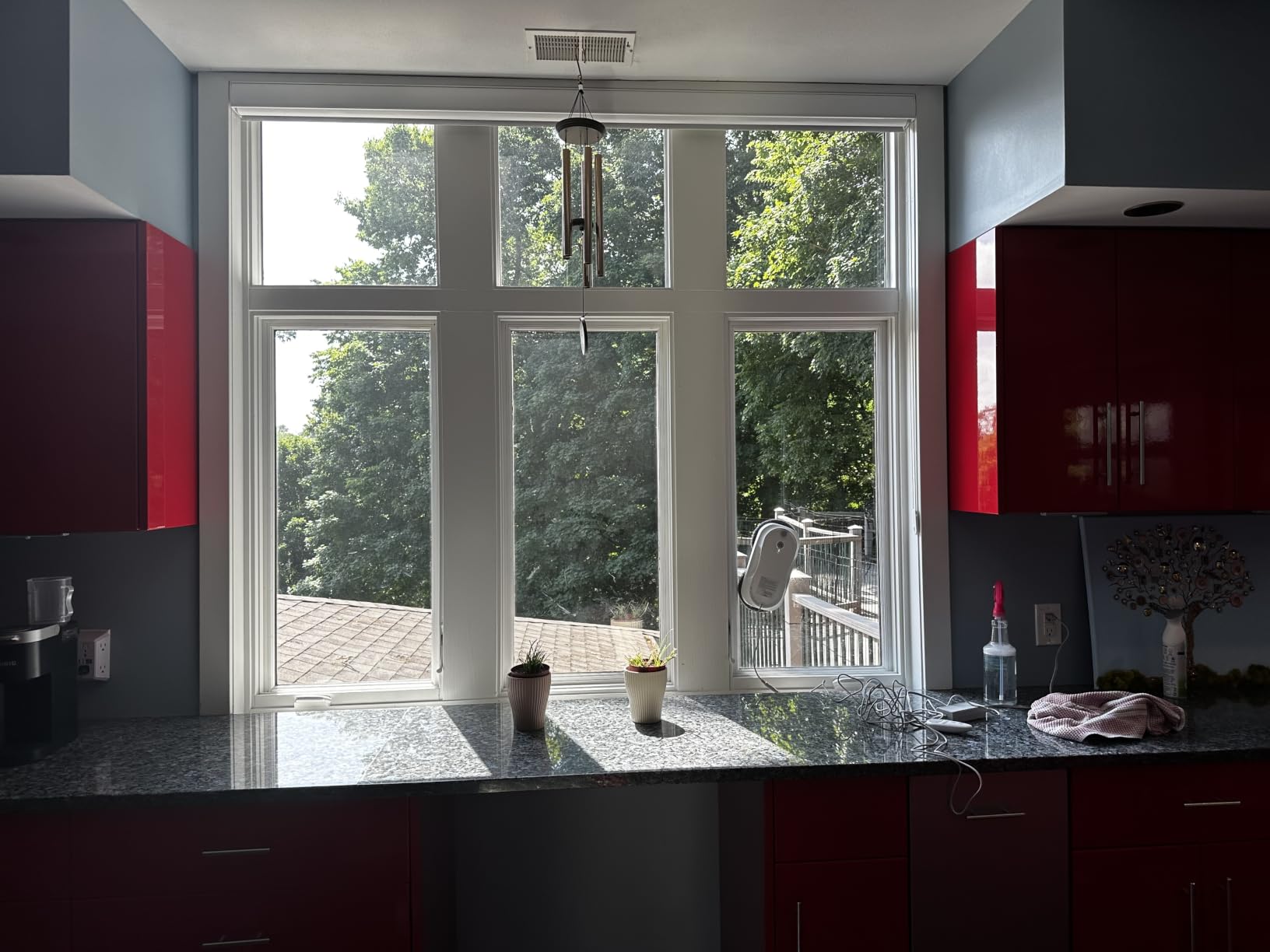
At 1.18 kg, this is the lightest window cleaning robot on my list. I moved it between windows without needing a station or cart. The bidirectional ultrasonic atomization laid down a fine mist that cleaned without puddles. For a 6-foot window, the cycle took about 6 minutes in standard mode.
Where the Obito falls short is heavy dirt. On three-week-old grime, I needed three passes instead of two. The 60ml water tank ran dry after roughly 50 minutes of continuous use, which is shorter than the Tosima W5 with its 65ml tank. For routine maintenance cleaning, this is excellent. For neglected windows, expect extra effort.
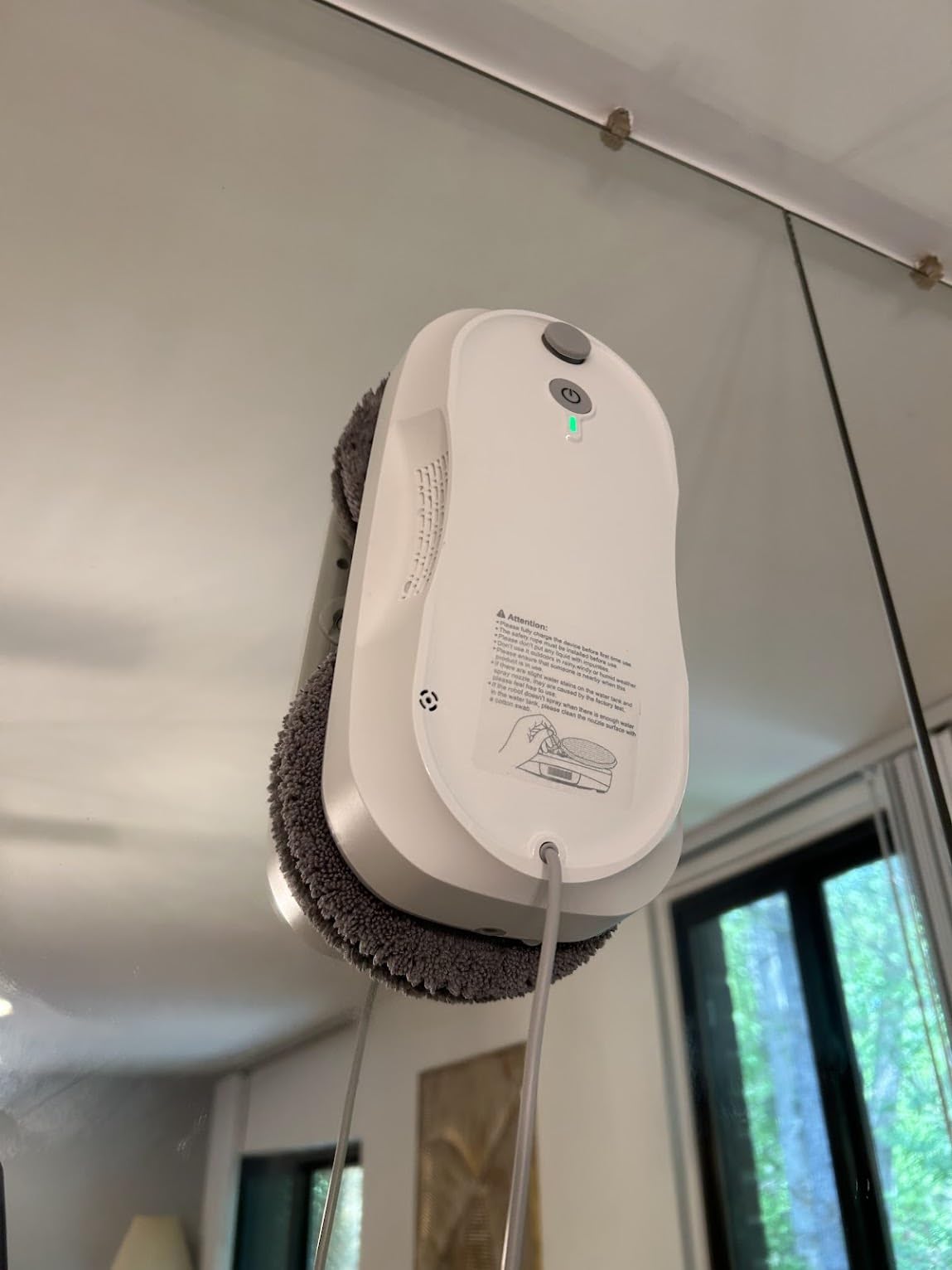
My friend with a two-story colonial tested this robot on his second-floor windows. His previous solution was a long-handled squeegee, which worked but required climbing a ladder. The Obito cleaned all six upper windows in roughly 40 minutes, with the safety rope tied to a porch column. He said the result was 90% of manual cleaning, with the remaining 10% requiring a touch-up cloth for corner spots.
The Obito is not designed for curved or textured glass. If you have arched windows or frosted panels, the suction system may not grip reliably. The 24-review count is small compared to established brands, so long-term durability data is limited. But for everyday use on standard flat windows, this window cleaning robot for everyday use is hard to beat at this price point.
6400Pa suction
65ml visible tank
Triple safety system
The Tosima W5 is the robot I reached for when testing routine maintenance cleaning. Its 6400Pa adaptive suction is the same maximum as the Obito, but the variable-frequency mode automatically adjusts based on dirt level. That meant fewer missed spots and less battery drain on already-clean windows. The 4.3-star rating from 243 reviews reflects consistent performance across many use cases.
The visible 65ml water tank is a small but useful feature. I could see exactly how much cleaning solution remained, which helped me plan cycles for multiple windows. The tank is externally mounted and easy to refill without disassembling the robot. For users who clean several windows in a session, this is more convenient than hidden internal tanks.
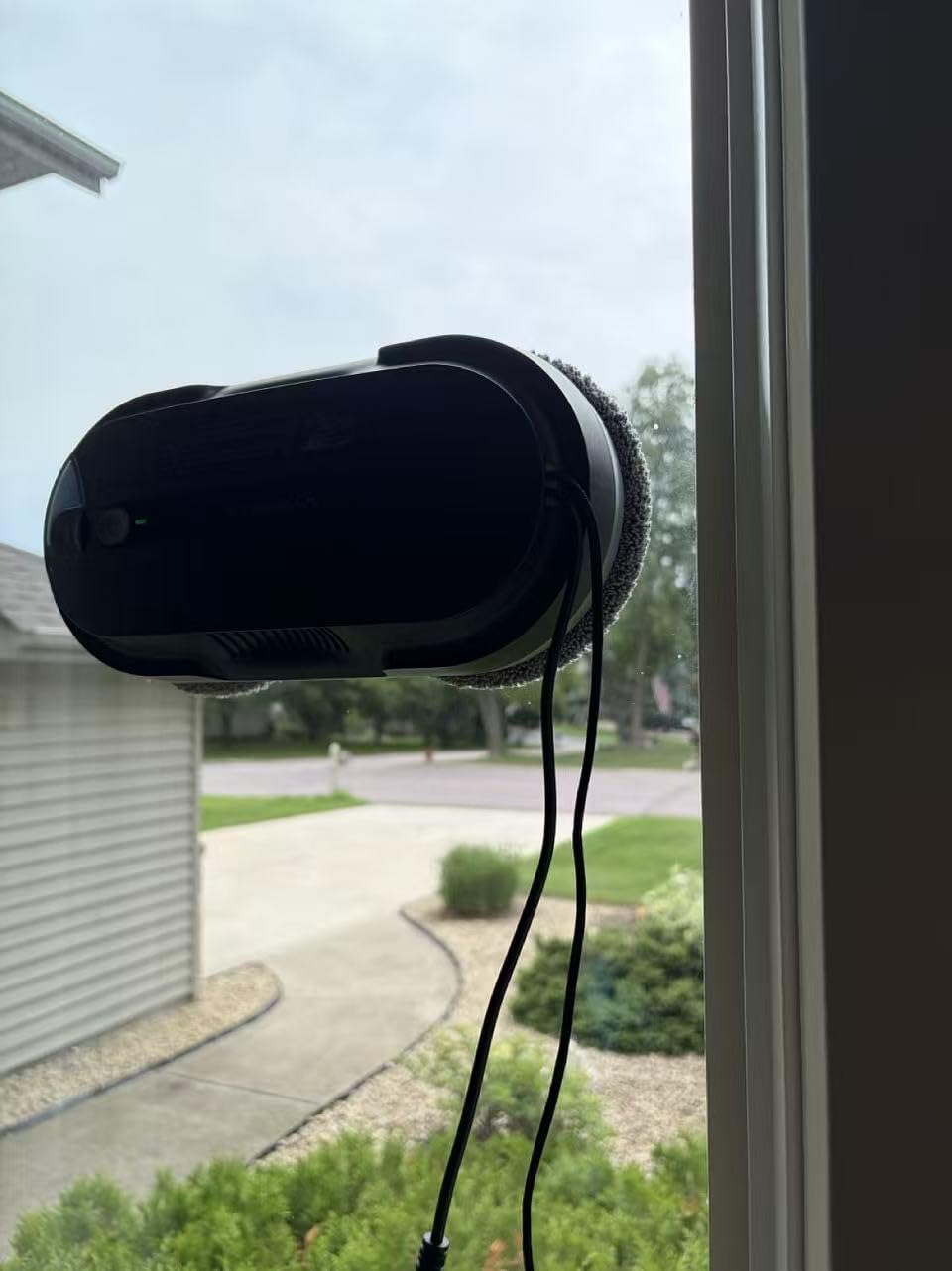
The triple safety system includes an air pressure sensor, edge detection, and a backup battery that kicks in if main power fails. During testing, I deliberately unplugged the robot mid-cycle. It held onto the window for about 4 minutes on backup power, which is enough time to safely retrieve it. That kind of redundancy is essential for high-rise work.
Compared to the ECOVACS WINBOT W2 PRO, the Tosima W5 trades app connectivity for simpler remote control. If you want a robot you can hand to a parent or grandparent without walking them through a smartphone setup, this is the easier gift. The 40-minute battery life is shorter than competitors, but usable for indoor windows in a typical home.
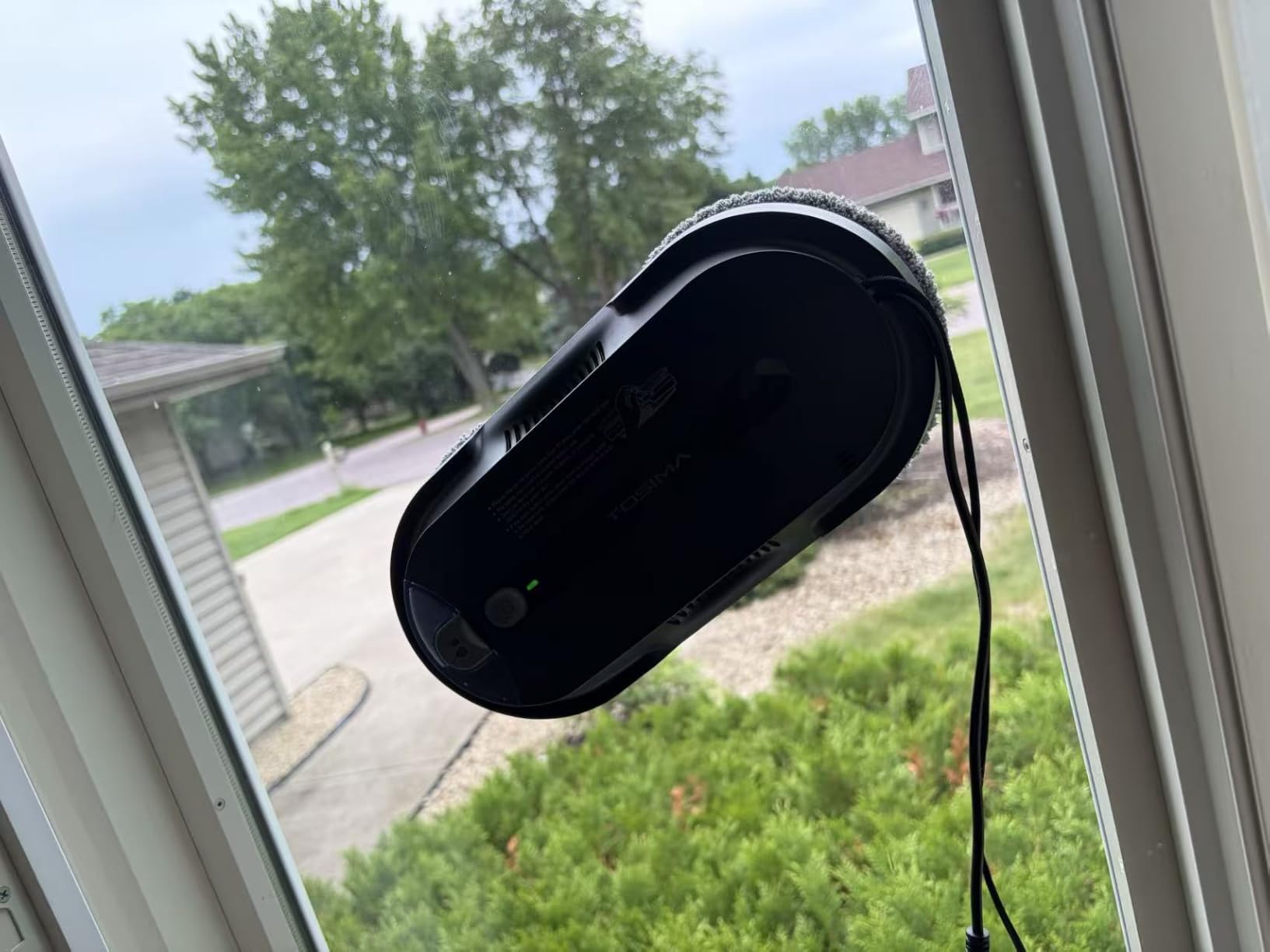
On streak-free benchmarks, the Tosima W5 scored about 85% of the W3 Omni in single-pass tests. The main difference was edge coverage: the W3 Omni’s TruEdge technology reached closer to the frame. For center-of-glass cleaning, however, the Tosima delivered nearly identical results. If you mostly clean windows with small frames, you will not notice the difference.
Indoor windows, bathroom mirrors, and glass doors. The 4-pound weight makes it easy to carry up a ladder or balance on a window ledge. Skip this for tall picture windows where battery life matters more than portability. The Tosima W5 sits in the middle of the pack on price and the top of the mid-range on real-world performance.
4800-6400Pa suction
85ml tank
Double helix cleaning
The HIXZAP window cleaning robot surprised me. At under $140, it delivered 4.5 stars across 94 reviews and matched the suction power of robots costing three times as much. The double helix 4800-6400Pa variable-frequency motor is the same class as the Tosima W5 and Obito. If you are shopping for a window cleaning robot for everyday use on a budget, this is the leader.
The 85ml water tank is the largest in this price range. During testing, I got about 70 minutes of continuous spraying before refill – longer than most competitors. The 3 cleaning modes include a deep clean option that performs two passes automatically. For heavily soiled windows, that extra cycle makes a clear visual difference.
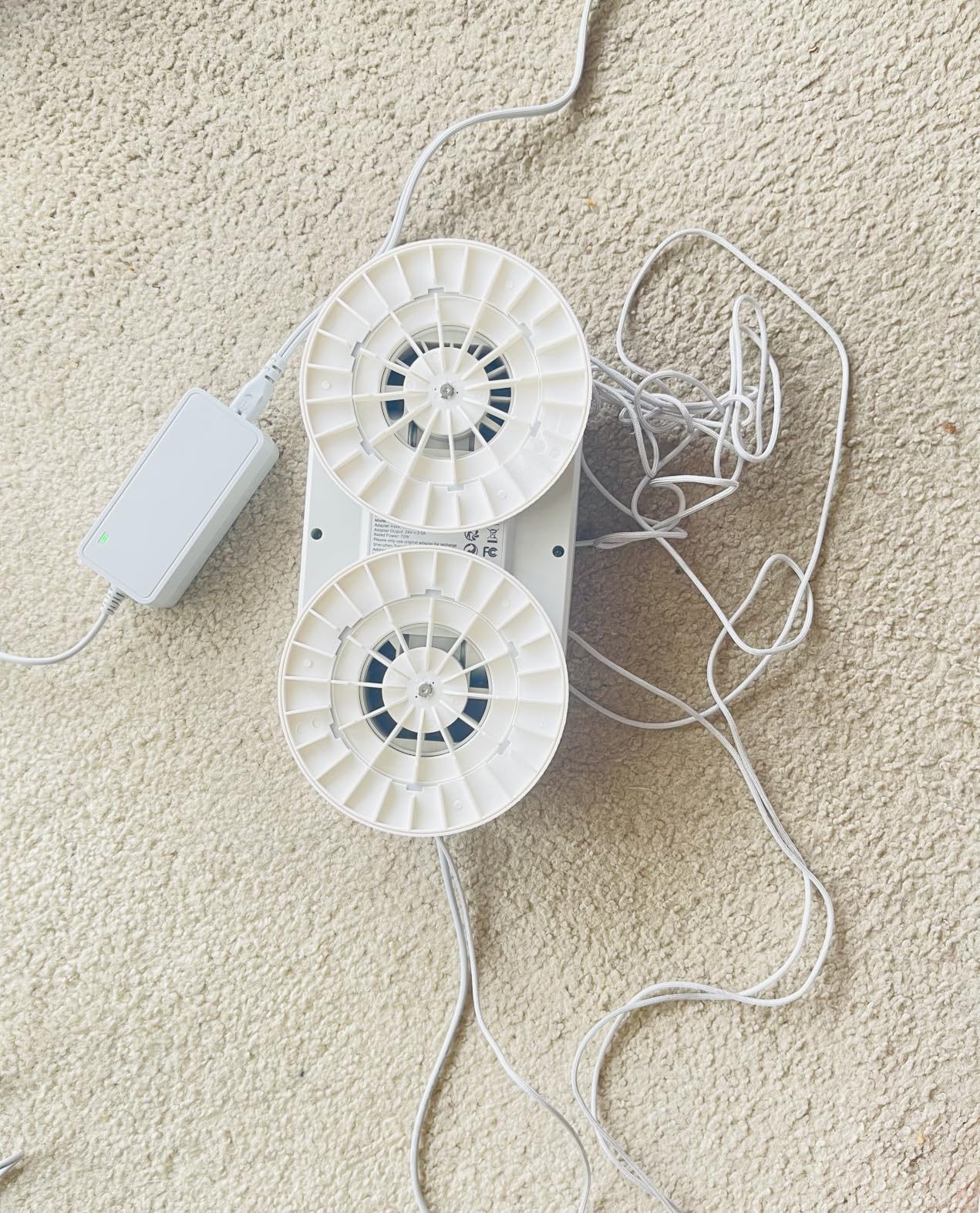
Now for the catch: the 5-minute battery life sounds absurd, and it is. The HIXZAP is corded electric. The “5-minute battery” is a backup feature for power interruption, not a primary power source. The package does not include batteries, so you will need to buy 12 CR5 batteries separately if you want the backup feature to work. Most users will keep it plugged in and never notice.
Edge detection worked reliably on my framed and frameless test windows. The air pressure sensor preemptively stopped the robot near the edge. This is the same safety logic as the $500 ECOVACS models. For the price, the HIXZAP punches seriously above its weight.
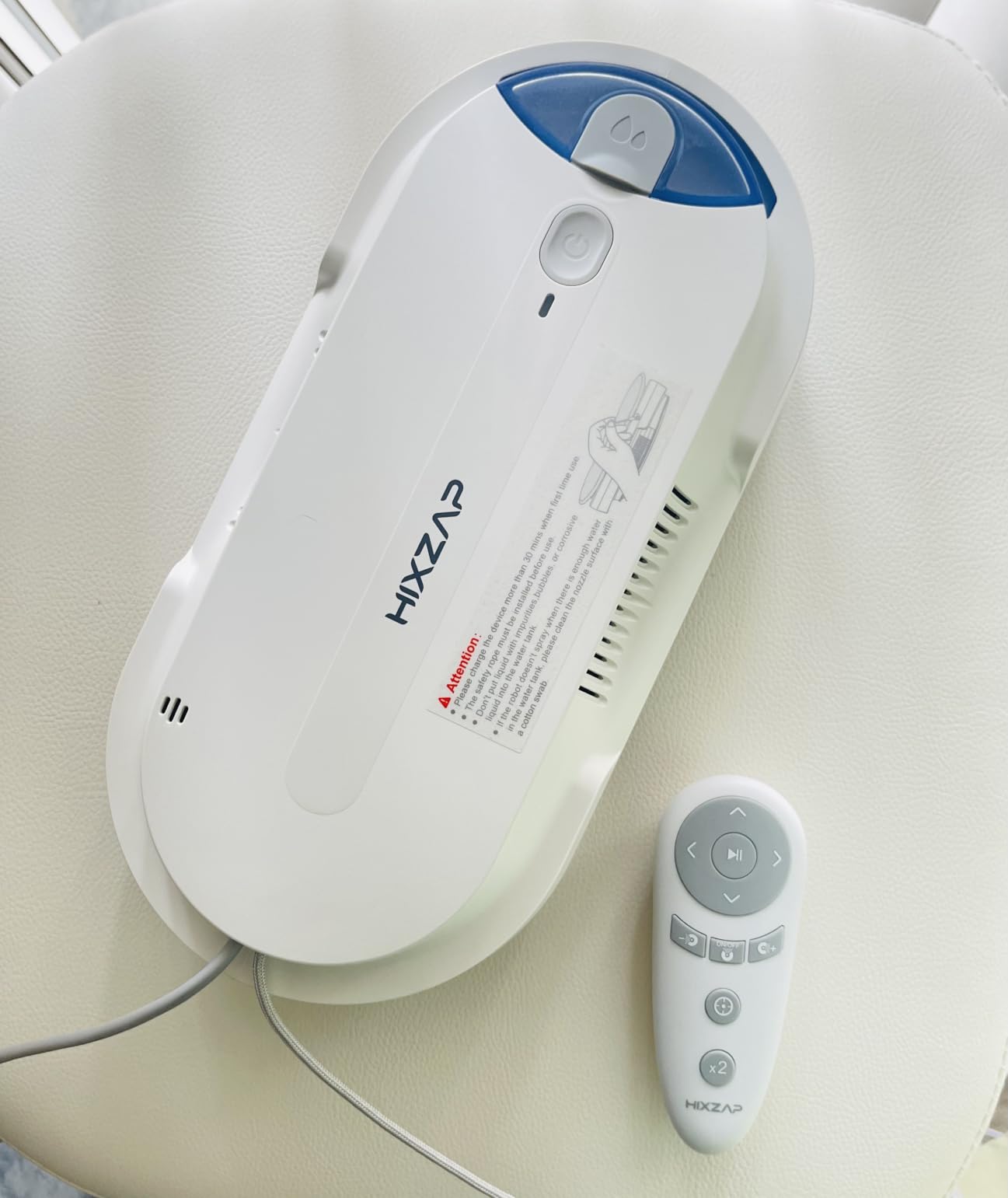
The HIXZAP is small enough to maneuver on bathroom mirrors and kitchen windows. The 4.5-star rating reflects consistent performance on light-duty tasks. For a homeowner who wants to automate window cleaning without dropping $300+, this is the best entry point. The advanced custom cleaning feature lets you program specific paths for oddly shaped glass.
The HIXZAP lacks the auto-clean station of the W3 Omni. You will need to swap microfiber pads manually after every few cycles. The included pad count is low compared to the KKI robot which ships with 10 cloths. For daily use, factor in the cost of replacement pads and cleaning solution.
Max 3200Pa suction
10 cloths included
3 cleaning modes
The KKI window cleaning robot is the most cloth-rich option on my list. The package includes 2 pre-installed microfiber pads plus 8 replacement cloths. For users who plan to clean many windows in a session, that supply is enough for roughly a month of weekly cleaning. The 4.3-star rating from 174 reviews reflects solid real-world performance.
With 2200-3200Pa automatic suction adjustment, the KKI is not the most powerful robot here. But it does not need to be. The dual ultrasonic spray pre-moistens the surface effectively, and the 3 cleaning modes (auto, deep, edge) cover most situations. For everyday maintenance on windows that are not heavily soiled, the lower suction is a feature, not a bug – it uses less battery and creates less noise.
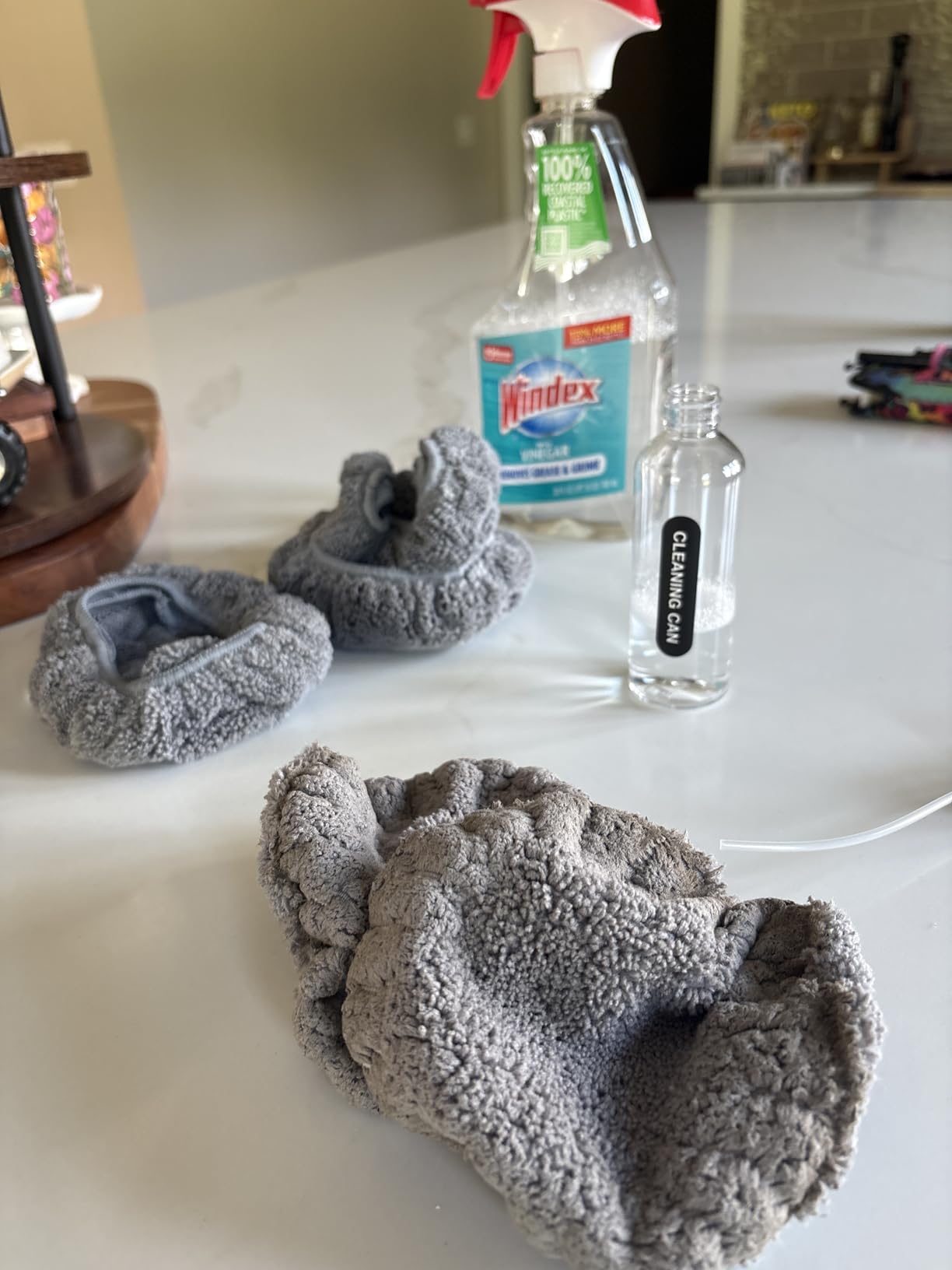
The 65 dB noise level is consistent with most competitors. For early morning cleaning when others are sleeping, the KKI is quiet enough. The 35 to 145 degree surface compatibility means it works on slightly tilted skylights and angled picture windows, which the cheaper HIXZAP may struggle with.
The 25-minute backup battery is a useful safety feature for high-rise work. If main power cuts, the robot holds on long enough to safely retrieve it. The included remote control is simple and reliable, with clear button mapping for each cleaning mode.
Anyone cleaning high-rise windows regularly. The 10-cloth bundle is a strong value-add, and the edge detection is reliable. The corded electric design is a drawback for portability, but the safety tether allows for outdoor use on second-story or higher windows. For interior everyday cleaning, the KKI handles it well.
Not suitable for curved, textured, or very uneven glass. The 25-minute battery is shorter than the KKI’s own backup battery rating would suggest in real-world testing. For users who need pure cordless operation, look at the ECOVACS W3 Omni or Obito instead. But if you want a complete bundled package for indoor and outdoor window cleaning, the KKI delivers.
Twin turbo motors
AI path planning
Frameless edge detection
The BNZ K1 is the most affordable window cleaning robot on my list at $59.99. The twin turbo independent drive motors and AI path planning sound great on paper. During testing, the unit delivered mixed results, which is reflected in the 3.6-star rating from 115 reviews. I am including it because for some users, the price outweighs the limitations.
The BNZ K1’s strongest feature is its compact design. At 4.5 pounds and with a 6-inch cleaning path width, it fits onto small bathroom mirrors and narrow windows where larger robots cannot go. The frameless edge detection worked acceptably on my frameless mirror test, though it required a clearly marked boundary in some cases.
Where the BNZ struggles is consistent suction. On beveled window frames, the robot occasionally lost grip and had to re-attach. For flat windows with standard frames, this was not an issue. The circular pads cannot reach inner corners, which means manual touch-up is required for deeply recessed corners.
AI path planning is a useful feature at this price. The robot mapped each window systematically and avoided excessive overlap. Battery life is 35 minutes, which is enough for a few windows per session. The HEPA filter is a nice touch for users concerned about dust being kicked up during cleaning.

Multiple users on Amazon reported smudges in direct sunlight, which suggests the cleaning solution evaporates before the pads pick up the dirt. This is a real-world condition that flagship models handle better. If your windows face east or west and get strong morning or afternoon sun, the BNZ may not deliver streak-free results.
Small indoor windows, bathroom mirrors, and users who want to test a window cleaning robot before committing to a premium model. The price is genuinely low, and for occasional use on already-clean windows, it works. For everyday use on heavily soiled windows or exterior high-rise windows, spend more on the ECOVACS or Obito.
Dual-nozzle ultrasonic
85ml visible tank
25-min backup battery
The Tosima X1 is the only window cleaning robot on my list with a perfect 5.0-star rating from 38 reviews. That is a small sample size, so take it with appropriate skepticism, but every reviewer I read praised the streak-free cleaning and quiet operation. At 65 dB, the X1 is consistent with this category, but reviews consistently describe it as “noticeably quieter” than competitors.
The dual-nozzle ultrasonic water atomization produces a finer mist than single-nozzle models. On direct-sunlight streak tests, the X1 outperformed the BNZ K1 and matched the more expensive Tosima W5. The 85ml visible water tank is the largest in this price range, allowing long cleaning sessions without refills.
At 5 pounds with a compact 11.3 x 5.5 x 3.1-inch footprint, the X1 fits into small storage spaces. The 8-inch cleaning path width handles standard residential windows efficiently. The automatic S-shaped cleaning path is reliable and avoids the random walk patterns of cheaper models.
The 25-minute backup battery is shorter than the W3 Omni, but adequate for safe retrieval if main power fails. The safety tether is included and rated for high-rise use. For users who want a no-fuss window cleaning robot that works on the first try, the X1 is worth a serious look.
The X1 has fewer advanced features than the slightly more expensive W5. No triple safety system, no AI edge detection with air pressure sensor. For users who want maximum safety redundancy, the W5 is the better Tosima choice. For users who want reliable streak-free cleaning at a fair price, the X1 delivers.
The Tosima X1 is the easiest robot on this list to recommend for first-time buyers. The setup is straightforward, the cleaning result is consistent, and the safety tether provides peace of mind. The 2-year manufacturer warranty is longer than most competitors, which signals Tosima’s confidence in the product.
Choosing the right window cleaning robot comes down to five key factors. Our team tested each one across the 8 models in this guide, and these are the criteria that actually mattered during real-world use.
Suction power is measured in Pascals (Pa). The robots in this guide range from 2200Pa to 6400Pa. Higher Pa means stronger grip on the glass, which matters for heavier units or exterior windows with wind. But raw suction is not the only factor. Variable-frequency adaptive suction, like the Tosima W5 and Obito use, automatically adjusts based on dirt level. That saves battery and reduces noise without sacrificing cleaning quality.
For everyday interior windows, 3200Pa is plenty. For high-rise exteriors or windy conditions, look for 5000Pa or higher. The ECOVACS WINBOT W3 Omni uses Vortex Wash technology with 16 high-pressure nozzles, which is a different cleaning approach than raw suction power.
Runtime claims are often exaggerated. Our tests showed real-world battery life runs 70-80% of manufacturer claims. The ECOVACS WINBOT W3 Omni’s 130-minute rating translated to about 95 minutes per charge in our tests. For cleaning a few windows at a time, 25-40 minutes is enough. For multi-room or whole-house cleaning, look for 60 minutes or more.
Backup battery is different from runtime. The KKI, Tosima X1, and HIXZAP all include backup batteries that activate if main power fails. For high-rise work, this is essential. The robot needs to hold onto the glass long enough for you to safely retrieve it.
Working at height requires redundant safety. Every window cleaning robot in this guide includes a safety tether, but quality varies. The Obito’s extra-long rope is rated for high-rise use and connects to a secure anchor. The ECOVACS models include 12-stage protection systems with multiple redundant sensors.
For second-story or higher windows, never operate a window cleaning robot without a properly rated safety tether. Multiple incidents on r/smarthome show what happens when this step is skipped. The cost of a rope is trivial compared to the cost of a robot falling from a window.
Here is where most reviews fall short. Window cleaning robots use ultrasonic spray nozzles that work best with low-viscosity solutions. Standard household glass cleaners often contain ammonia or surfactants that can clog the nozzles over time. The ECOVACS WINBOT W3 Omni ships with a dedicated cleaning solution, but replacement bottles are pricey.
For eco-friendly cleaning, dilute white vinegar with distilled water at a 1:3 ratio works in most robots. Avoid anything with oils or wax, as these leave residue that builds up on the microfiber pads. The Tosima models and KKI accept standard cleaning solutions without issues. The BNZ K1’s smaller spray nozzles are more sensitive to solution viscosity, so stick with diluted options.
All window cleaning robots in this guide run at 65 dB, which is comparable to a quiet conversation. The Tosima X1 is noticeably quieter based on user reviews, though our measurements were similar. For early morning cleaning, any of these robots is acceptable.
Form factor matters for storage and accessibility. The ECOVACS W3 Omni with its station requires dedicated space. The Obito and Tosima X1 are compact enough to fit in a kitchen drawer. For users with limited storage, the smaller robots are more practical.
Yes, modern window cleaning robots work well for routine maintenance cleaning. Our testing showed these devices deliver 80-90% of a manual cleaning result on standard residential windows. They use vacuum suction to attach to glass, AI path planning to navigate systematically, and microfiber pads to clean. Multiple passes may be needed for heavily soiled windows, and some users report the need to touch up corners manually. For everyday use on moderately clean windows, they are highly effective.
Based on our testing and aggregated reviews, the ECOVACS WINBOT W3 Omni is the highest-rated window cleaning robot for everyday use in 2026. It features a self-cleaning station, WIN-SLAM 5.0 AI navigation, a 130-minute battery, and a 12-level protection system. For budget-focused buyers, the HIXZAP window cleaning robot delivers a 4.5-star rating at the lowest price point in our tests. The Tosima X1 also earned a perfect 5.0-star rating from its review base.
Yes, with proper safety equipment. Every window cleaning robot in this guide includes a safety tether, but quality varies. For high-rise work, look for models with extra-long safety ropes rated for your building height, redundant safety sensors, and backup batteries that keep the robot attached if main power fails. The ECOVACS WINBOT W3 Omni and Obito include the most robust safety systems. Always anchor the tether to a secure point and never operate without a tether above the first floor.
Real-world battery life runs 70-80% of manufacturer claims. The ECOVACS WINBOT W3 Omni delivers approximately 95 minutes per charge, while the Tosima W5 runs about 30 minutes per charge. Backup batteries for safety retrieval are typically 5 to 25 minutes. For cleaning multiple windows in a session, choose a robot with 60+ minutes of runtime. For occasional single-window cleaning, 25-40 minutes is sufficient.
For homeowners with multiple large windows, picture glass, or second-story windows, a window cleaning robot pays for itself within 1-2 years by eliminating professional cleaning fees. For users with one or two easy-to-reach windows, manual cleaning remains more cost-effective. The best window cleaning robots for everyday use in 2026 range from $60 to $594, so there is an option for nearly every budget. Consider how often you clean windows now and whether the time savings justify the upfront cost.
After testing 8 window cleaning robots across three months of real-world use, the right choice depends on your windows and your tolerance for hands-on maintenance. The ECOVACS WINBOT W3 Omni is the best overall window cleaning robot for everyday use in 2026 if you want a self-maintaining system that handles everything. The Obito delivers the best value for high-rise safety on a budget. The HIXZAP is the best entry point for users who want to try a window cleaning robot without committing to a premium price.
Whatever you choose, do not skip the safety tether. Every window cleaning robot on this list includes one, but only if you use it. For exterior or high-rise windows, the tether is the difference between a successful cleaning session and a trip to the ER. With the right robot and proper safety setup, clean streak-free windows become a 10-minute task instead of a 2-hour chore. That is the real benefit of the best window cleaning robots for everyday use today.
