

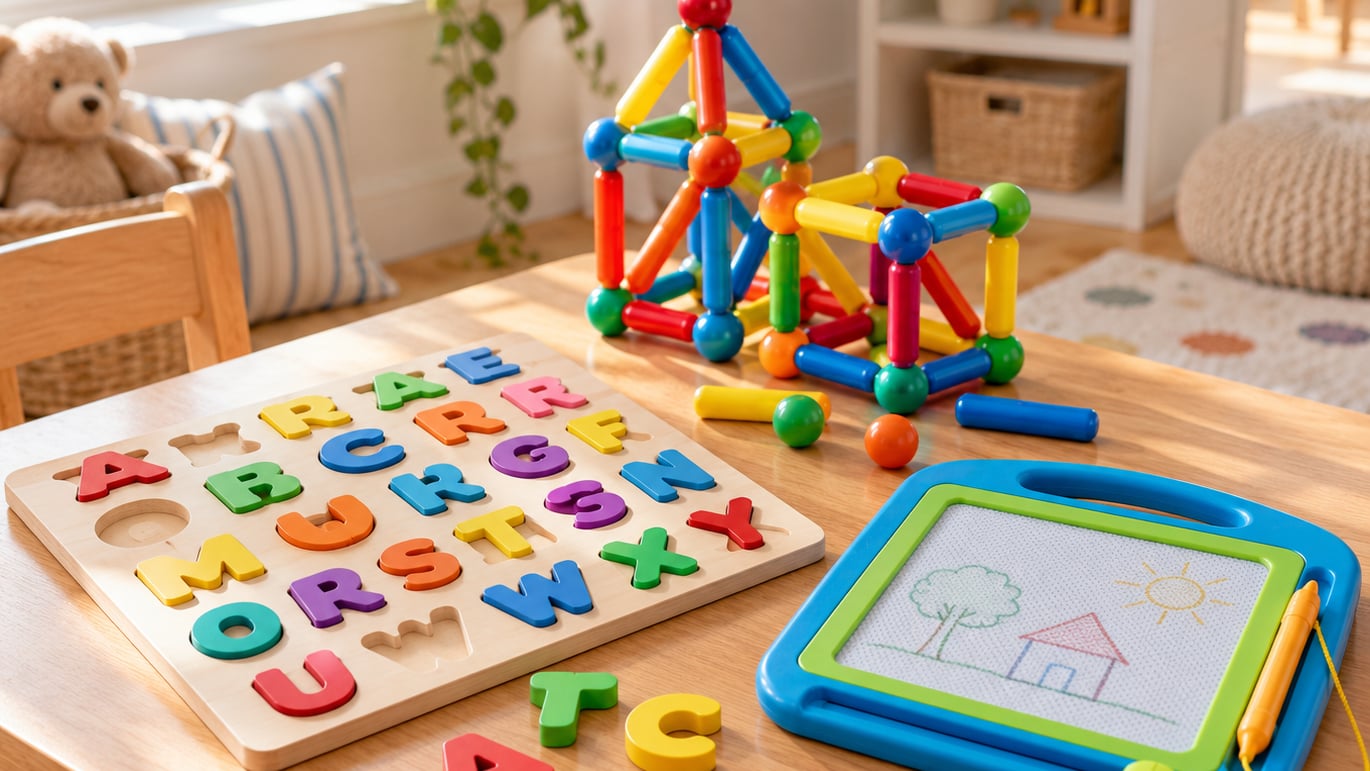
The LeapFrog 2-in-1 LeapTop Touch leads this roundup because it covers letters, numbers, spelling, and problem-solving in one compact device that travels easily — and it has more than 30k owner reviews to back it up. For kids who love to build, the Snap Circuits SC-100 turns electrical engineering into 100+ snap-together projects. For quiet solo play that grows with a child, the ThinkFun Gravity Maze keeps tweens puzzling for hours with 60 challenge cards from beginner to expert. All three are picks worth watching when Amazon runs its Prime Big Deal Days on October 6-7, 2026.


| Product | Features | Price |
|---|---|---|
 |
|
Check Deal Price |
 |
|
Check Deal Price |
 |
|
Check Deal Price |
 |
|
Check Deal Price |
 |
|
Check Deal Price |
 |
|
Check Deal Price |
 |
|
Check Deal Price |
 |
|
Check Deal Price |
 |
|
Check Deal Price |
 |
|
Check Deal Price |
We compared 10 educational toys for age range, learning focus, durability, and owner ratings on Amazon. Each pick had at least 8,000 owner reviews and a 4.3+ average rating. Pricing data and ratings were checked in October 2026; deals change throughout the sale, so use the buttons to see the current price.
Ages 2-5
Modes: 5 learning modes
Pieces: Keyboard A-Z and 1-10
Weight: 1.3 lb
The LeapTop Touch is a 1.3 pound device that flips between a pretend keyboard and a touch tablet, packing five learning modes into a frame small enough to tuck into a backpack. Parents who travel with a toddler appreciate the handle; kids as young as two can work it without help, which matters for a gift that should grow with a child for at least two or three years.
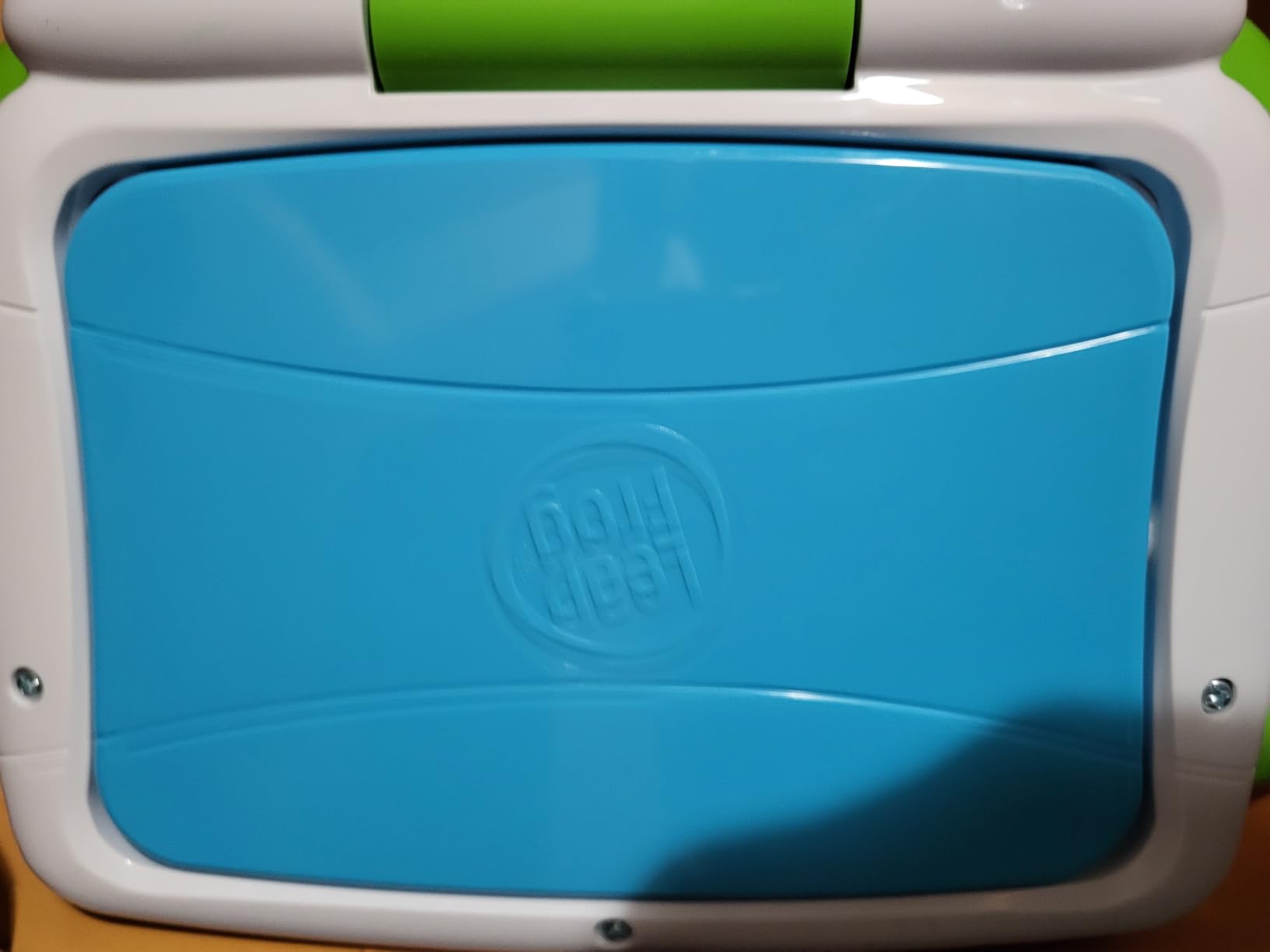
What stands out most in the reviews is the customization. Parents can program a child’s name so the spelling mode teaches the words that matter to them, and the keyboard layout covers A through Z plus numbers 1 through 10.
Two trade-offs to know about. With five modes on a small speaker, the sounds do repeat, and several reviews mention that adults tire of them faster than the kids do. Battery life is the other one: heavy play drains the AAs in a few sessions, so a spare set is worth keeping on hand.
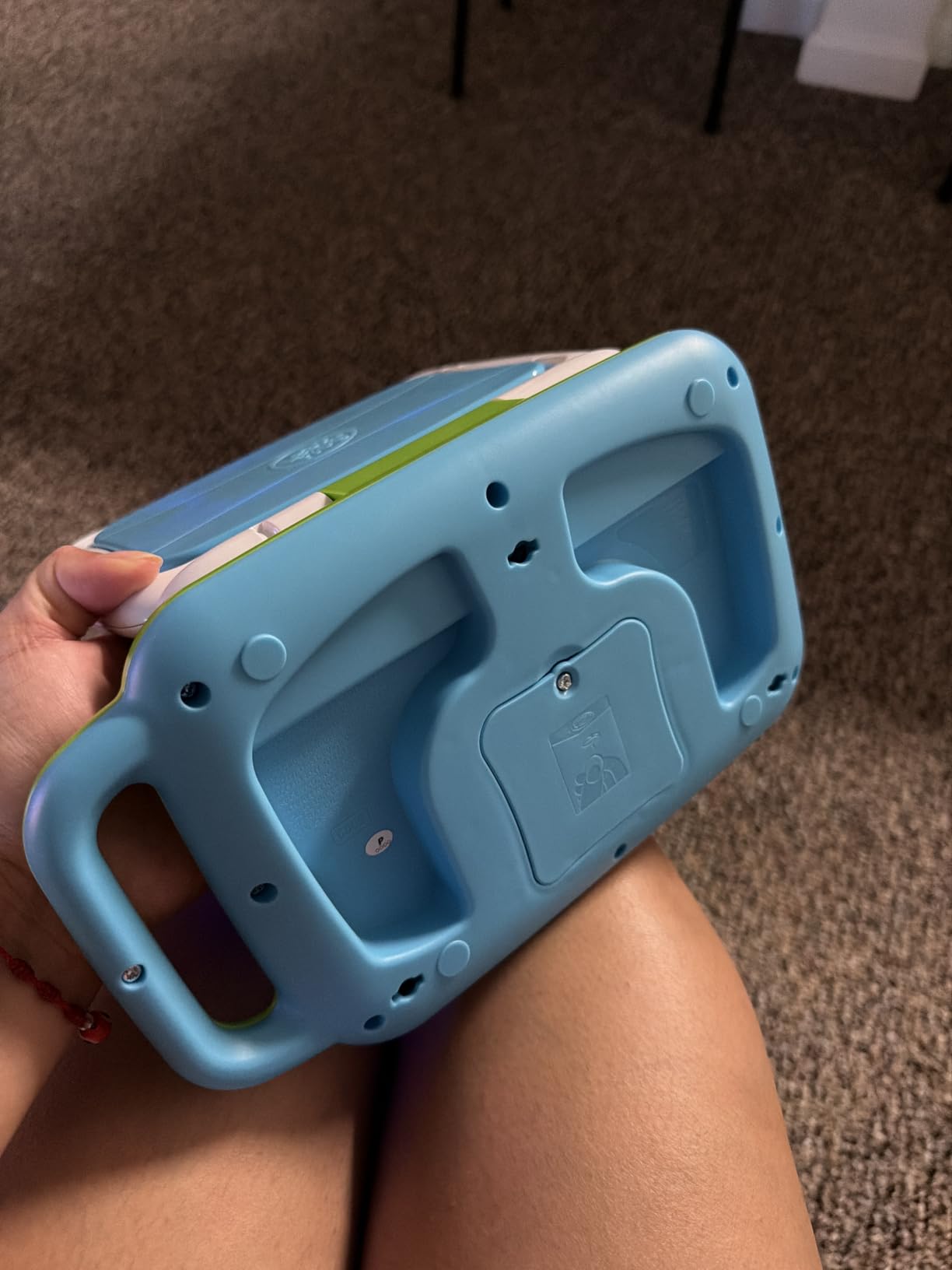
The grab-and-go form factor makes this a better pick than the larger VTech Activity Desk Deluxe for travel or small spaces, and the single-device design means there is no separate easel or chalkboard to set up. Good to know: the LeapTop runs on AA batteries and does not charge via USB, so factor replacements into your budget.
Ages 8+
Projects: 100+
Parts: 28 snap modules
Weight: 640 g
The Snap Circuits SC-100 turns a basic understanding of circuits into 100+ projects, from a flying saucer to a working alarm, using color-coded pieces that snap onto a board. No soldering and no tools, which means younger builders can work alongside a parent without sharp objects anywhere near the project.
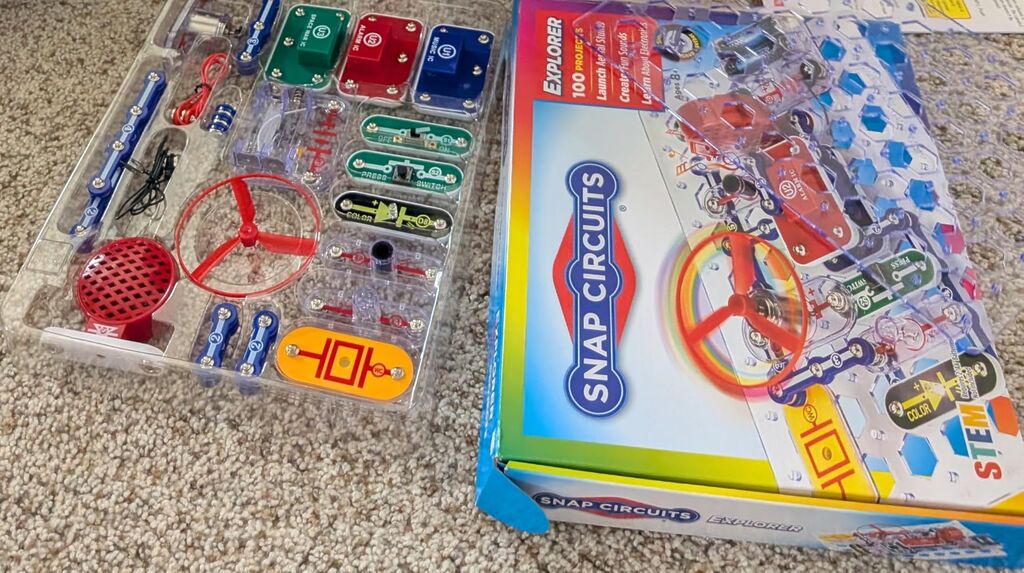
Owners consistently point to the same strength: kids who finish one project want to try the next, and the manual is laid out so a child can follow it alone after the first or second build. The SC-100 carries a Specialty Toy of the Year award and STEM.org approval, which is one of the reasons it shows up on most classroom and homeschool lists.
A few reviewers flag two practical points to plan around:
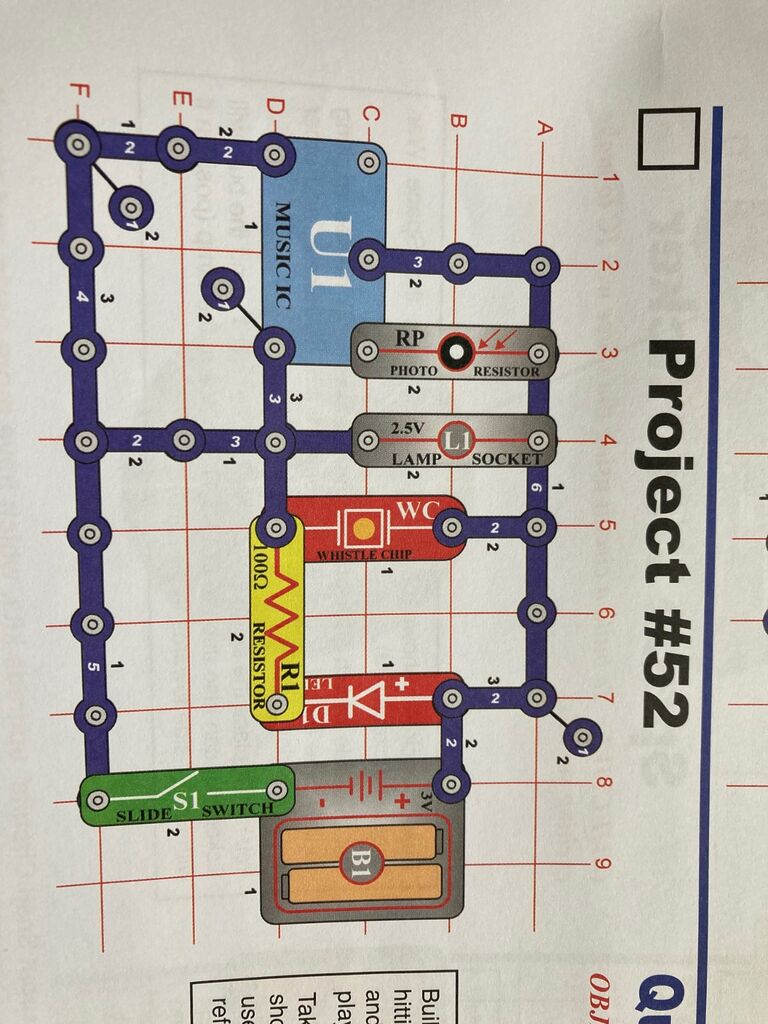
If your child lights up at the idea of a working circuit rather than a moving robot, this is the stronger pick over the Sillbird Solar Robot Kit, which focuses on mechanical builds. Snap Circuits teaches electrical concepts that translate directly to real engineering.
Ages 8-12
Pieces: 75
Challenges: 60 cards
Weight: 1.1 lb
Gravity Maze is a falling marble logic puzzle with 60 challenge cards that scale from beginner layouts to expert builds. The 9 towers, 3 marbles, and grid set up on a table in a couple of minutes, and one set can keep a child thinking through 20 or 30 layouts in a single sitting.
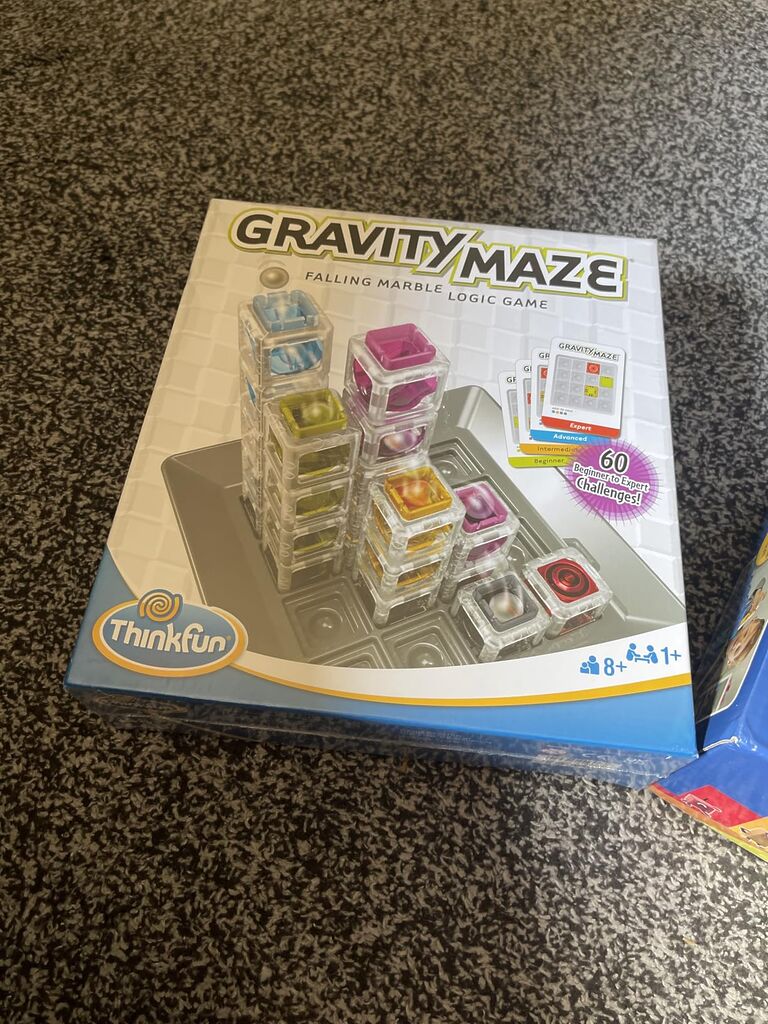
The verdict from owners is consistent: this is the rare logic toy that holds a child’s attention well past the first week. Many parents report that kids return to it months later, since the difficulty curve covers years of growth. There is no screen, no app, and no batteries, so it works on a long flight or a restaurant table.
Two things to keep in mind:
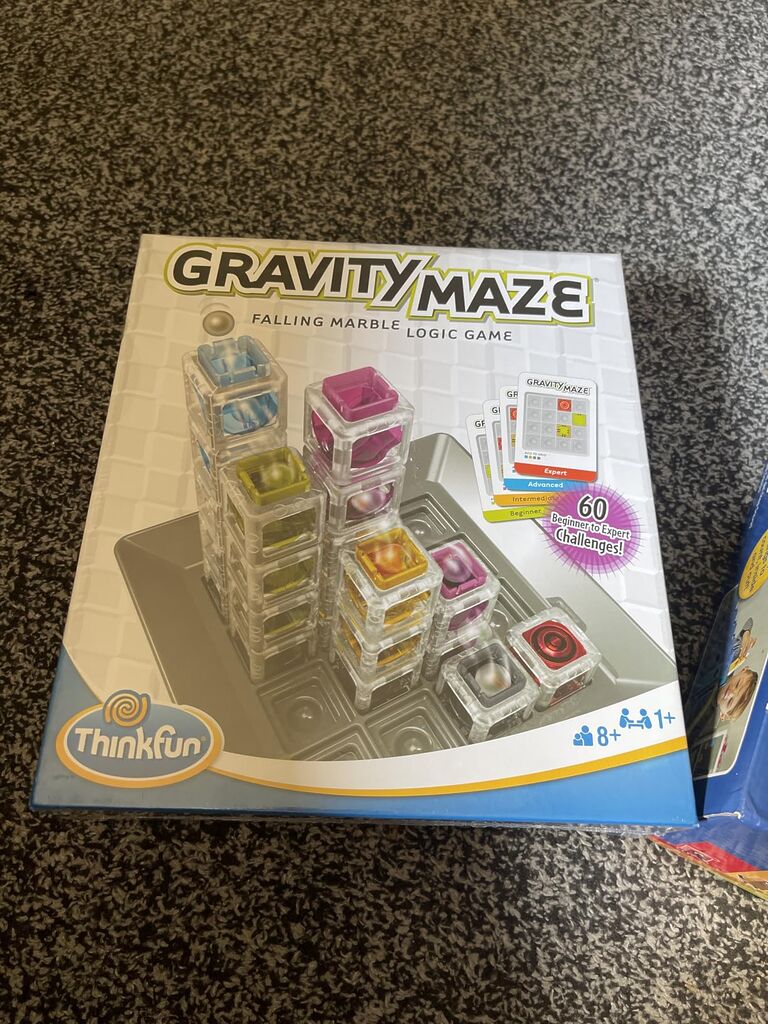
Where the National Geographic Magic Chemistry Set leans into showmanship, Gravity Maze is the more cerebral, quieter pick — better for a child who likes to plan three steps ahead. Good to know: cards are color-coded by difficulty, so a younger child can start at the green level and work up.

Ages 2-5
Pages: 5 interactive
Features: LED stroke display
Weight: 8.1 lb
Picture a corner of a playroom with a small desk, a stool, and a toddler pulling activity pages in and out of a slot. The VTech Activity Desk Deluxe is exactly that setup: a desk with five double-sided activity pages, a built-in LED display that shows proper letter and number strokes, and a transformation kit that turns it from a desk into an easel and chalkboard. A child aged 2 to 5 has a place to sit, draw, and switch between activities without asking an adult to set anything up.
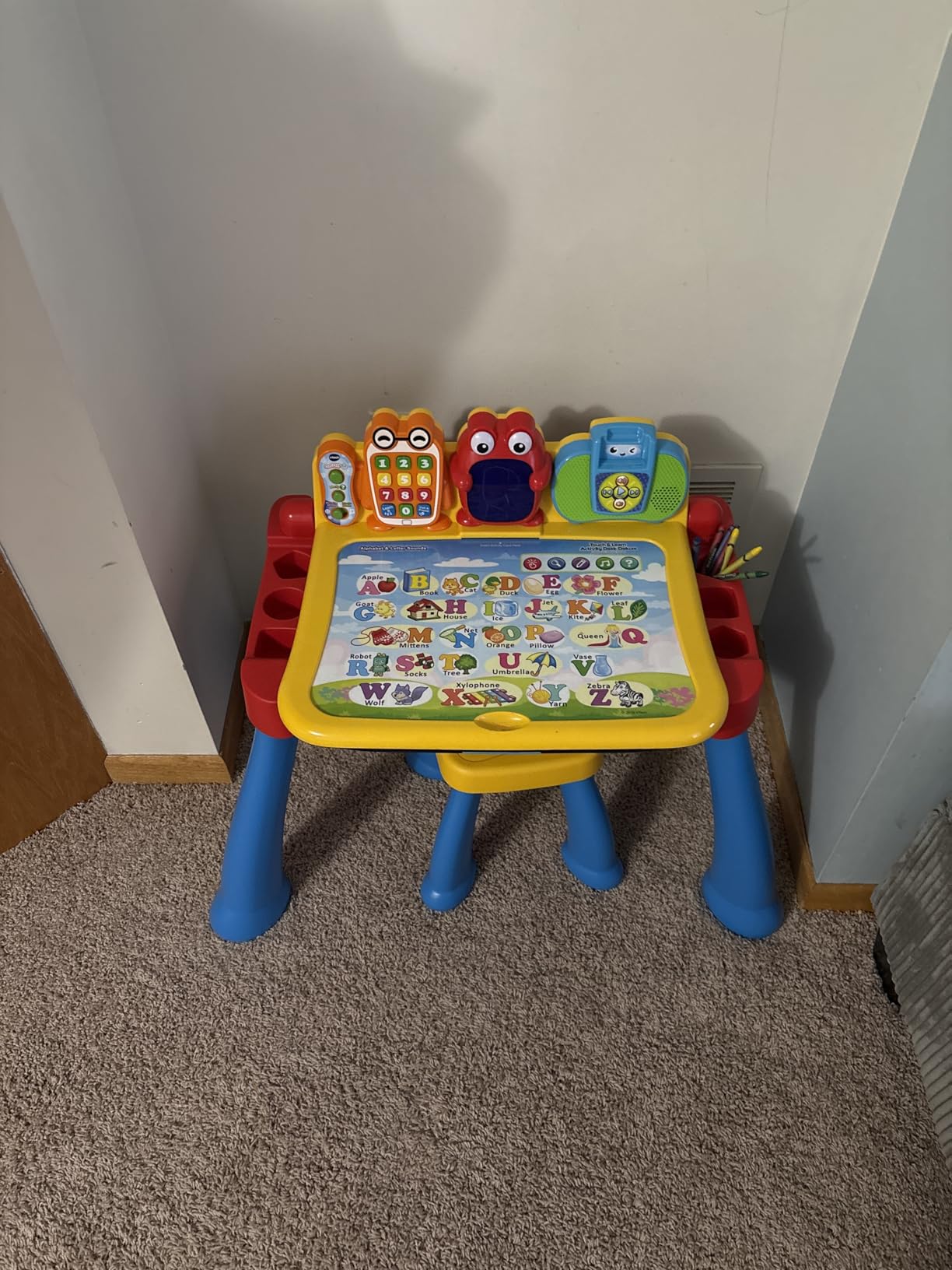
Owners say the LED stroke display is the feature that surprises kids most — the screen lights up to show how to draw a letter, which is a more guided experience than paper tracing. The activity pages cover 100+ vocabulary words, 20+ activities, and 20+ songs.
Two honest trade-offs to plan around. The desk weighs 8.1 pounds and takes up real floor space, so it does not fold up and put away. The 4 AA batteries are not included.
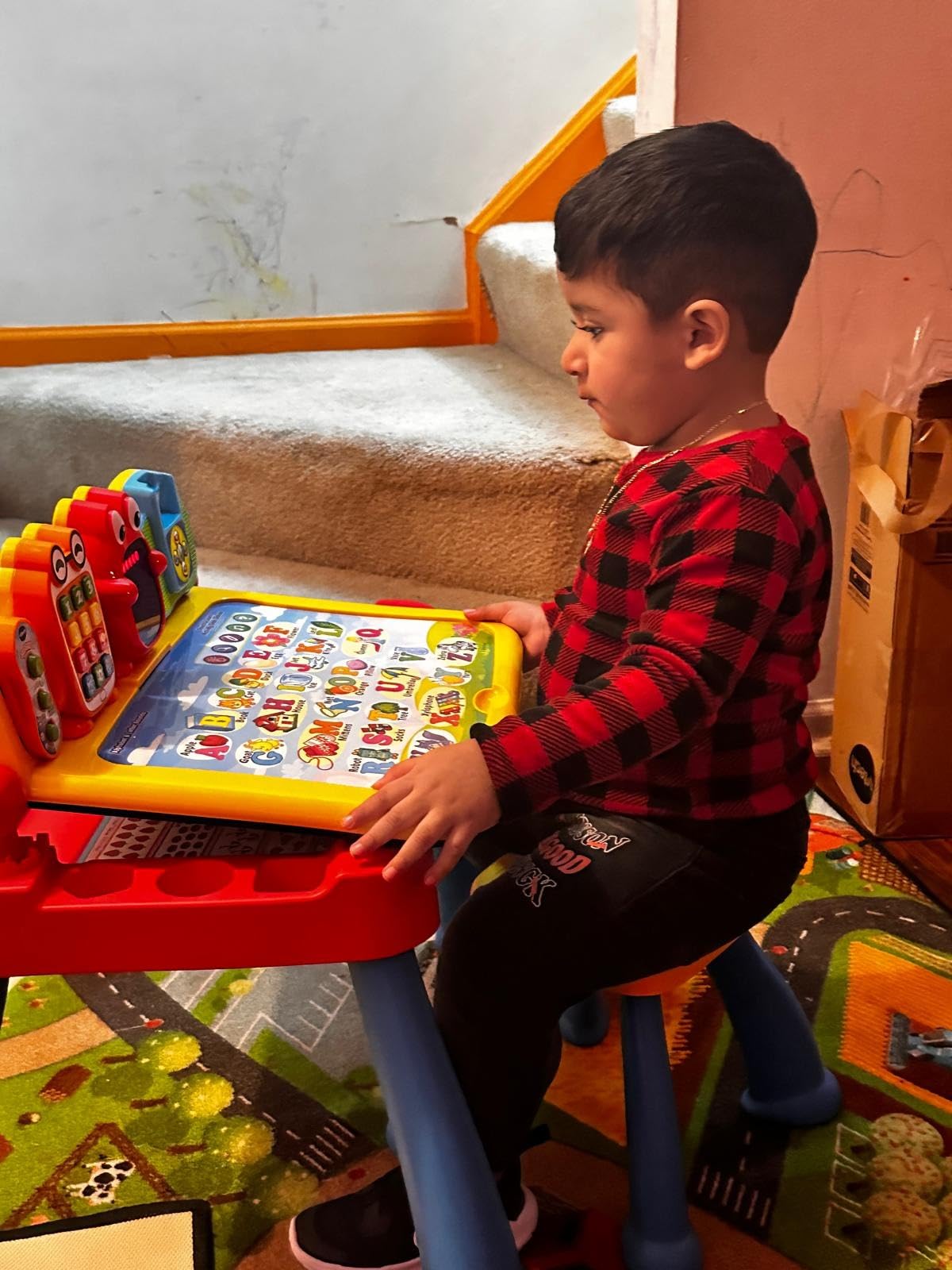
Best for: a home with a dedicated spot to leave the desk set up. Compared with the portable LeapFrog LeapTop Touch, the Activity Desk is the stationary, all-in-one play-and-learn station. For toddler developmental fit, our guide to ride-on toys for 2 year olds pairs well with this kind of seated learning toy.

Ages 8-12
Experiments: 10 magic tricks
Weight: 12.96 oz
Ten experiments dressed up as real magic tricks. The National Geographic Magic Chemistry Set catches bubbles in a hand, changes liquid colors, makes a coin float, and creates instant snow, then explains the science behind each one in a full-color learning guide. The kit includes a wand, white gloves, and everything needed to run all ten tricks.

What sets this apart from generic science sets, according to owners, is that the included materials feel complete. A child can start an experiment the moment the box is open rather than waiting for an adult to gather supplies. Blue Marble won a Toy of the Year award for this line, and the same care shows up in the instructions.
Two practical notes from reviews. A few experiments need an adult nearby, especially with younger kids. Some materials are limited, so heavy repeat use will run through the consumables.

The bigger National Geographic Mega Science Kit further down this list covers more ground but also more overwhelm. The Magic Chemistry Set is the more focused starter — ten tricks in the box, clear guides, fewer moving parts. Good to know: no batteries are required, which makes this an easy travel activity.

Ages 5-10
Pieces: Teaching clock and cards
Players: 1-4
Weight: 0.45 kg
The Learning Resources Time Activity Set centers on a realistic analog clock with moving hour and minute hands, and adds a write-and-wipe clock, double-sided activity cards, puzzles, dice, and an activity guide. The set supports one to four players, which makes it a rare pick that works for solo practice, sibling play, and small classroom groups.
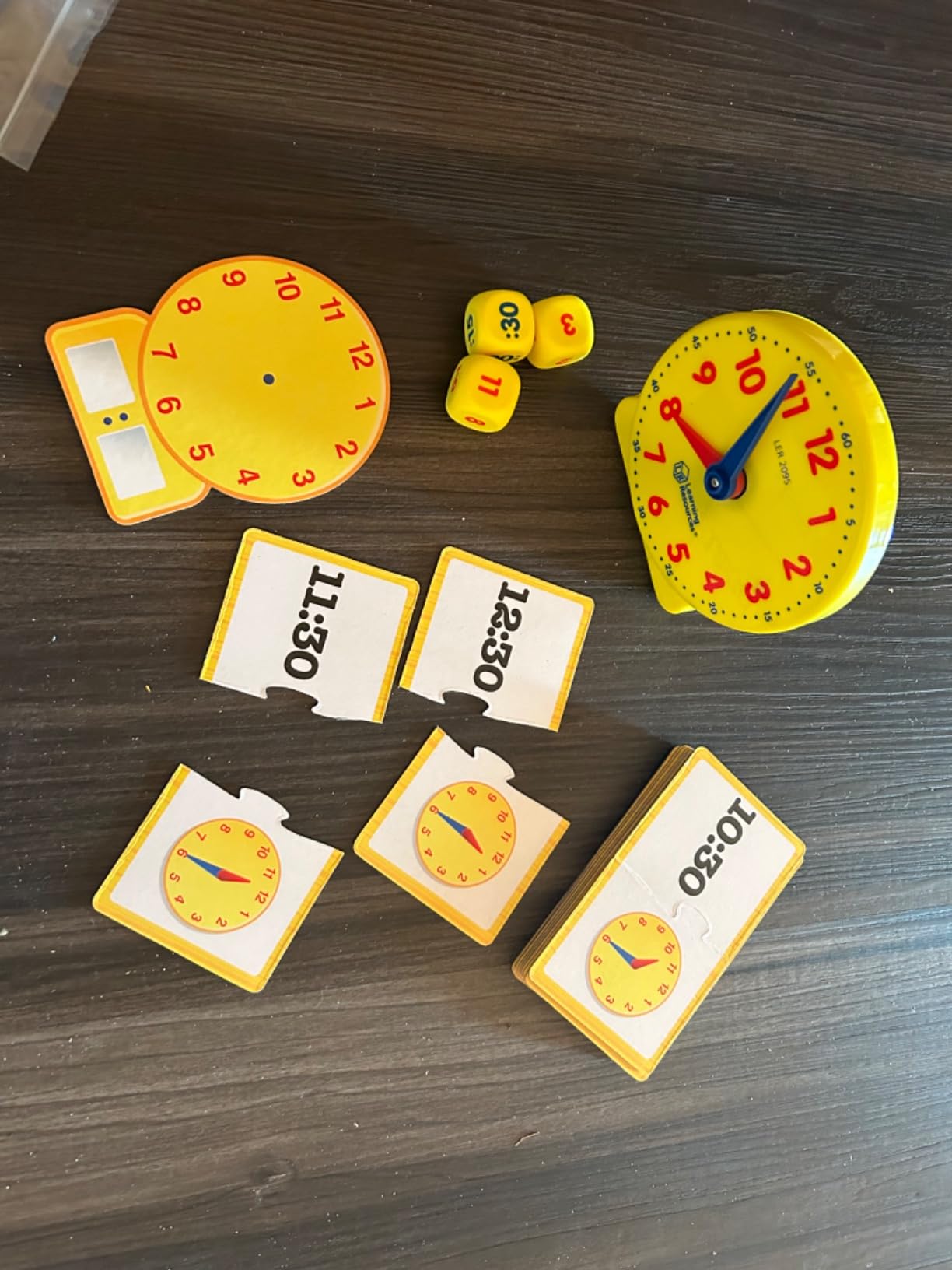
Owners say the moving hands are what makes the concept click for kids. Children can turn the hands themselves and watch the numbers change, which is harder to replicate on a tablet. This is a best-seller in the teaching clocks category, and several teachers report using the same set year after year without it wearing out.
Two trade-offs. The kit teaches analog only, so a family that wants digital-clock practice will need to add that separately. A few smaller pieces are worth watching with younger children.
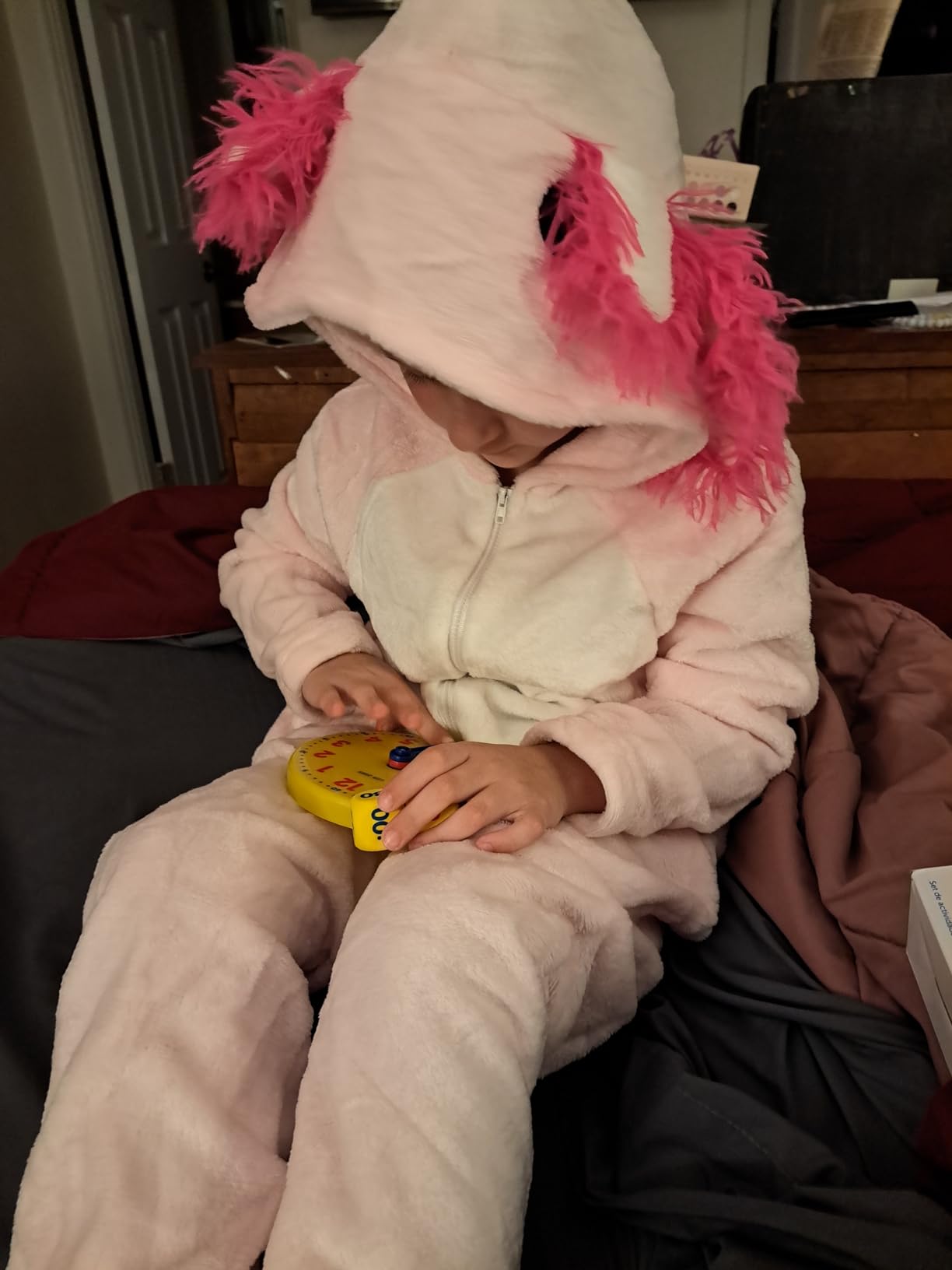
Best for: a child working through the specific milestone of telling time. The VTech Write and Learn Creative Center covers letters, while the Time Activity Set stays focused on the clock. Skip it if your child is already comfortable reading time and needs the next math step. Good to know: no batteries are required, and the activity guide includes a recommended progression by skill level.

Ages 3-6
Modes: Stencils and demos
Weight: 1.8 lb
The VTech Write and Learn Creative Center is a magnetic drawing board with animated demonstrations that show proper stroke order for both uppercase and lowercase letters. Parents can customize the device to teach a child’s name step by step, which is the feature most often mentioned in positive reviews.
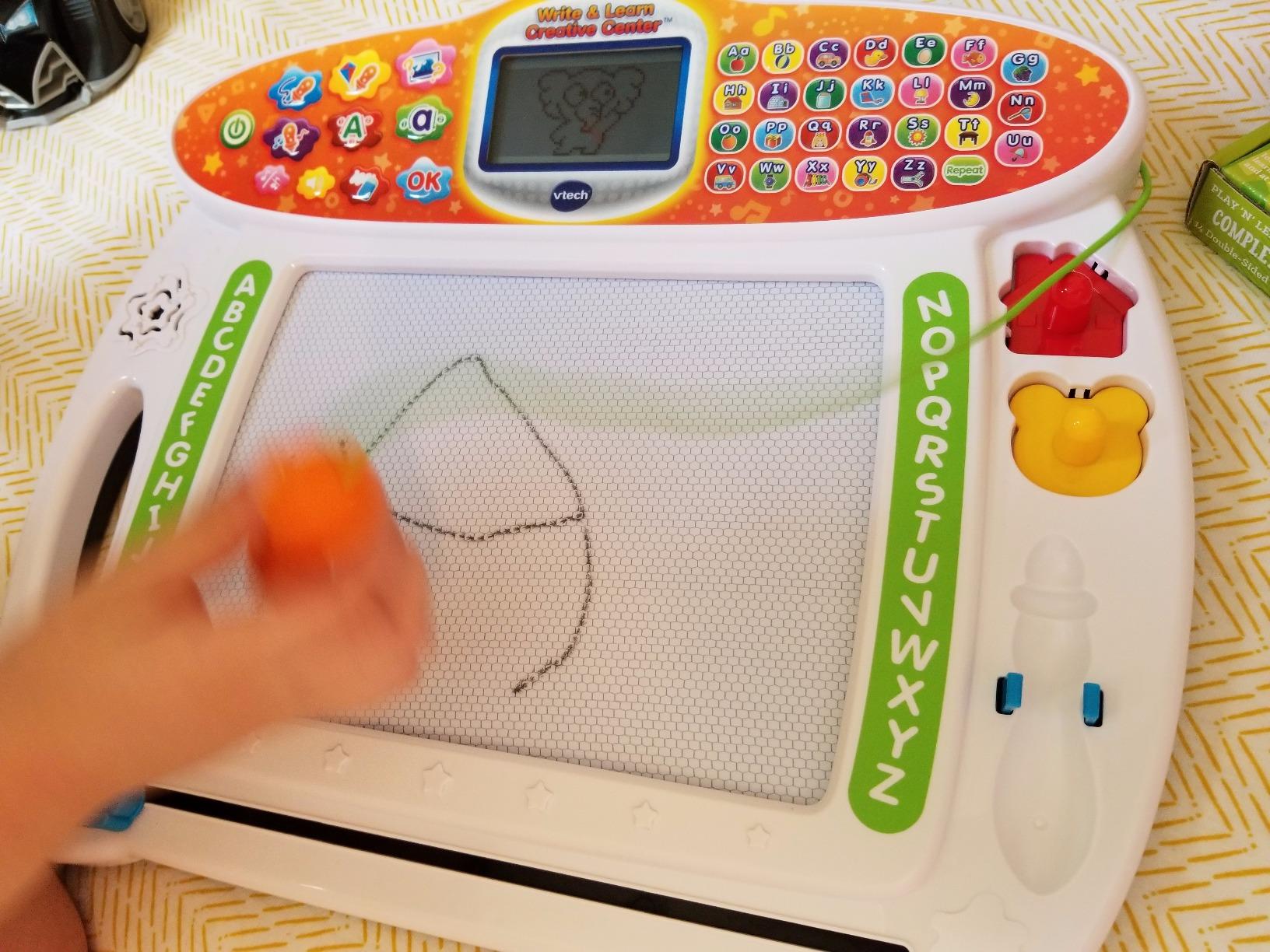
Owners appreciate the portability. At 1.8 pounds, it slips into a bag for restaurants and road trips, and the screen keeps kids engaged without needing paper. Stencils progress from simple lines up to 26 objects, so the device grows alongside a child’s fine motor skills.
Two trade-offs to know about. The small magnets in the stylus can fall out if the toy is dropped, so it is worth a quick check after a tumble. The included demo batteries tend to need replacement sooner than expected.
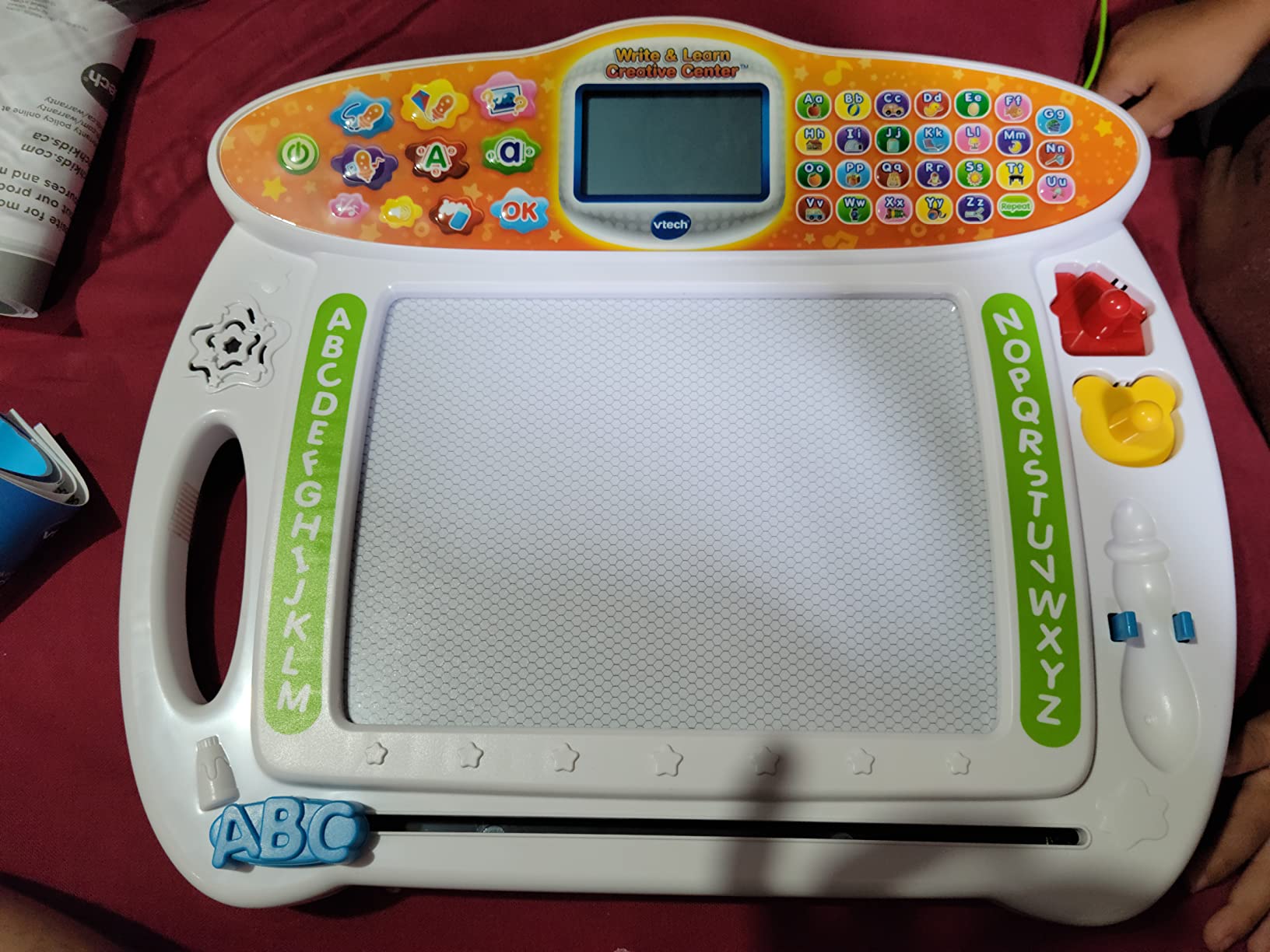
The LeapFrog LeapTop Touch covers both letters and numbers in a laptop format, while the Write and Learn Creative Center stays focused on writing skills — a cleaner pick for a child who is just starting to hold a stylus and form letters.

Ages 8-13
Builds: 12 models
Parts: 190
Weight: Not listed
One hundred and ninety parts. Twelve different models. A solar panel that powers every build. The Sillbird 12-in-1 Solar Robot Kit combines all three into a STEM build kit with serious replay value, and the build difficulty scales from beginner to advanced so the box can grow with a child for months.
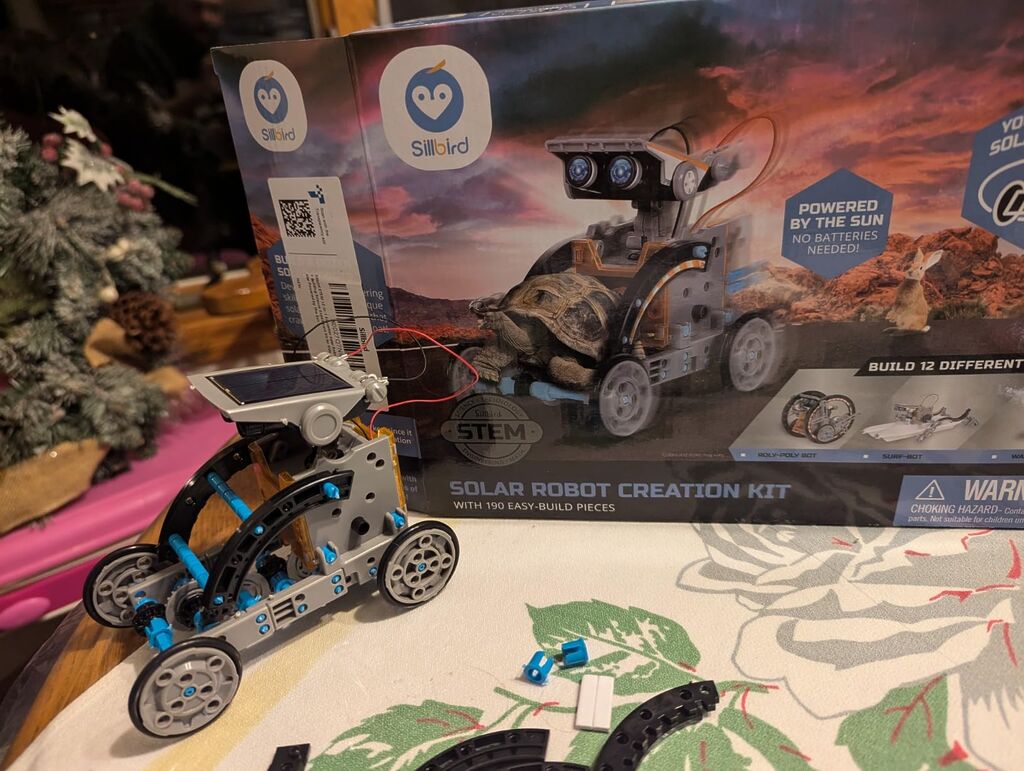
Owners highlight the value. Twelve builds in one kit makes it a gift that lasts through months of weekend projects, and the clear instructions let a child work mostly independently. The solar panel removes the need for batteries and cords, which is the other reason it shows up on so many “no-screen, no-plug” gift lists.
Two honest trade-offs. The power source is real: solar needs direct sunlight or a strong lamp, so a dim room or a cloudy day will slow testing. The pieces are small, and a few reviewers suggest sorting them into trays to avoid losing parts between builds.
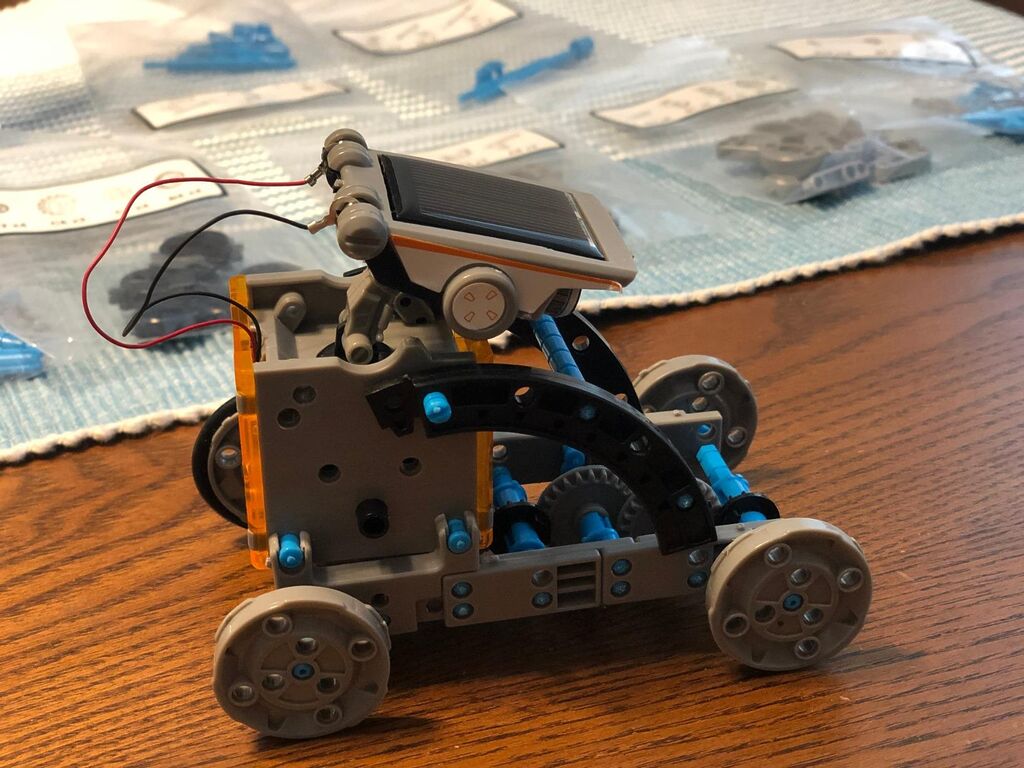
Compared with Snap Circuits SC-100, which teaches electrical engineering, the Sillbird kit is the more mechanical, more budget-friendly pick — better for a child who likes to snap together moving models than to wire a circuit. Good to know: this kit is the eco-friendly option of the STEM list, since it runs on light rather than batteries.

Ages 8-12
Experiments: 100+
Weight: 1.5 lb
The National Geographic Mega Science Magic Kit includes 20 magic-themed experiments in the box, plus a bonus booklet with 85+ additional experiments, so the toy stretches well past a single afternoon. The materials are higher-quality than typical science kits, and the instructions explain the real science behind every trick.
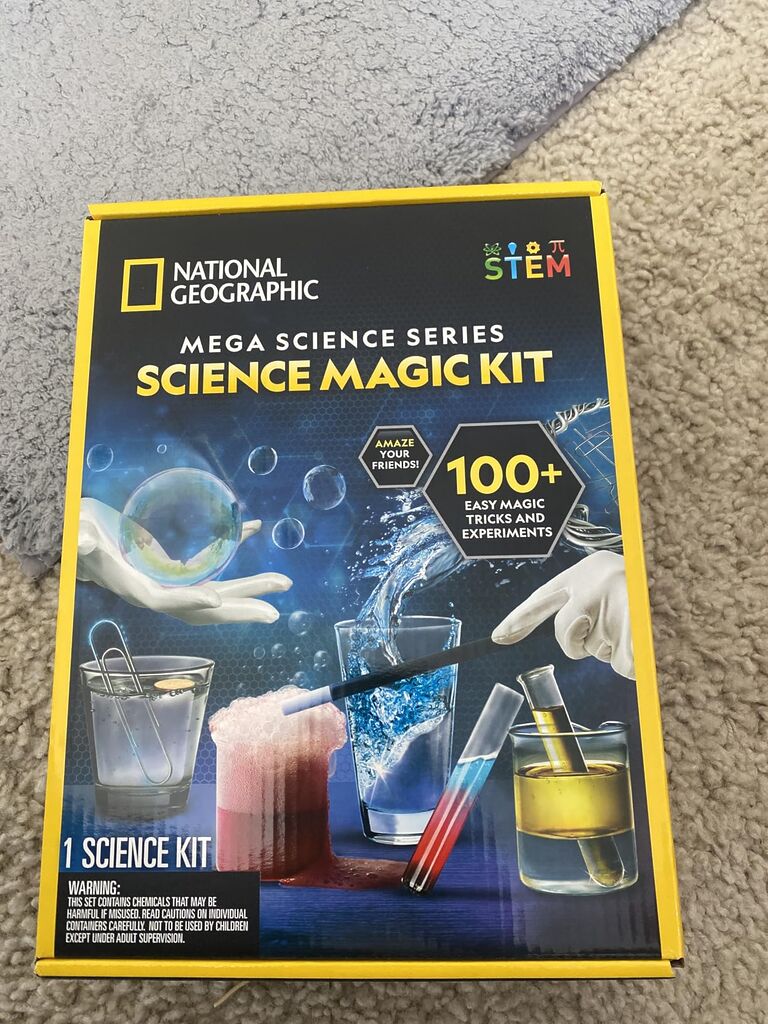
Reviewers call out the repeat-use angle. Experiments can be redone, adapted, and combined, so this is the rare kit that stays out of a closet after the first month. Several owners mention that the same kit kept their child busy through rainy weekends and birthday parties alike.
Two trade-offs to plan for. Some chemicals come in single-use packets, so a child who loves to repeat an experiment three times in a row will run out of supplies faster than the booklet suggests. Adult supervision is recommended for younger children, especially for the more involved experiments.
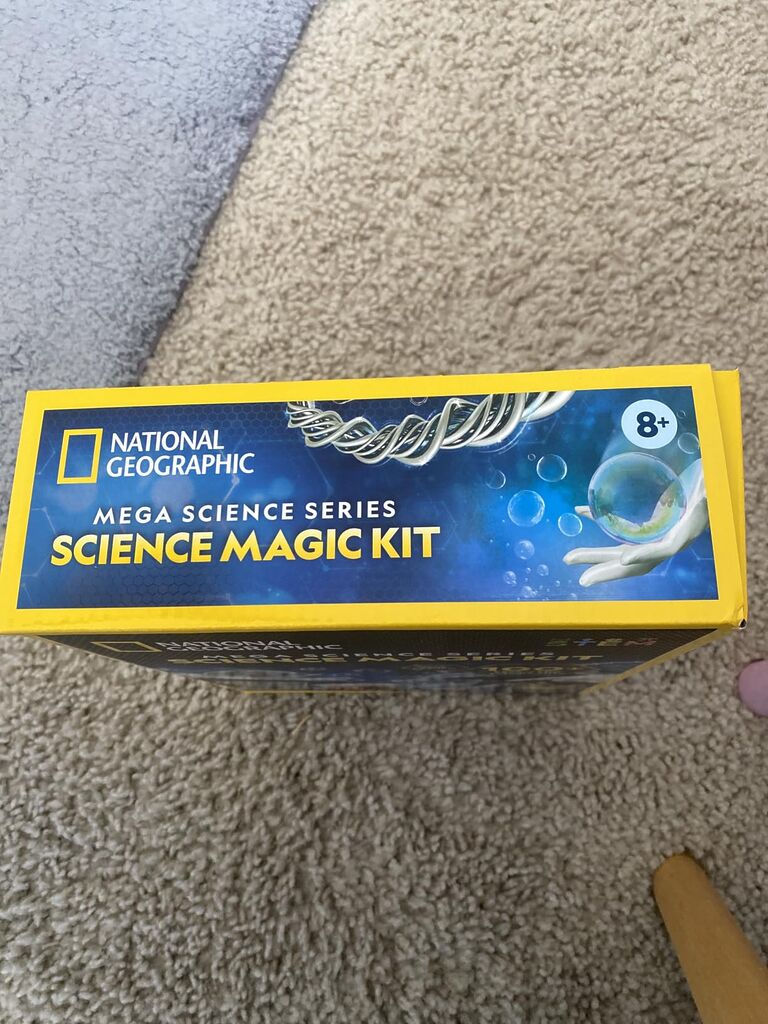
Where the smaller National Geographic Magic Chemistry Set earlier in this list works as a focused starter, the Mega kit is the deeper, longer-lasting option for a child ready for more challenge. For materials that hold up across years of play, our guide to year-round non-toxic bath toys covers similar long-life choices for kids.

Ages 4+
Pieces: 52 wooden
Box: Storage included
Weight: 2 lb
The Melissa & Doug Self-Correcting Alphabet Puzzles set includes 52 wooden pieces — 26 two-piece letter puzzles, each pairing a capital letter with a lowercase letter and a labeled image. The pieces only fit their correct matches, so a child gets instant feedback without an adult stepping in.
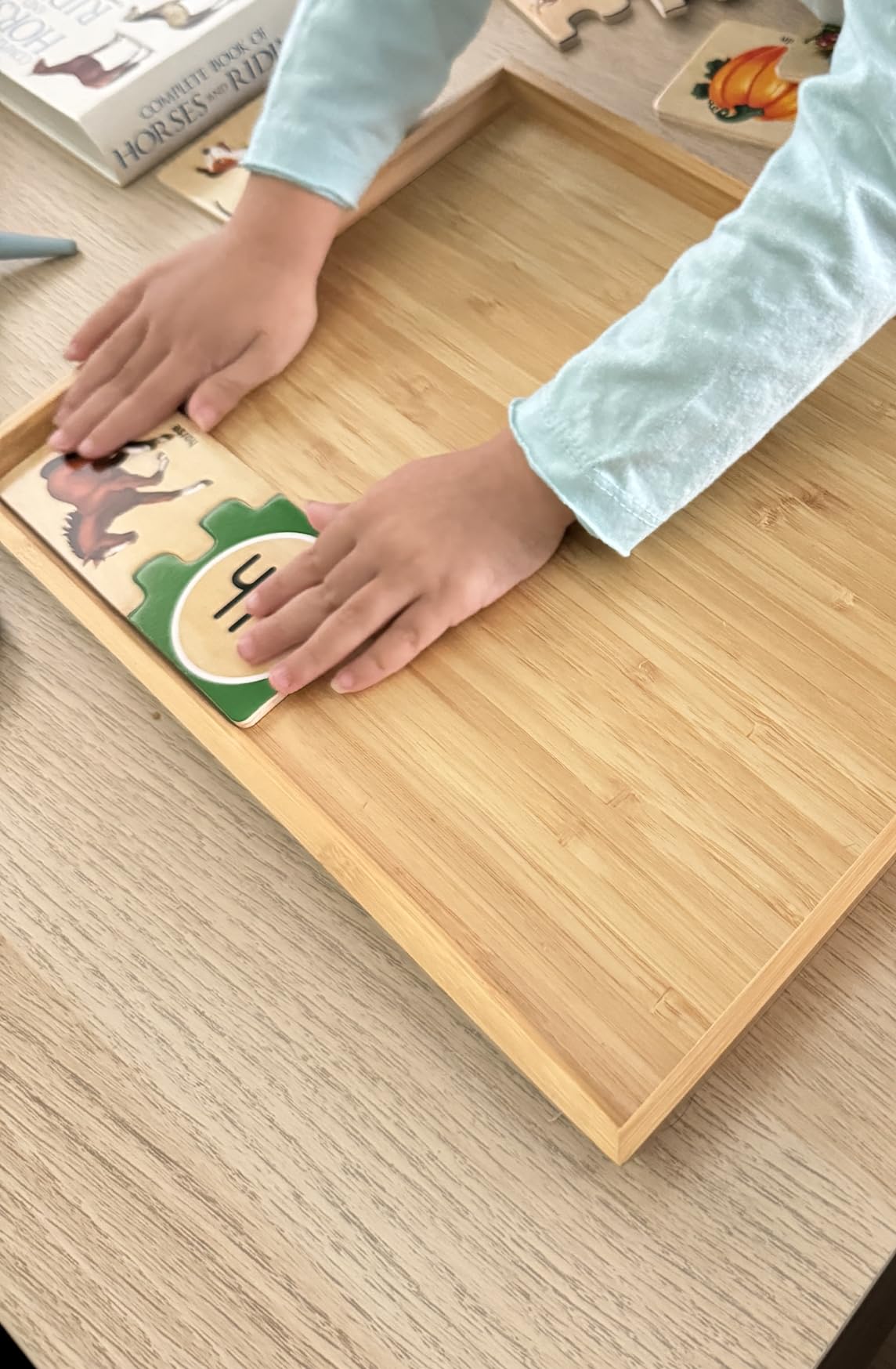
Owners consistently point to the wooden feel and the storage box as the two features that justify the kit. The pieces are sturdy, the illustrations are detailed, and the box keeps everything together for travel or quick cleanup.
Trade-offs are mild. Some of the more complex letters can challenge younger 4-year-olds, and a few owners mention that pieces do wander off if the box is left open.
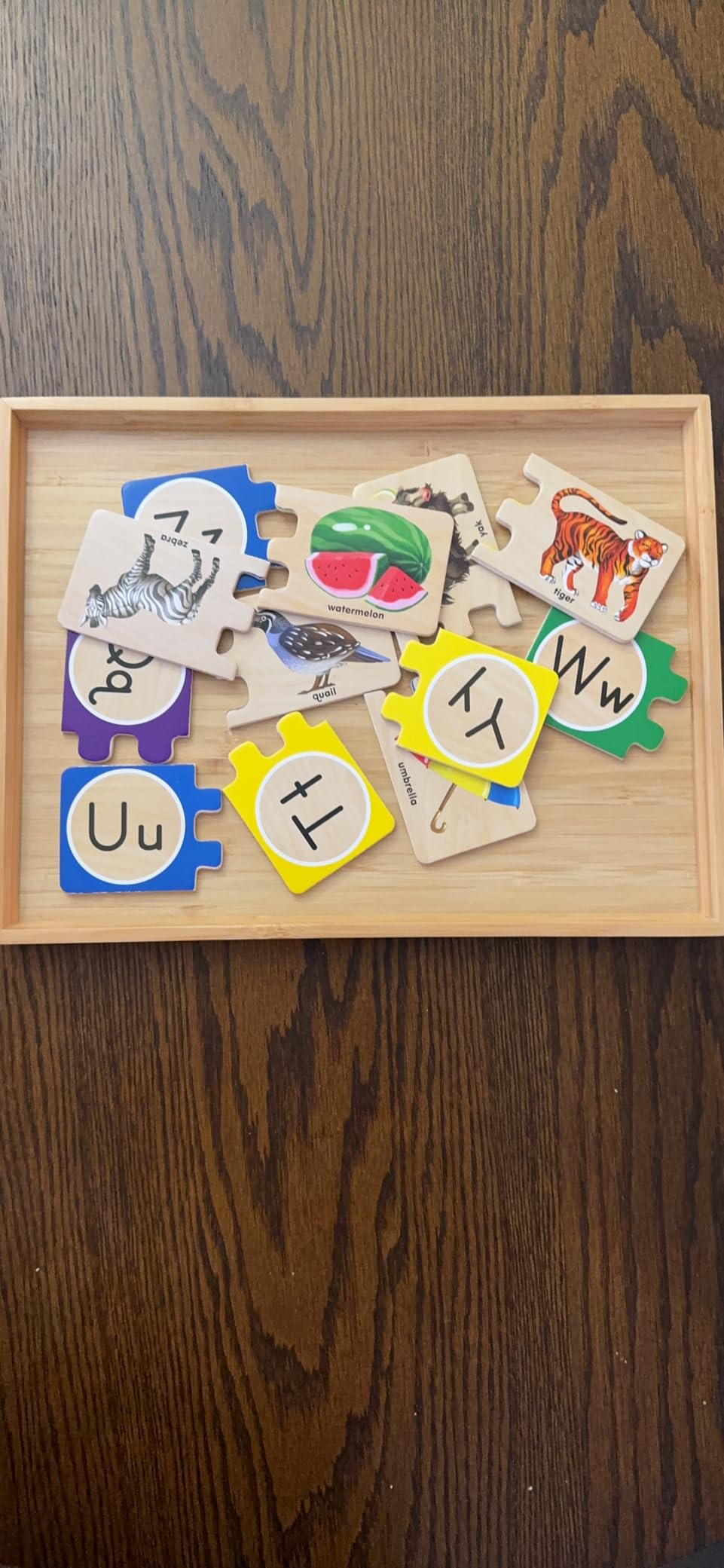
Compared with the electronic learning systems earlier in this list, the alphabet puzzle set is the quietest, most tactile pick — a different kind of learning toy for a child who absorbs more from handling objects than tapping a screen. For age-appropriate gift ideas for younger kids, our roundup of first birthday gift ideas sits well alongside this kind of classic wooden toy.
Prime Big Deal Days is a strong moment to stock up on educational toys, but the best pick depends on your child’s age, learning stage, and how they prefer to play. The factors below cover what actually matters when comparing deals on toys that should last more than a season.
The first filter is age range. The LeapFrog LeapTop Touch and the VTech Activity Desk Deluxe target ages 2 to 5, with chunky buttons and bright screens. Snap Circuits, ThinkFun Gravity Maze, and the National Geographic science kits fit ages 8 to 12, when kids can follow multi-step instructions and handle smaller parts. The Melissa & Doug alphabet puzzles bridge ages 4 and up, and the Sillbird solar kit covers ages 8 to 13 with twelve builds. Buying a toy a year or two above a child’s current stage is usually fine; buying one designed for older kids often ends up unused.
STEM toys teach engineering and problem-solving (Snap Circuits, Sillbird solar kit, ThinkFun Gravity Maze). Language and early literacy toys teach letters, spelling, and vocabulary (LeapFrog LeapTop Touch, VTech Write and Learn Creative Center, Melissa & Doug alphabet puzzles). Math and time-telling toys target specific milestones (Learning Resources Time Activity Set). Science magic kits blend entertainment with chemistry and physics (National Geographic Magic Chemistry Set and Mega Kit). A child who loves one subject will use that toy daily; a vague “learning” toy often ends up in a closet.
Look for solid construction, non-toxic finishes, and pieces that hold up to drops and rough play. Wooden toys like the Melissa & Doug alphabet set use sturdy plywood and printed illustrations. Plastic electronic toys should have sealed battery compartments and no small parts for kids who still mouth objects. The VTech Activity Desk and LeapFrog LeapTop both run on AA batteries, so plan replacements. If safe materials are a priority, our guide to non-toxic bath toys covers similar standards for kids’ products.
Several picks on this list are entirely screen-free, which matters for parents trying to limit tablet time. ThinkFun Gravity Maze, Snap Circuits, Melissa & Doug alphabet puzzles, and the National Geographic science kits all run without a screen or app. Toys like the LeapFrog LeapTop and VTech devices do have screens, but they use them for guided activities rather than open-ended play.
Most offers on educational toys during Prime Big Deal Days need an Amazon Prime membership (a free trial works), and prices can change throughout the two-day event. Check the model number in the listing — older model years of the same kit often appear alongside the current version at different price points. Look at what is actually in the box: some “kits” bundle consumables, while others are the core toy only. Third-party sellers on Amazon can offer the same product at different prices, so check the seller name and shipping terms before checkout. Amazon’s return policy covers most toys within 30 days, which is worth keeping in mind if a kit turns out to be the wrong fit.
Prime Big Deal Days runs October 6-7, 2026. Educational toy deals go live at the start of the event and can change throughout the two days, so it is worth checking back if a specific pick is not on sale yet.
Most offers during Prime Big Deal Days require an Amazon Prime membership. A free 30-day trial counts, so you can sign up shortly before the event and still access the toy deals. Some third-party sellers also run independent promotions that do not require Prime.
Many educational toy listings do see lower prices during the sale, especially best-selling STEM kits, learning laptops, and wooden puzzles from major brands. Discounts vary by product, and a small number of deals are less deep than they appear, so comparing against recent prices is always a good idea before checkout.
Start with the manufacturer age range on the listing, then look at the learning focus. Toddlers and preschoolers do well with chunky electronic learners and activity desks, while school-age kids benefit more from STEM kits, logic puzzles, and science magic sets that build on what they already know.
Truly educational toys teach a specific skill — letters, numbers, circuits, logic, or scientific concepts — and let a child practice it through play. Look for clear learning goals on the listing, hands-on components, and ideally an award or educator approval. A toy that only flashes lights and sounds is usually entertainment in an educational wrapper.
Bundles can be a good way to stretch a Prime Big Deal Days budget, especially when a single kit covers multiple learning goals, like the National Geographic Mega Science Kit with 100+ experiments. The trade-off is that bundles sometimes include smaller toys your child will outgrow, so check the contents before adding one to your cart.
Buy the LeapFrog LeapTop Touch if you want a single, well-reviewed learning toy that covers letters, numbers, and spelling for ages 2 to 5 and travels well. The Sillbird 12-in-1 Solar Robot Kit is the budget-friendly pick for a builder who wants twelve different STEM builds in one box. For school-age kids who love problem-solving, the ThinkFun Gravity Maze is the screen-free logic pick, and the Snap Circuits SC-100 is the strongest STEM choice for hands-on electrical engineering. The Melissa & Doug Alphabet Puzzles remain the best wooden, screen-free option for ages 4 and up. The educational toy deals during the Prime Big Deal Days sale move fast, so add your picks to a wishlist and use the buttons above to check the current price during the event.
