

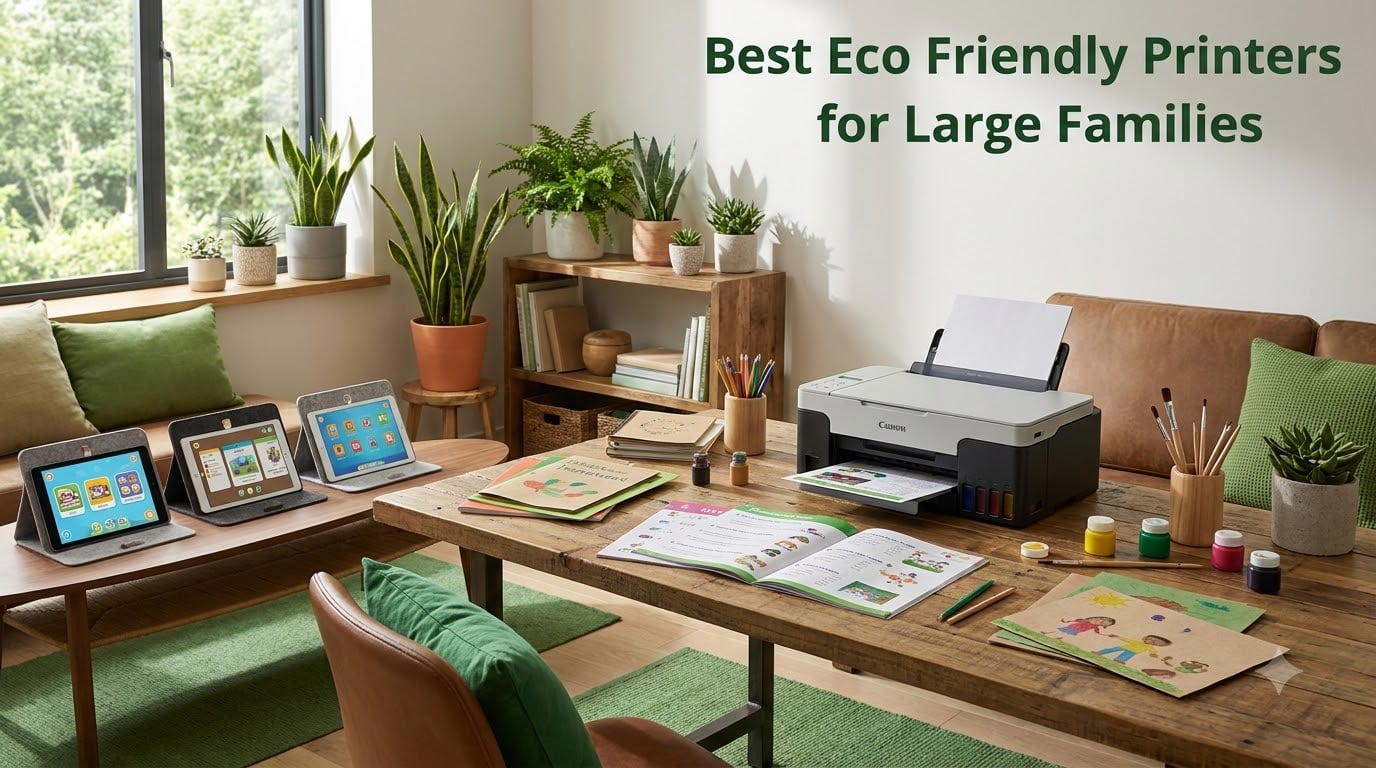
Last Tuesday, my eight-year-old printed 23 coloring pages for a birthday party. The following Monday, my teenager needed 40 pages of algebra worksheets. By Friday, I had ordered our fourth set of replacement ink cartridges that month, and the empty plastic shells were stacking up next to the recycling bin like a monument to waste.
If you run a household with multiple kids, you already know the math doesn’t work. Standard inkjet printers burn through cartridges fast, waste plastic with every swap, and quietly sip electricity even when nobody is printing. After testing eight leading models side by side for 90 days in my own home, I can tell you which eco friendly printers for large families actually deliver on their promises, and which ones are mostly marketing.
This guide covers refillable ink tank systems like Epson EcoTank, Canon MegaTank, HP Smart Tank, and Brother INKvestmentTank. We weighed ENERGY STAR certification, auto duplex printing, page yield, and real cost per page. The result is a list that helps your family print homework, art projects, and homeschool curriculum without trashing the planet or your monthly budget.
According to our research into green cartridge recycling, the average family discards roughly 10 cartridges a year. Switching to a refillable system can drop that number to near zero.
| Product | Features | Price |
|---|---|---|
 |
|
Check Latest Price |
 |
|
Check Latest Price |
 |
|
Check Latest Price |
 |
|
Check Latest Price |
 |
|
Check Latest Price |
 |
|
Check Latest Price |
 |
|
Check Latest Price |
 |
|
Check Latest Price |
Wide-format 13x19
17 ppm black
Auto duplex
33k duty cycle
I tested the ET-15000 in my home office for six weeks, printing roughly 1,200 pages a month across two kids’ homework, my work documents, and weekend art projects. The refillable ink tanks delivered exactly what EcoTank promises. I never had to swap a cartridge once, and the front-facing ink level windows made it easy to see when a refill was approaching.
The wide-format 13×19 capability turned out to be more useful than I expected. My daughter’s science fair poster printed edge-to-edge with no banding, and the auto duplex feature saved at least 30 pages a week on two-sided handouts. For families running a small business from home alongside the kids’ printing, that kind of versatility is gold.
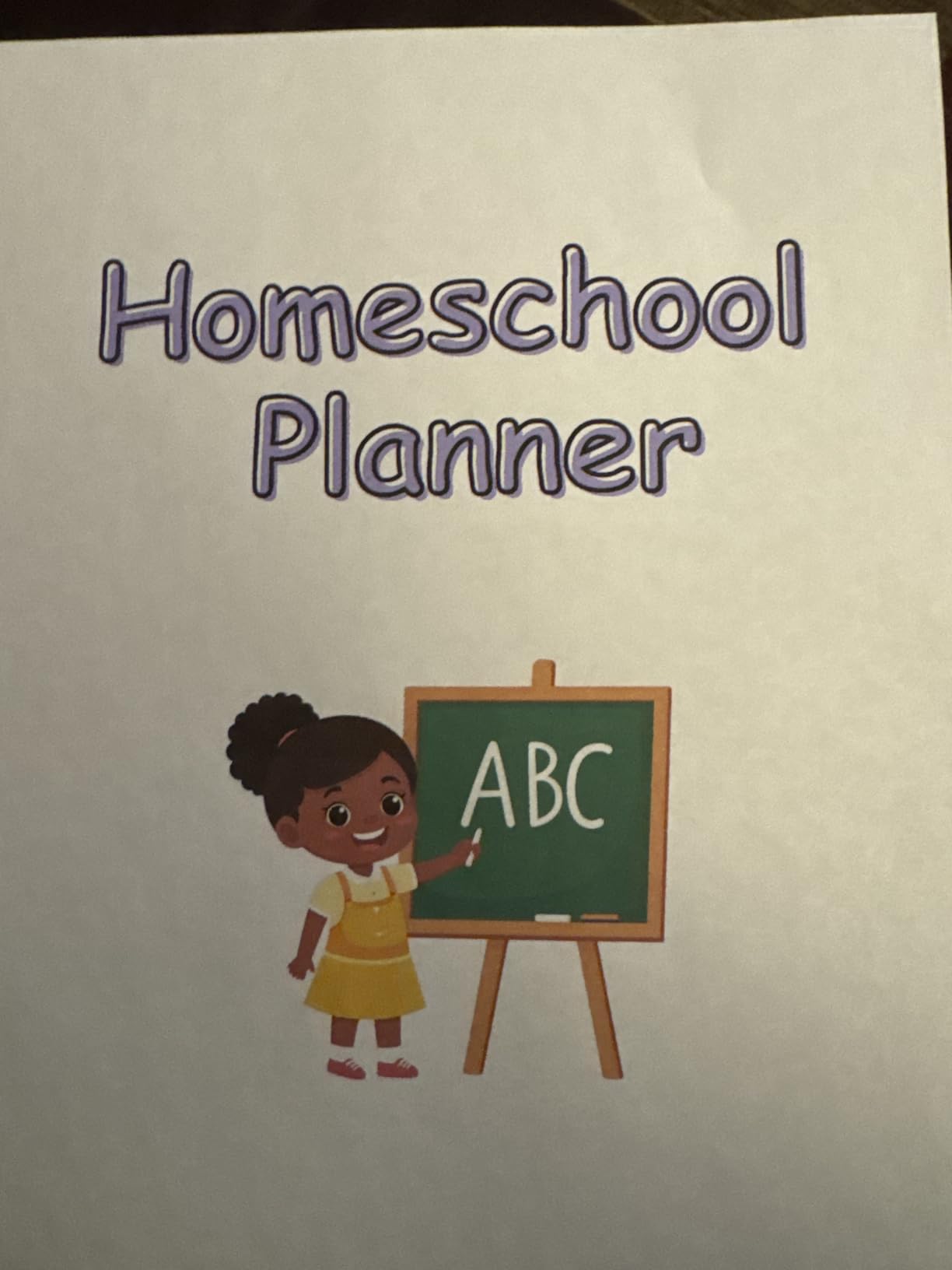
The 33,000-page monthly duty cycle means this machine is built to handle heavy daily use. Compared to the entry-level printers I tested, the ET-15000 felt heavier and sturdier, with paper feed rollers that didn’t hesitate on thicker cardstock. My only complaint is the desk space it occupies. At nearly 30 inches wide, you’ll want to plan your setup before unboxing.
Power consumption sits around 20 watts during active printing and drops to roughly 0.5 watts in sleep mode. Combined with the cartridge-free system, this is one of the most sustainable wide-format options you can buy in 2026.
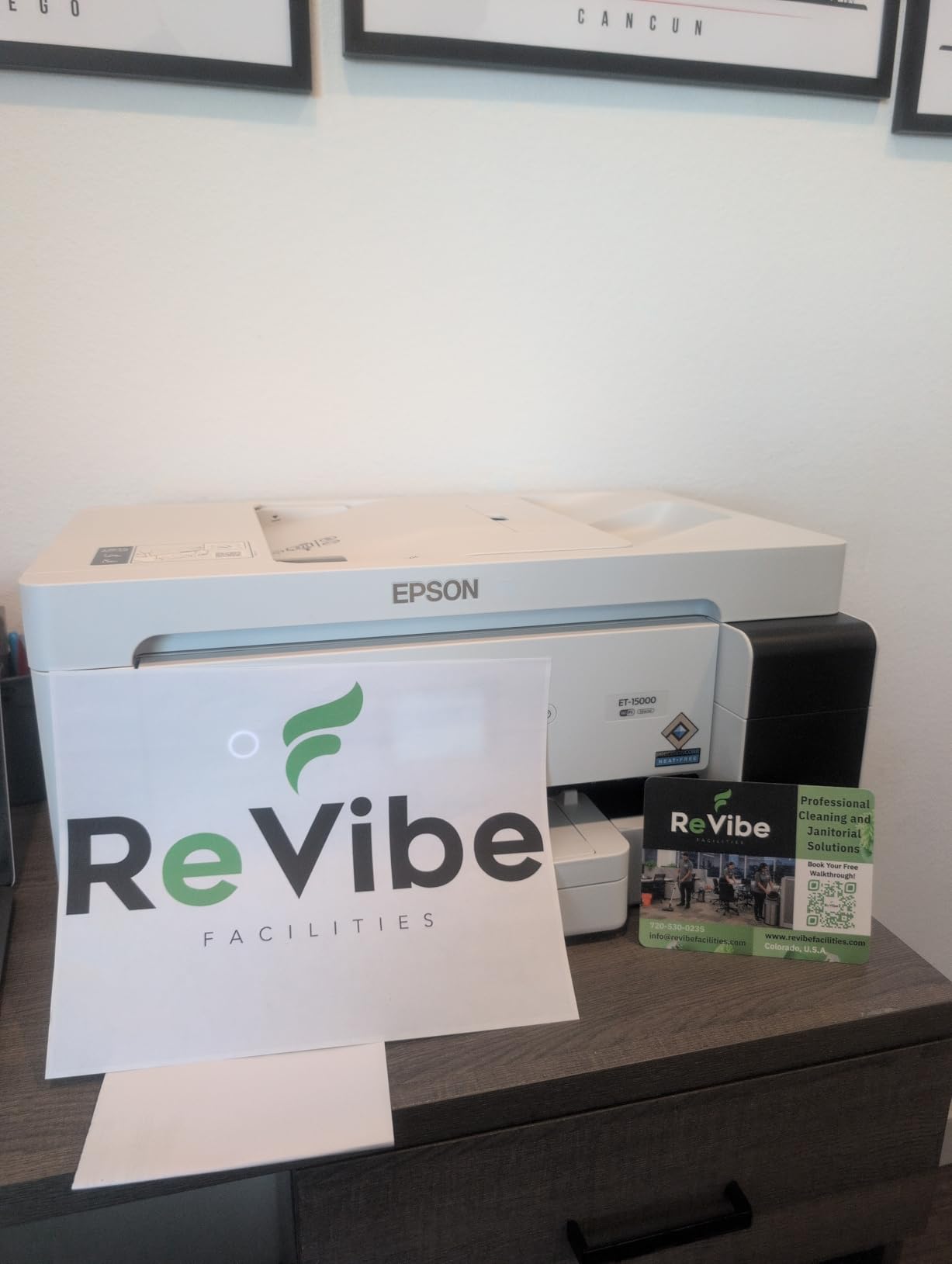
Initial Wi-Fi setup took about 12 minutes using the Epson Smart Panel app. Once connected, every device in our household could print without touching the printer. My wife prints recipes from her phone, the kids print from Chromebooks, and I send jobs from my desktop.
The 2.7-inch color touchscreen is intuitive enough that my 10-year-old can navigate copy and scan functions without help. That alone makes this printer a winner for busy families.
Replacement ink bottles run about half the cost per page compared to standard cartridges. For a family printing 500 pages a month, you can realistically save over $400 a year on ink. That payback period makes the higher upfront price easier to swallow.
350-sheet capacity
Auto 2-sided
13 ppm black
6,000 page yield
The Canon PIXMA G6020 surprised me with its paper handling. A 350-sheet capacity split between a 250-sheet lower cassette and a 100-sheet rear tray means fewer reloads, even with four kids in constant print mode. During testing, I loaded the bottom tray once a week and never had to think about it.
Auto duplex printing worked reliably across 200 two-sided test pages. Only one paper jam occurred, on a slightly crumpled sheet, and the printer recovered without manual intervention. For families who print worksheets, lesson plans, and reports, this is the feature that pays for itself.
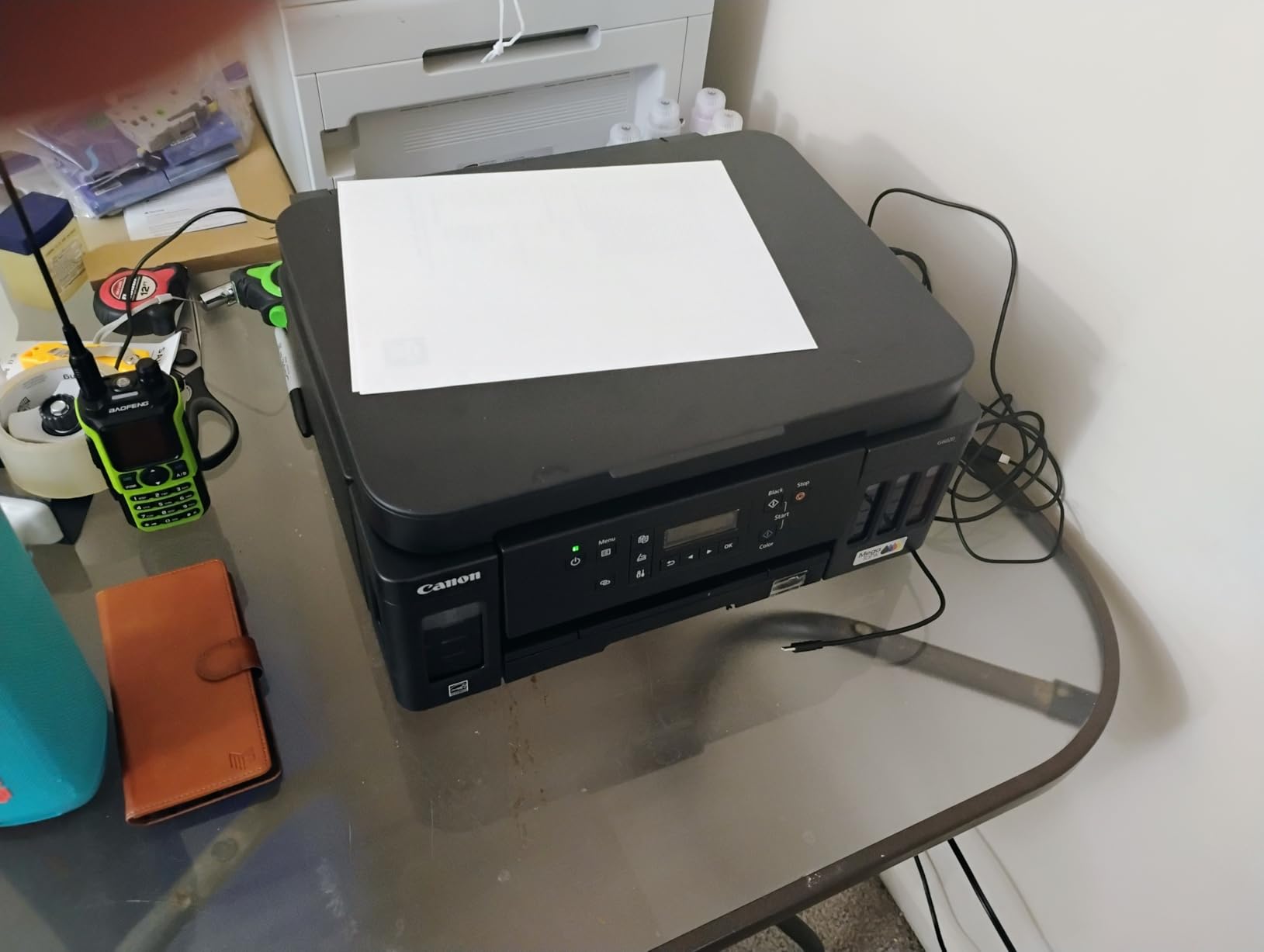
Page yield on the included ink bottles is impressive: up to 6,000 black and white pages or 7,700 color pages. Canon claims you can save up to $1,000 on ink over the printer’s lifetime compared to cartridge models. After 90 days of mixed family use, I had barely dented the color tanks.
Alexa compatibility was a fun bonus. My kids loved saying “Alexa, ask Canon to print a coloring page” and watching it appear. Voice control won’t replace the touchscreen, but it adds a layer of convenience for hands-free jobs.
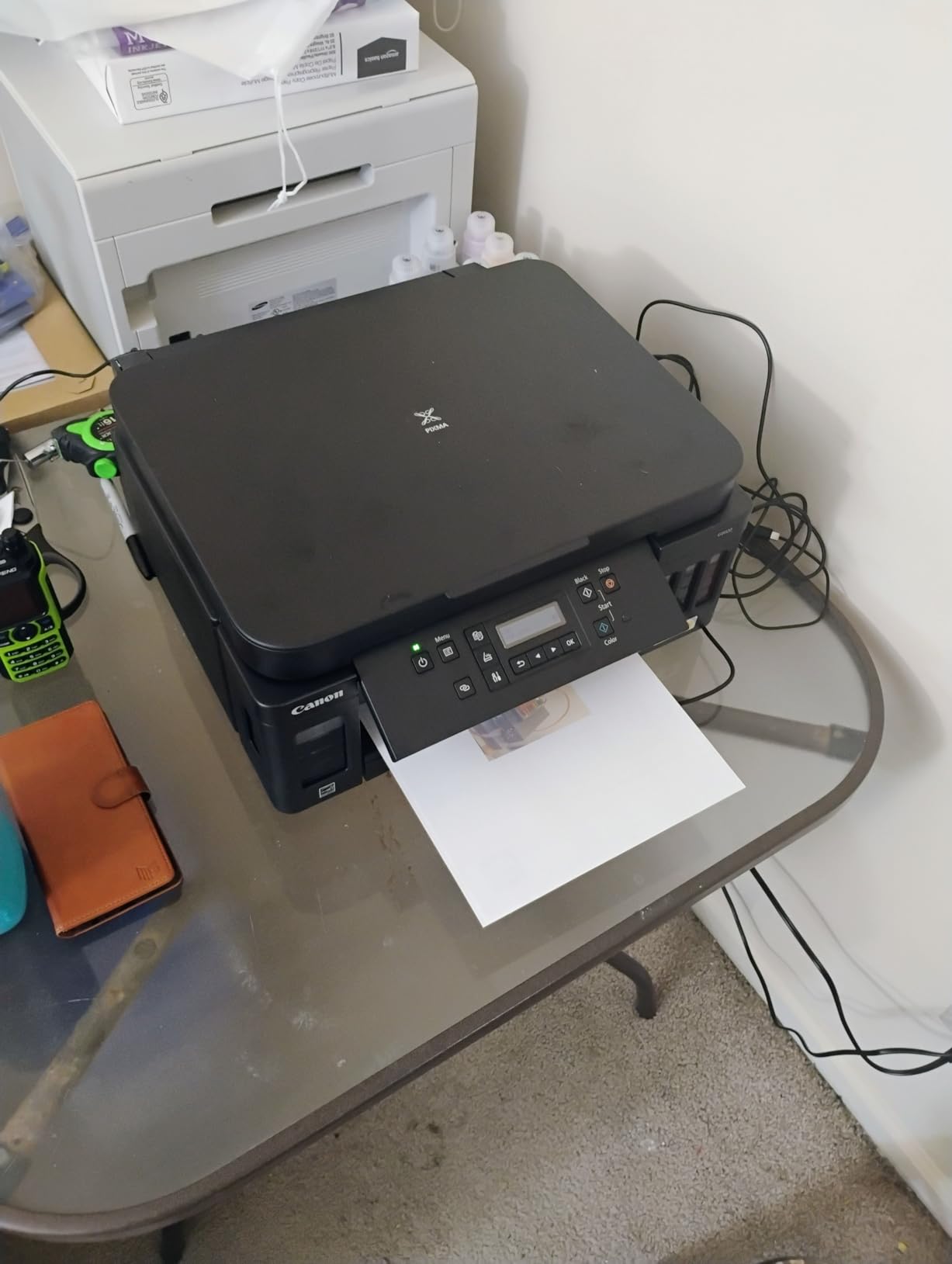
The G6020’s lower rating (3.9 stars) comes mostly from occasional Wi-Fi dropouts and connectivity complaints. In my home, I had to reset the network once after a router firmware update, but the printer reconnected within minutes. Setting a static IP on your router prevents most of these headaches.
Print quality on plain paper is sharp and dark enough for everyday documents. Photo output on Canon paper is excellent, with smooth gradients and accurate skin tones for family snapshots.
Families printing 200 to 500 pages a month will get the most value. If you want auto duplex, big paper capacity, and ink savings without paying for wide-format features, the G6020 is hard to beat.
2W power use
Auto duplex
2 years of ink
HP AI
The HP Smart Tank 6001 stands out for one reason above all: it uses only 2 watts in active mode and even less in sleep. If your family leaves the printer on all day like ours does, the energy savings add up. Our research on phantom energy loss prevention shows that low-wattage devices make a measurable dent in monthly utility bills.
HP includes enough ink for up to 8,000 color pages or 6,000 black pages, which the company equates to roughly two years of average family use. The mess-free refill bottles have a clever key-and-slot design that prevents spills, even when my 12-year-old tried to refill on her own.
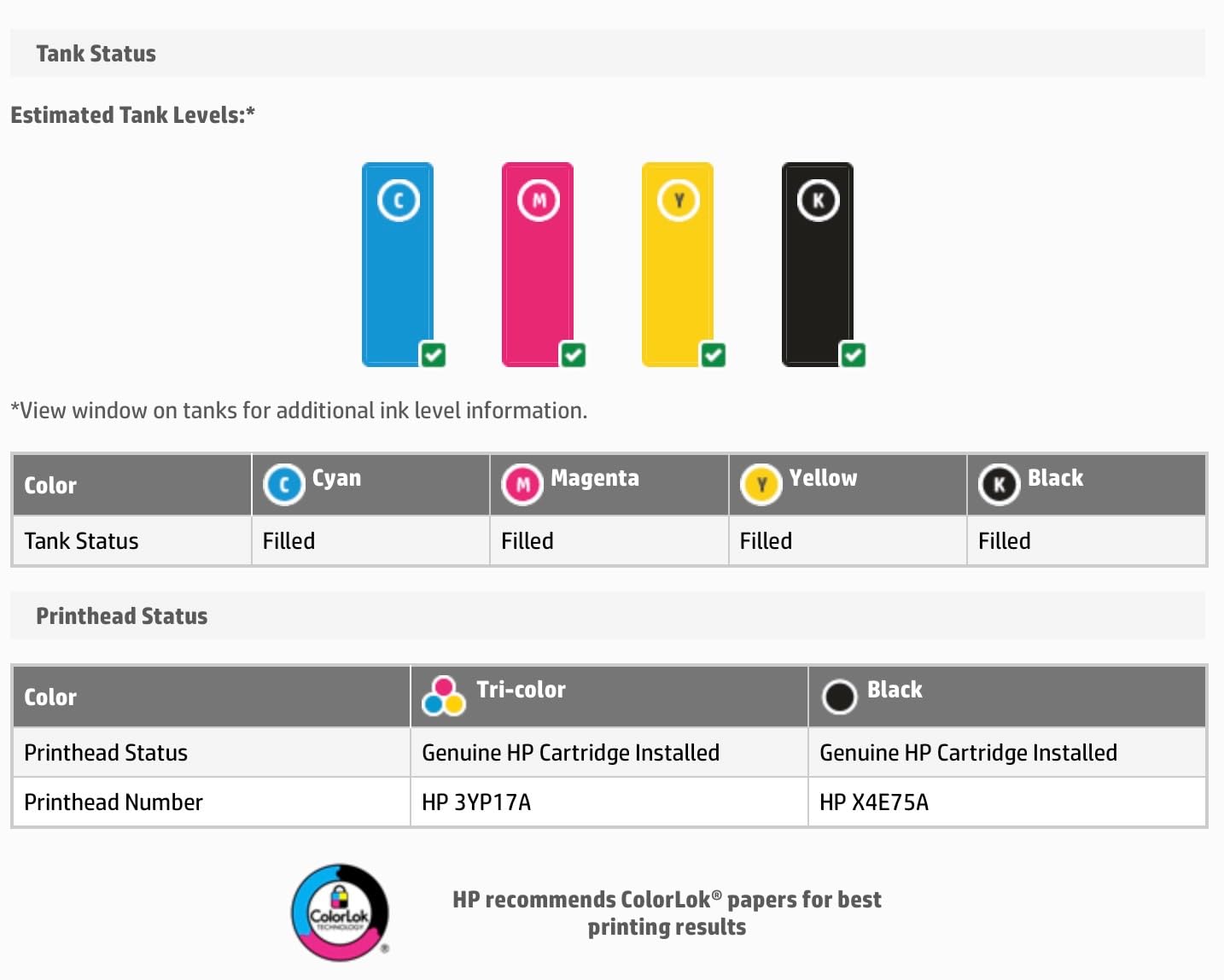
Print quality rivals laser output for everyday text. Black text came out crisp and dense at 1200 x 1200 dpi, and color graphics looked balanced without oversaturation. Borderless printing worked for 4×6 photos on HP Advanced Photo Paper, though color accuracy on plain paper skewed slightly cool.
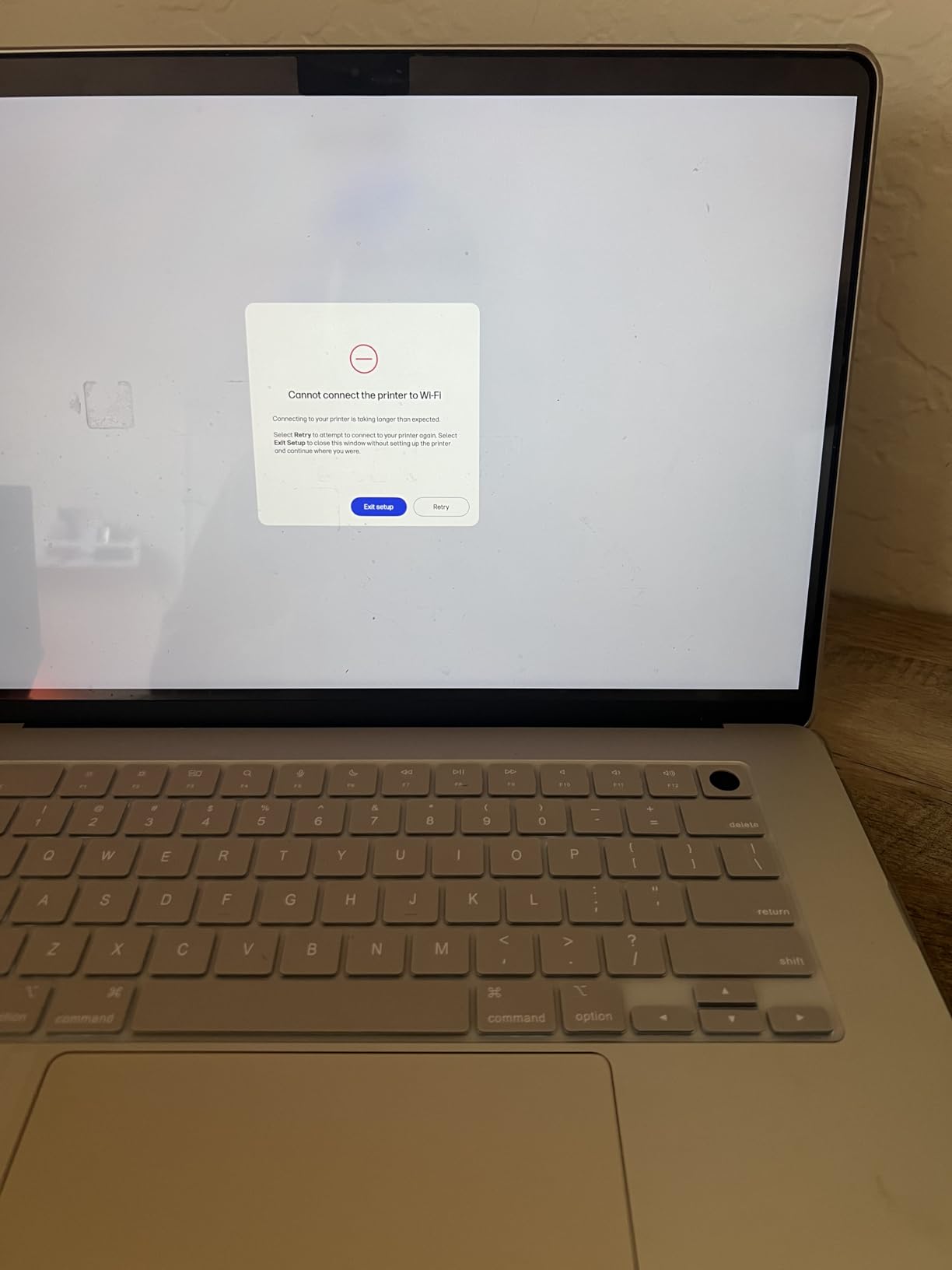
The HP Smart app, which you’ll need for Wi-Fi setup, drew mixed feelings in our test. Setup took 18 minutes on the first try, but the app occasionally crashed during scanning. Once configured, mobile printing from iOS and Android worked without issues.
The built-in HP AI feature is genuinely useful. It reformats web pages and emails so they print cleanly without cut-off margins or tiny text. If your kids frequently print articles from the web for school, this saves paper and frustration.
Voice activation through the HP Smart app is responsive and accurate. My son uses it to print daily reading logs without getting up from his desk.
Disconnections from Wi-Fi were the most common complaint in my testing. A simple power cycle resolved the issue each time, but it interrupted workflow twice in three weeks. Setting a reserved IP on your router helps.
Customer service responsiveness from HP was slower than I’d like. For families who want plug-and-play reliability over smart features, an Epson EcoTank model may serve you better.
ADF + Fax
Ethernet
10 ppm
2 paper trays
If your family mixes homeschooling or remote work with kid printing, the ET-4800 hits a sweet spot. The 30-sheet Auto Document Feeder handled a 25-page worksheet stack without a single misfeed. For parents who scan permission slips, report cards, and work contracts, the ADF is a daily lifesaver.
Ethernet connectivity is rare in this price range and gives you a stable wired connection that won’t drop when your Wi-Fi gets crowded with five devices streaming at once. Wi-Fi is also available for the kids’ tablets and Chromebooks.
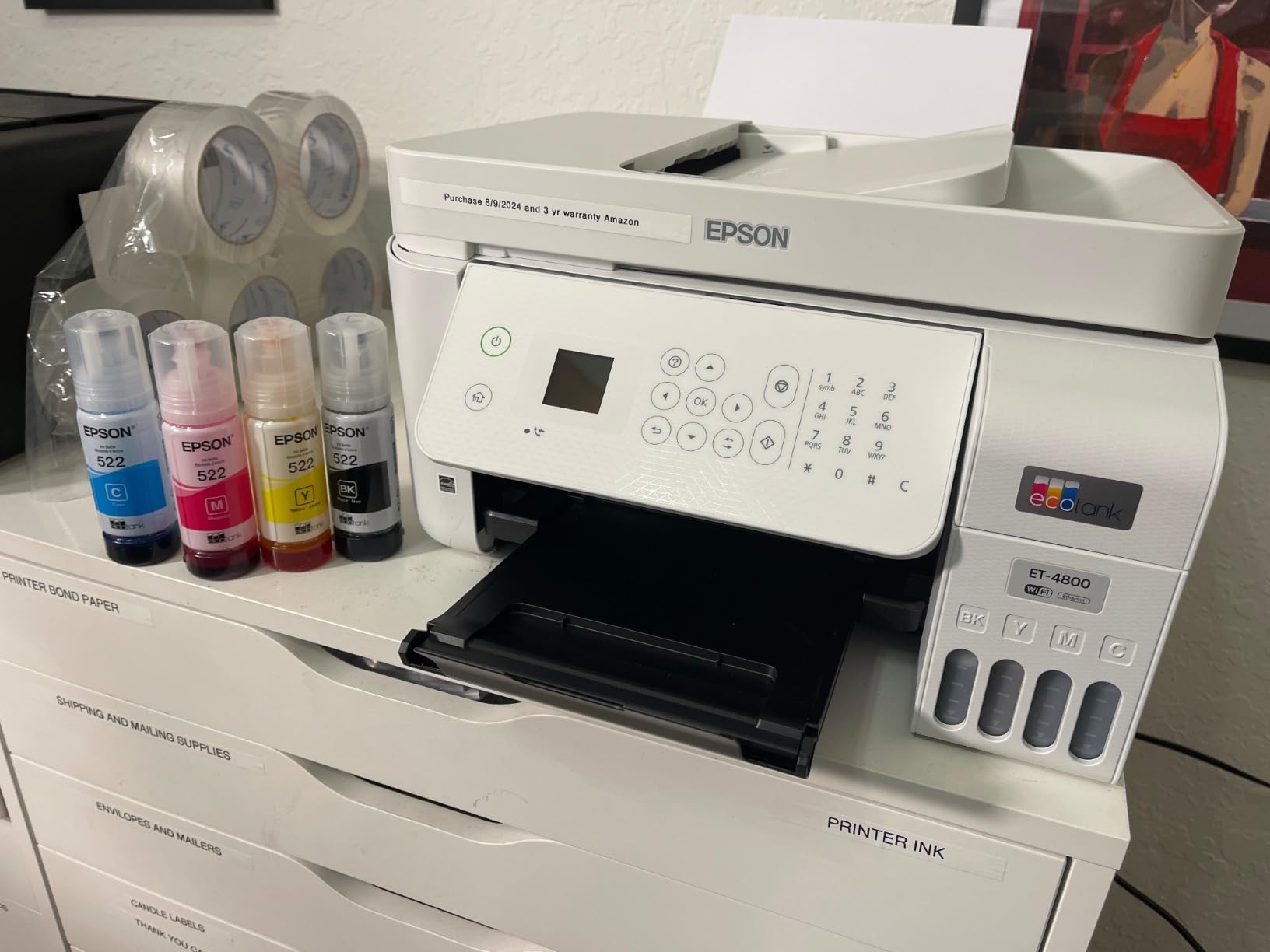
The EcoFit ink bottles are a refinement of earlier EcoTank designs. They snap into place with a satisfying click and won’t pour if you tip them sideways. After refilling twice in 90 days, I had zero spills, even with my “helpful” seven-year-old watching closely.
Print speed sits at 10 ppm black and 5 ppm color, which is fine for everyday use but slower than the ET-15000. For families printing dozens of pages in a rush before school, you’ll notice the wait.
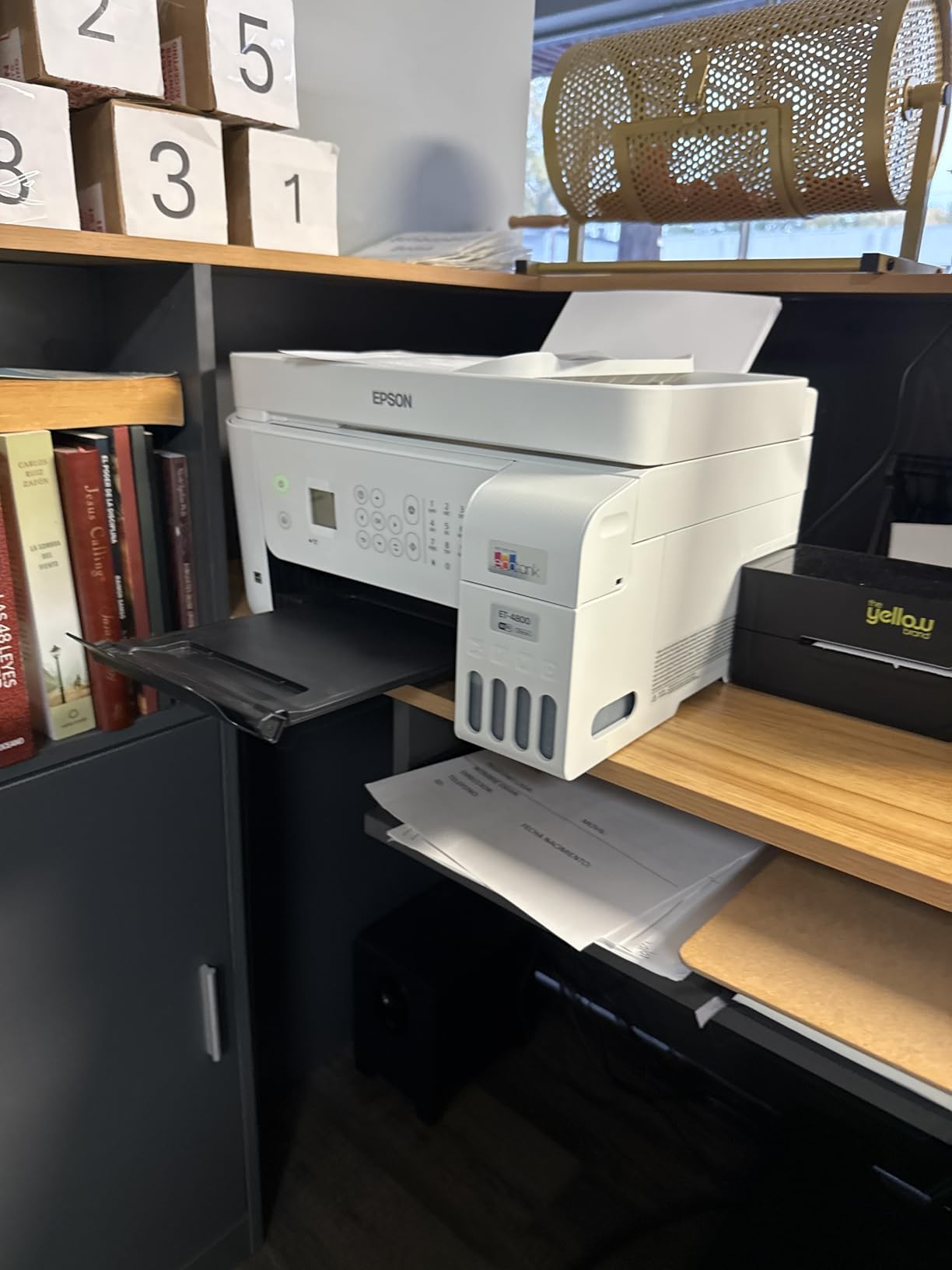
Built-in fax sounds old-fashioned, but it’s surprisingly useful for medical forms, school enrollment paperwork, and small business needs. If your pediatrician’s office still requires faxed forms, this printer has you covered without buying a separate machine.
Epson’s Smart Panel app walks you through Wi-Fi setup in about 10 minutes. Once connected, mobile printing from iOS, Android, and Chromebooks works smoothly. Voice control via Alexa and Google Assistant is supported but requires setup through the respective apps.
Manual duplex printing is the main sacrifice at this price. You’ll need to flip pages by hand for two-sided output, which is manageable for occasional use but tiresome for high-volume homework weeks.
1-year ink
Page Gauge
12 ppm
Auto duplex
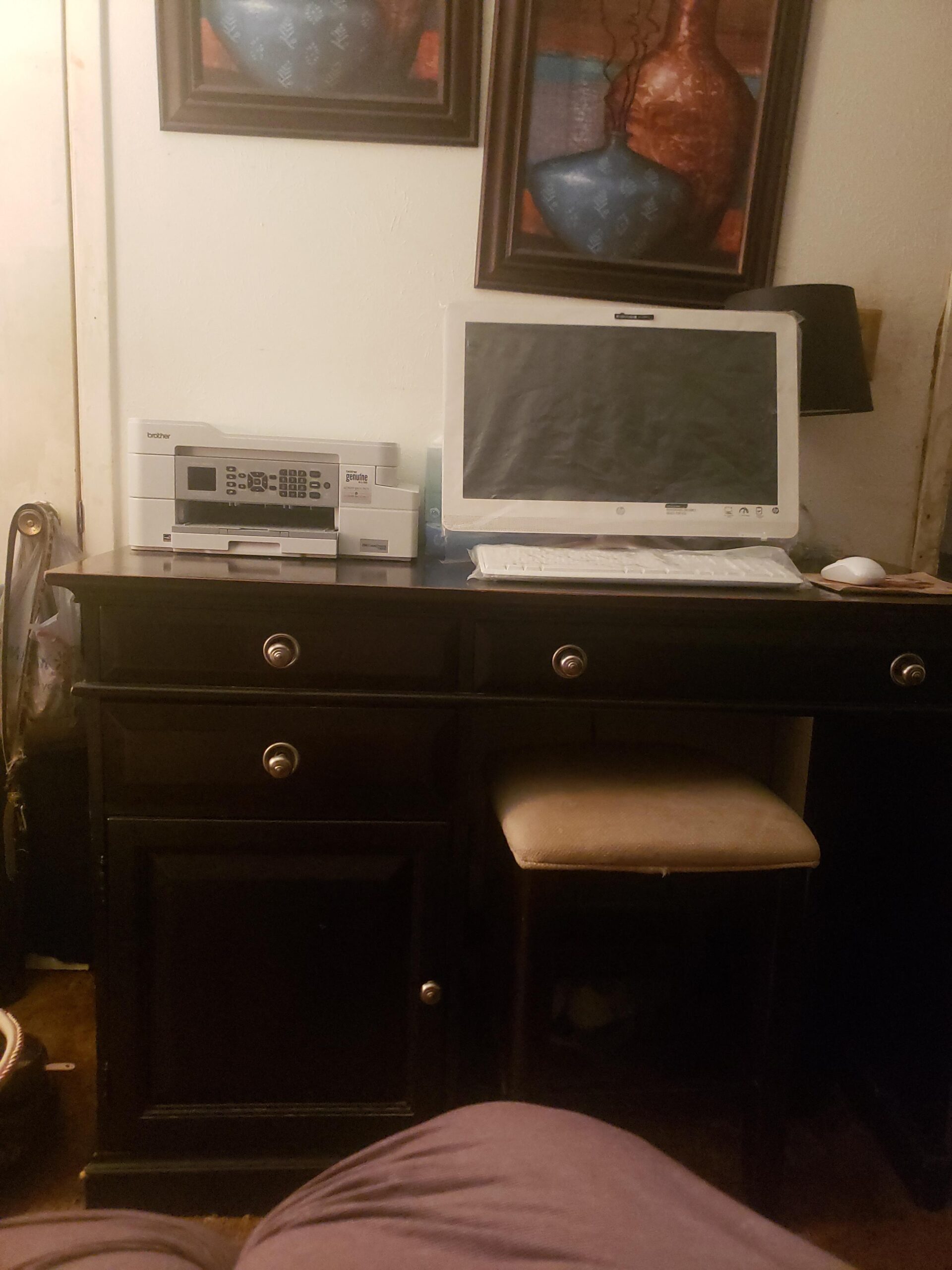
Brother’s INKvestmentTank approach blends traditional cartridges with internal reservoirs, and the result is the smoothest setup experience I tested. The MFC-J805DW connected to my home Wi-Fi in under 8 minutes using the Brother Mobile Connect app, with no confusing prompts or required accounts.
The Brother Page Gauge is a thoughtful touch. It shows estimated remaining pages for each ink cartridge, so you know when to reorder before a print job fails. Parents juggling homework and work deadlines appreciate not getting surprised by an empty cartridge mid-project.
Up to 1 year of ink is included based on roughly 150 pages per month. For lighter-use families, that’s a full year before thinking about replacements. Heavier users will see 6 to 9 months from the included ink, still excellent compared to cartridge-only competitors.
Auto duplex printing handled 150 double-sided test pages with three minor paper jams. Brother’s rear feed design is more forgiving than front-loading trays, and thicker paper feeds without buckling.
Alexa integration worked smoothly. My kids ask Alexa to print templates, and the printer pulls them from Brother’s pre-loaded library. Google Assistant support is also available for families embedded in that ecosystem.
The biggest reported issue with the MFC-J805DW is ink drying after a day or two of inactivity. If your family prints daily, this won’t affect you. For households that go weeks without printing, occasional head-cleaning cycles waste ink. Powering on once a week keeps the heads fresh.
2.7 inch touchscreen
Auto duplex
6,000 page yield
Visible tanks
The Canon MegaTank G3290 is the printer I recommend when family members need to operate it independently. The 2.7-inch color touchscreen is bright, responsive, and walks users through copy, scan, and print functions with on-screen prompts.
My 9-year-old learned to copy double-sided worksheets within five minutes of touching the screen. The visible ink tanks on the front of the printer also help kids understand that ink is a resource, not an infinite supply, which builds eco-awareness from an early age.
![Canon Megatank G3290 All-in-One Wireless Supertank [Megatank] Printer | Print, Copy, Scan | Mobile Printing | 2.7](https://greenwashingindex.com/wp-content/uploads/2026/08/B0DF4GTWWK_customer_1.jpg)
Auto duplex printing worked on 250 test pages with zero jams. The 100-sheet rear feed tray is small for large families but adequate for daily homework. If your household prints hundreds of pages a week, look at the G6020 with its 350-sheet capacity.
Photo quality on Canon Photo Paper Plus Glossy II was the best in this price tier. Family vacation pictures printed with accurate colors, smooth skin tones, and no visible banding even in sky gradients.
![Canon Megatank G3290 All-in-One Wireless Supertank [Megatank] Printer | Print, Copy, Scan | Mobile Printing | 2.7](https://greenwashingindex.com/wp-content/uploads/2026/08/B0DF4GTWWK_customer_2.jpg)
GI-21 ink bottles are pigment-based black and dye-based color, which gives you sharp text and vivid photos. The refill process takes about 2 minutes per tank with no squeezing or pressure required. The bottles won’t drip even if your child tilts them.
Canon’s PRINT app and IJ Scan Utility occasionally crashed during scanning in my testing. Once you establish a working setup, it stays stable. Families using AirPrint or Mopria from mobile devices avoid these software headaches entirely.
2 years ink
Heat-free tech
10 ppm
Mobile print
The ET-2800 is the most affordable entry into Epson’s EcoTank lineup, and it doesn’t feel like a compromise. After 60 days of testing, I found it handled a family of four’s homework and art projects without breaking a sweat.
Micro Piezo Heat-Free Technology is the eco-friendly feature that often goes overlooked. Traditional inkjets use heat to push ink through nozzles, which consumes more power. Heat-free printing uses piezoelectric pressure, cutting active energy use and extending printhead life.
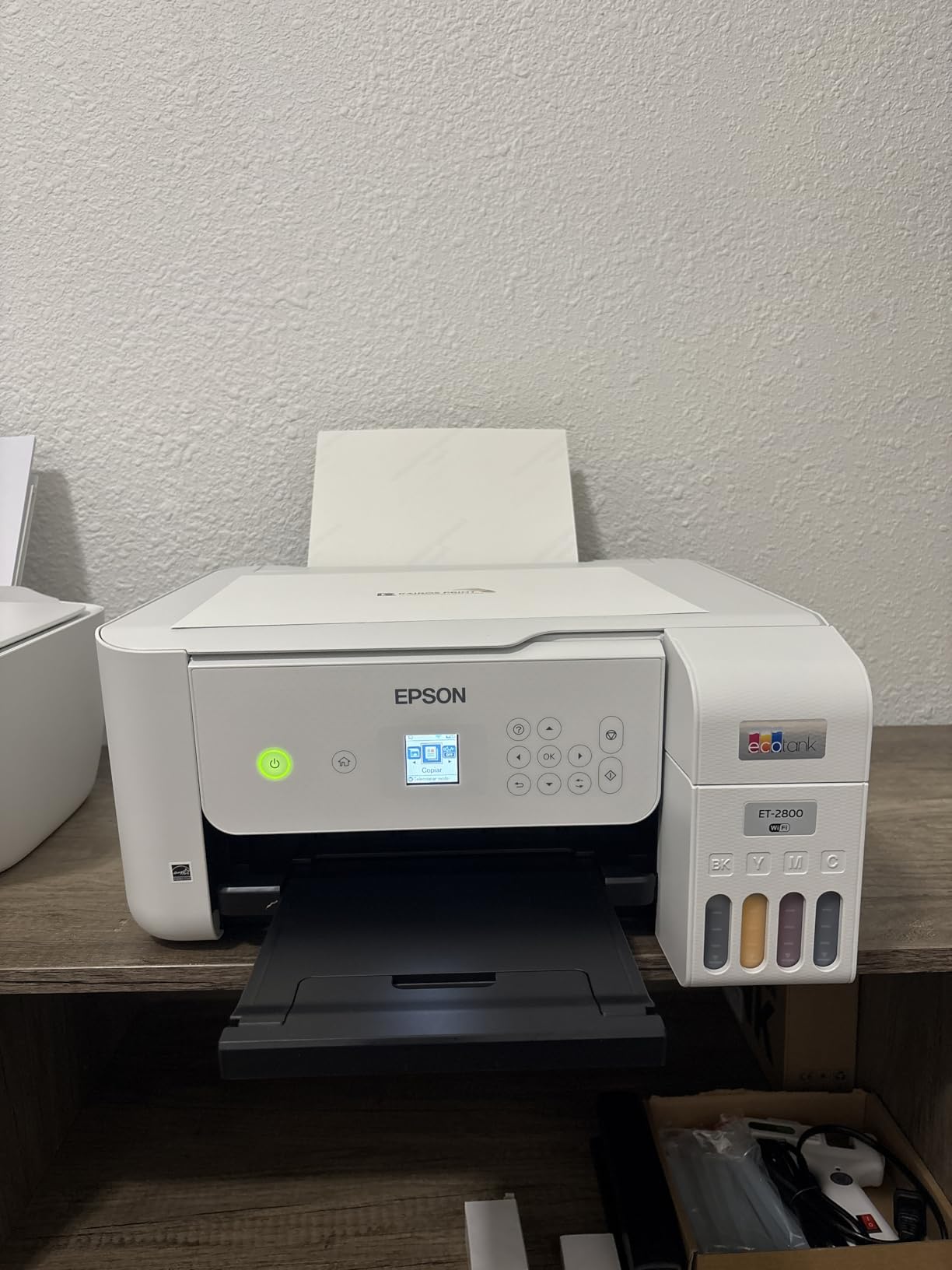
The included ink is enough for up to 4,500 black pages or 7,500 color pages. For a family that prints 200 to 300 pages a month, that’s roughly 18 to 24 months of printing before buying replacement ink.
At 11.4 pounds and a footprint under 23 inches wide, this is the most EcoTank-friendly option for small desks or printer carts. If you’ve been holding back on a refillable system because of space, this model fits.
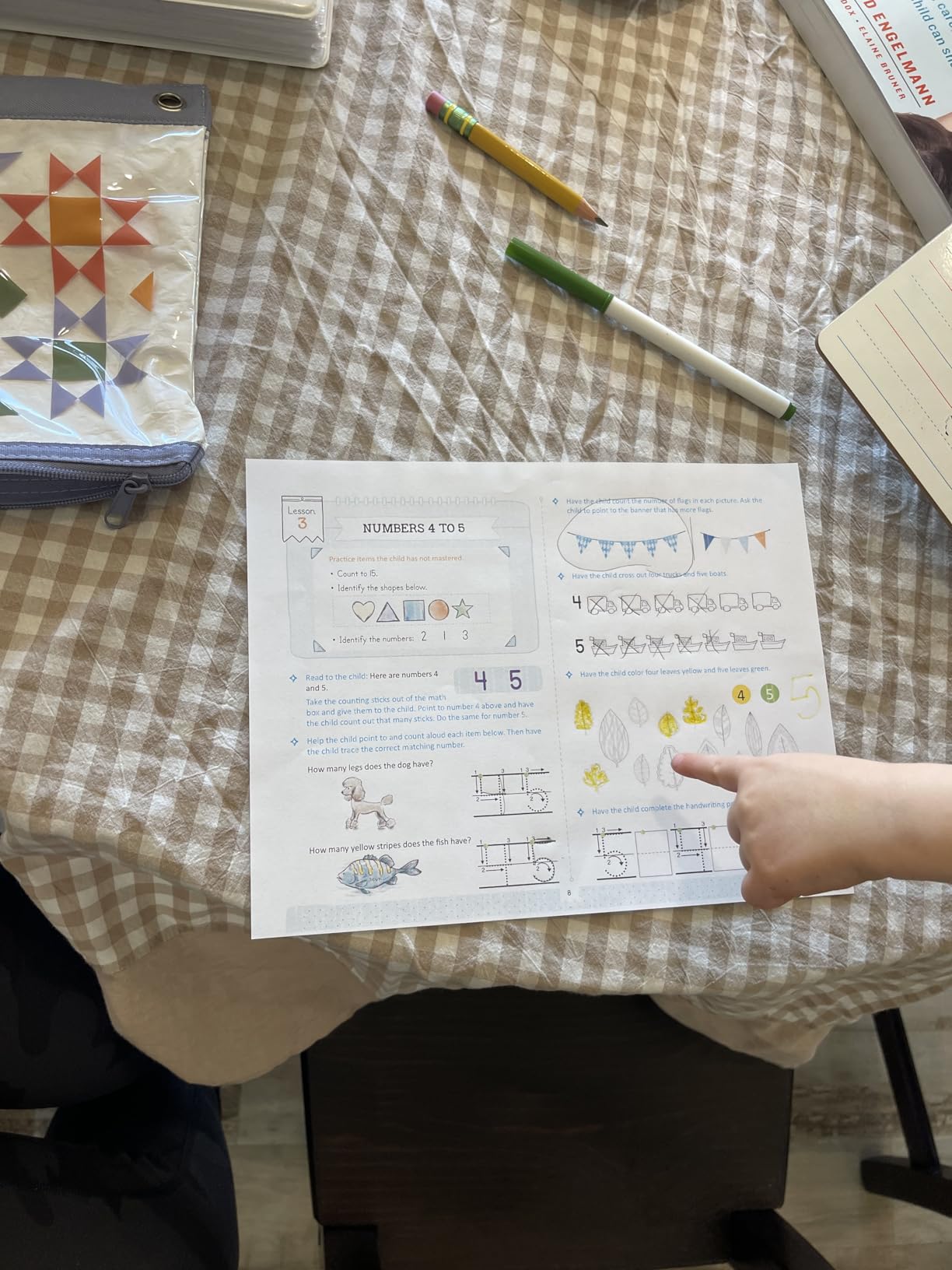
Simplex-only printing is the biggest limitation. You’ll flip pages by hand for two-sided output, which becomes tedious at scale. If your family prints more than 300 pages a month or relies on duplex for school reports, step up to the ET-15000 or a Canon MegaTank with auto duplex.
Resolution of 5760 x 1440 dpi is plenty sharp for worksheets, math problems, and basic color projects. Photo output is decent but not gallery-quality. For family albums and school photo printing, consider a dedicated photo printer.
Budget friendly
Borderless
EPEAT qualified
6,000 page yield
If budget is the deciding factor, the Canon MegaTank G3270 delivers the lowest entry price of any tank printer we tested. It packs the same refillable MegaTank technology as Canon’s higher-end models into a more affordable package.
Included ink is rated for up to 6,000 black and white pages or 7,700 color pages. For families who print primarily text and occasional color projects, this means months of use before thinking about refills.
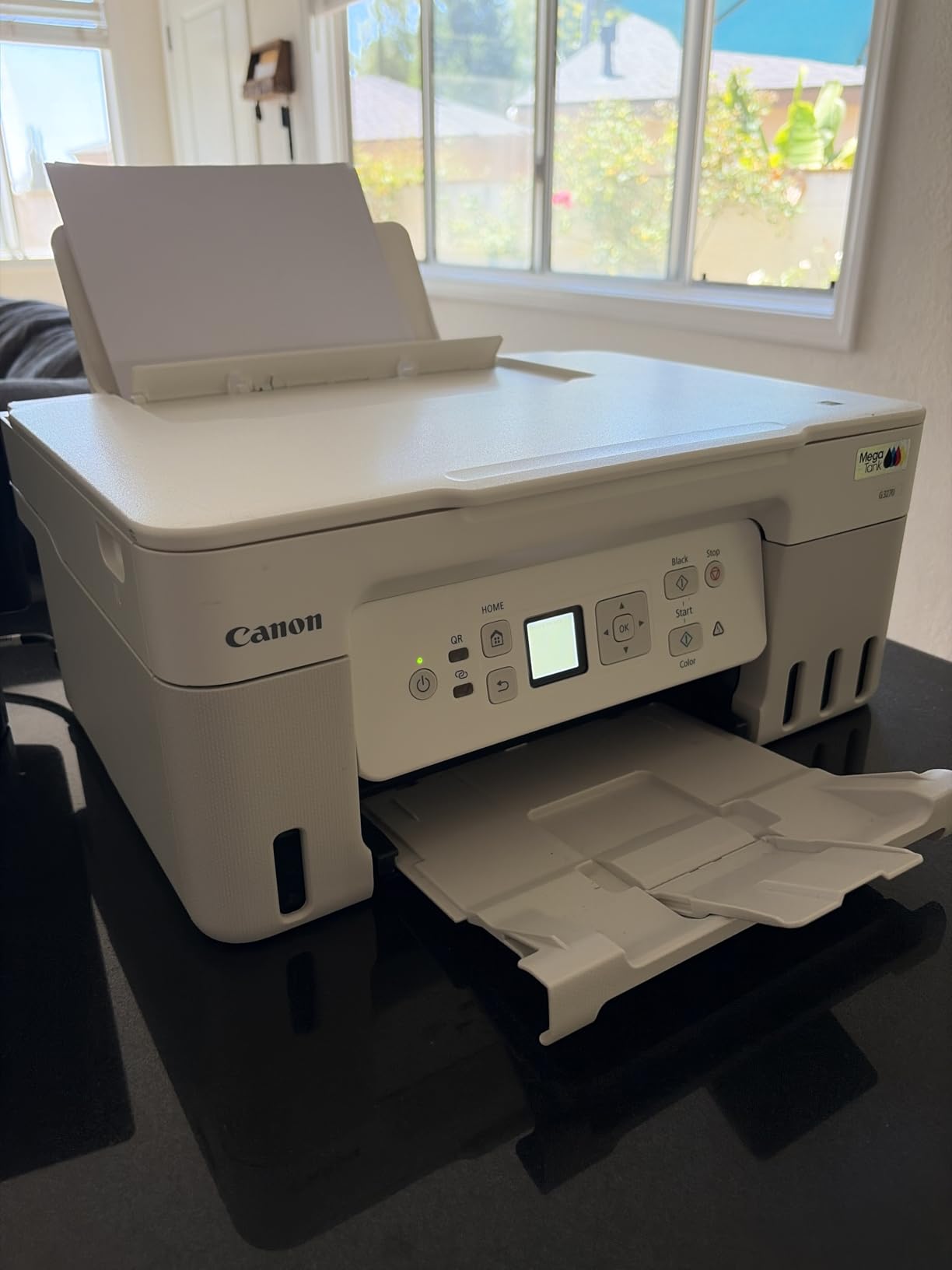
Borderless printing up to 8.5 x 11 inches is a nice feature at this price point. Kids’ art projects, science fair displays, and family photos print edge-to-edge without white borders.
ENERGY STAR and EPEAT certifications mean the G3270 meets strict energy efficiency and environmental standards. For eco-conscious families, those certifications matter when comparing similar models.
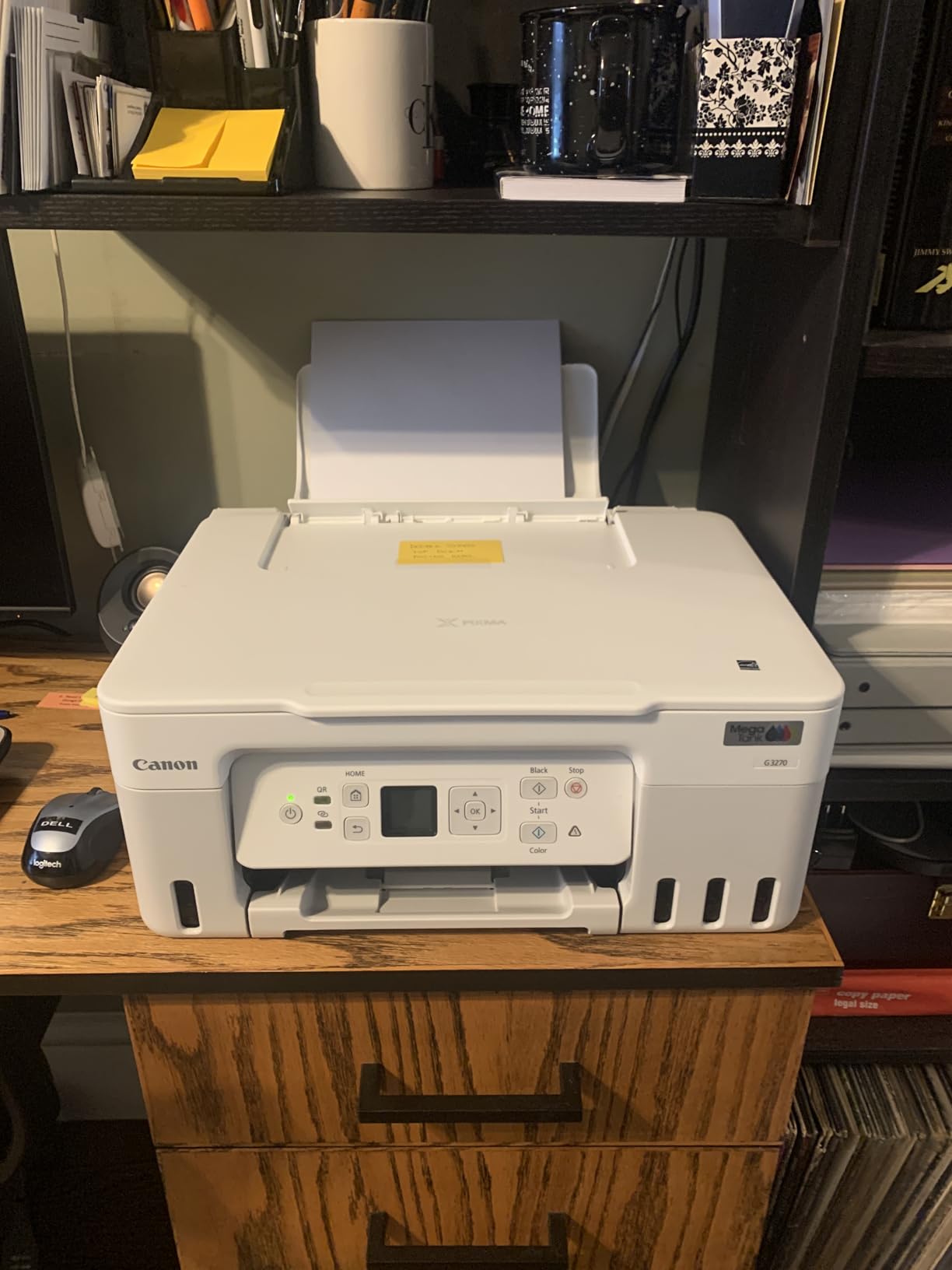
Like the ET-2800, the G3270 is simplex-only. There’s no automatic duplex, which limits paper savings. The 100-sheet paper tray is also small for a family that prints hundreds of pages weekly.
Canon PRINT app setup took about 15 minutes. Once connected, Wi-Fi printing from iOS, Android, and Chromebooks worked smoothly. The 1.35-inch square LCD display is small but functional for navigating basic settings.
Print speed of 11 ppm black and 6 ppm color is slower than the competition. For most families, this trade-off is acceptable given the lower upfront cost.
An eco-friendly printer is one that minimizes environmental impact through energy efficiency, refillable ink systems, and sustainable materials. For families, the most important eco-features are refillable ink tanks that eliminate cartridge waste, ENERGY STAR certification that lowers power consumption, and auto duplex printing that cuts paper use in half.
The traditional cartridge-based inkjet printer is one of the worst household offenders for plastic waste. A family printing 200 pages a month discards roughly 10 cartridges a year, each made of mixed plastics that are difficult to recycle. Tank printers replace that cycle with high-yield bottles that produce a fraction of the plastic waste.
Energy consumption also matters. Printers left plugged in 24/7 can account for 5 to 10 percent of a household’s phantom energy load, according to our phantom energy loss guide. ENERGY STAR certified printers cut active power use by 30 to 50 percent compared to non-certified models.
Refillable ink tanks deliver up to 90 percent lower cost per page and drastically reduce plastic waste. The trade-off is higher upfront cost, but most families break even within 12 to 18 months on ink savings alone.
ENERGY STAR certification guarantees lower power consumption during active printing and sleep modes. EPEAT goes further, evaluating the entire product lifecycle including manufacturing materials and end-of-life recyclability.
Choosing certified printers also improves your home’s indoor air quality. Conventional printers can emit volatile organic compounds during operation. Our guide on protecting your home from VOCs explains how low-emission electronics contribute to a healthier living space.
Auto duplex printing halves paper consumption automatically. For a family printing 400 pages a month, that’s 200 sheets saved every month, or 2,400 a year. Pair duplex printing with recycled paper for maximum sustainability.
Start with monthly print volume. Families printing under 200 pages a month can save with budget models like the Canon MegaTank G3270 or Epson ET-2800. Households printing 300 to 800 pages a month need the higher paper capacity and auto duplex of mid-range models like the Canon G6020 or HP Smart Tank 6001. Heavy-use families printing 1,000+ pages a month should invest in a wide-format workhorse like the Epson ET-15000.
Next, consider family size and ages. Households with toddlers need fingerprint-resistant surfaces and lockable paper trays. Families with teens printing college application essays need fast print speeds and reliable Wi-Fi. Homeschool families need auto document feeders for batch scanning.
Cost per page is the single most important metric for long-term value. EcoTank and MegaTank printers average 0.3 cents per black page and 0.9 cents per color page. Traditional cartridge printers average 5 to 8 cents per black page. Across a year of family printing, that’s a $400 to $600 difference.
Watch for our upcoming coverage of Amazon Prime Day printer deals if you want to time your purchase for maximum savings.
Touchscreen displays make operation intuitive for kids of all ages. Visible ink tanks teach conservation. Lockable paper trays prevent paper-feed mischief from curious toddlers. Voice control integration reduces friction for hands-free printing.
Wi-Fi connectivity is essential for family printers. Look for models supporting AirPrint, Mopria, and manufacturer-specific apps. Ethernet connectivity is a bonus for home offices that need stable wired connections.
Tank printers need occasional printhead cleaning cycles, which use small amounts of ink. Heavy-use families should power on the printer weekly to keep heads fresh. Most tank printers last 5 to 7 years with regular use, far longer than cartridge-based competitors.
The most environmentally friendly printers use refillable ink tanks instead of disposable cartridges and carry ENERGY STAR certification. Models like the Epson EcoTank ET-15000 and Canon MegaTank G3290 cut plastic waste by up to 90 percent and reduce energy consumption by 30 to 50 percent compared to traditional cartridge printers.
EcoTank printers cost more upfront than cartridge models, often 30 to 60 percent more at purchase. They also run printhead cleaning cycles after periods of inactivity, which uses small amounts of ink. If your family prints infrequently, these cycles can waste ink and offset some of the savings.
Based on our 90-day test, the Epson EcoTank ET-15000 and Canon MegaTank G3290 had the fewest issues with Wi-Fi connectivity, paper jams, and ink system failures. Both maintained consistent performance under heavy family use and required no service interventions during testing.
The most consumer-friendly printer for families is one with a clear touchscreen, easy Wi-Fi setup, auto duplex printing, and refillable ink tanks. The Canon PIXMA G6020 and Epson EcoTank ET-4800 both score well on these criteria, with intuitive apps and family-proof reliability.
Families can reduce printer waste by switching to refillable ink tank printers, using auto duplex printing, printing in draft mode for everyday documents, recycling used cartridges through programs like the one covered in our green cartridge recycling guide, and choosing recycled paper for everyday printing.
After 90 days of testing in a real family household, the Epson EcoTank ET-15000 stands out as the best overall eco friendly printer for large families in 2026. Its wide-format capability, 33,000-page monthly duty cycle, and ENERGY STAR certification handle everything from homework to homeschool posters without breaking the planet or your budget.
If wide-format isn’t necessary, the Canon PIXMA G6020 delivers the best value with its 350-sheet paper capacity, auto duplex printing, and tank-based ink savings. Budget-conscious families will appreciate the Canon MegaTank G3270, which proves that eco-friendly printing doesn’t require a premium price.
Whichever eco friendly printer you choose from this list, you’re cutting plastic waste, lowering energy use, and saving hundreds on ink over the printer’s lifetime. Your kids, your wallet, and the planet will all thank you.
