

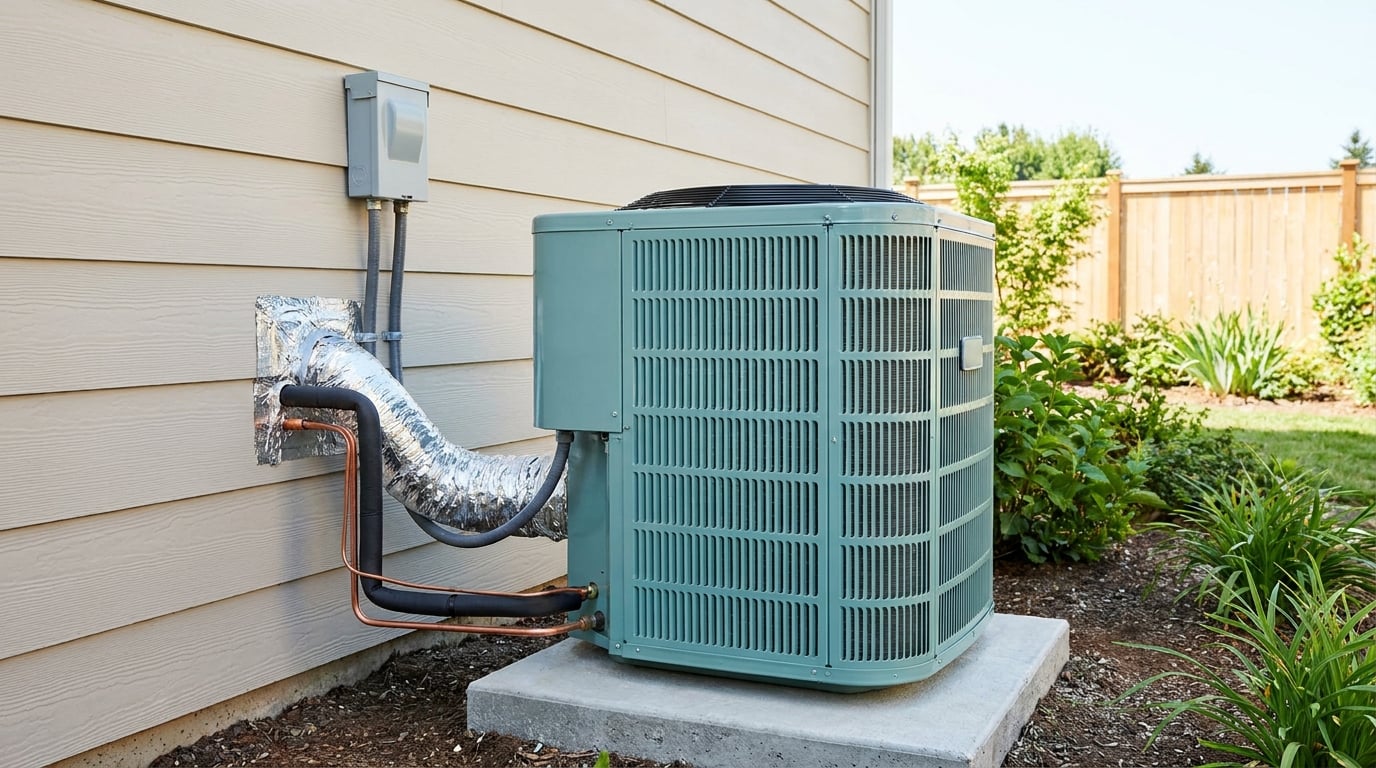
Most homeowners pay somewhere between $4,000 and $10,000 to install central air conditioning in a typical US home, with a national average around $6,500. If a system already exists and you are swapping it out, you will land nearer the bottom of that range. If the home has no ductwork at all, expect a much bigger number. All figures here are typical US ranges that vary by region and change over time.
The gap between a $5,000 job and a $20,000 job for what sounds like the same project is not a mystery, though it feels like one from the kitchen table. It comes down to tonnage, efficiency level, whether the ducts already exist, how much electrical work the panel needs, and how far the refrigerant lines have to run.
Here is what each of those pieces costs, what real homeowners actually paid, and where you can legitimately trim the bill.
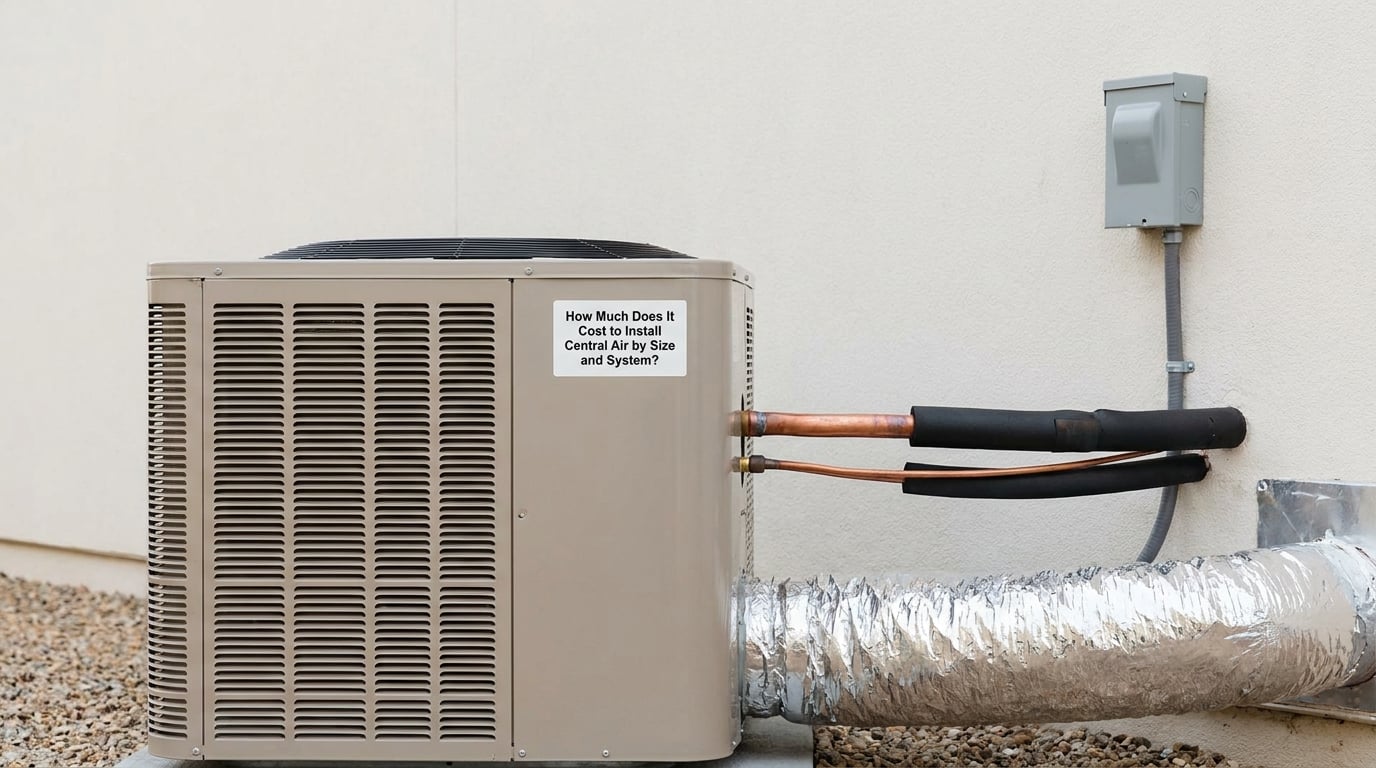
Tonnage is the first question a contractor will ask, and one ton of cooling equals 12,000 BTUs per hour. A 1,500 sq ft home in a moderate climate usually lands on a 2 to 2.5 ton unit. Bigger homes and hotter regions step up from there.
The ranges below are installed prices, meaning equipment, materials, labor, duct connections and basic electrical work are all in the number. Use them as a starting point for your own quotes, not as an offer.
| System size | Cooling capacity | Equipment and materials only | Installed, single-stage | Installed, two-stage or variable-speed |
|---|---|---|---|---|
| 2 ton | 24,000 BTU | $1,700 to $3,000 | $4,000 to $6,000 | $6,000 to $8,500 |
| 2.5 ton | 30,000 BTU | $2,000 to $3,400 | $4,800 to $7,000 | $7,000 to $9,500 |
| 3 ton | 36,000 BTU | $2,300 to $3,800 | $5,500 to $7,800 | $8,000 to $11,000 |
| 3.5 ton | 42,000 BTU | $2,600 to $4,300 | $6,200 to $8,600 | $8,800 to $12,000 |
| 4 ton | 48,000 BTU | $3,000 to $5,000 | $6,800 to $9,400 | $9,500 to $13,000 |
| 5 ton | 60,000 BTU | $3,800 to $6,200 | $7,800 to $11,000 | $11,000 to $15,000 |
As of January 2023, the federal minimum for new residential air conditioners moved to SEER2, which reads roughly 4.5 percent lower than the old SEER scale for the same hardware. SEER measures seasonal energy efficiency. The rule change pushed the price of entry-level equipment up by around 15 to 20 percent, which is worth knowing if you are comparing a new quote against an old one.
These two jobs look similar from the driveway and differ by thousands once the invoice arrives.
| Project type | What is involved | Typical installed range |
|---|---|---|
| Change-out | Old outdoor unit removed, new condensing unit set on the existing pad, existing line set and disconnect reused | $4,000 to $8,000 |
| New unit, new coil and air handler | Full matched system indoors and out, keeping the existing furnace blower and heat | $6,000 to $11,000 |
| Add cooling to an existing furnace | Condenser, coil, air handler or furnace swap, line set, pad, disconnect | $5,500 to $10,000 |
| Brand new installation, no ducts | Complete duct network designed and built from scratch, plus equipment | $12,000 to $25,000 and up |
A furnace and air conditioner replaced together usually costs less than the two jobs done separately, because the crew is already in the attic and the lines are already open.
Regional labor is the biggest swing factor. A technician in a low-wage part of the country may bill $75 to $110 an hour. In a high-cost metro or a place with a shortage of licensed technicians, the same hour runs $180 to $250. Equipment is close to nationally priced, so a system that costs the same in two states can land thousands apart once labor is in the total.
The other levers, roughly in order of how much they move the number:
Real invoices run wider than published averages, and that is normal rather than a red flag. One r/homeowners poster described a quote of $11,000 installed on a unit that retails for $3,300 online. The difference is labor, overhead, permits and warranty, not pure markup. Another thread in r/hvacadvice featured an attic installation where quotes for essentially the same heat pump system ran from roughly $22,000 to $44,000. Scope differences, brand tier and duct complexity did most of that explaining, not the contractors being dishonest.
If two quotes differ by more than double, ask both to send a written line-item breakdown before you decide. That one request settles most disputes.
The 5,000 dollar rule is a sales heuristic some reps use, not a code, a regulation or an industry standard. The idea is roughly that a job near 5,000 dollars is a comfortable margin for the company, so above that they get greedy. It has no basis in any published standard, and it is useful mainly as a prompt to ask why a price landed where it did.
This is where quotes stop looking like everyone else’s. A home with no central ducts needs a supply network, return runs, and usually new registers and returns placed through walls or ceilings. That work can equal or exceed the equipment price.
Flexible duct runs on new construction typically run $25 to $60 per linear foot installed. A 1,500 sq ft home needs somewhere around 400 to 600 linear feet of supply and return duct, which puts new-build ductwork alone at $10,000 to $30,000 depending on how many branches and how many ceiling penetrations.
Full mixed-air replacement, where you abandon an existing network and run new rigid or flex trunk lines and branches, runs $8,000 to $20,000 on its own. New returns and supply registers may need to be added in every room rather than reused.
Concealed work costs the most. Cutting into finished walls, fishing lines through existing cavities, or patching drywall and paint adds hours that never appear in the equipment line. Owners of older homes with no ducts sometimes see $25,000 to $40,000 quotes, and one r/hvacadvice thread describes an unofficial $30,000 figure for ductwork plus equipment on a home that never had central air.
If the duct route looks punishing, get a ductless mini-split quote before signing anything. For additions, older houses with no basement, and small square footage, a multi-head mini-split often lands well under full duct retrofit and runs more efficiently. The trade-off is that each head serves one room rather than a shared central system.
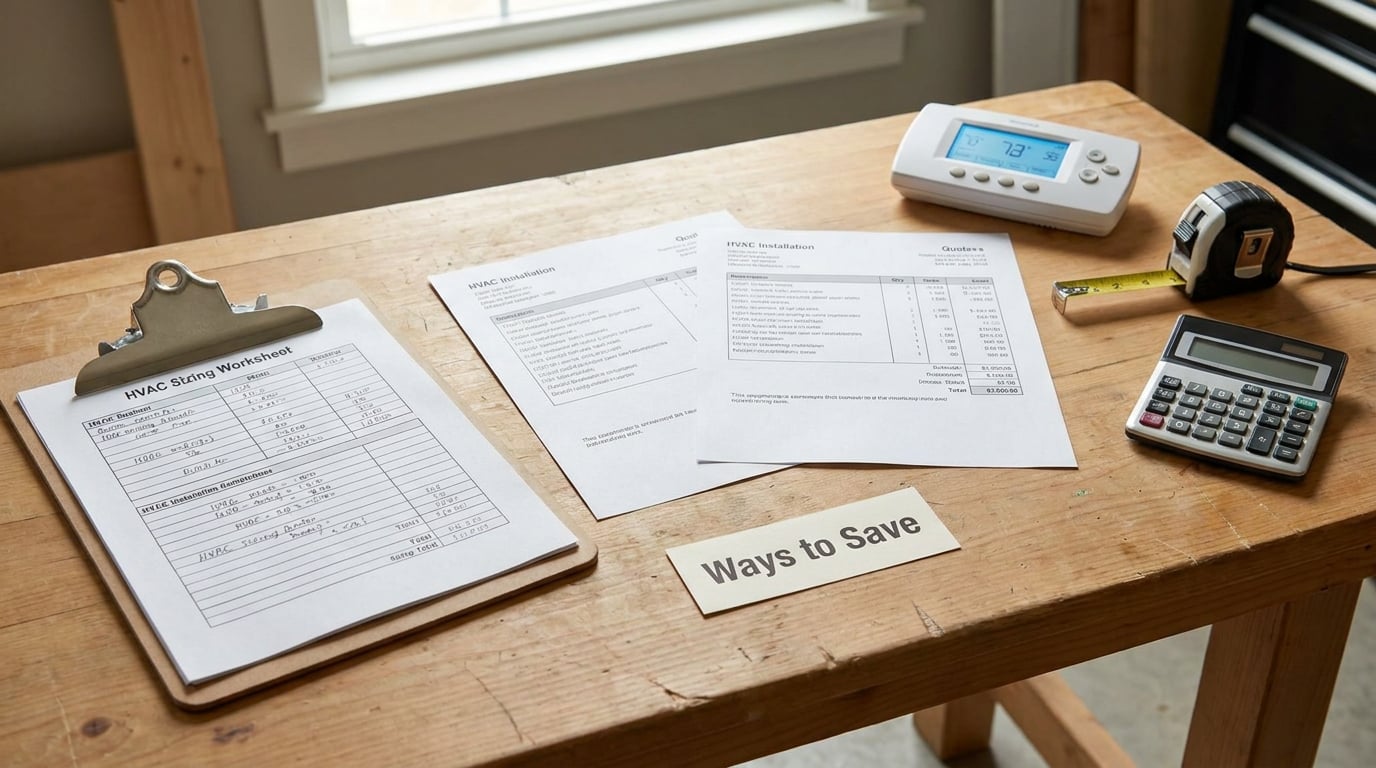
Collect at least three written quotes, and more if the spread looks strange. Homeowners on the forums treat three as the floor and four or five as the target. Ask each contractor for the same scope in writing so you are comparing like with like.
Your quote should itemize the equipment by model and tonnage, the coil and air handler separately, labor hours or a labor rate, the line set, the pad, the disconnect, permits, removal and disposal, and any optional add-ons. A contractor who refuses to break it down is telling you something.
Ask for a Manual J load calculation. That is the industry method for sizing equipment from your home’s heat gain, insulation, window area and climate zone. A contractor who sizes off square footage alone is guessing, and an oversized unit will not dehumidify properly. Homeowners in the forums treat a stated Manual J as a credibility signal.
Schedule the work in the shoulder season, roughly October through February in most regions. Demand drops, crews get less booked, and contractors have more room to negotiate on price. Peak summer in a hot market is the worst time to ask for a deal.
Keep compatible refrigerant lines and electrical service when they are code-compliant. Replacing an undersized or failing disconnect is not optional; reusing a sound one is. Ask the contractor to state which of each they are keeping and why.
Decline accessories you do not need. Extended warranties on parts already covered by the manufacturer, oversized surge protectors, and add-ons that get bundled in without explanation are common line items that rarely earn their price.
Finally, check on rebates, tax credits, utility programs and manufacturer incentives. They can be real and meaningful, especially on higher-efficiency equipment, but eligibility changes with your location, your utility, your tax situation and the program’s funding. Confirm the terms in writing with the program administrator before you count any of it in your budget, and never let a rebate be assumed on the spot.
A change-out of an existing system is cheaper, usually $4,000 to $8,000 installed, because the ductwork, pad, line set and electrical service are already there. A brand new installation runs $6,000 to $14,000 with working ducts, and $12,000 or more when the duct system has to be built. If your furnace is more than 20 years old, ask for furnace-plus-AC pricing, since doing both at once usually costs less than two separate jobs.
No, not if you want a working, warrantied, code-compliant system. Handling refrigerant requires certification, and the electrical side needs a licensed electrician plus a permit in most jurisdictions. The post-2023 SEER2 minimum also applies to the installed system, not just the hardware. You can absolutely do the prep work yourself, clearing the area, patching drywall after new registers go in, and handling disposal of the old unit.
Get at least three, and four or five if the first three differ wildly or if the job involves new ductwork. Give every contractor the same scope in writing so the comparison is fair. Compare equipment model, tonnage, efficiency rating, labor, and each add-on line separately rather than the bottom total. If two quotes are more than double apart, ask both for a written line-item breakdown and see where the gap actually lives.
A straight change-out with existing ducts and electrical service is usually one working day, sometimes two if the line set has to be extended or the coil replaced. Adding cooling to an existing furnace commonly takes a day or two. New ductwork is a different story and can take several days to a couple of weeks depending on how much of the house is being opened up. Permits and inspection can add a few days to the calendar.
In most US jurisdictions, yes. A permit is generally required for the electrical work and often for the mechanical work, with a final inspection before the system goes into service. Permit fees commonly run $150 to $500 depending on the municipality. Unpermitted work can create problems when you sell the house, and some manufacturers tie warranty coverage to a permitted, inspected installation, so ask the contractor to pull it.
Once it is running, keep up with filter changes and coil care, because a neglected system is the one that fails in August. Our ceiling fan running cost breakdown covers the cheaper way to cut indoor heat gain in summer, and our air purifier electricity guide covers another appliance that quietly adds to the summer bill.
Get at least three itemized quotes, ask each one to state the tonnage and the Manual J load calculation behind it, confirm the contractor is licensed for the mechanical and electrical work, and read the line items to see exactly what labor and add-ons are included. Then pick on total scope and fit for your home, not on the lowest equipment price. That single habit catches more bad quotes than any other.
