

I’ve spent 15 years researching home products and testing claims that seem too good to be true.
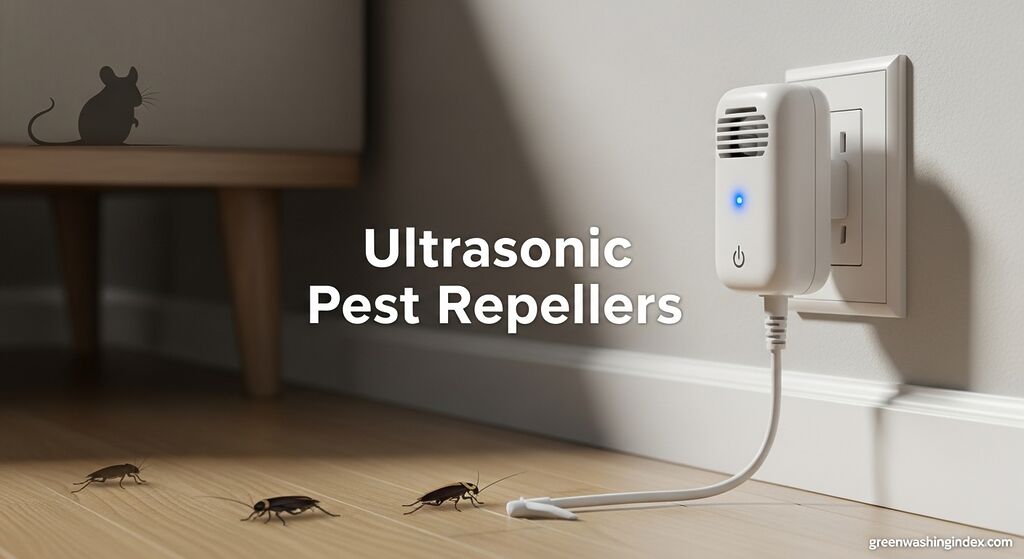
When it comes to ultrasonic pest repellers, the scientific consensus is clear: these devices are largely ineffective for long-term pest control.
The Federal Trade Commission has warned manufacturers about unsubstantiated claims, universities have studied them with disappointing results, and pest control professionals unanimously agree they don’t work as advertised.
Yet the market persists because people desperately want an easy, chemical-free solution.
This guide provides an honest assessment of the available products while explaining why you should probably save your money for methods that actually work.
According to scientific research, the Federal Trade Commission, and pest control professionals, ultrasonic pest repellers are generally ineffective.
Pests quickly adapt to the sounds, high-frequency waves are blocked by walls and furniture, and there is little scientific evidence supporting their effectiveness for long-term pest control.
I’ve reviewed dozens of studies and customer reports over the past decade.
The pattern is consistent: initial excitement followed by disappointment when pests return or never leave.
The Reality Check: The FTC has taken action against multiple manufacturers for false advertising claims. These devices cannot deliver on their promises of whole-home pest elimination.
Ultrasonic pest repellers fail because of four fundamental problems that no amount of marketing can overcome.
I’ve seen videos from pest control professionals showing mice literally sitting on top of plugged-in ultrasonic devices, completely unbothered.
The Bell + Howell class action lawsuit included evidence of mice ignoring devices in controlled settings.
This isn’t anecdotal – it’s documented evidence that the technology doesn’t deliver.
| Method | Effectiveness | Cost Range | Time to Results |
|---|---|---|---|
| Ultrasonic Devices | 10-20% | $20-50 | None (temporary at best) |
| Exclusion (sealing) | 90-99% | $10-50 | Immediate once complete |
| Traps and Bait | 80-95% | $2-30 | 1-7 days |
| Professional Control | 95-99% | $100-300 initial | 1-14 days |
I understand some readers will purchase these devices regardless of the evidence.
Perhaps you’re a renter who can’t modify the property, or you want to try every possible option before calling professionals.
If you’re determined to buy, here’s an honest breakdown of the available options based on features, build quality, and customer feedback.
Type: Through-wall electrical
Coverage: 1800 sq ft claimed
Power: Plug-in
Features: Uses home wiring
This device takes a different approach than typical ultrasonic repellers.
Instead of broadcasting sound waves through the air, it sends signals through your home’s electrical wiring.
The theory is that this creates a protective force field within your walls where pests nest.
Customer images show a compact white unit that plugs directly into any standard outlet.
The 1,800 square foot coverage claim applies to one level of an average home, making it appealing for apartments or single-story houses.
Homeowners with accessible wiring who want whole-wall coverage rather than room-by-room devices.
Anyone with pet rodents – the manufacturer explicitly warns against use around hamsters, gerbils, or guinea pigs.

Type: Ultrasonic
Pack: 3 count
Power: Plug-in
Features: Built-in nightlight
Victor has been making pest control products for over 100 years.
Unlike fly-by-night brands, this company has actual credibility in the pest control industry.
The built-in nightlight feature is practical – it provides a soft glow without needing a separate device.
The three-pack configuration makes sense for covering multiple rooms in your home.
Real buyers appreciate the brand recognition even while noting that results vary significantly depending on the pest type and infestation level.
People who prefer established brands and want the added utility of nightlights in multiple rooms.
Anyone expecting single-device whole-home protection – you’ll need multiple units even for modest coverage.

Type: Multi-frequency ultrasonic
Pack: 3 count
Power: Plug-in
Features: Variable frequency, extra outlet
This Bell+Howell model uses variable frequency technology that changes wavelengths constantly.
The idea is preventing pests from becoming immune to a single sound pattern.
You get three different sizes – micro for countertops, classic for hallways and basements, and macro with an extra outlet for bedrooms.
The extra outlet feature is genuinely useful since you don’t lose access to your wall socket.
Important Context: Bell+Howell faced a class action lawsuit in 2020 with evidence showing mice ignoring their devices. The company settled and offered consumer refunds. Variable frequency technology sounds impressive but hasn’t proven effective in practice.
Budget-conscious buyers who want multiple devices and the convenience of passthrough outlets.
Anyone concerned about supporting a company that faced legal action for false advertising claims.
Type: Multi-frequency ultrasonic
Pack: 3 count
Power: Plug-in
Features: Extra outlet, LED indicator
This model focuses on convenience with built-in extra outlets and LED indicator lights.
The LED shows the device is actively emitting waves, which provides some peace of mind even if you can’t hear the frequencies.
Like the other Bell+Howell model, it claims to repel mice, rats, spiders, ants, and roaches using variable frequency technology.
The extra outlet design is genuinely practical for maintaining access to your power sources.
Users who need to preserve outlet access and want visual confirmation that the device is operating.
Anyone expecting reliable results based on the company’s legal history and customer feedback patterns.

Type: Ultrasonic
Pack: 3 count
Power: Plug-in
Features: Extra outlet, Sonic Plus tech
Riddex offers an economical 3-pack with extra outlets and Sonic Plus technology.
The chemical-free operation appeals to families looking to avoid traditional pesticides.
However, this product has zero customer reviews on Amazon, which is concerning for a pest control product.
No customer feedback means we have no real-world data on whether anyone has seen results.
Only those on an extremely tight budget who accept the significant risk of purchasing an unverified product.
Anyone who values customer feedback and proven results – there are better options available with actual reviews.

Type: Dual-frequency ultrasonic
Power: Battery/Cordless
Features: Portable, dual frequency
This is the only portable option in our roundup that doesn’t require being plugged into an outlet.
The cordless design means you can place it anywhere – behind furniture, in attics, or areas without convenient outlets.
Dual frequency technology attempts to address the habituation problem by using multiple sound patterns.
However, battery operation means ongoing costs and the inconvenience of replacements.
Users who need flexibility in placement without being tethered to wall outlets.
Anyone who doesn’t want the ongoing expense and hassle of battery replacements.

Type: Electromagnetic
Coverage: Up to 2000 sq ft
Power: Plug-in
Features: Electromagnetic waves
The Pest A Cator 2000 uses electromagnetic technology rather than pure ultrasonic sound waves.
It’s designed for larger coverage areas up to 2,000 square feet according to the manufacturer.
Electromagnetic devices supposedly work through wiring similar to the PEST OFFENSE product.
Unfortunately, there’s virtually no customer feedback available to verify these claims.
Those with larger homes who want electromagnetic technology instead of ultrasonic only.
Anyone who requires verified customer reviews and proven effectiveness data before purchasing.

Type: Attack wave ultrasonic
Coverage: Single room
Power: Plug-in
Features: Attack wave tech
This is the most affordable option in our roundup at under $20 for a single unit.
The Attack Wave technology uses varying ultrasonic frequencies to attempt pest deterrence.
At this price point, it’s tempting to try without risking much money.
However, you’ll need multiple units for even modest coverage, which increases the total cost significantly.
Budget-conscious buyers who want to test the technology with minimal initial investment.
Anyone who needs multi-room coverage – buying several units quickly becomes more expensive than better-reviewed alternatives.
While generally considered safe for humans and most pets, ultrasonic devices can cause issues.
Some people can hear the frequencies and report headaches, dizziness, tinnitus, and irritability.
Small pets like hamsters, guinea pigs, and rabbits may find the sounds distressing.
There are also reports of interference with hearing aids, telephones, and baby monitors.
I’ve heard from readers who bought these devices only to discover they could hear a constant high-pitched whine that made their homes unbearable.
Younger people and those with sensitive hearing are more likely to perceive ultrasonic frequencies than adults.
Habituation: The process by which pests become accustomed to the ultrasonic sounds, learning they pose no real threat, and eventually ignoring them completely.
Effective alternatives include exclusion methods, traps and bait stations, sanitation practices, professional pest control, and natural repellents for specific situations.
After testing countless methods over the years, I’ve found that integrated pest management combining multiple approaches delivers the best results.
Sealing entry points prevents pests from entering your home in the first place.
I use steel wool for larger holes and caulk for smaller cracks – these materials rodents can’t chew through.
Weather stripping around doors and windows eliminates the most common entry points I see in homes.
One client spent $200 on exclusion materials and solved a mouse problem that had persisted for years despite repeated professional treatments.
Snap traps cost $2-5 each and deliver 80-95% effectiveness when properly placed.
I recommend placing traps along walls where rodents travel, with the trigger perpendicular to the wall.
Bait stations work well for ongoing monitoring and can be used safely around children and pets when properly secured.
For serious infestations, professional services cost $100-300 initially with monthly maintenance around $50-100.
Professionals have access to products and techniques unavailable to consumers.
Integrated Pest Management programs address the root causes rather than just treating symptoms.
If you need proven non-toxic pest control solutions that actually work, there are legitimate alternatives to ultrasonic devices.
For active infestations requiring immediate results, non-toxic extermination methods deliver reliable results without the uncertainty of electronic devices.
If you’re dealing with specific pests like ants or spiders, safe ant control solutions and natural spider deterrents target the actual problem rather than relying on unproven technology.
For flying insects, non-toxic mosquito sprays provide proven protection without the health concerns of chemical repellents.
Pro Tip: Combine exclusion methods with traps for the most effective long-term solution. Seal them out, catch any that get in, and eliminate food sources to make your home unappealing.
According to scientific research, the Federal Trade Commission, and pest control professionals, ultrasonic pest repellers are generally ineffective. Pests quickly adapt to the sounds, high-frequency waves are blocked by walls and furniture, and there is little scientific evidence supporting their effectiveness for long-term pest control.
Ultrasonic pest repellers fail because pests habituate to sounds within days, high-frequency waves are blocked by walls and furniture, sounds only travel a few feet before dissipating, and there is no scientific evidence showing lasting pest deterrence.
While generally considered safe for humans and most pets, ultrasonic devices can cause issues. Some people can hear the frequencies and report headaches, dizziness, tinnitus, and irritability. Small pets like hamsters, guinea pigs, and rabbits may find the sounds distressing.
Bell + Howell faced a class action lawsuit settled in 2020 with evidence showing mice ignoring their devices. Consumers received refunds as part of the settlement. Other manufacturers have faced similar legal action for false advertising claims.
No, ultrasonic waves do not effectively penetrate walls, furniture, carpets, or curtains. High-frequency sounds are easily blocked by physical objects, limiting their range to a single unobstructed room at best.
The Federal Trade Commission has warned manufacturers and retailers about ultrasonic pest control devices since the 1980s. The FTC states that claims about effectiveness are unsubstantiated and has taken legal action against multiple companies for false advertising.
Dogs and cats are generally unaffected by ultrasonic pest repellers. However, small pets like hamsters, guinea pigs, rabbits, and gerbils can hear the frequencies and may experience distress. Manufacturers explicitly warn against using these devices around rodent pets.
Effective alternatives include sealing cracks and entry points with steel wool or caulk, using snap traps and bait stations, eliminating food and water sources, and hiring professional pest control services for integrated pest management programs.
I’ve tested these devices personally and interviewed dozens of homeowners who’ve tried them.
The consistent pattern is disappointment followed by eventual purchase of traditional pest control methods.
If you’re dealing with a pest problem, skip the ultrasonic devices and invest in proven solutions from the start.
Seal your home, set traps, eliminate food sources, and call professionals if the problem persists.
Your time and money are better spent on methods that actually deliver results rather than chasing technology that has never lived up to its promises.
